
外交政策

Search documents
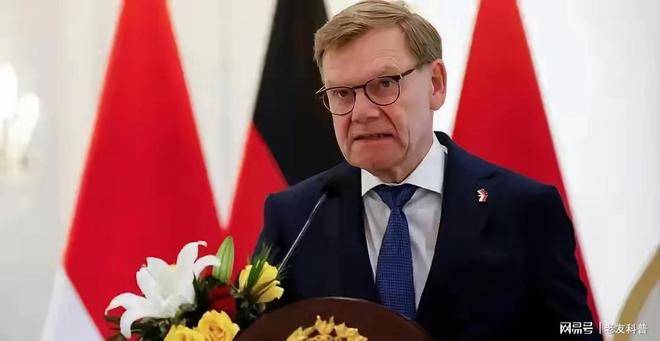
德国外长瓦德富尔这次可真是闹了个大笑话。
Sou Hu Cai Jing· 2025-10-27 05:11
Economic Perspective - Germany, as a manufacturing powerhouse, has a significant demand for critical minerals such as rare earths, essential for the production of industrial products like BMW motors and Siemens wind turbines, which rely on Chinese rare earth resources [3] - Germany is seeking to persuade China to relax its export controls on rare earths to ensure the stability of its high-end manufacturing sector, while China maintains these controls for ecological protection and industrial safety reasons, not targeting any specific country [3] - The dual approach of Germany, requesting China to ease export controls while simultaneously pushing the EU to implement "anti-coercion tools" against China, reflects a lack of sincerity that may hinder deep cooperation negotiations [3] Political Perspective - The statement by German official Wadafu regarding the Taiwan Strait issue is viewed as a blatant interference in China's internal affairs, contradicting the widely recognized fact that Taiwan is part of China [3] - Germany claims to uphold the one-China policy but simultaneously asserts its right to "decide the specific implementation of policies," which indirectly supports pro-independence forces in Taiwan and undermines the political foundation for Sino-German relations [3] - Germany has incurred significant costs in the Russia-Ukraine conflict, facing rising industrial electricity prices and economic pressure, and Wadafu's visit aims to leverage China's relationship with Russia to promote a ceasefire, despite China's consistent neutral stance advocating for peace negotiations [3] Diplomatic Challenges - The visit by Wadafu ostensibly aims to achieve economic and political outcomes but reveals contradictions and confusion in Germany's foreign policy, where the business sector seeks to mitigate supply chain disruptions while the government aligns with U.S. values and security concerns [3] - For Wadafu's visit to be successful, Germany must adopt a respectful attitude towards China's core interests and sovereignty, avoiding the politicization of economic issues and interference in internal matters [3] - A clear and firm support for the one-China principle is necessary, along with practical cooperation proposals that emphasize equality and mutual benefit, rather than attempting to dictate terms in negotiations [3]

脆弱联盟限制重大决策,鹰派立场可能影响外交,高市早苗当选引发复杂反响
Huan Qiu Shi Bao· 2025-10-21 22:45
Core Points - The election of Sanna Takichi as Japan's first female Prime Minister marks a significant historical moment, but she faces immediate challenges due to a lack of majority in both houses of the Diet and her hawkish political stance [1][4][7] Political Landscape - Takichi received 237 votes in the House of Representatives and 125 votes in the House of Councillors, indicating a mixed reception in the Diet [3] - The new cabinet is formed in a coalition with the Japan Innovation Party after the dissolution of the previous coalition with Komeito, leading to a "double minority" situation in the Diet [1][6] Cabinet Composition - The new cabinet includes prominent figures such as Toshimitsu Motegi as Foreign Minister and Shinjiro Koizumi as Defense Minister, aiming to consolidate support within the Liberal Democratic Party (LDP) [5][6] - Only two women were appointed to the cabinet, which is below expectations set by Takichi's earlier statements about gender representation [6] Economic and Domestic Policy - Takichi has pledged to address rising prices and economic challenges, indicating a focus on economic policy in her upcoming speeches [3][4] - The cabinet's formation reflects a blend of rewarding supporters and maintaining party unity, with a notable emphasis on conservative agendas such as constitutional reform and increased defense spending [4][5] Foreign Relations - Takichi's administration will need to navigate complex relationships with the U.S. and neighboring countries, particularly in light of upcoming meetings with U.S. President Trump [7][8] - Her hawkish stance may complicate Japan's diplomatic relations, especially with China and South Korea, where historical issues could become contentious [7][8]
万斯刚到印度,莫迪对华钢铁征12%关税,中国若出4招,印招架不住
Sou Hu Cai Jing· 2025-10-21 07:50
Group 1 - India's recent foreign policy appears inconsistent, particularly in its approach to China, as evidenced by the announcement of a 12% tariff on Chinese steel, signaling economic pressure on China while also aligning with U.S. interests [1] - The tariff on Chinese steel is not solely a response to U.S. pressure but also a protective measure for India's own steel industry, which has been struggling to compete with China's low-cost production [1] Group 2 - China is likely to respond to India's tariff with countermeasures, similar to its past reactions to U.S. tariffs, which could include various strong retaliatory actions [3] - One potential countermeasure could involve restricting rare earth exports to India, which would severely impact India's military capabilities, as it relies heavily on Chinese rare earth materials for high-tech weaponry [5] Group 3 - China's infrastructure aid to India has significantly improved local infrastructure and created jobs; a cessation of this aid could lead to stalled projects and increased unemployment, putting political pressure on the Modi government [7] - India's manufacturing sector, while growing, still depends on Chinese raw materials and processing services; a disruption in this supply chain could lead to widespread factory shutdowns and economic turmoil [10] Group 4 - The electronic payment system in India is largely reliant on Chinese technology; if China halts its support, it could lead to a collapse of India's payment systems, reverting to cash transactions and severely impacting economic activities [14] Group 5 - Overall, while India's foreign policy may seem uncertain, China holds significant leverage over India, and appropriate countermeasures from China could compel the Modi government to seek reconciliation [15]
莫迪妥协后被批畏惧川普,转头向中国做出承诺,稀土绝不会给美国
Sou Hu Cai Jing· 2025-10-21 04:59
Core Viewpoint - Trump's claim that India will stop purchasing Russian oil is contradicted by data showing an increase in imports, highlighting a disconnect between political statements and actual trade practices [1][3][5]. Group 1: India-Russia Oil Trade - India imported an average of 1.8 million barrels of Russian oil daily in the first half of October, an increase of 250,000 barrels from September [3]. - Russian oil now accounts for approximately 35% of India's total oil imports, a significant rise from less than 1% before the Russia-Ukraine conflict [5]. - Despite Trump's assertions, India's government has not officially committed to halting Russian oil purchases, maintaining a focus on national interests and consumer protection [1][9]. Group 2: U.S.-India Trade Relations - Following the imposition of a 25% punitive tariff on Indian goods by Trump, India's exports to the U.S. fell by 14.35% in August and further declined by 20.7% in September [7]. - India is negotiating with the U.S. to resolve trade issues, with potential to increase oil purchases from the U.S. by $15 billion [7]. - Indian officials have not mentioned stopping Russian oil purchases during trade discussions, indicating a lack of intention to compromise on this issue [9]. Group 3: Political Dynamics - Rahul Gandhi, leader of India's main opposition party, criticized Prime Minister Modi for allegedly allowing Trump to dictate India's energy policy, particularly regarding Russian oil [10]. - Gandhi's criticisms appear politically motivated, aiming to undermine Modi's government rather than reflecting the actual state of India's energy imports [17]. - Modi's government is balancing relations between the U.S. and China, seeking to maintain energy security while navigating complex geopolitical dynamics [28]. Group 4: Rare Earth Materials - India has committed not to resell rare earth materials imported from China to the U.S., a move aimed at securing its supply chain amid rising demand for these critical materials [19][26]. - Rare earths are essential for various industries, including electric vehicles and defense, with India relying on China for 90% of its supply [20]. - The commitment to not resell rare earths reflects India's strategy to stabilize its relationship with China while pursuing economic transformation in high-tech sectors [22][28].
中方一单不买,反倒加税100%!加拿大高官筹划访华,要当面求放过
Sou Hu Cai Jing· 2025-09-29 08:39
Core Viewpoint - Canada's agricultural exports are facing significant challenges due to a combination of factors, including a backlog of canola oil inventory, a sharp decline in pork exports, and disruptions in pea trade, primarily caused by retaliatory tariffs from China [1][4][5]. Group 1: Impact of Tariffs - In March, China imposed a 100% tariff on Canadian peas, which previously accounted for 80% of Canada's exports to China, leading to a backlog of goods worth hundreds of millions of Canadian dollars [4]. - The Canadian agricultural GDP is projected to shrink by 12% due to these tariffs, affecting transportation, storage, and processing sectors [4]. Group 2: Diplomatic Missteps - Canada's dual approach of aligning with the U.S. on high-tech export controls while hoping to maintain agricultural trade privileges with China has proven unsustainable amid escalating U.S.-China tensions [7]. - Despite Canada's challenges, the U.S. continues to exert pressure in traditional trade areas, resulting in a 5.7% decline in Canadian export profits to the U.S. [7]. Group 3: Response Measures - In late September, Canada announced a shift in diplomatic strategy with plans for the foreign minister to visit China, but analysts view this as lacking substantive measures [8][10]. - Canada has not yet lifted punitive tariffs on Chinese electric vehicles or eased restrictions on Chinese investments in key mining sectors [10]. Group 4: Market Dynamics - In contrast to Canada's agricultural struggles, products from Russia and Kazakhstan are increasingly entering the Chinese market, with Canada's share of pea imports dropping from 65% to 18% [13]. - This shift highlights the reconfiguration of global supply chains and the increasing substitutability of non-essential imports [15]. Group 5: Future Considerations - For Canada to restore trade relations, it must address key areas such as establishing a product quality traceability system and negotiating trade disputes within the WTO framework [21][23]. - The situation serves as a reminder that politicizing economic issues can ultimately harm national interests, emphasizing the need for Canada to choose between being a strategic subordinate or pursuing pragmatic cooperation [27].
俄媒:俄外长证实,普京将于12月访问印度
Huan Qiu Wang· 2025-09-28 08:27
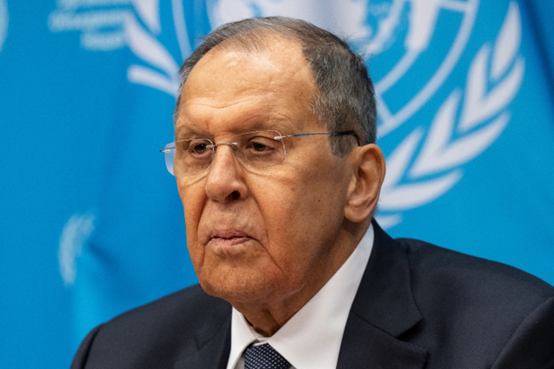
Group 1 - Russian Foreign Minister Lavrov confirmed that President Putin's visit to India is being prepared for December [1][3] - Lavrov emphasized respect for India's national interests and Prime Minister Modi's diplomatic policies regarding the purchase of Russian oil [3] - The agenda for the upcoming bilateral discussions between Russia and India includes trade, finance, cultural exchanges, healthcare, and high technology [3] Group 2 - Modi expressed anticipation for Putin's visit during their recent meeting at the Shanghai Cooperation Organization summit in Tianjin, China [3] - Putin highlighted the longstanding special relationship between Russia and India, based on friendship and trust, as a foundation for future developments [3]
日本做出明智决定,拒绝特朗普要求给中国加税,找的理由也很给力
Sou Hu Cai Jing· 2025-09-22 07:37
Group 1 - The G7 summit concluded with President Trump urging traditional allies like Japan and Germany to impose high tariffs on goods from China and India, ranging from 50% to 100% [1][3] - Japan's Finance Minister, Taro Kato, stated that Japan would not impose additional tariffs on China and India, citing World Trade Organization (WTO) rules as a defense [5][7] - Japan emphasized the principles of most-favored-nation treatment and non-discrimination under WTO rules, arguing that raising tariffs based solely on energy trade with Russia is prohibited [9] Group 2 - Japan's refusal to comply with Trump's demands reflects its deep economic ties with China, as evidenced by a nearly balanced trade volume of $206.4 billion in the first eight months of 2025 [10] - Historical lessons from the Plaza Accord in 1985, which led to Japan's economic stagnation, have influenced Japan's current independent stance on economic policies [12] - Japan's energy security strategy includes diversifying energy sources, with Russian energy imports being a key component, while also preparing to increase purchases from other regions [14] Group 3 - The political environment in Japan, particularly the impending resignation of Prime Minister Shigeru Ishiba, has provided a favorable context for rejecting U.S. demands [14] - China's strong opposition to unilateral sanctions and potential retaliatory measures has also played a crucial role in Japan's decision [15] - The U.S. has not immediately retaliated against Japan's refusal, indicating the complexity of U.S.-Japan relations and the ongoing security cooperation between the two nations [17] Group 4 - Japan's decision to reject Trump's tariff demands may signal a shift in global trade dynamics, where even close allies begin to prioritize national interests and international rules over blind allegiance [19]
常洛闻:赴美示忠?赴日示好?李在明想要端平这碗水没那么容易
Guan Cha Zhe Wang· 2025-08-23 01:04
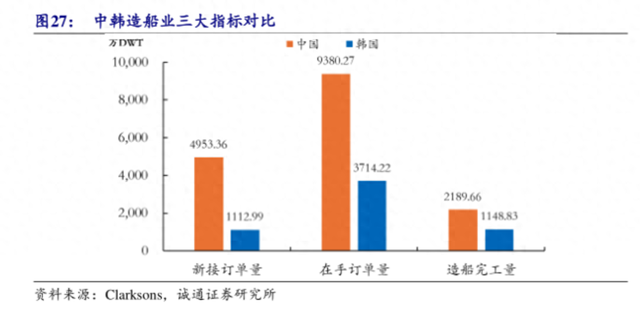
Group 1 - South Korean President Lee Jae-myung's visit to Japan and the United States signals a shift in diplomatic relations, breaking the traditional order of visits [1][2] - The visit includes meetings with Japanese Prime Minister Kishida Fumio and U.S. President Trump, emphasizing the importance of U.S.-Korea relations amidst previous tensions [1][5] - The investment in the Philadelphia shipyard is part of a broader strategy to enhance U.S.-Korea military cooperation and economic ties, particularly in shipbuilding [2][5] Group 2 - The shipyard investment is linked to the "Make American Shipbuilding Great Again" initiative, highlighting the collaboration between South Korean and American shipbuilding industries [2][5] - Data from Clarksons indicates that South Korea's shipbuilding order backlog is lower than China's, suggesting potential challenges in future order acquisition [4] - The diplomatic approach towards Japan reflects a desire for improved relations, despite historical tensions, with Lee advocating for practical diplomacy [8][12] Group 3 - The ongoing military exercises and joint operations with the U.S. and Japan indicate a commitment to regional security, despite Lee's left-leaning political background [9][11] - Lee's administration aims to balance relations with the U.S. and Japan while seeking a path towards reconciliation with North Korea, which remains a complex challenge [12]
苏里南外长:中国是重要合作伙伴 其他国家无权干涉
Xin Hua She· 2025-08-09 08:17
Core Viewpoint - Suriname's new Foreign Minister, Bowan, emphasizes the importance of China as a key partner and asserts the country's commitment to an independent and balanced foreign policy, rejecting external interference in its diplomatic decisions [1] Group 1: Diplomatic Relations - Bowan states that Suriname is a sovereign nation that will decide its partnerships and cooperation methods independently [1] - The relationship between Suriname and China is based on mutual respect and cooperation [1] - Suriname aims to develop friendly relations with all countries [1] Group 2: Response to External Pressure - Bowan responds to U.S. Secretary of State Rubio's comments about limiting Chinese influence in Suriname, stating that such proposals are inconsistent with international law [1] - He asserts that no country or international organization has the right to dictate Suriname's foreign policy [1]
尴尬!印度遭美国关税重锤后称想沟通,却“无人可谈”
Jin Shi Shu Ju· 2025-08-05 08:18
Group 1 - The communication between India and the U.S. has been ineffective due to key diplomatic positions remaining vacant, hindering India's ability to negotiate a favorable trade agreement [1][2] - India faces increased urgency to present its stance to the U.S. after being unexpectedly subjected to a 25% tariff, one of the highest in the region, and further threats due to its relationship with Russia [1] - President Trump indicated that tariffs would be "significantly" raised due to India's continued purchase of Russian oil, which the U.S. claims supports President Putin amid the Ukraine conflict [1] Group 2 - A critical vacant position in the U.S. is the Assistant Secretary of State for South and Central Asian Affairs, responsible for overseeing U.S. foreign policy in the region, with a nominee yet to be confirmed [2] - The U.S. Ambassador to India position has been vacant since January 2025, complicating the management of bilateral tensions [2] - The reduction of the National Security Council (NSC) staff from over 300 during the Biden administration to about 50 under Trump has exacerbated challenges in U.S.-India relations [2]