
大而美法案

Search documents
“美国党”是否会昙花一现?
Sou Hu Cai Jing· 2025-07-10 05:10
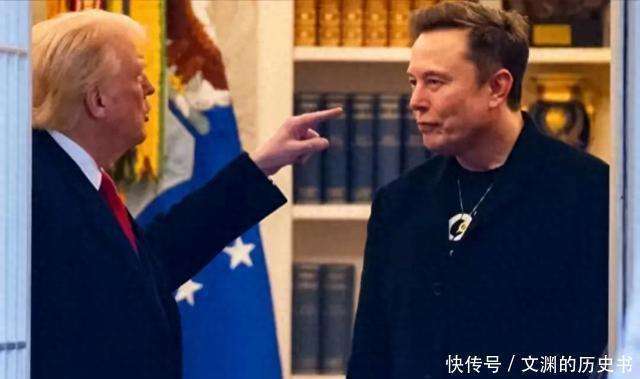
Group 1 - The article discusses the unique composition of the United States as a nation of immigrants, suggesting that traditional governance methods may fail in this context [1] - The relationship between Musk and Trump has shifted from alliance to open conflict due to differing views on the "Big and Beautiful" bill, which increased national debt by $3.3 trillion [3][4] - Musk's establishment of the "American Party" is seen as a reaction to Trump's policies, aiming to represent the people's interests but facing challenges in the existing two-party system [13] Group 2 - Musk's lack of practical experience in political governance is highlighted, noting that his previous efforts to cut foreign aid faced significant backlash [6][8] - The article emphasizes the importance of the Federal Reserve's independence, arguing that Trump's desire to control it could undermine the global trust in the dollar [10][12] - The article concludes that if the U.S. were governed like a traditional nation, it would lose its dynamism and creativity, ultimately leading to mediocrity [11][12]

“大而美”法案,特朗普就任以来的最大胜利?| 每天听见吴晓波
吴晓波频道· 2025-07-09 08:32
Core Viewpoint - The article discusses the passage of the "Big and Beautiful" Act by the U.S. House of Representatives, highlighting its significant tax cuts for corporations and wealthy individuals while adversely affecting lower-income populations [3][4][12]. Summary by Sections Tax Cuts and Economic Impact - The "Big and Beautiful" Act permanently extends the corporate and personal tax cuts from Trump's first term, reducing the corporate tax rate from 35% to 21% and extending tax incentives for business investments [6][7]. - Most personal and estate tax provisions set to expire in 2025 are also made permanent, benefiting wealthy individuals while cutting $1.2 trillion from programs like Medicaid and food assistance [8][11]. - The Congressional Budget Office estimates that the act could lead to 11.8 million Americans losing health insurance and 3 million low-income individuals losing food assistance over the next decade [8]. Criticism and Social Consequences - The act has been criticized as a "robbing the poor to pay the rich" policy, as it disproportionately benefits the wealthy at the expense of the working class and vulnerable populations [12]. - According to Yale University, the lowest-income Americans may see a 2.3% decrease in after-tax income over the next decade, while the highest-income individuals could see a 2% increase [11]. Environmental and Defense Spending Changes - The act effectively dismantles Biden's green energy policies, eliminating tax incentives for electric vehicle purchases and increasing support for traditional energy sources [13]. - It also significantly boosts military spending and immigration enforcement, allocating an additional $150 billion for military and $70 billion for border enforcement [14]. National Debt Implications - The act is projected to increase the national debt by $3.4 trillion, raising it to nearly $40 trillion, with a provision to raise the debt ceiling by $5 trillion [15]. - Analysts view the passage of this act as a major legislative victory for Trump, marking a significant shift in U.S. fiscal policy from Biden's focus on clean energy and social welfare to Trump's tax cuts and defense spending [15][16].

还卷什么价格?快去挣美元!
Sou Hu Cai Jing· 2025-07-08 17:20
Core Viewpoint - The photovoltaic industry is experiencing a strong resurgence, influenced by the recent "Big Beautiful" bill proposed by the Trump administration, which is expected to have significant implications for the industry [1][2]. Group 1: Legislative Impact - The "Big Beautiful" bill allows the White House to increase the debt ceiling by $5 trillion over the next ten years, with annual interest payments expected to reach at least $1.3 trillion [4]. - The bill permanently reduces the corporate income tax rate from 35% to 21%, and raises the estate tax exemption from $7 million to $15 million, benefiting a significant portion of wealthy families in the U.S. [5]. - The bill will eliminate $800 billion in healthcare subsidies, impacting the financial landscape for American citizens [6]. Group 2: Industry Implications - The "Big Beautiful" bill will gradually remove tax incentives and financial subsidies for clean energy established during the Biden administration by 2027, which could adversely affect the clean energy sector [7]. - The previous administration's tariffs on imported photovoltaic products and the Biden administration's subsidies for domestic manufacturers created a protective barrier for U.S. companies, allowing them to compete despite higher costs [8]. - The current legislative changes may open the market to increased competition from foreign photovoltaic companies, potentially undermining the gains made by domestic firms [9]. Group 3: Market Reactions - The market is currently experiencing a broad rally, with many stocks performing well, although stock selection remains crucial due to rapid market rotations [9][10].

5150!美参院一票险过“大而美”法案,特朗普还要驱逐马斯克?
Sou Hu Cai Jing· 2025-07-08 07:57
Group 1 - The core argument revolves around the intense debate between Trump and Musk regarding the "Big and Beautiful" bill, which aims to revitalize America's sunset industries, with Musk strongly opposing it, claiming it jeopardizes the nation's future [6][8]. - The bill passed the Senate on July 1 with a narrow margin of 51 to 50, largely due to Vice President Vance casting the deciding vote, despite significant dissent among lawmakers [8][12]. - The bill is projected to cut taxes by up to $4 trillion over the next decade, but critics argue that it will lead to severe cuts in social welfare programs, including nearly $1 trillion in medical assistance funding [18][24]. Group 2 - The bill's tax cuts are seen as a temporary fix that may not address fundamental issues, potentially leading to increased military and border security spending instead of benefiting the public [22][24]. - Musk's opposition is fueled by the bill's cuts to clean energy subsidies, which he views as detrimental to his business interests in the renewable energy sector [18][27]. - Trump's response to Musk's criticism includes a suggestion to investigate the subsidies Musk's companies have received, indicating a growing rift between the two [31][32]. Group 3 - The Federal Reserve has maintained interest rates between 4.25% and 4.50%, despite Trump's calls for a reduction to alleviate debt pressures, highlighting a potential conflict between fiscal policy and monetary independence [34].
特朗普的“大而美法案”到底美不美
经济观察报· 2025-07-07 12:11
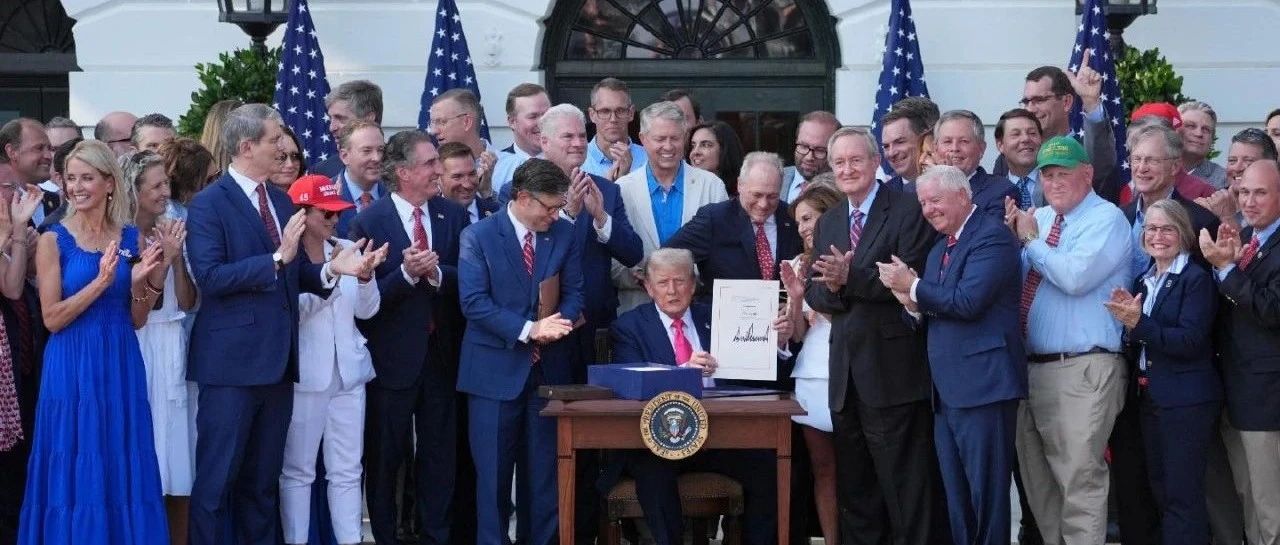
Group 1: Core Views - The "Big, Beautiful Bill" signed by Trump aims to adjust tax and government spending to increase residents' income and guide the development direction of American industries, ultimately striving to make America great again [5][13] - The bill is controversial for its impact on healthcare, with claims that it may lead to 12 million Americans losing health insurance over the next decade [6][9] - The bill has provisions requiring able-bodied adults without children or disabilities to work at least 80 hours a month to qualify for medical assistance, which has sparked mixed public opinion [6][7][8] Group 2: Industry Policy - The most contentious aspect of the "Big, Beautiful Bill" is its support for traditional energy while suppressing renewable energy, leading to conflicts between Trump and figures like Elon Musk [9] - Critics argue that the bill represents a strategic self-harm for the U.S., particularly in the context of the emerging artificial intelligence era, as it may weaken the American automotive industry and reduce clean energy job opportunities [12]
特朗普祭出关税大招,除了中国以外,170多国都要给美国一个交代
Sou Hu Cai Jing· 2025-07-07 11:46
Group 1 - The core viewpoint of the article highlights the intensifying trade conflict initiated by the U.S., with President Trump planning to notify over 170 countries about impending tariffs, indicating a shift towards a more aggressive trade stance [1][3][10] - The U.S. has only successfully negotiated agreements with the UK and Vietnam, with both countries accepting tariffs of 10% and 20% respectively, showcasing the slow progress in negotiations with other nations [1][3] - Trump’s frustration with the slow negotiation process has led him to opt for a direct communication method, sending approximately 10 letters daily to inform countries of their respective tariff rates [1][3] Group 2 - The potential tariff rates for countries could range from 20% to 30%, with Japan facing threats of 30% to 35% tariffs due to stalled negotiations on key issues like rice and automobiles [3][7] - The European Union has taken a hardline stance, demanding the U.S. lift existing tariffs before any agreements can be made, while also preparing for potential retaliatory measures [3][10] - The passage of the "Big and Beautiful Act" has emboldened Trump’s tariff policies, as it aims to fill the fiscal gap created by tax cuts and increased government spending through tariff revenues [4][5][7] Group 3 - The U.S. has made recent moves to ease restrictions on exports to China, indicating a potential de-escalation in the trade war, contrasting with the aggressive tariff strategy towards other nations [8] - The imposition of tariffs is expected to raise export costs for countries closely trading with the U.S., potentially harming their economic growth and employment [10] - While tariffs may temporarily boost U.S. fiscal revenues, they could lead to higher consumer prices and inflation in the long run, negatively impacting American consumers [10]
机构:“大而美”法案对美国经济的实际拉动作用有限
news flash· 2025-07-07 08:59
Core Viewpoint - The "big and beautiful" fiscal plan by the U.S. government is viewed skeptically by Lombard Odier, which believes it will have limited positive impact on the economy and may worsen the fiscal outlook [1] Economic Impact - Lombard Odier forecasts that the budget plan will increase the federal deficit by approximately $4 trillion over the next decade [1] - If tax cuts are made permanent, the deficit could increase even further [1] - The ratio of public debt to GDP is expected to rise to 119% by around 2034 [1] Revenue and Spending - While tariff revenues may alleviate some fiscal pressure, the largest spending cuts will focus on healthcare and food assistance programs [1] - Most tax cuts are unlikely to significantly boost consumer spending [1] Economic Growth Projections - Lombard Odier maintains its previous economic growth forecasts for the U.S., predicting growth rates of 1.3% in 2025 and 1.4% in 2026 [1]
美媒:调查显示越来越多美国人“吃不饱饭”,“大而美”法案可能加剧饥饿问题
Huan Qiu Wang· 2025-07-07 08:26
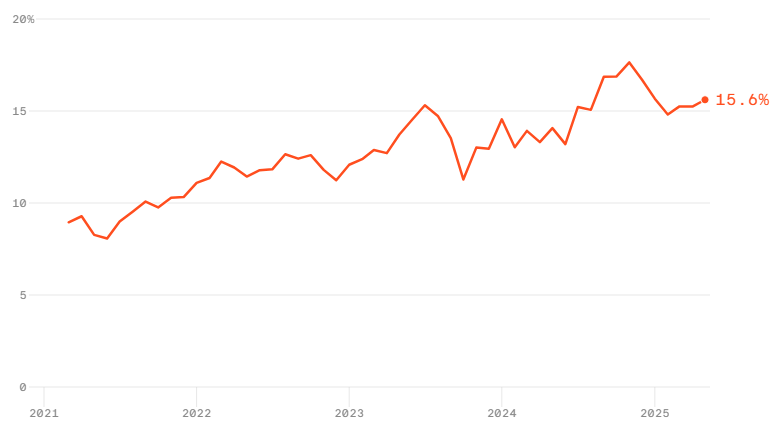
Core Insights - Increasing food insecurity is reported among American adults, with 15.6% facing food shortages in May 2023, nearly double the rate from 2021 [3] - The "Big and Beautiful" plan proposed by Trump may exacerbate the situation by cutting food assistance programs, leading to millions of households losing aid [3][4] Group 1: Food Insecurity Trends - The percentage of adults experiencing food shortages has been gradually rising over the past few years, with current levels surpassing pre-pandemic figures [3] - The demand for food assistance has surged, with a 120% increase reported by food banks in Philadelphia compared to three years ago [3] Group 2: Legislative Impact - Recent legislation has significantly reduced food assistance, requiring states to bear more costs for the Supplemental Nutrition Assistance Program (SNAP) and tightening eligibility criteria [3][4] - The USDA estimates that over 42 million Americans will rely on SNAP benefits by March 2025, highlighting the critical support it provides to low-income families and vulnerable populations [4] Group 3: Economic Implications - The Republican perspective suggests that cutting these benefits could encourage more individuals to enter the workforce and reduce dependency on government aid, despite rising food costs making it increasingly difficult for Americans to afford basic necessities [3]
摩根资管:大而美法案料托底美国经济 投资者要聚焦针对行业的关税
Zhi Tong Cai Jing· 2025-07-07 07:30
Group 1 - Morgan Asset Management estimates that the uncertainty from the tariff war will slow down U.S. economic growth in the second half of this year, but the "Inflation Reduction Act" will provide some support, and inflation is expected to decline to the Federal Reserve's 2% target by the end of next year [1] - The recent trade agreement between the U.S. and Vietnam has provided greater certainty for business planning, but investors should focus on industry-specific tariffs, such as those affecting pharmaceuticals from the EU and automobiles from Japan and South Korea, which may persist after a potential Trump 2.0 administration [1] - The fiscal expansion and regulatory easing from the "Inflation Reduction Act" are expected to take effect later this year and continue to drive U.S. economic growth into next year, providing a positive catalyst for the stock market [1] Group 2 - The AI sector has shown strong recent performance, reflecting market recognition that the increasing prevalence of AI will significantly enhance efficiency, suppress prices, and stimulate consumption [2] - Investment opportunities are gradually shifting towards companies that can effectively apply AI, as AI transitions from a single theme to a tool for improving corporate performance across various industries [2] - Given the current policy and geopolitical uncertainties, investors are advised to diversify across different markets and sectors, with Chinese stocks playing an important role in global asset allocation [2]
特朗普的“大而美法案”到底美不美
Jing Ji Guan Cha Wang· 2025-07-07 06:47
Domestic Policy - The "Big, Beautiful Bill" aims to increase residents' income primarily through tax cuts, with the first five highlights focusing on tax reductions for middle- and working-class Americans [3][4] - The bill is controversial, particularly in the healthcare sector, with claims that it may lead to 12 million Americans losing their health insurance over the next decade [3][4] - A provision requires able-bodied adults without children or disabilities to work at least 80 hours per month to qualify for medical assistance, which has sparked debate about the implications for low-income individuals [4][5] Energy Policy - The bill has faced criticism for favoring traditional energy sources while suppressing renewable energy, leading to tensions between Trump and figures like Elon Musk [6][7] - Critics argue that the bill's energy policies could weaken the U.S. automotive industry and benefit China, particularly in the context of the upcoming AI-driven energy landscape [7][8] - The overall sentiment among some analysts is that the bill may not lead to the economic prosperity that Trump anticipates, with concerns about its long-term impact on energy supply and innovation [7][8]