政治博弈

Search documents
美国现代史上首次!白宫"管家"宣布特朗普政府开始永久性裁员
Hua Er Jie Jian Wen· 2025-10-10 18:56
Core Points - The Trump administration has initiated unprecedented permanent layoffs of federal employees during a government shutdown, marking a significant departure from past practices of temporary furloughs [1][3] - The layoffs are expected to affect thousands of federal workers across at least nine government departments, including the Department of Interior, Department of Homeland Security, and Department of Education [1][3] - The layoffs are part of a broader political strategy by the Trump administration to pressure Democratic constituencies and are linked to ongoing budgetary disputes over key issues such as healthcare subsidies [4][5] Group 1: Layoff Details - The Office of Management and Budget (OMB) confirmed that the reductions in force (RIF) have begun, with a spokesperson stating that the scale is "considerable" [3] - The Department of Health and Human Services (HHS) has already notified employees of layoffs, particularly targeting those not aligned with the Trump administration's health agenda [3] - The OMB had previously instructed officials to prepare for RIFs during the shutdown, focusing on projects that are not legally mandated or conflict with Trump’s policy priorities [5] Group 2: Political Context - The layoffs are seen as a tactic to exert pressure on Democratic districts, with significant funding for infrastructure and energy projects in Democratic-supporting states being suspended [4] - Trump has publicly stated that the government will use the shutdown to "permanently cut" projects supported by Democrats, indicating a strategic political maneuver [4] - There is a division within the Republican Party regarding the layoffs, with some leaders expressing caution and advocating for the protection of federal employees [6] Group 3: Future Implications - Over two-thirds of federal employees remain on the job, either as essential workers or due to available funding for their positions, while the rest are on furlough without pay [7] - The White House has indicated that if the shutdown continues, layoffs will be an unfortunate consequence, although they hope for a resolution [7] - Any layoff notices issued in the coming days may include a 60-day notification period before actual termination, suggesting potential for revisions to the layoff plans post-shutdown [7]
日损近10亿!特朗普裁15万雇员,中美项目停滞,已有20家中企受损
Sou Hu Cai Jing· 2025-10-09 07:17
Group 1 - The U.S. government shutdown has led to 750,000 federal employees being forced into unpaid leave, impacting various sectors including tourism, which has lost over $1 billion in a week [1][2][19] - The shutdown has caused significant delays in multiple U.S.-China cooperative projects, particularly in infrastructure and renewable energy, affecting around 20 Chinese companies due to halted approvals and frozen funds [1][3][19] - The tourism industry is experiencing immediate financial losses, with hotel bookings canceled and tourist attractions closed, resulting in a sharp decline in income for tourism workers [1][19] Group 2 - The political standoff is not only a domestic issue but also has international ramifications, as the shutdown disrupts ongoing collaborations between the U.S. and China [1][3] - The Trump administration is using the shutdown as a political tool, with plans for significant federal layoffs and the freezing of funds for projects in Democratic-leaning states, exacerbating political divisions [7][9][19] - Public sentiment is shifting against the Republican Party and Trump, with a significant drop in trust towards the federal government, indicating a potential long-term impact on political dynamics [15][19]

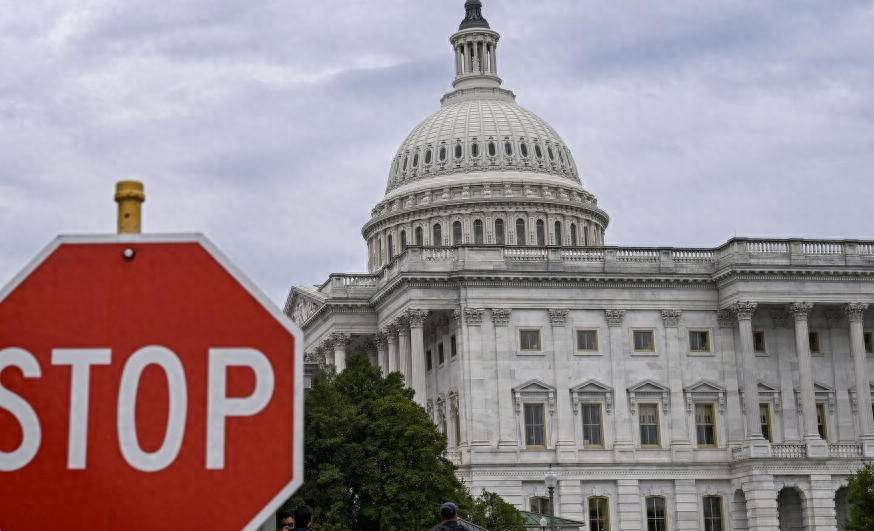
美国政府停摆进入第二周 经济与民生双重承压
Xin Hua Cai Jing· 2025-10-09 02:42
Core Viewpoint - The U.S. federal government has entered a "shutdown" state, affecting approximately 750,000 federal employees and causing significant disruptions to public services and the macro economy [1][2]. Economic Impact - The government shutdown is expected to suppress GDP growth, with economists warning that it could reverse the strong growth momentum seen in the second quarter, where GDP annualized growth was 3.8% [2]. - If the shutdown continues until October 15, it may lead to significant political and social pressure, potentially prompting bipartisan negotiations [2]. Data Availability - The shutdown has resulted in the suspension of key economic data releases, including non-farm payroll reports, creating an "information vacuum" for traders [3]. - This lack of data is forcing market participants to adjust their investment strategies amid heightened uncertainty [3]. Political Stalemate - The root cause of the shutdown lies in the intense political battle between Democrats and Republicans over the continuation of subsidies under the Affordable Care Act (ACA) [3][4]. - Both parties have failed to pass temporary funding proposals, with the Senate rejecting both sides' plans, indicating a need for bipartisan support to move forward [4]. Market Resilience - Despite the short-term impacts of the shutdown, the U.S. capital markets have shown resilience, with the S&P 500 index up 14% year-to-date and reaching a historical high [5]. - Analysts predict a 8.8% year-over-year increase in third-quarter earnings for S&P 500 companies, indicating underlying market strength [5]. Consumer Confidence - The negative effects of the shutdown are beginning to impact consumer confidence, with warnings that restarting the government may be more challenging than initiating the shutdown [6]. - Delays in airport security due to staffing shortages and potential interruptions to nutrition assistance programs are contributing to a decline in consumer sentiment [6][7]. - There is a 71% probability that the government shutdown will extend beyond October 14, which could further affect the economy and market sentiment in the fourth quarter [7].
美国政坛再爆危机!联邦政府关门,一天约损失4亿,CNN犀利点评
Sou Hu Cai Jing· 2025-10-08 08:51
Core Viewpoint - The government shutdown is not merely a financial issue but a deep political struggle between the two parties, highlighting their ideological differences [2] Group 1: Political Demands - The Republican Party's main demands include cutting welfare and strengthening border control, while the Democratic Party advocates for protecting healthcare and opposing layoffs [4] - Trump's Republican Party has two primary demands: reducing large healthcare subsidies from the Affordable Care Act and significantly increasing the border enforcement budget for building a wall and deporting illegal immigrants [6] Group 2: Legislative Challenges - The Senate's "60-vote rule" complicates the passage of the budget, as the Republican Party currently holds only 53 seats and needs to attract 7 Democratic votes, which is unlikely due to Democratic unity [6] Group 3: Economic Impact - The estimated loss from the government shutdown is about $400 million per day, with a previous shutdown costing $11 billion over 35 days [9] - The shutdown leads to significant disruptions, including the FBI lacking funds for investigations and the FDA halting food and drug inspections, which could delay the release of key economic data [11] Group 4: Public Sentiment and Consequences - Public opinion is not focused on who is right or wrong; rather, the shutdown creates numerous problems for citizens who rely on government services [11] - Analysts warn that if the shutdown lasts more than two weeks, panic may spread in the financial markets [11]
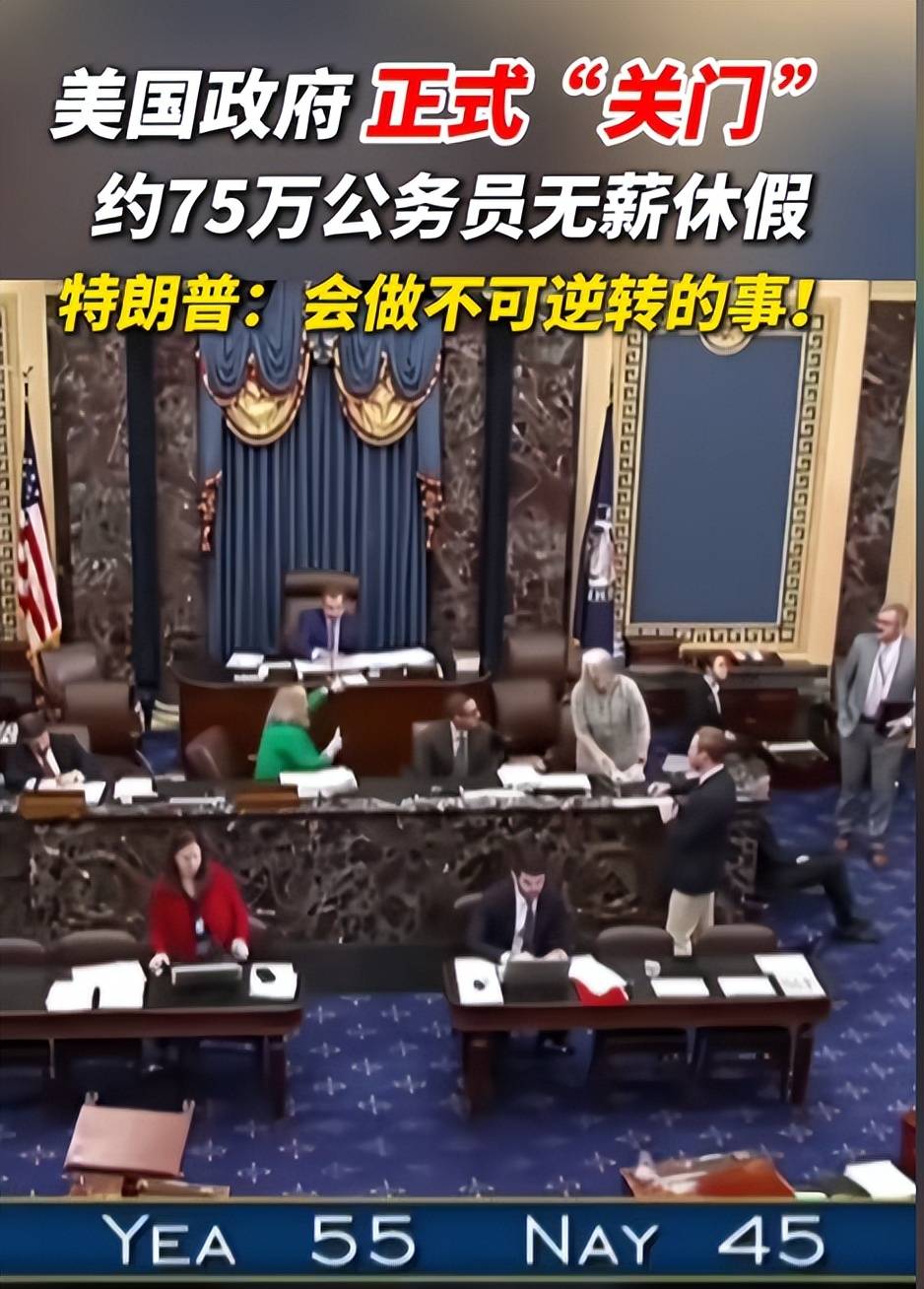
1周损失70亿!美国联邦政府关门重创民生,80万雇员面临失业危机
Sou Hu Cai Jing· 2025-10-07 05:20
Core Points - The article discusses a significant political crisis in the United States, marked by a government shutdown due to a failure to pass a budget before the fiscal year begins on October 1 [1][3] - This shutdown is characterized by a deeper political divide between the Senate and the House, leading to a complete breakdown in negotiations and a more severe impact on government operations compared to previous shutdowns [3][5] Economic Impact - The economic loss from the shutdown is estimated at $7 billion within just one week, with tourism and small businesses being particularly hard hit, suffering nearly $1 billion in losses weekly [5][6] - Key government functions are disrupted, including the release of critical economic data, which hampers decision-making for both policymakers and the market [6] Social Consequences - Low-income families face severe challenges, with potential interruptions in nutritional assistance for pregnant women and infants, as well as delays in housing and heating aid [6] - The shutdown has led to significant staffing reductions in federal agencies, with the Federal Communications Commission (FCC) sending home 81% of its employees, resulting in a halt to essential services [5][6] Political Dynamics - The article highlights the shift in political maneuvering, where the government shutdown is used as a tool for political leverage, affecting the livelihoods of federal employees while Congress members continue to receive their salaries [6][7] - The potential normalization of government shutdowns poses a long-term threat to the stability of governance in the U.S., with ordinary citizens bearing the brunt of the political fallout [7]
美联储压箱底的金融神器,正面临一场大危机
Feng Huang Wang Cai Jing· 2025-09-26 04:31
Core Viewpoint - The discussion around the politicization of the Federal Reserve has shifted from its independence in interest rate decisions to the potential political use of dollar swap lines, which are crucial for global financial stability [1][2]. Group 1: Dollar Swap Lines - Dollar swap lines serve as a liquidity channel for the dollar, activated by the Federal Reserve during crises to prevent stagnation in the dollar-dominated global financial system [1]. - Currently, the Federal Reserve has permanent dollar swap lines with five major central banks: the European Central Bank, the Bank of Japan, the Bank of England, the Swiss National Bank, and the Bank of Canada [1]. - In past crises (2008 and 2020), the Federal Reserve temporarily provided swap lines to nine additional countries, including Brazil, Australia, and Mexico, but these have since been discontinued [1]. Group 2: Political Implications - The influence of former President Trump raises questions about whether the Federal Reserve will provide dollars to foreign central banks during crises, suggesting that such decisions may become increasingly politicized [2]. - The South Korean central bank governor indicated that currency swaps are becoming a highly politicized issue rather than purely economic [2]. - The U.S. Treasury Secretary mentioned that all options, including currency swap lines, are being considered to stabilize the Argentine market, highlighting a differing approach towards various countries [2]. Group 3: Broader Context - The Federal Reserve's role, originally intended to safeguard global financial stability, is increasingly entangled in political maneuvering [3].
特朗普系人马突入美联储,理事会分裂加剧,货币决策陷入政治博弈
Sou Hu Cai Jing· 2025-09-23 03:15
【改写版】 本周二,美联储迎来了一场载入史册的议息会议——这场被华尔街称为三十年来最火药味十足的决策会 议,从开场就弥漫着不同寻常的政治硝烟。 会议前夕,一场惊心动魄的人事变动为这场会议埋下伏笔。白宫首席经济学家斯蒂芬·米兰在参议院以 48:47的刀锋式票数险胜,火速完成宣誓就职程序,填补了前任理事库格勒8月突然离职留下的空缺。令 人玩味的是,库格勒的任期原本应持续至明年,其以赴乔治城大学任教为由的仓促离职引发诸多猜测 ——该校官网至今未见其授课信息,这个反常举动让金融圈议论纷纷。 米兰的任命堪称近年来最具党派色彩的美联储人事变动。共和党议员集体投下赞成票,而民主党方面几 乎全员反对,这种泾渭分明的投票格局实属罕见。与此同时,另一位身处漩涡的理事丽莎·库克在会议 前夕惊险保住职位,上诉法院驳回了白宫的解职动议,这场理事保卫战更凸显当前美联储面临的前所未 有的政治压力。 回望1951年确立央行独立性的《美联储-财政部协议》以来,即便在尼克松时代高达两位数的通胀危机 中,美联储也未曾遭遇如此赤裸裸的政治干预。如今连向来德高望重的主席鲍威尔都难逃政治攻讦,被 公开斥为愚蠢决策者,美联储引以为傲的独立性光环正在急速褪 ...
特朗普撑不住了,降息靴子落地,美联储没有“无痛解决方案”!
Sou Hu Cai Jing· 2025-09-21 02:01
Core Viewpoint - The article discusses the recent interest rate decision by the Federal Reserve, highlighting the political pressures involved and the mixed market reactions following the rate cut. Group 1: Federal Reserve Decision - On September 18, 2025, the Federal Open Market Committee announced a 25 basis point cut in the federal funds rate to a range of 4.25% [5] - This marked the first rate cut of 2025, occurring nine months after three cuts in 2024 [5] - The decision was made with an overwhelming vote of 11 to 1, showcasing internal unity despite external pressures from the government [4] Group 2: Political Pressure - President Trump exerted significant pressure on the Federal Reserve, calling for a more substantial rate cut than the market anticipated [6] - The political dynamics surrounding the Federal Reserve's independence are highlighted, with ongoing interventions from the White House [4][10] Group 3: Market Reactions - Following the rate cut, the market response was unexpected, with the Dow Jones index showing only a slight increase, while Chinese concept stocks surged [8] - This divergence indicates a shift in global capital flows and raises questions about the effectiveness of the Federal Reserve's policies [8][13] Group 4: Economic Context - The article notes that the U.S. economy is facing deeper issues, including a $37 trillion government debt and $2 trillion in corporate debt maturing soon, which the 25 basis point cut does little to address [12][16] - The economic growth rate has declined from 2.5% to 1.5%, adding to the challenges faced by the Federal Reserve [12]
继马斯克后,特朗普矛头对准库克!面对媒体美财长贝森特火上浇油
Sou Hu Cai Jing· 2025-09-19 09:21
Core Points - The article discusses the ongoing conflict between former President Trump and Federal Reserve Board member Lisa Cook, highlighting allegations of mortgage fraud against Cook and the implications for the independence of the Federal Reserve [2][4][17] - The situation escalated with Treasury Secretary Scott B. Benset facing similar allegations, raising questions about the integrity of financial officials in the current administration [9][17] Group 1: Trump vs. Cook - Trump accused Cook of mortgage fraud, claiming she misrepresented properties to obtain favorable loan rates, leading to his attempt to remove her from the Federal Reserve [4][8] - Cook denied the allegations and filed a lawsuit against Trump, asserting that the accusations were baseless and that she would not resign [4][8] - A federal court ruled in favor of Cook, temporarily blocking Trump's attempt to dismiss her, citing a lack of due process and affirming the independence of the Federal Reserve [8][16] Group 2: Benset's Controversy - Treasury Secretary Benset was reported to have similar issues regarding mortgage declarations, where he listed two properties as "primary residences," raising concerns about double standards [9][11] - Experts reviewed Benset's mortgage documents and found no evidence of wrongdoing, suggesting that inconsistencies can occur in loan applications [11][17] - Benset's previous statements about the need for accountability among financial officials now appear contradictory in light of his own situation [11][17] Group 3: Political Implications - The conflicts highlight a broader political struggle, with suspicions that Trump may be using these allegations to undermine Cook, who has opposed his economic policies [15][17] - The potential removal of Cook could shift the balance of power within the Federal Reserve, allowing Trump to appoint more aligned officials [15][17] - The article emphasizes concerns over the independence of the Federal Reserve and the implications of political interference in monetary policy [17]
房贷争议发酵:特朗普点名美联储理事库克辞职 市场忧独立性受损
Sou Hu Cai Jing· 2025-08-21 16:07
Core Viewpoint - The recent demand by former President Trump for Federal Reserve Governor Lisa Cook to resign due to allegations of mortgage fraud has intensified the political scrutiny surrounding the Federal Reserve, raising concerns about its independence [1][4]. Group 1: Allegations and Investigations - Trump publicly called for Cook's resignation, claiming she allegedly falsified documents to obtain favorable mortgage terms, which has drawn the attention of the Department of Justice [1][3]. - The Director of the Federal Housing Finance Agency, Bill Pulte, has sent a letter to the Attorney General accusing Cook of mortgage fraud related to properties in Michigan and Georgia, suggesting she may have inflated her income by approximately 30% when purchasing a property in Atlanta in 2019 [3][4]. - An anonymous official from the Department of Justice confirmed receipt of a criminal investigation report regarding Cook's mortgage issues, although no formal investigation has been initiated yet [3]. Group 2: Political Implications - This incident is not the first time Trump has pressured the Federal Reserve; during his presidency, he criticized Chairman Powell's interest rate policies and hinted at potential dismissals [4]. - Analysts suggest that the allegations against Cook, a key economic official appointed by the Biden administration, may be politically motivated, reflecting the ongoing political battles in the U.S. [4][5]. - The demand for Cook's resignation has raised concerns about the independence of the Federal Reserve, which is considered crucial for economic stability, leading to a 1.2% drop in the financial sector of the New York stock market on the day of the announcement [4]. Group 3: Future Developments - Former Federal Reserve Vice Chairman Stanley Fischer warned that political figures publicly calling for the resignation of a governor sets a dangerous precedent, and the Senate Banking Committee plans to hold an emergency hearing to discuss maintaining the Federal Reserve's independence [5]. - As the investigation progresses, Cook's position may become a focal point of controversy in U.S. politics, highlighting the pressures faced by independent institutions amid increasing political polarization [5].