
教育强国建设

Search documents
扎实推动高等教育事业高质量发展
Xin Hua Ri Bao· 2025-12-08 21:10
编者按坚持以高质量发展统揽全局,教育高质量发展是题中应有之义。高等教育在教育强国建设中发挥 着龙头作用,应从强化党建工作、坚持党建引领、构建现代化高校治理体系以及打造新时代思政"金 课"等方面多措并举、提优增效,为培养德才兼备的高素质人才夯实基础。 ...
以教育家精神引领教师专业标准升级
Bei Jing Qing Nian Bao· 2025-12-03 22:54
Core Viewpoint - The establishment of the Expert Guidance Committee for Teacher Workforce Development aims to strengthen the teaching profession and enhance teacher welfare, aligning with the national strategy for building a strong education system by 2035 [1][2][3]. Group 1: Teacher Workforce Development - The Expert Guidance Committee will provide theoretical guidance, policy consultation, and practical direction to enhance the quality of the teaching workforce [2]. - The national education plan emphasizes the importance of strengthening the teacher workforce as a strategic support for building a strong education, technology, and talent nation [3]. - The overall structure and quality of the 18.85 million teachers in China have achieved a "dual optimization" [4]. Group 2: Teacher Welfare and Recognition - Efforts are being made to improve teacher status and welfare, including raising teacher age allowances and ensuring that average salaries for teachers in compulsory education are not lower than those of local civil servants [4]. - The Ministry of Education is committed to implementing policies that enhance teacher recognition and respect, including a multi-tiered honor recognition system [5][7]. Group 3: Educational Philosophy and Professional Development - The concept of "educationalist spirit" is highlighted as a guiding principle for teachers, encouraging them to embody this spirit in their teaching and professional development [4][5]. - Recommendations include integrating the study of educationalist spirit into teacher training and ongoing professional development [5][7]. - The committee will also focus on optimizing teacher resource allocation and enhancing the management and service levels for teachers [7][8].
贵州省政府常务会议强调:要把培育提升经营主体摆在更加突出位置 下大力优化营商环境
Xin Lang Cai Jing· 2025-12-03 13:20
Group 1 - The meeting emphasized the need to implement the spirit of the 20th National Congress and the 13th Provincial Congress, focusing on high-quality development in the preparation of the "14th Five-Year" plan and special plans [1][3] - It was highlighted that the government should optimize the business environment, deepen state-owned enterprise reforms, and support the growth of private enterprises [1][3] - The meeting called for a coordinated approach to project planning and revitalization of existing projects to support the goals of the "14th Five-Year" plan [1][3] Group 2 - The meeting stressed the importance of implementing Xi Jinping's important discourse on education, aiming to build a strong education province and improve the quality of education at all levels [1][3] - There is a focus on optimizing educational resource allocation based on population trends and urbanization, along with enhancing education funding supervision and performance evaluation [1][3] Group 3 - The meeting aimed to improve the birth support policy system, focusing on key areas such as marriage and child-rearing, to create a birth-friendly society [2][4] - Efforts will be made to reduce the costs associated with childbirth, education, and childcare, while enhancing public services related to housing, employment, and healthcare to stimulate the willingness to have children [2][4]


发展向前 民生向暖|你我的生活将会这样改变
Zhong Guo Jing Ji Wang· 2025-12-01 07:14
Group 1: Employment and Economic Development - The "14th Five-Year Plan" emphasizes the importance of promoting high-quality and full employment as a foundation for improving people's livelihoods and economic development [2][3] - The plan outlines strategies such as implementing an employment-first strategy, enhancing employment promotion mechanisms, and fostering new job opportunities in emerging industries [2][3] - The development of new industries, such as the drone sector, is expected to create significant employment opportunities, with registered drone users and drones doubling compared to the previous year [3] Group 2: Income Distribution and Middle-Income Expansion - The "15th Five-Year Plan" aims to improve the income distribution system, increasing the proportion of residents' income in national income distribution and enhancing labor remuneration in primary distribution [4][5] - The plan targets the expansion of the middle-income group, with projections indicating that the middle-income population could exceed 800 million in the next decade [6] - The focus is on optimizing the income distribution system to balance fairness and efficiency, ensuring that economic growth benefits all segments of society [6] Group 3: Education and Talent Development - The "15th Five-Year Plan" highlights the importance of providing quality education, with initiatives aimed at improving educational resources and aligning them with population changes [8][9] - The plan includes measures to expand free education and explore extending compulsory education, ensuring equitable access to quality education [9][10] - The goal is to cultivate innovative and versatile talents to support national development and enhance the country's competitiveness [9][10] Group 4: Social Security System - The "15th Five-Year Plan" emphasizes the need to strengthen the social security system as a safety net for people's livelihoods and a stabilizer for social order [10][11] - Recent developments include nationwide coverage of basic pension insurance and the establishment of a personal pension system, enhancing the comprehensiveness of social security [11][12] - The plan aims to balance social security expenditures while ensuring continuous investment in people's welfare [12] Group 5: Housing and Real Estate Development - The "15th Five-Year Plan" positions the promotion of high-quality real estate development as a key aspect of improving people's livelihoods and achieving common prosperity [13][14] - The plan addresses the need for a shift in real estate policy from quantity shortages to meeting diverse housing needs, with significant housing projects already completed [14][15] - Emphasis is placed on optimizing housing supply and improving housing quality to ensure that all citizens have access to decent living conditions [15][16] Group 6: Health and Well-being - The "15th Five-Year Plan" includes a commitment to building a healthy China, with a focus on preventive health measures and comprehensive health services [17][18] - The plan aims to improve health indicators, with projections indicating an increase in life expectancy to 80 years by 2024 [17][18] - Strategies include enhancing public health services and promoting healthy lifestyles to reduce disease prevalence and improve overall health outcomes [18][19] Group 7: Public Services and Accessibility - The "15th Five-Year Plan" outlines the goal of advancing the equalization of basic public services, ensuring that all citizens have access to essential services [22][23] - The plan emphasizes the need for improved efficiency in public service resource allocation and addressing disparities in service levels across regions [23][24] - Digital tools and infrastructure development are highlighted as means to enhance service delivery and accessibility, particularly in rural and underserved areas [24][25]
专访周洪宇:探索延长义务教育年限,助力跨越“中等收入陷阱”
2 1 Shi Ji Jing Ji Bao Dao· 2025-11-28 09:21
Core Viewpoint - The "15th Five-Year Plan" emphasizes the construction of a strong education system, focusing on major strategic tasks and policies in the education sector, including the expansion of free education and the exploration of extending compulsory education years [1][11]. Group 1: Education Reform and Development - The plan aims to implement significant educational reforms, including the initiation of a new round of "Double First-Class" construction and the steady expansion of free education [1]. - The integration of education, technology, and talent development is crucial for fostering new productive forces, requiring a unified approach among academic, educational, and market orientations [4][5]. - The expansion of high-quality undergraduate education is prioritized, with plans to increase the number of "Double First-Class" universities from 147 to around 200, focusing on emerging disciplines [5][6]. Group 2: Basic Education and Resource Allocation - The school-age population in China is projected to decline from 233.33 million in 2023 to 140.04 million by 2035, a decrease of 39.98%, necessitating flexible adjustments in educational resource allocation [8][9]. - A three-tiered response mechanism is proposed to monitor and adapt educational resources in line with population changes, ensuring effective resource distribution [9]. - In urban areas with increasing school-age populations, there is a need to enhance educational resource quality and availability, while rural areas should focus on small-scale standardized schools [9][10]. Group 3: Free Education Expansion - The plan suggests gradually expanding free education to include early childhood and high school education, with a focus on supporting economically disadvantaged families [11][12]. - Special education should also be included in the free education framework, with a goal of implementing 15 years of free education for disabled students [12][13]. - The expansion of free education should be gradual and within the limits of national financial capacity to avoid pitfalls seen in other countries [13][15]. Group 4: Compulsory Education and System Reform - The proposal to explore extending compulsory education is seen as a necessary step to enhance national human resources and address social transformation [14][16]. - The current six-three school system may need reform to better align with contemporary educational needs, with suggestions to consider a five-four system or a nine-year integrated system [17][18]. - The adjustment of the education system should be gradual and scientifically structured to meet diverse regional and developmental needs [18].
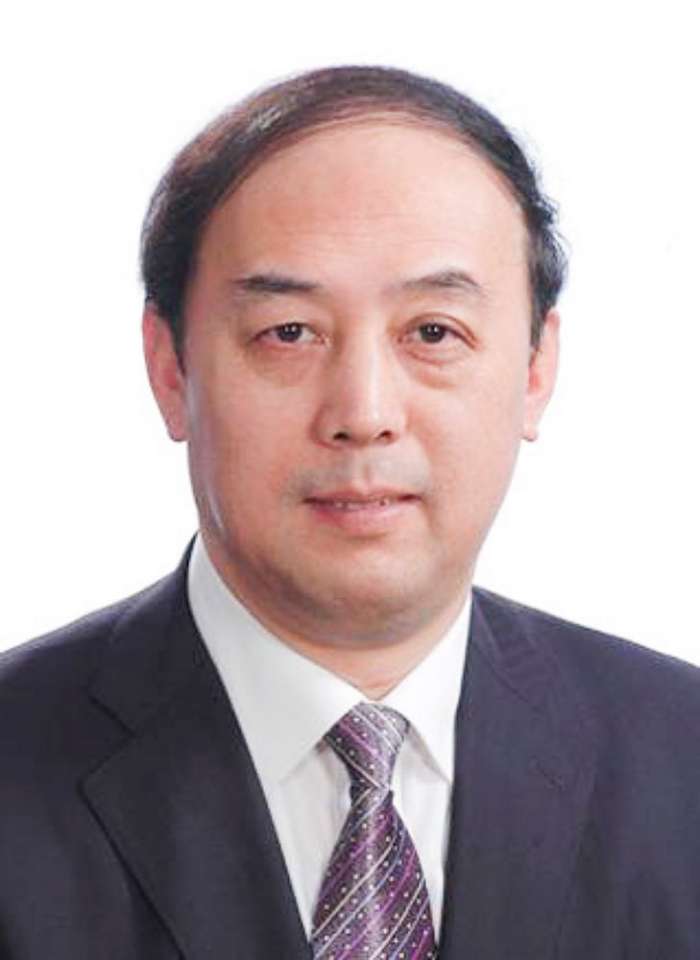
长链条贯通培养,北京基础教育“向未来扎根”
Xin Jing Bao· 2025-11-28 06:03
11月26日,《中共北京市委关于制定北京市国民经济和社会发展第十五个五年规划的建议》正式发布。 建议明确提出,办好人民满意的教育。实行新型集团化办学长链条贯通培养模式,健全学校家庭社会协 同育人机制。 "实行新型集团化办学长链条贯通培养模式",这一表述虽然仅十余字,却蕴含着北京基础教育未来的战 略方向——从以学校为教育单元,转向以集团为新型育人单元的贯通式培养体系。 打破学段壁垒,构建一体化育人生态 事实上,作为全国基础教育改革的先行区,近年来,北京已开始探索建设集团化办学的模式。其初衷是 通过优质校带动薄弱校,实现教育资源的均衡配置。 各区积极建设区级创新学院,统筹整合全区资源,打造区级人才培养基地。市级培养基地则在大范围内 统筹优质资源,选拔各区、各校发现的优秀且有潜质的培养对象进入市级基地深造。 同时,进一步优化和完善"1+3"培养实验模式,推动小学、初中、高中贯通式培养,着力打造具有北京 特色的创新人才培养新模式。 然而,以往集团化办学多聚焦于"横向拓展"——即在同一学段内复制名校品牌与管理模式。各成员校之 间往往停留在硬件共享、师资交流层面,对跨学段衔接、课程体系贯通、育人目标一致性等问题关注不 足 ...
教育法典建议稿取得阶段性成果
2 1 Shi Ji Jing Ji Bao Dao· 2025-11-25 12:18
教育部政策法规司副司长翟刚学指出,教育法典编纂既要立足当前教育实践、植根本土经验,又要回应数字教育等新问题新挑战,为教育强国 建设提供坚实法治保障。 21世纪经济报道记者王峰北京报道 《教育强国建设规划纲要(2024—2035年)》提出,研究编纂教育法典。 21世纪经济报道记者获悉,教育法典建议稿即将完成初稿。这部建议稿包括"总则""基础教育编""高等教育编""职业教育编""终身教育编"等部 分,整合了现行的教育法、义务教育法、高等教育法、职业教育法、学位法、民办教育促进法等法律,并填补了终身教育等领域的法律空白。 在近日举行的教育法典建议稿研讨会上,中国政法大学校长、教育法典编纂课题组总负责人马怀德指出,教育法典编纂是推进教育治理体系和 治理能力现代化的重要抓手,课题组经过近两年的工作,目前初步完成了教育法典建议稿文本初稿的写作,要听取和采纳各方面意见,不断提 升建议稿的科学性、完备性和规范性。 "十五五"时期还将开展更多教育改革项目。《中共中央关于制定国民经济和社会发展第十五个五年规划的建议》提出,探索延长义务教育年 限。《教育强国建设规划纲要(2024—2035年)》提出,建立"市县结合"的基础教育管理 ...

“保持投资合理增长”——政策周观察第56期
一瑜中的· 2025-11-25 10:50
Group 1 - The core message emphasizes the importance of reform and innovation, as highlighted in the speech by the General Secretary on November 21, which calls for a commitment to ideals and the need for continuous self-revolution within the party [2][8] - The speech also stresses the necessity of enhancing the people's sense of gain, happiness, and security, aiming for substantial progress in common prosperity [8] - The focus on utilizing both domestic and international resources for development is reiterated, along with the need for a comprehensive and planned approach to reform [8] Group 2 - Recent high-level inspections by government officials, including Ding Xuexiang and He Lifeng, indicate a strong emphasis on maintaining reasonable investment growth and improving investment efficiency across various sectors [3][9][10] - The inspections covered advanced manufacturing, smart manufacturing, and the development of new-generation information technology, highlighting the importance of optimizing traditional industries and nurturing emerging sectors [9] - The government is actively addressing external pressures on foreign trade and promoting a modern logistics system to enhance competitiveness [10] Group 3 - The State-owned Assets Supervision and Administration Commission (SASAC) held a meeting on November 21 to promote the specialization and integration of central enterprises, focusing on key areas such as new materials and artificial intelligence [13] - The Ministry of Industry and Information Technology launched a commercial trial for satellite IoT services, indicating a push towards integrating industrial internet and artificial intelligence [14] - The education sector is also being reformed to support modernization efforts, with initiatives aimed at enhancing talent cultivation and integrating technology with industry [15]
为推进中国式现代化贡献更多教育力量(权威访谈·学习贯彻党的二十届四中全会精神)
Ren Min Ri Bao· 2025-11-24 00:56
党的二十届四中全会是在向第二个百年奋斗目标进军的新征程上举行的一次十分重要的会议,全会审议 通过"十五五"规划建议,对一体推进教育科技人才发展、解决好人民群众急难愁盼问题、办好人民满意 的教育、推动人的全面发展等提出明确要求、作出重要部署。为深入学习贯彻党的二十届四中全会精 神,本报记者采访了教育部党组书记、部长怀进鹏。 深刻把握教育强国建设的重要意义、丰富内涵和系统部署 记者:如何深刻理解党的二十届四中全会对"十五五"时期教育强国建设作出的战略擘画? 怀进鹏:习近平总书记的重要讲话和全会审议通过的"十五五"规划建议,着眼统筹教育强国、科技强 国、人才强国建设,深刻把握教育的政治属性、人民属性、战略属性,对未来5年教育强国建设作出顶 层设计和战略擘画。 我们深刻认识到,为党育人、为国育才是教育的初心和使命。"培养什么人、怎样培养人、为谁培养 人"是教育的根本问题,也是教育强国建设的核心课题。立德树人关乎党的事业后继有人,关乎国家前 途命运,从这个意义上说,教育是国之大计、党之大计,必须持之以恒回答好这道"必答题"。 我们深刻认识到,教育、科技、人才已经成为支撑引领高质量发展的关键要素。从历次重大科技革命和 产 ...
教育+|“十五五”教育怎么干?教育部部长怀进鹏最新访谈
Xin Jing Bao· 2025-11-23 10:38
新京报讯 据教育部新闻办官方微信公众号"微言教育",11月23日,《人民日报》"权威访谈·学习贯彻党 的二十届四中全会精神"栏目采访教育部党组书记、部长怀进鹏。以下为采访内容。 为推进中国式现代化贡献更多教育力量 深刻把握教育强国建设的重要意义、丰富内涵和系统部署 记者:如何深刻理解党的二十届四中全会对"十五五"时期教育强国建设作出的战略擘画? 怀进鹏:习近平总书记的重要讲话和全会审议通过的"十五五"规划建议,着眼统筹教育强国、科技强 国、人才强国建设,深刻把握教育的政治属性、人民属性、战略属性,对未来5年教育强国建设作出顶 层设计和战略擘画。 我们深刻认识到,为党育人、为国育才是教育的初心和使命。"培养什么人、怎样培养人、为谁培养 人"是教育的根本问题,也是教育强国建设的核心课题。立德树人关乎党的事业后继有人,关乎国家前 途命运,从这个意义上说,教育是国之大计、党之大计,必须持之以恒回答好这道"必答题"。 ——访教育部党组书记、部长怀进鹏 党的二十届四中全会是在向第二个百年奋斗目标进军的新征程上举行的一次十分重要的会议,全会审议 通过"十五五"规划建议,对一体推进教育科技人才发展、解决好人民群众急难愁盼问题 ...