
数字主权

Search documents
他们致力遏制网络仇恨言论,却遭美国指控涉嫌言论审查
Xin Lang Cai Jing· 2025-12-24 15:41
Core Viewpoint - The Trump administration has banned five individuals involved in combating online misinformation and harmful online behavior from entering the United States, labeling them as "radical activists" and accusing them of undermining free speech [7][17]. Group 1: Individuals Involved - Thierry Breton, a former EU commissioner and one of the banned individuals, is noted for his role in digital policy [3][20]. - Josephine Ballon and Anna-Lena von Hodenberg co-manage a German legal aid organization that assists victims of online abuse and threats [4][20]. - Claire Malford operates a UK organization that identifies online misinformation [5][20]. - Imran Ahmed is a UK activist whose organization tracks anti-vaccine content on social media [6][20]. Group 2: Government Actions and Reactions - The Trump administration's actions are seen as an escalation in the dispute between the U.S. and the EU regarding online content and social media regulation [8][18]. - EU officials, including French President Emmanuel Macron, condemned the U.S. decision, claiming it threatens European digital sovereignty [8][18]. - The EU Commission's spokesperson emphasized that their digital rules aim to create a safe and fair market environment for all businesses [8][18]. Group 3: Legal and Regulatory Context - In the U.S., laws protecting free speech grant social media companies the right to set their own content policies, which has led to pressure on platforms to remove content moderation rules perceived to suppress conservative voices [8][18]. - In contrast, the EU has strict laws against hate speech and discriminatory content, exemplified by the Digital Services Act passed in 2022, which mandates transparency standards for social media companies [9][19]. - The EU recently fined Elon Musk's platform X $140 million for issues related to misleading identity and lack of data transparency [19].


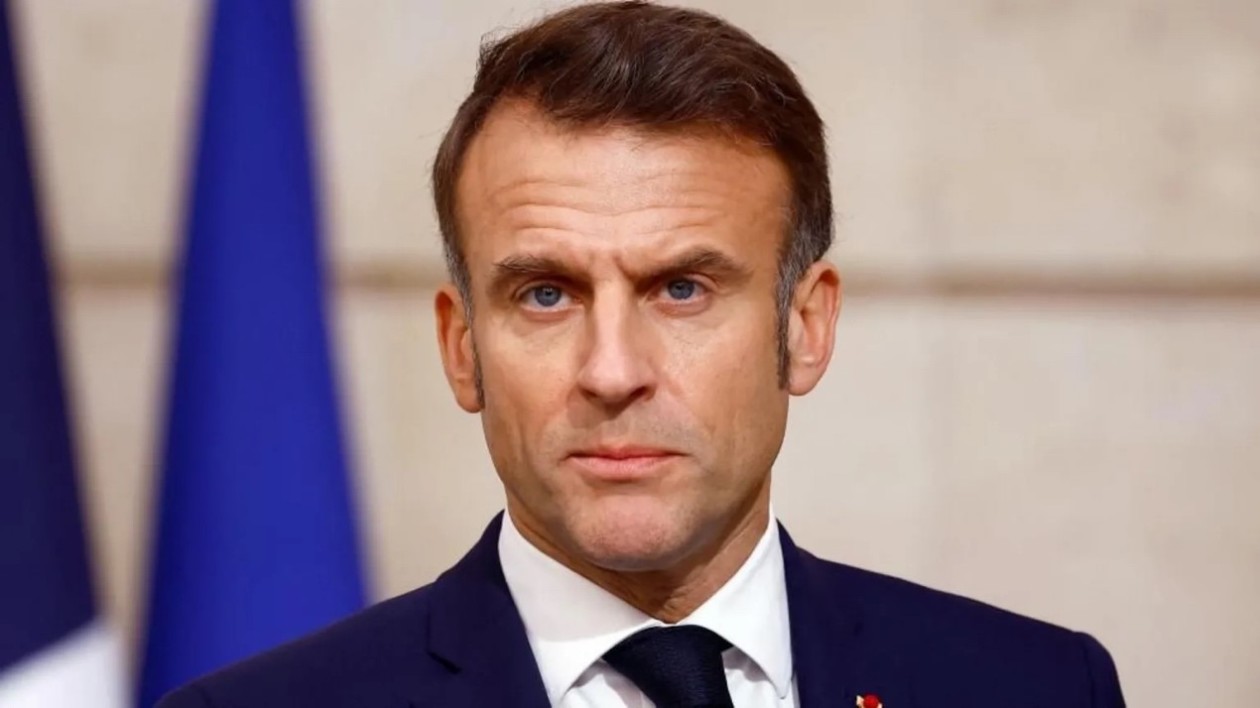
美国实施签证限制,马克龙谴责:这是恐吓和胁迫
Huan Qiu Wang· 2025-12-24 11:43
Group 1 - The U.S. State Department announced visa restrictions on five individuals, including former European Commission member Thierry Breton, which has been condemned by French President Macron as "intimidation" and "coercion" [1][3] - Macron emphasized the need to defend Europe's digital sovereignty and regulatory autonomy in response to the U.S. actions [3] - U.S. Secretary of State Rubio stated that the individuals on the visa ban list had led organized actions to coerce U.S. platforms into content "censorship" and warned of potential expansions to the list if their positions do not change [3] Group 2 - The visa restrictions are perceived as related to ongoing tensions between the U.S. and the EU regarding digital regulation, particularly following the EU's enforcement actions against U.S. tech companies under the Digital Services Act and Digital Markets Act [3] - The EU recently issued its first non-compliance decision under the Digital Services Act, imposing a fine of €120 million on the social media platform X, owned by billionaire Elon Musk [3]
欧盟频开罚单美国态度强硬 欧美关系现数字监管裂痕
Ren Min Ri Bao· 2025-12-24 06:00
Core Points - The European Union (EU) has issued its first non-compliance decision under the Digital Services Act, imposing a fine of €120 million on the social media platform X, owned by Elon Musk, for transparency violations [1] - The EU's investigation into X focuses on the effectiveness of measures taken to combat illegal content and misinformation [1] - The fine is broken down into three parts: €45 million for misleading "blue check" certification, €35 million for non-compliance in advertising transparency, and €40 million for not providing public data access to eligible researchers [1][2] Group 1: EU Actions and Regulations - The EU has been actively enforcing digital regulations, including the Digital Services Act and the Digital Markets Act, against American tech companies [3] - In September, the EU fined Google €2.95 billion for advertising violations and required a corrective action plan [3] - Ongoing investigations include Facebook and Instagram for insufficient public data access and a new inquiry into Google's search results fairness [3] Group 2: US-EU Tensions - The US government has reacted strongly against the EU's fines, claiming that the regulations are unfair to American tech companies [2][4] - The US Secretary of Commerce linked potential reductions in steel and aluminum tariffs to changes in the EU's digital regulatory approach, indicating a direct trade-off [4] - Observers note that the fines reflect a broader struggle for digital sovereignty between the US and EU, with the EU seeking to enhance its digital autonomy in response to the expansion of US tech giants [4]

有人5个月轻松赚85%
Sou Hu Cai Jing· 2025-12-24 01:37
*此图由AI生成 来源| 大猫研究所 猫哥来了! 01 今天不容易,三大指数微涨,但3600只个股收绿,赚钱效应很一般。 其实早盘还行,但是上午长征十二号甲运载火箭首飞,顺利入轨,不过大家最关注的一级火箭回收验证 未取得预期成效,结果出来,热门航天股跌停了不少。 其实这个结果都在预期之内,现在的发射都是为了拿到数据,美国的火箭回收也都是失败多次才成功 的,但市场情绪显然反应过度了,不过这也给了大家低位捡筹码的机会,商业航天星辰大海,现在才刚 起步,今天亏的钱,有大把机会赚回来。 昨天咱们说过贵金属的机会,今天黄金价格突破4500美元,直奔5000美元而去,原因咱们说过,地缘冲 突、美元指数下跌,还有就是各国央行的不断买入,现在预计明年各国央行的购买量会超过600吨,所 以金价可能有波动,但上涨趋势还是很明确的。 02 接下来,重点来了。 作者| 猫哥 确定看好的主线是什么?今天的盘面就是答案。 今天AI各细分板块的大涨,源自于最近的一个券商策略会。 还有几个交易日,2025年就结束了,明年的春季躁动行情能挣多少钱?这几天是非常关键的布局阶段。 今天的交易就指明了一些大主线,咱们来详细说一说。 看看今天的板块排 ...

欧盟为捍卫数字主权频开罚单 美国为维护霸主地位态度强硬 跨大西洋关系现数字监管裂痕(国际视点)
Ren Min Ri Bao· 2025-12-23 22:31
Group 1 - The European Union (EU) has issued its first non-compliance decision under the Digital Services Act, fining Elon Musk's social media platform X €120 million for transparency violations [1] - The EU's investigation into X, initiated on December 18, 2023, focuses on the effectiveness of measures taken to combat illegal content and misinformation [1] - X's violations include misleading design regarding "blue check" certification, non-compliance in advertising database transparency, and failure to provide public data access to qualified researchers, resulting in fines of €45 million, €35 million, and €40 million respectively [1] Group 2 - Following the announcement, Musk criticized the EU's fine, and the U.S. government condemned the EU's regulatory actions as unfair to American tech companies [2] - EU officials assert that the penalties are proportionate to X's user scale and are not targeted specifically at U.S. companies, emphasizing that all firms operating in the EU must adhere to the same standards [2] - The EU has been actively enforcing digital regulations, including significant fines against Google and investigations into other tech companies like Meta and Amazon [2] Group 3 - The EU is assessing Amazon and Microsoft to determine if they qualify as "gatekeepers" in cloud computing, which could lead to market investigations and penalties for non-compliance [3] - Tensions between the U.S. and EU over digital regulation have extended to traditional trade areas, with U.S. tariffs on steel and aluminum linked to EU's regulatory approach [3] - The EU has rejected U.S. claims of "extortion" regarding digital regulations, asserting that these laws are essential for sovereignty and should not be used as bargaining chips [3] Group 4 - Observers note that the increasing fines reflect a broader struggle for digital sovereignty between the U.S. and EU, with the EU seeking to enhance its digital autonomy in response to the expansion of U.S. tech giants [4] - The U.S. has criticized EU regulations as unfair, with recent national security reports highlighting challenges to the "America First" strategy posed by European digital policies [4] - The divergence in worldviews between Europe and the U.S. is seen as a growing trend, with calls for Europe to achieve greater sovereignty and independence [4]

跨大西洋关系现数字监管裂痕(国际视点)
Ren Min Ri Bao· 2025-12-23 22:31
Group 1 - The European Union (EU) has issued its first non-compliance decision under the Digital Services Act, fining Elon Musk's social media platform X €120 million for transparency violations [1] - The EU's investigation into X, initiated on December 18, 2023, focuses on the platform's effectiveness in combating illegal content and misinformation [1] - X's violations include misleading user interface design for "blue check" certification, non-compliance in advertising database transparency, and failure to provide public data access to qualified researchers, resulting in fines of €45 million, €35 million, and €40 million respectively [1] Group 2 - Following the announcement, Musk criticized the EU's fine, and the U.S. government condemned the EU's regulatory actions as unfair to American tech companies [2] - EU officials assert that the penalties are proportionate to X's user scale and are not targeted at U.S. companies, emphasizing that all firms operating in the EU must adhere to the same standards [2] - The EU has been actively enforcing digital regulations, including significant fines against Google and investigations into other tech companies like Meta and Amazon [2][3] Group 3 - The EU is assessing Amazon and Microsoft to determine if they qualify as "gatekeepers" in cloud computing, which could lead to market investigations and penalties for non-compliance [3] - Tensions between the U.S. and EU over digital regulation have extended to traditional trade areas, with the U.S. linking steel and aluminum tariffs to EU's regulatory practices [3] - The EU has rejected the U.S. approach, asserting that digital legislation is a matter of sovereignty and should not be used as a bargaining chip in trade negotiations [3] Group 4 - Observers note that the increasing fines reflect a broader struggle for digital sovereignty between the U.S. and EU, with the EU seeking to enhance its digital autonomy in response to the expansion of American tech giants [4] - The U.S. has accused the EU's digital regulations of being unfair, as highlighted in a recent national security strategy report that views European regulatory actions as challenges to U.S. interests [4] - The divergence in worldviews between Europe and the U.S. is seen as a growing trend, with calls for Europe to achieve greater sovereignty and independence in digital matters [4]
摩洛哥Orange公司接入地中海Medusa海底光缆
Shang Wu Bu Wang Zhan· 2025-12-18 06:25
Core Insights - Morocco's telecom operator Orange has officially connected to the Medusa submarine cable, launching the country's first open submarine cable landing station designed and operated by itself [1] - The Medusa cable is the longest submarine cable in the Mediterranean, spanning 8,700 kilometers with 18 landing points across Europe and North Africa, and a total capacity of 20 Tbps [1] - The connection to the Medusa cable is expected to enhance Morocco's international connectivity, strengthen its digital sovereignty, diversify its international connection routes, and reduce reliance on single infrastructure [1] Infrastructure Development - To connect to the Medusa submarine cable, Orange Morocco built the country's first open submarine cable landing station within 15 months [1] - The landing station covers an area of 3,500 square meters and has an IT capacity of 140 kW, capable of providing scalable international connectivity of up to 20 Tbps [1] - This infrastructure is open to all operators and aims to create a future-oriented submarine cable connection platform, attracting leading technology partners, particularly hyperscale data centers, which is strategically significant for building a robust and competitive national digital ecosystem [1]

美欧“数字战”升级:美国点名多家欧洲巨头,威胁反制“收费”
Di Yi Cai Jing Zi Xun· 2025-12-17 05:12
Core Viewpoint - The U.S. government has publicly named several European multinational companies, warning that if the EU does not change its regulatory approach towards U.S. tech giants, the U.S. will have "no choice" but to retaliate [1] Group 1: U.S. Government's Position - The U.S. Trade Representative (USTR) accused the EU and its member states of discriminatory and harassing legal actions, taxes, fines, and directives against U.S. service providers [1][2] - USTR emphasized that if the EU continues to impose discriminatory measures, the U.S. will utilize all available tools to counter these unreasonable actions [1] - The U.S. has a long-standing dissatisfaction with digital taxes imposed by Europe, viewing them as non-tariff trade barriers that harm American businesses [2] Group 2: Specific Companies Named - The USTR specifically named several European companies, including DHL, SAP, Siemens, Mistral, Capgemini, Publicis Groupe, Accenture, and Spotify, indicating that these companies have enjoyed a favorable operating environment in the U.S. for decades [2][3] - The U.S. has threatened to impose substantial tariffs on countries that implement digital taxes targeting American tech companies [2] Group 3: EU's Response - The EU Commission responded by asserting that it is an open market where rules are applied fairly and equally to all companies operating within the EU [6] - The EU Trade Commissioner acknowledged that while the recent trade agreement framework has stabilized relations with the U.S., unexpected issues may still arise [6] - The EU is committed to protecting its technological sovereignty, indicating a firm stance against U.S. pressures [6][7] Group 4: Regulatory Developments - Recent investigations by the EU into U.S. tech companies like Google, Microsoft, Amazon, and Meta reflect the EU's strong regulatory approach [7] - The EU is also simplifying regulations related to AI, cybersecurity, and data, aiming to reduce administrative burdens on European companies and create more growth opportunities [7]



71岁默克尔主动打破沉默,就欧洲形势指点迷津!中国态度很明确
Sou Hu Cai Jing· 2025-12-17 04:41
Core Viewpoint - Angela Merkel criticizes the U.S. national security strategy, emphasizing that Europe should not be manipulated by Washington, highlighting the need for strategic autonomy in Europe [1][3][7] Group 1: U.S.-Europe Relations - The U.S. views the EU as a troublemaker in its new national security strategy, criticizing various aspects such as immigration policy and political correctness [1] - Trump's aggressive tactics include imposing tariffs on the EU while attempting to divide member states, leading to a perception of Europe as a losing party in the relationship [1][5] - Merkel's remarks serve as a wake-up call for European leaders who have been overly focused on transatlantic ties [1][3] Group 2: Europe's Current Challenges - Europe faces multiple pressures: being treated as a tool by the U.S., losing trust with Russia due to ongoing conflicts, and severe internal inflation leading to economic concerns [5] - The decline in purchasing power in Europe is significant, with a reported decrease of 20-30% over five years, exacerbated by factory relocations to the U.S. [3] - The current European leadership has moved away from Merkel's strategic vision, undermining the potential for cooperation with Russia and contributing to the ongoing crisis [3][5] Group 3: Strategic Autonomy and Cooperation - Merkel advocates for a balanced approach, suggesting that Europe should not completely distance itself from the U.S. but must protect its interests [3] - She emphasizes the importance of AI regulation and digital sovereignty, warning that losing control over algorithms could jeopardize Europe's information sovereignty [3] - Merkel calls for Europe to engage in substantial cooperation with China, particularly in areas like technology and green transformation, to regain strategic confidence [5][7] Group 4: Future Directions for Europe - The choice for Europe is clear: either continue to be a pawn in U.S. strategies or reclaim strategic autonomy by fostering genuine partnerships with countries like China [5][7] - Merkel's statements reflect a broader need for Europe to navigate a multipolar world without being dominated by U.S. directives or ideological constraints [7] - The urgency for Europe to recalibrate its relationships and focus on pragmatic cooperation is emphasized, particularly in the context of digital investment and technological advancement [5][7]
毛里塔尼亚总统启动覆盖边境地区的电子通信服务项目
Shang Wu Bu Wang Zhan· 2025-12-13 15:42
数字化转型、创新与行政现代化部长表示,近年来国家数字基础设施取得前所未有的发展,网络覆 盖提升了350%,光纤网络延伸扩大了360%。 该项目覆盖区域自恩迪亚哥(N'Diago)延伸至恩贝克特·拉胡瓦什(N'Beykett Lahouach),整体 建设分三期实施:第一期覆盖恩迪亚哥至乌勒德延盖(Ould Yengé)段;第二、三期分别覆盖乌勒德延 盖至法萨拉(Fassala)及法萨拉至恩贝克特·拉胡瓦什区段。项目通过建设通信基站和无线链接系统, 实现2G网络覆盖面积超过14000平方公里,4G网络覆盖面积超过6000平方公里。项目建成后,使超过 400个社区、约23万名边境居民首次接入国家通信服务,大幅改善当地获取数字化公共服务的能力,包 括民事登记、教育、医疗、行政手续及电子金融交易等。部分过去依赖邻国通信网络的村镇如今可使用 本国网络,有助于提升数据安全性、减少跨境数据泄露风险,并增强国家在边境地区的数字主权。 该项目总投资约3137万欧元,由毛里塔尼亚国家监管局管理的普遍服务基金提供资金支持,旨在加 强边境地区数字基础设施,改善偏远地区居民的通信接入条件,为当地经济社会发展提供支撑。 (原标题:毛里塔 ...