
期货市场服务实体经济

Search documents
多项数据优异 期市服务实体经济效能提升
Qi Huo Ri Bao· 2025-09-11 17:00
Group 1 - The core viewpoint of the article highlights the significant growth of China's futures market, with total funds exceeding 1.9 trillion yuan and a year-on-year increase in trading volume and value of 21.7% and 22.9% respectively from January to August 2023 [1] - The futures market's strong performance is driven by three main factors: policy guidance, improved macroeconomic environment, and inherent demand within industries [1][2] - The stability of the trading-to-position ratio, approximately 0.77, indicates a mature futures market with a focus on long-term hedging rather than short-term speculation [2] Group 2 - The futures market plays a crucial role in supporting the stability of industrial supply chains and enhancing the quality of economic development by providing effective risk management tools for enterprises [3] - The proportion of industry clients in the off-exchange derivative trading business of futures companies has surpassed 50%, reflecting an optimized client structure in risk management subsidiaries [2] - Future growth opportunities in the futures market include innovation in products and tools, nurturing market participants, and building a technology-enabled system to enhance trading efficiency and risk management capabilities [4]
以场外衍生品为支点 推动实体经济高质量发展
Qi Huo Ri Bao Wang· 2025-09-05 01:13
Core Insights - The article emphasizes the critical role of the real economy in China's economic development, highlighting the importance of focusing on the real economy for long-term growth [1] - The recent data shows that the proportion of industrial clients in the OTC derivatives trading business of futures companies has surpassed 50% for the first time during the "14th Five-Year Plan" period, indicating a significant increase in risk management awareness and capabilities among enterprises [1][2] Group 1: Market Function and Client Engagement - The understanding of the functions of the futures market has deepened among industrial clients, leading to an increased willingness to participate in futures and derivatives trading as effective tools for managing price risks and stabilizing profits [2] - The rise in the proportion of industrial clients' positions reflects a growing trend of utilizing OTC derivatives to address market risks [2] Group 2: Service Upgrades and Product Innovation - Futures companies' risk management subsidiaries have enhanced their services by investing in professional team building, service model innovation, and product development, providing high-quality, efficient, and personalized services to industrial clients [3] - Innovative OTC derivative tools and tailored options structures have been developed to meet the diverse risk management needs of industrial clients, attracting more participation in OTC derivatives trading [3] Group 3: Policy Support and Market Environment - A series of policies have created a favorable environment for the futures market to serve the real economy, including the implementation of the Futures and Derivatives Law and the core requirement of "financial services for the real economy" from the Central Financial Work Conference [4] - Regulatory bodies are encouraging futures companies to innovate business models and deepen cooperation with the real economy, thereby lowering the barriers and costs for industrial clients to participate in the futures market [4] Group 4: Integration and Collaboration - The integration of futures and spot markets is identified as a key direction for futures companies and their risk management subsidiaries to support the development of the real economy [6] - Strengthening collaboration with industrial clients in the spot market through basis trading and warehouse receipt services can provide accurate price signals and risk management support [6] Group 5: Education and Capacity Building - Despite the increasing participation of industrial clients in the futures market, there remains a need for enhanced market cultivation and investor education to address gaps in understanding market mechanisms and risk management tools [7] Group 6: Innovation and Internationalization - The innovation and internationalization of the futures market are crucial for enhancing the international competitiveness and development space of China's real economy [8] - Futures companies should promote market innovation and explore new business models to expand international market opportunities for industrial clients [8]
郑商所修订鲜苹果期货业务细则
Guo Ji Jin Rong Bao· 2025-08-30 16:37
Core Viewpoint - The Zhengzhou Commodity Exchange has made significant revisions to the rules governing fresh apple futures to enhance the service quality of the futures market to the real economy and align futures standards more closely with the actual conditions of the spot industry [1][4]. Summary by Relevant Sections Rule Optimization - The revisions include optimizing the alternative delivery price mechanism and further detailing delivery standards to better align with industry practices [1][3]. - The delivery unit has been increased from 10 tons to 20 tons, which reduces the frequency of scattered deliveries and lowers operational costs related to transportation, storage, and inspection [1][3]. - A unified standard for packaging has been established, requiring the use of "iron baskets + white transparent plastic bags" for delivery apples, which enhances delivery and quality inspection efficiency [1][3]. - The delivery process for truck (ship) board has been optimized to shorten delivery times, clarify time nodes for each step, simplify processes, and define responsibilities and special handling procedures [1][4]. Industry Response - Industry representatives believe the revisions address key pain points in current apple spot trading and futures delivery, promoting better integration between spot and futures markets [2][3]. - The adjustments in delivery units and standards are seen as more aligned with actual trading practices, which could attract more industry participants to the apple futures market [2][4]. - The optimization of the delivery process is expected to reduce disputes that have previously arisen during delivery [2][3]. Future Implications - The revisions are anticipated to enhance market integrity by implementing stricter member reviews and linking pre-reporting deposits to curb false reporting [3]. - The changes are expected to improve the efficiency of price discovery and risk management functions in the apple industry, contributing to its high-quality development [4].
打造期货市场服务实体经济新生态
Qi Huo Ri Bao Wang· 2025-08-25 00:56
Core Viewpoint - The current "anti-involution" policy in China is guiding industries from a focus on scale expansion and price competition to a model emphasizing quality and value, which is also reflected in the futures market's shift towards deeper functional development [1] Group 1: Industry Development - The futures market in China has seen positive outcomes in terms of the speed and quantity of new product launches, trading volume growth, and improved market regulation [1] - The "anti-involution" policy is creating broader opportunities for the futures industry to support high-quality development of the real economy [1] - However, industry institutions still face challenges in utilizing futures tools for risk management, including insufficient professional capabilities, data barriers, and funding constraints [2] Group 2: Challenges for Industry Clients - Many enterprises, especially small and medium-sized ones, lack the professional capacity to effectively use hedging tools, including a misunderstanding of risk hedging tools and weak design capabilities for hedging plans [2] - Industry clients need to enhance their ability to gather and process information related to spot supply and demand, futures prices, macro policies, and international markets [2] - Financial pressures and costs are creating a "financial burden" for enterprises in hedging, necessitating higher funding management capabilities due to the margin system and leverage characteristics of futures trading [2] Group 3: Market Management Perspectives - To enhance the effectiveness of futures tools, the market must prevent irrational price fluctuations and establish a proactive, transparent expectation management mechanism [3] - Recommendations include improving the delivery system and establishing a layered warning and response mechanism for significant price discrepancies between futures and spot markets [3] - A collaborative model involving exchanges, futures companies, and leading industry enterprises for building delivery warehouses is suggested to address high storage costs and transportation issues [3] Group 4: Evolving Industry Needs - The demand from the real industry for the futures market is evolving, requiring a shift from traditional management to a composite model that includes exposure management and basis management [4] - The futures industry is experiencing a favorable policy environment, which supports the functionality and role of futures in the market [4] - Futures companies should focus on investor education to bridge the gap between the desire to use futures and the ability to do so effectively [4] Group 5: Service Innovation and Collaboration - Futures companies should continuously innovate service tools and business models to enhance their effectiveness in serving the real economy [6] - Suggestions for service tool innovation include the comprehensive application of OTC options, rights-inclusive trading, and cross-border risk management tools [6] - Collaboration among futures companies to share best practices and leverage comparative advantages is encouraged to improve industry service [7] Group 6: Talent Development - The cultivation of a professional talent pool is essential for the sustainable innovation and development of the industry [7] - A recommendation is made to build a composite team of industry researchers and futures analysts to better understand and address the real pain points of enterprises [7]
以高质量服务深耕产业沃土,以高水平开放拥抱世界风云→
Qi Huo Ri Bao· 2025-08-24 23:52
Core Viewpoint - The futures market's high-level opening is essential for enhancing international competitiveness and supporting the country's higher-level opening [2] Group 1: Market Development and Internationalization - The domestic futures market has accelerated its internationalization process, with specific futures contracts attracting foreign traders, thereby enhancing global price influence [2] - Futures exchanges are establishing delivery warehouses abroad and building cross-border logistics networks, which expands market depth and positions Chinese futures prices as important references in global trade [2] - The trend of international commodity market risks returning to Chinese market prices highlights the influence and fairness of the Chinese market [2] Group 2: Cross-Border Cooperation and Investor Education - Encouragement for domestic and foreign exchanges to collaborate on contract mutual listing and joint listing to enhance international compatibility of the Chinese futures market [3] - The importance of optimizing cross-border connectivity mechanisms, drawing on successful experiences like the Shanghai-Hong Kong Stock Connect, to explore a "Futures Connect" model [3] - Emphasis on educating foreign investors about Chinese market rules through multilingual platforms and online training tools [3][4] Group 3: Opportunities and Challenges for Futures Companies - Domestic futures companies are increasingly venturing into international markets, providing overseas risk management and financing services for Chinese enterprises [5] - The international business of some futures companies has become a significant growth point, driven by policy support and increasing demand for risk management from domestic enterprises [5] - Challenges include cross-border regulatory differences, high compliance costs, and a shortage of professionals skilled in both derivatives and cross-border communication [6][7] Group 4: Enhancing Service to the Real Economy - The futures market is transitioning from a focus on product and tool innovation to enhancing its functions to better serve the real economy [8][9] - Industry participants face challenges in using futures tools for risk management, including insufficient professional capabilities and data barriers [9][10] - Recommendations for industry enterprises to improve risk management awareness and establish internal risk control systems [10] Group 5: Innovations in Service Tools and Business Models - Futures companies are encouraged to strengthen innovation capabilities and deepen service in key areas to enhance their effectiveness in serving the real economy [14] - Suggestions for service tool innovations include the comprehensive application of OTC options and cross-border risk management tools [14] - The importance of building a professional team that combines industry researchers and futures analysts to understand and address the real pain points of enterprises [15]

大商所副总经理王玉飞一行到中物联座谈交流
Zheng Quan Shi Bao Wang· 2025-08-22 11:48
Core Insights - The meeting between Liu Nengwen, Deputy Secretary of the China Logistics and Purchasing Federation, and Wang Yufei, Deputy General Manager of Dalian Commodity Exchange, focused on enhancing collaboration in various areas to promote high-quality development in the industry [1] Group 1: Collaboration and Development - Liu Nengwen expressed a willingness to deepen cooperation with Dalian Commodity Exchange in areas such as new product listings, market cultivation, and research projects [1] - Wang Yufei provided an overview of the Dalian Commodity Exchange's development and the trading and delivery situation of the log futures, emphasizing the need for further collaboration in futures and spot market integration [1] - Both parties aim to enhance the role of the futures market in serving the real economy [1]
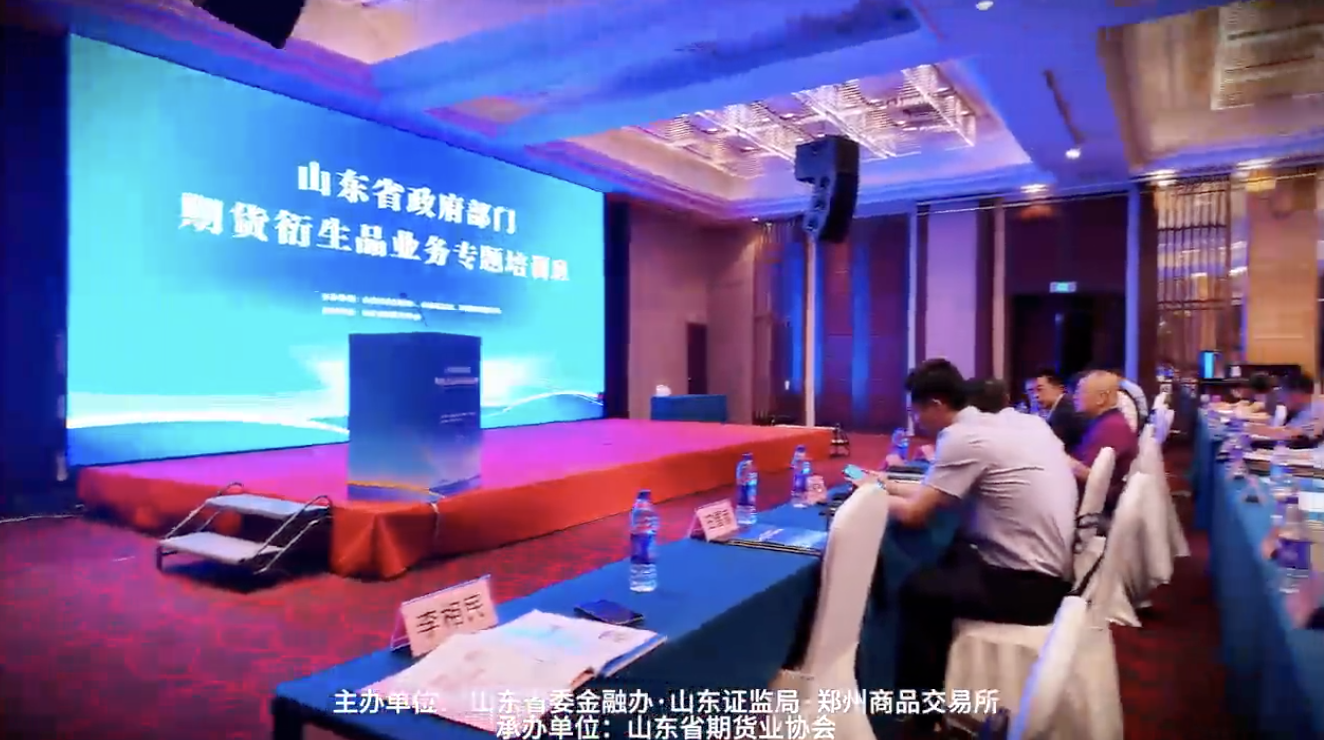
山东省政府部门期货衍生品业务专题培训在济南召开
Qi Lu Wan Bao· 2025-08-22 02:39
Core Viewpoint - The training program aims to enhance the understanding of futures markets among government officials to better support the real economy and improve risk management practices [1][4]. Group 1: Importance of Futures Market - The futures market plays a crucial role in risk management for enterprises, stabilizing operations and enhancing pricing transparency in the commodity trade [3][4]. - Futures prices have become an important reference for spot trade, improving market fairness and transparency, and increasing China's pricing influence in international markets [3]. - The futures market acts as a "shock absorber" for enterprises, especially during periods of significant commodity price fluctuations, thereby stabilizing production management expectations [3]. Group 2: Development in Shandong Province - Shandong, as a major industrial and agricultural province, has a solid foundation for futures market development, supported by various government departments [3][4]. - The futures market in Shandong is experiencing steady growth, effectively serving the real economy [3]. Group 3: Regulatory Challenges - The complexity of futures market mechanisms, such as margin requirements and settlement processes, poses higher demands on regulatory bodies [3][4]. - Regulatory agencies need to monitor transactions in real-time and address any violations promptly, while various departments are involved in different aspects of risk management and compliance [3][4]. Group 4: Training Objectives and Outcomes - The training aims to deepen the understanding of futures tools among government officials and promote inter-departmental learning and collaboration [4][6]. - The program provides a platform for discussing compliance issues related to the use of futures tools, helping participants clarify the internal logic of how futures markets serve the real economy [6][7]. - Participants expressed a commitment to leverage this training to assist more enterprises in effectively using futures and derivatives for risk management, contributing to high-quality economic development in Shandong [7].

推动液化天然气等重要能源品种上市
Zheng Quan Ri Bao· 2025-08-21 06:19
Core Viewpoint - The Chinese futures market has made significant progress in enhancing its service capabilities, price influence, and integration into national development, thereby supporting the stable operation of the real economy and addressing external risks [1][2]. Group 1: Market Development and Service Capabilities - The futures market's service capabilities have been continuously enhanced, with a richer variety of products and tools introduced, including important futures varieties like polysilicon and aluminum alloy since the end of last year [1]. - The participation of industrial clients has increased, with a 12.2% year-on-year growth in daily trading volume from industrial clients in 2024, and the total holding of 48 major varieties by industrial clients exceeding 200 million tons [1]. - The number of listed companies participating in hedging has maintained growth for eleven consecutive years [1]. Group 2: Price Influence and Market Integration - The influence of futures prices has been steadily increasing, with the opening up of the futures market allowing for more foreign participation, expanding the number of futures and options available to qualified foreign investors to 91 [1]. - Among the listed commodity futures and options, 84 are industrial products, accounting for 64%, providing strong support for the stability of manufacturing-related market entities amid increasing uncertainties [1]. Group 3: Future Directions and Strategic Focus - The China Securities Regulatory Commission (CSRC) aims to enhance service capabilities and levels, focusing on supporting the real economy and national strategies [2]. - Key future initiatives include enriching product supply by promoting the listing of important energy varieties like liquefied natural gas, and expanding the coverage of futures and derivative tools [2]. - The CSRC plans to advance high-level opening of the futures market, increasing the range of futures and options available for foreign investors [2]. - There will be a focus on improving market services, guiding leading enterprises to utilize the futures market effectively, and supporting small and medium-sized enterprises in risk management [2]. - The industry will enhance research-driven development to improve futures market research capabilities, addressing the needs of the national strategy and real economy [3].
为千万企业提供“期货答卷” ,做保障国家粮食安全的“压舱石”
Qi Huo Ri Bao· 2025-08-20 23:48
Group 1 - The forum focused on how the futures market can assist the oilseed and oil industry in responding to trade changes [2][3] - The oilseed and oil industry is crucial for food security and economic stability in China, with challenges in stabilizing planting areas and managing price risks [3][4] - The Zhengzhou Commodity Exchange (ZCE) has developed oilseed futures over the past decade, becoming an essential risk management tool for industry players [3][4] Group 2 - The global economic landscape is undergoing significant changes, leading to increased trade uncertainties and price volatility in the oilseed and oil market [3][4] - The domestic supply of edible vegetable oil remains robust despite a reduction in imports, with global supply continuing to increase [5] - The development of the biodiesel industry is significantly impacting global oilseed supply and demand, with nearly 20% of vegetable oil used for biodiesel [5][6] Group 3 - The ZCE is committed to enhancing market functions and service quality to help the oilseed industry navigate global trade challenges [4] - The domestic market for rapeseed and peanut oil is expected to face risks due to fluctuations in supply and demand, influenced by weather conditions and import levels [6][7] - The peanut industry in China is transitioning from a net exporter to a net importer, indicating a shift in trade dynamics [7][8] Group 4 - The future of the peanut market is projected to grow, driven by consumption, industry upgrades, and technological innovation [8] - The oilseed market is experiencing a divergence in oil and meal prices, with strong oil prices supported by biodiesel demand while meal prices remain under pressure [8]

期货市场多维赋能 助力实体经济高质量发展
Zhong Guo Zheng Quan Bao· 2025-08-20 20:17
Core Viewpoint - The futures market is increasingly integrated into the national development framework, enhancing its role as a professional risk management platform amid global economic uncertainties [2][3]. Group 1: Futures Market Development - The futures market's ability to serve the real economy is continuously improving, with a diverse range of products being introduced, including polysilicon and aluminum alloy futures [2]. - As of now, there are 131 listed commodity futures and options, expanding the market's reach across various sectors of the national economy [2]. - The daily trading volume of industrial clients increased by 12.2% year-on-year in 2024, with the total holding of 48 major products equivalent to over 200 million tons in the spot market [2]. Group 2: Price Influence and Application - The influence of futures prices is on the rise, with various hedging and arbitrage strategies being widely adopted in response to external uncertainties [3]. - Futures prices are becoming a reference for international trade pricing, with the number of foreign investors participating in domestic futures options expanding to 91 [3]. Group 3: Support for National Strategies - The futures market is contributing to rural revitalization and food security through initiatives like "insurance + futures" to stabilize farmers' incomes [3]. - The market is also supporting high-quality development in the manufacturing sector, with 84 of the listed products being industrial goods, accounting for 64% of the total [3]. Group 4: Future Directions for Zhengzhou Futures Exchange - Zhengzhou Futures Exchange aims to enhance its service capabilities by diversifying product offerings, including the development of sunflower seed oil futures and other commodities [4][5]. - The exchange plans to improve market operation and service quality, focusing on tailored strategies for individual products and enterprises [5]. - There is a commitment to expand international cooperation and enhance the global pricing influence of the Zhengzhou futures market [5][6]. Group 5: Regulatory and Institutional Support - The China Securities Regulatory Commission (CSRC) emphasizes the need for high-level market openness and plans to introduce more products to meet risk management needs [6][7]. - The CSRC will enhance service models for industries, guiding enterprises in utilizing the futures market for stable operations [6]. - There is a focus on improving research capabilities to support the futures market's development in alignment with national strategies [7].