激光雷达技术

Search documents
激光雷达先驱,或破产,都怪大客户?
3 6 Ke· 2025-11-18 02:05
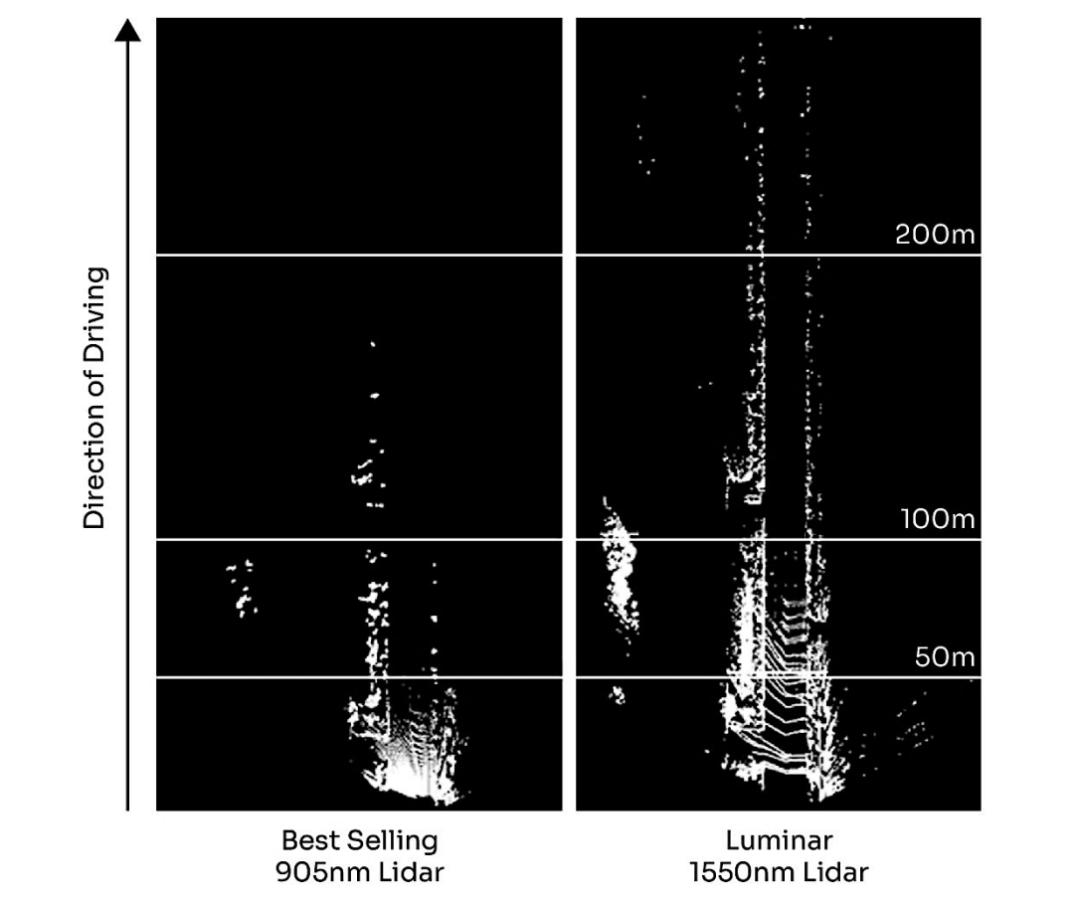
Core Insights - Volvo has canceled its five-year contract with Luminar due to the latter's failure to meet contractual obligations, aiming to limit supply chain risks [1] - Luminar is facing severe financial difficulties, including loan defaults and potential bankruptcy, as it struggles to maintain its business operations [1][8] Company Overview - Luminar, founded by Austin Russell in 2012, specializes in advanced lidar technology for automotive applications, utilizing a 1550nm wavelength for enhanced safety and performance [2][6] - The company has historically relied on partnerships with major automotive manufacturers, notably Volvo, which has significantly contributed to its credibility and market presence [7] Recent Developments - The conflict between Luminar and Volvo became public on October 31, when Volvo announced it would not use Luminar's lidar in its upcoming models, leading Luminar to claim significant losses and halt further commitments [9] - Luminar's CEO has indicated a strategic shift towards non-automotive markets and is considering asset sales or a complete business sale due to uncertainties stemming from the Volvo partnership [8][10] Market Context - The global automotive lidar market is projected to grow significantly, with a compound annual growth rate (CAGR) of 28% from 2024 to 2030, indicating increasing competition and demand for lidar technology [11] - Chinese lidar manufacturers are gaining market share, with companies like Hesai Technology and RoboSense leading the market, while Western firms face challenges in cost and market penetration [15][14] Technological Insights - Luminar's lidar technology offers superior resolution and detection range compared to competitors, with a resolution potential 17 times greater than lower wavelength lidar systems [4][2] - The lidar industry is evolving, with advancements in technology such as VCSELs and new receiver designs enhancing performance and reducing costs, which may impact Luminar's competitive position [16]


激光雷达先驱,或破产,都怪大客户?
半导体行业观察· 2025-11-18 01:40
Core Viewpoint - Volvo has canceled its five-year contract with Luminar due to Luminar's failure to meet contractual obligations, highlighting the increasing tensions between the two companies and Luminar's precarious financial situation, which may lead to bankruptcy [2][12][15]. Group 1: Luminar's Technology and Market Position - Luminar, founded by Austin Russell in 2012, has developed advanced lidar technology using a 1550nm wavelength, which offers significant advantages in safety and performance for automotive applications [4][6]. - The company claims that its 1550nm lidar can achieve 17 times the photon emission potential and four times the detection range compared to lower wavelength alternatives [6][8]. - Luminar's lidar technology has been integrated into various automotive models, with Volvo being a key partner, which has significantly contributed to Luminar's credibility and market presence [10][11]. Group 2: Financial Performance and Strategic Challenges - In Q3 2025, Luminar reported revenues of $18.7 million, a 20% quarter-over-quarter increase, primarily driven by sensor deliveries and non-recurring engineering revenue [13]. - The CEO emphasized a strategic shift towards non-automotive markets and the importance of LSI photon business, which now accounts for one-third of Luminar's annual revenue [13]. - The uncertainty surrounding the partnership with Volvo has raised concerns about Luminar's future, leading to potential asset sales or business divestitures [13][14]. Group 3: Industry Trends and Competitive Landscape - The global automotive lidar market is projected to grow from $861 million in 2024 to $3.804 billion by 2030, with a compound annual growth rate (CAGR) of 28% [17]. - Chinese lidar manufacturers are gaining market share, with companies like Hesai Technology and RoboSense leading the market, while Western firms face challenges due to higher costs and slower adoption rates [20][21]. - The average price of lidar systems is expected to decrease significantly, with entry-level models projected to cost around $200 post-2025, driven by advancements in technology and increased production [23].

航天员推迟回家,“罪魁祸首”是空间碎片
Ke Ji Ri Bao· 2025-11-06 01:27
Core Viewpoint - The Shenzhou-20 manned spacecraft has been delayed due to a suspected impact from space debris, prompting an analysis of the risks and potential preventive measures [1] Group 1: Sources of Space Debris - Space debris primarily originates from human space activities, with over 40% coming from defunct spacecraft and related components, including retired satellites and rocket remnants [2] - Operational waste generated during space missions also contributes significantly to space debris, including intentionally or unintentionally discarded items [2] - Secondary debris from collisions and explosions of spacecraft is a key factor in the increasing amount of space debris [3] Group 2: Dangers of Space Debris - Even small debris, less than 1 centimeter in diameter, can cause fatal damage to spacecraft due to its high velocity, typically ranging from 7 to 10 kilometers per second [4] - Millimeter-sized debris can scratch spacecraft windows and solar panels, while centimeter-sized debris can penetrate the spacecraft's shell, potentially causing fuel leaks or explosions [4] - A critical density of debris in low Earth orbit can lead to a "domino effect," creating a debris cloud that could severely hinder future space activities [4] - Astronauts have minimal protection against space debris, with even 0.1 millimeter fragments posing a risk of injury [4] Group 3: Technologies to Mitigate Impact Risks - Current methods for predicting space debris impact risks rely on monitoring technologies and data analysis models, employing a combination of active avoidance, passive protection, and debris removal strategies [5] - Optical observation techniques utilize telescopes and cameras to detect debris, while radar monitoring provides all-weather, long-range detection capabilities [5][6] - New technologies, such as laser radar and multi-sensor fusion, enhance debris tracking accuracy and real-time updates on debris locations [6] - For larger debris over 10 centimeters, spacecraft typically perform orbital maneuvers to avoid collisions, while smaller debris is managed through passive protective measures [6]
长光华芯20251028
2025-10-28 15:31
Summary of Long光华芯's Q3 2025 Earnings Call Company Overview - **Company**: 长光华芯 (Changguang Huaxin) - **Industry**: Optical Communication and Laser Technology Key Financial Performance - **Q3 2025 Revenue**: 339 million CNY, a year-on-year increase of 67.42% [2][4] - **Net Profit**: 20.94 million CNY, continuing the growth trend [2][4] - **Product Capacity**: EML and LRP products have a basic capacity of 5 million units, with potential annual production capacity reaching 20 million units if all MOCVD equipment is utilized [4][10] Business Segments - **Industrial Business**: Accounts for approximately 65% of total revenue, showing strong growth [2][8] - **Special Industry**: Represents about 20% of revenue, with significant growth observed [2][17] - **Optical Communication**: Comprises around 10% of revenue, facing some geopolitical challenges but still maintaining growth [2][8] Product Development and Innovation - **Laser Radar Technology**: Continuous updates and entry into new markets such as robotic vision [2][6] - **New Product Launch**: Introduction of the 200 mW BLB blue laser, attracting customer interest for sample testing [2][6] Market Dynamics - **Geopolitical Impact**: U.S. market demand for 800G and above modules is significant, influencing company strategy and operations [2][7] - **Global Chip Shortage**: The optical chip market is expected to remain in short supply in 2026, particularly for 800G modules in the U.S. [2][8] Strategic Focus - **Long-term Strategy**: Emphasis on high-end markets, aiming to compete with U.S. companies like Coherent [4][21] - **Investment Opportunities**: The company is positioned for growth in the optical communication sector, with potential breakthroughs in the U.S. market [2][23] Future Outlook - **Growth Potential**: The company anticipates continued growth in the industrial and special application sectors, with a focus on high-margin products [17][23] - **Market Readiness**: Preparations for increased production and testing capabilities to meet anticipated demand in 2026 [9][12] Conclusion - **Overall Assessment**: 长光华芯 is on a solid growth trajectory with a clear focus on high-end optical communication products and laser technologies, supported by strong financial performance and strategic market positioning [21][23]

禾赛已连续7个月车载主激光雷达市占率第一
Zheng Quan Ri Bao Zhi Sheng· 2025-10-23 11:11
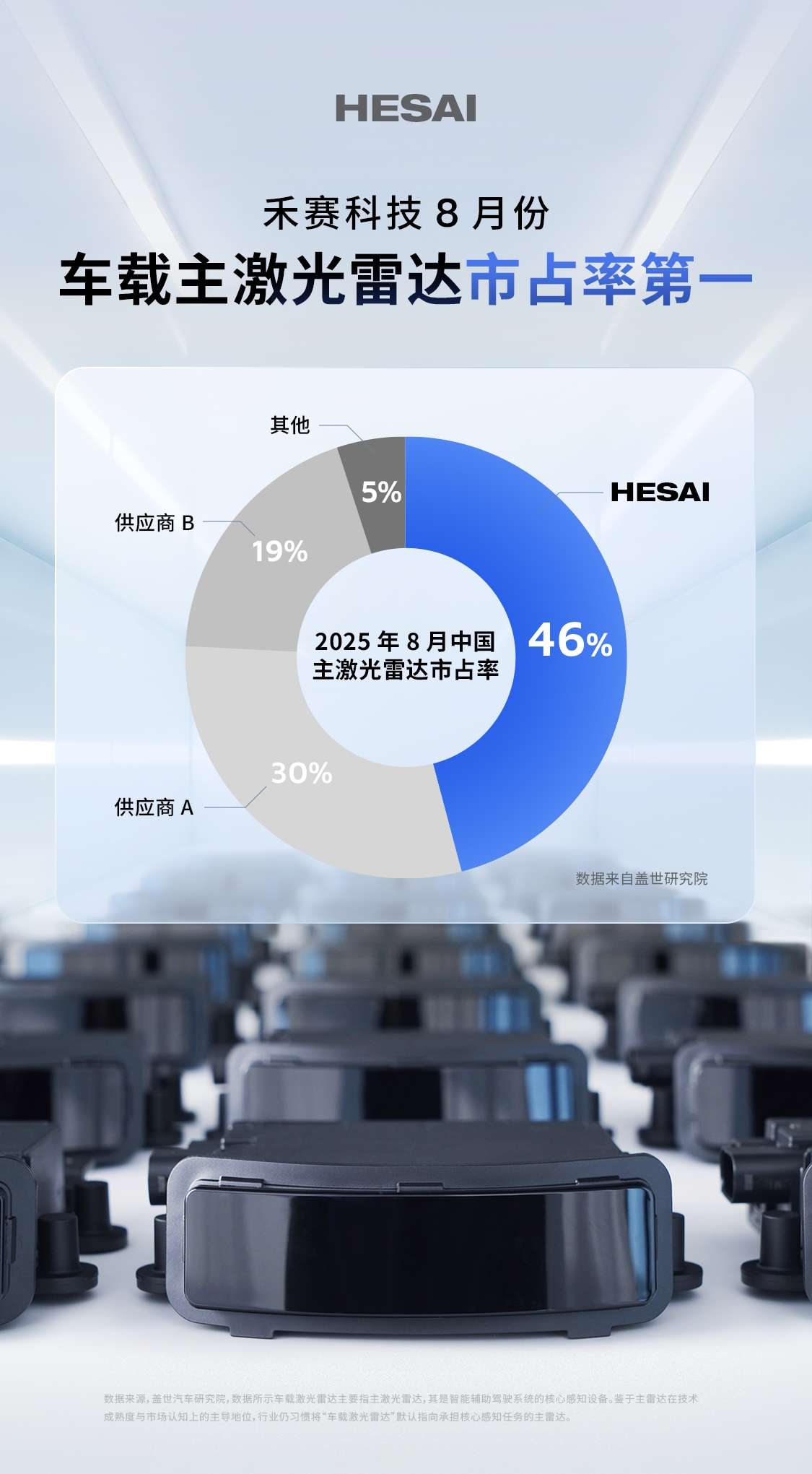
Core Insights - The report from Gaishi Automotive Research Institute indicates that Hesai Technology has maintained its position as the leading supplier of automotive LiDAR systems, achieving a market share of 46% as of August 2025, which is 1.5 times that of the second place and 2.4 times that of the third place [1][2] Group 1: Market Performance - In the period from January to August 2025, the cumulative installation of main LiDAR systems in China's front-mounted production reached 1.31 million units, with Hesai's contribution being 510,000 units [1] - Hesai's monthly installation volume of LiDAR systems has surged from 33,485 units to 97,583 units, nearly tripling [1] - The penetration rate of LiDAR in new energy passenger vehicles reached 19% by August 2025, indicating that nearly one in five new cars is equipped with this technology [1] Group 2: Production and Strategic Developments - Hesai plans to achieve an annual production capacity exceeding 2 million units in 2025, with expected deliveries ranging from 1.2 million to 1.5 million units [2] - As of the end of September 2025, Hesai became the first company globally to produce over 1 million LiDAR units in a year, marking the entry into a "million-unit" mass production era [2] - Hesai has officially listed on the Hong Kong Stock Exchange, becoming the first company in the industry to achieve dual listing on both US and Hong Kong markets, reflecting international market recognition of Chinese LiDAR technology [2] Group 3: Client Base and Product Applications - This year, Hesai's LiDAR technology has supported the launch of several popular vehicle models, including Li Auto's i6, Xiaomi's YU7, and Leap Motor's B10 [2] - Hesai has secured mass production contracts with over 24 OEMs for more than 120 vehicle models, with planned deliveries from 2025 to 2027 [2] - Key clients include top-tier automotive manufacturers such as a leading European OEM, a global champion in new energy vehicle sales, and major Chinese brands like Geely, Great Wall, and Changan [2]
市占率46%!禾赛持续领跑车载激光雷达市场
Zhi Tong Cai Jing· 2025-10-23 09:52
Core Insights - The report from Gaishi Automotive Research Institute indicates that Hesai Technology has maintained the leading position in the automotive lidar market for seven consecutive months, with a market share of 46% as of August 2025, significantly higher than its competitors [1][6][14] Group 1: Market Performance - In the first eight months of 2025, the cumulative installation of automotive lidar in China reached 1.31 million units, with Hesai's contribution being 510,000 units [6] - Hesai's monthly installation volume increased from 33,485 units to 97,583 units, nearly tripling [6] - The penetration rate of lidar in new energy passenger vehicles reached 19% by August 2025, indicating a growing trend towards making lidar a standard feature in new cars [11] Group 2: Production and Capacity - Hesai plans to achieve an annual production capacity exceeding 2 million units in 2025, with expected deliveries between 1.2 million to 1.5 million units [13] - By the end of September 2025, Hesai became the first lidar company globally to produce over 1 million units in a year, marking the entry into a new era of large-scale production [13] Group 3: Technological Advancements - Hesai has developed a complete series of self-researched chips, achieving mass production of all seven key components necessary for lidar functionality, which has created a strong technological barrier [13][14] - The fourth-generation self-developed chip has optimized lidar functions and performance by integrating all critical components [13] Group 4: Market Recognition and Partnerships - Hesai is recognized as the only company globally to have independently developed all seven key components of lidar and has successfully achieved mass production of the chip modules [14] - The company has secured production contracts with over 24 major automotive manufacturers for more than 120 vehicle models, including partnerships with leading brands such as Ideal, Xiaomi, and Toyota [14]
市占率46%!禾赛(02525)持续领跑车载激光雷达市场
智通财经网· 2025-10-23 09:37
Core Insights - Hesai Technology has maintained the leading position in the automotive lidar market for seven consecutive months, with a market share of 46%, significantly higher than its competitors [1][6][14] - The total installed volume of automotive lidar in China from January to August 2025 reached 1.31 million units, with Hesai contributing 510,000 units, marking a nearly threefold increase in monthly installation from 33,485 units to 97,583 units [6][11] - The penetration rate of lidar in new energy passenger vehicles reached 19% by August 2025, indicating a growing trend towards making lidar a standard feature in new cars [11] Company Developments - Hesai plans to achieve an annual production capacity of over 2 million units in 2025, with expected deliveries between 1.2 million and 1.5 million units [13] - The company has become the first in the world to produce over 1 million lidar units in a year, marking a significant milestone in large-scale production [13] - Hesai has successfully listed on the Hong Kong Stock Exchange, becoming the first company to achieve dual primary listings in both the US and Hong Kong, reflecting international market recognition of its technology [13] Technological Advancements - Since 2017, Hesai has focused on developing dedicated lidar chips (ASIC), enhancing performance, quality, and cost-effectiveness through optimized design [13][14] - The fourth-generation self-developed chip integrates all seven key components of lidar, showcasing significant technological advancements [13] - Hesai is the only company globally to have independently developed all seven key components of lidar and successfully achieved mass production of the chip modules [14] Market Position - According to Yole Group, Hesai holds the top global market share in automotive lidar, ADAS lidar, and L4 autonomous driving lidar, maintaining a leading position for four consecutive years [14] - The company has secured mass production contracts with over 24 OEMs for more than 120 vehicle models, with key clients including top European manufacturers and leading Chinese automakers [14]
方正证券:速腾聚创AC2新品发布在即 维持“推荐”评级
Zhi Tong Cai Jing· 2025-10-20 06:51
Core Insights - The International Conference on Intelligent Robots and Systems (IROS2025) will take place from October 19 to 25, 2025, in Hangzhou, where the company SUTENG will launch its latest Active Camera product, AC2 [1] - The company is expected to benefit significantly from the growth in intelligent driving and the broader robotics sector, with projected revenues of 2.5 billion, 3.42 billion, and 4.58 billion yuan for 2025, 2026, and 2027 respectively [1] - The AC2 product integrates advanced technologies such as dToF laser radar, dual RGB cameras, and IMU for motion compensation, providing a comprehensive solution for various 3D applications [1][2] Group 1 - The AC2 series is designed to be compact, with dimensions similar to widely used dual-vision sensors, offering millimeter-level distance accuracy and robust RGBD data for diverse applications in robotics [1] - The company has developed its SPAD-SoC chip since 2018, with the product launched in 2022, enhancing detection performance and power efficiency [2] - The AC series products are applicable across multiple sectors including automotive, robotics, and consumer electronics, with a potential second growth curve in robotics components [2] Group 2 - The company's technology is aligned with Huawei's laser radar products, indicating a shared technological foundation that can be leveraged across various applications [2] - The company has integrated with NVIDIA's DRIVE, Jetson, and Omniverse ecosystems, enhancing its capabilities in visual technology [2] - The company is also expanding its offerings in dexterous robotic components, which are expected to see gradual market adoption [2]

泳池机器人全球市场爆发在即,激光雷达开辟技术新战场
Xin Lang Zheng Quan· 2025-09-26 02:17
Group 1: Global Smart Home Cleaning Robot Market - The global smart home cleaning robot market shipped 15.352 million units in the first half of 2025, representing a year-on-year growth of 33% [1] - The lawn mower robot segment experienced explosive growth, with shipments reaching 2.343 million units, a staggering increase of 327.2% year-on-year [1] - The pool cleaning robot segment also showed strong growth potential, with shipments of 933,000 units, up 18.7% year-on-year, indicating a promising market outlook [1] Group 2: Technological Advancements and Market Dynamics - The surge in lawn mower robots is attributed to the successful application and reuse of home cleaning robot technologies, such as smart navigation and obstacle recognition [2] - Major players like Roborock, Ecovacs, and Dreame have leveraged their expertise in vacuum robots to dominate the lawn mower market [2] - The demand for laser radar technology in lawn mower robots has surged, with companies like Hesai Technology and Robosense reporting year-on-year increases in delivery volumes of 743.6% and 631.9%, respectively [2] Group 3: Pool Cleaning Robot Technology Breakthroughs - Traditional laser radar technology has faced challenges in underwater applications, limiting the advancement of pool cleaning robots [3] - The breakthrough in underwater laser radar technology marks a significant innovation point for pool robots, potentially enhancing their market penetration [3] Group 4: Launch of Advanced Underwater Laser Radar - Guangfeng Technology launched the Yuanmou D10 and T1 underwater blue laser radar products, targeting both consumer and professional markets [4] - The Yuanmou D10 is the first consumer-grade underwater blue laser radar, achieving effective measurement capabilities up to 10 meters, marking a new era in underwater measurement [4] Group 5: Technical Specifications and Market Impact - The Yuanmou D10 utilizes high-power 450nm blue laser technology, significantly outperforming traditional infrared lasers in underwater environments [7] - The product is compact, measuring 74x74x49mm, and can achieve measurement accuracy of 0.04 meters in water with low turbidity [7] - The introduction of the Yuanmou D10 is expected to accelerate the intelligent adoption of pool cleaning products, establishing a new benchmark for Chinese manufacturing in the global market [8]


三个85后上海造硬件,干出350亿香港IPO
Sou Hu Cai Jing· 2025-09-19 08:23
Core Viewpoint - Hesai Technology, a leading player in the lidar industry, has successfully completed a dual listing on the Hong Kong Stock Exchange and NASDAQ, marking the largest IPO of a Chinese company returning to Hong Kong in four years, led by three founders born in the 1980s [1][3][6]. Company Overview - Hesai Technology is the first company in the lidar industry to achieve a dual primary listing on both the Hong Kong and US stock exchanges [3][12]. - The company issued 19.55 million shares at a final price of HKD 212.80 per share, raising approximately HKD 4.16 billion (around RMB 3.8 billion) [3][4]. Market Performance - On its first trading day, Hesai's stock price surged, reaching a high of HKD 244, which is over 14% above the issue price, and the market capitalization exceeded HKD 35 billion [4][6]. - The IPO was significantly oversubscribed, with a 168.65 times oversubscription rate for the public offering and a 14.09 times oversubscription rate for the international offering [6][8]. Financial Highlights - Hesai's revenue for 2022, 2023, and projected for 2024 are RMB 1.203 billion, RMB 1.877 billion, and RMB 2.077 billion respectively, with a strong growth trajectory [20][24]. - The company achieved a gross profit of RMB 520 million in the first half of this year, with a gross margin of 47.9% [25]. - Hesai has turned a profit in the first half of this year, reporting a net profit of RMB 26.54 million, compared to losses in previous years [27]. R&D and Innovation - The company invests heavily in R&D, with expenditures of RMB 5.55 billion, RMB 7.91 billion, and RMB 8.56 billion from 2022 to 2024, representing 46.2%, 42.1%, and 41.2% of revenue respectively [29]. - Approximately 50% of the funds raised from the IPO will be allocated to R&D to ensure continuous innovation in lidar technology [41][44]. Market Position and Growth Potential - Hesai holds the leading market share in the global lidar industry, particularly in the automotive sector, with significant contracts with major automotive manufacturers [20][24]. - The global lidar market is projected to grow from USD 300 million in 2020 to USD 1.6 billion in 2024, with a compound annual growth rate (CAGR) of 57.8% [44][46]. - The ADAS market is expected to see a revenue increase from USD 100 million in 2020 to USD 1 billion in 2024, with a CAGR of 104.1% [46][47].