
燃油车智能化

Search documents
郭永锋接替李凤刚 一汽奥迪销售公司中方一把手两年内再换人
Jing Ji Guan Cha Bao· 2025-09-02 10:28
Group 1 - The leadership change at FAW Audi Sales Company is aimed at addressing the declining market performance, with Guo Yongfeng replacing Li Fenggang as the executive vice president starting September 1, 2025 [1] - FAW Audi's sales have been declining for three consecutive years, with 2024 sales dropping to 611,000 units, a 12.5% year-on-year decrease [2] - Audi's overall performance in China is negatively impacted by FAW Audi's decline, with a 10.2% drop in sales to 287,600 units in the first half of 2025 [2] Group 2 - FAW Audi's slow progress in the transition to electric vehicles is concerning, with over 90% of sales still coming from fuel vehicles, while competitors like Mercedes and BMW have higher electric vehicle sales ratios [3] - The establishment of the Audi FAW New Energy production base in Changchun is expected to enhance the introduction of new energy models, starting with the Q6L e-tron [3] - FAW Audi is collaborating with Huawei to enhance the intelligence of fuel vehicles, which may help improve market performance [3]
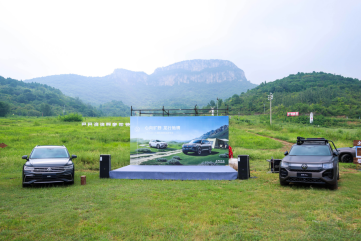
智享品质——上汽大众途昂Pro×大疆趣驾会圆满举行
Qi Lu Wan Bao· 2025-09-01 04:02
Core Insights - The event "Heart Towards the Wilderness, Together We Drive" showcased the performance and appeal of the SAIC Volkswagen Teramont Pro alongside DJI's technological innovations [1][14] Group 1: Product Performance - The Teramont Pro features the globally launched fifth-generation EA888 engine, delivering a maximum power of 200 kW and a peak torque of 400 N·m, achieving 0-100 km/h in 7.6 seconds [3] - The vehicle boasts a low fuel consumption of 8.35 L/100 km under WLTC conditions, combining strong power with low emissions through advanced technologies like variable geometry turbocharging (VTG) [3] Group 2: Driving Capabilities - Equipped with the new DCC adaptive suspension and 4MOTION intelligent four-wheel drive system, the Teramont Pro is designed to handle diverse terrains effectively [5] - The DCC system allows for 15 customizable settings for suspension stiffness, enhancing comfort during city driving and precision during mountain driving [5] Group 3: Space and Comfort - The Teramont Pro is a seven-seater SUV with a length of 5158 mm and a wheelbase of 2980 mm, providing spacious seating across all three rows [7] - Features include luxury configurations such as a "queen passenger seat," heated second-row seats, and a flexible third-row that can switch between five and seven seats [7] Group 4: Intelligent Features - The collaboration with DJI introduces the IQ.Pilot Level 2 driver assistance system, optimized for Chinese road conditions, enhancing safety and convenience [9] - The vehicle's digital cockpit supports six-screen interaction and includes features like remote control, smart navigation, and voice recognition, offering an experience comparable to electric vehicles [9] Group 5: Purchase Policies - The Teramont Pro is priced starting at 269,900 yuan, with a transparent pricing strategy and no hidden fees [12] - First-time owners benefit from a lifetime warranty on the vehicle, ensuring peace of mind throughout the ownership cycle [12] Group 6: Market Positioning - The collaboration between SAIC Volkswagen and DJI not only highlights the product's capabilities but also positions the Teramont Pro as a versatile contender in the mid-to-large SUV market, promising enhanced travel experiences for consumers [14]


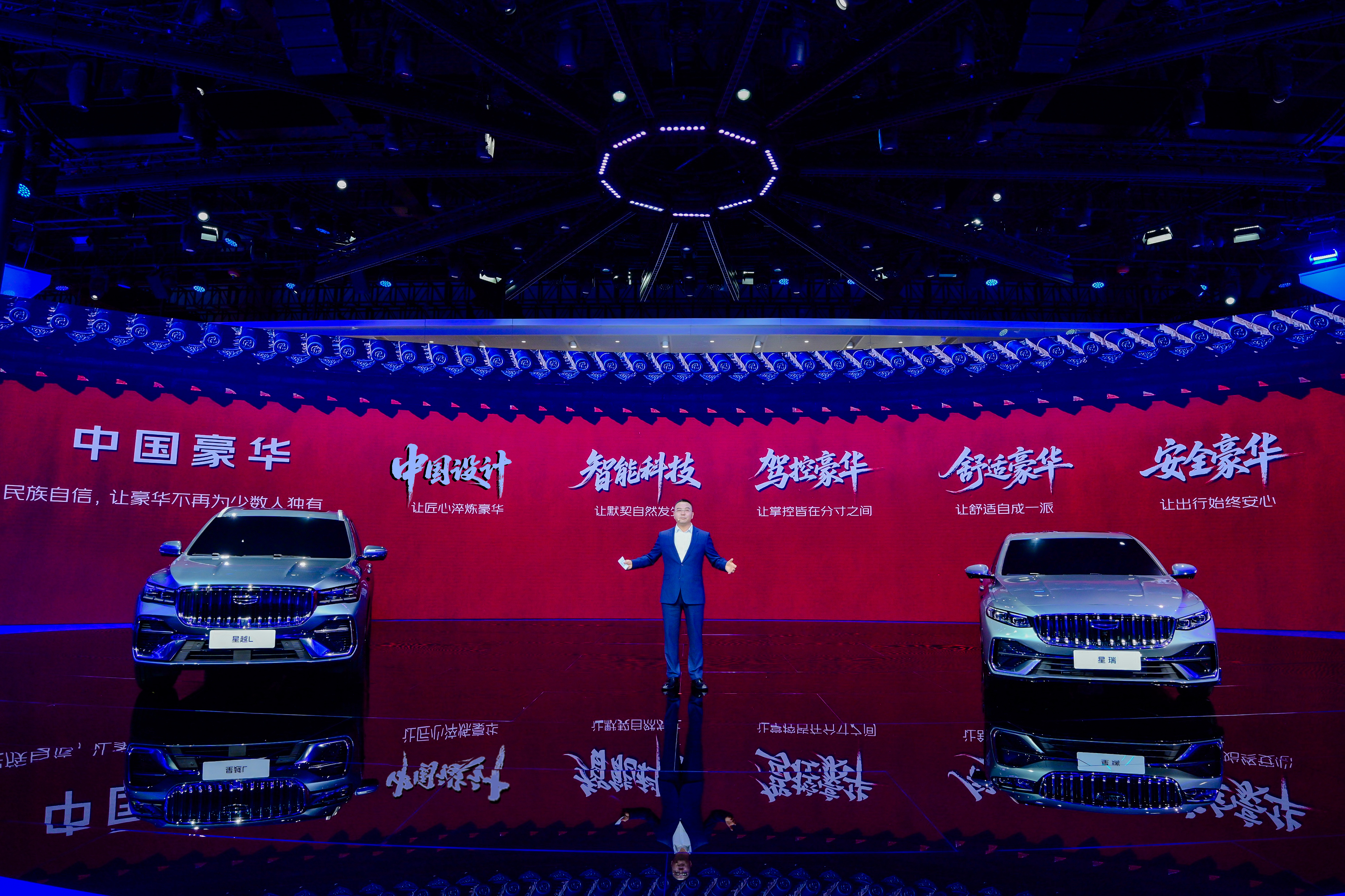
“五大豪华”诠释燃油车高价值,吉利中国星全新东方曜系列亮相成都车展
Zhong Guo Qi Che Bao Wang· 2025-08-29 10:15
Core Viewpoint - The Chengdu International Auto Show highlights the continued relevance and evolution of fuel vehicles, particularly through the launch of Geely's new China Star series, which emphasizes luxury and advanced technology in fuel cars despite the industry's shift towards electrification [1][4][6]. Industry Overview - The domestic fuel vehicle market still holds a significant share, with a market base of 49.9% as of the first half of the year, indicating strong consumer demand [4]. - Fuel vehicle sales in China have shown growth, with July sales reaching 981,000 units, a year-on-year increase of 8.4% [4]. Company Performance - Geely's cumulative sales from January to July reached 1.6469 million units, marking a 49% year-on-year increase, with over 850,000 units sold in the new energy sector, reflecting a 126% growth [6]. - The launch of the China Star series reinforces Geely's "dual fuel" strategy, showcasing its commitment to both fuel and electric vehicles [6]. Product Features - The China Star series features three exclusive colors inspired by Chinese culture and design, emphasizing the integration of traditional aesthetics with modern luxury [6]. - The series is equipped with a 2.0TD turbo engine and an 8AT transmission, delivering a maximum power of 200 kW and torque of 400 N·m, with acceleration times of 5.6 seconds for the Star瑞 and 7.3 seconds for the Star越L [8]. - Comfort features include heated and massaging front seats, heated steering wheel, and advanced suspension systems that enhance ride quality [10]. Technological Advancements - The series incorporates advanced technology such as the GEEA3.0 electronic architecture, enabling high-speed data transmission and seamless integration of smart features [11]. - The Flyme Auto system, powered by Qualcomm's 8155 chip, enhances the in-car experience with AI-driven voice interaction capabilities [13]. - The series also includes a comprehensive suite of safety features, with Geely leading in patent filings for automotive safety technologies in China [16]. Market Impact - The cumulative sales of the Star瑞 and Star越L series have surpassed 1.6 million units, positioning them as the fastest models to reach the million-unit mark in the 100,000-200,000 yuan fuel vehicle market [18]. - The introduction of the China Star series is expected to drive a new sales peak for Geely, solidifying its position in both the fuel and new energy vehicle markets [18].

为求生存,燃油车悄然降价简配
Jing Ji Guan Cha Wang· 2025-08-23 07:28
Core Viewpoint - The automotive market is experiencing a complex transformation where traditional fuel vehicles are adapting to the rise of electric vehicles (EVs) through price reductions and configuration simplifications while also enhancing their technological features to remain competitive [2][11]. Group 1: Market Performance - In July 2025, the retail sales of passenger vehicles in China reached 1.826 million units, a year-on-year increase of 6.3%, with new energy vehicles (NEVs) accounting for 987,000 units, up 12% [2]. - The retail sales of fuel passenger vehicles were 839,000 units, showing a slight growth of 0.35% [2]. Group 2: Pricing Strategies - Traditional fuel vehicle manufacturers are adopting a "price-for-volume" strategy, often accompanied by configuration reductions to attract price-sensitive consumers [3]. - The launch of the 2026 model of the Nissan Sylphy introduced a new base model priced at 75,800 yuan, which is 10,000 yuan lower than the previous model, achieved through significant configuration cuts [3][4]. Group 3: Configuration Reductions - The "省心版" model of the Nissan Sylphy has seen reductions in lighting, safety technology, and comfort features, such as the removal of the 8-inch central control screen [3][4]. - The Volkswagen Touareg "锐越版" model has also reduced comfort features while maintaining its powertrain specifications, indicating a trend of simplification across various vehicle segments [4]. Group 4: Intelligent Features - Fuel vehicles are increasingly integrating smart technologies to enhance competitiveness, with models like the Audi A5L featuring advanced driving assistance systems developed in collaboration with Huawei [7][8]. - Companies like Volkswagen are planning to enhance the smart capabilities of their fuel vehicles, leveraging economies of scale to optimize costs [10][9]. Group 5: Market Dynamics - The competition between fuel and electric vehicles is evolving, with fuel vehicles transitioning towards hybrid models and exploring new energy sources, such as biofuels and hydrogen [11][12]. - The market share of traditional fuel vehicles is projected to decline from approximately 59% in 2023 to 31% by 2030, while the global market share is expected to drop from about 47% in 2025 to between 30% and 35% by 2030 [14].

别惊讶,油车的魅力正在大幅上升
3 6 Ke· 2025-08-18 01:35
Core Viewpoint - The perception that fuel vehicles are outdated and electric vehicles represent the future is challenged by recent data showing an increase in the product appeal index and user satisfaction for fuel vehicles, as reported by J.D. Power [1][2][4]. Group 1: Market Perception and Trends - Despite the prevailing narrative favoring electric vehicles, J.D. Power's report indicates that the overall appeal index for fuel vehicles in China is projected to reach 751 points in 2025, marking a 14-point increase from 2024, the largest rise in five years [2]. - The decline in consumer interest in fuel vehicles is largely attributed to media bias favoring new energy vehicles, leading to a misconception that fuel vehicles are no longer relevant [4]. - Fuel vehicle sales in the first half of the year reached 5.426 million units, a slight decrease of 1.8% year-on-year, maintaining a market share of 49.6%, nearly equal to that of new energy vehicles [7]. Group 2: Consumer Satisfaction and Vehicle Performance - The increase in consumer satisfaction for fuel vehicles is driven by improvements in fuel economy (+17 points), entry/exit convenience (+13 points), exterior design (+12 points), interior quality (+12 points), and features/startup (+12 points) [12]. - The advancements in fuel vehicle technology, such as the introduction of the fifth-generation EA888 engine and the widespread adoption of hybrid technology by Japanese brands, have significantly improved fuel efficiency [14][12]. - Fuel vehicles continue to dominate in various segments, with popular models like Nissan Sylphy and Volkswagen Lavida remaining in the top sales rankings, indicating their sustained relevance in the market [8][10]. Group 3: Competitive Pricing and Market Dynamics - The competitive landscape has led to significant price reductions for fuel vehicles, making them more accessible; for instance, entry-level models are now priced around 50,000 yuan, previously requiring a budget of 100,000 yuan [20]. - The combination of enhanced product features, competitive pricing, and various subsidies for vehicle upgrades has improved the overall value proposition of fuel vehicles, leading to increased consumer satisfaction [20][21]. - The ongoing development of intelligent features in fuel vehicles, such as advanced driver assistance systems and upgraded infotainment options, has further enhanced their appeal to consumers [15][18].

多维突破,全新一汽-大众揽境实力演绎家庭旗舰SUV天花板
Zhong Guo Qi Che Bao Wang· 2025-08-06 03:14
Core Viewpoint - The article discusses the strategic decision of FAW-Volkswagen to adopt a dual approach of promoting both fuel and electric vehicles, highlighting the launch of the new SUV, the All-New Langjing, as a significant step in this direction [1][22]. Product Launch and Features - FAW-Volkswagen launched two models of the All-New Langjing SUV, priced at 269,900 yuan and 299,900 yuan, with a unique "four lifetime" guarantee package valued over 20,000 yuan [3]. - The All-New Langjing features a spacious design with a length of 5,168 mm and a wheelbase of 2,980 mm, providing a high occupancy rate of 87.2% [4][6]. - The SUV offers both 6-seat and 7-seat configurations, catering to the needs of multi-child families, with advanced comfort features such as electric adjustment and 3D massage capabilities [6][8]. Performance and Efficiency - The All-New Langjing is equipped with the fifth-generation EA888 engine, delivering a maximum power of 200 kW and a peak torque of 400 N·m, achieving 0-100 km/h in just 7.5 seconds [8]. - Despite an increase in vehicle weight and a 23.5% power boost, the fuel consumption has decreased to 8.33 L/100 km, reflecting a 3.7% reduction [8]. Design and Safety - The SUV features a robust and dynamic exterior design, with a high-strength steel usage rate of 84% in its body structure, enhancing safety [10]. - It includes advanced safety technologies such as emergency assistance and pedestrian protection systems, ensuring comprehensive safety for family travel [10]. Intelligent Features - The All-New Langjing incorporates a three-screen design for an enhanced smart cockpit experience, featuring a 15-inch central display powered by Qualcomm 8155 chip and advanced voice recognition capabilities [12]. - It is the first fuel vehicle to offer end-to-end highway navigation assistance, utilizing a sophisticated driver assistance system developed in collaboration with DJI [14][16]. Customer Engagement and Services - FAW-Volkswagen introduced the "Jingxiang Family" service program, providing personalized sales and after-sales services to enhance customer experience [17]. - The "Volkswagen Old Friends" brand was launched to reward over 20 million customers, emphasizing a commitment to long-term customer relationships and satisfaction [19][22].

智美绝尘,首款搭载华为乾崑技术的燃油车A5L Sportback正式上市
Huan Qiu Wang Zi Xun· 2025-08-04 08:16
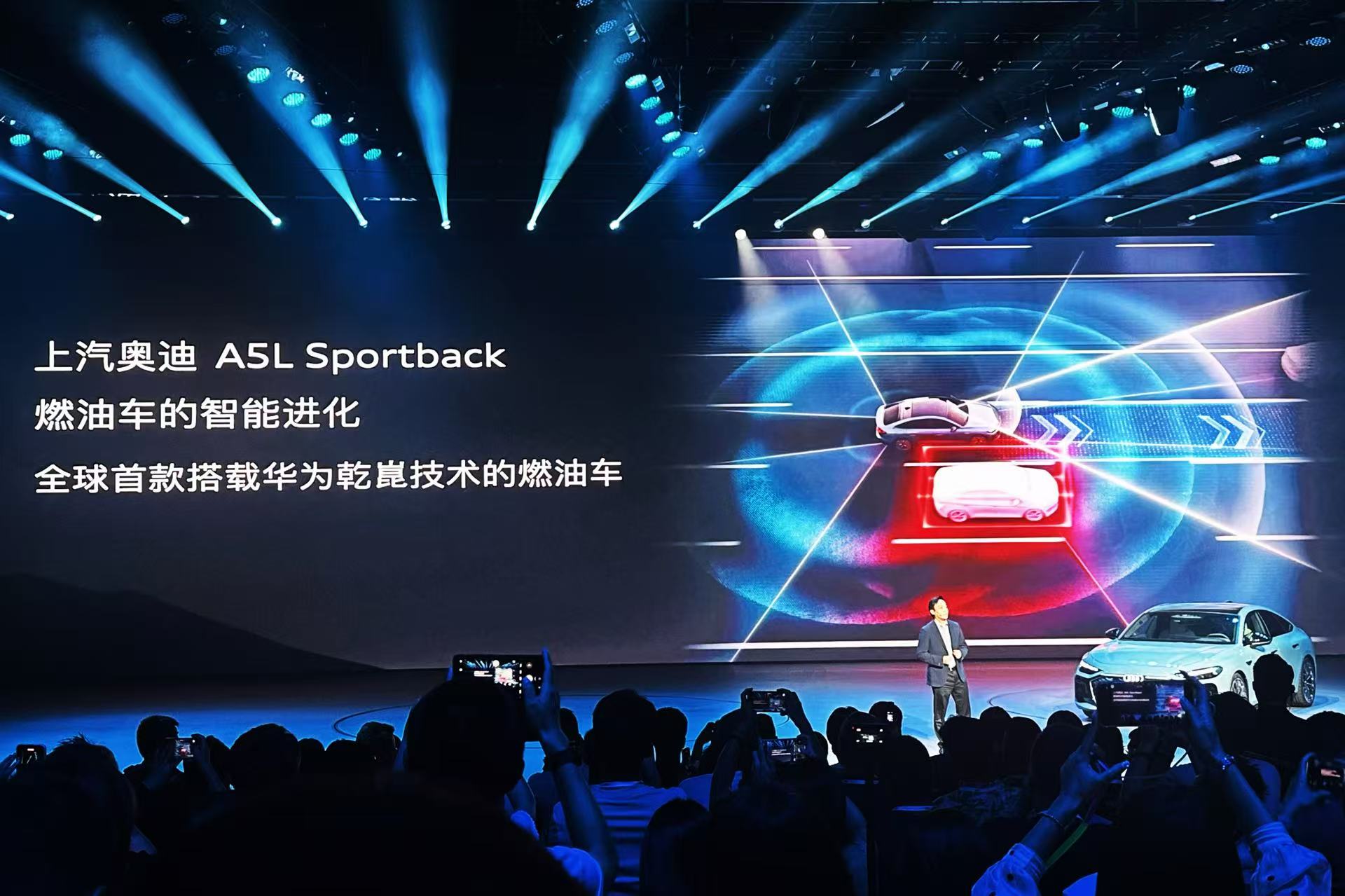
Core Insights - The launch of the SAIC Audi A5L Sportback marks a significant milestone in the automotive industry as it is the world's first mass-produced fuel vehicle equipped with Huawei's QianKun intelligent driving technology [1][9] - The collaboration between Huawei and SAIC Audi aims to break the technological barriers in fuel vehicle intelligence, combining Chinese technology with German engineering to set a new standard for luxury fuel vehicles [3][9] Product Features - The A5L Sportback offers a full range of six configurations, starting at a competitive price of 259,900 yuan, along with a limited-time cash discount of 4,000 yuan [1][8] - It is equipped with 32 high-performance sensors, including 12 cameras, 6 millimeter-wave radars, and 12 ultrasonic radars, along with two laser radars for enhanced safety in complex environments [5][7] Performance and Design - The vehicle features the fifth-generation EA888 engine with a power output of 200 kW, achieving a 0-100 km/h acceleration in just 5.6 seconds [7] - The design emphasizes luxury and intelligence, with a focus on meeting the diverse needs of young elites, incorporating a sleek hatchback silhouette and advanced interior features [8] Market Positioning - The A5L Sportback is positioned as a "luxury intelligent performance sedan," aiming to redefine market value standards in the luxury fuel vehicle segment [8][9] - The strong pre-sale interest indicates significant market competitiveness, showcasing the dual advantages of German driving dynamics and Chinese intelligent technology [8][9]

搭载华为乾崑智驾技术,上汽奥迪新车为“豪华品牌智能化”开辟新路径
Zhong Guo Qing Nian Bao· 2025-08-03 13:40
Core Viewpoint - Audi is exploring the integration of mechanical beauty and intelligent experience in the context of the "new four modernizations" in the automotive industry, exemplified by the launch of the new A5L Sportback, which incorporates Huawei's intelligent driving technology [2][3] Group 1: Product Launch and Features - The A5L Sportback is positioned as a "luxury smart performance sedan" with six configurations starting at a limited-time price of 259,900 yuan [2] - The vehicle aims to break the perception that intelligent driving features are exclusive to electric vehicles, paving a new path for luxury brand intelligence [2] - The car features a new PPC platform and E³ 1.2 electronic architecture designed to enhance the vehicle's intelligence and electrification levels [4] Group 2: Technological Integration - The E³ 1.2 architecture replaces traditional control units with five domain controllers, enabling rapid and reliable responses to user commands through gigabit Ethernet [4] - Huawei's intelligent driving technology acts as the "brain" of the vehicle, while the VMM vehicle motion management module integrates core systems for seamless coordination between intelligent assistance and vehicle control [4] Group 3: Performance Metrics - The A5L Sportback is equipped with Audi's fifth-generation EA888 engine and features a 0-100 km/h acceleration time of just 5.6 seconds, enhanced by the upgraded quattro intelligent all-wheel-drive system [5] - As of June 30, Huawei's intelligent driving technology has accumulated 3.541 billion kilometers of driving, with parking assistance used 230 million times, preventing 2.3814 million potential collisions [5] Group 4: Industry Impact - The A5L Sportback is seen as a "breaker of ice" for luxury brands and fuel vehicle intelligence, demonstrating the compatibility of traditional mechanical performance with cutting-edge technology [5] - The collaboration between Audi and Huawei is viewed as a significant step towards creating a smart travel experience tailored to Chinese users [5]
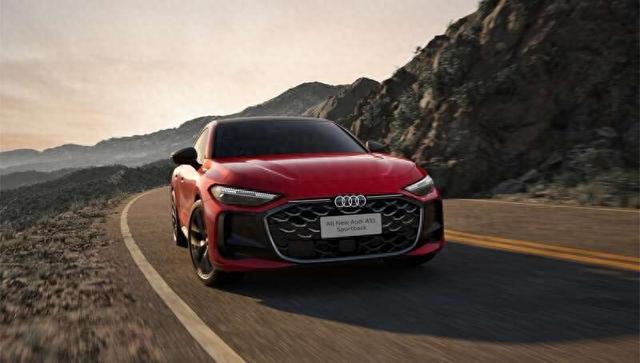
汽车视点 | 首款华为乾崑智驾燃油车上市!上汽奥迪打响豪华品牌转型“第一枪”
Xin Hua Cai Jing· 2025-08-02 08:19
Core Viewpoint - The launch of the SAIC Audi A5L Sportback, priced between 259,900 to 369,900 yuan, represents a strategic shift for traditional luxury brands, focusing on innovation in fuel vehicles while maintaining competitiveness in the market [1][5][7] Market Context - The introduction of the A5L Sportback comes amid declining sales for traditional luxury brands (BBA) in China, with BMW's sales down 15.5% and Mercedes-Benz's down 14% in the first half of 2025 [5][6] - Despite the push towards electrification, fuel vehicles still hold a significant market share, accounting for 49.8% of new car sales in China in the first half of 2025 [6] Strategic Decisions - BBA brands have collectively decided to abandon their comprehensive electrification plans, opting instead for a strategy that allows for the coexistence of fuel and electric vehicles [6][7] - The A5L Sportback is positioned as a response to market demands, aiming to rejuvenate the brand's presence in the fuel vehicle segment [7] Technological Innovation - The A5L Sportback is the first fuel vehicle globally to feature Huawei's QianKun intelligent driving system, addressing challenges in integrating smart technology into traditional fuel vehicles [9][10] - The vehicle includes 32 high-precision sensors and innovative features like "one-click return," enhancing its appeal to tech-savvy consumers [11] Target Demographic - The design of the A5L Sportback targets younger consumers, moving away from Audi's traditional image as a "government car" to a more dynamic and modern aesthetic [12][14] - The shift aligns with Audi's global strategy to attract younger buyers, with plans to create the youngest product matrix by the end of 2025 [14][15] Future Outlook - The performance of the A5L Sportback and the upcoming E5 Sportback will be critical indicators of whether traditional luxury brands can regain market strength [15]
合资车企销量回暖,增量引擎何在?
Bei Ke Cai Jing· 2025-07-23 03:56
Core Insights - The sales of mainstream joint venture brands in China showed a year-on-year increase of 6.3% in June, indicating a recovery trend in the market [1] - Major joint venture automakers like FAW Toyota, FAW-Volkswagen, SAIC Volkswagen, and SAIC General Motors reported positive sales growth, while brands like GAC Honda, Dongfeng Honda, and Dongfeng Nissan continued to decline [1][7] Sales Performance - FAW Toyota's sales increased by 16% year-on-year, while FAW-Volkswagen, SAIC Volkswagen, and SAIC General Motors saw growth rates of 3.5%, 2.3%, and 8.64% respectively [4] - GAC Toyota's flagship fuel vehicles, including Camry, Sienna, and Highlander, achieved a total sales volume of 179,100 units, a 30% increase year-on-year, with a market share rise to 49.2% [4] - The market share of FAW-Volkswagen's fuel vehicles grew by 0.7 percentage points year-on-year [4] Factors Driving Recovery - The recovery in sales is attributed to multiple factors, including the intelligent upgrade of fuel vehicles and aggressive pricing strategies such as "one-price" promotions [3][4] - Joint venture brands are focusing on intelligent features to attract consumers, with significant cash discounts observed in various models [2][6] Challenges for Specific Brands - Honda and Nissan are struggling, with Dongfeng Nissan's sales down by 23.5% and GAC Honda and Dongfeng Honda down by 25.63% and 37.4% respectively [7] - The decline is linked to their slow transition to electrification, lack of intelligent features, and conservative pricing strategies [8] Electric Vehicle Market Position - Despite the recovery in fuel vehicle sales, joint venture brands are lagging in the electric vehicle (EV) market, with a penetration rate of only 5.3% for mainstream joint venture brands compared to 75.4% for domestic brands [10] - Only SAIC Volkswagen made it to the top 20 in EV sales among joint venture brands [10] Future Outlook - Joint venture brands are expected to transition from "dominators" to "runners" in the market, with the next three years seen as a critical transformation window [12] - The success of these brands will depend on their localization speed, product definition capabilities, and execution of pricing strategies [13]