
载人登月

Search documents
欧媒幻想:新一轮登月竞赛,德国人有没有可能先登月?
Guan Cha Zhe Wang· 2025-12-29 09:30
Core Viewpoint - Europe aims to become an independent participant in the lunar exploration race, seeking to send European astronauts to the Moon, while still heavily relying on the U.S. Artemis program for its lunar ambitions [1][5]. Group 1: European Space Agency (ESA) Involvement - ESA is expected to play a key role in NASA's Artemis program, potentially sending European astronauts aboard U.S. spacecraft to the Moon [1][5]. - ESA's Director General, Aschbacher, indicated that the first European astronauts for the lunar missions are likely to come from Germany, France, and Italy, with four German candidates being the most promising [3][5]. - ESA has received nearly €22.1 billion from its member states for operations from 2026 to 2028, aiming to enhance Europe's independent access to space [5]. Group 2: Funding and Investment - Germany is the largest contributor to ESA, providing €5.1 billion, and emphasizes the need for increased investment in space as a contribution to European sovereignty and security [5]. - Despite budget constraints, Germany's Federal Minister for Research, Technology, and Space, Dorothee Bär, advocates for more funding in the space sector [5]. Group 3: Global Lunar Exploration Context - The U.S. Artemis program, initiated in 2017, aims for a manned lunar landing, with Artemis 3 now delayed to mid-2027 due to development challenges [6]. - China is progressing steadily with its lunar exploration plans, aiming for its first manned lunar landing by 2030, having already conducted multiple lunar missions [6].

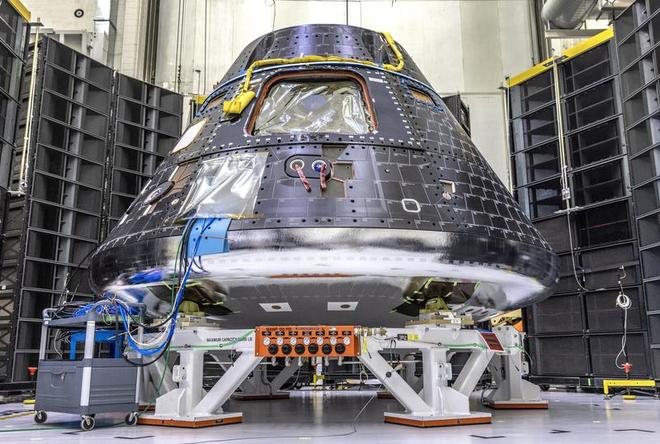
美媒盘点2025中国航天“重大进展”
Huan Qiu Wang Zi Xun· 2025-12-26 22:59
Core Insights - In 2025, China achieved significant advancements in its space sector, including record rocket launches, manned lunar exploration hardware tests, and deep space missions, culminating in a total of 87 launches, surpassing the previous record of 68 launches set in 2024 [1][2] Group 1: Launch Achievements - China launched a total of 87 space missions in 2025, breaking its previous record [1] - The increase in launch frequency is partly driven by two low Earth orbit internet constellations, which include thousands of satellites, as a response to Western counterparts like SpaceX's Starlink [2] - The successful launch of 15 low Earth orbit satellites using the Long March 6A rocket on December 9, 2025, is a notable achievement [2] Group 2: Manned Lunar Exploration - China is on track to achieve its first manned moon landing by 2030, with significant hardware tests conducted in 2025 [2] - Key tests included the successful zero-height escape flight test of the Dream Chaser spacecraft and the comprehensive verification of the lunar lander [2] Group 3: Deep Space Missions - The Tianwen-2 probe was successfully launched in May 2025, marking another deep space exploration mission following the Tianwen-1 Mars mission [3] - The Tianwen-2 probe is expected to reach its target asteroid by July 2026, providing new insights and samples from the celestial body [2][3] Group 4: Emergency Response - In November 2025, an emergency situation arose when a crack was found in the Shenzhou-20 spacecraft's window, leading to a swift response where astronauts were transferred to the Shenzhou-21 spacecraft for safe return [4] - The backup Shenzhou-22 spacecraft was prepared and launched within 16 days to ensure the safety of the crew [4] Group 5: Future Plans - The frequency of launches is expected to increase further in 2026, with plans for more reusable rocket tests and the expansion of launch facilities [5] - Major upcoming missions include the Chang'e 7 lunar probe and the SMILE satellite in collaboration with the European Space Agency [5] - The manned space program will see the launch of Shenzhou-23 and Shenzhou-24 missions, with plans for long-term stays in space [6]
美国全面加速太空军备:特朗普定调“太空优势”,35亿美元卫星订单紧随其后
Hua Er Jie Jian Wen· 2025-12-21 10:46
Core Points - The U.S. is initiating the largest militarization of space since the Cold War, with President Trump signing an executive order prioritizing manned lunar missions, establishing a lunar base, and developing space defense systems [1] - The executive order aims for a manned lunar landing by 2028 and a permanent lunar base by 2030, requiring the Pentagon and intelligence agencies to formulate a space security strategy [1][4] Group 1: Lunar Mission Goals - The 2028 lunar landing goal is seen as highly challenging, similar to a previous 2024 directive, with delays in NASA's Space Launch System and SpaceX's Starship affecting timelines [2] - The executive order reinforces NASA's existing goal of developing a long-term lunar base using nuclear energy, originally set during the Obama administration [2] - The Artemis program will mark NASA's first manned lunar mission under this new directive, heavily relying on the development progress of SpaceX's Starship [2] Group 2: Military Satellite Network - The U.S. Space Force's Space Development Agency announced a $3.5 billion satellite order, indicating an acceleration in military space deployment [3] - Four defense contractors will each receive contracts for 18 satellites, enhancing missile warning and tracking capabilities with near-continuous global coverage [3] - This satellite deployment is part of a strategy to launch new batches every two years, with the first batch of 154 satellites expected to achieve initial operational capability by 2027 [3] Group 3: Space Policy Coordination - The executive order restructures the national space policy coordination mechanism, placing it under the leadership of the President's Chief Science Advisor [4] - The National Space Council, previously uncertain in its future, will continue to exist under a new structure, with the President as its chair [4] - The order also calls for the Pentagon and intelligence agencies to develop a space security strategy and encourages private contractors to improve efficiency [4] Group 4: NASA Budget and Dual Goals - NASA is facing financial pressures, with a potential budget cut of about 25% from the usual $25 billion, threatening numerous prioritized space science programs [6] - The new NASA administrator supports targeting both lunar and Mars missions, reflecting Congressional pressure to focus on lunar initiatives [6] - Legislative focus has shifted back to lunar missions, despite previous discussions about prioritizing Mars exploration [6]


前NASA局长急死:赶紧推翻重来,中国才是对的
Guan Cha Zhe Wang· 2025-12-11 04:06
Core Viewpoint - The former NASA administrator Michael Griffin expressed concerns about the feasibility of the U.S. manned lunar return program, suggesting that the U.S. is falling behind China, which is on a more effective path for lunar exploration [1][2][8]. Group 1: U.S. Lunar Program Challenges - The Artemis program, announced in 2019, has faced significant delays due to complex design and unverified technologies, with the Artemis 2 and Artemis 3 missions postponed multiple times [4][5]. - Griffin criticized the current Artemis 3 mission plan, stating it relies on untested technologies and complex operations that could jeopardize mission reliability [7][8]. - He highlighted that the U.S. has wasted time and may not achieve manned lunar landing before China, emphasizing the need for a simplified approach similar to China's strategy [1][2][9]. Group 2: Comparison with China's Lunar Program - China aims to land humans on the moon by 2030, with progress reported as smooth and on track, contrasting with the U.S. delays [2][4]. - Griffin noted that China's lunar mission plan is simpler and more aligned with the successful Apollo program, utilizing a dual-rocket launch system that has proven technologies [8][9]. - The Chinese government’s ability to execute long-term plans consistently provides them with advantages in project continuity and stability, which Griffin believes the U.S. political system struggles to match [9].

剑指2028 美媒:贝佐斯火箭公司欲抢先SpaceX登月
Feng Huang Wang· 2025-12-03 06:52
Core Insights - Blue Origin, founded by Jeff Bezos, is making progress in its orbital launch business and is now competing with SpaceX for NASA's manned lunar missions by 2028 [1][4][6] - The company successfully launched its New Glenn rocket and plans to increase launch frequency, including a lunar cargo mission in early 2026 [1][2] - Blue Origin's CEO, Dave Limp, is restructuring the company to accelerate operations and improve public perception of its development speed [2][3] Company Developments - Blue Origin has undergone a workforce reduction of about 10% and has restructured its management to enhance operational efficiency [3] - The company aims to challenge SpaceX's dominance in the rocket and satellite operations sector by focusing on lunar missions as a key competitive area [4][5] - Blue Origin has secured a NASA contract to build a larger crewed lunar lander for future manned missions [4][5] Lunar Mission Strategy - The company plans to launch a small cargo lander named "Blue Moon Mark 1" to the lunar surface early next year, which will gather critical data and deliver a NASA research device [4][7] - Blue Origin's simplified lunar landing plan includes developing a crewed version of the cargo lander for short-term lunar stays, targeting a manned lunar landing by the end of 2028 [7] - The proposed crewed vehicle will utilize storable propellants, avoiding the complexities of in-space refueling, and will rely on hardware that is already in development or testing [7]

SpaceX文件显示月球着陆器最快要2028年才准备好,美国登月计划或又拖后一年
Huan Qiu Shi Bao· 2025-11-20 22:36
Core Points - The Artemis lunar landing program, heavily politicized in the U.S., is facing significant delays, with the crewed lunar lander developed by SpaceX not expected to be ready until September 2028, pushing back NASA's planned Artemis 3 mission to at least 2028 [1][2][3] - Concerns are rising that China may achieve its lunar landing goals before the U.S. due to these delays [1][8] Timeline of the Artemis Program - NASA's original plan aimed to send astronauts to the Moon by mid-2027, but this timeline is now "almost certain" to be delayed further [2] - SpaceX's internal documents indicate that the first crewed lunar landing could occur as late as September 2028, following a series of critical tests scheduled for 2026 and 2027 [2][3] - The Artemis 2 and Artemis 3 missions have already been postponed from 2023 and 2024 to 2026 and beyond, respectively, with the average interval between missions now exceeding two years [7] Technical Challenges - The SpaceX Starship rocket, essential for the Artemis 3 mission, has faced multiple failures during testing, raising doubts about its reliability and the feasibility of the planned lunar missions [3][5] - NASA's acting administrator has criticized SpaceX for its slow progress and announced a restart of bidding for alternative lunar lander solutions, indicating a need for backup plans [5][6] Competitive Landscape - The U.S. lunar program's delays have led to fears of falling behind China, which is progressing steadily towards its goal of landing astronauts on the Moon by 2030 [8][10] - Blue Origin is emerging as a potential competitor to SpaceX, developing its own lunar lander for future Artemis missions, although its timeline may not surpass SpaceX's [10]
深度关注丨让五星红旗在浩瀚太空绽放光彩
Zhong Yang Ji Wei Guo Jia Jian Wei Wang Zhan· 2025-11-02 00:49
Core Points - The successful launch of the Shenzhou 21 manned spacecraft marks a significant milestone in China's space exploration, being the 37th flight mission since the initiation of the manned space program [3][4] - The Shenzhou 21 crew will stay in the Chinese space station for approximately six months, conducting various scientific and application tasks, including space experiments and public outreach activities [3][12] - The mission features a new crew composition strategy of "new and old pairing," enhancing the experience and expertise of the astronauts involved [4][11] Launch and Mission Details - The Long March 2F rocket successfully launched the Shenzhou 21 spacecraft from the Jiuquan Satellite Launch Center on October 31, 2023, with the spacecraft entering its designated orbit approximately 10 minutes post-launch [3][7] - The Shenzhou 21 mission is part of the application and development phase of the Chinese space station, representing the sixth manned flight in this phase [3][12] - The mission achieved a record 3.5-hour autonomous rapid rendezvous and docking with the space station, significantly reducing the waiting time for astronauts and energy consumption [7][8] Astronaut Crew Composition - The Shenzhou 21 crew consists of three astronauts: Zhang Lu (Commander), Wu Fei, and Zhang Hongzhang, representing the three types of active astronauts in China [4][11] - Wu Fei, the youngest astronaut at 30 years old, expressed gratitude for the opportunity to participate in this mission, highlighting the rapid development of China's space program [4][5] - Zhang Hongzhang, a researcher from the Dalian Institute of Chemical Physics, emphasized the significance of conducting innovative research in the space station environment [5][11] International Cooperation - Following a cooperation agreement signed in February, Pakistan has initiated the selection process for its astronauts, with plans for two Pakistani astronauts to train alongside Chinese astronauts [6][12] - The collaboration aims to enhance international cooperation in space exploration and share scientific advancements for mutual benefit [5][6] Scientific Research and Experiments - The Shenzhou 21 mission will conduct 27 new scientific and application projects, focusing on key scientific issues in fields such as space life sciences, aerospace medicine, and microgravity fluid physics [12][15] - The mission will also involve the first in-orbit experiment with domestic rodents, studying the effects of microgravity on behavior and physiology [11][12] Future Goals - The Chinese space program is targeting a manned lunar landing by 2030, with ongoing development of key technologies and systems necessary for this ambitious goal [10][14] - The program continues to emphasize the importance of collaboration and innovation to achieve significant milestones in space exploration [14][15]

神舟二十一号航天员乘组10月31日出征太空
Ren Min Ri Bao· 2025-10-30 22:37
Core Points - The Shenzhou 21 manned mission is scheduled for launch on October 31, 2023, at 23:44 Beijing time, with a crew consisting of Zhang Lu, Wu Fei, and Zhang Hongzhang [6] - This mission marks the sixth manned flight during the application and development phase of the space station and the 37th flight of the manned space program [7] - The crew will conduct 27 scientific and application projects, including experiments on space life sciences and microgravity fluid physics [8][9] Group 1: Mission Overview - The primary objective of the Shenzhou 21 mission is to complete an in-orbit crew rotation with the Shenzhou 20 crew and to stay in the space station for approximately six months [7] - The mission will involve various tasks such as extravehicular activities, cargo handling, and installation of space debris protection devices [7] - The Shenzhou 21 spacecraft will autonomously dock with the Tianhe core module approximately 3.5 hours after entering orbit [7] Group 2: Scientific Research - The mission will include the first domestic space experiment with rodents, studying the effects of microgravity on behavior and physiological responses [8] - Additional projects will explore the origins of genetic codes and chirality in space environments [8] - The mission aims to provide a foundation for future scientific research and applications in space [9] Group 3: International Cooperation - China plans to arrange for a Pakistani astronaut to participate in a short-term flight mission as part of ongoing international cooperation in manned spaceflight [10] - The selection process for the Pakistani astronaut is underway, with training scheduled to take place in China [10] Group 4: Astronaut Profiles - Zhang Lu, the commander of the Shenzhou 21 mission, emphasizes the importance of thorough training and preparation for the mission [15] - Wu Fei, the youngest astronaut in the mission, has transitioned from an engineering role to a flight engineer, focusing on a broader range of knowledge [20][22] - Zhang Hongzhang, a payload specialist, brings his research background to the mission, highlighting the significance of conducting experiments in space [24][26] Group 5: Future Goals - China remains committed to achieving manned lunar landings by 2030, with ongoing development of key technologies and systems [12] - The country is increasingly involving commercial entities in space projects, enhancing the pace of development [13][14]

神舟二十一号丨中国人2030年前实现登陆月球的目标不动摇 长征十号将进行技术验证飞行试验
Xin Hua She· 2025-10-30 08:35
Core Points - The goal of achieving a manned lunar landing by 2030 remains unchanged, with overall progress on the manned lunar mission development proceeding smoothly [2][3] - Key components such as the Long March 10 rocket, Mengtian manned spacecraft, lunar lander, lunar suits, and lunar rovers have completed major initial work [2] - Various tests have been successfully conducted this year, including the Long March 10 rocket's second-stage power system test and the Mengtian spacecraft's zero-height escape test [2] Development Progress - The development of the lunar landing mission includes the completion of design work for scientific research and application systems for various flight missions [2] - Future tests will include integrated testing of the lunar lander and thermal tests for the Mengtian spacecraft, among others [2] - The engineering team is committed to overcoming challenges and ensuring the successful completion of all development tasks [3] Commercial Participation - The lunar exploration program has adopted a commercial competition model to attract private sector involvement in the development of low-cost cargo transport systems, lunar rovers, and lunar remote sensing satellites [3] - The scale of commercial participation in engineering tasks is significant, contributing to the accelerated development of the program [3][4] - Future scientific payload developments will also utilize commercial competition to further enhance participation from the commercial space sector [4]

中国人登月,时间锚定→
Zheng Quan Shi Bao· 2025-10-30 07:39
Core Points - The Shenzhou-21 manned mission press conference was held at the Jiuquan Satellite Launch Center, highlighting the smooth progress of the lunar landing mission preparations [1] - Key flight products such as the Long March 10 rocket, Mengtian manned spacecraft, lunar lander, and lunar rover have completed major work in the initial sample phase [1] - The ground systems for launch, measurement and control communication, and landing are accelerating in their development [1] Summary by Sections - **Mission Progress**: The overall progress of the manned lunar landing mission is on track, with significant milestones achieved in the development of various spacecraft and systems [1] - **Upcoming Tests**: Future tests include integrated testing of the lunar lander, thermal tests of the Mengtian spacecraft, and low-altitude flight tests of the Long March 10 rocket [1] - **Future Plans**: The goal remains to achieve a manned lunar landing by 2030, with ongoing verification of new technologies and a focus on quality and tight scheduling [2]