固态电池产业化

Search documents
再读固态电池投资机会系列—工艺与设备
2025-09-09 02:37
Summary of Solid-State Battery Conference Call Industry Overview - The focus is on the solid-state battery industry, which utilizes non-flammable solid electrolytes to enhance safety and reduce risks of short circuits and combustion [1][3][4]. Key Points and Arguments 1. **Safety and Performance**: Solid-state batteries significantly improve safety by suppressing lithium dendrite growth, which is a common issue in traditional liquid batteries [1][3]. 2. **Dry Process Advantages**: The dry process in solid-state battery production eliminates solvents, avoiding side reactions associated with wet processes, making it particularly suitable for moisture-sensitive all-solid sulfide routes [1][5]. 3. **Technological Breakthroughs**: Key technologies in dry process fiberization equipment include binder nanofiberization, nano-level grinding, and integrated coating head and membrane preparation, which require high precision in pressure, temperature, and accuracy [1][6]. 4. **High-Pressure Formation Equipment**: The backend process of solid-state batteries necessitates high-pressure formation equipment to ensure tight interfaces and avoid gas bubbles that can hinder lithium ion conduction [1][13]. 5. **Market Leaders**: Leading companies in the dry electrode forming equipment sector include Naknor and Mannesmann, which have developed composite machines and secured contracts with major battery manufacturers [1][8]. Additional Important Content 1. **Production Process Differences**: Solid-state batteries are transitioning from traditional winding processes to stacking processes, which optimize interface contact and reduce interface resistance, enhancing overall performance [1][10]. 2. **Industry Growth Projections**: Major manufacturers like BYD, CATL, and Guoxuan High-Tech are ramping up production with pilot lines, with expectations to achieve mass production by 2027 [2][14]. 3. **Equipment Demand Surge**: The equipment sector is expected to benefit first from the solid-state battery industry's growth, with significant demand for specialized equipment during the pilot phase [15]. 4. **Investment Risks**: Investors should be aware of risks such as slower-than-expected technological advancements and increased industry competition, which could impact order stability [19]. 5. **Investment Opportunities**: Recommended companies for investment include those with technological breakthroughs in core equipment, such as Naknor, Mannesmann, and leading firms with strong order visibility [20]. Conclusion The solid-state battery industry is poised for significant growth, driven by technological advancements and increasing production capabilities. The equipment sector is expected to see early benefits, with a focus on companies that can navigate the technological and competitive landscape effectively.
中信建投:政策持续支持加速固态电池产业化进程,设备端将率先受益
Sou Hu Cai Jing· 2025-09-08 02:02
中信建投证券研报称,近日,工业和信息化部、市场监督管理总局联合印发《电子信息制造业2025— 2026年稳增长行动方案》。其中提到,提升协同攻关效率,支持全固态电池等前沿技术方向基础研究。 这一政策推出正值锂电设备行业即将迎来固态电池专项中期审查与电池厂和整车厂中试线招标的关键节 点,行业有望在政策催化下发展进一步加速。此外,锂电设备企业披露半年报,固态电池作为新技术被 频繁提起,设备公司从今年6月起开始陆续给下游厂商交付固态电池相关设备,并且今年上半年固态设 备订单快速增长。这都预示着固态电池产业化进程显著提速,产业链各环节的投资机会也日益凸显,设 备端作为整个产业资本开支的最上游,将率先受益。 ...

固态电池行业周报:先导智能已打通全固态电池量产工艺环节,亿纬锂能“龙泉二号”全固 | 投研报告
Zhong Guo Neng Yuan Wang· 2025-09-08 01:48
Group 1 - Tianqi Lithium announced the commencement of a pilot project for producing 50 tons of lithium sulfide in Meishan, Sichuan, utilizing self-developed recycling purification technology, achieving a purity of 99.9% and reducing impurity content by 90%, with production costs lowered to 60% of the industry average [1][2] - EVE Energy's solid-state battery research institute in Chengdu officially opened, with the "Longquan No. 2" solid-state battery successfully produced, having an annual production capacity of nearly 500,000 cells upon full operation [1][2] - The "Longquan No. 2" solid-state battery features an energy density of 300Wh/kg and a volume energy density of 700Wh/L, designed for high-end applications such as humanoid robots and low-altitude aircraft, with a wide operating temperature range of -20℃ to 60℃ and a cycle life exceeding 2000 cycles [2] Group 2 - Zijin Mining acquired a 2.35% stake in Shanghai Yili Lithium New Energy, which focuses on the development of sulfide solid-state batteries and has a production line with a capacity of 500MWh [2] - The solid-state battery sector is transitioning from laboratory to mass production validation, with expectations for small-scale vehicle trials by the end of 2025 and widespread trials in 2026-2027, driven by emerging applications in low-altitude, robotics, and AI [2] - The solid-state battery index increased by 8.8% from September 1 to September 5, with a cumulative increase of 47.9% in 2025, while the average increase for related stocks was 12.2%, with equipment and negative electrode sectors showing the highest gains [3][4]

9月8日投资早报|中芯国际筹划购买中芯北方49%股权继续停牌,广汽集团8月汽车销量13.57万辆同比下降8.43%,罗博特科筹划在港交所上市
Sou Hu Cai Jing· 2025-09-08 00:46
Market Performance - On September 5, 2025, A-shares saw all three major indices rise, with the Shanghai Composite Index closing at 3812.51 points, up 1.24% [1] - Hong Kong stocks also rebounded strongly, with the Hang Seng Index increasing by 1.43% to 25417.98 points, and the total trading volume reaching 2999.45 billion HKD [1] - In the US market, all three major indices fell, with the Dow Jones down 0.48% to 45400.86 points [1] Forex Reserves - As of the end of August 2025, China's foreign exchange reserves stood at 33222 billion USD, an increase of 299 billion USD from the end of July, marking a rise of 0.91% [4] - The increase in reserves was influenced by expectations of monetary policy from major economies and macroeconomic data, alongside a decline in the US dollar index [4] Public Fund Sales Regulations - New regulations for public fund sales were introduced on September 5, 2025, emphasizing investor interests and encouraging long-term and value investment strategies [4][5] - The revised regulations include measures to increase costs for short-term trading and eliminate sales service fees for funds held longer than one year, thereby reducing long-term investment costs [5] Shenzhen Housing Fund Regulations - Shenzhen's housing fund management regulations are undergoing revisions to support home purchases, including new provisions for down payment withdrawals for first and second homes [6] - The proposed changes allow full withdrawal of the housing fund balance for first homes and up to 60% for second homes, aimed at easing the financial burden on homebuyers [6] Solid-State Battery Industry - The solid-state battery sector is entering a critical catalytic period in September, with key meetings scheduled for standard reviews and project launches [7] - Positive test results for battery cells and materials could lead to an accelerated market entry and increased expectations for installation volumes, suggesting potential for continued innovation in the sector [7]




固态电池板块领涨 双创主题ETF资金流出
Zhong Guo Zheng Quan Bao· 2025-09-07 20:52
Group 1: Market Performance - A-share market experienced wide fluctuations in early September, with solid-state battery sector leading the rise in the new energy sector, resulting in over 20 battery and new energy-related ETFs rising more than 10% [1] - Solid-state battery stocks such as Xian Dao Intelligent, Sunshine Power, and others saw significant gains, with the Fortune China Battery Theme ETF rising over 15% [1][2] - Gold stocks and innovative pharmaceuticals also performed well, with West Mining rising nearly 50% and several gold stock ETFs increasing over 9% [2] Group 2: Sector Analysis - The solid-state battery industry is gaining attention due to its high energy density and safety, supported by policy, technological advancements, and growing downstream demand [2] - The military industry, represented by aerospace, experienced a pullback, with several stocks declining over 10% and related ETFs dropping more than 12% [2] - The dual innovation sector (创业板 and 科创板) showed significant volatility, with the ChiNext Index and the STAR 50 Index experiencing declines followed by rebounds [2][3] Group 3: Fund Flows - There was a notable outflow of funds from dual innovation theme ETFs, with over 60 billion yuan net outflow from ETFs tracking the ChiNext and STAR 50 indices [3] - Conversely, sectors like securities, chemicals, batteries, and gold stocks saw inflows, with over 80 billion yuan net inflow into ETFs tracking securities companies [3] - Hong Kong technology and internet ETFs also attracted significant capital, with net inflows exceeding 30 billion yuan [3] Group 4: Investment Strategy - The market is expected to shift towards a fundamental-driven logic, with technology sectors likely to continue performing well due to upcoming industrial catalysts [4] - The storage industry is showing strong demand, and AI computing power is identified as a core investment theme, with potential for rebound after recent adjustments [4] - The relative value of technology growth sectors is improving, with solid-state batteries and power equipment gaining attention as new investment directions [4]
锂电后市推荐 - 旺季趋势以及固态电池加速产业化投资机遇
2025-09-07 16:19
Summary of Key Points from Conference Call Records Industry Overview - The lithium battery industry is experiencing a significant increase in demand, driven by high capacity utilization rates among leading companies like CATL, which approached full production in Q2, leading to a supply-demand imbalance [1][3] - Chinese companies are rapidly increasing their market share in Europe, particularly in the commercial vehicle sector, which is positively impacting shipment volumes and overall expectations for the industry [1][3] Core Insights and Arguments - The growth of power batteries is primarily supported by the passenger and commercial vehicle markets, with the development of pure electric models and increased energy capacity driving battery growth rates beyond that of vehicle sales [1][5] - The independent energy storage installation and bidding volumes in China have significantly increased, with overseas large project orders also providing support [1][6] - The battery industry is expected to grow faster than the vehicle industry, with strong real demand and proactive production cycles leading to positive medium- to long-term expectations [1][7] - Supply-side constraints are prompting leading battery manufacturers to accelerate their expansion plans, which is expected to support capital expenditures in both Hong Kong and A-shares [1][8] Market Performance - The lithium battery sector has shown rapid growth in stock performance, with a notable valuation shift among leading companies due to high industry expectations [2][11] - In Q3, the sector is expected to benefit from traditional peak seasons in consumer electronics, new energy vehicles, and energy storage, with leading companies operating at full capacity [9][11] Supply Chain and Pricing Strategies - The industry is focusing on capacity control and pricing strategies, with some sectors establishing guiding prices to ensure profitability [4][10] - Despite full production, some companies are still facing losses, but policies aimed at reducing internal competition may provide opportunities for price recovery in the materials sector [10] Future Trends - The solid-state battery market is progressing steadily, with significant growth in equipment orders and production capacity expected in the coming quarters [12][19] - The European new energy vehicle market is recovering, with new model releases from companies like BMW expected to support demand in 2026 [17] - The current interest rate reduction cycle is expected to benefit the energy storage industry by lowering financing costs, which will promote market growth [16] Emerging Technologies - In the consumer electronics sector, new technology trends are emerging, particularly with the introduction of steel-shell batteries and higher energy density requirements from clients like Meta [18] - Solid-state battery applications are expanding beyond automotive to include robotics and drones, indicating a growing demand in new fields [14][19] Conclusion - The lithium battery industry is on a positive trajectory, supported by strong demand from various sectors, proactive expansion plans from leading manufacturers, and favorable market conditions in Europe and the consumer electronics space. The focus on solid-state technology and energy storage solutions further enhances the industry's growth potential.

固态电池产业化进展喜人
Zheng Quan Ri Bao Zhi Sheng· 2025-09-07 16:04
Group 1 - Solid-state batteries are considered a key technology direction for the next generation of lithium batteries due to their high safety and energy density [1] - Several A-share listed companies, including Better Energy Materials Group, Xian Dao Intelligent Equipment, and Guoxuan High-Tech, have disclosed their progress in the solid-state battery field during investor interactions since September [1] - Xian Dao Intelligent has established equipment cooperation with multiple leading domestic and international companies, successfully delivering core equipment for solid-state batteries and mass production line solutions [1] Group 2 - Guoxuan High-Tech has completed its first solid-state battery pilot line, achieving a yield rate of 90% for its "Jinshi" solid-state battery, and has initiated the design of a 2GWh production line [2] - The rapid progress in solid-state battery industrialization is closely related to the emphasis on technological innovation by upstream and downstream companies, which will establish a solid foundation for future competition [2] - Major companies in the new energy sector have significantly increased their R&D investments, with BYD, SAIC Motor, and CATL spending 30.88 billion, 10.17 billion, and 10.09 billion respectively in the first half of the year [2] Group 3 - Guoxuan High-Tech's R&D investment in the first half of 2025 reached 1.382 billion, a 13.34% increase year-on-year, with new products launched including the GY solid-state battery and "Jinshi" solid-state battery [3] - Better Energy's R&D expenditure was 401 million, a 27.30% increase year-on-year, with the release of material solutions for solid-state batteries [3] - The global solid-state battery industry is entering a phase of accelerated industrialization, with Chinese companies expected to establish a leading advantage in the global competition [3]



固态电池行业周报(第十三期):先导智能已打通全固态电池量产工艺环节,亿纬锂能“龙泉二号”全固态电池下线-20250907
KAIYUAN SECURITIES· 2025-09-07 14:23
Investment Rating - The industry investment rating is "Positive" [4] Core Viewpoints - The solid-state battery industry is transitioning from laboratory to mass production validation, with expectations for small batch vehicle testing by the end of 2025 and widespread vehicle testing in 2026-2027. Emerging applications in low-altitude, robotics, and AI are expected to accelerate market growth [25][27][29] Summary by Sections Industry Overview - The solid-state battery index increased by 8.8% from September 1 to September 5, with an average increase of 12.2% for related stocks. Equipment and negative electrode segments saw the highest gains, with increases of 17.6% and 15.4% respectively [2][11][13] Key Developments - Leading companies have made significant advancements: - XianDao Intelligent has successfully established the mass production process for solid-state batteries [30] - Yiwei Lithium Energy's "Longquan No. 2" solid-state battery has been successfully produced, with a production capacity of nearly 500,000 cells annually once fully operational [24][30] - Tianqi Lithium has initiated a pilot project for producing 50 tons of lithium sulfide, achieving a purity of 99.9% and reducing production costs to 60% of the industry average [23][29] Market Dynamics - The market is witnessing increased activity, with notable stock performances: - Top gainers include XianDao Intelligent (+51.5%), Hangke Technology (+49.7%), and Yiwei Lithium Energy (+36.4%) [17][26] - The overall trading volume has significantly increased, with a daily average of 995 billion yuan, up 54.6% from the previous week [12] Strategic Collaborations - Huineng Technology has partnered with France's CEA to develop the world's first "replaceable" solid-state battery module, which will be showcased at the Munich Auto Show [28] - The Ministry of Industry and Information Technology has released a plan to guide the orderly layout of the lithium battery industry, supporting foundational research in solid-state batteries [27] Investment Recommendations - Recommended stocks include: - For equipment: XianDao Intelligent, Honggong Technology, and DeLong Laser - For batteries: Guoxuan High-Tech, Zhuhai Guanyu, and Puli Te - For positive electrodes and electrolytes: Xiamen Tungsten, Rongbai Technology, and Haichen Pharmaceutical [25][30]



产业周跟踪:两部委政策继续强化反内卷,储能电芯6f供应趋紧加工费上涨
Huafu Securities· 2025-09-07 13:22
Investment Rating - The report maintains an "Outperform" rating for the industry [6] Core Insights - The battery sector is witnessing significant advancements in solid-state battery technology, with a penetration rate of 55.3% for new energy vehicles in August [2][10] - The photovoltaic sector is set for high-quality development following new government policies aimed at curbing low-price competition [3][17] - The energy storage sector has reached a record high in bidding scale, with 25.8GW/69.4GWh in August, indicating strong market demand [4][35] Summary by Sections New Energy Vehicles and Lithium Battery Sector - Battery companies are making substantial progress in solid-state battery development, with industry-wide commercialization on the horizon [9] - The penetration rate of new energy vehicles reached 55.3% in August, with expectations for market growth in September due to seasonal demand and subsidy implementation [10][11] Photovoltaic Sector - New government initiatives aim to eliminate low-price competition in the photovoltaic industry, promoting high-quality growth [3][17] - The plan includes measures for better industry planning, quality management, and international cooperation [18] Wind Power Sector - The successful delivery of the Fan Stone II project's submarine cable and new orders from Europe highlight ongoing growth in the wind power sector [27][28] - The wind power supply chain is experiencing stable pricing for key materials, with some fluctuations noted [29] Energy Storage Sector - August saw a historic high in energy storage bidding, with a total scale of 25.8GW/69.4GWh, driven by large-scale project completions [35] - The average price for 2-hour energy storage systems has dropped below 0.5 yuan/Wh, indicating a trend towards cost reduction [36][37] Electric Power Equipment Sector - The South Grid's first batch of metering products achieved a total bid of 3.462 billion yuan, with significant contributions from leading companies [49][50] - The Jinshang-Hubei ±800 kV UHVDC project has commenced operation, enhancing power transmission capabilities [51] Industrial Control and Robotics Sector - The PMI index showed improvement in August, indicating a recovery in manufacturing demand, which is expected to boost orders for industrial control components [58] - The establishment of the Wenzhou Artificial Intelligence Bureau aims to promote AI development, with significant contracts awarded in the humanoid robot sector [60] Hydrogen Energy Sector - The Yalong River Basin's hydrogen energy development plan is underway, with significant projects being awarded, indicating growth in the hydrogen sector [66][67]
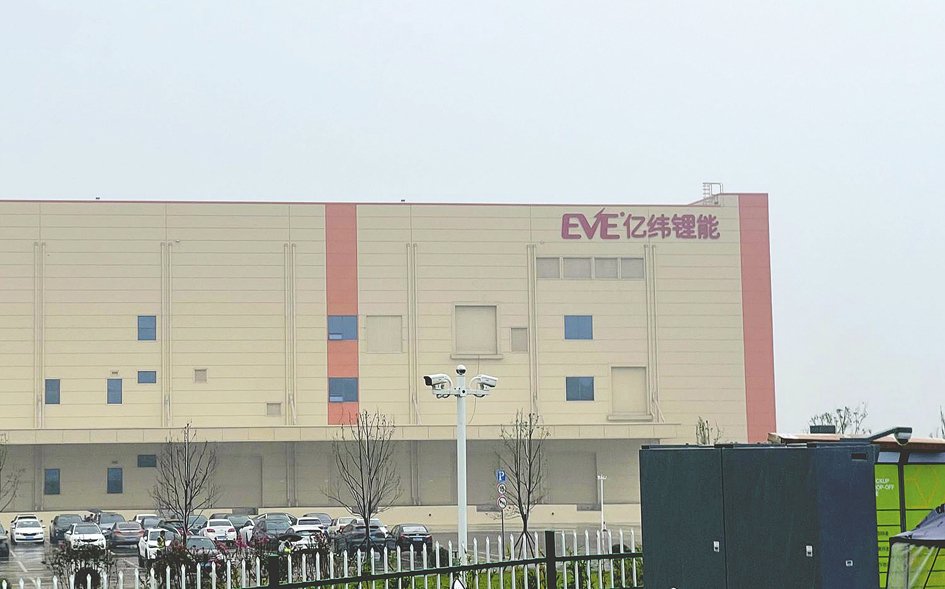
实探亿纬锂能固态电池基地:设备商驻场调试生产线
Mei Ri Jing Ji Xin Wen· 2025-09-07 12:21
Core Viewpoint - The solid-state battery sector in China is experiencing significant growth, with leading companies like XianDao Intelligent and Yiwei Lithium Energy seeing substantial stock price increases, indicating strong market interest and potential for future production [1][3][4]. Company Developments - Yiwei Lithium Energy's solid-state battery production line in Chengdu has begun testing, with plans for mass production targeting 2027 [3][4]. - The Chengdu facility aims for an annual production capacity of nearly 500,000 cells, with the first phase expected to be completed by December 2025 [4]. - The "Longquan No. 2" solid-state battery produced has a high energy density of 300Wh/kg and is intended for advanced applications such as humanoid robots and AI [4][8]. Industry Context - The global solid-state battery industry faces challenges, particularly in the U.S. and Japan, where companies are struggling with production timelines and technical hurdles [9][11]. - Chinese companies are accelerating their efforts, with Yiwei Lithium Energy and other firms like CATL targeting small-scale production by 2027 [17][18]. - The Chinese government is actively supporting the development of solid-state batteries, aiming to establish several leading companies in the sector by 2027 [18]. Technical Challenges - The solid-state battery technology is recognized as complex, with issues such as the "solid-solid interface" and the production of lithium sulfide posing significant challenges [12][15]. - Despite advancements, the commercial viability of solid-state batteries remains uncertain, with ongoing research needed to address material and production challenges [12][15][16].