绿水青山就是金山银山

Search documents
书写绿满中原新答卷
He Nan Ri Bao· 2025-08-14 23:24
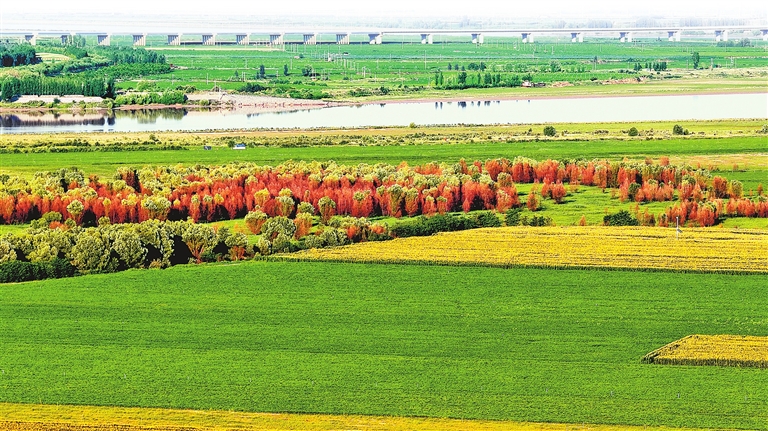
8月12日,在洛阳市孟津区会盟镇扣马村地段俯瞰,黄河两岸生态秀美、风景如画。 郑占波 马绍磊 摄 天气炎热,在嵩县车村镇、西峡县太平镇一带,连日高温催生清凉经济,当地人办起民宿,接待来此避暑的 人们。有游客表示,今年夏天已在嵩县连续住了三个月了。森林覆盖率高,旅游公路串起多个景区,避暑公 寓、民宿等业态兴起,当地居民吃上了旅游饭,经济转型有了新抓手。从卖石头到卖风景,保护生态环境, 每一分努力都不会被辜负,每一份力量都算数。"人不负青山,青山定不负人"的故事,每天都在中原大地精 彩演绎。 今年是"绿水青山就是金山银山"理念提出20周年,在全国生态日来临之际,我省召开深入学习贯彻习近平总 书记在河南考察时的重要讲话精神加强生态环境保护工作会议,对全省生态环境保护工作进行再部署,意义 重大。这既是贯彻落实习近平总书记在河南考察时重要讲话精神的重大举措,也表明了持之以恒提升生态环 境的决心信心。 生态文明建设是"国之大者",以习近平同志为核心的党中央把生态文明建设提升到前所未有的高度,在"五位 一体"总体布局中,生态文明建设是其中一位;在新发展理念中,绿色是其中一项;在到本世纪中叶建成社会 主义现代化强国目标中,美 ...

20年“山水生金” 这片绿色动人心
Zhong Guo Qing Nian Bao· 2025-08-14 22:49
Core Concept - The article emphasizes the integration of ecological preservation and economic development in Zhejiang, showcasing the success of the "Green Mountains and Clear Water are Gold and Silver Mountains" philosophy initiated by Xi Jinping, which has transformed local economies through sustainable practices [1][9]. Group 1: Economic Transformation through Youth Engagement - Anji County is focusing on attracting young talent as a key driver for transforming the "Two Mountains" concept into economic benefits, with a goal to recruit 100,000 young university students [2]. - The "Global Partners" program in Anji has led to over 60 partnerships and new economic projects, with more than 1,200 young people regularly working in the area [2]. Group 2: Tourism and Local Development - The "Cloud Grassland" scenic area in the Danyu Village region has seen significant growth, with 1.8 million visitors and a sports tourism revenue exceeding 820 million yuan in 2024, marking a 120% and 800% increase from 2019 respectively [3]. - Other villages in Zhejiang, such as Luli Keng, have transformed abandoned sites into community hubs, enhancing local tourism and economic activity [4]. Group 3: Innovative Agricultural Practices - In Qingtian County, the oil tea industry has evolved, with 107 "common prosperity workshops" established, creating over 7,900 jobs and increasing monthly income by more than 2,600 yuan per person [7]. - The integration of ecological practices in pearl farming in Zhuji has led to an annual production and sales value exceeding 50 billion yuan, showcasing a successful shift towards sustainable aquaculture [8]. Group 4: Cultural and Ecological Integration - The transformation of the former quarry site in Jinyun County into a cultural and tourism center illustrates the potential for blending ecological restoration with cultural development, attracting visitors and boosting local businesses [6]. - The establishment of a beekeeping industry in Lin Keng Village has created a sustainable income source, with 65 households producing 10,000 pounds of honey annually, contributing to local employment and economic growth [8]. Group 5: Sustainable Development Goals - The article highlights that the "Green Mountains and Clear Water are Gold and Silver Mountains" philosophy has become a new growth point for sustainable economic development in Zhejiang, focusing on both environmental protection and economic expansion [9].

守护青山,就是守护未来(山水间的财富密码①)
Ren Min Ri Bao Hai Wai Ban· 2025-08-14 22:10
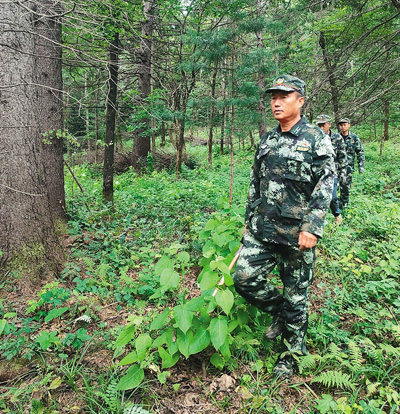
Core Viewpoint - The article highlights the successful implementation of the "Two Mountains" concept in China's forestry sector, showcasing the transformation from timber extraction to ecological conservation and economic development through sustainable practices [3][8]. Group 1: Ecological Transformation - The "Two Mountains" concept, proposed by Xi Jinping, emphasizes that ecological health can lead to economic prosperity, guiding China's development towards a model that balances production, living standards, and environmental sustainability [3]. - The article illustrates the shift in forestry practices in Heilongjiang Province, where the focus has moved from logging to forest protection, significantly improving biodiversity and forest density [4][8]. Group 2: Economic Opportunities - The transition from logging to forest conservation has resulted in increased incomes for former loggers, with one individual reporting a rise in monthly earnings from under 2,000 yuan to nearly 5,000 yuan as a forest ranger [4][8]. - The development of non-timber forest products, such as medicinal herbs, has created new revenue streams for local residents, with one farmer achieving a yield of 1,500 pounds per acre of a valuable herb, leading to significant economic benefits for the community [6][8]. Group 3: Tourism Development - The region has successfully developed eco-tourism, with local businesses adapting to attract visitors, such as transforming accommodations to offer unique experiences that highlight local culture and natural beauty [7][8]. - The eco-tourism sector has seen substantial growth, with one hotel reporting summer revenues exceeding 150,000 yuan, illustrating the economic impact of sustainable tourism practices [8]. Group 4: Community Engagement - Local residents are actively involved in the sustainable development process, sharing knowledge and resources to cultivate medicinal plants and promote eco-tourism, thereby enhancing community resilience and economic stability [6][8]. - The article emphasizes the importance of community collaboration in achieving ecological and economic goals, with local farmers and entrepreneurs working together to maximize the benefits of their natural resources [8].
守绿水青山 促绿富同兴
Ren Min Ri Bao· 2025-08-14 21:51
Core Viewpoint - The article emphasizes the successful implementation of the "Two Mountains" concept in Zhejiang, which integrates ecological protection with economic development, leading to significant improvements in both environmental quality and economic performance over the past 20 years [1][10]. Economic Development - Zhejiang's GDP has increased from 1.15 trillion yuan in 2004 to over 9 trillion yuan in 2024, showcasing a path of high-quality development that balances ecological beauty, economic strength, and wealth for the people [1]. - The province has invested over 700 billion yuan in circular economy transformations across 83 provincial parks during the "14th Five-Year Plan" period, focusing on recycling industries such as textiles, plastics, and metals [5]. Ecological Protection - The proportion of surface water quality at provincial control levels improved from 41.9% to 98.6% over 20 years, while PM2.5 average concentration decreased from 61 micrograms per cubic meter in 2013 to 26.1 micrograms per cubic meter currently [4]. - In the first half of this year, the total nitrogen and phosphorus concentrations in 23 national-controlled rivers entering the sea decreased by 16.7% and 36.2%, respectively, compared to 2020 [2]. Technological Innovation - Advanced technologies, such as particle quantum radar for air quality monitoring, are being utilized to create dynamic pollution maps, enabling rapid response to pollution sources [2]. - The transition from lead-acid batteries to new energy batteries in Changxing County has resulted in a reduction of local battery manufacturers from 175 to 16, while increasing output value by 14 times and tax contributions by 6 times [6]. Green Development - The province has seen a 38% reduction in energy consumption per unit of GDP over the past 20 years, making it one of the fastest provinces in terms of energy intensity reduction [7]. - The total output value of forestry in Qingyuan County is projected to reach 9.01 billion yuan in 2024, a 34.2% increase compared to 2022, driven by the cultivation of medicinal herbs and sustainable forestry practices [7]. Social Benefits - The income ratio between urban and rural residents in Zhejiang has decreased from 2.45 to 1.83 over the past 20 years, indicating a more balanced economic development driven by the beautiful economy [8]. - The ecological environment has significantly improved, with public satisfaction regarding ecological conditions rising to 88.71 in 2024, marking a continuous increase over 13 years [10].
黄河入鲁第一村,“变”出滩头好日子
Qi Lu Wan Bao· 2025-08-14 21:24
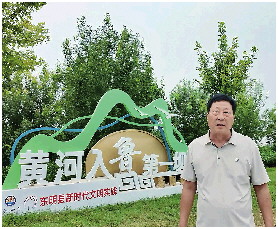
Core Viewpoint - The transformation of the first village where the Yellow River enters Shandong has led to significant ecological improvements, enhancing the quality of life for local residents and attracting tourism [2][3][5]. Group 1: Ecological Changes - The previously barren land has seen a revival, with clearer water and the return of wildlife such as rabbits and birds, indicating a healthier ecosystem [3][5]. - The water quality of the Yellow River has improved, with dissolved oxygen levels at 8.5 mg/L and a pH of 7.6, meeting environmental standards [6][7]. Group 2: Economic Impact - The improved environment has allowed local residents to establish businesses, such as farm stays, leading to increased income and reduced outmigration of youth [5][9]. - The establishment of the East Ming Yellow River National Wetland Park has attracted over 100,000 migratory birds annually, boosting local tourism [5][9]. Group 3: Inter-Provincial Cooperation - A unique ecological compensation agreement between Shandong and Henan was established to protect the Yellow River, with Shandong providing 1.26 billion yuan in compensation for water quality improvements [7][9]. - The second round of the compensation agreement has shifted the monitoring from annual to monthly, with additional focus on total nitrogen levels [7][9]. Group 4: Policy and Future Directions - The "green bet" mechanism has been recognized as a pioneering model for inter-provincial ecological compensation in China, promoting sustainable development [10][11]. - The government aims to expand this compensation mechanism to cover various ecological elements by 2027, enhancing the overall environmental governance framework [11].
零碳小岛连世界,国际朋友圈喜扩容
Qi Lu Wan Bao· 2025-08-14 21:24
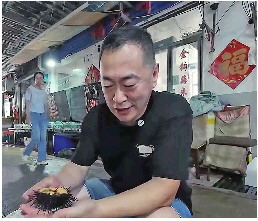
Core Insights - Yantai Changdao is experiencing a tourism boom this summer, attracting visitors with local experiences and showcasing its commitment to low-carbon practices through initiatives like the "International Zero Carbon Island" [2][6] - The transformation from a coal-dependent economy to a sustainable model has resulted in significant ecological and economic benefits for the local community, with an annual output value reaching over 60 million yuan [4][5] Group 1: Ecological Transformation - The village of Sunjia has shifted from a heavy reliance on sea cucumber farming, which caused environmental degradation, to eco-friendly practices that restore marine ecosystems [3][4] - The implementation of the "solid algae collection and fish" ecological restoration project has led to the protection of marine algae and the recovery of local fish populations, contributing to carbon sequestration [4][6] - The carbon sequestration capacity of the marine algae beds is significant, with reports indicating that the intertidal zone can sequester 187.31 grams of carbon per square meter [4] Group 2: Economic Development - The local economy has diversified with the establishment of high-end homestays, generating substantial profits during peak tourist seasons, with daily gross profits reaching 15,000 yuan [5] - The overall annual output value of the village has increased to over 60 million yuan, demonstrating the economic benefits of sustainable practices [4] Group 3: Zero Carbon Initiatives - Yantai has set ambitious goals for achieving net-zero greenhouse gas emissions by 2035, with comprehensive plans for clean energy, waste management, and sustainable tourism [6][9] - The "International Zero Carbon Island Cooperation Organization" has been established to promote sustainable development practices among island nations, emphasizing the integration of ecological and economic benefits [10][11] Group 4: Biodiversity and Conservation - The return of the spotted seal population to Changdao is a positive indicator of the improved marine ecosystem, with sightings increasing significantly in recent years [6][8] - The area has also seen a rise in various bird species, contributing to the region's biodiversity [9]
【看见美丽中国】生态“含绿量”成发展“含金量” 看石漠化山村的绿色蜕变
Yang Shi Wang· 2025-08-14 16:28
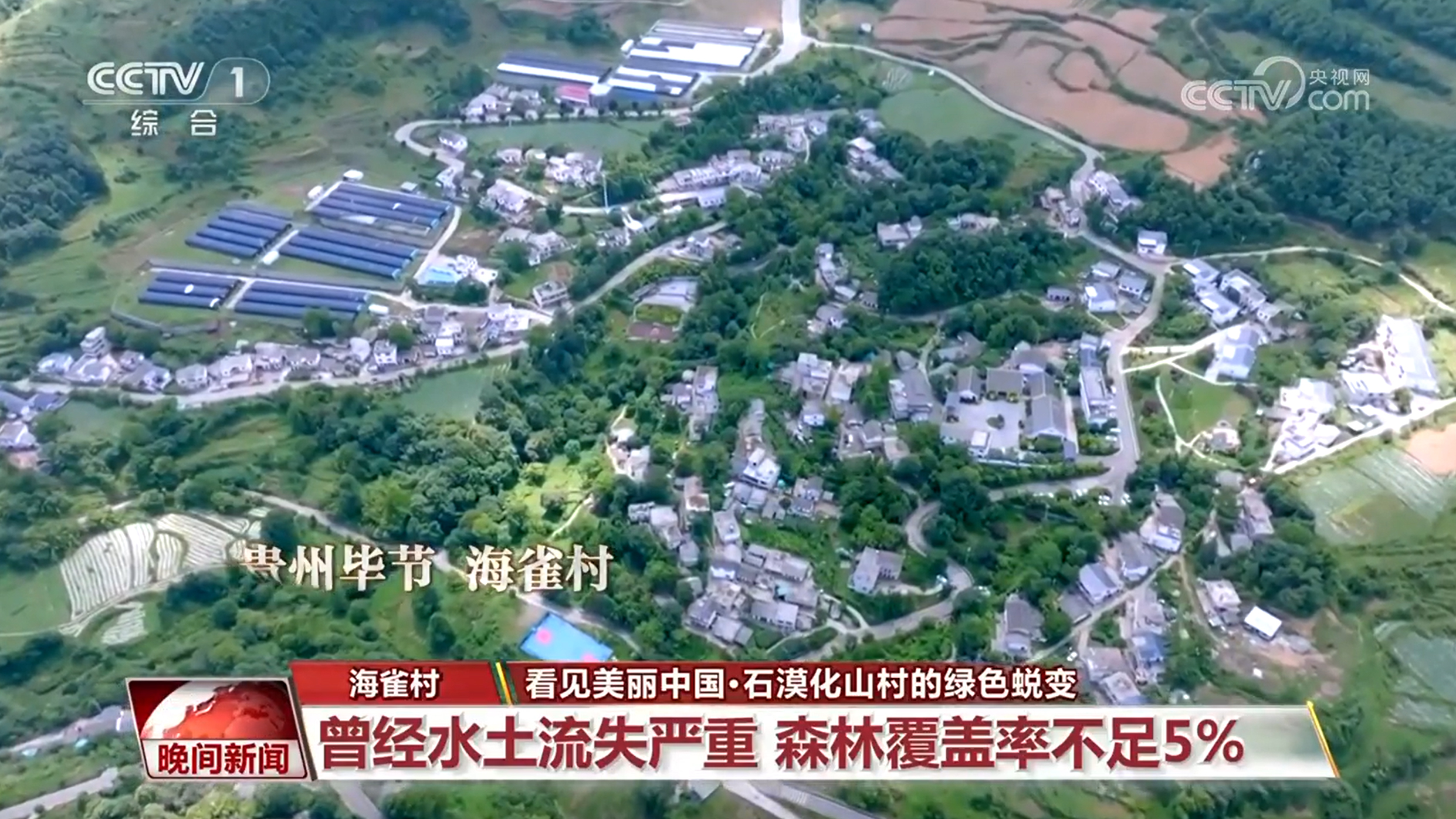
Core Viewpoint - The transformation of Haizhu Village in Bijie City, Guizhou Province, from a severely impoverished and ecologically degraded area to a thriving community with improved living conditions and sustainable development practices is highlighted, showcasing the impact of targeted ecological restoration and economic initiatives [1][6][25]. Group 1: Historical Context - Haizhu Village was once characterized by severe stone desertification, with a forest coverage rate of only 5% and significant soil erosion, leading to extreme poverty among residents [6][10]. - The establishment of the Bijie Experimental Zone in 1988 marked the beginning of efforts to combat poverty and ecological degradation in the region [7][10]. Group 2: Ecological Restoration Efforts - Local leaders and villagers actively participated in reforestation efforts, planting over 13,000 acres of Huashan pine, which significantly improved the local ecosystem [10][12]. - The implementation of the national stone desertification comprehensive management pilot project in 2008 further supported ecological restoration initiatives across Bijie [12]. Group 3: Economic Development - The village has shifted towards developing a forest economy, focusing on the cultivation of wild-simulated Tianma (a medicinal herb) and organic vegetables, which are well-suited to the local climate [15][20]. - The introduction of eco-tourism, leveraging the village's unique cultural heritage and improved ecological environment, has become a new source of income for residents [21][24]. Group 4: Current Achievements - As of 2024, Haizhu Village boasts 13,700 acres of forest with a coverage rate of 77.21%, and the carbon credits generated from these forests are valued at over 3 million yuan, contributing to increased household income [25][27]. - The village has received multiple accolades for its ecological and cultural initiatives, reinforcing its status as a model for sustainable rural development [25].
焦点访谈|书写生态答卷,各地交出亮眼“绿色成绩单”
Yang Shi Wang· 2025-08-14 13:26
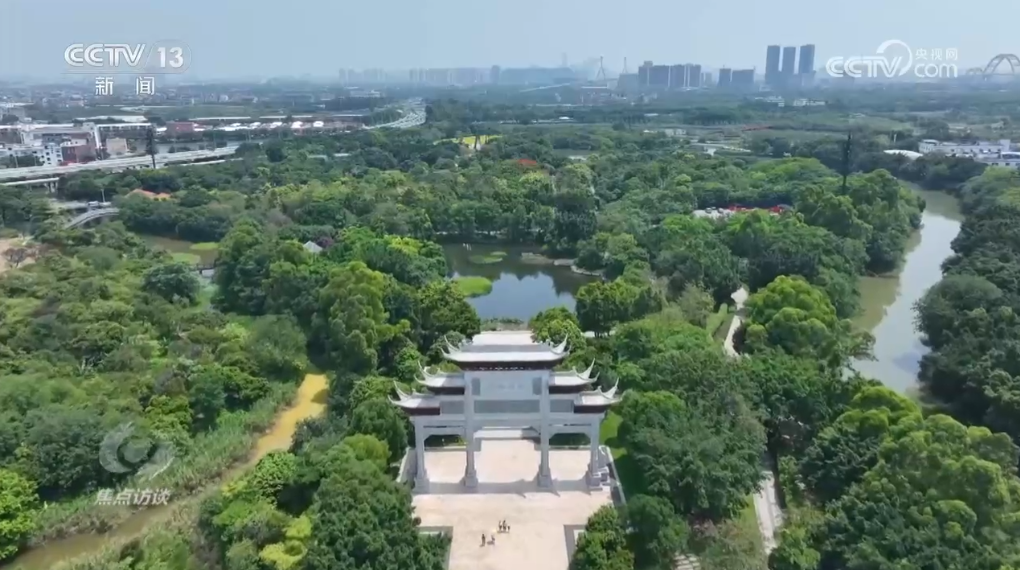
Group 1 - Urban areas are crucial for modernization and the well-being of over 900 million urban residents, emphasizing the importance of ecological environment [1] - The Haizhu National Wetland Park in Guangzhou, known as the "green heart" of the city, spans over 16,000 acres and is a rare large wetland park located in the center of a major city [3] - The transformation of Haizhu Wetland from a polluted area to a thriving ecological park involved significant investment and legislative measures to protect the land for ecological purposes [5][7] Group 2 - The ecological restoration efforts in Guangzhou have led to a significant increase in biodiversity, with plant species rising from 294 to 835, insect species from 42 to 903, and bird species from 72 to 202 over a decade [9] - The construction of pocket parks in Ma'anshan City has improved urban green space, with a green space rate of 44.52% and an increase in per capita park area by 4.06 square meters compared to 2022 [14] - The successful management of the Naka River in Nanning, which transformed from a polluted waterway to a clean ecosystem, serves as a model for other cities in addressing urban water pollution [22]
习近平总书记关切事丨生态守护亮“新”技
Xin Hua She· 2025-08-14 12:28
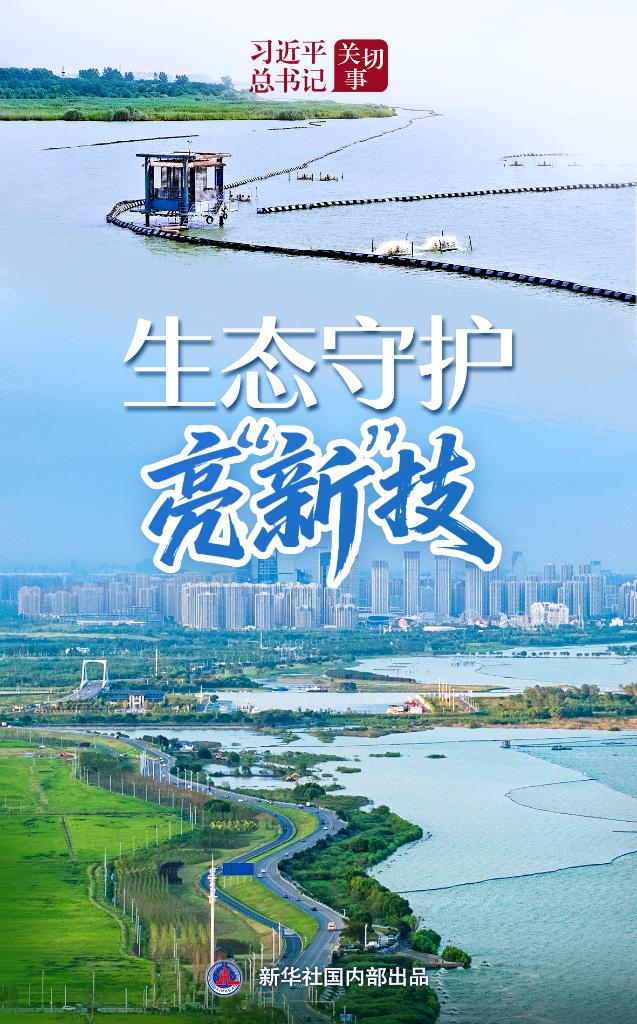
Group 1 - The concept of "Green Mountains and Clear Water are as Valuable as Mountains of Gold and Silver" has been emphasized by General Secretary Xi Jinping, marking its 20th anniversary this year [2] - Technology is identified as a key force in ecological governance and supporting high-quality development, facilitating green development and the protection of natural resources [2] - Various regions have adopted technological innovations in ecological restoration and environmental governance, enhancing the effectiveness of green development initiatives [2] Group 2 - The Chaohu Lake, one of China's five major freshwater lakes, has been highlighted for its ecological importance and the need for effective governance [4] - Local volunteers have been actively involved in cleaning up the lake, addressing severe blue-green algae pollution that previously affected water quality [5][6] - Technological advancements, such as the "Digital Chaohu" system and deep well algae control platforms, have significantly improved the efficiency of blue-green algae removal, processing up to 786,000 cubic meters daily [7][8] Group 3 - In Ningxia, new technologies for desertification control, such as "grass grids + artificial blue-green algae crusts," have been developed to enhance ecological restoration in arid regions [14] - The artificial blue-green algae crusts can effectively stabilize sandy surfaces and promote ecosystem recovery, even under drought conditions [16] - The successful application of these technologies has expanded to 3,600 acres in the Tengger Desert, demonstrating significant progress in combating desertification [17] Group 4 - The "Qinghai Ecological Window" remote video monitoring system has been established to enhance wildlife protection efforts in ecologically sensitive areas [20][21] - The number of monitoring points has increased from 6 to 76, allowing for comprehensive real-time monitoring of various ecological types and landscapes [21] - Technological advancements have improved the efficiency of ecological patrols, enabling better tracking and protection of endangered species like the snow leopard and Tibetan antelope [23][26]
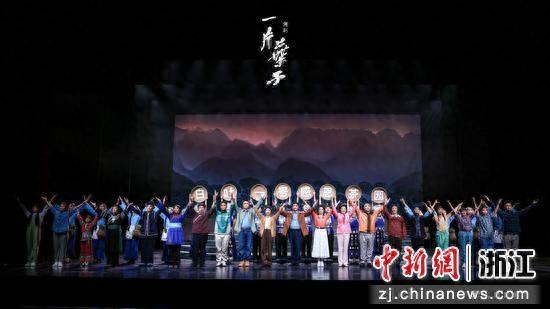
逐绿前行 原创现实题材湖剧《一片叶子》首演落幕
Zhong Guo Xin Wen Wang· 2025-08-14 09:48
Core Viewpoint - The article highlights the premiere of the original lake drama "A Leaf" in Huzhou, which embodies the concept of "Lucid waters and lush mountains are invaluable assets" and showcases the local story of ecological transformation and common prosperity through the tea industry [1][4]. Group 1: Cultural Significance - The drama "A Leaf" is based on the rural revitalization story of Huangdu Village in Anji County, illustrating how local leaders and community members achieved common prosperity through green transformation in the tea industry [1][3]. - The performance aims to celebrate the 20th anniversary of the "Lucid waters and lush mountains are invaluable assets" philosophy, emphasizing the importance of cultural expression in promoting local stories [1][4]. Group 2: Creative Process - The creative team conducted field research in Anji and Guizhou's Leishan for nearly two years, focusing on the narrative of ecological assistance and community support, which is central to the drama [3]. - The integration of ethnic artistic elements with traditional lake drama enhances the storytelling, allowing audiences to experience the beauty of the mountains and the hope of shared prosperity [3]. Group 3: Future Plans - Following its premiere, "A Leaf" is scheduled to perform at the National Grand Theatre on September 24, aiming to reach a broader audience and share Huzhou's journey towards ecological development [3]. - The production features a diverse cast, including seasoned actors and young performers, reflecting a commitment to preserving and innovating local cultural heritage [3].