
区域协调发展

Search documents
山东省委书记林武:努力打造北方地区经济重要增长极
Bei Jing Ri Bao Ke Hu Duan· 2025-10-29 00:50
Core Points - The 20th Central Committee's Fourth Plenary Session emphasizes the importance of the "14th Five-Year Plan" and the upcoming "15th Five-Year Plan," showcasing the strategic planning and responsibility of the central leadership under Xi Jinping [1][2][3] - The session aims to unify thoughts and actions around the significant achievements during the "14th Five-Year Plan" and to outline the strategic tasks for the "15th Five-Year Plan" [2][3] Summary by Sections Economic Development - Shandong's GDP is projected to increase from 7.44 trillion yuan in 2020 to 9.86 trillion yuan by 2024, with expectations to surpass 10 trillion yuan this year [5] - The high-tech industry accounts for 55.2% of the total industrial output, with over 35,000 high-tech enterprises [5] - The province's non-fossil energy installed capacity exceeds 130 million kilowatts, representing 53.4% of the total, with a cumulative reduction of 18.5% in energy consumption per unit of GDP over four years [5] Social Development - Shandong has implemented 20 key livelihood projects, maintaining a fiscal expenditure on people's livelihoods at around 80%, with an average annual growth of 6.4% in per capita disposable income over four years [5] Strategic Planning - The "15th Five-Year Plan" focuses on high-quality development, emphasizing the need for quality, efficiency, and innovation in economic growth [7][10] - The plan aims to address existing issues such as insufficient innovation capacity and regional development imbalances [8] Regional Coordination - The strategy includes promoting regional coordination and urban-rural integration, with a focus on the Yellow River's ecological protection and the development of a modern marine economy [12] Common Prosperity - The plan emphasizes enhancing public services and social security systems to ensure equitable access to resources and opportunities for all citizens [13] Safety and Security - The strategy incorporates a comprehensive approach to maintaining economic and social stability, addressing risks in various sectors, including finance and production safety [14] Implementation and Accountability - The emphasis is on strong execution of the plans, with clear timelines and responsibilities assigned to ensure that the objectives of the "15th Five-Year Plan" are met effectively [15][16][17]
聚焦“十五五”规划建议|为基本实现社会主义现代化夯实基础、全面发力——从“十五五”规划建议看奋力开创中国式现代化建设新局面
Xin Hua Wang· 2025-10-29 00:27
Core Points - The "15th Five-Year Plan" is crucial for laying a solid foundation for achieving socialist modernization by 2035, as emphasized by Xi Jinping [1] - The plan outlines systematic strategies for economic and social development, focusing on high-quality growth, technological self-reliance, and enhanced national security [2][3] Economic and Social Development Goals - The plan sets seven main goals for the "15th Five-Year" period, including significant achievements in high-quality development, technological independence, and improved living standards [2] - It aims for per capita GDP to reach the level of middle-developed countries by 2035, indicating a substantial increase from current levels [3] Modern Industrial System - Emphasis on building a modern industrial system as the material and technical foundation for Chinese-style modernization, focusing on the real economy and advanced manufacturing [4] - The plan anticipates an additional market space of approximately 10 trillion yuan over the next five years through the effective upgrading of traditional industries [4] Technological Innovation - The plan highlights the importance of technological modernization, aiming to enhance the national innovation system and boost self-innovation capabilities [6] - Key areas for technological breakthroughs include integrated circuits, advanced materials, and biomanufacturing [6][7] Domestic Market Development - Strengthening the domestic market is identified as a strategic foundation for modernization, with a focus on expanding domestic demand and improving consumption [8][9] - The plan includes measures to enhance investment efficiency and increase the proportion of government investment in people's livelihoods [9] High-Level Opening Up - The plan emphasizes expanding high-level openness and cooperation, aiming to enhance trade and investment while maintaining a focus on domestic strengths [14][15] - Specific initiatives include optimizing trade structures and promoting digital trade [15] Agricultural Modernization - The plan prioritizes agricultural modernization and rural revitalization, aiming to improve agricultural productivity and living conditions in rural areas [16][17] - It includes measures to ensure food security and promote sustainable agricultural practices [17] Regional Economic Coordination - The plan aims to optimize regional economic layouts and promote coordinated development across regions, enhancing the synergy between urban and rural areas [18][19] - It includes initiatives for urbanization and improving infrastructure in rural areas [20] Cultural Development - Cultural prosperity is highlighted as a key aspect of modernization, with a focus on enhancing cultural innovation and public cultural services [21][22] Social Welfare and Quality of Life - The plan emphasizes improving living standards and social welfare, aiming for equitable access to resources and services [23][24] - It includes strategies for enhancing education, healthcare, and housing quality [24][25] Environmental Sustainability - The plan stresses the importance of green development and ecological protection, aiming for significant progress in building a "Beautiful China" [26][27] - It outlines measures for carbon neutrality and sustainable resource management [27] National Security - Strengthening national security is a key focus, with strategies to enhance the national security system and address various risks [28][29] - The plan emphasizes the need for a comprehensive approach to security that integrates development and safety [29][30] Defense Modernization - The plan outlines goals for modernizing national defense and the military, emphasizing the importance of a strong military for national security [31][32] Party Leadership - The plan underscores the necessity of the Party's leadership in driving modernization efforts, ensuring that all initiatives align with the Party's directives [33][34] - It emphasizes the importance of maintaining a unified approach to governance and policy implementation [34][35]
蓝图绘就话担当(前沿观察)
Ren Min Ri Bao· 2025-10-28 22:30
Group 1 - The article emphasizes the importance of accelerating high-level technological self-reliance and innovation as a key driver for high-quality development [7][8] - The Beijing Huairou Science City is highlighted as a major hub for advanced scientific research, with 29 out of 37 planned scientific facilities already operational, producing 430 research outcomes [7][8] - The establishment of 19 technology service teams aims to support innovation by providing tailored assistance to researchers and entrepreneurs [8][9] Group 2 - The G60 Science and Technology Corridor is presented as a collaborative platform for regional innovation, facilitating resource flow and addressing development challenges through cooperation among nine cities [10][11] - The article notes that the average R&D investment intensity among the G60 cities reached 3.77% during the 14th Five-Year Plan period, with high-tech enterprises accounting for approximately 13.5% of the national total [11][12] Group 3 - The article discusses ecological protection efforts in Qinghai Province, emphasizing the establishment of a management system for ecological conservation in the Sanjiangyuan National Park [14][15] - The integration of ecological protection with economic development is highlighted, showcasing how local communities are benefiting from eco-tourism and sustainable practices [15] Group 4 - In Yunnan Province, the focus is on poverty alleviation through agricultural modernization, with local leaders actively seeking funding and developing livestock and medicinal herb industries [16][17] - The article mentions that since 2021, over 12,000 impoverished individuals in the region have achieved stable income through various agricultural initiatives [17] Group 5 - The article outlines the efforts of the Nanning Free Trade Zone to enhance cross-border trade efficiency, with significant improvements in customs processes leading to faster clearance times [18][19] - Data indicates that the Nanning area has seen a cumulative import and export value exceeding 290 billion yuan over the past five years, with notable growth in sectors like new energy vehicles and lithium batteries [19][20]

中共中央关于制定国民经济和社会发展第十五个五年规划的建议
国家能源局· 2025-10-28 09:18
Core Viewpoint - The "15th Five-Year Plan" period is crucial for achieving basic socialist modernization, building on the significant achievements of the "14th Five-Year Plan" period, and addressing complex domestic and international challenges [3][4][5]. Group 1: Achievements and Challenges - The "14th Five-Year Plan" period saw major achievements in economic stability, high-quality development, technological innovation, and social governance, despite facing severe challenges such as the pandemic [3]. - The "15th Five-Year Plan" period will focus on consolidating advantages, breaking bottlenecks, and addressing weaknesses to secure strategic initiatives in international competition [4][5]. Group 2: Economic and Social Development Goals - The guiding principles for economic and social development during the "15th Five-Year Plan" include adhering to Marxism, promoting high-quality development, and ensuring that modernization benefits all people [8][9]. - Key goals include achieving significant results in high-quality development, enhancing self-reliance in technology, and improving the quality of life for citizens [11][12][13]. Group 3: Modern Industrial System - The establishment of a modern industrial system is essential, focusing on optimizing traditional industries, fostering emerging industries, and enhancing service sector development [14][15][16]. Group 4: Technological Innovation - Accelerating technological self-reliance and innovation is vital, with an emphasis on original innovation and the integration of technology with industry [17][18][19]. Group 5: Domestic Market Development - Strengthening the domestic market is a strategic priority, with initiatives aimed at boosting consumption, expanding effective investment, and removing barriers to market integration [21][22][23][24]. Group 6: High-Level Socialist Market Economy - Building a high-level socialist market economy involves enhancing the vitality of various economic entities, improving the market allocation of resources, and ensuring sustainable fiscal policies [25][26][27][28]. Group 7: Opening Up and International Cooperation - Expanding high-level openness and cooperation is essential, focusing on trade innovation, investment cooperation, and the Belt and Road Initiative [29][30][31]. Group 8: Agricultural Modernization - Promoting agricultural modernization is crucial for overall modernization, with efforts to enhance agricultural productivity and improve rural living conditions [32][33][34][35]. Group 9: Regional Economic Coordination - Optimizing regional economic layouts and promoting coordinated development across regions are necessary for achieving balanced growth [36][37][38]. Group 10: Cultural Development - Fostering cultural innovation and development is a key aspect of modernization, emphasizing the promotion of socialist core values and cultural industries [39][40][41]. Group 11: Improving People's Livelihoods - Enhancing the quality of life for citizens through employment, income distribution, education, and social welfare is fundamental to achieving common prosperity [42][43][44][45].
中共中央关于制定国民经济和社会发展第十五个五年规划的建议
Wind万得· 2025-10-28 09:07
Core Viewpoint - The article emphasizes the importance of the 15th Five-Year Plan as a critical period for achieving socialist modernization in China, highlighting the need for strategic initiatives to address both opportunities and challenges in the domestic and international landscape [5][6][7]. Group 1: Achievements and Context - The 14th Five-Year Plan has led to significant achievements in China's development, including economic stability, technological innovation, and improved living standards, despite facing challenges such as the pandemic and international tensions [5]. - The 15th Five-Year Plan is positioned as a transitional phase that builds on past successes while addressing existing challenges to lay a solid foundation for future modernization efforts [6]. Group 2: Development Environment - The international landscape is characterized by rapid changes, including shifts in global power dynamics, technological revolutions, and rising protectionism, which pose both risks and opportunities for China's development [7]. - Domestically, China maintains a strong economic foundation but faces issues such as uneven development, insufficient demand, and demographic changes that require strategic responses [7]. Group 3: Guiding Principles and Goals - The guiding principles for the 15th Five-Year Plan include upholding the leadership of the Communist Party, prioritizing people-centered development, and focusing on high-quality growth [9][10]. - Key goals include achieving significant advancements in high-quality development, technological self-reliance, and comprehensive reforms, alongside improvements in social welfare and environmental sustainability [13][14]. Group 4: Economic Structure and Innovation - The plan emphasizes the need to strengthen the real economy, enhance traditional industries, and foster emerging sectors, with a focus on innovation and sustainability [15][16]. - A modernized industrial system is essential for supporting China's unique modernization, with an emphasis on advanced manufacturing and the integration of digital technologies [15][18]. Group 5: Domestic Market and Investment - Strengthening the domestic market is crucial for driving economic growth, with initiatives aimed at boosting consumption and effective investment [23][24]. - The plan outlines strategies to eliminate barriers to market integration and enhance the efficiency of resource allocation across various sectors [25][27]. Group 6: Social Development and Welfare - The plan prioritizes improving living standards and social welfare, with a focus on employment, income distribution, and education [41][42]. - Enhancing the social security system and ensuring equitable access to resources are key components of the strategy to achieve common prosperity [44].

重磅!“十五五”规划建议全文公布
中国基金报· 2025-10-28 08:55
Core Viewpoint - The "15th Five-Year Plan" period is crucial for achieving basic socialist modernization, building on the significant achievements of the "14th Five-Year Plan" and addressing complex domestic and international challenges [2][3][4]. Group 1: Achievements and Challenges - The "14th Five-Year Plan" saw major accomplishments, including stable economic growth, advancements in technology and innovation, and improvements in social governance and national security [2]. - The "15th Five-Year Plan" will focus on consolidating advantages, overcoming bottlenecks, and addressing shortcomings to secure strategic advantages in international competition [3][4]. Group 2: Economic and Social Development Guidelines - The guiding ideology for the "15th Five-Year Plan" emphasizes the importance of Marxism, Xi Jinping's thoughts, and the goal of building a modern socialist country [6]. - Key principles include maintaining the Party's leadership, prioritizing people’s needs, promoting high-quality development, and deepening reforms [7][8]. Group 3: Economic Goals - Significant improvements in high-quality development are expected, with economic growth maintained within a reasonable range and increased domestic consumption driving growth [9]. - The plan aims for substantial advancements in self-reliance in technology, with a focus on innovation and integration of technology and industry [9]. Group 4: Modern Industrial System - The establishment of a modern industrial system is essential, focusing on the real economy and promoting intelligent, green, and integrated development [11]. - Traditional industries will be optimized, and new and future industries will be cultivated to enhance competitiveness [12][13]. Group 5: Domestic Market Development - Strengthening the domestic market is a strategic priority, with initiatives to boost consumption and effective investment [19][20]. - The plan includes measures to eliminate barriers to a unified national market and enhance market efficiency [22]. Group 6: High-Level Open Economy - Expanding high-level openness and cooperation is vital, with a focus on aligning with international trade rules and enhancing trade and investment [26][27]. - The plan emphasizes the importance of the Belt and Road Initiative and international collaboration in various sectors [28]. Group 7: Agricultural Modernization - Agricultural modernization is a key focus, with efforts to enhance production capacity and quality while ensuring rural revitalization [28][29]. - Policies will be implemented to improve living conditions in rural areas and support sustainable agricultural practices [30]. Group 8: Cultural Development - Promoting cultural innovation and development is essential for modernizing society, with a focus on core socialist values and enhancing cultural confidence [35][36]. - The plan aims to foster a vibrant cultural ecosystem and improve the quality of cultural services [37]. Group 9: Social Welfare and Common Prosperity - Enhancing social welfare and ensuring common prosperity are central to the plan, with strategies to improve employment, income distribution, and education [39][40][41]. - The establishment of a comprehensive social security system is prioritized to support vulnerable populations and promote social equity [42].
中共中央关于制定国民经济和社会发展第十五个五年规划的建议
财联社· 2025-10-28 08:45
Core Viewpoint - The "15th Five-Year Plan" period is crucial for achieving basic socialist modernization, building on the significant achievements of the "14th Five-Year Plan" and addressing complex domestic and international challenges [3][4][5]. Group 1: Achievements and Challenges - The "14th Five-Year Plan" saw major accomplishments in economic stability, high-quality development, technological innovation, and social governance despite the severe impact of the pandemic [3]. - The "15th Five-Year Plan" will focus on consolidating advantages, overcoming bottlenecks, and enhancing weaknesses to secure strategic initiatives in international competition [4]. - The development environment is characterized by profound changes, with both strategic opportunities and risks present, necessitating a proactive approach to navigate uncertainties [5][6]. Group 2: Guiding Principles and Goals - The guiding ideology for the "15th Five-Year Plan" emphasizes Marxism, Xi Jinping's thoughts, and the goal of building a modern socialist country while promoting high-quality development and comprehensive reforms [7][8]. - Key goals include achieving significant results in high-quality development, enhancing self-reliance in technology, and improving the overall governance system [10][11]. Group 3: Economic and Social Development - The plan aims for a notable increase in economic growth, productivity, and consumer spending, with a focus on building a unified national market and promoting new industrialization [10][12]. - The emphasis will be on fostering emerging industries, optimizing traditional sectors, and enhancing service industry quality [13][19]. Group 4: Infrastructure and Technological Advancement - A modernized infrastructure system will be developed, focusing on integrating new technologies and enhancing resilience [14]. - The plan prioritizes technological self-reliance, with significant investments in key areas such as semiconductor technology and advanced materials [15][16]. Group 5: Domestic Market and Investment - Strengthening the domestic market is essential, with strategies to boost consumption and effective investment [20][21]. - The plan includes measures to eliminate barriers to market integration and enhance the investment environment for both domestic and foreign entities [22][23]. Group 6: Rural Modernization and Regional Development - Agricultural modernization is a priority, with efforts to improve production capacity and quality while ensuring rural revitalization [29][30]. - The plan promotes regional coordination, aiming to balance development across different areas and enhance infrastructure connectivity [32][33]. Group 7: Cultural and Social Development - Cultural innovation and the promotion of socialist values are highlighted as key components of modernization [35][36]. - The plan aims to improve living standards and social welfare, ensuring that development benefits all citizens [38][39].

奋进“十五五” 续写新篇章|“人享其行、物畅其流”加快实现 重塑区域经济格局
Yang Shi Wang· 2025-10-28 03:21
Core Points - The article emphasizes the importance of promoting regional coordinated development as a crucial support for achieving high-quality development and advancing Chinese-style modernization [1] - The "14th Five-Year Plan" suggests optimizing regional economic layout and promoting coordinated development [1] Group 1: Regional Development Strategies - The article discusses the integration of various strategies such as regional coordinated development, major regional strategies, functional area strategies, and new urbanization strategies to enhance productivity layout and leverage key regional growth [2] - It highlights the need to enhance regional development coordination, promote inter-regional development, and optimize land spatial development patterns [2] Group 2: Infrastructure Development - The completion of the Urumqi-Weili Highway is set to transform the economic landscape of Xinjiang by significantly reducing travel time between Urumqi and Korla from 7 hours to 3 hours [3] - The highway, with a total investment of 46.7 billion and a length of 319.7 kilometers, is nearing completion, with the last major project being the Victory Tunnel [3][5] - The construction of the highway has faced unprecedented challenges due to high altitude and harsh conditions, but it is expected to be operational by the end of this year [5] Group 3: Economic Impact - The new highway is anticipated to stimulate local economies, with businesses such as dairy production and hospitality already preparing for increased traffic and economic activity [9] - The article notes that the national comprehensive transportation network has connected over 80% of county-level administrative regions, supporting approximately 90% of the economy and population [11] - The development of advanced transportation networks is expected to significantly enhance the flow of goods and people, thereby supporting sustained economic growth [11]
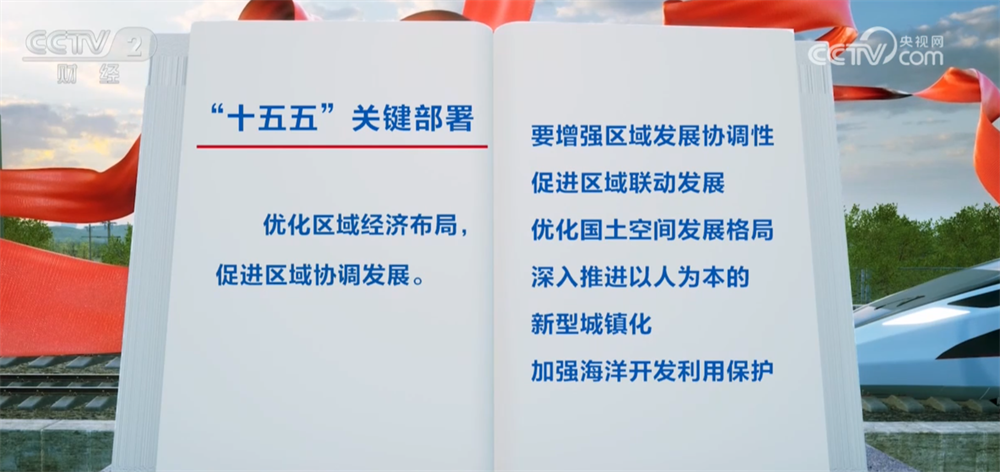
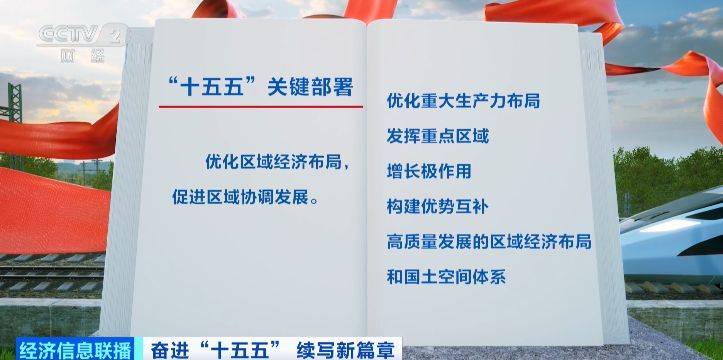
“十五五”关键部署:优化区域经济布局 促进区域协调发展
Sou Hu Cai Jing· 2025-10-27 14:43
Group 1 - The core viewpoint emphasizes that promoting regional coordinated development is essential for achieving high-quality growth and advancing Chinese-style modernization [1] - The "14th Five-Year Plan" suggests optimizing regional economic layout and promoting coordinated regional development [1] Group 2 - The strategy aims to leverage the combined effects of regional coordinated development, major regional strategies, principal functional area strategies, and new urbanization strategies to optimize the layout of major productive forces [3] - It highlights the importance of enhancing regional development coordination, promoting regional interconnected development, and optimizing the spatial development pattern of the territory [3] - The initiative also focuses on advancing people-centered new urbanization and strengthening marine development and protection [3]
国家邮政局:前三季度邮政行业业务收入同比增长7.7%
Zhong Guo Xin Wen Wang· 2025-10-27 03:07
Core Insights - The postal industry in China has shown a steady and positive trend in the first three quarters of 2023, providing robust delivery support for economic and social development [1][3] Industry Performance - The postal industry achieved a business revenue of 1.3 trillion yuan and a delivery volume of 158.26 billion items, representing year-on-year growth of 7.7% and 15.0% respectively [1] - Express delivery revenue reached 1.1 trillion yuan with a volume of 145.08 billion items, marking year-on-year increases of 8.9% and 17.2% [1] - The average price of express delivery stabilized and increased by 0.5% in Q3 compared to Q2, with average prices recorded at 7.35 yuan/item, 7.36 yuan/item, and 7.55 yuan/item for July, August, and September respectively [1] Service Quality - The on-time delivery rate in key regions reached 86.47% in Q3, an improvement of 2.08 percentage points year-on-year [1] - Public satisfaction with express delivery services scored 85.0 points, an increase of 1.3 points from the previous year [1] Growth Drivers - Cross-regional express delivery is the main driver of growth, with revenue and volume reaching 534.76 billion yuan and 130.17 billion items, reflecting year-on-year growth of 6.9% and 18.6% [2] - Cross-regional business contributed 96% to the overall growth in express delivery volume [2] - The central and western regions saw significant growth, with revenue and volume increasing by 12.8% and 23.9% respectively, enhancing their share of the national total [2] Infrastructure and Innovation - New logistics parks and hubs are being developed, with increasing integration of express services with railways, airports, and other transport modes [2] - The application of unmanned vehicles and drones is rapidly expanding, alongside continuous innovation in customized delivery services [2] Regulatory and Governance Improvements - The postal industry is advancing its governance capabilities, focusing on integrating party building with business operations and addressing issues of competition and service quality [3] - Efforts are being made to enhance the rural delivery logistics system and improve service quality and market order [3] - The implementation of the "Interim Regulations on Express Delivery" is being promoted to strengthen industry oversight [3]