新型能源体系

Search documents
数据中心引发全球“用电荒”,关注电网设备行业超级周期
Mei Ri Jing Ji Xin Wen· 2025-12-02 05:28
Core Viewpoint - The electric grid equipment sector is experiencing a downturn alongside the broader A-share market, but it has shown resilience with significant inflows into the electric grid equipment ETF, indicating strong investor interest and potential growth opportunities in the sector driven by AI and energy demands [1][2]. Group 1: Market Performance - As of December 2, the A-share market indices collectively retreated, with the electric grid equipment ETF (159326) declining by 1.34% and a trading volume of 126 million yuan [1]. - The electric grid equipment ETF has seen net inflows for three consecutive trading days, totaling over 208 million yuan, reaching a new high of 2.096 billion yuan in total assets [1]. Group 2: Industry Dynamics - The AI computing boom is causing global electricity supply tensions, with Microsoft highlighting electricity shortages as a bottleneck for AI industry development, transforming electric grid equipment from traditional infrastructure to a core asset of the digital economy [1]. - The demand for electricity driven by AI and the necessity for grid upgrades provide strong support for the long-term development of the electric grid equipment industry [1]. - CITIC Securities emphasizes the importance of a new energy system in the "14th Five-Year Plan," focusing on long-term development priorities such as consumption, resilience, and electrification in power system construction [1]. - The policy guidance is expected to solidify medium to long-term opportunities in ultra-high voltage, flexible DC transmission, and smart grid sectors, while short-term demand for transmission and transformation equipment is showing structural growth [1]. Group 3: ETF Composition - The electric grid equipment ETF (159326) is the only ETF tracking the CSI Electric Grid Equipment Theme Index, with a strong representation in sectors such as transmission and transformation equipment, grid automation, cable components, and distribution equipment [2]. - The ultra-high voltage segment holds a significant weight of 65% in the index, the highest in the market [2].
成都五百千伏“立体双环”电网冲刺合环 人工交替作业 无人机“走线验收”
Si Chuan Ri Bao· 2025-12-01 03:36
Core Viewpoint - The construction and acceptance of the 500 kV Wanjun to Xingmeng transmission line is a critical phase in the completion of Chengdu's 500 kV "three-dimensional double-ring" power grid project, which aims to enhance the power supply capacity and reliability for the Chengdu region [1][3][5] Group 1: Project Implementation - The project employs a two-person alternating work mode to improve efficiency, allowing a comprehensive inspection of a base tower to be completed in about one hour [1][2] - The acceptance team utilizes an innovative "on-the-go acceptance" model, ensuring seamless workflow by conducting inspections immediately after construction of each segment [2] Group 2: Technological Integration - Drones equipped with laser radar are used for "line acceptance," enabling precise measurement of the distance between trees and power lines, and generating three-dimensional models for efficient inspections [1][2] Group 3: Infrastructure Development - The 500 kV "three-dimensional double-ring" power grid is designed to address the high dependency of Chengdu's power supply on external sources, facilitating balanced distribution of electricity from various substations [4] - The network consists of 15 substations that allow for flexible routing of electricity, enhancing reliability and support during peak demand or faults in specific lines [4] Group 4: Strategic Importance - The strengthened 500 kV power grid will not only ensure reliable power supply during peak times but also connect to the national energy configuration network through the 1000 kV ultra-high voltage AC project, supporting the development of the Chengdu-Chongqing economic circle [5]
从院士增选名单看能源创新体系之变
中国能源报· 2025-11-29 11:51
Group 1 - The article highlights the significant increase in the number of academicians from private enterprises, with three experts, including Wu Kai from CATL, being elected as academicians of the Chinese Academy of Engineering, marking a record for private enterprise representation [1] - The energy sector in China has made substantial progress since the 14th Five-Year Plan, with national electricity generation exceeding 10 trillion kilowatt-hours in 2024, accounting for one-third of global production [3] - The share of renewable energy generation capacity has increased from 40% to around 60%, with wind and solar power installations seeing annual increases surpassing 100 million and 200 million kilowatts respectively [3] Group 2 - The shift in the national innovation strategy emphasizes the importance of technological breakthroughs and industrial upgrades, moving beyond traditional academic achievements [6] - Private enterprises are becoming key players in the energy sector, particularly in wind and solar energy, with 60% market share in wind turbine manufacturing and a majority presence in photovoltaic equipment manufacturing [4] - CATL's initiatives in battery technology, particularly in lithium-ion batteries, have led to significant advancements, including achieving an energy density of over 300Wh/kg [7] Group 3 - The upcoming 15th Five-Year Plan aims to enhance the supply of renewable energy and transition from fossil fuels, indicating a shift from scale expansion to value cultivation in the energy industry [9] - The Chinese government is actively supporting private enterprises in energy investments and encouraging participation in energy technology strategic planning [9] - CATL is aligning its strategies with national energy goals, focusing on integrated renewable energy solutions and establishing zero-carbon industrial parks in various regions [9]


省委常委会召开会议学习习近平总书记重要指示精神 部署能源发展安全生产和街道人大工作
Shan Xi Ri Bao· 2025-11-29 00:27
Group 1 - The meeting emphasized the responsibility of being a national important energy base, focusing on the construction of the Yulin Energy Revolution Innovation Demonstration Zone, and promoting a high-end, diversified, and low-carbon direction for the energy industry [1] - The meeting highlighted the need to establish a clean, low-carbon, safe, and efficient new energy system, while deepening international energy cooperation to stabilize the energy supply chain [1] - Safety production was underscored as a priority, with a focus on risk assessment and prevention measures to protect public safety and property [1] Group 2 - The meeting called for the comprehensive implementation of the "Regulations on the Work of Street Working Committees of County-level People's Congresses in Shaanxi Province" to enhance the effectiveness of street-level people's congress work [2] - It stressed the importance of strengthening platforms for representative communication and implementing a voting system for public welfare projects by representatives [2] - The meeting urged local party committees to support the legal authority of the people's congress and improve the governance effectiveness of the people's congress system [2]
山东向新逐绿加快建设新型能源体系
Xin Hua She· 2025-11-28 04:20
Core Insights - The article highlights the innovative use of flexible microgrid systems in Shandong Province, showcasing the integration of renewable energy technologies to enhance energy efficiency and sustainability [1][3][4] Group 1: Microgrid and Renewable Energy Utilization - The TaiKai Industrial Park has implemented a flexible microgrid system that utilizes rooftop solar panels, energy storage batteries, and electric vehicles as mobile energy units, achieving 100% on-site utilization of green electricity [1][3] - The park generates approximately 11 million kilowatt-hours of green electricity annually, saving over 5 million yuan in electricity costs and reducing carbon dioxide emissions by over 9,300 tons [3] Group 2: Wind Energy Development - The Dongying Economic and Technological Development Zone has successfully integrated a 26-megawatt offshore wind turbine into the grid, capable of generating 62 kilowatt-hours per rotation [3] - Under optimal conditions, this wind turbine can produce an annual output of 100 million kilowatt-hours, sufficient to meet the annual electricity needs of 55,000 households, while saving 30,000 tons of standard coal and reducing carbon emissions by 80,000 tons [3] Group 3: Energy Storage Innovations - The abandoned salt caverns in Feicheng have been repurposed for compressed air energy storage, with the "Nengchu 1" project designed to store energy for 8 hours and release it for 4 hours, generating an annual output of 460 million kilowatt-hours [4] - This output is equivalent to the annual electricity consumption of over 200,000 households, demonstrating the potential of innovative energy storage solutions in the region [4] Group 4: Non-Fossil Energy Growth - During the 14th Five-Year Plan period, Shandong's non-fossil energy generation capacity has surpassed that of coal power for the first time, with installed capacity reaching 134 million kilowatts, a 2.8-fold increase from 2020 [4] - Non-fossil energy now accounts for 53.4% of the total installed power capacity in the province, indicating a significant shift towards sustainable energy sources [4]
赵一德赵刚与吕军李向良一行座谈
Shan Xi Ri Bao· 2025-11-27 22:53
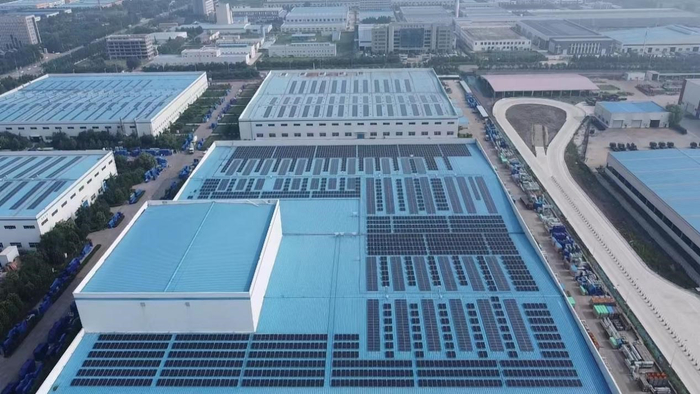
Group 1 - The meeting between Shaanxi provincial leaders and China Datang Group's executives focused on enhancing cooperation in energy projects and technology innovation [1] - Shaanxi is advancing its energy industrial transformation towards a clean, low-carbon, and efficient energy system, aiming to foster green productivity [1] - China Datang Group expressed its commitment to align with Shaanxi's development needs and expand collaboration in major energy projects and new energy development [1]
国家能源局组织召开全国可再生能源电力开发建设11月调度视频会
国家能源局· 2025-11-27 13:31
Core Insights - The meeting highlighted the steady growth and breakthroughs in China's renewable energy sector from January to October 2025, with a total installed capacity reaching 2.22 billion kilowatts, accounting for nearly 60% of the national total [2] - Renewable energy generation reached 3.21 trillion kilowatt-hours, representing about 40% of the national total, surpassing the combined electricity consumption of the tertiary industry and urban-rural residents [2] - Wind and solar power generation amounted to 1.89 trillion kilowatt-hours, making up 23.5% of the national electricity generation, demonstrating significant contributions to supply security and transformation [2] Group 1 - The meeting emphasized the importance of implementing the spirit of the 20th Central Committee's Fourth Plenary Session and promoting high-quality development of renewable energy through systematic and innovative thinking [3] - The "14th Five-Year Plan" is nearing completion while the "15th Five-Year Plan" is beginning, necessitating a focus on three key areas: ensuring the implementation of policies, coordinating local energy responsibilities, and planning for future projects [3] - The meeting called for local energy authorities to monitor the implementation of policies closely and balance renewable energy consumption responsibilities with economic capabilities to ensure orderly progress [3] Group 2 - The meeting was attended by representatives from various governmental and industry organizations, including the National Development and Reform Commission, the National Energy Administration, and several energy-related associations [4]
我国已建成世界规模最大的清洁能源供应体系
Ke Ji Ri Bao· 2025-11-27 00:57
Core Insights - China has established the world's largest clean energy supply system, with a total installed power generation capacity of 3.65 billion kilowatts as of June 2025, of which 2.2 billion kilowatts (60%) is from clean energy sources [1][2] Group 1: Energy Consumption and Economic Growth - Over the past decade, China's energy consumption has grown at an average rate of 3.1%, supporting an average GDP growth of 6.7% [1] - The energy consumption per unit of GDP has decreased by 27%, and carbon emission intensity has dropped by 34% [1] Group 2: Renewable Energy Capacity - Since the 14th Five-Year Plan, China has added an average of 22 million kilowatts of new energy capacity annually, contributing over 80% of the world's new installed capacity [1] - Renewable energy capacity accounts for 41% of the global total, with over 96% of coal-fired power units completing ultra-low emission upgrades [1] Group 3: Technological Innovations - China has built 44 ultra-high voltage transmission channels, with annual electricity transmission from the "West to East" exceeding 700 billion kilowatt-hours [2] - The country has the world's largest single-unit capacity hydropower generator at 1 million kilowatts, and onshore and offshore wind power units have reached capacities of 11 megawatts and 26 megawatts, respectively [2] Group 4: Energy Storage and Electric Vehicles - The operational capacity of new energy storage in China is 95 million kilowatts, accounting for over 40% of the global total [2] - The number of electric vehicles in China exceeds 25.5 million, with 17 million charging facilities and a total rated power of 196 million kilowatts [2] Group 5: Regional Developments - Hunan province has accelerated the construction of a new power system, establishing the first provincial-level research center for new power system development in China [2] - Demonstration projects such as the Hunan New Power System Innovation Center and the Orange Isle Zero Carbon Energy Experience Hall have significantly improved energy supply efficiency in the province [2]
国电南瑞:“电网卫士”打造世界智能电网领军企业
Shang Hai Zheng Quan Bao· 2025-11-27 00:44
Core Viewpoint - The company, Guodian NARI, is positioned as a leading high-tech enterprise in China's power and industrial control sector, focusing on the development of a new energy system and enhancing grid safety through innovative technologies and research capabilities [5][6][9]. Group 1: Company Overview - Guodian NARI is recognized as a "problem solver" in the power grid industry, with a strong research team that ensures the safety and reliability of the power grid [5]. - The company has made significant advancements in smart grid technology and has transitioned from a follower to a leader in the international market through high levels of R&D investment [6]. Group 2: Technological Innovation - The company has achieved breakthroughs in key technology areas such as ultra-high voltage equipment, relay protection, and new energy integration, particularly since the start of the 14th Five-Year Plan [6][7]. - Guodian NARI has established seven specialized research teams to tackle industry challenges and advance cutting-edge technologies, emphasizing a long-term approach to research and development [7]. Group 3: New Energy System Development - The company is actively involved in the construction of a new energy system, aligning with national goals to increase the share of non-fossil energy consumption to over 30% by 2035 [8][9]. - Guodian NARI is focusing on the integration of clean energy with grid systems, addressing challenges posed by the uneven distribution of renewable energy sources [9]. Group 4: Business Growth and Market Expansion - The low-carbon energy sector of Guodian NARI has experienced rapid growth, particularly in new energy equipment and grid-friendly technologies [10]. - The company has made progress in its overseas business, particularly in ultra-high voltage direct current transmission and energy storage systems, with expectations for steady growth in revenue and profit [10]. Group 5: Future Goals - Guodian NARI aims to become a world-class leader in energy internet technology, with a strategic focus on smart grids, energy integration, and industrial interconnectivity [10]. - The company plans to optimize its business layout and achieve sustainable development through innovation-driven strategies [10].

张树伟:煤电“安全兜底”和“低碳转型”,需在运行方式上高度分化
和讯· 2025-11-26 08:56
Core Viewpoint - The article discusses the transition of coal power from being a "basic guarantee power source" to a "supporting adjustment power source" within China's energy strategy, emphasizing the need for a differentiated operational logic for coal power to achieve safety and low-carbon transformation [2][3][10]. Energy Transition and Challenges - The "14th Five-Year Plan" aims to establish a new energy system and a new power system, focusing on accelerating the construction of a new energy framework and promoting energy security [2]. - By September 2025, domestic coal consumption is projected to reach nearly 2.2 billion tons, indicating that coal power will still play a significant role during this transition [2]. - As of September 2025, installed capacity for wind and solar power reached 1.7 billion kilowatts, accounting for 46% of total installed capacity, with wind and solar generation contributing 22.3% to total electricity consumption in the first three quarters of the year [2]. - The increasing scale of renewable energy generation faces challenges in system absorption, with wind abandonment rates at 6.6% and solar abandonment rates at 5.7%, indicating a need for changes in renewable energy development and operational models [2]. Differentiated Operation of Coal Power - To achieve effective safety and low-carbon transformation, over 5,000 coal power units need to operate in a highly differentiated manner, with some units running as baseload, others ensuring grid stability, and some serving as strategic reserves [3][10]. - The current operational model of coal power is criticized for being overly homogenized, which limits efficiency and flexibility in the system [10]. Market and Policy Mechanisms - The article highlights the need for clearer policy objectives and market mechanisms to support the transition to a new energy system, emphasizing that the current market structure is fragmented and lacks transparency [21]. - The concept of "green electricity" is discussed, suggesting that it should be treated as equivalent to "green certificate consumption," which has become less relevant due to the decreasing costs of renewable energy [12][14]. - The article argues for the need to allow renewable energy to replace coal power in a broader context rather than being confined to self-consumption scenarios, which currently limits efficiency [18]. Future Directions - The article suggests that the focus should be on improving the operational transparency of the energy system, allowing for better understanding and efficiency in policy and investment decisions [21]. - It calls for a shift from traditional planning methods to more dynamic models that consider load curves and extreme weather impacts, advocating for the integration of randomness optimization methods to enhance system resilience [22][23].