
核心CPI

Search documents
新华全媒+丨2025年7月份CPI同比持平 环比上涨0.4%
Xin Hua She· 2025-08-10 01:59
Group 1 - The core viewpoint of the article indicates that the effects of policies aimed at expanding domestic demand are becoming increasingly evident, as reflected in the Consumer Price Index (CPI) data for July [1][4][6] - In July, the national CPI remained flat year-on-year, while it increased by 0.4% month-on-month, reversing a previous decline of 0.1% [1][4][5] - The core CPI, which excludes food and energy prices, rose by 0.8% year-on-year, marking an expansion in growth for three consecutive months [1][4][6] Group 2 - The increase in CPI is primarily driven by rising prices in services and industrial consumer goods [3]

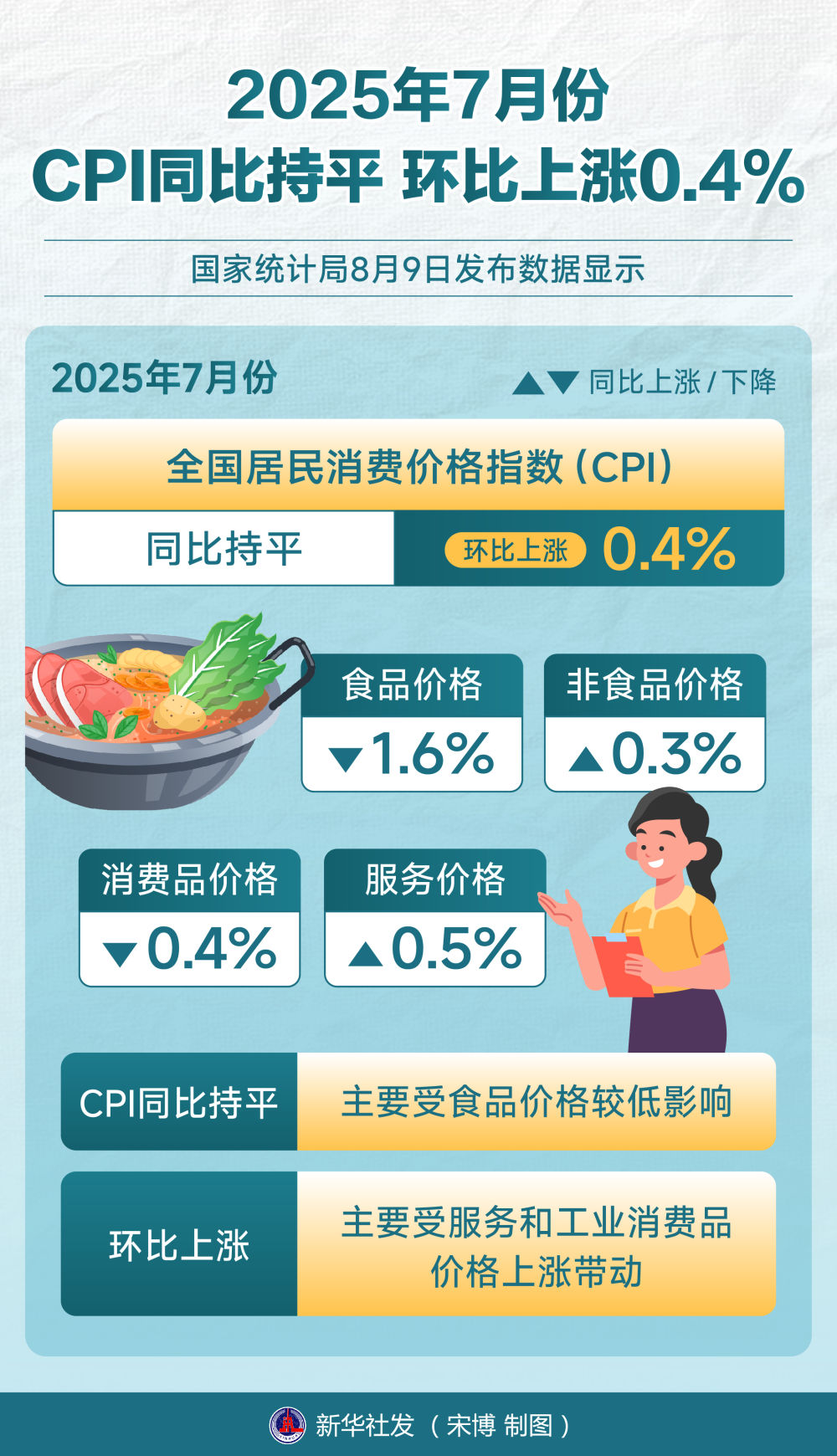
7月份居民消费价格指数环比上涨0.4%
Xin Hua She· 2025-08-10 00:27
Group 1 - The core viewpoint of the article highlights that in July, the effects of policies to expand domestic demand are becoming evident, with the Consumer Price Index (CPI) remaining flat year-on-year and increasing by 0.4% month-on-month after a previous decline of 0.1% [1] - The core CPI, excluding food and energy prices, rose by 0.8% year-on-year, marking an expansion in growth for three consecutive months [1] - Food prices decreased by 1.6% year-on-year, while non-food prices increased by 0.3% [1] Group 2 - The average CPI from January to July showed a decline of 0.1% compared to the same period last year [1] - The analysis indicates that the flat year-on-year CPI is primarily influenced by lower food prices, particularly fresh vegetable prices, which fell by 7.6% year-on-year, with a significant increase in the rate of decline [1] - Service prices increased by 0.6% month-on-month, contributing approximately 0.26 percentage points to the CPI increase, accounting for over 60% of the total rise [1]
7月份全国CPI同比持平 环比上涨0.4%
Shan Xi Ri Bao· 2025-08-09 23:50
Core Insights - The consumer price index (CPI) in China remained flat year-on-year in July, with a month-on-month increase of 0.4%, reversing a previous decline of 0.1% [1] - The core CPI, excluding food and energy prices, rose by 0.8% year-on-year, marking an expansion in growth for three consecutive months [1] Price Trends - Food prices decreased by 1.6% year-on-year, while non-food prices increased by 0.3% [1] - Consumer goods prices fell by 0.4% year-on-year, whereas service prices rose by 0.5% [1] - The average CPI from January to July showed a decline of 0.1% compared to the same period last year [1] Influencing Factors - The flat year-on-year CPI was primarily influenced by lower food prices, particularly fresh vegetables, which saw a 7.6% decrease, expanding the decline by 7.2 percentage points compared to the previous month [1] - Fresh fruit prices increased by 2.8% year-on-year, but the growth rate fell by 3.3 percentage points from the previous month [1] - The month-on-month increase in CPI was driven mainly by rising service prices, which increased by 0.6%, contributing approximately 0.26 percentage points to the CPI increase [1] - Industrial consumer goods prices rose by 0.5% month-on-month, with an increase of 0.4 percentage points compared to the previous month, contributing about 0.17 percentage points to the CPI rise [1]
7月CPI与PPI:环比有变化,“反内卷”成政策重点
Sou Hu Cai Jing· 2025-08-09 23:46
Group 1 - The core viewpoint of the article highlights the multidimensional changes in consumer and industrial prices in July, indicating the effects of policies aimed at expanding domestic demand [1] - The Consumer Price Index (CPI) showed a month-on-month increase of 0.4% in July, reversing a previous decline of 0.1%, while the year-on-year change remained flat [1] - The core CPI rose by 0.8% year-on-year, marking the highest increase since March 2024, with significant contributions from service and industrial consumer goods prices [1] Group 2 - The Producer Price Index (PPI) decreased by 0.2% month-on-month, but the decline was narrowed by 0.2 percentage points, the first contraction since March, with a year-on-year decrease of 3.6% [1] - Seasonal factors and uncertainties in international trade have led to price declines in certain industries, particularly in non-metallic mineral products and computer communication sectors [1] - The article suggests that the narrowing of the PPI decline reflects positive changes due to effective policies and industry structure optimization, with a focus on reshaping supply and demand in the short term [1]
核心CPI连续3个月回升——消费领域价格呈现积极变化
Sou Hu Cai Jing· 2025-08-09 22:53
Group 1 - The consumer price index (CPI) increased by 0.4% month-on-month in July, reversing a previous decline of 0.1%, while year-on-year it remained flat [2] - The core CPI, excluding food and energy, rose by 0.8% year-on-year, marking the highest increase since March 2024 [3] - The producer price index (PPI) decreased by 0.2% month-on-month, but the decline was narrower than the previous month, indicating a potential stabilization in prices [2][3] Group 2 - Service prices increased by 0.6% month-on-month, contributing significantly to the CPI rise, while industrial consumer goods prices, excluding energy, also saw a 0.2% increase [2] - The decline in food prices, down 1.6% year-on-year, was a major factor in keeping the year-on-year CPI unchanged [2] - The improvement in supply-demand relationships in certain industries is attributed to ongoing macroeconomic policies and consumer demand initiatives [4] Group 3 - Recent months have shown a stabilization in PPI declines, reflecting effective policy measures and structural adjustments in the industry [5] - The concept of "anti-involution" is expected to be a key focus for policies in the second half of the year, aiming to optimize resource allocation and improve industry efficiency [5] - The sustainability of price recovery remains uncertain and is contingent on effective policy execution and coordination [5]
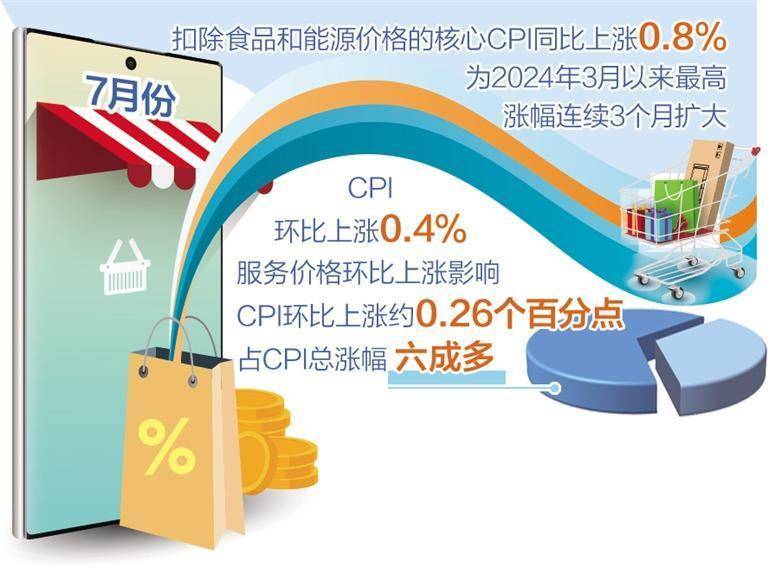
7月份居民消费价格指数环比上涨0.4% 同比持平
Yang Shi Wang· 2025-08-09 22:21
Group 1 - The core CPI in July 2025 showed a year-on-year increase of 0.8%, marking the third consecutive month of growth [3] - The overall CPI in July shifted from a month-on-month decrease of 0.1% to an increase of 0.4%, while the year-on-year figure remained stable [3] - Service prices rose by 0.6% month-on-month in July, contributing over 60% to the total CPI increase, driven by high demand during the summer travel season [3] Group 2 - The Producer Price Index (PPI) decreased by 0.2% month-on-month in July, but the decline was narrowed by 0.2 percentage points compared to the previous month, marking the first month of reduced decline since March [3] - The domestic market's competitive order has improved, leading to a reduction in price declines for industries such as coal, steel, photovoltaic, and lithium batteries [3]
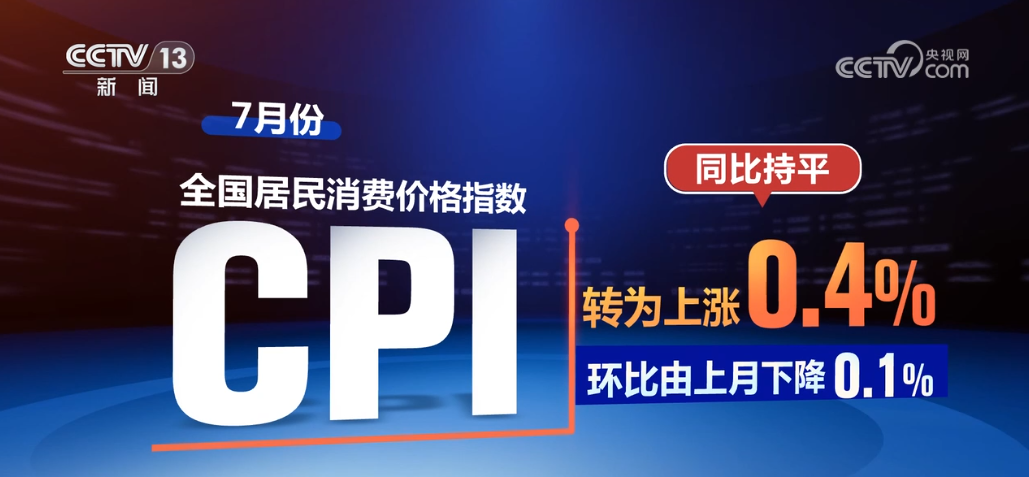
7月CPI环比上涨0.4%
Ren Min Ri Bao· 2025-08-09 22:11
Group 1 - The core viewpoint of the articles indicates that the effects of domestic demand expansion policies are becoming evident, with the Consumer Price Index (CPI) showing a month-on-month increase of 0.4% in July, reversing a previous decline of 0.1% in June, while year-on-year CPI remains flat [1] - The core CPI, excluding food and energy prices, has increased by 0.8% year-on-year, marking the highest growth since March 2024, and the growth rate has expanded for three consecutive months [1] - The Producer Price Index (PPI) has decreased by 0.2% month-on-month in July, with a year-on-year decline of 3.6%, indicating a narrowing of the month-on-month decline by 0.2 percentage points compared to the previous month [1] Group 2 - The year-on-year CPI remained unchanged primarily due to lower food prices, which fell by 1.6% compared to the same month last year, with the decline rate widening by 1.3 percentage points from the previous month [2] - Non-food prices have increased by 0.3% year-on-year, with the growth rate expanding by 0.2 percentage points compared to the previous month [2]

7月CPI环比上涨0.4% PPI环比降幅收窄
Ren Min Ri Bao· 2025-08-09 21:44
Group 1 - The core viewpoint of the articles indicates that the effects of domestic demand expansion policies are becoming evident, with the Consumer Price Index (CPI) showing a month-on-month increase of 0.4% in July, reversing a previous decline of 0.1% [1] - The core CPI, excluding food and energy prices, has increased by 0.8% year-on-year, marking the highest growth since March 2024, and the growth rate has expanded for three consecutive months [1] - The Producer Price Index (PPI) has decreased by 0.2% month-on-month in July, with a year-on-year decline of 3.6%, indicating a narrowing of the month-on-month decline by 0.2 percentage points [1] Group 2 - The CPI year-on-year remained flat, primarily due to lower food prices, which decreased by 1.6% year-on-year, influenced by a high price base from the previous year [2] - Non-food prices have increased by 0.3% year-on-year, with the growth rate expanding by 0.2 percentage points compared to the previous month [2]
7月份居民消费价格指数环比上涨0.4%
Yang Shi Wang· 2025-08-09 12:57
Group 1 - In July, the Consumer Price Index (CPI) in China increased by 0.4% month-on-month, reversing a previous decline of 0.1% in June, while year-on-year it remained flat [1] - The core CPI, excluding food and energy prices, rose by 0.8% year-on-year, marking an expansion in growth for three consecutive months [1] - Service prices saw a month-on-month increase of 0.6%, contributing over 60% to the total CPI increase, driven by high demand during the summer travel season, particularly in airfares, tourism, and hotel accommodations [1] Group 2 - The domestic market's competitive order continues to improve, leading to a narrowing of price declines in industries such as coal, steel, photovoltaics, and lithium batteries [2] - In July, the Producer Price Index (PPI) decreased by 0.2% month-on-month, but this decline was 0.2 percentage points smaller than the previous month, marking the first month-on-month decline reduction since March [2]

中国核心CPI同比涨幅连续3个月扩大
Zhong Guo Xin Wen Wang· 2025-08-09 08:35
Group 1 - The core consumer price index (CPI) in China rose by 0.8% year-on-year in July, marking the highest increase since March 2024, with the growth rate expanding for three consecutive months [1][2] - The CPI increased by 0.4% month-on-month, surpassing the seasonal level by 0.1 percentage points, driven primarily by rising prices in services and industrial consumer goods [1] - Service prices rose by 0.6% month-on-month, contributing approximately 0.26 percentage points to the overall CPI increase, with significant price hikes in air tickets, tourism, hotel accommodations, and vehicle rentals due to the summer travel season [1] Group 2 - The prices of gold and platinum jewelry increased significantly, with year-on-year rises of 37.1% and 27.3% respectively, while service prices maintained a stable year-on-year increase of 0.5% [2] - The prices of fuel and new energy vehicles saw minimal declines of 2.6% and 1.9% year-on-year, representing the smallest decreases in nearly 34 and 28 months respectively [2] - Food prices decreased by 1.6% year-on-year, influenced by a high base from the previous year, with fresh vegetable prices dropping by 7.6% and fresh fruit prices increasing by 2.8% [2]