
能源安全

Search documents
匈牙利外长:欧洲议会禁止俄罗斯能源决定极为危险
Yang Shi Xin Wen Ke Hu Duan· 2025-10-17 01:06
Core Viewpoint - The Hungarian Foreign Minister, Péter Szijjártó, expressed concerns over a decision made by the European Parliament that threatens Hungary's energy security and economic development, particularly regarding the reduction of public utility costs [1] Group 1: Energy Security - The European Parliament's committee voted to support a motion to ban the import of Russian natural gas and oil starting January 1, 2026 [1] - Hungary currently benefits from the lowest natural gas prices in Europe due to cheap Russian gas [1] Group 2: Economic Impact - Without Russian natural gas, Hungary's gas prices are expected to surge significantly [1] - Hungary is unwilling to bear the costs associated with Brussels' war policies [1]
筑牢能源安全与经济发展双重基石
Liao Ning Ri Bao· 2025-10-17 01:05
Core Insights - The China Datang Fuxin Coal-to-Natural Gas Project has resumed construction, marking a significant step in revitalizing the Northeast industrial base and enhancing energy security in China [3][4][9] - This project is the largest single investment in Fuxin's history and aims to produce 4 billion standard cubic meters of coal-derived natural gas annually, with the first phase expected to be operational by the end of 2026 [4][8] Project Overview - The project is a major initiative supported by the central government, recognized as the third large-scale coal-to-natural gas demonstration project approved by the National Development and Reform Commission [3] - It will utilize lignite from Inner Mongolia as raw material and is designed to supply clean energy to five cities, benefiting approximately 15.96 million people [4][8] Technological Advancements - The project employs self-developed technologies such as crushed coal pressurized gasification and high-efficiency methane catalysts, achieving over 98% localization of equipment [4][5] - Environmental measures include improved treatment of by-products like sulfur, which can now be recycled and sold, thus reducing pollution [5] Economic Impact - Upon completion, the first phase of the project is expected to generate over 4 billion yuan in annual output value and create more than 2,000 jobs [8] - The project will also stimulate the development of downstream coal chemical industry clusters, positioning Fuxin as a coal chemical industry base in Liaoning [8] Urban Transformation - Fuxin, as a pilot city for economic transformation from resource depletion, aims to leverage this project to enhance local living standards, optimize energy structure, and drive economic growth [8][9] - The project is anticipated to contribute over 100 million yuan in annual tax revenue and activate the coal chemical sector in the Fuxin New Qiao Economic Development Zone [8] Sustainable Development - The project aligns with China's dual carbon goals, promoting a transition from a coal-based economy to a greener, low-carbon model [9][10] - Plans are in place to integrate renewable energy resources with the coal chemical industry, ensuring sustainable development and economic viability [9]


美国要求日本:停止进口
中国能源报· 2025-10-17 00:57
Group 1 - The U.S. Treasury Secretary Scott Bansen has urged Japan to stop importing Russian energy products during a meeting with Japanese Finance Minister Kato Masanobu [4][5] - Since the outbreak of the Ukraine crisis in 2022, Japan has agreed with G7 members to gradually halt imports of Russian crude oil, but continues to purchase Sakhalin Blend crude oil, which is crucial for Japan's energy security [4][5] - Japan's Ministry of Finance reported that from January to July this year, Japan imported approximately 599,000 barrels of crude oil from Russia, accounting for only 0.1% of total imports during the same period [4] Group 2 - The U.S. is pushing its allies to increase imports of liquefied natural gas (LNG) from the U.S., including participation in the yet-to-be-built Alaska LNG project, which has a total investment of about $44 billion [5] - In recent months, Japan has signed new LNG procurement agreements with several U.S. energy companies, although no substantial agreement has been reached regarding the Alaska project [5]

长江能科今日登陆北交所 国家级“小巨人”锚定“一带一路”与能源安全 携海工装备战略布局开启新征程
Sou Hu Wang· 2025-10-16 10:50
Core Viewpoint - Changjiang Energy Technology Co., Ltd. (referred to as "Changjiang Energy") has successfully listed on the Beijing Stock Exchange, raising 160 million yuan to expand its production capacity and R&D in heavy special materials and equipment, aiming to strengthen its foothold in the energy equipment sector and expand into the "Belt and Road" market [1] Group 1: Market Position and Business Structure - Changjiang Energy's core business revolves around "electro-dehydration equipment" and "marine and land oil and gas equipment/LNG clean energy equipment," aligning with national energy security strategies and the "Belt and Road" energy cooperation needs [1][2] - The company has maintained the leading market share in electro-dehydration equipment in China from 2021 to 2023, providing stable equipment support to major domestic refining projects [2] - Revenue from existing customers has increased from 103 million yuan in 2022 to 254 million yuan in 2024, indicating a strong customer retention rate and the essential role of its products in the energy supply chain [2] Group 2: International Expansion and Strategic Initiatives - In line with the "Belt and Road" initiative, Changjiang Energy has expanded its operations to over 20 countries, including Singapore and Algeria, and has become a key player in the global energy equipment supply chain [3] - The company plans to establish a subsidiary in Dubai to enhance its local operations and focus on overseas electro-dehydration equipment, marine equipment, and LNG clean energy equipment [3] Group 3: Market Growth and Technological Advancements - The marine equipment market is experiencing significant growth due to global shipping environmental regulations and accelerated domestic marine energy development, with the domestic marine engineering equipment manufacturing industry expected to grow from 57.3 billion yuan in 2020 to 103.2 billion yuan in 2024 [4] - Changjiang Energy has established technological barriers in the LNG equipment sector, holding multiple patents and being recognized for its innovative technologies, which are crucial for meeting the growing demand in the marine energy market [4][6] Group 4: Funding and Future Plans - Of the 160 million yuan raised, 100 million yuan will be allocated to projects aimed at producing 1,500 tons of heavy special materials and 4,500 tons of marine and land oil and gas engineering equipment, addressing the domestic high-end marine equipment supply gap [5] - The company emphasizes technological innovation as a core strategy, with R&D investment growing at an annual compound rate of 26.61% over the past three years, and plans to continue leveraging high-tech equipment to support domestic oil and gas development and international energy cooperation [6]
人类“史诗级”工程启动,哪些投资风口已现?
Cai Fu Zai Xian· 2025-10-16 10:50
Core Insights - The Yarlung Tsangpo River downstream hydropower project (referred to as Yaxia Hydropower Project) is a super-large hydropower initiative in Tibet, with strategic significance beyond a single energy project [1][4] - The project is set to have an investment comparable to the total of 300 key projects in Beijing and an annual power generation capacity equivalent to three Three Gorges dams [1][3] Project Overview - The Yaxia Hydropower Project is located mainly in Linzhi City along the downstream of the Yarlung Tsangpo River, which has the largest water flow drop in the world [1] - The project has evolved from initial geological mapping in the 20th century to recent groundbreaking, marking a significant milestone in China's infrastructure and energy strategy [2] Project Scale and Comparison - The total investment for the Yaxia Hydropower Project is approximately 1.2 trillion yuan, which is about 88.7% of China's total water conservancy investment for 2024 and six times the annual investment in Tibet [6] - In comparison, the Three Gorges Project has a total installed capacity of 22.5 million kilowatts and an annual power generation of over 100 billion kilowatt-hours, with a total investment of 207.2 billion yuan [3] Strategic Impact - The project is expected to enhance energy security by increasing the share of hydropower in China's energy mix and reducing dependence on foreign energy sources [5] - It will also play a crucial role in regional economic growth and job creation, with 16 central enterprises signing investment agreements totaling 317.5 billion yuan [6] Geopolitical and Ecological Considerations - The Yarlung Tsangpo River flows through China, India, and Bangladesh, making the hydropower development significant for geopolitical stability [6] - The project aims to replace 90 million tons of standard coal annually and reduce carbon dioxide emissions by 300 million tons, supporting China's carbon neutrality goals by 2060 [7] Technological Advancements - The project is set to redefine global hydropower technology standards, utilizing advanced techniques such as 2300-meter head ultra-high-pressure steel pipes and full-face tunnel boring machines (TBM) [7] Beneficiary Industries - The Yaxia Hydropower Project will benefit a wide range of industries, including material supply, construction, equipment manufacturing, and power operation, due to its unprecedented scale [5]
匈牙利外长表态:没有俄罗斯石油和天然气,匈牙利无法满足自身能源需求
Huan Qiu Wang· 2025-10-16 10:01
Core Viewpoint - Hungary's energy security is heavily reliant on existing supply channels and long-term contracts with Russian companies, with no intention of abandoning these supplies [1][3]. Group 1: Energy Dependency - The Hungarian Foreign Minister, Szijjártó, emphasized that without Russian oil and gas, Hungary cannot meet its energy needs [1][3]. - Szijjártó criticized the EU's demand for Hungary to reject Russian energy as "absurd" and "illogical," questioning how abandoning a source can be considered diversification [3]. Group 2: Economic Impact - Hungarian Prime Minister Orbán stated that without Russian gas and oil, Hungary's economy could suffer a 4% loss, leading to the bankruptcy of hundreds of thousands of families [3]. - Orbán highlighted Hungary's geographical limitations as a landlocked country, making pipeline transport the only viable option for energy supply [3]. Group 3: Energy Infrastructure - Szijjártó warned that cutting off Russian gas supplies would prevent Hungary from ensuring necessary fuel supplies, with no alternative routes available to replace the volumes provided by the "TurkStream" and "Friendship" pipeline networks [3]. - Szijjártó praised the cooperation between Hungary and Russian energy companies, noting their reliability in fulfilling contracts [3].
突发“黑天鹅”,供应短缺!“未来的新石油”能否成为下一个牛市品种?
Jing Ji Ri Bao· 2025-10-16 05:38
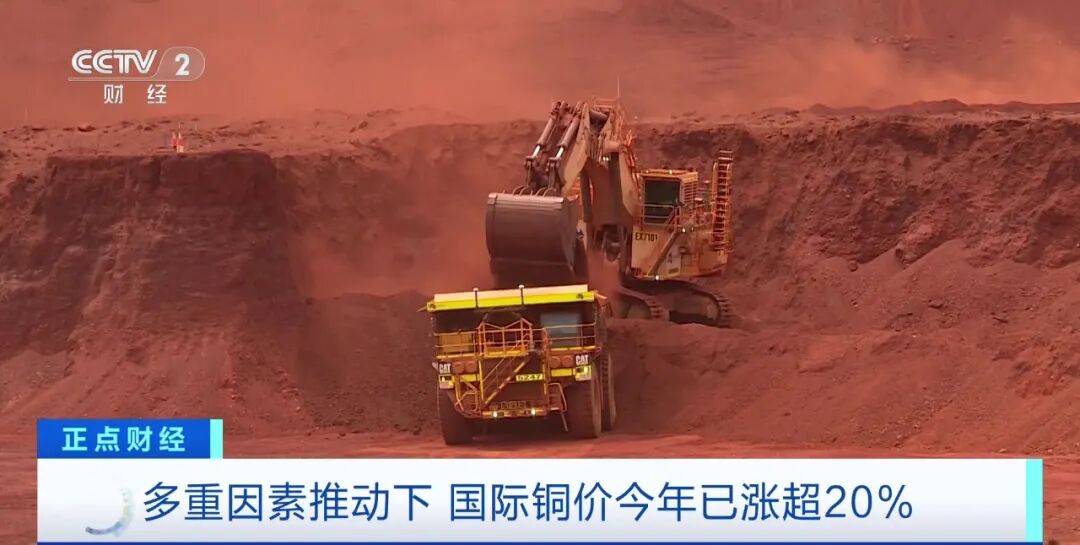
Core Viewpoint - Recent international copper prices have attracted attention, with LME copper futures nearing $11,000 per ton, indicating a new price floor and potential for significant price increases in the coming years [1][2] Supply and Demand Dynamics - Global copper supply is facing significant challenges due to production issues at major mines, including the Grasberg mine in Indonesia, which has halted operations due to a landslide, leading to a projected 35% drop in output by 2026, equating to a loss of approximately 270,000 tons of copper [1][2] - Other mines, such as Escondida in Chile and Kamoa-Kakula in the Democratic Republic of Congo, are also experiencing operational disruptions, further tightening global copper supply [2] - The International Copper Study Group has revised its global mine production growth forecast for this year down from 2.3% to 1.4% due to these supply constraints [4] Demand Drivers - There is a surge in demand for copper driven by several factors, including the construction of data centers fueled by the AI boom, increased defense spending, and the acceleration of global electrification [4] - Goldman Sachs has emphasized the strategic importance of copper, likening it to "the new oil" due to its critical role in AI and energy security [4] Strategic Reserve Influence - The monetary policy of the Federal Reserve also impacts copper prices; a weaker dollar and expectations of interest rate cuts enhance the attractiveness of copper as an investment [5] Short-term Price Outlook - The current market conditions suggest that copper prices are likely to rise in the short term due to supply shocks and the traditional consumption peak in September and October, making it difficult for prices to decline [6] Medium-term Price Challenges - For a significant price rally to occur in the medium term, demand must align with supply constraints; historical price surges have been linked to substantial demand increases, which may not be replicated this year despite potential Fed rate cuts [7][8]
东北地区首个煤制天然气项目进入新阶段
Zhong Guo Xin Wen Wang· 2025-10-16 03:28
Core Viewpoint - The China Datang Fuxin coal-to-natural gas project has entered a new phase, marking a significant investment and development in Northeast China's energy sector, aimed at enhancing energy security and facilitating economic transformation in resource-depleted cities [1] Group 1: Project Overview - The project is the largest single investment in Fuxin's history and the first coal-to-natural gas demonstration project in Northeast China [1] - It utilizes self-developed technologies such as crushed coal pressurized gasification and high-efficiency methane catalytic conversion, with a domestic equipment rate exceeding 98% [1] Group 2: Environmental Impact - The project aims to convert low-quality coal, which has high carbon emission intensity and is difficult to utilize directly, into clean, low-carbon, and convenient natural gas [1]
特朗普声称莫迪向他保证印度不再购买俄罗斯石油
Xin Jing Bao· 2025-10-16 03:04
据环球网报道,10月15日特朗普说莫迪保证印度不再购买俄罗斯石油,印度方面暂未回应。特朗普说印 度无法"立即"停止购买俄罗斯石油,并说"这是一个过程"。报道称俄罗斯是印度最大的石油供应国,印 官员称这些采购对国家能源安全至关重要。8月6日,特朗普以印度直接或间接进口俄石油为由,对印度 输美产品征收额外的25%关税。印方表示美方对印度加征关税的做法"不公平、不公正、不合理"。 ...
中国大唐阜新煤制天然气项目正式复工
Liao Ning Ri Bao· 2025-10-16 01:05
Core Insights - The China Datang Fuxin coal-to-natural gas project has officially resumed construction, marking a significant milestone in this central-local government cooperative energy project [1] - This project is the third large-scale coal-to-natural gas demonstration project approved by the National Development and Reform Commission and represents the largest single investment project in Fuxin's history, highlighting its strategic importance for energy security in Northeast China and local economic development [1] Summary by Categories Project Overview - The Fuxin project is a major energy initiative aimed at enhancing energy security and supporting local economic growth [1] - The project faced delays due to various challenges but has now fully resumed construction thanks to the efforts of provincial and local governments [1] Economic Impact - The first phase of the project is expected to generate an annual output value exceeding 4 billion yuan [1] - The project aims to create a win-win situation by improving living standards, optimizing the energy structure, and promoting economic development [1] Government Support - The provincial government has established a joint task force to address challenges related to resources, market access, and regulatory procedures, demonstrating strong commitment to the project's success [1] - Continued optimization of services will be provided to ensure the project's safe, high-quality, and efficient advancement [1]