
养老金融

Search documents
新跨越 新征程——2025卓越竞争力金融论坛
Zhong Guo Jing Ying Bao· 2025-12-09 11:47
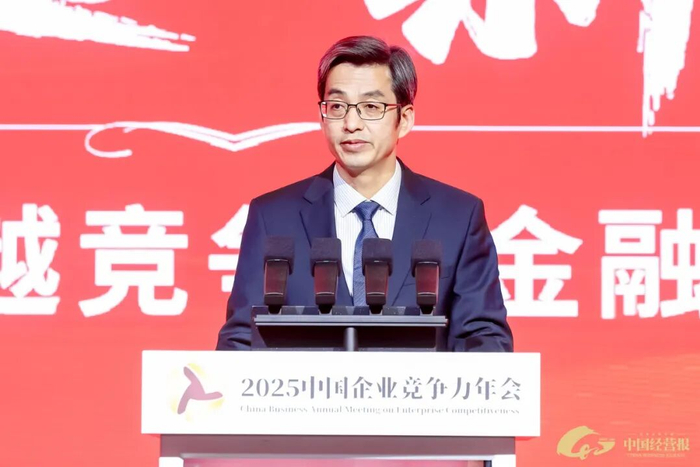
Group 1 - The core viewpoint of the articles emphasizes the opportunities and challenges facing China's financial industry as it approaches the end of the "14th Five-Year Plan" and prepares for the "15th Five-Year Plan" [1] - The "2025 Excellence Competitiveness Financial Forum" aims to explore paths and models for high-quality financial development, focusing on topics such as structural transitions, pension finance, financial technology, and digital transformation [1] - The financial industry is urged to enhance its alignment with the real economy and improve its service precision and resilience in response to the evolving economic landscape [1] Group 2 - Zhang Rongwang highlights the importance of the financial sector as a key pillar of national competitiveness and stresses the need for innovation and reform to drive high-quality development [4] - Huang Zhuo discusses the transformative impact of generative artificial intelligence on human-computer interaction and its potential to enhance productivity across various sectors, including finance [6] - Zhao Feng points out the risks associated with an aging population, emphasizing the need for sufficient pension funds and care for the elderly [8] Group 3 - Han Dong emphasizes that improving financial quality and efficiency requires a holistic approach, integrating advanced productivity elements such as technology and culture into the digital transformation of banks [10] - Chen Li notes the capital market's critical role in supporting the real economy, particularly through diversified financing platforms for new quality productivity-related enterprises [12] - Sun Haitao outlines a systematic approach for financial institutions to provide targeted support in key areas, including top-level design and cross-sector collaboration [14] Group 4 - Zhang Guanghua discusses the growing importance of insurance in supporting the real economy, particularly in technology finance, and highlights significant investments made by his company in this area [16] - Wang Hui emphasizes the need for investment institutions to enhance their research capabilities and collaborate with leading financial entities to expand their project sources [18] - Deng Jia describes the development of a product positioning framework at CITIC Group that aligns with national policies and incorporates digital and risk control elements [20] Group 5 - Xue Hongyan outlines the benefits of attracting long-term capital into the market, including providing necessary funds for innovative enterprises and reducing market volatility [22]

国民养老与安联投资落地战略合作
Zheng Quan Ri Bao Wang· 2025-12-09 11:13
Core Insights - National Pension Insurance Co., Ltd. has entered into a strategic cooperation project with Allianz Investment, marking the first collaboration following their capital increase and strategic investment [1][2] - The partnership aims to integrate National Pension's digital retirement planning services with Allianz's advanced asset allocation capabilities, creating a comprehensive solution for personalized and intelligent retirement asset management [1] Group 1: Strategic Collaboration - The collaboration will leverage Allianz's global pension asset allocation models and capabilities through its wholly-owned subsidiary, Allianz Fund, in China [1] - The project will provide a one-stop solution that includes goal planning, portfolio configuration, account services, transaction execution, and long-term support for retirement financial planning [1] Group 2: Market Context and Goals - Allianz Fund's Chairman and General Manager, Shen Liang, emphasized the need for personalized asset allocation and systematic solutions in China's retirement finance sector, which is evolving into a wealth management 2.0 phase [1] - The partnership aims to combine international best practices with local conditions in China, enhancing service efficiency and improving pension fund management capabilities [2]
学习贯彻党的二十届四中全会精神丨中信保诚人寿在行动
Xin Lang Cai Jing· 2025-12-09 09:42
Core Viewpoint - The 20th Central Committee's Fourth Plenary Session has outlined a strategic framework for China's economic and social development over the next five years, emphasizing new and higher requirements for financial work. CITIC Prudential Life Insurance aims to integrate its development into the national strategy while focusing on five key areas: technology finance, green finance, inclusive finance, pension finance, and digital finance [1][10]. Strategic Transformation Driving Development - CITIC Prudential Life Insurance is guided by the Party's innovative theories and has implemented the "1628" strategic plan, which focuses on innovation as a driving force. This plan includes six key projects aimed at enhancing service capabilities and achieving a comprehensive upgrade from "risk compensation" to "service empowerment" [11][12]. - The company's performance reflects the success of its transformation, with insurance business revenue reaching 27.833 billion yuan and net profit at 3.14 billion yuan for the first three quarters of 2025. Total assets exceeded 270 billion yuan, and the asset management scale of its subsidiary approached 370 billion yuan. The solvency ratios are well above regulatory requirements, with a comprehensive solvency ratio of 215% and a core solvency ratio of 110% [2][11]. Focus on Pension Finance - Pension finance is a core area for CITIC Prudential Life Insurance, directly impacting the well-being of families. The company views the national strategy for addressing population aging as a significant opportunity and aims to develop a comprehensive pension finance system [3][13]. - The company has optimized its product structure, achieving a 606% year-on-year increase in sales of pension-related products by September 2025, indicating strong market recognition of its pension solutions [3][13]. Comprehensive Advancement in Financial Services - In addition to focusing on pension finance, CITIC Prudential Life Insurance has made solid progress in other areas, demonstrating a systematic approach to serving the needs of the real economy and people's livelihoods [4][14]. Technology Finance - The company leverages its stable long-term insurance funds to support advanced manufacturing and technological innovation, serving over 440 national-level specialized and innovative enterprises and providing group insurance services to nearly 160 related companies [5][6][15]. Green Finance - CITIC Prudential Life Insurance actively implements the "dual carbon" strategy, integrating ESG principles into investment decisions. By September 2025, the scale of its green and social responsibility investments reached 21.527 billion yuan, ranking among the top in the joint venture life insurance sector [7][16]. Inclusive Finance - The company remains committed to the principle of "finance for the people," innovating inclusive insurance products that cover both the elderly and children. By mid-2025, inclusive life insurance had effectively covered 631,900 individuals, with a total effective insurance amount of 97.04 billion yuan [8][17]. Digital Finance - CITIC Prudential Life Insurance is advancing "customer management digitization" as a strategic initiative, enhancing the application of big data and artificial intelligence. This has led to significant improvements in electronic insurance applications, smart underwriting, and claims efficiency [9][18].
以创新实践诠释金融温度 中信银行交出高质量发展答卷
和讯· 2025-12-09 09:18
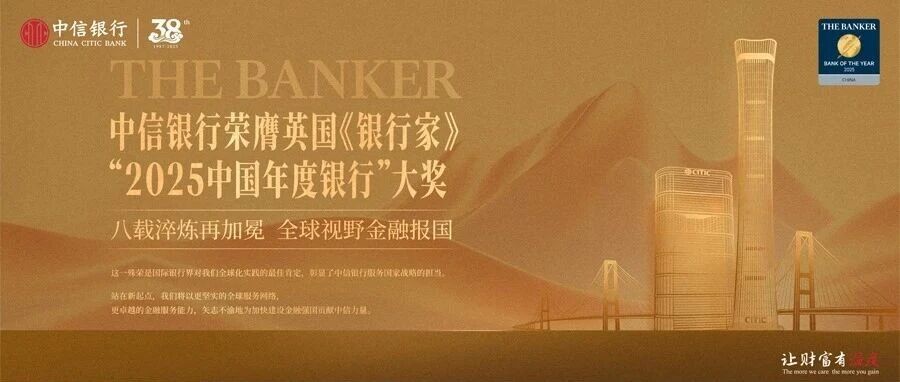
Core Viewpoint - CITIC Bank was awarded "Bank of the Year China 2025" by The Banker magazine, highlighting its exceptional brand building and comprehensive service matrix that meets customer needs across various sectors [1] Group 1: Brand Activities and Value Communication - CITIC Bank emphasizes its core value of "Wealth with Warmth" through brand activities, including the "信·新" forum focused on financial empowerment for consumption [2] - The bank's continuous engagement in sports and cultural events enhances brand recognition and emotional connection with the audience, showcasing its commitment to the "financial for the people" philosophy [3] Group 2: Business Layout and Performance - CITIC Bank maintains a robust performance across its three main business segments: retail, corporate, and financial markets, ensuring balanced development in quality, efficiency, and scale [5] - In retail banking, CITIC Bank focuses on wealth management, achieving a retail AUM of 5.26 trillion yuan and a year-on-year growth of 13.59% in wealth management income [5][6] - The corporate banking segment has seen a general corporate loan balance of 2.974 trillion yuan, with a year-on-year increase of 10.99%, particularly in manufacturing and private sector loans [6] Group 3: Social Responsibility and ESG Initiatives - CITIC Bank integrates ESG principles into its brand practices, engaging in various charitable activities and educational support programs to assist underprivileged groups [7] - The bank has been recognized for its contributions to rural revitalization and green finance, being the only commercial bank rated "Excellent" in the 2024 rural revitalization assessment [9] - CITIC Bank's brand value reached $16.95 billion, marking a 27.23% increase, and it achieved an upgrade to AAA in the latest ESG ratings by MSCI [9]

中国外贸信托入选“2025央视财经金融强国年度案例”
Zheng Quan Shi Bao Wang· 2025-12-09 08:43
Core Viewpoint - The event "2025 CCTV Finance and Economics Financial Power Ceremony" highlighted the role of trust in providing innovative solutions for elderly care in China, showcasing the unique advantages of trust systems in addressing social needs [1][2][5] Group 1: Financial Innovation and Trust - The ceremony served as a significant platform for showcasing annual reform and innovation achievements in the financial sector, with participation from key financial regulatory bodies and institutions [2] - China Foreign Trade Trust's case of establishing real estate trust property registration for "422" dual-income families was presented as a model for how trust can support elderly care [1][2] Group 2: Practical Applications in Elderly Care - China Foreign Trade Trust has implemented a special needs trust for a woman with mental health issues, demonstrating a collaborative approach involving judicial, administrative, and community support to ensure proper management of elderly care funds [3] - The company has expanded its services to address the needs of elderly clients, launching innovative trust services that combine guardianship and special needs trust to assist solitary elderly individuals [4] Group 3: Commitment to Social Responsibility - The total scale of trust in China has reached 32 trillion yuan, indicating a substantial demand for long-term trust solutions in areas like elderly care and inheritance [5] - China Foreign Trade Trust's initiatives aim to transform the promise of "elderly care" into tangible practices, ensuring that financial solutions are accessible and reliable for families in need [5]
泰康资产深耕养老金核心战略 推动养老金资产稳健增值
21世纪经济报道· 2025-12-09 08:43
养老金业务实现三支柱全覆盖 当前养老金管理市场呈现多行业多机构的竞争格局。在我国养老金体系不断完善的过程中, 泰康资产积极把握了企业年金、基本养老和职业年金市场化运作带来的发展机遇。 泰康资产 及子公司养老金业务全面实现覆盖养老一、二、三支柱。 在第一支柱方面,泰康资产于2 0 1 6 年入选基本养老保险基金证券投资管理机构;在第二支柱方面,2 0 0 7年获得企业年金基金投 资管理资格,2 0 1 8年开始参与职业年金投资管理;在第三支柱方面,2 0 2 2年证监会发布首批 个人养老金投资基金产品和销售机构名录,泰康资产旗下子公司泰康基金的三只目标风险型 养老目标基金成功入围。 发展养老金融是促进中国特色金融和养老事业高质量发展良性循环的关键着力点。面对日益多元 化的养老金融市场需求,泰康资产将养老金作为战略性业务长期投入,持续升级中长期资金投资 能力,健全养老金产品和服务体系,推动养老金资产稳健增值。 泰康资产还积极储备和打磨新策略,在养老金投资管理组合和策略类型上不断取得新突破。 自2 0 1 3年公司首次获得养老金产品备案批复以来,经过十余年的布局完善,公司旗下养老金 产 品 线 覆 盖 所 有 年 ...

【高端访谈】三十万亿银发经济蓝海待启——访光大银行副行长齐晔
Zhong Guo Jin Rong Xin Xi Wang· 2025-12-09 08:36
Core Viewpoint - The aging population in China presents unprecedented opportunities for the pension finance sector, with a projected 400 million people aged over 60 by 2035 and a silver economy expected to reach 30 trillion yuan [1][2]. Group 1: Pension Finance Development - The banking industry is focusing on three key areas: pension finance, pension service finance, and pension industry finance, which are seen as having significant growth potential [3]. - The demand for pension security is increasing as the population ages and income levels rise, leading to a greater awareness of the importance of early retirement savings [4]. - As of September 30, 2025, there are 1,181 personal pension products available, with 888 currently on sale, indicating a growing market [5]. Group 2: Challenges in Pension Fund Investment - Pension funds face challenges such as a lack of long-term assets that meet their needs for safety and moderate returns, as well as an imbalance in the development of the three pillars of pension insurance [7][8]. - The first pillar (basic pension insurance) dominates, while the second pillar (enterprise and occupational annuities) has limited coverage, and the third pillar (personal pensions) needs further development [7]. - Market volatility poses a significant risk to pension funds, which require high asset safety and cannot withstand large fluctuations [7]. Group 3: Service Enhancement and Ecosystem Building - The banking sector is shifting from a product-centric approach to a customer-centric service model, focusing on enhancing service quality and building a collaborative ecosystem [9]. - Banks are encouraged to diversify product offerings to meet the varied needs of different customer segments, such as creating tailored pension products for different age and income groups [10]. - Technology is being leveraged to improve service delivery, with tools like personalized asset allocation suggestions and automated processes for pension fund management [11]. - Continuous improvement of services for the elderly is essential, with banks optimizing both online and offline experiences to build trust and understanding [11]. - Collaborative efforts are being made to support the pension industry financially, integrating financial products with services to create comprehensive solutions [12].


对话中欧国际工商学院教授芮萌:养老金投资需要对抗“非理性”,长期封闭是必要机制
Xin Lang Cai Jing· 2025-12-09 05:33
Core Viewpoint - The Chinese financial system is at a historical juncture, emphasizing the construction of a financial powerhouse and the development of a dynamic pension finance system to support the aging population and enhance the economy [1][22]. Group 1: Understanding Pension Finance - Pension finance is not a single product but a comprehensive financial service system covering the entire personal retirement lifecycle, typically divided into three pillars: basic pension insurance, enterprise annuities, and personal pensions [3][25]. - Traditional savings for retirement is a static wealth preservation method, while pension finance is a dynamic system that continuously generates and optimizes cash flow throughout the retirement period [4][26]. Group 2: Benefits of Pension Finance - Pension finance can address longevity risk, ensuring that individuals do not outlive their savings by providing long-term, stable cash flow through various products like annuities and pension funds [5][27]. - It better hedges against inflation and preserves value, as pension products often involve professional asset allocation in capital markets, allowing individuals to benefit from long-term market growth [6][28]. - Pension finance significantly reduces the risk of funds being misused or lost to fraud, as products typically have defined lock-in periods and withdrawal rules, promoting disciplined spending [6][28]. Group 3: Challenges and Market Development - The primary challenge in promoting pension finance is a lack of awareness and understanding among the public, as many individuals are unfamiliar with long-term pension products and prefer short-term returns [8][30]. - Current pension products generally yield stable returns in the range of 3%-5%, which aligns with the goal of prioritizing safety over high short-term returns [8][30]. Group 4: Targeting Younger Demographics - Pension products should be designed with younger individuals in mind, featuring lower investment thresholds and flexible payment options to accommodate their financial situations [9][31]. - Simplifying the purchasing process and providing incentives for long-term holding can encourage younger people to participate in pension finance [10][32]. Group 5: Regulatory and Market Structure - The safety and long-term sustainability of pension products are ensured through strong regulatory oversight, with a focus on stable asset investments [12][35]. - The market for personal pension products has developed a diverse range of options, allowing for tailored investment strategies based on individual risk tolerance and retirement timelines [13][36]. Group 6: Capital Market Considerations - For pension funds to effectively contribute to solving China's retirement issues, the capital market must be cleaner and more efficient, with a focus on eliminating poorly performing companies [17][41]. - The shift towards a "silver economy" indicates a significant market potential, with approximately 330 million elderly individuals in China, representing a market size of 3 trillion to 15 trillion yuan depending on consumption levels [19][42]. Group 7: Policy Support and Industry Development - The "14th Five-Year Plan" aims to cultivate the pension finance sector into a substantial industry, balancing both protective and developmental aspects to meet the diverse needs of the elderly population [20][43]. - The demand from the elderly is multi-faceted, requiring a comprehensive service system that goes beyond basic needs to include health, social participation, and emotional support [21][43].
个人养老金产品“货架”持续完善
Jin Rong Shi Bao· 2025-12-09 01:55
Core Insights - The article highlights the shift in banks' marketing strategies for personal pension accounts, focusing on retaining existing customers rather than acquiring new ones, with an emphasis on wealth preservation and growth for residents [1][3] - The personal pension investment and financial system is rapidly evolving, with over 70 million accounts opened since the pilot program began in November 2022, and the number of available products expanding to 1,245 [1][4] Group 1: Market Trends - The aging population in China is a significant concern, with projections indicating that by the end of 2024, there will be 310 million individuals aged 60 and above, representing 22% of the total population [2] - The development of pension finance is seen as a crucial direction for building a strong financial nation and addressing the challenges posed by an aging society [2] - The current pension finance system includes various components such as basic pensions, enterprise annuities, and personal pensions, but the overall scale remains relatively small [2][4] Group 2: Product Development - The personal pension product system is continuously improving, with a diverse range of offerings including savings, insurance, funds, and wealth management products [4][5] - As of November 25, there are 1,245 personal pension products available, comprising 466 savings products, 305 fund products, 437 insurance products, and 37 wealth management products [4] - The introduction of electronic savings bonds into the personal pension product range starting June 2026 will further enhance the product pool [4] Group 3: Challenges and Opportunities - There is a notable phenomenon of "high account openings but low contributions," indicating a lack of long-term investment planning among residents [3][7] - The market faces challenges such as product homogeneity and a lack of awareness among investors regarding pension planning [3][7] - Banks are encouraged to transition from a single service model to an integrated ecosystem, linking financial services with healthcare and wellness to create a comprehensive solution for clients [6][7]
未雨绸缪还是生存刚需?解码险企年度“战略蓄水”
Sou Hu Cai Jing· 2025-12-08 23:36
Core Viewpoint - The insurance industry is actively increasing capital through various means, including equity financing and bond issuance, to enhance their financial strength and meet regulatory requirements [2][3][10]. Group 1: Capital Increase Activities - Multiple insurance companies have received approval for capital increases or announced plans, with total amounts reaching hundreds of billions [3][10]. - Life insurance companies are leading in capital increases compared to property insurance and reinsurance companies [1][3]. - Ping An Life announced a capital increase of approximately 20 billion yuan, aimed at accelerating business development and enhancing solvency [3][10]. - Other notable capital increases include China Postal Life's increase from 28.663 billion yuan to 32.643 billion yuan and CITIC Prudential Life's increase from 4.86 billion yuan to 7.36 billion yuan [3]. Group 2: Bond Issuance - Issuing perpetual bonds has become a mainstream option for insurance companies to enhance their core solvency ratio [4]. - Companies such as Xinhua Insurance, Taikang Life, and Ping An Life have announced bond issuance plans to support their capital needs [4]. - In June, Ping An announced a plan to issue zero-coupon convertible bonds worth 11.765 billion HKD, aimed at supporting its future business development [4]. Group 3: Regulatory Environment and Strategic Responses - The "Solvency II Phase II" rules have heightened the demand for capital supplementation among insurance companies, necessitating proactive measures to maintain solvency [10][11]. - The regulatory framework requires insurance companies to meet specific solvency ratios, with a comprehensive solvency ratio of at least 150% for personal pension business [10]. - The transition period for the new solvency rules has been extended to the end of 2025, prompting companies to strengthen their capital management [10]. Group 4: Focus on Pension Insurance - Taikang Life has positioned itself as a leader in the pension insurance sector, with a pension fund management scale of 670 billion yuan as of November 2025 [6][7]. - The company aims to leverage its experience in managing pension funds to enhance its offerings in the second and third pillars of pension insurance [8]. - Taikang Life's solvency ratios remain robust, with a comprehensive solvency ratio of 222.42% and a core solvency ratio of 131.41% [7].