
生物制造

Search documents
省“十四五”高水平科技自立自强新闻发布会透露,“十四五”期间:广东研发投入等指标领跑全国
Nan Fang Ri Bao Wang Luo Ban· 2025-12-04 08:29
Core Viewpoint - Guangdong Province is accelerating the construction of a comprehensive innovation chain during the "14th Five-Year Plan" period, focusing on high-level technological self-reliance and strength, with all planning indicators being successfully completed [1] Group 1: Regional Innovation Capability - Guangdong has maintained the top position in regional innovation capability in China for nine consecutive years, with significant advancements in various technology innovation indicators [2] - By 2024, Guangdong's R&D expenditure is expected to reach 510 billion yuan, with over 77,000 high-tech enterprises, 792,300 valid invention patents, and 23,400 PCT international patent applications [2] - High-tech manufacturing revenue is projected to be 6.288783 trillion yuan, and high-tech product exports are expected to reach 256.74 billion USD [2] Group 2: R&D Investment and Education - Guangdong ranks first in R&D investment intensity among all provinces, with Shenzhen's R&D investment reaching 245.307 billion yuan, and an R&D intensity of 6.67% [3] - In 2024, Guangdong's institutions are expected to achieve record highs in national science and technology awards and funding from the National Natural Science Foundation [3] - The province has implemented a plan to enhance higher education, resulting in a 101% increase in authorized invention patents and a 255% increase in technology transfer projects since 2020 [5] Group 3: Collaborative Efforts in Innovation - The Greater Bay Area Comprehensive National Science Center is a key support for building an international technology innovation center, with significant progress in establishing major scientific infrastructure [4] - The construction of three major science cities is underway, enhancing the core innovation space and supporting high-quality industrial development [4] Group 4: Doctoral Talent Development - Guangdong has expanded its postdoctoral platform and recruitment, with over 27,000 postdoctoral researchers, the highest in the country [6] - The province has initiated programs to attract postdoctoral talent from outside, including the "Hong Kong Scholars Program" and "Macau Youth Scholars Program" [6] Group 5: Intellectual Property Development - Guangdong has received 1,095 "China Patent Awards" during the "14th Five-Year Plan," with 36 projects winning gold awards [7] - The province has seen a significant increase in patent financing, with 912.8 billion yuan in new financing and a total of 69,000 patent licensing transactions, ranking first in the country [7]
聚焦“非粮+农业”赛道,中科康源获国投融资,20万吨级生物饲料生产线已完成
合成生物学与绿色生物制造· 2025-12-04 08:11
Core Viewpoint - Zhongke Kangyuan has successfully completed its first round of financing, marking a significant milestone in its development of non-grain biomass manufacturing technology using straw as a raw material, receiving recognition from both state-owned enterprises and local venture capital institutions [1] Group 1: Addressing Straw Conversion Challenges - China generates over 900 million tons of agricultural and forestry waste annually, with about 700 million tons being agricultural straw, but the resource utilization rate remains low [3] - Zhongke Kangyuan focuses on the efficient biological conversion of lignocellulosic biomass, having developed a proprietary continuous controllable temperature oxidation pretreatment process that effectively breaks down the degradation barriers of straw [3][4] Group 2: Supporting Livestock Industry Cost Reduction and Efficiency - The "New Energy Source" digestible sugar and protein products developed by Zhongke Kangyuan have over 55% digestible sugar content and over 8% crude protein content, allowing for a 1:1 replacement of corn in ruminant feed [7] - Trials at a leading domestic enterprise's farm showed an increase of 0.19 kg/day in dry matter intake per cow, with feed costs decreasing by over 0.35 yuan per cow per day, while improving milk fat and protein rates [7][8] Group 3: 200,000 Ton Project Commencement - The 200,000-ton straw bioconversion project in Tangshan has officially commenced production, covering 70 acres with a total investment of 240 million yuan, utilizing proprietary equipment and an intelligent control system [9] - Zhongke Kangyuan is accelerating the replication of this industrialization across major agricultural production areas in China, establishing a resource utilization network covering key straw-producing regions [9] Group 4: Aligning with National Development Goals - The national strategy emphasizes the importance of "biomanufacturing" as a key direction for future industries, focusing on high-value utilization of agricultural and forestry waste and the development of non-grain biomass conversion technologies [10] - Zhongke Kangyuan's technology aligns with these policies, aiming to alleviate feed grain pressure and provide non-grain carbon sources for downstream industries, contributing to China's transition from "catching up" to "leading" in biomanufacturing [10]


国家生物制造产业创新中心启动试运行
2 1 Shi Ji Jing Ji Bao Dao· 2025-12-04 02:30
(文章来源:21世纪经济报道) 在4日上午举行的"光明科学城论坛·2025"开幕式上,国家生物制造产业创新中心正式启动试运行。该中 心2023年7月由国家发展改革委批复成立,由中国科学院深圳先进技术研究院牵头组建,是我国生物制 造领域唯一的国家级产业创新平台,将聚焦绿色低碳、生物农业、医疗健康三大领域。 ...
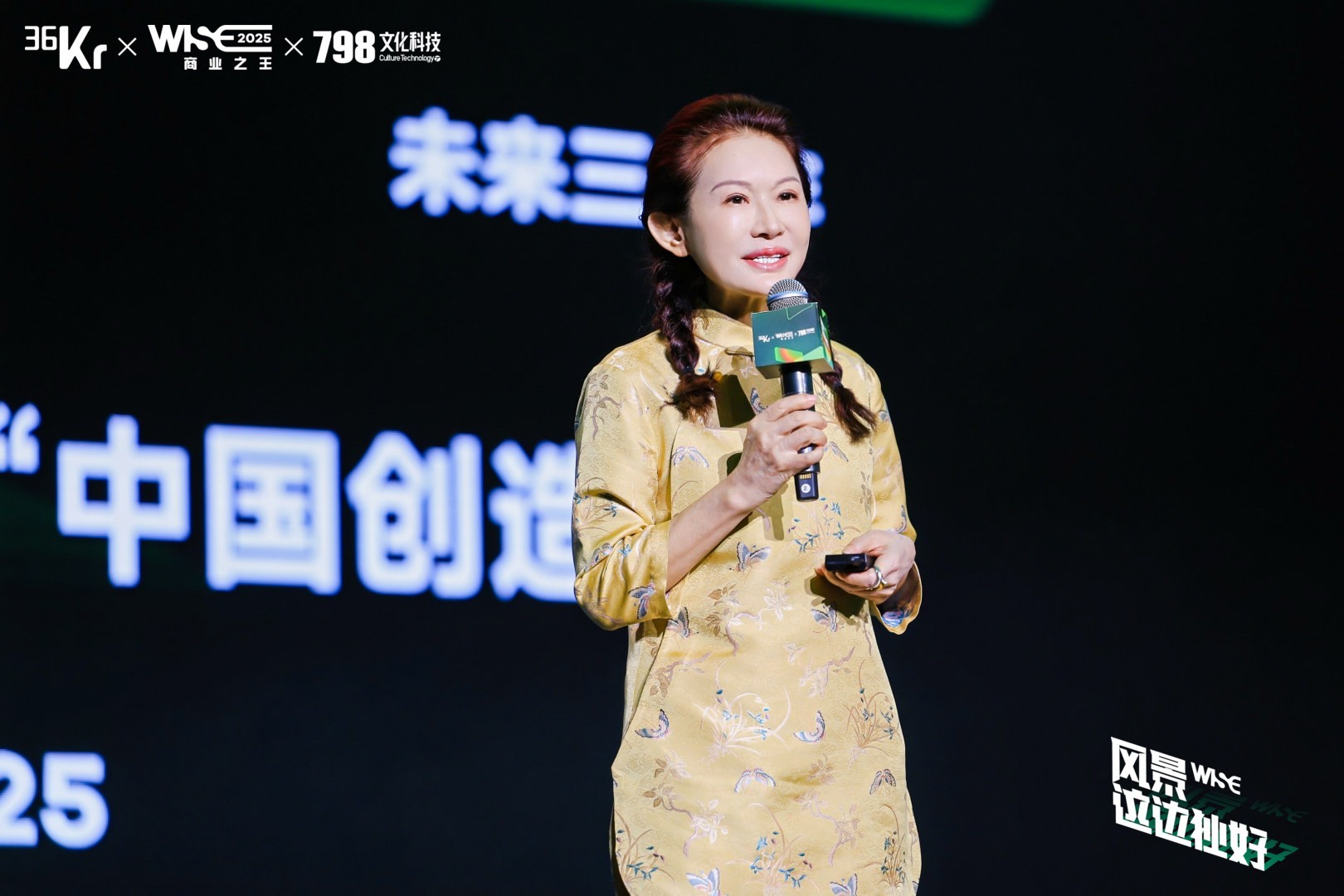
华熙生物赵燕:共生的力量,中国制造与生命再生|WISE2025 商业之王大会
3 6 Ke· 2025-12-04 00:41
Core Viewpoint - The WISE 2025 Business King Conference aims to anchor the future of Chinese business amidst uncertainty, emphasizing the importance of collaboration and innovation in the face of technological advancements and market changes [1][2]. Group 1: Conference Overview - The WISE 2025 Business King Conference, held on November 27-28 in Beijing, is described as an immersive experience rather than a traditional industry summit, focusing on the intersection of technology and business [2]. - The conference features various themes, including AI's impact on hardware, global brand expansion, and the integration of traditional industries with advanced technologies [2]. Group 2: Speaker Insights - Zhao Yan, Chairman of Huaxi Group and Huaxi Bio, delivered a keynote speech titled "The Power of Symbiosis: Chinese Manufacturing and Life Regeneration," highlighting the significance of hyaluronic acid beyond its cosmetic applications [4][5]. - Hyaluronic acid is presented as a fundamental active substance in human life, essential for tissue repair and regeneration, and is crucial in various medical applications [5][6]. Group 3: Industry Positioning - Huaxi Bio holds over 70% market share in the global pharmaceutical raw material sector and more than 40% in the cosmetic-grade raw material sector, showcasing its leadership in the biomanufacturing industry [6]. - The company emphasizes the parallel between macro-manufacturing and micro-repair processes, illustrating how both realms share similar principles of connection and collaboration [7][8]. Group 4: Future Directions - The company aims to transition from "Chinese manufacturing" to "Chinese creation," focusing on biomanufacturing and the mastery of core technologies to enhance product quality and innovation [15][16]. - Huaxi Bio is investing in a biomanufacturing pilot platform in Tianjin, with a goal to increase the technology transfer rate from below 10% to 35%-50% over the next five years [17]. Group 5: Vision and Values - The company seeks to create a collaborative ecosystem in the biomanufacturing industry, promoting shared growth and innovation among enterprises and research institutions [16][18]. - The ultimate goal is to respect and enhance every life, ensuring that individuals can achieve quality longevity through health and vitality [21].

锚定“稳、进、新” 实体经济转型升级动能强
Shang Hai Zheng Quan Bao· 2025-12-03 18:46
Core Viewpoint - The article emphasizes the resilience and vitality of China's real economy, highlighting the importance of industrial upgrading as a key to development amidst various challenges in the domestic and international economic environment [1][2]. Group 1: Stability in Economic Growth - The Chinese government has implemented a series of targeted policies to stabilize the real economy, focusing on cost reduction, resource assurance, and market relief, which have allowed industrial enterprises to operate with confidence [1][2]. - The National Development and Reform Commission and the Ministry of Finance have expanded support for equipment upgrades to various sectors, effectively stimulating corporate technological transformation and production enthusiasm [2]. - As of October 2025, the sales revenue of China's equipment manufacturing industry increased by 7.3% year-on-year, with the battery manufacturing sector experiencing a significant surge of 27.2% [2]. Group 2: Advancements in Quality and Efficiency - The focus on industrial upgrading has led to a shift from scale expansion to quality and efficiency, with traditional industries undergoing rapid intelligent transformation [3][4]. - The Ministry of Industry and Information Technology has recognized 15 factories as leading smart factories, marking a critical leap in China's smart manufacturing [3]. - The establishment of a green manufacturing system has been prioritized, with 6,430 green factories and 491 green industrial parks cultivated, promoting over 40,000 green products [3]. Group 3: Innovation-Driven Future Development - Innovation is positioned as a core driver for the sustained growth of the real economy, with a focus on emerging industries and the construction of an innovative ecosystem [5][6]. - Various regions are actively developing new sectors such as artificial intelligence, humanoid robots, and low-altitude economy, creating new spaces for industrial development [5]. - The Ministry of Industry and Information Technology has outlined plans to enhance the comprehensive strength of future industries by 2027, aiming for global leadership in certain fields [6].
浙江“十五五”规划建议:聚焦人形机器人、脑机接口等领域,布局建设一批未来产业先导区
Zheng Quan Shi Bao Wang· 2025-12-03 00:13
Core Viewpoint - The Zhejiang Provincial Committee emphasizes the integration of advanced manufacturing clusters to promote the upgrading of traditional industries, the growth of emerging industries, and the scientific layout of future industries [1] Group 1: Traditional Industry Upgrading - The initiative aims to implement "tenglong huan niao" (transformation) and "phoenix nirvana" actions to deepen the construction of national traditional manufacturing upgrade demonstration zones [1] - There will be a strong push for technological transformation, equipment updates, and ecological upgrades in traditional industries to enhance quality and technical capabilities [1] - Key industries such as green petrochemicals, textiles and apparel, electrical machinery, and home appliances will be prioritized for quality upgrades to strengthen their competitive positions [1] Group 2: Emerging Industry Development - The plan focuses on building new pillar industries, accelerating the development of clusters in artificial intelligence, new materials, new energy, aerospace, low-altitude economy, and biomedicine [1] - A future industry investment growth mechanism will be established to explore various technological routes, typical application scenarios, feasible business models, and market regulation rules [1] - Key areas for future industry development include humanoid robots, brain-machine interfaces, brain-like intelligence, quantum information, and biomanufacturing [1] Group 3: Service Industry Enhancement - The implementation of high-quality development projects in the service sector will be prioritized, aiming to improve the integration of modern services with advanced manufacturing and modern agriculture [1] - The initiative will promote the specialization and high-end extension of productive services and enhance the quality and diversity of life services [1]

生物制造唯一国创中心明日试运行
Nan Fang Du Shi Bao· 2025-12-02 23:21
Core Viewpoint - The Shenzhen government is hosting the Guangming Science City Forum 2025 from December 4 to 5, focusing on themes of "Openness," "Intelligence Creation," and "Leadership" under the permanent theme "Guangming: Building Dreams for the Future" [1][2]. Group 1: Forum Structure and Activities - The forum will adopt a "1+1+7" format, including one opening ceremony, one plenary session, and seven parallel forums [1]. - Significant activities include the launch of the National Bio-Manufacturing Industry Innovation Center, the unveiling of the Shenzhen branch of the National University Technology Transfer Center (Greater Bay Area), and the establishment of the Guangming Science and Technology Innovation Fund [2]. Group 2: Development of Guangming Science City - Guangming Science City has attracted over 3,000 high-level talents, including renowned academicians, and has been recognized as one of the top 100 science cities in China, improving its ranking from 24th in 2022 to 7th in 2024 [1][3]. - The city is home to major scientific facilities and institutions, including two high-level research universities and multiple research institutes, contributing to significant advancements in various scientific fields [3]. Group 3: Industrial Development - Guangming District hosts two trillion-level industrial clusters in ultra-high-definition video display and high-performance materials, with a high-end medical device cluster valued at 50 billion [4]. - The district is also capitalizing on the artificial intelligence trend, with an AI industry cluster reaching 30 billion, and a biopharmaceutical industry cluster valued at approximately 10 billion [4].
科创企业加速聚集 湖南津市生物制造产业转型中
Xin Hua Cai Jing· 2025-12-02 15:04
Core Insights - The "14th Five-Year Plan" suggests promoting quantum technology, biomanufacturing, hydrogen energy, nuclear fusion, brain-computer interfaces, embodied intelligence, and 6G mobile communication as new economic growth points [1] Biomanufacturing Industry Development - Jinshi City has gathered 27 core biomanufacturing enterprises capable of producing over 200 high-end synthetic biological products, indicating a rapid transformation and upgrade of the biomanufacturing industry [1] - The history of biomanufacturing in Jinshi dates back to 1978 with the establishment of the Jinshi Enzyme Factory, which evolved into Hunan Hongying Biological Engineering Co., continuing to develop enzyme products [1] - Leading local enterprise, Xinhong Biological Technology Co., established in 2013, focuses on the R&D, production, and sales of steroid intermediates and raw materials, forming a complete industrial chain for steroid drugs [1] Strategic Collaborations and Investments - Jinshi has partnered with leading institutions like AstraZeneca and CICC to establish 16 funds totaling 20 billion yuan, with 104 projects invested and 23 projects settled in Jinshi [2] - Hunan Yihang Biotechnology Co. received over 5 million yuan in government support and secured 1.2 billion yuan in industrial fund investment and 1 billion yuan in bank financing for its production base [2] - Lier Biological Technology Co. achieved the world's largest sales volume for its herbicide product, with a global market share of 62% last year [2] Technological Advancements and Infrastructure - Muen (Guangzhou) Biotechnology Co. established a complete microbial industrialization technology system in Jinshi, becoming an international leader in microbial platform technology [3] - Jinshi has created a comprehensive incubation system for biomanufacturing, including a "scientific innovation platform—pilot base—acceleration factory—industrial park" model [3] - The Hunan Biomanufacturing Pilot Base Co. was established in 2023 to assist companies in conducting pilot tests for amino acids, vitamins, and cosmetic products [3] Support for Innovation and Talent Attraction - Jinshi promotes the "Acceleration Factory" project to assist companies in overcoming challenges from pilot testing to mass production [4] - The Shenzhen Innovation Platform is operational, with two companies settled and three awaiting entry, while the Jinshi (Changsha) Biomanufacturing Research Institute focuses on key areas like pharmaceuticals and health products [4] - The Jinshi (Shanghai) Technology Achievement Transformation Center was established to enhance collaboration with universities and attract high-level talent for synthetic biology projects [4]
黄楚平主持省十四届人大常委会第二十二次会议联组会议开展专题询问以法治助推建设具有国际竞争力的现代化产业体系
Nan Fang Ri Bao Wang Luo Ban· 2025-12-02 02:01
Group 1 - The meeting focused on building a modern industrial system with international competitiveness, emphasizing the integration of technological and industrial innovation [1][2] - The provincial government has made significant progress in addressing key issues and implementing practical measures to enhance the industrial system [1] - The importance of advanced manufacturing as a driving force for revitalizing traditional industries and leading emerging industries was highlighted [2] Group 2 - The need for a strong legal framework to support the construction of a competitive industrial system was emphasized, including legislative plans for emerging fields such as artificial intelligence and quantum technology [3] - Collaboration among various stakeholders is crucial for achieving the industrial development goals, with a focus on horizontal and vertical coordination [3] - The provincial government aims to create a market-oriented, law-based, and international business environment to support industrial growth [2][3]
王岩:把握推动高质量发展的科学方法论
Jing Ji Ri Bao· 2025-12-02 00:09
Core Viewpoint - The 20th Central Committee's Fourth Plenary Session emphasizes "high-quality development" as a primary goal for the 15th Five-Year Plan, continuing the focus from the 14th Five-Year Plan and highlighting the need for a balanced approach between stability and progress [1][2] Group 1: Stability and Progress - "Stability" is identified as the foundation for high-quality development, requiring a focus on employment, enterprises, markets, and expectations to maintain economic stability [3] - "Progress" represents the goal of high-quality development, necessitating reforms in quality, efficiency, and driving forces to achieve a balance between qualitative improvement and reasonable quantitative growth [4] Group 2: Methodological Approach - The principle of "seeking progress while maintaining stability" serves as a methodological framework for economic work, advocating for macroeconomic regulation and the effective implementation of fiscal and monetary policies [5] - Emphasizing the need for a systematic approach, the strategy calls for a balance between government and market roles, speed and quality, and development and safety [5] Group 3: Coordinated Development - The strategy promotes "point" and "surface" coordination, focusing on key issues while ensuring overall systemic progress, enhancing the internal dynamics of high-quality development [6][8] - Identifying key breakthrough areas in industrial development, the strategy emphasizes the importance of focusing on the real economy and technological innovation to drive high-quality development [7] Group 4: Domestic and International Integration - Strengthening the domestic cycle is crucial for high-quality development, with a focus on expanding domestic demand and enhancing consumption as a primary driver of economic growth [11] - The strategy highlights the importance of facilitating both domestic and international dual circulation, promoting an open and competitive market environment to enhance the quality and efficiency of high-quality development [12][13]