
新发展格局

Search documents
中国企业“含金量”稳步提升
Jing Ji Ri Bao· 2025-09-16 22:14
Core Insights - The number of enterprises with a scale of over 100 billion continues to grow, showcasing significant technological innovations and ongoing structural adjustments, reflecting the vitality and resilience of the Chinese economy [1] Group 1: Enterprise Development - The "2025 China Top 500 Enterprises" list indicates that large enterprises, represented by the top 500, are maintaining a steady and positive development trend despite challenges [2] - Revenue of the top 500 enterprises increased from 89.83 trillion yuan to 110.15 trillion yuan, a growth of 22.62%, while total assets rose from 343.58 trillion yuan to 460.85 trillion yuan, an increase of 34.13% [2] Group 2: Innovation and R&D - R&D investment among the top 500 enterprises rose from 1,306.6 billion yuan to 1,728.7 billion yuan, a growth of 32.30%, with average R&D intensity increasing from 1.77% to 1.95% [3] - The number of invention patents increased from 594,600 to 1,039,600, and participation in standard-setting rose from 69,000 to 91,400 [3] Group 3: Structural Optimization - The contribution rates to total revenue from manufacturing, services, and other sectors are 40.48%, 40.29%, and 19.23%, respectively, indicating coordinated development across different types of enterprises [3] - The number of enterprises in advanced manufacturing sectors increased from 23 to 32, reflecting a more balanced regional distribution of enterprises [3] Group 4: Global Influence - The top 100 Chinese multinational companies reported overseas revenue of 90,687 million yuan and overseas assets of 119,594 million yuan, with overseas revenue and assets growing by 29.74% and 47.44%, respectively [6][7] - Chinese large enterprises are enhancing their global resource allocation capabilities, transitioning from "technology following" to "technology leading" [7] Group 5: Future Opportunities - Chinese large enterprises are encouraged to act as the "main engine" of innovation, focusing on long-term investments in fundamental research and key technologies [8] - They are expected to play a leading role in the transformation of traditional industries and the development of strategic emerging industries [8] - Emphasis is placed on green and digital transformation, with large enterprises urged to integrate these principles throughout their product lifecycle [9]
榜单见证中国大企业发展态势向好(经济聚焦)
Ren Min Ri Bao· 2025-09-16 22:10
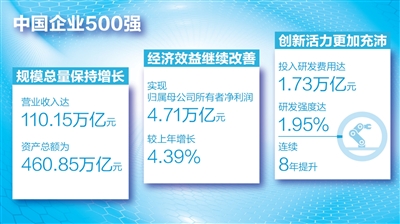
Core Insights - Since the "14th Five-Year Plan," China's top 500 enterprises have made new strides in seeking progress while maintaining stability, enhancing development momentum, and playing a significant role in industrial upgrading, innovation capability enhancement, and international competition [1][2] Group 1: Performance Metrics - The threshold for entering the "2025 China Enterprise 500" list has increased for 23 consecutive years, reaching 47.96 billion yuan, up by 579 million yuan from the previous year [1] - The total operating revenue of the top 500 enterprises reached 11.015 trillion yuan, showing an increase from the previous year; net profit attributable to shareholders was 471 billion yuan, up by 4.39% [1][3] - The number of enterprises with revenues exceeding 100 billion yuan increased from 222 in 2020 to 267 in 2024, an increase of 45 [1] Group 2: R&D and Innovation - The top 500 enterprises invested 1.73 trillion yuan in R&D, achieving a record R&D intensity of 1.95%, marking an increase for eight consecutive years [2][5] - The average R&D intensity of the "2025 China Innovation 100" increased from 5.27% to 5.61%, an increase of 0.34 percentage points [2] Group 3: Structural Optimization - The operating revenue of the top 500 enterprises grew from 8.983 trillion yuan in 2020 to 11.015 trillion yuan in 2024, a growth of 22.62% [3] - The total assets increased from 34.358 trillion yuan to 46.085 trillion yuan, a growth of 34.13% [3] - The contribution to revenue growth from manufacturing, services, and other sectors was 40.48%, 40.29%, and 19.23%, respectively [5] Group 4: Global Competitiveness - The threshold for the "2025 China Top 100 Multinational Corporations" was 22.173 billion yuan, up by 2.333 billion yuan, or 11.76% from the previous year; total overseas assets reached 11.96 trillion yuan [2] - The average multinational index was 15.56%, an increase of 0.21 percentage points from the previous year [2] Group 5: Future Directions - Chinese enterprises are encouraged to increase long-term stable investments in basic research and key common technologies, leveraging the country's vast application scenarios to overcome core technology challenges [6][7] - The importance of a market-oriented, collaborative innovation system that integrates industry, academia, and research is emphasized to enhance the competitiveness of Chinese enterprises on the global stage [7]

“十四五”规划知多少丨五年规划如何编制实施?一文读懂
Yang Shi Xin Wen· 2025-09-16 02:11
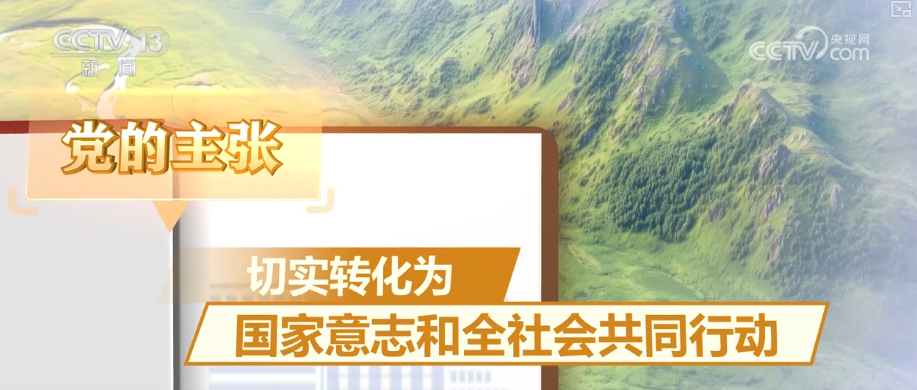
Core Points - The article emphasizes the importance of the leadership of the Communist Party of China in the formulation and implementation of the Five-Year Plans, ensuring that the party's proposals are transformed into national will and collective action across society [1] - The "14th Five-Year Plan" is highlighted as a strategic response to global changes, focusing on high-quality development and addressing key issues through coordinated organizational mechanisms [1][2] - The planning process involves extensive public consultation to gather diverse opinions and experiences, aiming to reflect the people's aspirations for a better life [1] Group 1 - The formulation of the Five-Year Plans relies on the significant advantage of the socialist system to concentrate efforts on major tasks, aligning with the long-term strategic goal of building a modern socialist country [1] - The planning process is characterized by a commitment to maintaining strategic determination, ensuring continuity in the implementation of plans over time [2] - The implementation of the plans is supported by a comprehensive mechanism that integrates various types of planning, resource allocation, and monitoring to ensure effective execution [2]
“十四五”规划知多少?如何编制?如何有效执行?| 150秒解锁↓
Yang Shi Wang· 2025-09-16 01:45
Core Viewpoint - The article discusses the importance of the "14th Five-Year Plan" in China, emphasizing the need for effective implementation mechanisms to ensure the successful execution of planning tasks [1][3]. Group 1: Planning Compilation and Implementation - The leadership of the Communist Party of China is fundamental in transforming party proposals into national will and collective action across society, ensuring the achievement of planning goals [3]. - The planning process should leverage the advantages of the socialist system to concentrate efforts on significant tasks, aligning with the long-term strategic goal of building a modern socialist country [5]. - The "14th Five-Year Plan" adapts to unprecedented global changes, focusing on a people-centered development approach and outlining strategic directions for high-quality development [7]. Group 2: Social Collaboration and Strategic Consistency - The planning process emphasizes social collaboration by integrating top-level design with public consultation, gathering diverse opinions to reflect the aspirations of the people [9]. - Maintaining strategic consistency is crucial, with a commitment to a long-term vision that connects successive five-year plans to achieve the grand goal of national rejuvenation [11]. Group 3: Implementation Mechanisms - The implementation of the plan relies on a well-coordinated mechanism that integrates various types of planning, ensuring detailed execution at different levels [13]. - A robust support mechanism involving fiscal budgets, government investments, land supply, and financial resources is essential for the successful implementation of the plan [13]. - Monitoring and evaluation processes are necessary to adjust priorities based on assessment results, ensuring the plan's successful completion [13].
以“立破之道”建设好全国统一大市场
Ren Min Ri Bao· 2025-09-15 22:22
市场是最稀缺的资源,超大规模市场是我国的优势所在。用好市场资源和优势,纵深推进全国统一大市 场建设,是当务之急,更是战略之举。 习近平总书记指出:"建设全国统一大市场,不仅是构建新发展格局、推动高质量发展的需要,而且是 赢得国际竞争主动权的需要""必须把全国统一大市场建设好,增强我们从容应对风险挑战的底气"。 7月30日召开的中共中央政治局会议指出,纵深推进全国统一大市场建设,推动市场竞争秩序持续优 化。 上半年,国内生产总值同比增长5.3%,内需对经济增长贡献率达68.8%。面对严峻复杂的外部环境,中 国大市场彰显出强大韧性。 与此同时,一些行业和企业低价无序竞争、有的地方"政策洼地"比拼、产业盲目跟风等现象依然存在, 成为做强国内大循环的阻碍。 打通堵点、畅通循环,必须用好"立破之道"。 "立"什么、"破"什么,怎么"立"、如何"破"……在认识上和实践中解决好这些问题,才能更好推进全国 统一大市场建设,更好构建新发展格局,把发展的主动权牢牢掌握在自己手里。 (一) 构建全国统一大市场,要立"显规则"、破"潜规则"。 "改革有破有立,得其法则事半功倍"。全国统一大市场建设,坚持以制度建设为主线,破立并举、先 ...
参与有活力,发展增动力(评论员观察)
Ren Min Ri Bao· 2025-09-15 22:22
Group 1 - The article emphasizes the importance of collective participation and collaboration in driving development, highlighting that both individuals and nations can progress faster and more steadily through innovative participation methods [1][3] - The construction of a new sports field at Mengba Middle School in Gansu Province serves as a case study of how donations and creative designs from university students can significantly impact local education and community development [1][2] - The article discusses the role of strategic initiatives, such as the education strengthening strategy and regional coordination development strategy, in enhancing access to quality education resources across different regions, particularly in the western areas of China [2] Group 2 - The narrative draws parallels between the vibrancy of sports and the dynamism of societal development, suggesting that young students are vital to future progress and that sustained energy is necessary for ongoing development [2][3] - The article highlights the need for collaborative efforts in various fields to achieve significant advancements, using the example of national teamwork in developing advanced technologies like the third-generation fighter jet [3] - It concludes with a call for unity and cooperation in facing economic challenges and fostering a competitive yet collaborative ecosystem, emphasizing that every contribution, regardless of size, is valuable for national and community progress [3]
前八月固定资产投资稳定增长,高技术制造业带动作用明显
2 1 Shi Ji Jing Ji Bao Dao· 2025-09-15 14:05
Economic Overview - In the first eight months of the year, national fixed asset investment (excluding rural households) reached 326.111 billion yuan, with a year-on-year growth of 0.5%. Excluding real estate development investment, fixed asset investment grew by 4.2% [1] - Infrastructure investment increased by 2.0% year-on-year, while manufacturing investment rose by 5.1%. Real estate development investment saw a decline of 12.9% [1] Manufacturing Sector - Manufacturing investment grew by 5.1%, outpacing overall investment growth by 4.6 percentage points, contributing 1.3 percentage points to total investment growth [1] - Investment in consumer goods manufacturing increased by 9.0%, and equipment manufacturing investment grew by 3.2%. High-tech manufacturing sectors, such as aerospace and computer equipment, saw significant investment growth of 28.0% and 12.6%, respectively [1] Investment Trends - The data indicates a structural shift in investment, with a notable increase in investments related to downstream and consumer-related industries, reflecting a trend towards demand-driven investment [1] - The real estate sector is transitioning from a focus on new growth to managing existing stock, indicating a shift in investment strategy [1] Private Investment - Private investment decreased by 2.3% year-on-year, but when excluding real estate development, it grew by 3.0% [2] - The government is implementing measures to stimulate private investment, focusing on removing barriers and enhancing support for private enterprises [3][4] Consumer Demand - The third batch of consumer goods replacement policies has been implemented, contributing to the release of consumer demand and driving sales growth in related goods [2] - In August, retail sales of household appliances and cultural office supplies continued to show double-digit growth, indicating strong consumer demand [2] Future Outlook - The government aims to maintain a stable economic environment while promoting high-quality development through various macroeconomic policies [3] - The focus will be on enhancing the investment environment for private enterprises, particularly in green industries and future technologies [3][4]
开辟西部新通道,世纪工程临近“收官”!
Zhong Guo Xin Wen Wang· 2025-09-15 13:37
Core Points - The Pinglu Canal project in Guangxi has made significant progress, with a total investment of 59.25 billion yuan completed, accounting for 81.5% of the total investment [2][4] - The canal is expected to be completed and navigable by the end of 2026, enhancing the logistics and transportation network in the region [2][5] - The Pinglu Canal will create a shorter and more cost-effective logistics route, reducing transportation distance by approximately 1,200 km and saving about 13 days in transit time compared to existing routes [6][7] Investment and Economic Impact - The total estimated investment for the Pinglu Canal is around 72.7 billion yuan, and it is designed to accommodate 5,000-ton vessels over a length of approximately 135 kilometers [4][5] - The canal is part of a broader strategy to transform Guangxi into a transportation hub facing ASEAN, facilitating trade and economic cooperation [8] - The project aims to optimize the logistics structure of the Western Land-Sea New Corridor, providing a more efficient transportation option for goods from western regions to the Beibu Gulf Port [7][8] Future Developments - The construction of the Pinglu Canal is part of a national strategy that includes plans for additional canals, such as the Xianggui Canal, which aims to connect Hunan and Guangxi [9][11] - The development of these waterways is expected to enhance the integration of regional economies and improve access to domestic and international markets [7][9] - The Pinglu Canal will also support the growth of the logistics industry in Guangxi, contributing to the province's goal of becoming a leading transportation province by 2025 [6][7]

《求是》杂志发表习近平总书记重要文章《纵深推进全国统一大市场建设》|宏观经济
清华金融评论· 2025-09-15 10:04
Core Viewpoint - The construction of a national unified market is a significant decision made by the Central Committee, essential for building a new development pattern, promoting high-quality development, and gaining an advantage in international competition [4]. Group 1: Basic Requirements for Market Construction - The basic requirements for advancing the national unified market are "Five Unifications and One Opening." The "Five Unifications" include unifying market foundational systems, infrastructure, government behavior standards, market supervision and enforcement, and resource factor markets [4]. - "One Opening" refers to the continuous expansion of openness, promoting internal and external connectivity without closed operations [4]. Group 2: Key Areas of Focus - The first focus is on addressing the chaotic competition among enterprises, particularly the issue of low-price disorder, which requires effective legal governance and industry self-regulation to promote quality over price [5]. - The second focus is on rectifying government procurement bidding irregularities, including issues like lowest bid winning and quality compromises, necessitating standardized procurement processes and fair review mechanisms [6]. - The third focus is on standardizing local investment attraction practices, establishing a unified list of behaviors, and ensuring transparency in financial subsidies [6]. - The fourth focus is on promoting the integration of domestic and foreign trade, enhancing consistency in standards, and developing comprehensive service platforms [6]. - The fifth focus is on addressing regulatory and legal shortcomings by amending relevant laws and enhancing enforcement actions [6]. - The sixth focus is on correcting deviations in performance evaluation systems to ensure accountability for improper investment attraction and local protectionism [6]. Group 3: Implementation and Coordination - The construction of a national unified market is both a tough battle and a long-term endeavor, requiring coordinated efforts from various regions and departments, as well as between government and enterprises [7].
冠通期货2025年8月宏观经济数据
Guan Tong Qi Huo· 2025-09-15 05:56
1. Report Industry Investment Rating No relevant content provided. 2. Core View of the Report In August 2025, under the strong leadership of the Party Central Committee with Comrade Xi Jinping as the core, the national economy maintained a generally stable and progressive development trend. Production and demand were basically stable, employment and prices were generally stable, and new driving forces were cultivated and strengthened [3]. 3. Summary by Relevant Catalogs Industry - In August, the added value of industrial enterprises above designated size increased by 5.2% year - on - year and 0.37% month - on - month. The added value of the mining industry, manufacturing, and the production and supply of electricity, heat, gas, and water increased by 5.1%, 5.7%, and 2.4% year - on - year respectively. The added value of the equipment manufacturing industry and high - tech manufacturing industry increased by 8.1% and 9.3% year - on - year respectively, faster than the overall industrial added value [3]. - From January to August, the added value of industrial enterprises above designated size increased by 6.2% year - on - year. In August, the manufacturing purchasing managers' index was 49.4%, up 0.1 percentage points from the previous month; the enterprise production and operation activity expectation index was 53.7%, up 1.1 percentage points [3]. - From January to July, the total profit of industrial enterprises above designated size was 40204 billion yuan, a year - on - year decrease of 1.7% [3]. Services - In August, the national service industry production index increased by 5.6% year - on - year. The production indexes of information transmission, software and information technology services, finance, and leasing and business services increased by 12.1%, 9.2%, and 7.4% year - on - year respectively, faster than the service industry production index [4]. - From January to August, the national service industry production index increased by 5.9% year - on - year. From January to July, the operating income of service enterprises above designated size increased by 7.4% year - on - year [4]. - In August, the service industry business activity index was 50.5%, up 0.5 percentage points from the previous month; the service industry business activity expectation index was 57.0%, up 0.4 percentage points. Some industries were in the high - level boom range [4]. Consumption - In August, the total retail sales of consumer goods were 39668 billion yuan, a year - on - year increase of 3.4% and a month - on - month increase of 0.17%. The retail sales of urban and rural consumer goods increased by 3.2% and 4.6% year - on - year respectively. The retail sales of goods and catering revenue increased by 3.6% and 2.1% respectively [5]. - From January to August, the total retail sales of consumer goods were 323906 billion yuan, a year - on - year increase of 4.6%. The national online retail sales were 99828 billion yuan, a year - on - year increase of 9.6%. The online retail sales of physical goods were 80964 billion yuan, a year - on - year increase of 6.4%, accounting for 25.0% of the total retail sales of consumer goods [5]. - From January to August, the service retail sales increased by 5.1% year - on - year, with relatively fast growth in cultural and sports leisure services, tourism consulting and leasing services, and transportation services [5]. Investment - From January to August, the national fixed - asset investment (excluding rural households) was 326111 billion yuan, a year - on - year increase of 0.5%. Excluding real estate development investment, it increased by 4.2%. Infrastructure investment increased by 2.0%, manufacturing investment increased by 5.1%, and real estate development investment decreased by 12.9% [6]. - The sales area of newly built commercial housing was 57304 million square meters, a year - on - year decrease of 4.7%; the sales volume was 55015 billion yuan, a year - on - year decrease of 7.3% [6]. - In August, fixed - asset investment (excluding rural households) decreased by 0.20% month - on - month [6]. Import and Export - In August, the total volume of goods imports and exports was 38744 billion yuan, a year - on - year increase of 3.5%. Exports were 23035 billion yuan, an increase of 4.8%; imports were 15709 billion yuan, an increase of 1.7% [7]. - From January to August, the total volume of goods imports and exports was 295696 billion yuan, a year - on - year increase of 3.5%. Exports were 176056 billion yuan, an increase of 6.9%; imports were 119640 billion yuan, a decrease of 1.2% [7]. - From January to August, general trade imports and exports increased by 2.2%, accounting for 63.9% of the total import and export volume. Imports and exports to countries along the Belt and Road increased by 5.4%. Private enterprise imports and exports increased by 7.4%, accounting for 57.1% of the total import and export volume, 2.1 percentage points higher than the previous year [7]. Price - In August, the national consumer price index (CPI) decreased by 0.4% year - on - year and remained flat month - on - month. The core CPI excluding food and energy prices increased by 0.9% year - on - year, with the growth rate expanding by 0.1 percentage points from the previous month [8]. - From January to August, the national consumer price index decreased by 0.1% year - on - year [8]. - In August, the ex - factory price of industrial producers decreased by 2.9% year - on - year, with the decline narrowing by 0.7 percentage points, and remained flat month - on - month; the purchase price of industrial producers decreased by 4.0% year - on - year, with the decline narrowing by 0.5 percentage points, and remained flat month - on - month [8]. Employment - From January to August, the average urban surveyed unemployment rate nationwide was 5.2%. In August, the urban surveyed unemployment rate was 5.3%, up 0.1 percentage points from the previous month, the same as the same month of the previous year [8]. - The surveyed unemployment rate of local household registration labor force was 5.4%; the surveyed unemployment rate of non - local household registration labor force was 5.0%, among which the surveyed unemployment rate of non - local agricultural household registration labor force was 4.7% [8]. - The surveyed unemployment rate in 31 large - scale cities was 5.3%, up 0.1 percentage points from the previous month and down 0.1 percentage points from the same month of the previous year. The average weekly working hours of enterprise employees nationwide were 48.5 hours [8].