
新型能源体系

Search documents
优化能源结构 培育绿电优势 山西加快构建新型能源体系
Jing Ji Ri Bao· 2025-11-22 21:46
Group 1 - Shanxi has made significant progress in optimizing energy structure, promoting clean and efficient coal utilization, and fostering new advantages in green electricity through comprehensive energy reform pilot initiatives [1] - The Jinrui Coal Mine, part of Shanxi Coking Coal Group, has successfully mined 86 meters using the "110 method" green mining technology, which is expected to recover an additional 95,000 tons of coal, generating over 30 million yuan in economic benefits [1] - Shanxi Coking Coal Group is focused on building "zero-carbon mines" and has established 298 intelligent mines, with over 50% of installed capacity coming from renewable and clean energy sources [1] Group 2 - Shanxi's electricity spot market is the first officially operational spot market in the country, prioritizing the consumption of renewable energy and guiding thermal power companies to adjust their output through price signals [2] - The provincial government aims to enhance coal's clean and low-carbon development, diversify its utilization, and deepen energy system reforms to build a new energy system that ensures national energy security and supply chain stability [2]
热词看未来|持续提高新能源供给比重
Xin Hua She· 2025-11-22 00:55
新型能源体系以非化石能源为供应主体、化石能源为兜底保障、新型电力系统为关键支撑、绿色智慧节 约为用能导向。加快建设新型能源体系,既能够推动能源绿色低碳转型、支撑实现碳达峰碳中和,也是 保障国家能源安全的重要支撑。 国家能源局数据显示,"十四五"时期,我国加快"逐绿向新",能源转型跑出"加速度"。全社会用电量 中,每3度电就有1度绿电;全国能源消费中,非化石能源占比每年增加1个百分点,煤炭占比每年减少1 个百分点。 2025年前三季度,全国可再生能源新增装机3.1亿千瓦,同比增长47.7%,约占新增装机的84.4%。其 中,水电新增716万千瓦,风电新增6109万千瓦,太阳能发电(含光热)新增2.4亿千瓦,生物质发电新 增105万千瓦。 《建议》明确建设能源强国,要求促进清洁能源高质量发展,加强化石能源清洁高效利用,对电力系统 建设作出部署,将助推我国加快"逐绿向新",未来将会有更多的绿电点亮万家灯火。 《中共中央关于制定国民经济和社会发展第十五个五年规划的建议》提出,加快建设新型能源体系。 编导:杲均丰 包装:胡心懿 新华社音视频部制作 ...
张玉清:“十五五”时期能源安全是我国能源产业的首要任务
2 1 Shi Ji Jing Ji Bao Dao· 2025-11-21 13:22
Core Viewpoint - The conference highlighted the achievements and future goals of China's energy industry, emphasizing the importance of energy security and the transition to a low-carbon economy during the 14th and 15th Five-Year Plans [1][2]. Group 1: Achievements in Energy Sector - During the 14th Five-Year Plan, China's energy consumption structure improved, and the supply capacity of renewable energy significantly increased [1]. - Over the past decade, the average cost of wind power projects has decreased by over 60%, and the cost of photovoltaic power projects has dropped by over 80%, largely due to China's innovation and manufacturing capabilities [1]. Group 2: Future Goals and Strategies - The primary task for the 15th Five-Year Plan is to ensure energy security, which includes increasing oil and gas exploration and development, aiming for an additional natural gas production of 20 billion cubic meters annually [2][3]. - The development and utilization of renewable energy must accelerate, with a target for non-fossil energy consumption to exceed 30% by 2035 and a total installed capacity of wind and solar power to reach over 360 million kilowatts [3]. - Enhancing energy efficiency is crucial, focusing on key technologies, promoting zero-carbon parks and factories, and advancing the digitalization of the energy sector [3].
热词看未来丨持续提高新能源供给比重
Xin Hua She· 2025-11-21 08:54
Core Viewpoint - The article emphasizes the importance of accelerating the construction of a new energy system that prioritizes non-fossil energy, ensures energy security, and supports the transition to a low-carbon economy [1][2][8]. Group 1: New Energy System Development - The new energy system is characterized by non-fossil energy as the main supply, fossil energy as a backup, a new power system as a key support, and green smart savings as the energy consumption direction [1]. - The "14th Five-Year Plan" indicates a significant acceleration in energy transition, with one-third of the total electricity consumption being green electricity [4]. Group 2: Renewable Energy Growth - In the first three quarters of 2025, the newly installed capacity of renewable energy reached 310 million kilowatts, marking a year-on-year increase of 47.7%, accounting for 84.4% of the total new capacity [6]. - The breakdown of new renewable energy installations includes 7.16 million kilowatts from hydropower, 61.09 million kilowatts from wind power, and 240 million kilowatts from solar energy [6]. Group 3: Policy and Strategic Goals - The recommendations from the Central Committee highlight the need to build a strong energy nation, promote high-quality development of clean energy, and enhance the efficient use of fossil energy [8]. - The focus on the construction of the power system is expected to facilitate the transition towards greener energy sources, leading to more households being powered by green electricity in the future [8].

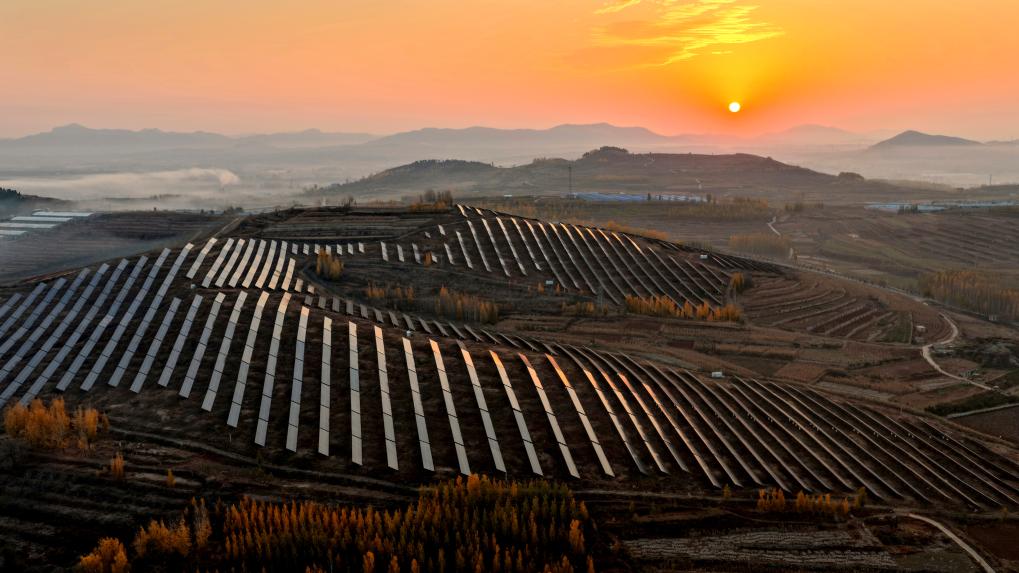
赵刚在榆林宣讲党的二十届四中全会精神并调研座谈时强调着力构建体现特色优势的现代化产业体系更好保障国家能源安全助力陕西高质量发展
Shan Xi Ri Bao· 2025-11-21 00:40
Group 1 - The provincial governor emphasizes the need to implement the spirit of the 20th Central Committee and to build a modern industrial system that reflects regional advantages, ensuring national energy security and supporting high-quality development in Shaanxi [1] - Shaanxi, as a major energy province, is accelerating the high-end, diversified, and low-carbon development of the energy and chemical industry, aiming to create a trillion-level modern energy industry cluster [2] - The governor encourages companies to focus on clean energy development, technological innovation, and ecological protection to help establish a new energy system that is clean, low-carbon, safe, and efficient [2] Group 2 - The governor highlights the importance of transforming the energy industry and leveraging comparative advantages to support the overall development of the province [3] - There is a call for enhanced economic monitoring and support for key industries, enterprises, and projects to ensure the release of quality production capacity and to plan major strategic tasks for the upcoming "15th Five-Year Plan" period [3]
中国能源政策研究院院长林伯强:从能源制造强国迈向能源体系强国
2 1 Shi Ji Jing Ji Bao Dao· 2025-11-20 08:05
"十五五"规划建议提出,要加快建设新型能源体系,持续提高新能源供给比重,推进化石能源安全可靠 有序替代,着力构建新型电力系统,建设能源强国。 "十四五"时期,中国新能源产业在全球能源版图中实现了从追赶到引领的历史性跨越。无论是在光伏、 风电领域,还是储能和电动汽车领域,中国制造均已成为全球能源转型的重要支撑力量。但在设备制造 环节全面领先的同时,新型能源体系的配套支撑也有待提升。如何将强大的制造能力切实转化为系统高 效运行的整体实力,已成为"十五五"时期推动中国能源转型的关键任务。 储能、智能电网和微电网建设将成为"十五五"时期能源体系升级的核心突破点。"十五五"规划建议明确 强调,要科学布局抽水蓄能、大力发展新型储能,加快智能电网和微电网建设,这为解决新能源波动性 和间歇性问题提供了关键技术路径。在储能技术布局方面,应构建涵盖电化学储能、抽水蓄能,及探索 氢能、热储能等多元化技术形式的储能体系,实现不同时间和空间尺度下能源的灵活调节能力。智能电 网和微电网通过技术集成,可推动分布式能源高效消纳,显著提升能源系统整体响应速度,为新能源充 分发挥替代作用提供坚实技术支撑。 然而,制造端的全面领先并未完全转化为能 ...
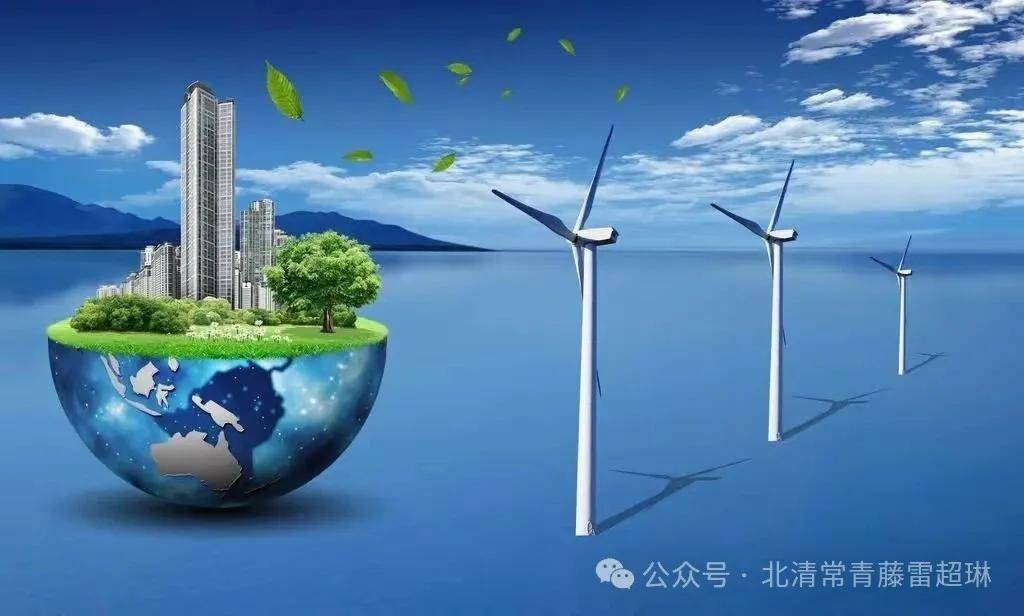
二十届四中全会定调:能源安全与绿色转型成 “十五五” 核心命题
Sou Hu Cai Jing· 2025-11-20 07:23
1. 新型能源体系:构建 "清洁为主、兜底有力" 的供应格局 根据规划建议,新型能源体系以非化石能源为供应主体、化石能源为兜底保障、新型电力系统为关键支撑、绿色智慧节约为用能导向。国家能源 局明确,到 "十五五" 末,新增用电需求绝大部分将由清洁能源满足,火电将从 "主力电源" 转型为 "调节性电源",新能源将成为电力供应的核心 力量。 前三季度的能源数据已显现转型成效:全国可再生能源装机接近 22 亿千瓦,风电、太阳能发电合计突破 17 亿千瓦,新增装机占比达 84.4%;风 电光伏发电量同比增长 28.3%,占全社会用电量的 22%,甚至超出同期第三产业用电量总和。这背后,是 "人工智能 + 能源""新型储能规模化建 设""绿电直连" 等一系列政策 "组合拳" 的持续发力,为十五五能源转型铺平道路。 2025 年 10 月,党的二十届四中全会在北京胜利召开,审议通过的《中共中央关于制定国民经济和社会发展第十五个五年规划的建议》,为未来 五年能源发展锚定总航向。全会明确提出 "加快建设新型能源体系""建设能源强国" 的重大任务,将能源安全与绿色转型提升至中国式现代化建设 的战略高度,这既是对 "十四五" 能 ...
南方电网“裂变”:第四个IPO诞生
2 1 Shi Ji Jing Ji Bao Dao· 2025-11-20 00:19
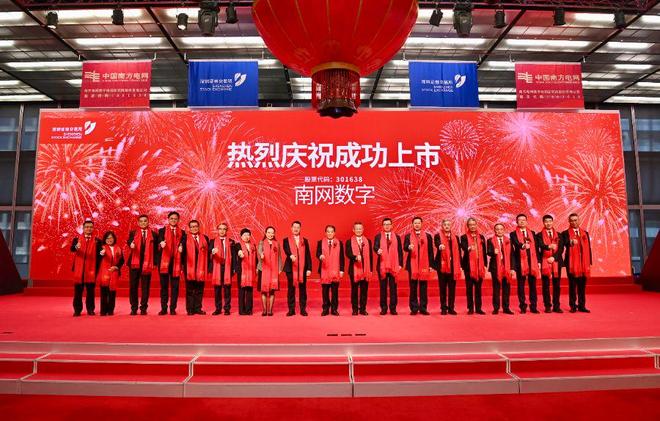
Core Insights - Southern Power Grid Digital Grid Research Institute Co., Ltd. (referred to as Southern Grid Digital) officially listed on the Shenzhen Stock Exchange on November 18, with a first-day opening increase of 261.51% and a total market capitalization of 760 billion yuan by November 19 [1][7] - The company aims to enhance its governance and strengthen its core position in technological innovation, focusing on advanced technologies such as artificial intelligence and quantum sensing [5][8] Company Overview - Southern Grid Digital's main business covers three major areas: grid digitization, enterprise digitization, and digital infrastructure, with revenue contributions projected for 2024 at 39.64%, 33.77%, and 25.56% respectively [3] - The company has a significant reliance on its parent company, Southern Power Grid, which accounted for 92.16% of its sales revenue in 2022, decreasing slightly to 85.88% by 2024 [4] Financial Performance - For 2024, Southern Grid Digital is projected to achieve revenues of 6.09 billion yuan and a net profit of 574 million yuan, with a remarkable growth in net profit of 464.76% year-on-year for the first nine months of 2025 [1][3] - The company has reported a total revenue of 2.779 billion yuan for the first nine months of 2025, reflecting a year-on-year growth of 31.88% [3] Market Position - Southern Grid Digital is the fourth listed company under Southern Power Grid, joining Southern Grid Energy, Southern Grid Technology, and Southern Grid Energy Storage, collectively exceeding a market capitalization of 1 trillion yuan [1][7] - The company plans to invest the funds raised from its IPO into advanced product development and cutting-edge technology research, including projects related to intelligent digital twin platforms and AI applications in the energy sector [4] Industry Context - The "14th Five-Year Plan" emphasizes the construction of a new energy system, highlighting the importance of smart grid and microgrid development, indicating a favorable policy environment for companies in the energy sector [2][6] - Southern Power Grid aims to strengthen its digital grid ecosystem to better support the intelligent, green, and integrated transformation of the energy and power industry [8]
南方电网“裂变”:第四个IPO诞生,央企巨头再扩张
2 1 Shi Ji Jing Ji Bao Dao· 2025-11-20 00:04
Core Insights - Southern Power Grid Digital Research Institute Co., Ltd. (referred to as Southern Grid Digital) officially listed on the Shenzhen Stock Exchange on November 18, with a first-day opening increase of 261.51% and a total market capitalization of 760 billion yuan by November 19 [2][8] - The company aims to enhance its governance and strengthen its core position in technological innovation, focusing on advanced technologies such as artificial intelligence and quantum sensing [6][9] Company Overview - Southern Grid Digital's main business covers three major areas: grid digitization, enterprise digitization, and digital infrastructure, with projected revenues of 6.09 billion yuan and net profits of 574 million yuan for 2024 [2][4] - The company has achieved a remarkable net profit growth of 464.76% year-on-year for the first nine months of 2025, reaching 158 million yuan [4] Financial Performance - The revenue structure for 2024 is expected to be 39.64% from grid digitization, 33.77% from enterprise digitization, and 25.56% from digital infrastructure [3] - The top three revenue-generating products for Southern Grid Digital in 2024 are expected to be the enterprise operation management system, cloud-based integrated platform, and digital grid IoT sensing devices, each with gross margins exceeding 20% [3] Market Position and Client Dependency - Southern Grid Digital heavily relies on its parent company, Southern Power Grid, which accounted for 92.16% of its sales revenue from 2022 to 2024 [4] - The company maintains a stable and sustainable sales relationship with Southern Power Grid, which is typical for the energy sector [4] Future Development Plans - The funds raised from the IPO will be invested in advanced product and technology development, including projects related to intelligent digital twin platforms and AI applications in energy [5] - Southern Grid Digital plans to expand its digital technology applications across the entire energy industry chain [6] Industry Context - The "14th Five-Year Plan" emphasizes the construction of a new energy system, highlighting the importance of smart grids and microgrids [3][8] - The overall market landscape for energy companies is evolving, with a focus on capital market engagement to seize new opportunities [8]
多项网间电力灵活互济工程获核准
Ke Ji Ri Bao· 2025-11-19 00:44
Core Viewpoint - The approval of the Xiangqian, Xiangyue, and Yuchuan flexible interconnection power projects will significantly enhance the power transmission capacity between the Southern Power Grid and the State Grid, with a total investment exceeding 15.6 billion yuan and a maximum transmission capacity of 9 million kilowatts by 2027 [1][2]. Group 1 - The three projects are set to start construction by the end of this year and are expected to be operational before the summer peak in 2027, increasing the number of transmission channels between the Southern Power Grid and the State Grid from 2 to 5 [1]. - Each of the three projects will involve the construction of a 3 million kilowatt flexible DC back-to-back converter station in Guizhou, Hunan, and Chongqing, along with related line construction to enhance interconnectivity [1][2]. - The projects will provide a solid physical foundation for normalized electricity trading between interconnected regions, supporting high-quality economic and social development and green energy demands [1]. Group 2 - The Xiangqian project will enable peak-shaving interconnection between Hunan, which experiences high electricity load in summer, and Guizhou, which has a "winter high, summer low" load characteristic, thus enhancing power supply security and renewable energy absorption [2]. - In case of extreme weather events, such as high temperatures or severe cold, the Xiangqian project will allow for emergency power support from the opposite side, significantly improving the grid's disaster response capability [2]. - The Southern Power Grid and the State Grid will enhance collaboration and resource investment to ensure high-quality construction and operation of the projects, accelerating the development of a new energy system and power structure [2].