物理AI

Search documents
中兴通讯崔丽:AI应用触及产业深水区,价值闭环走向完备
2 1 Shi Ji Jing Ji Bao Dao· 2025-12-30 10:25
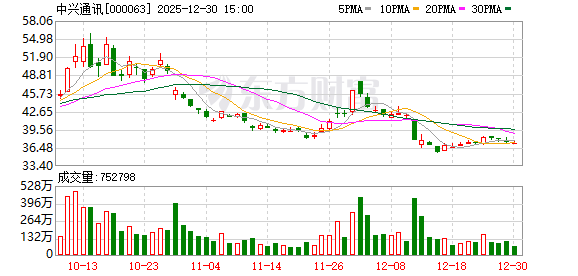
Core Insights - The rapid development of AI large models is becoming a key factor in the new round of technological competition, with a belief that the number of foundational large models will converge to a single-digit figure, while numerous specialized models and applications will emerge across various industries [2] - Physical AI is highlighted as a significant area of focus, accelerating advancements in fields like embodied intelligence and autonomous driving, which are expected to profoundly change societal operations [2][3] - The transition from generative models to world models and visual language models (VLA) represents a paradigm shift in AI, moving from mere prediction to simulation and physical alignment [3][4] Industry Trends - The emergence of Sora has sparked discussions about world models, indicating a shift in AI capabilities from being mere predictors to becoming simulators [3] - The divergence in world model approaches has led to the classification of models into "generative" and "representational" camps, with each having distinct applications and strengths [4][5] - The integration of VLA and world models is seen as a trend, with VLA focusing on sequence modeling for robot control and world models emphasizing internal environmental modeling for efficient learning [5] Challenges and Solutions - Three major challenges remain for world models: understanding causality, building effective simulators, and addressing data scarcity issues [6] - The competition for high-quality synthetic data is crucial for the next phase of AI development, particularly in data-driven AI applications like autonomous driving [6] - The timeline for the realization of world models is projected to span from 2024-2025 for visual simulation to 2028-2030 for general embodied intelligence [6] Technological Evolution - The network architecture is evolving from "cloud-native" to "AI-native," necessitating a focus on performance and collaboration between computing and networking [7] - ZTE has been progressively advancing its hardware and software integration from 2G to 5G, now incorporating large models into its development paradigm [8] - The integration of AI into core business processes is expected to transform industries, with a shift from content generation to autonomous action [9] Implementation and Applications - ZTE's "Co-Sight Intelligent Agent Factory" aims to enhance reasoning capabilities and ensure decision-making reliability through advanced verification mechanisms [11][12] - The successful application of AI requires a combination of robust infrastructure, effective methodologies, and deep industry engagement [17] - Industries such as education, healthcare, software development, and smart manufacturing are identified as likely candidates for early AI value realization due to their structured data environments and feedback mechanisms [14][13] Future Directions - The hybrid approach of "cloud-edge collaboration" is recommended for integrating general foundational models with industry-specific enhancements [15] - The need for specialized models in non-natural language data scenarios is emphasized, particularly in high-stakes environments like finance [16] - The overarching narrative of AI is shifting towards practical applications in various sectors, moving away from mere technological showcases to tangible value creation [18]


现场见证!港交所今日6锣同响,港股2025年IPO收官
Zheng Quan Shi Bao· 2025-12-30 10:00
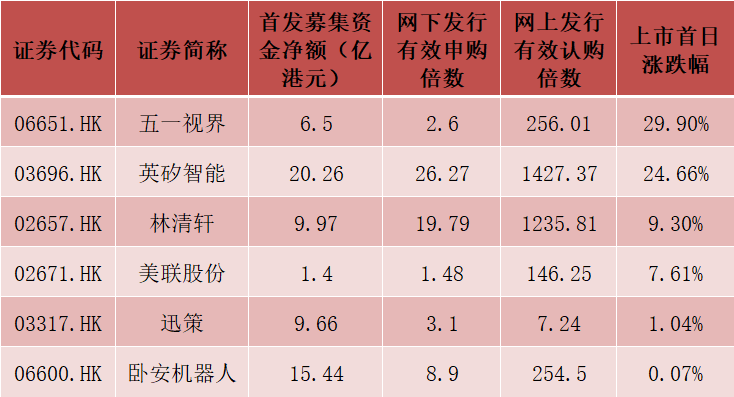
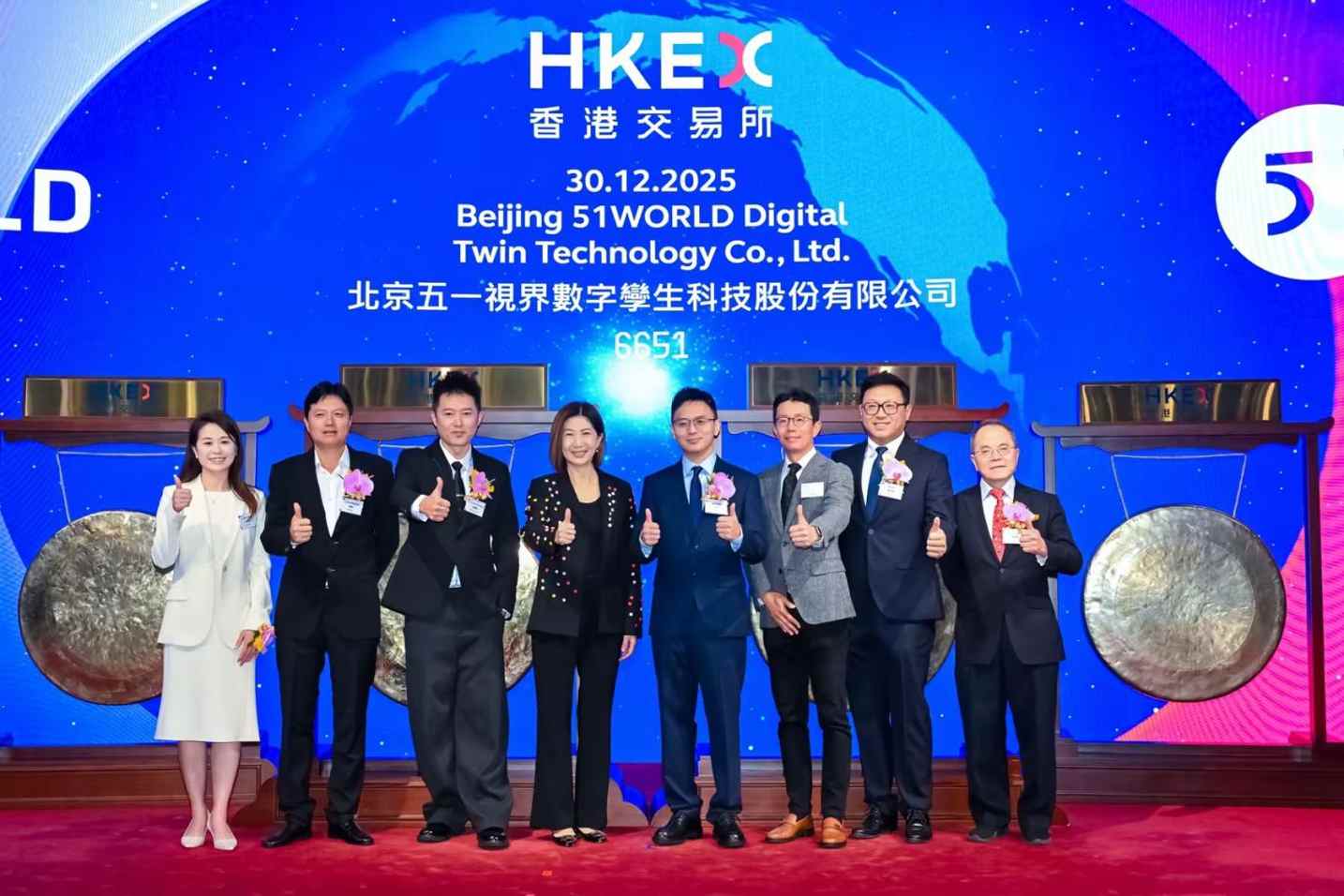
Group 1: IPO Overview - Six companies, including Yingxi Intelligent, Woan Robotics, Linqingxuan, Meilian Holdings, Xunce, and Wuyi Vision, simultaneously listed on the Hong Kong stock market on December 30, marking the end of the 2025 IPO season and the first time in five years that six companies have listed on the same day [1][2] - The last occurrence of six or seven companies listing on the same day was in July 2020, with the peak being eight companies on July 12, 2018 [1] Group 2: Market Reception - All six companies performed well on their first day, with no company experiencing a drop below the issue price. Wuyi Vision and Yingxi Intelligent had the highest gains, at 29.90% and 24.66% respectively [4] - Yingxi Intelligent's public offering saw a subscription rate of 1427.37 times, indicating strong market interest [4] Group 3: Company Highlights - Woan Robotics is a leading provider of AI-enabled home robotics, focusing on AI machine vision and control technologies, and aims to lead the industrial revolution in AI [3][6] - Linqingxuan, a domestic cosmetics brand, plans to enhance its global presence and invest in R&D for skincare technology following its listing [3] - Xunce, a provider of real-time data infrastructure, emphasizes the importance of data intelligence in driving high-quality industrial development [3] Group 4: Market Trends - The Hong Kong IPO market saw a significant increase in financing, with a total of 117 companies listed in 2025, raising 285.7 billion HKD, making it the top global market for IPO financing [7][8] - The interest in IPOs is expected to continue into 2026, with predictions of around 160 new listings and total financing exceeding 300 billion HKD [8]
现场见证!港交所今日6锣同响,港股2025年IPO收官
证券时报· 2025-12-30 09:56
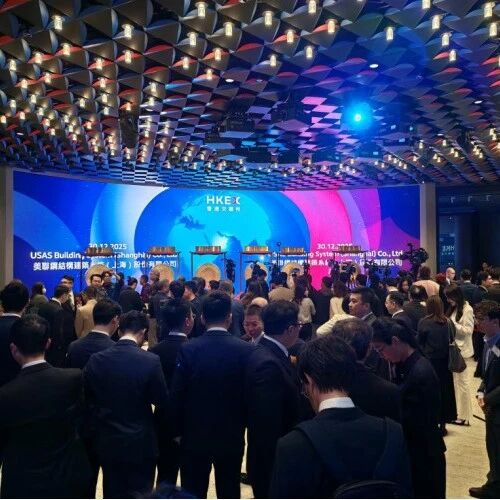
Core Viewpoint - The article highlights the successful simultaneous listing of six companies on the Hong Kong Stock Exchange (HKEX) on December 30, 2025, marking a significant event in the IPO landscape and indicating a vibrant market for new listings in the upcoming year [1][2][16]. Group 1: IPO Event Details - Six companies, including Yingxi Intelligent, Woan Robotics, Linqingxuan, Meilian Co., Xunce, and Wuyi Vision, made their debut on the HKEX, representing the first time in five years that six companies have listed on the same day [1][2]. - The last occurrence of six or seven companies listing simultaneously was in July 2020, with the peak being eight companies on July 12, 2018 [2]. - The trading hall was crowded with employees, intermediaries, and investors, indicating strong interest and participation in the event [5][7]. Group 2: Company Highlights and Performances - Woan Robotics' founder, Li Zhichen, emphasized the company's journey from a laboratory to a global leader in AI-driven household robotics, expressing commitment to innovation and performance [9]. - Linqingxuan's founder, Sun Laichun, announced the brand's ambition for global expansion and increased investment in research and development post-IPO [10]. - Xunce's executive director, Geng Dawei, highlighted the company's focus on data intelligence as a core driver for high-quality industrial development [10]. - All six companies experienced positive market performance on their first day, with Wuyi Vision and Yingxi Intelligent seeing the highest gains of 29.90% and 24.66%, respectively [11]. Group 3: Market Context and Future Outlook - The IPO market in Hong Kong saw a significant increase in activity in 2025, with a total of 117 companies listed and a total fundraising amount of 285.7 billion HKD, marking a notable rise from the previous year [17]. - The interest in IPOs is expected to continue into 2026, with predictions of around 160 new listings and total fundraising of at least 300 billion HKD, supported by over 300 pending applications [18].
海淀上市公司+1!五一视界成为“物理AI第一股”——
Sou Hu Cai Jing· 2025-12-30 08:39
Core Viewpoint - Beijing Wuyi Vision Digital Twin Technology Co., Ltd. (stock code 06651.HK) has officially listed on the Hong Kong Stock Exchange, becoming the first physical AI company in China to enter the capital market, marking a significant milestone for the company and its ambitious vision of "cloning the Earth" [1][3][22]. Group 1: Company Overview - The company’s stock price rose by 14.75% on its debut, reaching HKD 35 per share, with a total market capitalization exceeding HKD 14 billion, reflecting strong investor confidence in its technological capabilities and business model [3]. - The concept of "cloning the Earth" is the ultimate vision of digital twin technology, which involves creating high-precision, interactive digital replicas of real-world objects using 3D modeling, IoT, simulation, and AI [5][6]. - Founded by Li Yi, the company initially focused on VR real estate but shifted towards a broader goal of city-level digital twins after recognizing the limitations of visual representation [8][10]. Group 2: Technological Vision - The "cloning the Earth" initiative is structured into five progressive phases: static world, dynamic world, semi-simulated world, fully simulated world, and digital twin world [12][14]. - The current phase is the fully simulated world, where the company has developed the capability to generate a city in one day, laying the technical foundation for its grand narrative [15]. - The ultimate goal is to achieve a global-scale, physically accurate digital twin that interacts and simulates all elements, creating a parallel virtual planet [14]. Group 3: Business Model - The company’s revenue primarily comes from three core business platforms: 51Aes, 51Sim, and 51Earth, which support the "cloning the Earth" vision [17][19]. - The 51Aes platform accounts for approximately 80% of revenue, providing high-quality digital twin development and application services across over ten industries [19]. - The 51Sim platform offers simulation software products and solutions for intelligent driving and AI training, while the 51Earth platform aims to create an accessible digital twin world for both enterprises and consumers [19]. Group 4: Market Position and Future Plans - As the largest digital twin solution provider in China, the company is positioned to capitalize on the emerging trend of physical AI, which is expected to be a new growth point in the market over the next decade [21]. - The company plans to allocate approximately 80% of the funds raised from its IPO to ongoing R&D, including enhancing core platforms and developing generative AI tools [22]. - The strategic partnerships with notable investors, including SenseTime and Moore Threads, provide not only financial support but also critical capabilities in AI vision and graphics computing [22].

“Physical AI第一股”五一视界首日上市飙升超30%
Ge Long Hui· 2025-12-30 02:53
Core Insights - 51WORLD, known as the "first stock of Physical AI," debuted on the Hong Kong Stock Exchange on December 30, with its share price surging over 30% to reach 39.8 HKD, resulting in a market capitalization exceeding 16 billion HKD [1] Company Overview - Founded in February 2015, 51WORLD is a technology company focused on cloning Earth's 5.1 million square kilometers [1] - The company has made significant investments in three main technology areas: 3D graphics, simulation, and artificial intelligence, developing core competencies in these fields [1] Business Segments - 51WORLD has launched three core business platforms: - 51Aes (Digital Twin Platform) - 51Sim (Intelligent Driving Simulation Platform) - 51Earth (Digital Earth Platform) - These products are widely used by over a thousand large and medium-sized enterprises globally, covering 19 countries and regions [1] Technological Advancements - After ten years of technological accumulation, 51WORLD has established a complete closed-loop ecosystem for Physical AI, consisting of synthetic data, spatial intelligent models, and simulation training platforms [1] - The company is among the few globally that possess all three essential elements of Physical AI and has implemented benchmark cases in intelligent driving, transportation hubs, smart factories, and smart energy sectors [1]
Physical AI第一股五一视界(06651)正式登陆港交所!
智通财经网· 2025-12-30 02:25
Core Viewpoint - 51WORLD has successfully listed on the Hong Kong Stock Exchange, marking a significant milestone as the first Physical AI company in China to go public, and concluding the year's listings of specialized technology firms on the exchange [1][3]. Group 1: IPO Details - 51WORLD issued a total of 23,975,200 shares, raising a total of HKD 731 million during its IPO [3]. - The public offering in Hong Kong was oversubscribed by 258 times, with strong interest from various investors including long-term funds and hedge funds [3]. - At market opening, the stock price reached HKD 35, representing a 14.75% increase from the issue price, with a market capitalization exceeding HKD 14 billion [3]. Group 2: Company Overview - Founded in February 2015, 51WORLD focuses on cloning Earth's 5.1 million square kilometers and has invested heavily in 3D graphics, simulation, and artificial intelligence [6]. - The company has developed three core business platforms: 51Aes (digital twin platform), 51Sim (intelligent driving simulation platform), and 51Earth (digital earth platform), which are utilized by over a thousand enterprises globally across 19 countries and regions [6]. - 51WORLD has established a complete physical AI ecosystem, integrating synthetic data, spatial intelligent models, and simulation training platforms, making it one of the few companies globally with all three elements of physical AI [6]. Group 3: Financial Performance - The company's revenue for the years 2022, 2023, 2024, and the first half of 2025 were RMB 170 million, RMB 256 million, RMB 287 million, and RMB 54 million respectively [6]. - The compound annual growth rate (CAGR) of revenue from 2022 to 2024 was 30.02%, with a year-on-year revenue growth of 62.04% in the first half of 2025 [6]. - Corresponding net losses for the same periods were RMB 190 million, RMB 87 million, RMB 79 million, and RMB 94 million, with adjusted net losses of RMB 132 million, RMB 68 million, RMB 43 million, and RMB 67 million [6]. Group 4: Investment and Market Outlook - 51WORLD has a strong backing from notable investors including Lightspeed, Yunjiu, Star VC, and industry players like Moore Threads and SenseTime [7]. - Experts believe that the next wave of AI will be "Physical AI," which is expected to become a new growth point in the market over the next decade [7]. - The successful listing of 51WORLD is anticipated to have a significant demonstration effect, attracting more capital and talent to accelerate technological innovation and application in the field of Physical AI in China [7].
“Physical AI第一股”五一视界(6651.HK)首日上市飙升超30%
Jin Rong Jie· 2025-12-30 02:18
Core Insights - The company "51WORLD" (6651.HK), known as the first stock of "Physical AI," debuted on the Hong Kong Stock Exchange today, with its share price surging over 30% to reach 39.8 HKD, resulting in a market capitalization exceeding 16 billion HKD [1] Company Overview - Founded in February 2015, 51WORLD is a technology company focused on cloning Earth's 5.1 million square kilometers [1] - The company has made significant investments in three main technological areas: 3D graphics, simulation, and artificial intelligence, developing core competencies over the years [1] Business Segments - 51WORLD has launched three core business platforms: - 51Aes (Digital Twin Platform) - 51Sim (Intelligent Driving Simulation Platform) - 51Earth (Digital Earth Platform) - These products are widely used by over a thousand large and medium-sized enterprises globally, with operations spanning 19 countries and regions [1] Technological Advancements - After ten years of technological accumulation, 51WORLD has established a complete closed-loop ecosystem for Physical AI, consisting of "synthetic data - spatial intelligent models - simulation training platforms" [1] - The company is among the few globally that possess all three essential elements of Physical AI and has implemented benchmark cases in various fields, including intelligent driving, transportation hubs, smart factories, and smart energy [1]
2025,最得意的四大车企掌门人
第一财经· 2025-12-29 10:25
Core Viewpoint - The article discusses the competitive landscape of the Chinese automotive market in 2025, highlighting a multi-faceted battle involving new products, marketing, public opinion, and values. It identifies four prominent automotive leaders who have made significant strides in this challenging environment [1][3]. Group 1: Key Figures in the Automotive Industry - **Zhu Jiangming of Leap Motor**: Successfully transitioned from proving the company's survival to achieving significant sales, with 2025 sales expected to approach 600,000 units, including 60,000 from overseas. The company is projected to achieve profitability for the first time, driven by a self-research technology strategy and a cost-effective pricing model [6][8]. - **Zhu Huarong of Changan**: Led the establishment of Changan Automobile as a state-owned enterprise, achieving significant milestones such as the production of the 30 millionth Chinese brand vehicle. The company aims for 5 million units in sales by 2030, with over 60% from new energy vehicles [10][12]. - **Yin Tongyue of Chery**: Celebrated the successful IPO of Chery, raising HKD 9.14 billion, and achieving a market value exceeding HKD 200 billion. Chery's global sales surpassed 1 million units, with a focus on local production in markets like Spain [15][17]. - **He Xiaopeng of Xpeng Motors**: Approaching profitability with a projected delivery of 350,000 units in 2025, marking a 156% year-on-year increase. The company is also expanding into robotics and flying cars, with significant advancements in AI technology [20][22]. Group 2: Challenges and Future Goals - **Leap Motor's Challenges**: Despite its success, Leap Motor faces the challenge of enhancing brand value to move into higher price segments. Zhu Jiangming aims for 1 million units in sales by 2026 and plans to introduce new products across a broader price range [7][8]. - **Changan's Strategic Focus**: Zhu Huarong must balance ambitious strategic goals with operational effectiveness, particularly in integrating resources within the large enterprise structure to navigate competitive pressures [12]. - **Chery's High-End Market Struggles**: Chery's efforts to penetrate the high-end market face challenges, particularly with its collaboration with Huawei and the Starway brand, which has yet to establish a strong domestic presence [17]. - **Xpeng's Technological Ambitions**: He Xiaopeng's focus on expanding into robotics and flying vehicles presents both opportunities and risks, as the company navigates the complexities of its technological roadmap and market expectations [22].
2025,最得意的四大车企掌门人
Di Yi Cai Jing· 2025-12-29 09:59
Core Insights - The Chinese automotive market in 2025 is characterized by intense competition across multiple dimensions, including new products, marketing, public opinion, and values, leading to a "multi-front war" among companies [1] - Four prominent automotive leaders have been recognized for their significant achievements in this competitive landscape [1] Group 1: Leap Motor - Zhu Jiangming - Leap Motor is projected to approach sales of 600,000 vehicles in 2025, with overseas deliveries contributing approximately 60,000 units, achieving its annual target ahead of schedule [3] - The company is expected to achieve its first annual profit in 2025, marking a transition to a self-sustaining phase [3] - Zhu Jiangming's strategy focuses on "full self-research" technology and a "cost pricing" business model, with 65% of components being self-developed, allowing for a competitive edge in pricing [3] - Leap Motor has expanded its global presence to 35 markets with over 800 overseas stores [3] - Despite challenges, including a brief restriction on high consumption due to a subsidiary's contract dispute, Zhu Jiangming aims for a sales target of 1 million vehicles in 2026 [4] Group 2: Changan - Zhu Huarong - Changan Automobile was officially established as a state-owned enterprise in July 2025, ranking 73rd among state-owned enterprises, with Zhu Huarong as its chairman [6] - The company achieved a significant milestone with the production of its 30 millionth vehicle in December 2025, setting ambitious targets for 2030, including sales of 5 million vehicles with over 60% from new energy sources [6][7] - Changan's high-end brand, Avita Technology, submitted a listing application to the Hong Kong Stock Exchange, aiming to be the first state-owned new energy vehicle company to go public [7] - Zhu Huarong faces the challenge of balancing strategic ambitions with operational effectiveness amid intense market competition [7] Group 3: Chery - Yin Tongyue - Chery Automobile completed its long-awaited IPO on the Hong Kong Stock Exchange, raising HKD 9.14 billion and achieving a market valuation exceeding HKD 200 billion [10] - The company exported over 1 million vehicles in 2025, with European sales increasing by over 200% year-on-year, contributing nearly 40% to total revenue [10] - Yin Tongyue aims to establish Chery as a global corporate citizen through localized production in markets like Spain [10] - Chery faces challenges in its high-end branding efforts, particularly with its collaboration with Huawei and the Xingtai brand [11] Group 4: Xpeng - He Xiaopeng - Xpeng is nearing its profitability goal, with a projected delivery of 350,000 vehicles in 2025, reflecting a year-on-year increase of 156% [13] - The company anticipates delivering between 125,000 and 132,000 vehicles in the fourth quarter of 2025, with total revenue expected to range from CNY 21.5 billion to CNY 23 billion [13] - Xpeng's stock has surged over 80% in Hong Kong and 75.8% in the U.S. since the beginning of the year, surpassing Li Auto's market capitalization [13] - The company is also venturing into robotics and flying cars, with plans to launch three Robotaxis in 2026 and a new generation of robots [14]
对话何小鹏:打赢“翻身仗”之后,我依然“痛苦”
3 6 Ke· 2025-12-29 00:47
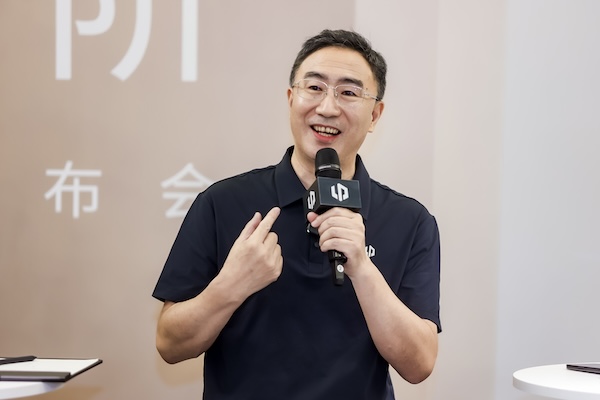
Core Insights - Xiaopeng Motors has shown significant growth in 2025, with cumulative vehicle deliveries reaching 391,937 units from January to November, marking a 156% year-on-year increase [1] - The company's Q3 revenue reached 20.38 billion yuan, surpassing 20 billion yuan for the first time in a single quarter, while net losses narrowed to 380 million yuan, a 78.9% reduction year-on-year [1] - CEO He Xiaopeng expressed ongoing challenges in transforming the company and emphasized the importance of collective responsibility and communication within the organization [1][3] Group 1: Financial Performance - Xiaopeng Motors delivered 391,937 vehicles in 2025, a 156% increase compared to the previous year [1] - Q3 revenue reached 20.38 billion yuan, marking a historical high for the company [1] - Net losses decreased to 380 million yuan, reflecting a 78.9% improvement year-on-year [1] Group 2: Strategic Vision and Challenges - He Xiaopeng articulated a new ten-year vision for the company, aiming to become a "global embodied intelligence company" [1] - The company is heavily investing in the VLA architecture for intelligent driving, with approximately 2 billion yuan already allocated for training the second-generation model [3] - He highlighted the need for a strategic approach to navigate the automotive industry's competitive landscape, which differs significantly from the internet sector [4][14] Group 3: Technological Innovations - The second-generation VLA architecture is seen as a significant advancement in intelligent driving technology, with expectations for it to address previously unsolvable issues by 2026-2027 [19] - The company is also focusing on the development of humanoid robots, with plans for mass production by the end of 2026 [34][39] - He emphasized the importance of integrating AI with physical manufacturing processes to create innovative products [38] Group 4: Organizational Development - Xiaopeng Motors is undergoing organizational upgrades to improve management efficiency, with a focus on transitioning from initial to higher-level management practices [45][47] - The company aims to enhance its organizational structure to better adapt to changes and challenges in the automotive industry [48] - He noted that effective management does not guarantee a strong organizational system, which is a long-term goal for the company [47]