财富管理

Search documents
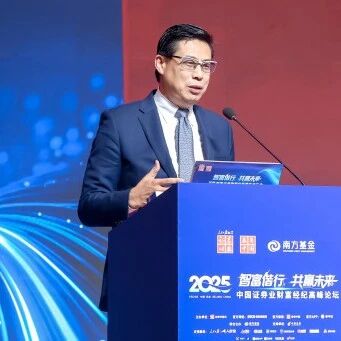
中信建投张昕帆:财富管理应具备的“三重使命”
券商中国· 2025-10-16 06:29
Core Viewpoint - The primary mission of wealth management institutions is to prevent risks, followed by seeking wealth preservation, appreciation, and inheritance [2][4]. Group 1: Risk Prevention - Zhang Xinfan emphasizes that the key to wealth management is not seizing opportunities but preventing risks, as highlighted by Warren Buffett's principle of avoiding losses [4][5]. - The real risk in wealth management arises from purchasing incorrect or fraudulent assets, rather than market fluctuations [4]. Group 2: Investment Advisory Role - Investment advisors should help clients filter out noise, avoid risks, and skillfully abandon unfamiliar or complex financial products to find stable growth channels [5][6]. Group 3: Financial Product Accessibility - The complexity of investment and financial management is increasing, making the value of professional institutions and advisors more prominent [6]. - Future directions for brokerage wealth management include developing a fully entrusted advisory model and focusing on ETFs as a simple investment method [6]. Group 4: Financial Equity - The concept of "financial equity" is emphasized, suggesting that individuals in remote areas can access investment opportunities through financial products, promoting wealth balance in society [7].


“北京塔”来了!这个区域将建高度275米新地标
Xin Jing Bao· 2025-10-16 03:49
Group 1 - The core viewpoint is that the Canal Business District in Beijing is set to release 750,000 square meters of office space over the next three years, focusing on a diverse industrial ecosystem centered around headquarters economy, wealth management, green finance, and fintech [1] - The total planned area of the Canal Business District is 20.38 square kilometers, which includes the core startup area, the New City Financial Service Park, and the comprehensive transportation hub area [1] - The Canal Business District has a total planned building area of 13.79 million square meters, encompassing various sectors such as office, commercial, apartments, and hotels [1] Group 2 - Currently, 172 buildings have been completed in the Canal Business District, with 33 buildings over 100 meters tall and 4 buildings over 200 meters tall [2] - The "Yunhe Tian" super high-rise building, reaching a height of 249.9 meters, has completed its main steel structure and will become a commercial complex [2] - The "Beijing Tower" project in the core startup area is expected to be the tallest building in the sub-center at 275 meters [2]
财富管理机构应具备“三重使命”
Zheng Quan Shi Bao· 2025-10-15 22:05
Core Insights - The primary mission of wealth management institutions is to prevent risks, followed by seeking wealth preservation, appreciation, and inheritance [2] - Wealth management should transcend economic cycles rather than merely predicting or speculating on them [2] - Investment advisors should help clients filter noise, avoid risks, and focus on stable growth channels [2] Group 1: Wealth Management Philosophy - Wealth management institutions must accompany and guide clients to achieve self-awareness and navigate economic cycles [3] - Investment advisors need a deep understanding of wealth management's mission, vision, values, and the development of the Chinese economy [3] Group 2: Investment Strategies - Future directions for brokerage wealth management include the development of fully entrusted investment advisory models and the promotion of ETFs as simple investment methods [2] - Financial products are essential for stable and long-term wealth management development, enabling ordinary investors to access investment opportunities in emerging sectors like renewable energy and AI [3]
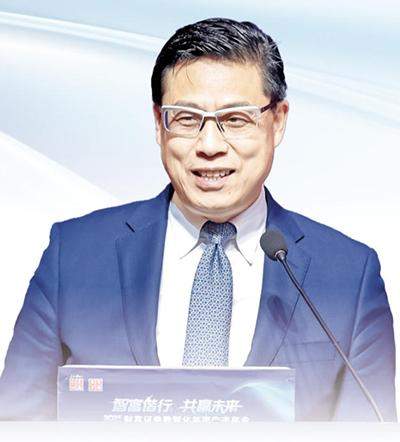
以ETF为纽带 共建高质量财富管理生态
Sou Hu Cai Jing· 2025-10-15 21:36
Group 1 - The wealth management market is transitioning from scale expansion to quality deepening, with Southern Fund focusing on providing precise product support and professional investment advisory resources [2] - The A-share technology sector now accounts for over 25% of the market capitalization, indicating a significant increase in the capital market's capacity to support technological innovation [2] - ETFs are gaining popularity due to their risk diversification, low cost, and ease of operation, serving as a bridge between investors and the capital market [2] Group 2 - As of August 2025, Southern Fund manages 62 equity ETF products with a total scale of 312.5 billion yuan, maintaining a leading position in the industry [3] - Southern Fund's passive index funds have a three-year scale-weighted tracking error of only 0.38%, ranking first in the industry [3] - The collaboration between fund companies and securities firms is essential for the efficient operation of the capital market, providing tailored financial products and asset allocation solutions [3]
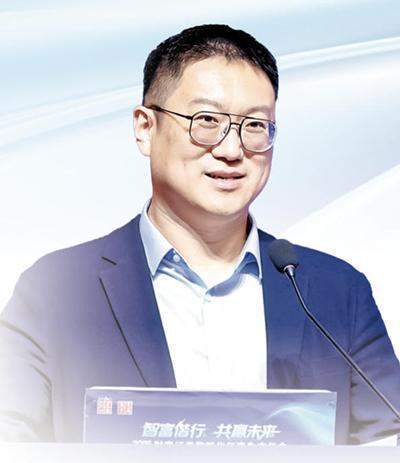
官宣!张东接替江向阳成博时基金新掌舵人
Zheng Quan Shi Bao· 2025-10-15 19:19
Core Points - Zhang Dong officially takes over as the chairman of Bosera Asset Management, succeeding Jiang Xiangyang, who has held the position for over a decade [1][2] - Under Jiang's leadership, Bosera's public fund management scale grew from 132.4 billion yuan in mid-2015 to 1.19 trillion yuan, ranking 8th in the industry [1][2] - Zhang Dong has over 36 years of experience in the financial industry, with a strong background in wealth management, which is expected to benefit Bosera's future development [2] Company Overview - Bosera Asset Management was established on July 13, 1998, and is one of the first public fund companies in China [1] - As of September 30, 2025, Bosera's total managed assets, including subsidiaries and non-public businesses, exceeded 1.8 trillion yuan [2] Leadership Transition - Jiang Xiangyang served as the general manager from July 2015 and became chairman in January 2020, leading the company through various phases of growth [1] - Zhang Dong, who has been the general manager for over a year, has strengthened Bosera's market position during challenging market conditions [2] Strategic Direction - Bosera plans to focus on value orientation and long-termism, aiming to enhance coordination across various investment avenues and create value for clients [2]
国联民生证券总裁葛小波: 买方投顾将成为未来财富管理基石
Zheng Quan Shi Bao· 2025-10-15 18:10
Core Insights - The future of wealth management in China will be significantly influenced by the buy-side investment advisory model, supported by AI applications to enhance the transmission mechanism from headquarters to frontline and clients [1][2] Group 1: Industry Trends - China has the largest middle-class population globally, necessitating a robust wealth management business to match this demographic [1] - Wealth management and asset management are increasingly becoming a larger share of financial institutions' business, with the buy-side advisory model emerging as mainstream [1] - Currently, over 70% of retail brokerage revenue in China comes from brokerage commissions and margin financing, indicating a potential shift towards increased revenue from buy-side advisory services [1] Group 2: Current State of Wealth Management - The wealth management industry in China is in its early stages, characterized by three key developments: 1. Institutions are increasingly engaging in advisory services as a significant revenue source 2. Securities firms are transforming their organizational structures to reduce reliance on traditional brokerage services 3. There is a notable improvement in team structures, with a significant increase in advisory personnel and a decrease in brokerage staff [1] Group 3: Challenges and Recommendations - The depth of buy-side advisory services in China is currently insufficient, lacking excellent client managers and not fully leveraging long-term investment strategies [2] - The core of buy-side advisory lies in the shift from a pure agency relationship to a full discretionary relationship, requiring a fundamental change in service philosophy from product-oriented to client-oriented [2] - There is a recommendation to expand the range of investment targets for fund advisory services to enhance their effectiveness [2] Group 4: Role of Technology - AI should focus on solving core issues related to asset allocation and its transmission, ensuring that institutional capabilities are effectively communicated to frontline employees and clients [2] - Wealth management remains fundamentally a people-centric business, with technology serving as an auxiliary tool; the true essence lies in the understanding of risk, financial instruments, and compliance by client managers [2]

中信建投证券执委会委员张昕帆: 财富管理机构应具备“三重使命”
Zheng Quan Shi Bao· 2025-10-15 18:04
Core Insights - The primary mission of wealth management institutions is to prevent risks, followed by seeking wealth preservation, appreciation, and inheritance [1] - Wealth management should transcend economic cycles rather than merely predicting or speculating on them [1] - Investment advisors should help clients filter noise, avoid risks, and focus on stable growth channels [1] Group 1 - Zhang Xin Fan emphasized the importance of risk prevention in wealth management, stating that protecting asset safety is the top priority [1] - The future of brokerage wealth management will focus on two main directions: developing a fully entrusted investment advisory model and promoting ETFs as a simple investment method [1] - Investment advisors must possess a deep understanding of wealth management's mission, vision, and the development of the Chinese economy [2] Group 2 - Financial products are crucial for the sustainable development of wealth management, enabling ordinary people to access investment opportunities in emerging sectors like renewable energy and AI [2] - The concept of financial equality is highlighted, as individuals in remote areas can access the same investment opportunities through financial products, despite lacking access to top-tier resources [2]

券商赴港热潮再起:多家机构设子公司,IPO、跨境并购、财富管理成必争之地
Sou Hu Cai Jing· 2025-10-15 03:40
Core Insights - Chinese securities firms are accelerating their expansion in the Hong Kong market, driven by market recovery and increased overseas business activities [2][3] - The trend shows a dual approach of establishing new subsidiaries and increasing capital in existing ones, with significant investments announced throughout the year [2][3] Group 1: Market Activity - In 2025, the total capital increase by Chinese securities firms for Hong Kong subsidiaries has exceeded 5 billion HKD, marking a three-year high in capital layout [3] - The Hong Kong market is experiencing a surge in IPO sponsorship, with 456 equity financing events recorded in the first three quarters of 2025, a year-on-year increase of 34.91% [3][4] Group 2: Business Development - Major firms are enhancing their licensing capabilities to provide comprehensive financial services, including IPO sponsorship, mergers and acquisitions, and bond issuance [3][4] - The establishment of a "one-stop" cross-border financial solution is a key strategy for improving market competitiveness [3] Group 3: Wealth Management - Wealth management services are being developed to capitalize on cross-border capital flows, with firms like CITIC Securities International launching innovative services for high-net-worth clients [5] - The favorable market conditions, including a 29.06% increase in the Hang Seng Index, are supporting the growth of wealth management businesses [5] Group 4: Regulatory Environment - Recent regulatory changes, such as the relaxation of the 'A+H' share public holding requirements, are expected to expand business opportunities for securities firms [5] - The competitive landscape is intensifying, with over a hundred Chinese securities branches in Hong Kong facing challenges from established international investment banks [6]






副中心五河交汇区域将建275米高楼
Bei Jing Ri Bao Ke Hu Duan· 2025-10-14 08:16
Core Insights - The Canal Business District in Beijing is set to release 750,000 square meters of office space over the next three years, focusing on headquarters economy, wealth management, green finance, and fintech [1][3] - The total planned area of the Canal Business District is 20.38 square kilometers, with a total construction area of 13.79 million square meters, including offices, commercial spaces, apartments, and hotels [3] - The district will feature a 275-meter tall commercial building, the Beijing Tower, which will become the tallest building in the sub-center [4] Summary by Sections Development Plans - The Canal Business District aims to create a multi-chain industrial ecosystem with a focus on key sectors such as headquarters economy, wealth management, green finance, and fintech [1] - The core starting area has a planned construction area of 6.74 million square meters, while the New City Financial Service Park will cover 2.53 million square meters, emphasizing digital trade and fintech R&D [3] Infrastructure and Facilities - The district will include the largest underground comprehensive transportation hub in Asia, with a planned area of 4.52 million square meters, supporting emerging financial services and high-end business operations [3] - Currently, 172 buildings have been completed in the Canal Business District, with 33 buildings over 100 meters and 4 buildings over 200 meters in height [3] Landmark Projects - The "Yunhe Tian" skyscraper, reaching a height of 249.9 meters, has completed its main steel structure and will serve as a commercial complex [3] - The Beijing Tower project in the core starting area is expected to be the tallest building in the sub-center, located at the confluence of five rivers [4]

平安证券姜学红:建言完善投顾业务制度框架,呼吁共建良性生态
券商中国· 2025-10-12 02:24
Core Viewpoint - The wealth management industry is undergoing a transformation due to changes in the secondary market and regulatory environment, necessitating a shift from a product-centric to a client-demand-driven approach [2][3][4]. Group 1: Market Environment and Challenges - The A-share market has shown strong performance over the past year, leading to more mature investor behavior and higher service expectations from wealth management institutions [2]. - Traditional sales-driven business models are becoming unsustainable, with a need for enhanced advisory capabilities and client engagement [2][3]. - Four main challenges are identified: the rapid disappearance of traditional license benefits, intensified industry homogenization, structural changes in client demands, and the rise of AI tools and fintech [5][6][7]. Group 2: Strategic Adjustments - The company has implemented a dual strategy focusing on both trading and wealth management, offering a range of solutions for different client needs [8]. - Emphasis is placed on professional value creation through comprehensive asset mapping and tailored solutions for various client segments [8][10]. - The transition from a reliance on channel fees to service value fees is underway, enhancing the sustainability and professionalism of the wealth management model [9][10][11]. Group 3: Future Outlook and Recommendations - There is a call for clearer regulatory guidance on advisory services, particularly regarding digital and AI-assisted decision-making [12][13]. - The company advocates for a long-term investment mindset among clients and emphasizes the importance of financial literacy and the value of professional services [13]. - Collaboration within the industry is encouraged to establish competitive advantages through differentiated services and self-regulation [13].