具身智能

Search documents
在「想象」中练就真机能力:RISE,让VLA强化学习告别真机试错
机器之心· 2026-03-17 11:31
Core Insights - The article discusses the development of the Visual-Language-Action (VLA) model as a core framework for general operational tasks in embodied intelligence, highlighting its challenges in complex scenarios such as long-term planning and dynamic interactions [2][8] - The RISE (χ0-RL) framework proposed by the OpenDriveLab team aims to address these challenges by enabling robots to perform reinforcement learning in an imagined virtual space, significantly improving long-term task performance [2][18] Challenges in VLA Implementation - The reliance on imitation learning leads to cumulative errors in reasoning, as current VLA models primarily learn from successful paths demonstrated by experts, making it difficult to self-correct when deviating from these paths [9][10] - Real-world reinforcement learning faces three major constraints: high costs of physical interactions, safety risks associated with exploratory operations, and the lack of automatic reset mechanisms in real environments [11][13] - Existing world models struggle to balance high-fidelity simulation and long-term consistency, limiting the effectiveness of virtual-physical integration attempts [8][11] RISE Framework Overview - RISE utilizes a combination of world models to facilitate online learning without the need for extensive physical interactions, leading to significant improvements in real-world task performance [15][18] - The framework's core innovation lies in transferring physical interactions to a combination world model, creating a self-evolving cycle in imagined spaces [16][17] Components of RISE - The combination world model consists of two independent modules: a controllable dynamics model for high-fidelity physical simulation and a progress value model for precise trajectory evaluation [18] - The controllable dynamics model employs a task-centric batching strategy to focus on relevant actions, while the progress value model integrates progress estimation and temporal difference learning to enhance sensitivity to minor failures [18] Self-Evolution in Imagined Spaces - RISE implements a three-step online reinforcement learning loop entirely within the imagined space, allowing for efficient strategy iteration without real-world interactions [19][20] - The process includes generating future video predictions, evaluating imagined trajectories, and updating the VLA strategy based on high and low-value actions [20] Performance Evaluation - RISE has been tested on three challenging real-world long-term tasks: dynamic brick sorting, backpack packing, and box closing, demonstrating significant performance improvements across all metrics [24][25] - The success rates for these tasks increased dramatically, with dynamic brick sorting rising from 50% to 85%, backpack packing from 30% to 85%, and box closing achieving a success rate of 95% [29] Generalization and Robustness - The strategies developed through RISE exhibit the ability to recover from failures and adapt to unexpected disturbances, showcasing a level of intelligence beyond mere imitation [28][29] - The model's capacity for position generalization allows it to perform tasks accurately even when the placement of objects changes, without requiring retraining [31] Quality of Generation - RISE's dynamics model outperforms baseline models in generating high-fidelity future frames, maintaining physical consistency and avoiding common issues such as blurriness or object teleportation [32][34] Future Implications - RISE represents a paradigm shift in how intelligent agents understand and interact with the world, moving from passive adaptation in the physical realm to active evolution in imagined spaces [35][36] - This framework significantly reduces the costs associated with physical interactions, paving the way for more efficient training and deployment of robotic systems [36][37]

地瓜机器人融资1.2亿美元,滴滴、美团入局
Sou Hu Cai Jing· 2026-03-17 10:21
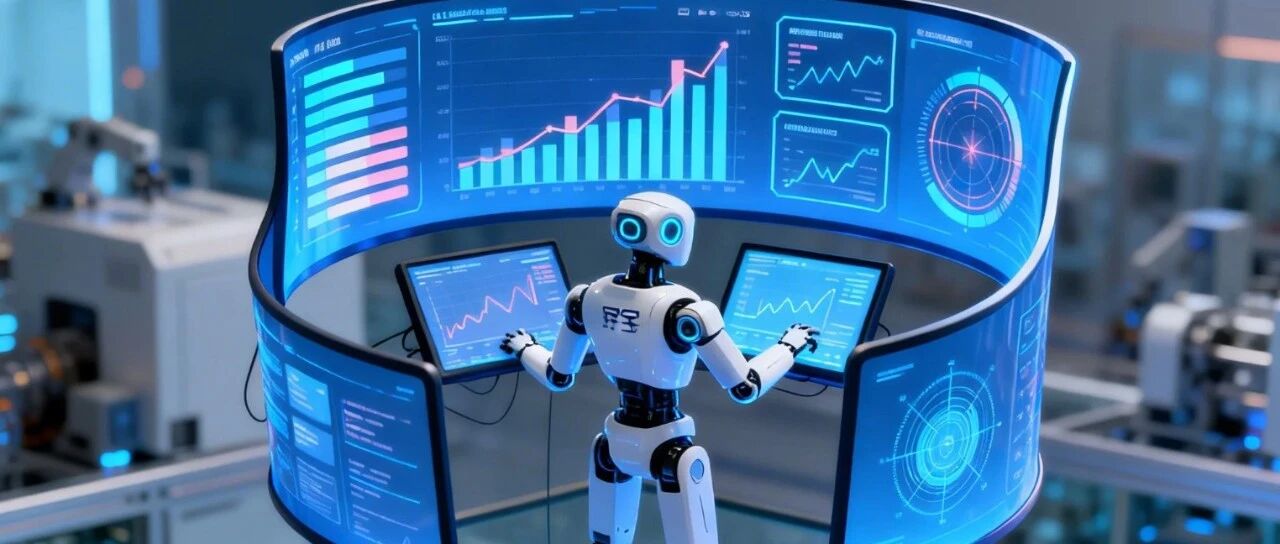
Group 1 - The core viewpoint of the article is that Digua Robotics has successfully completed a $120 million Series B financing round, bringing the total funding to $220 million after the $100 million Series A round in 2025 [2] - The financing attracted top industry investors including Synstellation Capital, Didi, and Meituan Longzhu, along with strategic investment institutions such as Baorui Capital and Jiuyang Family Office [2] - The funds raised will be used for the development of comprehensive software and hardware technology, product iteration, and to enhance the integrated intelligent technology foundation for the robotics industry [2] Group 2 - Digua Robotics does not manufacture robots directly but focuses on providing underlying technology, including chips, development kits, operating systems, and a one-stop development platform [3] - The company aims to create a unified "intelligent base" for various types of robots, enabling developers to create robotic products more efficiently and with lower barriers [3] - Digua Robotics was established in January 2024 and is headquartered in Shenzhen, with a vision to become the "Wintel of the robotics era" [2]

融资2.8亿美元 灵初智能押注具身智能“大脑”
BambooWorks· 2026-03-17 10:09
Core Insights - Lingchu Intelligent has raised 2 billion yuan (approximately 280 million USD) in angel and Pre-A financing, highlighting the rapid influx of capital into the field of embodied intelligence technology in China [1][2] - Investors are increasingly focusing on the underlying data, training loops, and deployment systems rather than just the robots themselves, as these elements enable practical applications in the real world [1][2] Financing and Market Context - The scale of capital investment in embodied intelligence is unprecedented, with Lingchu Intelligent's funding being particularly notable for a company that is only two years old [2] - The timing of the financing announcement coincided with the release of the 14th Five-Year Plan, which emphasizes the importance of artificial intelligence and robotics in the economy, aligning with investor interests [2][4] Company Strategy and Model - Lingchu Intelligent aims to develop foundational capabilities for robots, focusing on large-scale logistics deployment and building extensive data collection systems, rather than competing in the flashy display robot market [4][5] - The company adopts a "small full-stack" model, maintaining control over critical hardware design aspects while outsourcing core component production to specialized suppliers, allowing for cost efficiency [4][5] Data and Training Focus - The biggest challenge for practical robots is not their manufacturing but the collection of high-quality data to ensure reliable operation in complex environments, making data a strategic asset [5][6] - Lingchu Intelligent is working to create scalable and repeatable learning pipelines to enhance its training capabilities, which is crucial for the development of effective robots [5][6] Market Position and Competition - Lingchu Intelligent distinguishes itself from other high-profile embodied robot startups by focusing on practical applications in logistics and operations, which are more likely to generate early revenue [6][7] - The company has attracted significant investment from state-owned and industry capital, indicating strong backing and confidence in its business model [7][8] Future Outlook and Challenges - The global market for humanoid robots is projected to grow significantly, with an expected shipment of approximately 18,000 units by 2025, indicating a shift towards commercial buyers [7][8] - Lingchu Intelligent has begun deploying its products in semi-structured logistics environments, which are critical for proving the viability of its business model [8] - The long-term value of embodied intelligence may lie not only in the robots themselves but also in the data, training, and deployment systems provided by third-party service providers, which Lingchu Intelligent aims to capitalize on [8]

第一期:这20家AI明星公司正在等你丨人才留言板
36氪· 2026-03-17 09:47
Core Viewpoint - The article emphasizes the mismatch between talent supply and demand in the hard technology sector, particularly in AI and robotics, and introduces a "Talent Message Board" to connect well-funded companies with top-tier talent [4][5][6]. Group 1: Talent Message Board - The "Talent Message Board" aims to create a genuine connection between well-funded companies that respect technology and top talent seeking meaningful opportunities [6]. - The initiative is based on the understanding of the industry, helping both parties establish a more efficient communication channel [5][6]. Group 2: Featured Companies and Job Opportunities - The article lists several companies with job openings, including: - Kingsoft Office: Listed company focusing on AI applications, hiring AI application development engineers with salaries ranging from 25,000 to 40,000 [11]. - Zhongkong Technology: Listed company in industrial automation, seeking senior software testing engineers with salaries between 15,000 and 17,000 [12]. - Yushutech: IPO company with a focus on robotics, looking for talent to join their team [13]. - Agora: Listed company specializing in real-time interaction technology, hiring real-time AI application developers with competitive salaries [13]. - Other notable companies include: - Cloud Deep Technology: Pre-IPO, leading in embodied intelligence applications [17]. - Cyberbot Robotics: A-round company focusing on technology that serves humanity [29]. - Nova Fusion: Angel+ round company involved in nuclear fusion technology [35]. Group 3: Job Descriptions and Requirements - Various job positions are highlighted, such as: - Reinforcement Learning Control Engineer at Songyan Power, with salaries ranging from 30,000 to 60,000 [23]. - Algorithm Engineer positions at multiple companies, with salaries varying based on experience and expertise [27][39]. - The article emphasizes the importance of candidates having relevant educational backgrounds and experience, with many positions requiring at least a bachelor's degree [12][15][20].



OpenClaw、Agent 企业级落地……2026 奇点智能技术大会硬核议题发布
AI科技大本营· 2026-03-17 08:27
Core Insights - The article highlights the ongoing transition from "technical experimentation" to "engineering paradigm shift" as large models and AI agents become deeply integrated into production environments [2][3] - It emphasizes the need for a comprehensive understanding of this transformation among developers, industry experts, and business leaders, as well as the importance of establishing engineering standards and safety systems to match the rapid advancements in AI technology [2][3] Group 1: Conference Overview - The "2026 Singularity Intelligent Technology Conference" aims to address how to systematically understand the ongoing transformation and find pathways for adaptation [3] - The conference will explore 12 cutting-edge topics, including multimodal models, AI-native development, and agent systems, to create a forward-looking and practical cognitive map for navigating this "tenfold speed transformation" [5] Group 2: Key Topics and Speakers - The "Evolution of Large Language Model Technology" session will feature top scholars and experts who will construct a new coordinate system for the evolution of large model technology [7] - The "Agent Design Patterns and Deep Water Landing" session will focus on building reliable agents, moving away from "blind box" development [13] - The "OpenClaw Industry Practice" session will provide a complete guide for IT leaders and tech enthusiasts on introducing digital employees and adapting to the OpenClaw framework [17] Group 3: AI Infrastructure and Operations - The "AI Infra Infrastructure and Operations" session will present practical guides for transforming operational systems using agent-based approaches, aimed at infrastructure engineers and system architects [21][24] - The session will include insights on automating operations for multi-GPU clusters and enhancing infrastructure with self-awareness and repair capabilities [24] Group 4: AI Application and Industry Practices - The "AI Native Application Innovation and Development Practice" session will showcase successful AI applications that have achieved significant user engagement and valuation, focusing on engineering practices that led to their success [25] - The "AI + Industry Landing Practices" session will provide methodologies for converting large models into tangible business ROI across various sectors, including e-commerce and finance [29] Group 5: Multimodal and Embodied Intelligence - The "Multimodal and World Models" session will cover the underlying technical secrets from video generation to multimodal document understanding, providing a comprehensive engineering path for deployment [39][41] - The "Embodied Intelligence and Intelligent Hardware" session will offer methodologies for achieving large-scale practical applications in high-risk environments, focusing on visual perception and control [47][51] Group 6: Future of AI - The conference serves as a platform for deep communication in the tech field and aims to promote AI ecosystem integration and industry collaborative innovation [53] - It invites global AI industry participants to capture cutting-edge trends and explore paths for industrial upgrades, contributing to the broader application of AI [53]


全球人形机器人产业周报(二):GTC催化,量产预期仍是核心锚点
Shanghai Aijian Securities· 2026-03-17 07:25
Investment Rating - The report assigns an "Outperform" rating for the humanoid robotics industry, indicating a positive outlook compared to the broader market [2]. Core Insights - The humanoid robotics index experienced a decline of 1.37% during the week of March 9 to March 13, 2026, maintaining a volatile market pattern. The current price-to-earnings (PE) ratio is at a 23.81% percentile over the past three months [2]. - Key companies in the humanoid robotics sector, such as Bozhong Precision Engineering (+38.28%), Shuangyi Technology (+26.27%), and Yuhuan CNC (+23.63%), showed significant gains, while Huapei Power (-23.42%) and Hengfeng Tools (-17.09%) faced notable declines [2][14]. - In China, several humanoid robotics companies are accelerating their listings in Hong Kong, enhancing their global presence and competitive edge. For instance, AISTON and Zhaowei Electromechanical both listed on March 9, 2026, as part of their strategy to strengthen their industry influence [2]. - Globally, leading manufacturers are focusing on model capabilities and dexterous operations, with complex task execution and mass production capabilities being key industry focal points. The upcoming NVIDIA GTC 2026 is expected to highlight advancements in robotics and AI [2]. Summary by Sections Industry Overview - The humanoid robotics industry is currently in a phase of technological validation and industrial introduction, with short-term pricing driven by technological advancements and event catalysts. Long-term variables include mass production pace and application scenario implementation [2]. Investment Recommendations - The report recommends investing in companies like Huichuan Technology (300124) and Sanhua Intelligent Control (002050), while suggesting to keep an eye on Hengli Hydraulic (601100). The focus should be on companies with core component capabilities and those that can integrate algorithms and control systems effectively [2]. Market Trends - The humanoid robotics sector is witnessing a surge in activities, including the completion of the first practice test for the humanoid robot half marathon in Beijing, which introduced autonomous navigation teams [2][19]. - The report emphasizes the importance of the upcoming NVIDIA GTC 2026, which is expected to showcase significant technological advancements in robotics and AI, potentially enhancing market expectations for the humanoid robotics sector [2][19].






汽车行业3月投资策略:乘用车销量触底回升,新技术与新品周期有望提振板块【国信汽车】
车中旭霞· 2026-03-17 06:42
Core Viewpoint - The automotive industry is expected to enter a recovery phase in March 2026, driven by new technologies and product cycles, despite recent declines in sales figures [26]. Monthly Production and Sales - In February, the national retail sales of passenger cars reached 1.034 million units, down 25.4% year-on-year and 33.1% month-on-month, with cumulative retail sales for January-February at 2.578 million units, a decrease of 18.9% year-on-year [26]. - Wholesale sales of passenger cars in February were 1.518 million units, down 14.3% year-on-year and 23.0% month-on-month, with cumulative wholesale sales for January-February at 3.494 million units, a decline of 9.8% year-on-year [26]. - Retail sales of new energy passenger cars in February were 464,000 units, down 32.0% year-on-year, with a penetration rate of 44.9%, a decrease of 4 percentage points year-on-year [26]. - Total automotive sales in February were 1.805 million units, down 15.2% year-on-year and 23.1% month-on-month [26]. Market Performance - The CS automotive sector rose by 2.82% in February, with the CS passenger car index down 0.21%, while the CS commercial vehicle index increased by 9.22% [2]. - The automotive sector has outperformed the CSI 300 index by 2.73 percentage points and the Shanghai Composite Index by 1.73 percentage points in February [2]. Industry Dynamics - BYD launched its second-generation blade battery and flash charging technology, which allows for rapid charging times [4]. - XPeng Motors introduced its second-generation VLA model, enhancing its vehicle's capabilities in complex driving scenarios [5]. - Chery's high-end brand, Exeed, announced a price increase for its ET5 model due to rising costs of automotive-grade storage chips [6]. Government News - Shenzhen announced a vehicle trade-in subsidy program, offering up to 20,000 yuan for electric vehicle purchases, aimed at boosting the automotive market [18]. Company Developments - Lantu Automotive is set to list on the Hong Kong Stock Exchange on March 19, 2026, becoming the first high-end new energy stock from a central state-owned enterprise [9]. - Xiaomi's robots have begun working in automotive factories, indicating a push towards automation in manufacturing [10]. - Waymo aims to achieve 1 million weekly paid rides for its autonomous taxi service in the U.S. by the end of 2026 [17].



全球人形机器人产业周报(二):GTC催化,量产预期仍是核心锚点-20260317
Shanghai Aijian Securities· 2026-03-17 06:42
Investment Rating - The report rates the humanoid robotics industry as "Outperform the Market" [2] Core Insights - The humanoid robotics index experienced a decline of 1.37% during the week of March 9 to March 13, 2026, maintaining a volatile pattern. The current PE ratio is at a 23.81% percentile over the past three months [2] - Key companies in the humanoid robotics sector are accelerating their listings in Hong Kong, enhancing their global presence and supply chain influence [2] - The upcoming NVIDIA GTC 2026 conference is expected to be a significant catalyst for advancements in robotics and AI, focusing on industrial-grade embodied intelligence and foundational models [2] Summary by Sections Industry Overview - The humanoid robotics industry is in a transitional phase from engineering to mass production, with technological advancements and event-driven catalysts influencing short-term pricing [2][19] - The report highlights the importance of production rhythm and application scenarios for long-term growth [2] Market Performance - The humanoid robotics index has shown fluctuations, with notable gains from companies like Bozhong Precision (+38.28%) and Shuangyi Technology (+26.27%), while companies like Huapei Power (-23.42%) and Hengfeng Tools (-17.09%) faced significant declines [2][14] - The report emphasizes the need to monitor the production and iteration progress of leading humanoid robotics manufacturers [2] Investment Recommendations - The report recommends investing in companies with core component capabilities that can enhance value through collaboration with complete machine manufacturers, such as reducers, screws, motors, sensors, and control systems [2] - It also suggests focusing on platform-type manufacturers with integrated algorithm and control system capabilities, as their market leadership is expected to become more evident with the advancement of industrialization [2]



从工厂到展台:开普勒K2“大黄蜂”亮相AWE2026,秀出工业级人形真功夫
机器人大讲堂· 2026-03-17 06:13
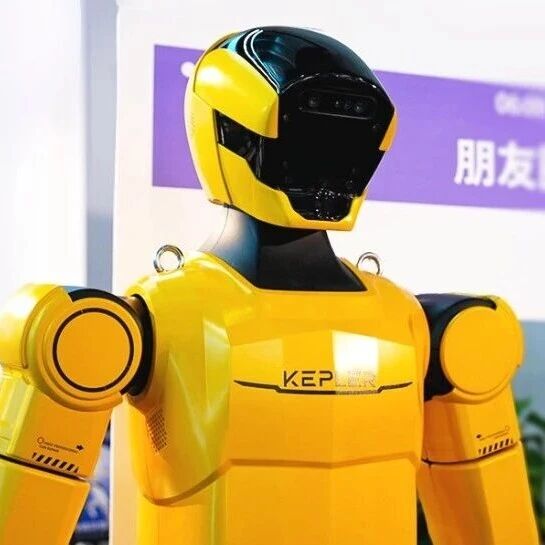
Core Viewpoint - The article highlights the advancements and commercial potential of the Kepler K2 "Bumblebee" humanoid robot, showcasing its capabilities in industrial applications and its role in the ongoing transformation driven by AI technology [1][4][5]. Group 1: Product Features and Performance - The Kepler K2 "Bumblebee" can operate for 8 hours on a single charge and can carry loads of up to 30 kg, demonstrating impressive endurance and load capacity [5]. - The robot's design incorporates a combination of planetary roller screw actuators and precision rotary actuators, enhancing its load capacity by 3-6 times and improving motion stability and energy efficiency [5]. - A recent endurance challenge video showcased the K2 "Bumblebee" pulling a total weight of 105 tons for 8 hours and 12 minutes, emphasizing its long-lasting performance in real industrial environments [4]. Group 2: Intelligent Architecture - The K2 "Bumblebee" features an embodied intelligence architecture based on the self-developed VLA+ model, which utilizes both simulation and real-world data for continuous learning [7]. - The robot integrates multi-modal interaction capabilities, allowing it to perform tasks in complex and dynamic environments through visual perception, language understanding, and action decision-making [7]. Group 3: Market Applications and Commercialization - The K2 "Bumblebee" has been deployed in various industrial settings, including logistics and manufacturing, achieving a task success rate of over 98% during operations [9]. - The company is actively working to lower application development barriers by creating a developer platform to facilitate the integration of humanoid robots into various industries [12]. - The humanoid robot industry in China is experiencing significant growth, with government initiatives supporting the development of standards and frameworks to promote the commercialization of humanoid robots [12].
申报即将截止!第三届LeadeRobot具身智能与人形机器人行业评选四大类专业奖项+三大TOP50榜单,抢占具身智能新格局!
机器人大讲堂· 2026-03-17 06:13
Core Insights - The industry of embodied intelligence and humanoid robots is experiencing unprecedented growth opportunities, with financing in this sector increasing by over 150% year-on-year since 2025, and nearly a hundred companies entering the market [2] - The application scenarios are rapidly extending from industrial manufacturing to healthcare, home services, and specialized operations, transforming futuristic concepts into present realities [2] - The industry is advancing along a clear path of technological breakthroughs and application implementations, with significant improvements in data quality, core performance metrics, and production capabilities [2][3] Industry Development - The industry maintains a strong momentum of forward development, with various stakeholders including algorithm teams, manufacturing companies, core component suppliers, and service organizations collaborating to address technical challenges and refine applications [3] - The third LeadeRobot evaluation aims to identify industry benchmarks, promote innovative achievements, and build collaborative bridges to inject strong momentum into the high-quality development of the embodied intelligence and humanoid robot industry [3][4] Evaluation Focus - The evaluation will focus on three core directions: 1. Technological innovation, emphasizing breakthroughs with independent intellectual property 2. Commercial value, prioritizing projects that have achieved scalable implementation and sustainable business models 3. Industry collaboration, covering all links in the industrial chain to promote upstream and downstream enterprise cooperation [5] Award Categories - The evaluation consists of five major award categories, covering the complete ecosystem of "technology-product-application-industry chain," with 16 detailed awards and three major lists to ensure comprehensiveness and professionalism [6] - The embodied intelligence series awards focus on technological breakthroughs and application implementations, while the humanoid robot series awards emphasize product performance and commercialization capabilities [7][8] Service Institutions - The service institution series awards focus on industry services and ecological collaboration, recognizing institutions that have made significant contributions to core technology breakthroughs, industry standards, and talent cultivation [11] Major Lists - Three major lists will be established to select industry benchmarks and leading forces, including the leading enterprises list, the industry chain pioneers list, and the influential individuals list in the industry [13][20] Event Details - The third embodied intelligence and humanoid robot industry conference will be held on April 28-29, 2026, in Beijing, focusing on creating a high-energy platform for industry ecosystem co-construction, resource sharing, and win-win cooperation [24]