普惠金融

Search documents
市值创历史新高!新华保险的2025年答卷:站上新台阶
券商中国· 2025-12-31 02:12
Core Viewpoint - In 2025, Xinhua Insurance achieved record-breaking performance amidst a complex environment characterized by low interest rates, evolving customer demands, and technological disruptions, marking a significant milestone as it approaches its 30th anniversary [2][4]. Group 1: Comprehensive Strength - By the end of Q3 2025, Xinhua Insurance's total assets exceeded 1.83 trillion yuan, an increase of 8.3% from the beginning of the year, reaching a historical high [3]. - The company's embedded value approached 280 billion yuan, reflecting an 8.1% growth year-to-date, also a historical peak [3]. - Core solvency ratio and comprehensive solvency ratio stood at 154.27% and 234.15%, respectively, indicating strong capital adequacy [3]. Group 2: Development Efficiency - In the first three quarters of 2025, Xinhua Insurance reported a net profit of 32.857 billion yuan, a year-on-year increase of 58.9%, setting a new historical record [4]. - Total premium income reached 172.7 billion yuan, up 19% year-on-year, maintaining industry-leading growth [4]. - The first-year premium income for long-term insurance was 34.9 billion yuan, reflecting a 41% increase [4]. - New business value surged to 6.18 billion yuan in the first half, a significant year-on-year increase of 58%, with a continued growth of 50.8% in the first three quarters [4]. Group 3: Strategic Development Model - Xinhua Insurance is committed to a development vision of becoming a leading financial service group centered on insurance, providing comprehensive risk protection and wealth planning services [5][6]. - The company has adopted a collaborative model of "Insurance + Service + Investment," focusing on enhancing customer-centric strategies and building a robust service ecosystem [6][7]. - Investment performance remains strong, with an annualized total investment return of 8.6% and a comprehensive investment return of 6.7%, leading the industry [7]. Group 4: Contribution to National Strategy - Xinhua Insurance emphasizes its political mission and social responsibility, aligning its operations with national strategies in areas such as technology finance, green finance, inclusive finance, pension finance, and digital finance [8][9]. - The company has invested over 60.5 billion yuan in supporting technology-driven enterprises, with a year-on-year growth of 29.3% [9]. - In green finance, investments exceeded 31.6 billion yuan, marking a 28.8% increase, while providing insurance services to over 6,300 green enterprises [9][10].



迈向“十五五” 农银人寿书写服务国家战略的保险答卷
2 1 Shi Ji Jing Ji Bao Dao· 2025-12-30 23:19
Core Viewpoint - The insurance industry plays a dual role as an "economic shock absorber" and "social stabilizer" in China's high-quality economic development narrative, with a focus on serving national strategies such as rural revitalization and common prosperity [1] Group 1: Insurance Industry's Role in National Strategy - The recent central financial work conference emphasizes the importance of "insurance" in addressing rural revitalization and common prosperity, highlighting the industry's mission to align with national strategies [1] - By 2025, the insurance sector is expected to contribute significantly to the "14th Five-Year Plan" and the upcoming "15th Five-Year Plan," with companies like Agricultural Bank of China Life Insurance (ABC Life) finding differentiated development paths [1] Group 2: Focus on Rural Elderly Care - The 2024 central financial work conference identifies "pension finance" as a key area, addressing the challenges posed by an aging population of 280 million and the urban-rural pension gap [2] - ABC Life has launched 81 pension savings products since 2025, with a total premium of 10.919 billion yuan, specifically targeting the rural elderly population [2] Group 3: Integration of Financial Services - ABC Life is enhancing its pension service integration capabilities by leveraging the resources of its parent company, creating comprehensive financial service solutions for clients in the pension industry [3] Group 4: Insurance's Role in Rural Revitalization - ABC Life is actively developing affordable and accessible insurance products tailored to the unique needs of rural clients, aiming to reduce the risk of poverty among these populations [4] - The company has introduced a product system that includes short-term accident, medium-term savings, and long-term pension products, with a total of 12 products designed for rural clients [4] Group 5: Investment in Rural Development - ABC Life is focusing on investment opportunities in rural revitalization, utilizing its substantial insurance funds to support agricultural security and rural industry development [5] - As of October 2025, the company has invested 5.318 billion yuan in rural bonds, demonstrating its commitment to enhancing services in the agricultural sector [6] Group 6: Inclusive Insurance Products - ABC Life is developing a range of inclusive insurance products aimed at underserved groups, including rural populations, new citizens, and small enterprises, under its "Hui" product series [7] Group 7: Accessibility of Services - The company has implemented "claims care services" to assist elderly and disabled clients, providing 1,313 home visits and handling claims amounting to 126 million yuan in 2025 [8] - ABC Life has established a digital platform for comprehensive online services, enhancing customer experience and efficiency in claims processing [8] Group 8: Commitment to Core Insurance Principles - Since its establishment, ABC Life has focused on returning to the core principles of insurance, emphasizing long-term protection products and undergoing significant reforms to enhance its operational efficiency [9] - The company aims to continue exploring sustainable models in pension finance and agricultural investments, aligning its growth trajectory with national strategies and public welfare [9]
“眼睛向下”优化普惠金融发展
Jing Ji Ri Bao· 2025-12-30 22:08
Core Viewpoint - The recent Central Economic Work Conference emphasizes the importance of inclusive finance in supporting small and micro enterprises, technological innovation, and expanding domestic demand, which are crucial for economic development and public welfare. Group 1: Inclusive Finance Development - By the end of Q3 2025, the balance of inclusive loans for small and micro enterprises reached 36.5 trillion yuan, a year-on-year increase of 12.1% [1] - The balance of inclusive agricultural loans was 14.1 trillion yuan, with an increase of 1.2 trillion yuan since the beginning of the year [1] Group 2: Service Innovation - Financial institutions are encouraged to address financing needs in remote and rural areas, enhancing the depth and breadth of inclusive finance services [2] - The Industrial and Commercial Bank of China has established service teams to engage directly with small enterprises, promoting easy-to-access financial products [2] - Small and micro enterprises are identified as key to connecting macro policies with microeconomic vitality, necessitating a shift in financial institutions' focus from collateral to creditworthiness [2] Group 3: Support for Small and Micro Technology Enterprises - China Construction Bank is focusing on providing services to small technology enterprises, with a 41.3% year-on-year increase in loans to these businesses, supporting over 130,000 firms [3] - Minsheng Bank has launched an electronic guarantee service to streamline the process for small enterprises, significantly reducing the time required to obtain guarantees [3] Group 4: Coordination Mechanisms - A new financing coordination mechanism has been established to facilitate direct access to credit for small enterprises, enhancing collaboration between central and local authorities [4] - The mechanism has led to significant loan disbursements, with over 590 billion yuan in credit loans processed through coordinated efforts [6] Group 5: Technological Empowerment - The application of artificial intelligence in finance is enhancing the efficiency of inclusive financial services, improving decision-making and resource allocation [7] - Mobile banking has drastically reduced service costs, with mobile transactions costing about 1/5 of face-to-face interactions [8] - The integration of digital technologies is leading to faster loan approval processes and the development of customized financial products [9]
“已故人员银行卡账户线索跨行查询”服务在辽宁上线
Xin Lang Cai Jing· 2025-12-30 21:15
Core Viewpoint - The launch of the "deceased persons' bank account cross-bank inquiry" service in Liaoning Province aims to address the public's difficulties in inheriting assets by simplifying the process of locating deceased relatives' bank accounts, thereby enhancing financial service accessibility and efficiency [1][2]. Group 1: Service Implementation - The service is a collaboration between China UnionPay Liaoning Branch, China UnionPay Dalian Branch, and several commercial banks, focusing on alleviating the "difficult to check accounts" issue faced by the public [2]. - Currently, 9 pilot banks have opened 212 service points across all 14 prefecture-level cities and districts in Liaoning Province, ensuring comprehensive coverage and convenience for residents [2]. Group 2: Process Efficiency - The service utilizes the "Yunshangfu" app's "one-click card inquiry" feature, combining offline verification with online inquiry in a streamlined process [3]. - Applicants must register and log in to the app, locate a nearby pilot bank, and submit necessary identity information and documents for verification, after which they receive an authorization code to complete the inquiry [3]. Group 3: Information Security - The service prioritizes information security by providing only essential clues about the deceased's bank accounts, without disclosing sensitive details such as account numbers or balances [4]. - Future efforts will focus on optimizing service efficiency and expanding the service's reach, ensuring a secure and convenient financial service experience for the public [4].
陕国投A:将积极推动信托业务转型发展
Zheng Quan Ri Bao Zhi Sheng· 2025-12-30 13:43
Core Viewpoint - The company aims to lead high-quality development by focusing on three main tasks: serving the real economy, preventing financial risks, and deepening financial reforms [1] Group 1: Business Strategy - In 2025, the company plans to optimize its business structure and innovate service models while actively engaging in five key areas: technology finance, green finance, inclusive finance, pension finance, and digital finance [1] - The company emphasizes its responsibility and commitment to serving national strategic initiatives [1] Group 2: Future Development - In 2026, the company will promote the transformation and development of its trust business, contributing to the construction of a strong financial nation through its own high-quality development [1]

2025,迎变、应变、求变
Di Yi Cai Jing· 2025-12-30 13:07
就在王力宏成都演唱会上,6名人形机器人以高难度"韦伯斯特"空翻惊艳全球前不久,笔者刚刚在北京 一家银行的数字金融主题发布会上,近距离目睹了一次具身智能"出洋相"——在一位银行高管亲自主持 和隆重的介绍中,一个嵌入银行元素的人形机器人出场,但刚走几步还没和观众打完招呼就踉踉跄跄跌 倒在地,"皮肤"在"抽搐"中摔掉几块。 令人意外的是,现场观众并未哗然起哄,反而回以善意的笑声和鼓励的掌声,这份包容恰恰成了这次小 意外里最温暖的注脚。 笔者想,其中有对AI+应用的启发,也有对银行这类在大众心中印象比较固化的"传统派"积极拥抱新事 物的映射。回望2025年,新形势带来的机遇层出不穷,但各种考验似乎也更为苛刻,AI的飞速演进只 是其中之一。那些宏大的话题勾勒着经济社会运行的轮廓,也折叠着无数个体的应对之策——迎变、应 变与求变,这是他们也是笔者和团队同事的关键词;是今年的关键词,想必未来还会持续很长一段时 间。 变局是宏大的,也是具体的 当我们越来越多地讨论宏大叙事,可能也意味着要多放一些目光到具体的人和事上。在诸多变化都在发 生的2025年,这种感觉在采访中比以往更为强烈。 笔者从采访对象的身上看到,一些积极的信号在 ...
华龙证券:以文化引领 书写金融赋能新篇章
Zhong Zheng Wang· 2025-12-30 13:02
Core Viewpoint - The article emphasizes the importance of financial culture in driving the healthy development of the economy, highlighting HuLong Securities' commitment to social welfare, customer wealth creation, shareholder returns, and employee value realization [1] Group 1: Financial Services and Innovation - HuLong Securities focuses on serving the real economy, particularly in the technology innovation sector, by participating in initiatives like the "Yuruyi Plan" in Gansu Province, investing over 1.3 billion yuan in advanced manufacturing and biomedicine through various financial instruments [1] - The company has successfully assisted in the listing of cloud-based technology companies on the Beijing Stock Exchange and has issued innovation bonds and established industry funds to support local tech enterprises [1] Group 2: Green Finance - HuLong Securities integrates the concept of "green mountains and clear waters are invaluable assets" with a prudent financial culture, supporting regional green transformation [2] - The company acted as a financial advisor in the major asset restructuring of Gansu Energy, completing a 7.6 billion yuan asset transfer and 1.9 billion yuan financing, facilitating its transition to a comprehensive energy company [2] Group 3: Inclusive Finance - The company emphasizes its commitment to inclusive finance as a means to enhance social welfare, empowering small and micro enterprises through diverse channels and innovative educational models [2] - HuLong Securities has invested over 7.5 million yuan in support initiatives for regions like Gannan and Tianshui, and its team won second place in a national investor rights knowledge competition [2] Group 4: Pension Finance - In response to societal aging demands, HuLong Securities has initiated a fund for the development of the pension service industry, investing 450 million yuan to support the construction of the pension system [3] - The company has introduced financial products tailored for elderly needs and developed a comprehensive pension finance service system, including educational initiatives for seniors [3] Group 5: Digital Finance - HuLong Securities embraces digital transformation while maintaining compliance, enhancing service efficiency through initiatives like "one machine handles all" and local deployment of financial AI models [3] - The company applies cutting-edge technology in risk management and investment decision-making, ensuring high-quality development while adhering to risk management principles [3] Group 6: Future Outlook - Looking ahead, HuLong Securities aims to uphold the banner of Chinese financial culture, focusing on compliance, integrity, professionalism, and win-win cooperation, while enhancing service capabilities to support the real economy [4] - The company is committed to preventing systemic risks and contributing to the modernization of Gansu Province through its financial initiatives [4]

响水农商银行召开农村普惠金融服务点年度总结表彰会
Jiang Nan Shi Bao· 2025-12-30 13:02
Core Insights - The meeting held by Xiangshui Rural Commercial Bank on December 27 focused on summarizing the achievements of rural inclusive financial service points for the year 2025 and recognizing outstanding contributors [1] Group 1: Financial Service Points Overview - The overall operation of financial service points was reviewed, highlighting their role in enhancing basic financial service coverage, meeting residents' daily financial needs, and promoting inclusive financial products [1] - These service points are crucial in bridging the "last mile" of financial services, effectively serving urban and rural communities [1] Group 2: Training and Compliance - A specialized training session was conducted to improve service quality and standardize business operations, covering daily service procedures, risk prevention, and the latest business policies [1] - The training emphasized compliance awareness and operational norms to ensure safe and efficient service delivery [1] Group 3: Recognition and Engagement - Outstanding service merchants were recognized for their contributions to providing convenient services, spreading financial knowledge, and fulfilling social responsibilities [1] - An engaging atmosphere was created during the event with a lottery segment, encouraging active participation from the merchants [1] Group 4: Future Plans - Xiangshui Rural Commercial Bank plans to deepen the construction of financial service points, increasing support and training for these points [2] - The bank aims to build a more accessible, vibrant, and reliable rural financial service network to contribute to rural revitalization and local livelihoods [2]
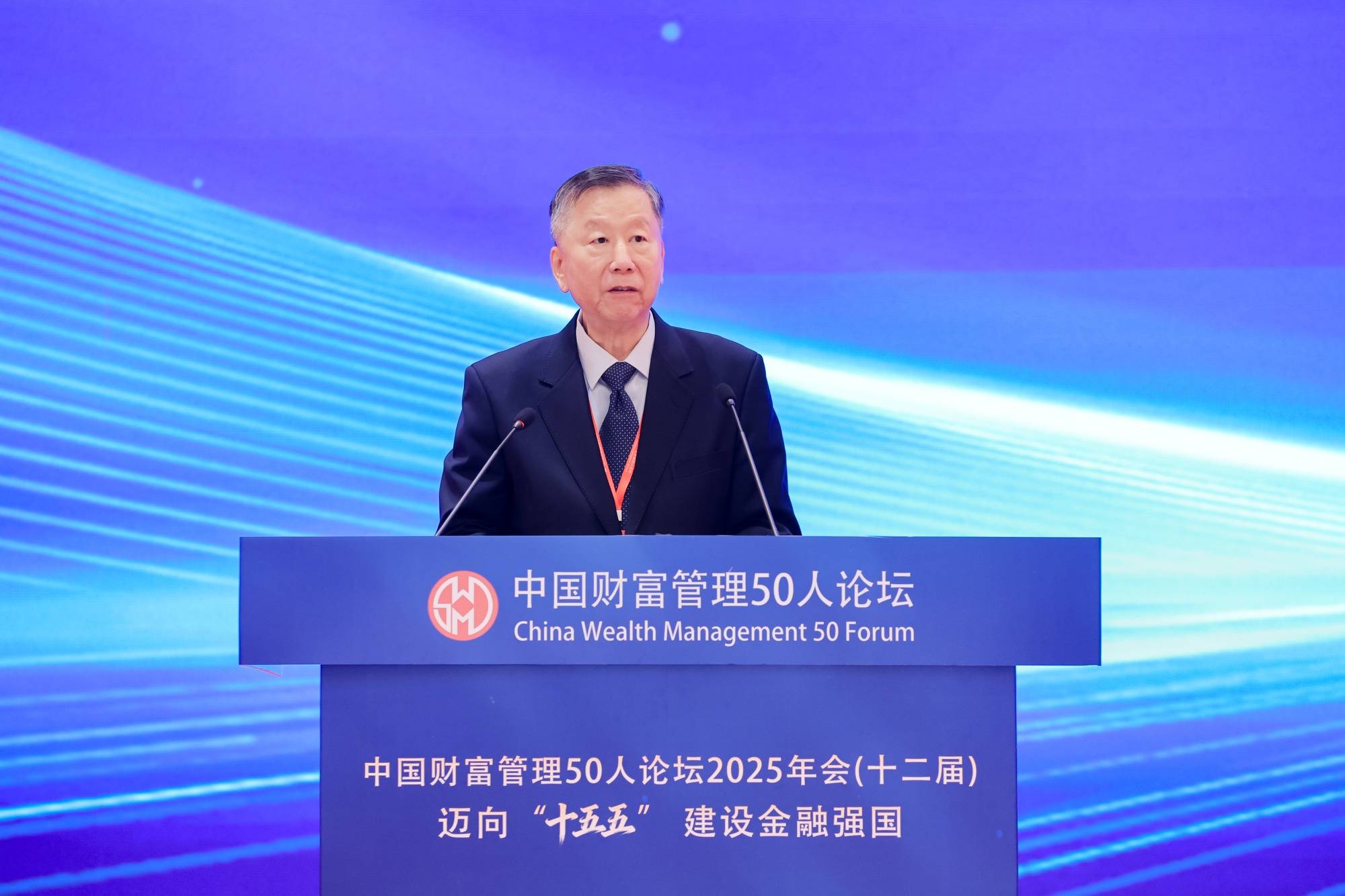
尚福林:“十五五”金融强国建设需聚焦四大核心
Sou Hu Cai Jing· 2025-12-30 10:39
央广网北京12月30日消息(记者 樊瑞)12月27日至28日,中国财富管理50人论坛2025年会在北京召开。中国财富管理50人论坛理事长、原银监会主席、证 监会原主席尚福林表示,回望"十四五"时期,我国金融业实现了规模增长与质量提升的历史性跨越,为金融强国建设奠定了坚实基础。迈向"十五五",加快 建设金融强国,是质的有效提升和量的合理增长有机统一,是综合性、系统性、引领性的跃升。他指出,"十五五"时期加快金融强国建设需聚焦四大核心内 涵。 "十四五"期间金融业实现历史性跨越 尚福林表示,"十四五"的五年,金融领域始终坚守服务实体经济的本源,总量合理增长,质效持续提升。信贷结构持续优化,金融支持科技创新、绿色转型 等重点领域的力度不断加大;资本市场改革不断推进,多层次、广覆盖的市场体系更加完备;金融开放稳步扩大,上海国际金融中心能级持续提升,人民币 国际化不断深化;金融风险防范化解取得显著成效,守住了不发生系统性风险的底线。这些成就为"十五五"时期实现金融由大到强的跨越积累了宝贵经验。 第一,更加聚焦金融服务实体经济的根本宗旨,努力做好金融"五篇大文章"。金融强国建设的根基在于实体经济,必须优化金融资源配置,更 ...
中信百信银行“看见一百个信心的朝向”普惠金融公益计划荣获“杰出社会责任奖”
Jin Rong Jie· 2025-12-30 10:11
Core Insights - CITIC Baixin Bank received the "Outstanding Social Responsibility Award" at the "Qihang·2025 Financial Annual Conference" for its innovative practices in promoting inclusive finance, recognizing its commitment to social responsibility and support for small and micro enterprises [1] Group 1: Public Welfare Promotion - The project "Seeing a Hundred Directions of Confidence" has focused on five typical small and micro enterprises in sectors such as catering, consumption, and technology innovation, generating over ten million exposures through various promotional activities [2] - The stories and promotional videos of these enterprises have gained significant attention and coverage from major media outlets, enhancing the visibility of small and micro businesses [2] - CITIC Baixin Bank initiated a recruitment plan for the inclusive finance brand promotion, encouraging more small business owners to participate and support business growth [2] Group 2: Policy Support and Product Services - CITIC Baixin Bank has launched the "Entrepreneurial Guarantee Loan" product, supported by government subsidies, to address the common financing challenges faced by small and micro enterprises [3] - The bank has introduced a fully online, unsecured "Business Loan" product, leveraging digital capabilities to streamline the application process and improve approval efficiency to a matter of minutes [3] Group 3: Technological Empowerment in Financial Services - The bank has developed the "Bailian System," a digital solution for small and micro enterprises, which utilizes digital credit and integrates multiple data sources to create a dynamic operational profile for businesses [4] - The automated operations of the system have improved overall approval efficiency by approximately 65%, with some scenarios allowing for funding within minutes [4] - The system dynamically adjusts credit limits and interest rates based on real-time business performance, enhancing the accessibility of inclusive financial services for small and micro enterprises [4]