
固态电池

Search documents
华商均衡成长混合A 2025年涨超137% 基金经理张明昕展望2026
Xin Lang Cai Jing· 2026-01-16 01:02
Core Viewpoint - The A-share market has started strong in 2026, with the Shanghai Composite Index rising by 3.82% to surpass 4100 points in the first week, indicating a potential spring rally and active trading environment [1][13] Market Outlook - The overall upward trend in the market is expected to continue in 2026, with increased volatility and significant structural opportunities, particularly in sectors such as AI, robotics, innovative pharmaceuticals, solid-state batteries, and new consumption [1][6][7] - The macroeconomic environment is anticipated to foster a relatively loose liquidity situation in the first quarter, supported by proactive total policies [6][16] Investment Strategy - The investment approach emphasizes value-driven industrial trend investments rather than short-term speculation in single sectors [4][15] - Investors are encouraged to maintain a broad perspective and not limit themselves to specific directions, focusing on systematic tracking and assessment of industry trends [6][18] Sector Focus - The AI sector is highlighted as a core investment area, with strong performance in AI applications such as software and healthcare, alongside ongoing developments in overseas computing power [7][17] - Other sectors of interest include solid-state batteries, robotics, and innovative pharmaceuticals, with a focus on policy support and market potential [7][17][18] Fund Performance - The Huashang Balanced Growth Mixed Fund A achieved a remarkable annual growth of 137.15% in 2025, ranking 4th among 1895 similar funds, showcasing strong active management capabilities [4][5][16] - The fund's performance significantly outpaced the benchmark return of 25.78% during the same period [5][16]


2025中国汽车驶出增长新动能
Xin Lang Cai Jing· 2026-01-15 22:40
Core Insights - The Chinese automotive industry has achieved significant milestones in 2025, with total vehicle production and sales exceeding 34 million units, and new energy vehicles (NEVs) surpassing 16 million units, marking a structural upgrade in the industry [5][6] - NEVs now account for over 50% of new car sales in China, indicating their dominance in the market [6][7] - The industry is experiencing rapid technological advancements, particularly in smart driving and battery technology, which are enhancing the competitiveness of electric vehicles [9][10] Industry Performance - In 2025, China's NEV production reached 16.62 million units, with sales at 16.49 million units, reflecting year-on-year growth of 29% and 28.2% respectively, maintaining the global leadership for 11 consecutive years [6][7] - BYD has surpassed Tesla in annual pure electric vehicle sales, marking a significant achievement for the company [7] - The introduction of L3-level autonomous driving vehicles by Changan and BAIC marks a transition from technology validation to mass production applications [8] Technological Advancements - The automotive industry is witnessing breakthroughs in battery technology, with advancements in energy density and charging efficiency, contributing to the reduction of "range anxiety" for electric vehicle users [9] - The integration of AI and robotics into the automotive sector is creating new opportunities for innovation and efficiency [10] - The collaboration between companies like JD, GAC Group, and CATL is enhancing the entire automotive value chain from R&D to sales [9][10] Regulatory and Market Dynamics - The industry is facing challenges related to "involution" competition, prompting regulatory measures to ensure fair market practices and promote high-quality development [12][13] - New guidelines and safety standards are being implemented to enhance the safety and reliability of electric vehicles [13][14] - The focus on building a modern industrial system and promoting green consumption is expected to drive the future growth of the automotive sector [14][15]
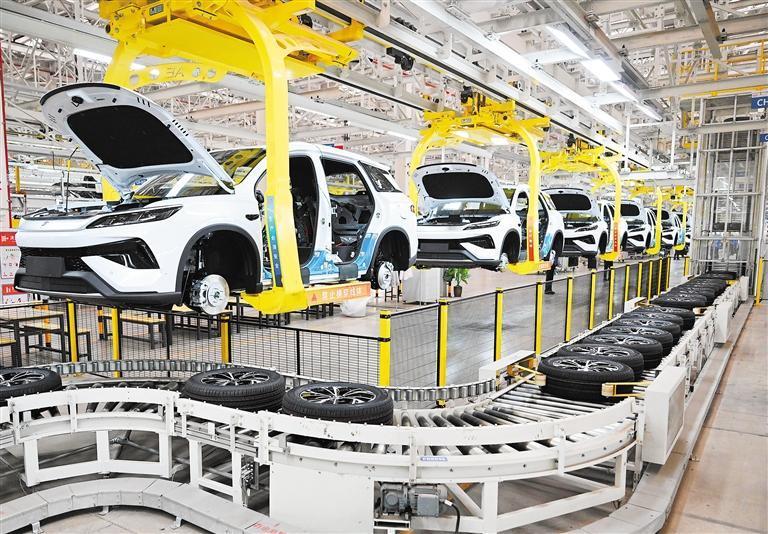
华商基金权益投资部总经理张明昕 市场波动或加大 可关注AI产业链
Shen Zhen Shang Bao· 2026-01-15 17:43
Core Viewpoint - The overall upward trend of the market is expected to continue in 2026, with increased volatility and significant structural opportunities, particularly in the AI industry chain, robotics, innovative pharmaceuticals, and solid-state batteries [2][3][4]. Market Performance - A-shares have shown strong performance at the beginning of 2026, with the Shanghai Composite Index rising above 4100 points, although there has been some recent adjustment [3][4]. - The market has been active, with trading volumes exceeding 3 trillion yuan for four consecutive trading days [3]. Investment Strategy - Investors are advised to broaden their perspectives and not limit themselves to specific sectors. The focus should be on tracking industry trends and identifying sectors with upward momentum [4][5]. - The investment approach will continue to emphasize systematic tracking and evaluation of industry conditions to identify the best opportunities [4]. Key Sectors to Watch - The AI industry chain is highlighted as a core investment direction, with ongoing developments in AI applications such as software and healthcare [5]. - Robotics is in the early investment stage, with attention on Tesla's supply chain and the potential for large-scale production [5]. - The innovative pharmaceuticals sector is expected to benefit from supportive policies, with significant market potential and profitability anticipated [5]. - Solid-state batteries are on the verge of commercialization, presenting ongoing investment opportunities once technological breakthroughs occur [6]. Economic Context - The macroeconomic environment is expected to foster a relatively loose liquidity situation in the first quarter of 2026, supporting the market's positive outlook [4]. - The dual support of policy and industry-driven growth is seen as crucial for the healthy and high-quality development of the capital market [4][6].

六氟磷酸锂龙头天际股份董事长吴锡盾等高管收警示函
Guo Ji Jin Rong Bao· 2026-01-15 15:54
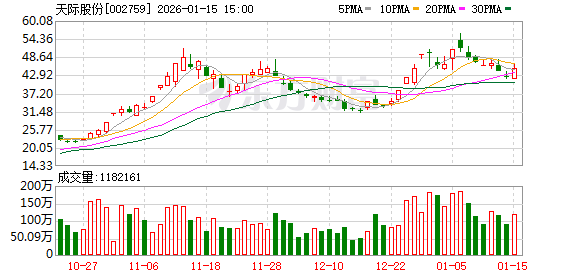
Core Viewpoint - Tianji Co., Ltd. is expected to achieve a net profit of between 70 million and 105 million yuan in 2025, marking a turnaround from a loss of 1.361 billion yuan in the previous year, despite facing regulatory scrutiny for several compliance issues [2][5]. Group 1: Financial Performance - The company forecasts a net profit of 70 million to 105 million yuan for 2025, indicating a significant recovery from a loss of 1.361 billion yuan in the previous year [2][5]. - The turnaround in performance is attributed to rapid growth in demand in the new energy vehicle and energy storage markets, along with a rise in sales prices of its main product, lithium hexafluorophosphate, in the fourth quarter of 2025 [5][6]. - The stock price of Tianji Co., Ltd. surged from 8.77 yuan per share at the beginning of the year to 46.43 yuan by year-end, with a peak of 51.25 yuan, resulting in an annual increase of 429.42% [6]. Group 2: Regulatory Issues - The company received a warning letter from the Guangdong Securities Regulatory Bureau and the Shenzhen Stock Exchange due to three main issues: non-compliance in goodwill impairment testing, inaccurate financial accounting, and improper information disclosure [2][5]. - Specific issues included inadequate basis for sales growth rate predictions in goodwill impairment tests for subsidiaries, improper salary accruals for sales and management personnel, and failure to follow required procedures for financial assistance to non-related parties [5][6]. - The regulatory authorities have mandated corrective actions for the company and issued warning letters to key executives, including the chairman and CFO [6].

中伟新材:Millennium Partners、Trivest Advisors等多家机构于...
Xin Lang Cai Jing· 2026-01-15 15:12
Core Viewpoint - Company maintains a positive outlook on the future market for ternary materials, driven by growth in the European automotive market and the introduction of high-end electric vehicle models in China [2] Group 1: Market Outlook - The global production of ternary materials is projected to reach 1.038 million tons by 2025, with a growth rate of 7.7%, and the company remains the market leader in ternary precursor shipments [2] - The demand for high-performance cobalt-based materials is expected to increase due to rapid updates in consumer electronics and the rise of new applications in smart wearable devices [4] Group 2: Product Development - The company has established partnerships with leading solid-state battery customers and has shipped nearly 50 tons of solid-state battery materials, with a projected global market share of 89.5% for ultra-high nickel ternary precursors by 2024 [3] - The company has built a production capacity of nearly 200,000 tons for iron phosphate and 50,000 tons for lithium iron phosphate, positioning itself among the industry's top players [5] Group 3: Sodium and Nickel Materials - The company has secured a thousand-ton order for sodium battery materials for 2025, with expectations of significant increases in shipments as industrialization progresses [6] - The company has locked in 500-600 million wet tons of nickel ore resources in Indonesia and has established four nickel raw material industrial bases, with a smelting capacity of 195,000 tons of metal nickel [7] Group 4: Financial Performance - For the first three quarters of 2025, the company reported a main revenue of 33.297 billion yuan, a year-on-year increase of 10.39%, while net profit attributable to shareholders decreased by 15.94% to 1.113 billion yuan [10] - The company's gross profit margin stands at 12.28%, with a debt ratio of 61.31% [10] Group 5: Institutional Ratings - In the last 90 days, five institutions have given buy ratings for the stock, indicating strong institutional confidence [11]
谁卡住了固态电池的材料端
Xin Lang Cai Jing· 2026-01-15 14:10
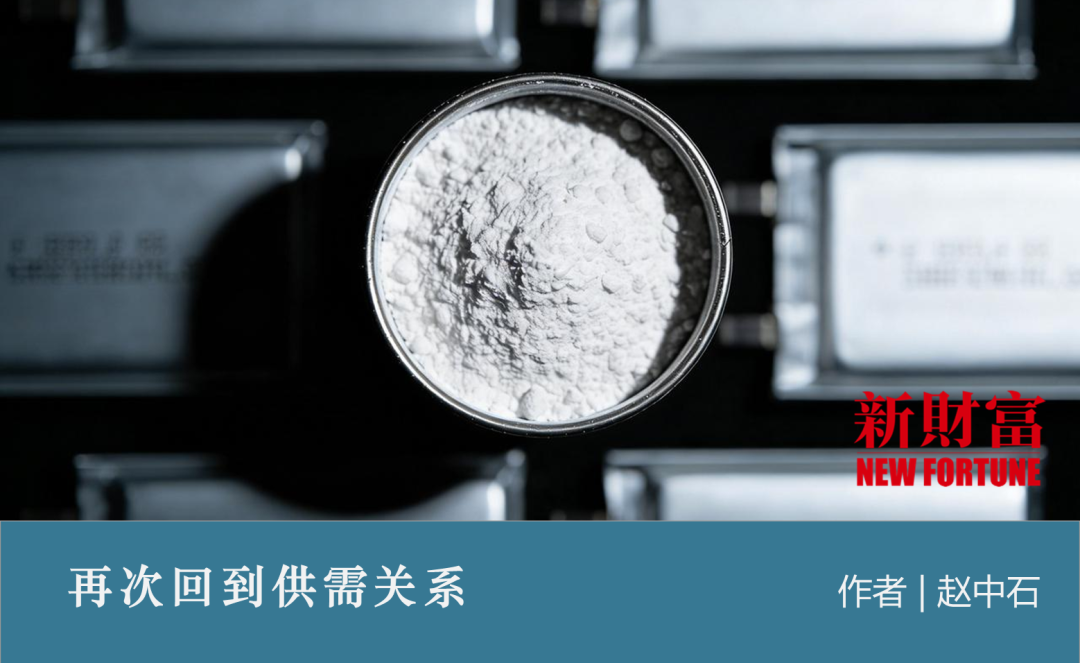
Group 1 - Donut Lab, a Finnish startup, has unveiled the world's first mass-producible all-solid-state battery with impressive specifications: 400Wh/kg energy density, operational temperature range of -30℃ to 100℃, 5-minute full charge, and a lifespan of 100,000 cycles [3][25] - The company plans to deliver electric motorcycles equipped with this battery in the first quarter of 2026, potentially making it the first player to mass-produce all-solid-state batteries for vehicles [3][25] Group 2 - The current focus in the industry remains on sulfide solid-state batteries, which are seen as the most viable path to commercialization, with lithium sulfide (Li₂S) being a critical precursor material [5][27] - The supply chain for sulfide solid-state batteries is clear: sulfide solid-state batteries → sulfide solid electrolytes → key precursor materials (Li₂S), indicating a single path dependency [6][27] Group 3 - The cost structure of sulfide solid electrolytes shows that lithium sulfide typically accounts for 70%-80% of the cost, making it a key variable in determining the overall cost of the electrolyte [8][28] - The demand for lithium sulfide is highly concentrated in the sulfide solid electrolyte sector, with limited applications in other areas, indicating a strong dependency between lithium sulfide and sulfide solid electrolytes [8][30] Group 4 - The potential downstream applications for sulfide solid-state batteries include power batteries, electrochemical energy storage, consumer electronics, and emerging fields like embodied intelligence and low-altitude economy [9][31] - In 2024, global lithium-ion battery shipments are expected to reach 1,545.1GWh, with power batteries accounting for 1,051.2GWh (68% of total shipments) [9][31] Group 5 - By 2030, the demand for power batteries is projected to exceed 3,000GWh, with estimates ranging from 3,300GWh to 3,910GWh, indicating a compound annual growth rate of approximately 22% [11][33] - The penetration rate of solid-state batteries in high-value vehicle segments is estimated to be around 6% by 2030, translating to a need for approximately 200GWh of solid-state batteries for electric vehicles [16][38] Group 6 - Current global production capacity for lithium sulfide is limited, with most projects in the pilot or small-scale production phase, indicating a significant gap between supply and the anticipated demand of tens of thousands of tons [19][41] - The effective supply of lithium sulfide is extremely scarce, with most production lines operating at low capacity, highlighting a constrained supply situation that could change rapidly if solid-state batteries gain traction [21][43] Group 7 - The expansion of lithium sulfide production capacity is expected to be slow and steady, requiring time to optimize production environments, purity, and safety management [44] - The solid-state battery market holds significant potential, and the story of lithium sulfide may evolve into a compelling narrative over the next decade [22][44]


华源晨会精粹20260115-20260115
Hua Yuan Zheng Quan· 2026-01-15 12:26
Group 1: Chaohongji (潮宏基) Overview - Chaohongji is expected to achieve a net profit attributable to shareholders of 436-533 million yuan in 2025, representing a year-on-year growth of 125%-175% [2][8] - The company plans to reach a total of 1,668 jewelry stores by the end of 2025, with a net increase of 163 stores during the year [2][8] - The brand focuses on young consumers by emphasizing "non-heritage," "beading," and "trending" categories, which is expected to enhance its market performance [2][9] Group 2: Babi Food (巴比食品) Overview - Babi Food is a leading chain brand in the breakfast bun market, expanding from 2,074 stores in 2016 to 5,685 stores in the first half of 2025 [11][12] - The national bun market is projected to grow from 704 billion yuan in 2024 to 740 billion yuan in 2025, with a year-on-year increase of 5.1% [12][14] - The competitive landscape is fragmented, providing significant room for consolidation, with Babi Food being the largest player in the market [13][14] Group 3: Minshida (民士达) Overview - Minshida is positioned to benefit from the growing demand for aramid paper in the aerospace sector, with China applying for frequency and orbital resources for 203,000 new satellites [3][15] - The company’s aramid paper is recognized for its high strength, lightweight, heat resistance, and insulation properties, making it suitable for various aerospace applications [15][16] - The demand for transformers is expected to rise due to the aging power grids in North America and Europe, which will further drive the need for Minshida's products [16][17] Group 4: Nakanor (纳科诺尔) Overview - Nakanor has successfully delivered dry electrode equipment for space power applications, enhancing its technological innovation capabilities [20][21] - The company is advancing its production capacity with a new 1,500-ton production line that began trial production in June 2025, achieving a 50% operating rate by September 2025 [18][21] - Nakanor is establishing a regional headquarters in Hainan to facilitate global strategic layout and enhance its international market competitiveness [22][23]


璞泰来:目前在手订单充足
Zheng Quan Ri Bao Wang· 2026-01-15 12:11
Core Viewpoint - The company is actively expanding its solid-state battery equipment layout across various manufacturing stages, anticipating significant order growth in 2025 due to increased demand from downstream battery manufacturers in the new energy vehicle and energy storage markets [1] Group 1: Equipment Layout - The company has established a presence in both dry and wet process technology routes for solid-state battery equipment [1] - Key equipment in the dry process includes fluidized bed for positive electrodes, lithium metal negative electrode forming equipment, mixers, film formers, rollers, and stacking machines [1] - In the wet process, the main equipment consists of coating machines and VOCs [1] Group 2: Development and Orders - Important post-processing equipment, such as isostatic pressing equipment, is currently in the prototype development and evaluation stage [1] - The company has seen a substantial increase in new orders within the year, supported by a strong backlog of orders [1] - Cumulatively, the company has secured over 200 million yuan in orders for solid-state battery equipment over the past few years [1]

德福科技拟7500万元至1.5亿元回购股份,公司股价年内跌12.04%
Xin Lang Zheng Quan· 2026-01-15 12:07
Group 1 - The company, Defu Technology, announced a share buyback plan with a total amount between 75 million and 150 million yuan, with a maximum buyback price of 53.46 yuan per share, which is 69.82% higher than the current price of 31.48 yuan [1] - The company has seen a cumulative stock price decline of 12.04% this year [1] - Defu Technology specializes in the research, production, and sales of high-performance electrolytic copper foil, with its main business revenue composition being 77.53% from lithium battery copper foil, 14.80% from electronic circuit copper foil, and 7.66% from other sources [1] Group 2 - As of January 9, the number of shareholders for Defu Technology increased by 6.76% to 59,800, while the average circulating shares per person decreased by 6.33% to 6,268 shares [2] - For the period from January to September 2025, Defu Technology achieved operating revenue of 8.5 billion yuan, representing a year-on-year growth of 59.14%, and a net profit attributable to shareholders of 66.59 million yuan, up 132.63% year-on-year [2] - Since its A-share listing, Defu Technology has distributed a total of 24.76 million yuan in dividends [3]
海亮股份(002203) - 海亮股份:002203海亮股份投资者关系管理信息20260115
2026-01-15 11:14
Group 1: Copper Foil Product Development - The company is continuously innovating in advanced copper foil technologies, including nickel-plated copper foil and ultra-high tensile copper foil, which have received positive feedback from leading domestic and international battery manufacturers [1] - The company aims to provide differentiated, high-quality products by focusing on cutting-edge technology and market orientation [1] Group 2: 2025 Business Performance - In 2025, there was significant growth in demand for copper foil in both the new energy sector and electronic circuit applications, leading to improved business performance [2] - Specific performance metrics will be detailed in the company's regular reports [2] Group 3: International Expansion - The Indonesian facility is the first overseas copper foil factory from China, collaborating with five of the top ten global power battery clients and two of the top three 3C digital clients, with supply agreements starting in 2026 [2] - The Moroccan project is part of the company's global strategy, expected to include multiple high-end copper processing products upon completion [5] Group 4: Production Capacity and Market Demand - Current copper foil production capacity is experiencing a temporary shortfall due to high market demand, but the company is enhancing capacity utilization through technology upgrades [3] - The company has a competitive edge in cost and product quality due to strategic site selection in low-cost regions and advanced production line designs [2] Group 5: Challenges and Future Outlook - Solid-state batteries face challenges in cost, manufacturing processes, and supply chain integration, which the company acknowledges as a long-term endeavor [3] - The company is exploring new production opportunities in the AIDC sector to enhance overall competitiveness and create new growth points [5]
