数字化转型

Search documents
我国灯塔工厂突破百家 轻工行业领跑数字化转型新浪潮
Xiao Fei Ri Bao Wang· 2026-02-03 00:42
Core Insights - The World Economic Forum recently announced a new batch of lighthouse factories, with 16 out of 23 new factories located in China, accounting for nearly 70% of the total [1] - China now has a total of 101 lighthouse factories, representing almost half of the global total of 224, with the light industry sector alone contributing 36 factories, over one-third of China's total [1] Group 1: Lighthouse Factory Selection and Characteristics - The "lighthouse factory" designation, a collaboration between the World Economic Forum and McKinsey, is set to undergo a significant upgrade in its evaluation criteria by September 2025, expanding from three categories to five, emphasizing a comprehensive capability across the entire value chain [2] - The new light industry lighthouse factories span various sectors, including home appliances, batteries, plastics, and eyewear, featuring notable companies such as Carl Zeiss Optical, Hisense, EVE Energy, and Midea [2] - These factories exemplify a deep integration of intelligence and sustainability, with high levels of supply chain digitization and industrial internet platforms driving collaborative upgrades across the industry [2] Group 2: Support for Light Industry Development - The rise of China's light industry "lighthouse cluster" is attributed to a synergy of policy guidance, market demand, and technological accumulation [4] - The "Digital Transformation Implementation Plan for Light Industry" aims for a 90% adoption rate of digital R&D design tools and a 75% CNC rate for key processes by 2027, providing a clear path for industry transformation [5] - The China Light Industry Federation has initiated various systemic measures to promote transformation, including developing high-end digital standards and a technology solution library to accelerate the commercialization of technological achievements [6] Group 3: Future Development and Goals - China's light industry has established a multi-level innovation system, with 25 national key laboratories and over 60% coverage of industrial internet platforms since the 14th Five-Year Plan [7] - The industry is expected to enhance its global competitiveness through increased penetration of smart technologies and improved data capabilities [7] - By 2030, the light industry aims to achieve over 30 trillion yuan in revenue, with a focus on green transformation, aiming for a 40% coverage rate of green factories and 35% of products being green [10]
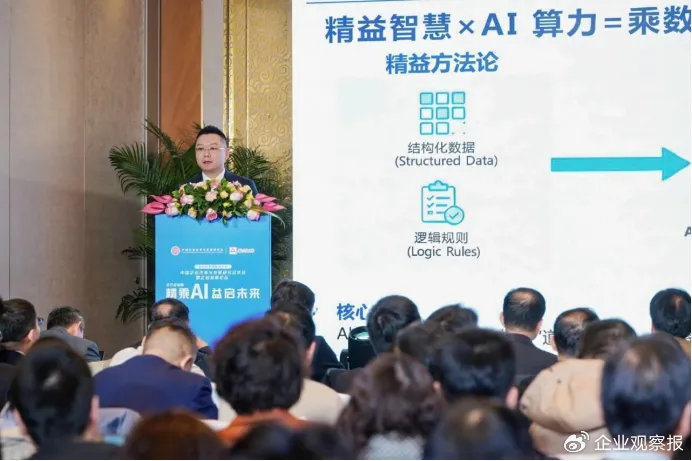
爱波瑞赵禹:以“精益管理×AI”破解制造业转型困局
Xin Lang Cai Jing· 2026-02-03 00:13
Core Insights - The article discusses the acceleration of transformation in China's manufacturing industry through the integration of artificial intelligence (AI) and manufacturing, as outlined in the "AI + Manufacturing" action plan by eight government departments [3] - The focus is on addressing common challenges in the transformation process, such as high investment costs, slow results, and the disconnect between technology and business operations [3][4] Group 1: Company Strategy and Implementation - Aibori Group's president emphasizes that lean management serves as the foundational framework for effective AI implementation, with AI acting as the tools and methods to enhance lean practices [5] - The company has developed a three-pronged service system that includes consulting, lean digitalization, and talent development to systematically assist enterprises in moving up the global value chain [3][6] - Aibori's approach involves optimizing business processes, enhancing operational visibility, and ensuring effective execution of strategies through digital tools [6][7] Group 2: Industry Challenges and Solutions - Common issues faced by enterprises during lean and digital transformation include a lack of communication and collaboration between business and digital teams, leading to suboptimal outcomes despite significant investments [4][5] - The integration of AI with lean management can significantly improve data processing efficiency, provide deeper insights into problems, and enable predictive management capabilities [6][7] - Aibori's solutions include AI-driven tools for resource optimization and cost analysis, which help enterprises make informed decisions and enhance operational efficiency [6][7] Group 3: Contributions to the Manufacturing Sector - Aibori has served over 4,000 enterprises, with more than 70% being state-owned, and has conducted over 5,000 service projects, training tens of thousands of management personnel [4][8] - The company actively promotes industry collaboration through platforms like the "Lean Digital Innovation Conference" and the "China Lean Digital Innovation Competition," fostering knowledge sharing and innovation [7][8] - Aibori has contributed to the development of national standards, such as the "Digital Lean Evaluation System," to guide the industry towards higher standards and practices [9]

2026年第5周:酒行业周度市场观察
艾瑞咨询· 2026-02-03 00:07
Group 1 - The core viewpoint of the article highlights the significant changes in the Chinese liquor industry, including a shift towards premium products and a focus on consumer experience rather than social gifting [2][4][8] - In 2025, the average price of imported whiskey decreased by 19.65%, while "white spirits" saw a growth of over 40%, indicating a consumer shift towards practicality [3][4] - The wine market is experiencing a "volume decrease but price increase" trend, with a 26.85% drop in import volume but a 21.79% rise in average price, reflecting a concentration on high-quality wines [3][4] Group 2 - The white liquor industry is undergoing a deep adjustment, with distributors shifting from expansion to optimization, focusing on products that address consumer pain points [5] - High-end liquor is entering a "burden reduction" phase, with major companies implementing structural reforms to enhance channel health and sustainability [6] - The market for zodiac wines has cooled significantly, with a decrease in both launch volume and market feedback, as consumer investment interest wanes [7] Group 3 - The liquor industry is facing a fundamental restructuring, moving from "scale competition" to "value cultivation," with a focus on user relationship management and inventory control [8] - In 2025, the production of white liquor decreased by 12.1%, while beer production fell by 1.1%, and wine production saw a 17.1% decline [9] - The online liquor market is rapidly growing, with Pinduoduo's liquor business projected to reach nearly 50 billion yuan in 2025, driven by a subsidy model [10] Group 4 - The "14th Five-Year Plan" emphasizes high-quality development in the liquor industry, focusing on digital transformation and consumer experience [11][12] - Major liquor brands are intensifying competition for the 2026 Spring Festival market, implementing refined marketing strategies to enhance sales [13] - Water Well Square's collaboration with the Temple of Heaven for a New Year wine symbolizes the integration of cultural elements into marketing strategies [14] Group 5 - The high-end yellow wine brand Lanting has achieved rapid growth, with revenues nearing 200 million yuan, attributed to product matrix and quality upgrades [16] - Xifeng Liquor is focusing on brand upgrades and national layout as part of its strategic plan for 2026, aiming to enhance consumer engagement and digital marketing [17] - Jin Xing Beer is preparing for an IPO, aiming to become the first "Chinese craft beer" listed on the Hong Kong Stock Exchange, with significant revenue growth [19] Group 6 - The "牛市" beer launched by Zhenjiu Li Du has quickly gained attention in the high-end craft beer market, driven by premium ingredients and emotional branding [30][31] - Jingpai's annual technology responsibility report highlights its commitment to health-oriented products and innovation in the liquor sector [32] - Langjiu's strategic initiatives have led to record storage levels and brand value, emphasizing quality and consumer engagement [33]

党建引领聚合力 多元联动促和谐
Xin Lang Cai Jing· 2026-02-02 20:06
Core Viewpoint - The article highlights the proactive transformation of the governance work in Sanya's Jiyang District, focusing on community service and collaborative governance through the establishment of a party-led alliance and a one-stop service platform for conflict resolution [1] Group 1: Governance and Community Engagement - Jiyang District's governance center has shifted from a reactive to a proactive service model, emphasizing collaboration among 28 units to enhance community safety and service quality [1] - The establishment of a joint learning and construction alliance aims to integrate resources and address key issues in grassroots safety construction [1] - A mechanism for joint meetings with over 20 units has been created to collaboratively address community safety challenges [1] Group 2: Service Infrastructure and Efficiency - The governance center has set up three functional areas for guiding, mediating, and dispatching services, with 11 comprehensive service windows and specialized rooms for mediation and psychological counseling [1] - A total of 420 disputes have been handled offline, allowing residents to resolve issues through a single entry point [1] - The center has also established a grassroots service station to provide legal consultations and public legal education, serving over 1,900 individuals [1] Group 3: Innovative Conflict Resolution - An innovative "emotion-reason-law" mediation model has been introduced, incorporating psychological support to enhance the effectiveness of conflict resolution [1] - A rapid response mechanism has been implemented, allowing for quick resolution of disputes within 30 minutes, significantly improving community satisfaction [1] - The center has adopted digital tools like "smart grid personnel" and AI early warning applications to enhance risk management and response capabilities [1] Group 4: Community Network and Leadership - The governance center has established a three-tiered network involving district, village (community), and grid levels to effectively manage and resolve conflicts [1] - The center acts as a command hub, coordinating resources and assessing complex disputes, while community centers serve as frontline stations for regular conflict monitoring [1] - The initiative aims to prevent minor issues from escalating and ensures that conflicts are resolved locally, enhancing community stability [1]
多维度展现发展韧性 百余家央企控股上市公司2025年业绩报喜
Shang Hai Zheng Quan Bao· 2026-02-02 18:44
Core Viewpoint - The overall performance of central enterprises listed on A-shares is showing a multi-dimensional improvement for the year 2025, with over 110 companies expected to report positive earnings, including 23 companies turning losses into profits, 46 companies experiencing profit growth, and 41 companies significantly reducing their losses [1] Group 1: Companies Turning Losses into Profits - 23 central enterprises, including South Grid Energy, China Ordnance, and China Chengxin, are expected to turn losses into profits in 2025, indicating a significant improvement in operational conditions [2] - South Grid Energy is focusing on energy-saving services and biomass sectors, projecting a net profit of 300 million to 360 million yuan for 2025 [2] - Military enterprises like China Aerospace South Lake and China Ordnance are also expected to report profits due to increased delivery of special equipment and defense products [2] Group 2: Companies with Significant Profit Growth - A group of central enterprises, such as Salt Lake Co., Longxin Bochuang, and China Shipbuilding Defense, are expected to see substantial profit growth in 2025, with some companies projecting profit increases of over 300% [4] - China Shipbuilding Defense is benefiting from a booming global shipbuilding market, with a projected profit growth of 149.61% to 196.88% for 2025 [4] - Longxin Bochuang is experiencing revenue growth due to demand from cloud computing and artificial intelligence, with expected profit growth exceeding 300% [4] Group 3: Companies Reducing Losses - 41 central enterprises, including China First Heavy Industries and China Great Wall, are expected to significantly reduce their losses in 2025, indicating positive signals during their transformation periods [6] - China First Heavy Industries is expected to reduce losses by 3.276 billion to 3.426 billion yuan through structural reforms and asset optimization [6] - In the steel industry, companies like Maanshan Steel and Chongqing Iron and Steel are also expected to reduce losses amid ongoing market challenges [6] Group 4: Cost Control and Operational Efficiency - Many central enterprises are implementing refined measures such as cost control and investment optimization to improve their financial performance [3] - Companies like China Chengxin and Blue Science High-tech emphasize the importance of cost control and efficiency improvements in their earnings announcements [3] - In the chemical sector, China National Chemical is enhancing operational capabilities and controlling costs to mitigate revenue pressures while achieving significant loss reductions [7]




沈阳燃气业务迈入电子签约时代
Xin Lang Cai Jing· 2026-02-02 18:02
(来源:沈阳晚报) 转自:沈阳晚报 本报讯(沈阳晚报、沈阳发布客户端记者于海)2月2日记者从沈阳燃气集团有限公司获悉,近日,沈阳 市的燃气供用气合同电子签约服务已正式上线。此举覆盖了全市居民及工商服等企业用户,通过数字化 手段,让过去需要往返奔波、手续繁琐的合同签订流程,简化为在手机上即可完成的操作,真正实现 了"数据多跑路,群众少跑腿"。 以往,市民办理燃气开栓等业务,需要准备多份纸质材料,亲自前往营业厅办理,签订后的纸质合同不 仅保管不便,还容易丢失。如今,居民用户可以通过两种方式便捷地完成电子签约。一是在燃气公司的 售后服务人员上门开栓时,现场通过其工作设备完成电子合同的签订;二是通过"沈阳燃气微厅"微信小 程序,自助在线阅读并签署合同。签订后的电子合同将被永久保存在云端,用户可随时登录小程序查阅 或下载,解决了纸质合同易丢失、难查找的问题。据了解,自该功能上线以来,居民用户的电子合同签 约量已累计突破1.4万份。 对于工商服等企业用户而言,电子签约带来的效率提升更为显著。过去,一份合同的签订往往需要经过 合同文本在企业和燃气公司之间的反复传递、审核、盖章,整个流程平均耗时约20个工作日,耗费大量 人力 ...
贵阳经开区两个案例入选
Xin Lang Cai Jing· 2026-02-02 18:02
Group 1 - The core viewpoint of the articles highlights the recognition of two projects from Guiyang Economic and Technological Development Zone as exemplary cases for digital transformation in the industrial sector of Guizhou Province by 2025 [1][2] - The selected projects include the "Intelligent Production Collaboration System Construction Project" by Guiyang Zhiyuan Machinery Product Development Co., Ltd. and the digital transformation case of Guizhou Zhonghui Heavy Industry Co., Ltd., which specializes in manufacturing new energy special vehicles [1] - Guizhou Zhonghui Heavy Industry has successfully enhanced its research and development capabilities, leading to its products being exported to international markets including Europe, the Middle East, and Southeast Asia [1] Group 2 - Guiyang Economic and Technological Development Zone is focusing on the integration of big data with traditional manufacturing, promoting digital transformation across industries through a dual-drive approach of "big data + artificial intelligence" [2] - The zone aims to continue advancing intelligent upgrades and digital transformations, fostering the integration of the digital economy with the real economy, and developing a model for intelligent manufacturing [2] - The initiative includes the cultivation of data labeling companies and the creation of digital application scenarios to enhance the overall industrial upgrade [2]
越南永隆省大力发展绿色、循环农业
Shang Wu Bu Wang Zhan· 2026-02-02 16:01
Core Insights - The article discusses the efforts of Vinh Long Province in Vietnam to promote agricultural modernization through technology and digital transformation, aiming for sustainable and green development in agriculture [1][2] Group 1: Technological and Digital Transformation - Vinh Long Province is implementing the 57th Resolution of the Central Committee of the Communist Party regarding technological innovation and digital transformation in agriculture [1] - The province aims for 15%-20% of agricultural production area to utilize high-tech by 2030, creating smart production areas and traceability systems throughout the value chain [1] - Advanced technologies such as variety improvement, biotechnology, mechanization, automation, and smart management are increasingly applied, reducing costs and enhancing resource efficiency [1] Group 2: Agricultural Development and Sustainability - The province is focusing on green agriculture and circular economy development, emphasizing reduced chemical fertilizer use and increased application of organic fertilizers and bioproducts [2] - Vinh Long's main agricultural products are rice and coconuts, with over 9,200 households registered in the "1 Million Hectares of Quality Low-Carbon Rice Sustainable Development Plan," aiming for at least 50,000 hectares by 2030 [2] - The coconut industry targets an area of approximately 132,000 hectares by 2030, with 50% being organic coconuts, leveraging the carbon credit potential of coconut trees [2]
魏桥纺织、宏拓实业入选省2025“工赋百景”数字化转型揭榜项目
Xin Lang Cai Jing· 2026-02-02 14:55
Group 1 - The core viewpoint of the article highlights the recognition of Shandong Weiqiao Textile Technology Co., Ltd. and Shandong Hongtuo Industrial Co., Ltd. for their digital transformation projects in the manufacturing sector, as part of Shandong Province's "Gongfu Baijing" initiative for 2025 [1][3] - The "Gongfu Baijing" project aims to promote high-quality development in manufacturing by focusing on three main directions: technology empowerment, chain transformation, and carrier empowerment, while selecting leading transformation benchmark cases in various subfields such as industrial internet, safety production, green low-carbon initiatives, 5G factories, and digitalization of supply chains [1] - The inclusion of these companies in the project is a dual recognition of their technological innovation and practical efforts in "smart transformation and digital upgrade" [1] Group 2 - The Weiqiao Textile project focuses on intelligent upgrades across the entire textile supply chain, while the Hongtuo Industrial project emphasizes digital empowerment for safety management, aligning with industry transformation needs and national strategic directions [2] - Both companies aim to leverage this recognition to deepen the integration of digital technology with the real economy, driving a "smart and green" transformation in traditional industries and injecting momentum into high-quality development in manufacturing [2]
张家港农商银行 科技创新筑牢金融安全屏障
Jiang Nan Shi Bao· 2026-02-02 14:40
Group 1 - The core viewpoint of the articles highlights Zhangjiagang Rural Commercial Bank's commitment to enhancing safety management through digital transformation and innovative mechanisms, resulting in recognition as an advanced unit in financial safety construction in Suzhou for 2025 [1] Group 2 - The bank has strengthened its security capabilities by building an integrated intelligent management platform that enhances proactive, precise, and comprehensive security measures, including risk warning and monitoring functions [2] - The implementation of remote visual supervision for cash transport processes has improved standardization and safety levels in cash handling, allowing real-time monitoring of operations [2] Group 3 - The bank has established a robust safety responsibility framework through institutional constraints and cultural guidance, including a safety assessment scheme that quantifies inspection results and provides quarterly reports [3] - AI technology has been utilized to enhance safety policy learning, offering tools like the "Regulation OK Assistant" for employees to easily access safety regulations [3] Group 4 - The bank focuses on management innovation and preventive measures, deploying energy-saving control systems to mitigate overload risks while achieving significant energy savings [4] - Proactive professional inspections of electrical facilities have been implemented to enhance the safety and operational continuity of older branches [4] - The bank plans to continue integrating various safety measures and exploring new technologies to strengthen its safety protection network [4]