
智能化

Search documents
“五元一体”打破“独角戏” 江苏为财会监督立新规
Xin Hua Ri Bao· 2026-01-22 00:00
《条例》共六章四十五条,构建起系统完备的财会监督制度框架。省财政厅财会监督局相关负责人 介绍,过去财政部门"唱独角戏"的模式,升级为"财政部门主责监督、有关部门依责监督、各单位内部 监督、相关中介机构执业监督、行业协会自律监督"的"五元一体"格局,让监督不再有死角。在此基础 上,《条例》还打造"纵横贯通"的工作机制:在明晰财政部门和有关部门监督职责的同时,要求加强财 会监督与纪律监督、监察监督、巡视巡察监督的协调,与人大监督、民主监督的协同,与行政监督、司 法监督、审计监督、统计监督的联动,畅通群众监督和舆论监督渠道,形成监督合力。 顺应数字化发展趋势,《条例》突出科技赋能。要求运用大数据、人工智能等信息化手段,整合公 共数据资源,完善财会监督数据库,推进线上动态监控,提升监督数字化、智能化水平,实现重大风险 精准预警。该负责人表示,此次立法不仅为江苏财会监督工作提供了坚实法治保障,更为全国财会监督 法治化建设提供了可复制、可推广的实践经验。随着条例的正式施行,江苏将以法治力量规范财经秩 序、防范经济风险,为高质量发展注入更强动力。 1月20日,《江苏省财会监督条例》经省十四届人大常委会第二十次会议表决通过, ...
量是压舱石 质是定盘星
Xin Lang Cai Jing· 2026-01-21 20:32
Core Insights - In 2025, China's automotive industry achieved remarkable results, with production and sales both exceeding 34 million units, and nearly half of new car sales being electric vehicles, indicating a significant transformation from quantity to quality [1][4] Group 1: Industry Performance - The automotive industry has maintained its position as the world's largest market for 17 consecutive years, supported by a robust market capacity that facilitates technological advancements and supply chain improvements [1][2] - The growth to 34 million units reflects the collaborative development of related industries and provides substantial employment, reinforcing China's status as a manufacturing powerhouse [1][2] Group 2: Quality and Innovation - The shift from quantity to quality is evident as the industry moves away from the perception of "domestic cars" being low-end, with advancements in core technologies such as materials science and software algorithms [1][2] - The automotive sector is experiencing a comprehensive quality enhancement, transitioning from a focus on mere product availability to prioritizing safety and performance in consumer decision-making [2][4] Group 3: Industry Ecosystem and Standards - China's automotive industry benefits from a complete and responsive supply chain system, with efficient collaborative networks established across various economic regions [2][3] - Recent industry regulations have aimed at curbing harmful practices like price wars and enhancing safety standards, contributing to a more mature industry environment [2][3] Group 4: Future Directions - The "14th Five-Year Plan" emphasizes smart and connected vehicles as a trillion-yuan consumption focus, reflecting higher expectations for industry quality [3][4] - The transition from a manufacturing powerhouse to a strong automotive nation is marked by a commitment to quality and innovation, which is essential for sustainable development and global competitiveness [4][5]
格力电器:格力数控机床将继续向高速、高精、智能化等方向持续突破
Zheng Quan Ri Bao Zhi Sheng· 2026-01-21 14:13
Core Viewpoint - Gree Electric Appliances is focusing on the development of integrated die-casting technology for the automotive industry, particularly addressing challenges in processing key vehicle components, and has achieved significant efficiency improvements with its new equipment [1] Group 1: Company Developments - In response to investor inquiries, Gree Electric announced the development of a dual five-axis high-speed gantry machining center aimed at the integrated die-casting sector for electric vehicles [1] - The new machining center can complete all six-sided processing in one clamping, resulting in over an 80% increase in processing efficiency compared to traditional single five-axis equipment [1] - Gree's innovative design has been recognized with a gold medal at the Geneva Inventors' Exhibition, positioning the company among the top three in terms of shipment volume in this niche market [1] Group 2: Industry Focus - The company plans to continue its advancements in high-speed, high-precision, and intelligent manufacturing technologies across various sectors, including automotive, 3C electronics, molds, and general machinery [1] - Gree Electric aims to contribute to the development of China's equipment manufacturing industry through these technological breakthroughs [1]

康力电梯:公司主营业务为电扶梯产品及其相关零部件和后服务市场
Zheng Quan Ri Bao Wang· 2026-01-21 12:11
Core Viewpoint - Kangli Elevator (002367) is focusing on its main business of escalator products and related components, while also expanding its investment strategies to enhance synergy with affiliated companies [1] Group 1: Main Business - The company’s primary business includes escalator products and their related components and after-sales service [1] Group 2: Investment Strategy - Kangli Elevator has established a multi-line investment layout, including direct investments by the listed company, its subsidiary Suzhou Kangli Technology, and various funds such as Kangli Junzhu Internet of Things Fund and Kangli Junzhu Digital Economy Fund [1] - The investment strategy aims to deepen the company's linkage with affiliated enterprises and explore the integration of its products with advanced technologies in IoT, digitalization, and intelligence [1] Group 3: Business Development - The company is focused on promoting business segments, product upgrades, technological innovation, and service expansion through its investment initiatives [1]

直击达沃斯|对话比亚迪执行副总裁李柯:欧洲觉得比亚迪的车“好到让人难以置信”
Xin Lang Cai Jing· 2026-01-21 11:00
Core Insights - The rapid development of China's new energy vehicle (NEV) industry is primarily driven by clear, consistent government policies that provide long-term certainty for companies to invest in research and development [1][5][6] - The intense competition within the Chinese market, including traditional automakers and new entrants from the IT and internet sectors, has significantly stimulated innovation in the automotive industry [2][6] Government Policy Impact - Government policies serve as a strong signal for companies to invest in R&D, emphasizing the need to focus resources on new energy and future technologies [1][5] - The value of these policies lies not in short-term subsidies but in the long-term certainty they provide, enabling companies to shift resources from internal combustion vehicles to electrification and intelligence [1][5] Market Competition - The competition in China's NEV sector includes not only traditional car manufacturers but also numerous new entrants with IT backgrounds, which enhances the industry's innovative capabilities [2][6] - The automotive industry in China has transformed from a traditional manufacturing sector to a comprehensive industry integrating hardware, software, algorithms, and system capabilities [2][6] Innovation and R&D - BYD's engineering culture is a core support for its innovation, with over 10% of its workforce being R&D engineers, totaling approximately 120,000 [2][6] - The company has achieved significant milestones, including the development of a 3,000 horsepower electric vehicle and setting a world record speed of 496.22 km/h [2][6] Supply Chain and Geopolitical Factors - In response to geopolitical changes and external uncertainties, Chinese automakers are accelerating the establishment of a self-sufficient industrial system [7] - This pressure has fostered stronger internal motivation within companies to develop capabilities across the entire supply chain, from raw materials to software integration [7] International Market Challenges - Chinese companies face policy uncertainties when expanding into international markets, particularly in Europe, where there is less stability in subsidy rules and technical standards compared to China [7][8] - The lack of a predictable policy environment increases operational costs and decision-making difficulties for companies looking to invest abroad [7][8] Industry Trends - The global automotive industry's competitive focus is shifting from power systems to intelligent capabilities, system integration, and continuous iteration [8] - Chinese NEVs are gradually overcoming biases in the European market through product strength, with consumers often expressing disbelief at their performance and features [8] Consumer Behavior - In a real market environment, consumers will ultimately make choices based on their experiences, leading to direct decisions when they find no significant shortcomings in NEVs compared to traditional models [8]

针对性化解供强需弱矛盾
Xin Lang Cai Jing· 2026-01-21 10:21
Economic Overview - The total economic output of China has reached a new milestone of 140 trillion yuan, with the manufacturing value added ranking first globally for 16 consecutive years, and the urbanization rate of the permanent resident population increasing by 0.89 percentage points compared to the previous year [2] Development Goals and Strategies - The National Development and Reform Commission (NDRC) summarized the past year's economic achievements, highlighting stable economic operation and enhanced resilience, with a focus on high-quality development [3] - Looking ahead to 2026, significant potential for growth is expected in consumption, investment, technology, and regional development [3] Technological and Industrial Advancements - New technologies, products, and scenarios are emerging, with sectors such as new energy, new materials, and aerospace poised for growth [3] - The NDRC is planning to advance a series of major high-tech industry projects during the 14th Five-Year Plan period [3] Supply and Demand Dynamics - The NDRC emphasized the need to address the prominent contradiction of strong supply and weak demand, focusing on achieving a dynamic balance and healthy circulation of supply and demand [4] - Key strategies include strengthening domestic circulation, enhancing the real economy, and promoting a unified national market [4] Policy Initiatives - The NDRC is set to develop a strategic implementation plan for expanding domestic demand from 2026 to 2030, aiming to leverage new demand to drive new supply [4] - Policies will focus on intelligent, green, and integrated development, fostering emerging and future industries [4] Consumer and Market Dynamics - Efforts to enhance consumer income are crucial for expanding domestic demand, with plans for actions to stabilize employment and increase urban and rural residents' income [5] - The NDRC is working on optimizing project conditions and standards to lower investment thresholds in equipment updates and improve the consumer goods replacement program [5] Price Stability and Inflation Control - Maintaining stable prices for essential goods is a key macroeconomic goal, with recent trends showing a rise in both the Consumer Price Index (CPI) and the Producer Price Index (PPI) [6] - The NDRC plans to implement more proactive fiscal policies and moderately loose monetary policies to promote reasonable price recovery [6][7]

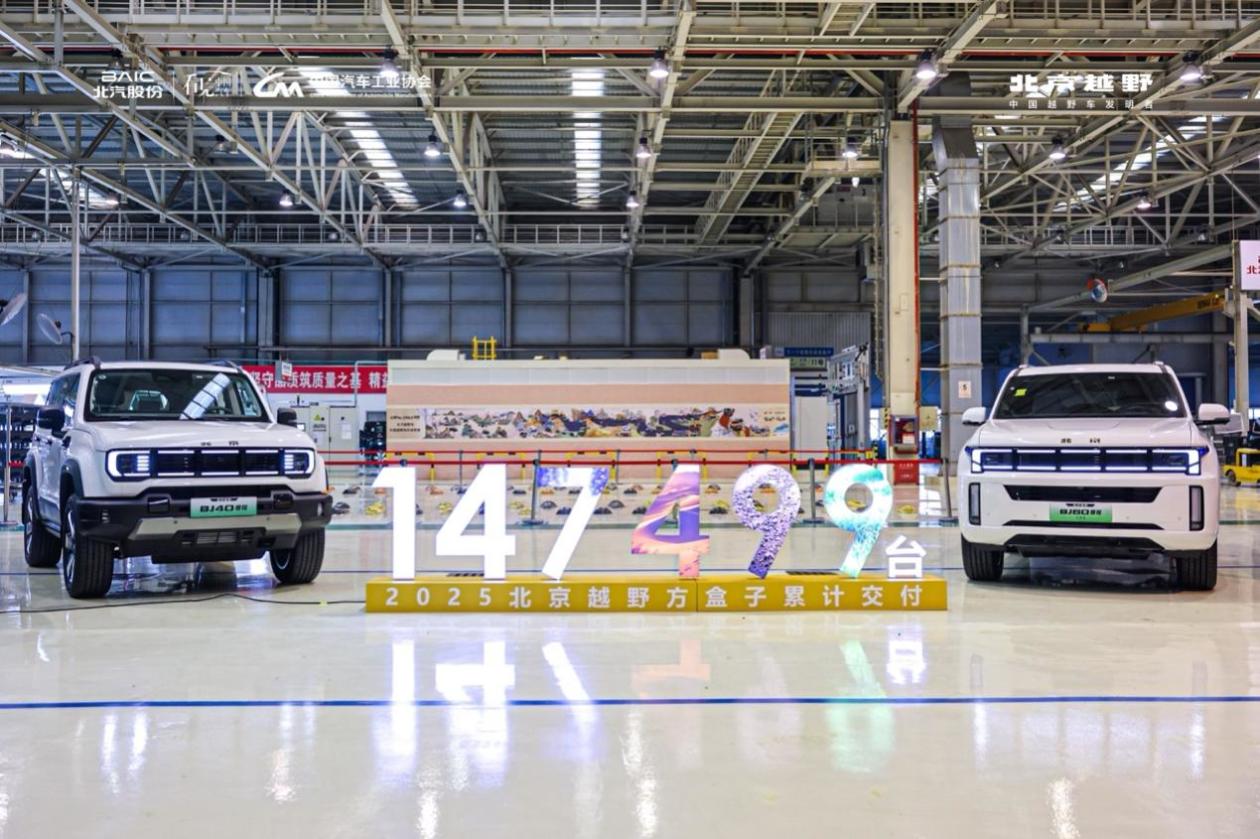
2026 “看见中国汽车”活动走进北京越野
Huan Qiu Wang· 2026-01-21 09:50
Core Insights - Beijing Off-road achieved impressive sales in 2025, delivering over 200,000 vehicles, with a 72% year-on-year increase in boxy models and a doubling of sales for rugged off-road vehicles [1][3] - The company's transformation into a user-centric enterprise involved comprehensive changes in strategy, organization, products, and ecosystem, focusing on user feedback for product development [3][5] Sales Performance - In 2025, Beijing Off-road's boxy model sales reached 147,000 units, while rugged off-road vehicle sales hit 76,000 units, marking a significant growth [1][3] - The BJ40 extended range version sold 38,000 units within eight months, contributing to the overall sales surge [1] Product Strategy - The company launched multiple new models in 2025, including BJ40 extended range, BJ40 fuel, and BJ30 Traveler, covering various technology routes such as gasoline, diesel, and hybrid [5] - The BJ40 extended range version gained popularity for its combination of off-road performance and electric comfort, while the BJ60 extended administrative version addressed specific user needs with advanced technology [5] Operational Improvements - Beijing Off-road optimized its marketing, cost, and quality processes, forming a "marketing army" and enhancing data management, resulting in a 30% increase in conversion rates [7] - The company shifted from price competition to lean management across the value chain, with a focus on quality control led by management [7] Future Strategy - For 2026, the company aims to transition from "breakthrough" to "consolidation and evolution," focusing on user co-creation and building a platform for user involvement in vehicle design [7] - The strategic focus will also include evolving the product matrix for full-scene collaboration and establishing a foundation of trust with users [7] - The integration of electrification and intelligence with off-road scenarios is expected to elevate the Chinese off-road industry from a follower to a leader position [7]
中孚实业:电解铝业务成本下降及销售价格上涨 预计2025年净利润同比增长120.27%-141.59%
Zhong Zheng Wang· 2026-01-21 06:37
Core Viewpoint - The company, Zhongfu Industrial, anticipates a significant increase in its net profit for the year 2025, projecting a growth of 120.27% to 141.59% compared to the previous year [1] Financial Performance - The expected net profit attributable to shareholders is between 1.55 billion to 1.7 billion yuan [1] - The projected non-recurring net profit is estimated to be between 1.52 billion to 1.67 billion yuan, reflecting a year-on-year growth of 156.32% to 181.61% [1] Growth Drivers - The primary reasons for the anticipated performance improvement include the company's focus on "green, digital, and intelligent" initiatives, alongside ongoing cost reduction and management enhancement efforts [1] - The growth in performance is mainly attributed to the decrease in costs and the increase in sales prices within the electrolytic aluminum business [1]

研报掘金丨华源证券:首予鸿路钢构“买入”评级,智能化驱动成长提速
Ge Long Hui A P P· 2026-01-21 06:13
Core Viewpoint - Honglu Steel Structure is a leading player in the domestic steel structure industry, demonstrating clear growth pathways and significant scale advantages [1] Group 1: Company Overview - Honglu Steel Structure has been continuously advancing its intelligent transformation and capacity expansion, with an annual steel structure production capacity expected to reach 5.2 million tons by the end of 2024 [1] - The company's capacity utilization rate is projected to be 86.75%, and the sales-to-production ratio is expected to be 96.08%, indicating strong operational efficiency [1] - The company has a robust financial status, reflected in its consistent high dividend payouts, emphasizing its commitment to shareholder returns [1] Group 2: Market Dynamics - The demand for multi-layer heavy steel factories is gradually being released, driven by policies such as "Industrial Upgrading," which is expected to enhance net profit per ton [1] - The comprehensive breakthrough in intelligent welding and the successful transformation aimed at cost reduction and efficiency improvement are anticipated to yield positive results [1] - The company is actively expanding its overseas market presence while binding core customers, positioning itself for future growth [1] Group 3: Comparative Analysis - Comparable companies in the construction materials supply sector, such as Jinggong Steel Structure, Hongsheng Huayuan, and Zhizhi New Materials, are expected to have an average PE ratio of approximately 45.40 times by 2025 [1] - The anticipated recovery of the industry and the profitability improvements from intelligent upgrades support a "Buy" rating for Honglu Steel Structure [1]

瞄准家庭出行场景 吉利银河V900携AI增程技术上市
Zheng Quan Ri Bao Wang· 2026-01-21 04:58
Core Viewpoint - The launch of the Geely Galaxy V900 marks a significant entry into the high-end family MPV market, emphasizing a multi-scenario family experience and comfort for all passengers [1][4]. Group 1: Product Features - The Geely Galaxy V900 offers three versions and emphasizes a spacious interior with a room rate of 91.8% and an effective interior length of 3.97 meters [2]. - The vehicle features a maximum trunk capacity of 1100 liters, catering to family travel and cargo needs [2]. - Comfort is enhanced with 11-layer cloud sensation SPA seats, a 27-speaker Flyme Sound audio system, and various entertainment options for long journeys [2]. Group 2: Design and Aesthetics - The design philosophy combines "international aesthetics with Eastern expression," featuring a grille design inspired by "water rhythm" and a light group that reflects "arch bridge moon" motifs [3]. - The design aims for cultural inclusivity, ensuring broad aesthetic recognition across different markets [3]. Group 3: Performance and Safety - The V900 is equipped with a dual-motor all-wheel-drive system, delivering a peak power of 340 kW and a peak torque of 523 N·m, with a 0-100 km/h acceleration time of 6.5 seconds [3]. - The vehicle's body structure consists of 76.6% high-strength steel, enhancing safety, particularly for rear passengers [3]. Group 4: Intelligent Features - The V900 incorporates a super AI range extension system with a thermal efficiency of 47.26%, achieving a comprehensive range of over 1200 kilometers [4]. - It features an AI interaction experience with emotional recognition and memory capabilities, along with advanced parking assistance functions [4]. Group 5: Market Positioning - The launch of the Galaxy V900 signifies Geely Galaxy's strategic positioning in the MPV market, reflecting the brand's deepening understanding of high-end family vehicles [4].
