AI芯片

Search documents
大摩大幅上调谷歌TPU产量预测:2027年达500万块,每50万块“外销”或增收130亿美元和0.40美元的每股收益
Ge Long Hui· 2025-12-01 08:24
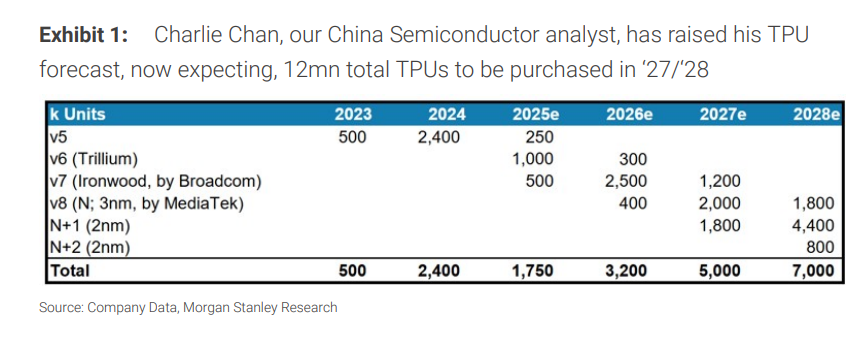
Core Insights - Google's self-developed AI chip, TPU, is showing significant potential to challenge the existing market landscape in the competitive AI chip sector [1] Supply Chain and Production Forecast - Morgan Stanley's latest report indicates that uncertainties surrounding Google's TPU supply chain are diminishing, with expectations for explosive growth in production over the next two years [1] - The production forecast for Google's TPU has been significantly raised for 2027 and 2028, with the 2027 estimate increasing from approximately 3 million units to about 5 million units, representing a growth of around 67% [1] Revenue Potential - If Google initiates a "third-party sales" model for TPU, it could open up a substantial new revenue stream [1] - The report estimates that for every 500,000 TPU chips sold, Google could potentially add approximately $13 billion in revenue and $0.40 in earnings per share (EPS) by 2027 [1]



大摩大幅上调谷歌TPU产量预测,同步分享谷歌TPU专家调研纪要,图片保存!
是说芯语· 2025-12-01 07:29
Core Viewpoint - Google's self-developed AI chip, TPU, is showing significant potential to challenge the existing market landscape, with expectations of explosive growth in production over the next two years, indicating a possible shift towards large-scale sales to third parties [1][3][4]. Supply Chain Signals - The uncertainty surrounding the TPU supply chain is diminishing, with a substantial increase in production forecasts for 2027 and 2028. The production estimate for 2027 has been raised from approximately 3 million units to about 5 million units, a 67% increase [1][3]. - For 2028, the production forecast has surged from around 3.2 million units to approximately 7 million units, reflecting a remarkable 120% increase [3][4]. Financial Implications - If Google initiates an external sales strategy for TPU, it could open up a significant new revenue stream. Each sale of 500,000 TPU chips could potentially add around $13 billion in revenue and $0.40 to earnings per share (EPS) in 2027 [1][4]. - The report estimates that over the two years from 2027 to 2028, Google could secure 12 million TPU units, compared to a total of 7.9 million units over the past four years, indicating a rapid expansion in AI hardware investment and positioning [1][4]. Strategic Shift - The increase in TPU production suggests a strategic shift for Google from a "self-use" model to directly competing with major players in the AI chip market. This transition could position Google as a hardware seller rather than just a consumer and service provider [4].
大摩大幅上调谷歌TPU产量预测:2027年达500万块,每50万块“外销”或增收130亿美元
Hua Er Jie Jian Wen· 2025-12-01 06:57
Core Insights - Google's self-developed AI chip, TPU, is showing significant potential to challenge the existing market landscape as supply chain uncertainties are diminishing [1][4] - Morgan Stanley's report indicates a substantial increase in TPU production forecasts for 2027 and 2028, suggesting a strategic shift towards external sales [2][6] Supply Chain Signals - Morgan Stanley's analysis reveals a clear increase in TPU orders, leading to a revised forecast of 12 million TPUs for 2027-2028, compared to a total of 7.9 million over the past four years [2][4] - The anticipated production surge indicates Google's accelerated investment and expansion in AI hardware [2] Production Forecasts - The production forecast for 2027 has been raised from approximately 3 million to about 5 million units, reflecting a 67% increase [6] - For 2028, the forecast has jumped from around 3.2 million to 7 million units, marking an impressive 120% increase [6] Strategic Shift - The new production data suggests that Google's previous supply constraints may no longer be an issue, allowing for a potential shift from an internal-use model to competing directly in the AI chip market [4] - The projected production of 12 million TPUs over two years indicates the potential for Google to sell more TPUs through its Google Cloud Platform (GCP) and as standalone products [4] Financial Implications - Each sale of 500,000 TPU chips could generate approximately $13 billion in revenue and $0.40 in earnings per share (EPS) for Google in 2027 [5][7] - Successful implementation of the TPU external sales strategy could significantly enhance Google's revenue and profit growth, potentially reshaping market valuations and the competitive landscape in the AI chip sector [7]
20cm速递|科创芯片ETF国泰(589100)飘红,电子和半导体行业呈现强劲发展态势
Mei Ri Jing Ji Xin Wen· 2025-12-01 06:07
(文章来源:每日经济新闻) 国投证券指出,电子和半导体行业呈现强劲发展态势。台积电计划在增建三座2纳米厂,以满足AI芯片 订单激增的需求,预计资本支出有望达到500亿美元,其中约70%用于先进制程的研发及扩产。半导体 设备国产化取得突破,上海芯上微装自主研发的首台350nm步进光刻机完成出厂调试,标志着我国在高 端半导体光刻设备领域实现关键突破。此外,谷歌正升级其AI芯片竞赛,Meta或从2027年开始采用谷 歌TPU,逐步摆脱对英伟达的依赖。消费电子领域,阿里夸克AI眼镜正式发布,采用全球量产最小的 AR光引擎,显示行业在微型化与高性能芯片集成方面持续创新。 科创芯片ETF国泰(589100)跟踪的是科创芯片指数(000685),单日涨跌幅达20%,该指数从科创板 市场中选取涉及半导体材料、设备、设计、制造等全产业链环节的50家相关上市公司证券作为指数样 本,以反映中国芯片产业核心领域上市公司证券的整体表现。指数重点覆盖数字芯片设计、半导体设备 和集成电路制造等关键技术领域,全面展现国内芯片产业链的发展动态与长期潜力。 ...
瑞芯微涨2.07%,成交额14.65亿元,主力资金净流出8833.57万元
Xin Lang Cai Jing· 2025-12-01 02:57
Core Viewpoint - The stock of Rockchip Microelectronics has shown significant price movements and financial growth, indicating strong market interest and performance in the semiconductor industry [1][2]. Financial Performance - For the period from January to September 2025, Rockchip achieved a revenue of 3.141 billion yuan, representing a year-on-year growth of 45.46% [2]. - The net profit attributable to shareholders for the same period was 780 million yuan, reflecting a substantial increase of 121.65% year-on-year [2]. Stock Market Activity - As of December 1, the stock price of Rockchip increased by 2.07%, reaching 186.75 yuan per share, with a trading volume of 1.465 billion yuan and a turnover rate of 1.90% [1]. - The stock has appreciated by 71.08% year-to-date, with a recent 5-day increase of 9.63% and a 20-day increase of 4.41%, although it has seen a decline of 24.18% over the past 60 days [1]. Shareholder Information - As of September 30, the number of shareholders increased to 87,500, a rise of 34.79%, while the average circulating shares per person decreased by 25.76% to 4,811 shares [2]. - The top ten circulating shareholders include Hong Kong Central Clearing Limited, which increased its holdings by 1.6511 million shares, and Galaxy Innovation Mixed A, which reduced its holdings by 461,000 shares [3]. Dividend Distribution - Since its A-share listing, Rockchip has distributed a total of 1.274 billion yuan in dividends, with 566 million yuan distributed over the past three years [3]. Company Overview - Rockchip Microelectronics, established on November 25, 2001, and listed on February 7, 2020, specializes in the design, development, and sales of large-scale integrated circuits and applications [1]. - The company's main revenue sources include smart application processor chips (90.25%), mixed-signal chips (7.39%), and other chips (2.04%) [1].

82岁退休的他,带出一系千亿级科技巨头,却不持有1股股权
3 6 Ke· 2025-12-01 02:12
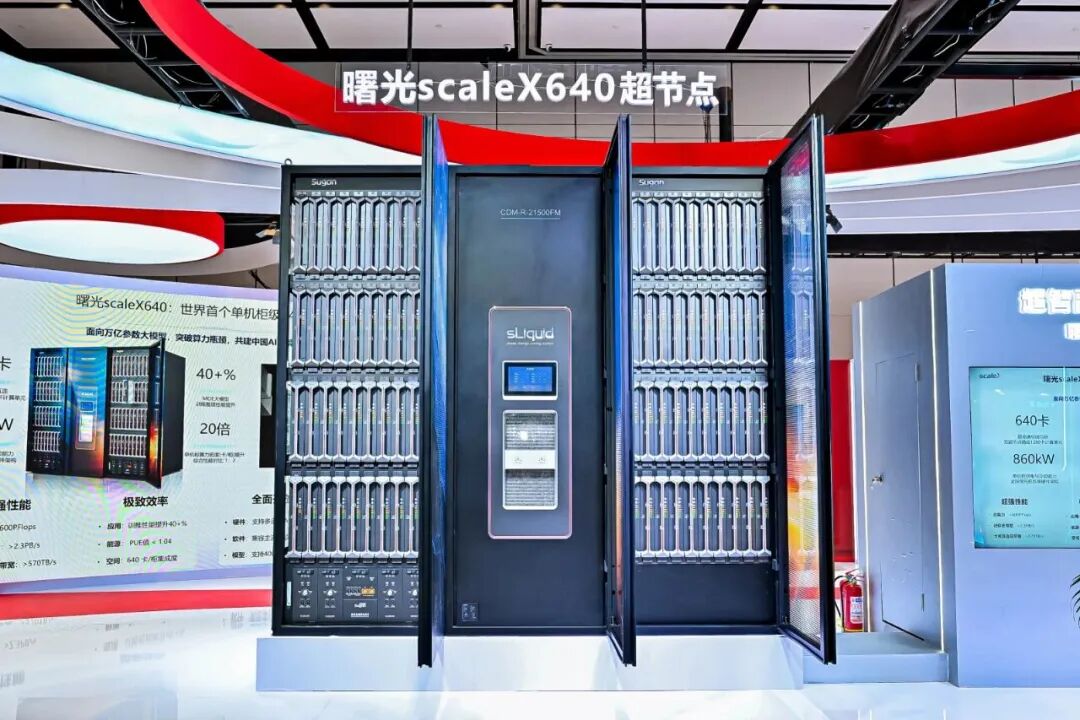
Core Viewpoint - The article highlights the evolution and achievements of the Chinese high-performance computing (HPC) industry, particularly focusing on the contributions of Sugon (中科曙光) in establishing China as a global leader in supercomputing technology. It emphasizes the importance of self-reliance in technology and the strategic significance of HPC in various sectors. Group 1: Historical Development - In 1990, the National Intelligent Computer Research and Development Center was established to promote the "863 Program," with Li Guojie appointed as the director [24] - The first project initiated by Li was the development of supercomputers, leading to the creation of "Shuguang No. 1" in 1993, marking China's entry into the HPC field [35][12] - The success of "Shuguang No. 1" led to the lifting of the ban on 10 billion calculations for China by Western countries just three days later [37] Group 2: Technological Advancements - Sugon has developed several supercomputers, including "Shuguang 4000A," "Shuguang 5000," and "Shuguang 6000," breaking the Western monopoly and establishing China as the third country capable of independently developing supercomputers [12] - The "Shuguang" series has been instrumental in various applications, from weather forecasting to space exploration, showcasing the versatility and necessity of HPC [8][10] Group 3: Market Position and Challenges - From 2009 to 2019, Sugon ranked first in the China HPC TOP100 for ten consecutive years, despite facing significant pressure from U.S. sanctions [13] - In June 2019, the U.S. Department of Commerce placed five Chinese companies on the Entity List, including four from the Sugon system, but this did not hinder Sugon's innovation [14] Group 4: Strategic Expansion - Sugon has expanded its capabilities beyond supercomputing to include a full industry chain involving chips, computing, cloud, and intelligence, enhancing its competitive edge [15] - The company has developed its own chips through subsidiaries like Haiguang Information, which produces both X86 architecture CPUs and self-developed deep computing units [16] Group 5: Financial Performance - By 2024, Sugon's gross margin and net margin reached 29.16% and 15.16%, respectively, representing increases of 159% and 293% since 2018 [91] - The net profit surged from 116 million in 2014 to 1.911 billion in 2024, marking a 16-fold increase over ten years [91] Group 6: Future Outlook - The merger of Haiguang Information and Sugon is set to create a comprehensive ecosystem for domestic chip, server, storage, and data center services, establishing a new landscape for the domestic HPC industry [80] - Sugon's strategic initiatives, including the establishment of intelligent computing centers and cloud services, position it well for future growth and resilience against external pressures [83][84]
朗矽科技计划联合开发模块级整合产品 推动硅电容行业标准化应用
Jing Ji Guan Cha Wang· 2025-11-30 10:18
Core Insights - The conference focused on the transformation of the high-end electronic components industry, highlighting the challenges and opportunities within the sector [1] Group 1: Industry Challenges - Traditional MLCC (Multi-layer Ceramic Capacitors) face a "bottleneck" dilemma due to the monopoly of Japanese companies like Murata, TDK, and Kyocera over key raw materials and manufacturing processes [1] - The entire supply chain, from key raw materials like BaTiO powder to core equipment and process formulas, is dominated by these Japanese firms, creating significant barriers for domestic alternatives [1] Group 2: Strategic Opportunities - The founder of Langxi Technology, Wang Daxiang, emphasized the potential of silicon capacitors, which utilize CMOS/MEMS technology, allowing them to operate independently of the ceramic material system dominated by Japanese manufacturers [1] - Langxi Technology aims to collaborate with leading companies in AI high-performance chips, SOC chips, power management ICs, and optical modules to develop integrated module-level products, positioning capacitors as part of comprehensive solutions rather than standalone components [1]
SemiAnalysis深度解读TPU--谷歌冲击“英伟达帝国”
硬AI· 2025-11-29 15:20
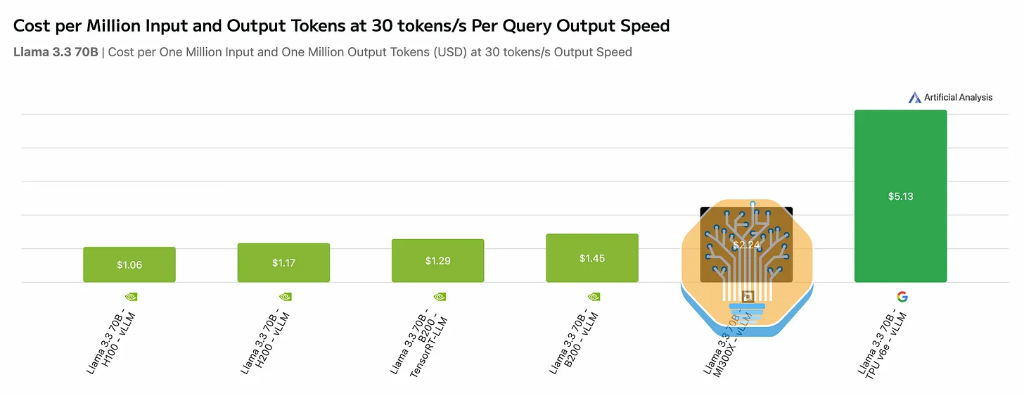
Core Insights - The AI chip market is at a pivotal point in 2025, with Nvidia maintaining a strong lead through its Blackwell architecture, while Google's TPU commercialization is challenging Nvidia's pricing power [2][3][4] - OpenAI's leverage in threatening to purchase TPUs has led to a 30% reduction in total cost of ownership (TCO) for Nvidia's ecosystem, indicating a shift in competitive dynamics [2][3] - Google's strategy of selling high-performance chips directly to external clients, as evidenced by Anthropic's significant TPU purchase, marks a fundamental shift in its business model [8][9][10] Group 1: Competitive Landscape - Nvidia's previously dominant position is being threatened by Google's aggressive TPU strategy, which includes direct sales to clients like Anthropic [4][10] - The TCO for Google's TPUv7 is approximately 44% lower than Nvidia's GB200 servers, making it a more cost-effective option for hyperscalers [13][77] - The emergence of Google's TPU as a viable alternative to Nvidia's offerings is reshaping the competitive landscape in AI infrastructure [10][12] Group 2: Cost Efficiency - Google's TPUv7 servers demonstrate a significant cost efficiency advantage over Nvidia's offerings, with TCO for TPUv7 being about 30% lower than GB200 when considering external leasing [13][77] - The financial model employed by Google, which includes credit backstops for intermediaries, facilitates a low-cost infrastructure ecosystem independent of Nvidia [16][55] - The economic lifespan mismatch between GPU clusters and data center leases creates opportunities for new players in the AI infrastructure market [15][60] Group 3: System Architecture - Google's TPU architecture emphasizes system-level engineering over microarchitecture, allowing it to compete effectively with Nvidia despite lower theoretical peak performance [20][61] - The introduction of Google's innovative interconnect technology (ICI) enhances TPU's scalability and efficiency, further closing the performance gap with Nvidia [23][25] - The TPU's design philosophy focuses on maximizing model performance utilization rather than merely achieving peak theoretical performance [20][81] Group 4: Software Ecosystem - Google's shift towards supporting open-source frameworks like PyTorch marks a significant change in its software strategy, potentially eroding Nvidia's CUDA advantage [28][36] - The integration of TPU with widely used AI development tools is expected to enhance its adoption among external clients [30][33] - This transition indicates a broader trend of increasing compatibility and openness in the AI hardware ecosystem, challenging Nvidia's historical dominance [36][37]

高市政府21万亿日元“赌局”;泽连斯基密友涉腐败丑闻辞职;英伟达市值蒸发4万亿元,黄仁勋坐不住了| 一周国际财经
Mei Ri Jing Ji Xin Wen· 2025-11-29 10:47
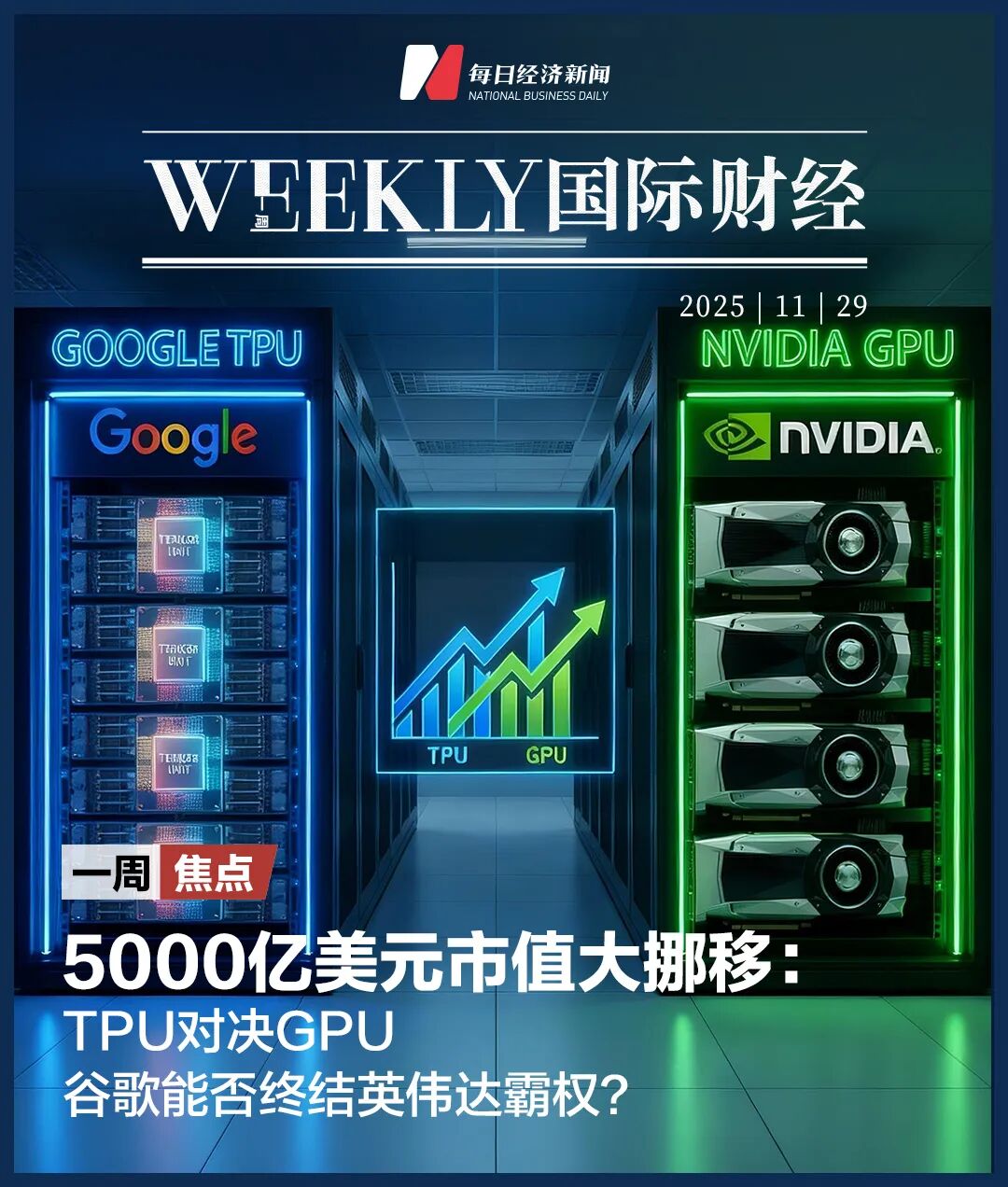
Core Viewpoint - The significant market shift between Google and Nvidia, with Google gaining approximately $530 billion in market value while Nvidia lost about $620 billion, is driven by potential procurement of Google's TPU chips by Meta, challenging Nvidia's dominance in the GPU market [5][6][8]. Group 1: Market Dynamics - In November 2025, Alphabet's market value increased by approximately $530 billion, approaching $4 trillion, while Nvidia's market value decreased by $620 billion, equating to about 4.39 trillion yuan [6][8]. - The stock price of Alphabet rose by 13.87% in November, extending its year-to-date gain to 69%, whereas Nvidia's stock fell nearly 12.59%, reducing its year-to-date gain to 27.96% [8][12]. - The market's reaction to the potential shift in AI chip competition is evident, with Meta reportedly in talks with Google to purchase TPU chips, which could significantly impact Nvidia's market share [12][36]. Group 2: Technology Comparison - Google's TPU chips, with a 2-3 times higher energy efficiency compared to GPUs, are positioned to disrupt Nvidia's nearly 85% market share in AI chips [6][18]. - The evolution of TPU technology over seven generations has focused on improving computational acceleration, energy efficiency, and scalability, solidifying its position as a leading AI workload chip [15][17]. - The latest TPU model, Ironwood, is designed for inference and boasts a performance increase of approximately 2 times compared to its predecessor, Trillium [17][18]. Group 3: Industry Reactions - The potential collaboration between Meta and Google has sparked discussions on Wall Street regarding Nvidia's market position, leading to a divide between the "win-win" camp and the "threat" camp [33][35]. - Analysts from the "win-win" camp argue that the AI infrastructure market is large enough to accommodate multiple players, while the "threat" camp believes Google's vertical integration capabilities pose a significant risk to Nvidia [34][36]. - Nvidia's CEO is actively monitoring the developments with TPU and is emphasizing the superiority of its CUDA platform to counter the perceived threat from Google's TPU [37].
SemiAnalysis深度解读TPU--谷歌(GOOG.US,GOOGL.US)冲击“英伟达(NVDA.US)帝国”
智通财经网· 2025-11-29 09:37
Core Insights - Nvidia maintains a leading position in technology and market share with its Blackwell architecture, but Google's TPU commercialization is challenging Nvidia's pricing power [1][2] - OpenAI's leverage in threatening to purchase TPUs has led to a 30% reduction in total cost of ownership (TCO) for Nvidia's ecosystem [1] - Google's transition from a cloud service provider to a commercial chip supplier is exemplified by Anthropic's significant TPU procurement [1][4] Group 1: Competitive Landscape - Google's TPU v7 shows a 44% lower TCO compared to Nvidia's GB200 servers, indicating a substantial cost advantage [7][66] - The first phase of Anthropic's TPU deal involves 400,000 TPUv7 units valued at approximately $10 billion, with the remaining 600,000 units leased through Google Cloud [4][42] - Nvidia's defensive posture is evident as it addresses market concerns regarding its "circular economy" strategy of investing in AI startups [5][31] Group 2: Technological Advancements - Google's TPU v7 architecture has been designed to optimize system performance, achieving competitive efficiency despite slightly lower theoretical peak performance compared to Nvidia [12][53] - The introduction of Google's innovative interconnect technology (ICI) allows for dynamic network reconfiguration, enhancing cluster availability and reducing latency [15][17] - Google's shift towards supporting open-source frameworks like PyTorch indicates a strategic move to dismantle Nvidia's CUDA ecosystem dominance [19][20][22] Group 3: Financial Implications - The financial engineering behind Google's TPU sales, including credit backstop arrangements, facilitates a low-cost infrastructure ecosystem independent of Nvidia [9][47] - The anticipated increase in TPU sales to external clients, including Meta and others, is expected to bolster Google's revenue and market position [43][48] - Nvidia's strategic investments in AI startups are seen as a way to maintain its market position without resorting to price cuts, which could harm its margins [35][36][31]