
互利共赢

Search documents
西芒杜项目彰显开放合作力量
Jing Ji Ri Bao· 2025-11-12 22:20
Core Insights - The launch of the Simandou iron ore project in Guinea marks a significant achievement in international cooperation, showcasing the potential for mutual benefits and shared development among nations [1][2] - The project is expected to produce 120 million tons annually, positioning Guinea as a key player in the global iron ore production and export market [2] Group 1: Project Overview - The Simandou iron ore project is located in southeastern Guinea and is recognized as a world-class high-quality open-pit iron ore resource [1] - The project faced challenges such as funding, technology, and infrastructure but has been successfully advanced through collaboration between Chinese enterprises, the Guinean government, and international partners [1] Group 2: Economic Impact - The project is anticipated to significantly boost Guinea's economy, creating numerous job opportunities and fostering growth in various sectors including manufacturing, transportation, and services [2] - The establishment of an economic corridor connecting railways and ports will promote industrial clustering and regional synergy, benefiting local communities [2] Group 3: Global Significance - The production of iron ore is crucial for the global steel industry, and the Simandou project is expected to enhance the stability of the global iron ore supply chain, which has historically been concentrated in a few regions [2] - The project is seen as a stabilizing force in the global market, contributing to the resilience and security of industrial and supply chains, thereby supporting sustainable global economic development [2]
外交部:中国将书写更多“与天下同利”的精彩故事
Xin Hua She· 2025-11-11 11:48
Core Insights - The China International Import Expo (CIIE) has become a significant platform for showcasing new products and technologies, with over 461 new items presented this year, including more than 200 global debuts [1][2] - The event has seen participation from 155 countries and regions, with 290 Fortune 500 companies, marking a record increase in exhibitors and exhibition area compared to previous years [1][2] - The intended transaction amount reached over $83.4 billion, highlighting China's role as a major player in global trade and cooperation [1] Group 1 - The CIIE serves as a bridge connecting the Chinese economy with the global economy, promoting the concept of shared opportunities and mutual development [2] - The event reflects China's commitment to free trade and cooperation amidst rising uncertainties in the international economic landscape [2] - China's goods trade has maintained its position as the world's largest for eight consecutive years, demonstrating the resilience of the Chinese economy [2] Group 2 - The CIIE is increasingly recognized for its role in fostering innovation and providing opportunities for countries to engage in trade [2] - The participation of long-term exhibitors, with 170 overseas companies and 27 institutions returning year after year, underscores the event's growing importance [1] - The Chinese government emphasizes the need for high-level opening up and creating new cooperative win-win scenarios as part of its economic strategy [2]
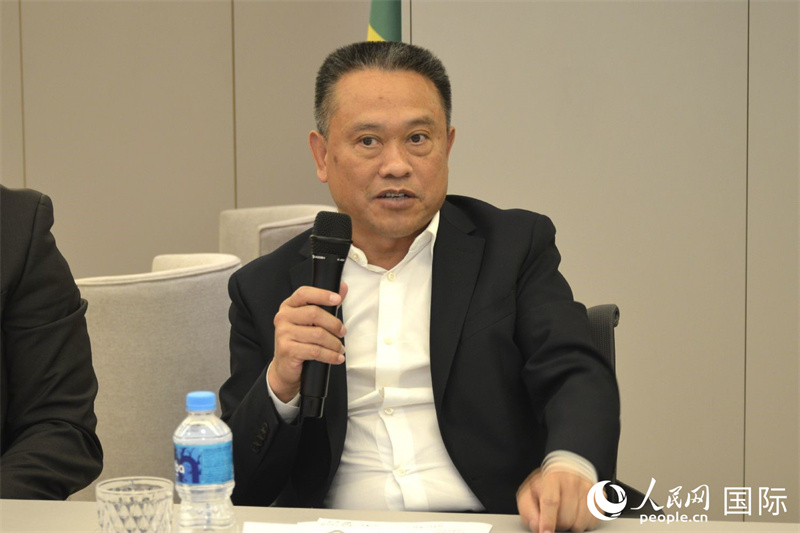
湖北省武汉市人大代表团与巴西中国和平统一促进会举行座谈会
人民网-国际频道 原创稿· 2025-11-11 10:12
Core Points - The visit of Wuhan's Deputy Director Lin Wenshu to Brazil highlights the potential for cooperation between Wuhan and Brazil in various sectors, particularly in infrastructure and emerging industries [2][4] - The Brazilian Chinese Peaceful Unification Promotion Association aims to strengthen ties between the Chinese community in Brazil and Wuhan, emphasizing the importance of cultural and economic exchanges [4][6] Group 1 - Wuhan has a robust industrial system in fiber optics, display manufacturing, information technology, and chip industries, with significant advantages in "new infrastructure" [2] - The city is rich in educational and research resources, providing a strong foundation for technological innovation and industrial upgrades [2] - There is a call for deeper exchanges and practical cooperation between Wuhan and Brazil to explore mutually beneficial models [2][4] Group 2 - The Brazilian Chinese Peaceful Unification Promotion Association has been dedicated to promoting cross-strait exchanges and social welfare since its establishment [4] - The association's president expressed a desire to enhance exchanges with Wuhan, leveraging the overseas Chinese community's role in economic, cultural, and educational fields [4][6] - The Brazilian Chinese Friendship Association has actively built cooperation bridges between local governments, enterprises, and academic institutions in both countries [6]

外交部谈进博会:中国大市场正成为全球利润场
Zhong Guo Xin Wen Wang· 2025-11-11 08:09
Group 1 - The China International Import Expo (CIIE) has become a significant platform for showcasing new products and technologies, with 461 new items presented, including over 200 global debuts, and an intended transaction amount exceeding $83.4 billion this year [1][2] - The event saw participation from 155 countries, regions, and international organizations, along with 290 Fortune 500 companies, marking an increase of over 600 exhibitors compared to the previous year [1][2] - The CIIE is viewed as a bridge connecting the Chinese economy with the global economy, promoting the idea of shared opportunities and mutual development [2] Group 2 - China's goods trade has maintained its position as the world's largest for eight consecutive years, with growth sustained for nine months this year, reflecting the resilience of the Chinese economy and its commitment to open cooperation [2] - The Chinese government emphasizes the importance of high-level opening up and creating a win-win cooperation landscape, aligning with the principles of free trade and mutual benefit [2] - The CIIE is seen as a testament to China's role as a co-creator of global opportunities and a builder of open platforms for shared development outcomes [2]
在开放共享中奔赴美好未来——第八届中国国际进口博览会观察
Xin Hua She· 2025-11-10 13:11
Core Insights - The eighth China International Import Expo (CIIE) concluded successfully, with a record intended transaction amount of $83.49 billion, marking a 4.4% increase from the previous year [1] - The event showcased China's commitment to high-level opening-up and cooperation with the global market, reflecting a strong signal of mutual benefit and win-win collaboration [1] Group 1: Participation and Engagement - A total of 155 countries, regions, and international organizations participated in this year's expo, with 4,108 foreign exhibitors, indicating a significant increase in international interest [2][5] - The expo featured 43 trading groups and over 700 sub-groups, facilitating extensive discussions and potential partnerships among exhibitors, buyers, and distributors [4] Group 2: Innovation and Technology - The expo served as a platform for numerous global product launches and technological innovations, including advanced robotics and AI applications, highlighting China's role as a testing ground for global innovation [7][8] - Companies like GE Healthcare and Nippon Paint showcased products developed primarily by Chinese teams, emphasizing the country's growing influence in global R&D [8] Group 3: Market Opportunities - The event attracted significant interest from global companies, with many expressing confidence in the Chinese market's potential for growth and collaboration [3][6] - Notable partnerships were formed, such as between a Portuguese cork brand and a Chinese winery, illustrating the expo's role in creating new market opportunities [3] Group 4: Economic Impact - The expo has been instrumental in enhancing China's position as a major open market, with 290 Fortune 500 companies participating, many establishing regional headquarters or R&D centers in China [13] - The event has also contributed to local economies, with companies like Roche Pharmaceuticals investing in local production facilities, demonstrating the long-term economic benefits of participation [12] Group 5: Global Collaboration - The expo has facilitated cross-border e-commerce initiatives and innovation incubation, helping foreign products align with Chinese market demands [11] - China's commitment to supporting developing countries through initiatives like zero-tariff policies and expedited logistics has been highlighted, showcasing its role in global economic integration [14]
“进博会是开放合作、互利共赢的重要平台” ——访阿塞拜疆副总理沙欣·穆斯塔法耶夫
Ren Min Ri Bao· 2025-11-09 22:48
Core Insights - Azerbaijan's relationship with China is at its historical best, emphasizing the importance of economic cooperation [1] - Trade between Azerbaijan and China reached $3.4 billion from January to September, marking a 28% year-on-year increase, indicating deepening economic ties and significant potential [1] Economic Cooperation - China is Azerbaijan's fourth-largest trading partner and the largest source of imports [1] - Over 370 Chinese enterprises are operating in Azerbaijan, with Chinese investments exceeding $950 million [1] Participation in the Expo - Azerbaijan showcased its achievements in tourism, innovation, green energy, industry, agriculture, and culture at the Expo [1] - The "Made in Azerbaijan" section highlighted quality products such as alcoholic and non-alcoholic beverages, confectionery, dairy products, and hazelnuts [1] Market Expansion and Understanding - Participation in the Expo is crucial for Azerbaijani companies to expand into the Chinese market and enhance product recognition [1] - The platform allows Azerbaijani businesses to understand Chinese consumer preferences and market trends, aiding in compliance with local laws and logistics [1] Areas of Collaboration - Cooperation between Azerbaijan and China is expanding beyond traditional sectors like trade, transportation, and energy to include digital economy, green energy, and artificial intelligence [1] - Multiple memorandums of understanding have been signed in areas such as digital economy investment, smart logistics, and industrial digital transformation [1] Strategic Goals - Azerbaijan aims to leverage China's advanced experience in digital economy development and green transformation to enhance its governance and public services [1] - The Belt and Road Initiative is seen as a key factor in strengthening connectivity between Eurasia, benefiting Azerbaijan's role as a regional logistics and transportation hub [1]
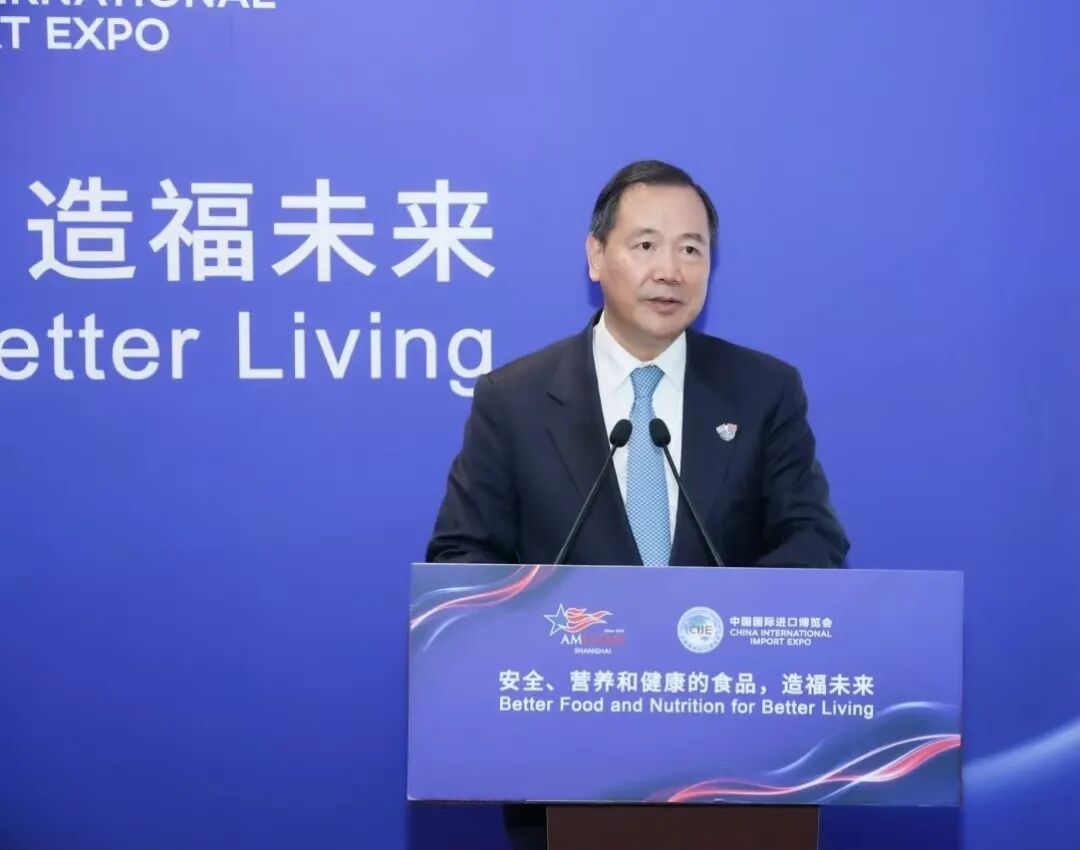
上海美国商会会长郑艺:中美之间更应互利共赢
Guo Ji Jin Rong Bao· 2025-11-09 10:45
Core Insights - The 8th China International Import Expo (CIIE) is being held in Shanghai from November 5 to 10, attracting participation from 155 countries and regions, with over 4,100 exhibiting companies, highlighting its significance as a global trade platform [1] - The U.S. has maintained the largest exhibition area for seven consecutive years, with the U.S. Food and Agriculture Pavilion showcasing 19 exhibitors and covering 350 square meters [1] - The Shanghai American Chamber of Commerce President, Zheng Yi, emphasized the importance of this year's participation in light of recent U.S.-China trade discussions, indicating a positive outlook for future collaborations [1][3] Group 1: Trade Agreements and Economic Impact - In 2023, the collaboration between the Shanghai American Chamber of Commerce and the U.S. Department of Agriculture resulted in over $500 million in signed cooperation agreements during the expo, with the previous year achieving a record of $711 million [3] - On the opening day of the U.S. Pavilion, orders reached $5.8 million, showcasing immediate business opportunities [3] Group 2: Agricultural Trade Dynamics - The U.S. is the largest agricultural exporter globally, while China is the largest agricultural importer, creating a strong complementary economic relationship [5] - In 2023, U.S. agricultural exports to China reached $29.1 billion, making China the top destination for U.S. agricultural products, accounting for nearly 20% of total U.S. agricultural exports [6] - The projected U.S. soybean export total for 2024 is $24.5 billion, with nearly $12.8 billion directed to China, indicating the significant role of China in U.S. agricultural exports [6] Group 3: U.S.-China Relations and Trade Outlook - Zheng Yi noted that trade tensions between the U.S. and China are normal, but emphasized that there are no fundamental conflicts between the two nations, advocating for a mutually beneficial relationship [6] - Despite challenges posed by uncertainties in U.S.-China relations, trade exchanges have remained consistent, with structural issues contributing to trade deficits rather than direct conflicts [6]
开放合作 互利共赢(进博会观察)
Ren Min Ri Bao· 2025-11-07 22:00
Group 1 - The core theme of the news is the significance of the China International Import Expo (CIIE) as a platform for global cooperation and trade, showcasing a variety of products and fostering partnerships between domestic and international companies [2][3][4] - The CIIE has facilitated substantial business transactions, including a notable deal worth over 100 million USD signed by an engine repair company on the first day of the event [1] - The participation of companies from the least developed countries has increased, with 163 companies attending, marking a 23.5% year-on-year growth, and the number of African exhibitors has surged by 80% [3] Group 2 - The event emphasizes the importance of open cooperation and mutual benefits, aligning with China's modernization goals and enhancing domestic enterprises' capabilities through international collaboration [3][4] - The CIIE serves as a window for high-level opening-up, providing opportunities for global businesses to tap into the Chinese market, which is seen as a pathway to future growth [3][4] - The expo reflects China's commitment to high-quality development and its role in promoting global economic recovery and growth through shared opportunities [4]
“中国对外开放的大门越开越大”——免签政策助力拉紧中外融通纽带
Xin Hua She· 2025-11-07 10:07
Core Points - China's continuous implementation of visa exemption policies and optimization of entry regulations is enhancing foreign engagement and showcasing its commitment to high-level openness [1][6] - The increase in foreign visitors to China, with over 7 million entering under the visa exemption policy in Q3, represents a 48.3% year-on-year growth, indicating a shift from superficial tourism to deeper cultural experiences [2][3] - The visa exemption policy is facilitating mutual understanding and cultural exchange, as highlighted by various international business leaders who see it as a catalyst for economic cooperation [3][5] Group 1 - The visa exemption policy has led to a significant rise in inquiries about travel to China, reflecting a growing interest among foreign tourists [2] - The policy is perceived as a friendly gesture by China, encouraging deeper exploration of its diverse regions and cultures [2][3] - Business leaders from countries like Argentina and Portugal express that the visa exemption measures are instrumental in fostering trade and economic partnerships [3][4] Group 2 - The ongoing high-level openness from China is viewed as a clear signal of its confidence and commitment to international cooperation [6] - The visa exemption policy is seen as a practical and innovative approach to enhance bilateral trade and cultural exchanges [3][6] - The policy is contributing to a more interconnected global economy, providing new momentum for international collaboration [6]
第八届进博会|从进博看中国自贸区:开放试验田孕育全球合作新机遇
Zhong Guo Xin Wen Wang· 2025-11-07 02:04
Core Insights - The eighth Hongqiao International Economic Forum's "Investing in China" special promotion event highlighted the achievements of China's free trade zones (FTZs) over the past decade, emphasizing China's commitment to open cooperation and mutual benefits [1] - The Ministry of Commerce stated that FTZs serve as experimental fields for reform and are strong engines for high-quality development in the new era [1] - Since the establishment of the first FTZ in Shanghai in 2013, China has created a network of 22 FTZs that contribute approximately 12% of the national GDP and account for 20% of the country's trade volume [1] Summary by Relevant Sections Development and Achievements of FTZs - FTZs have formed a comprehensive open pattern across various regions in China, serving as critical support for national strategies [1] - The United Nations Industrial Development Organization highlighted the significant economic contributions of national-level FTZs [1] Regional Characteristics and Industry Development - Western and border FTZs have leveraged their geographical advantages to develop differentiated industrial paths, showcasing unique strengths at the China International Import Expo [2] - Chongqing and Sichuan FTZs have collaborated to build a modern industrial cluster worth trillions in electronic information, equipment manufacturing, and advanced materials [2] - The Shaanxi FTZ is actively involved in the Belt and Road Initiative, focusing on international logistics and agricultural cooperation [2] - Heilongjiang FTZ has transformed its cold climate into an economic advantage, with the ice and snow economy exceeding 300 billion [2] - Xinjiang FTZ has become a key node for supply chain cooperation between Asia and Europe due to its unique resources [2] - Yunnan FTZ is developing as a connectivity hub for South and Southeast Asia, promoting green energy and digital economy sectors [2] - Guangxi FTZ, being the only one that is both border and coastal, is establishing itself as an AI industry hub, attracting international enterprises [2]