
光模块

Search documents
四会富仕:目前已实现800G光模块PCB的小批量交付
Xin Lang Cai Jing· 2026-01-21 07:09
四会富仕1月21日在互动平台表示,公司目前已实现800G光模块PCB的小批量交付;同时,1.6T光模块 PCB产品也已通过终端客户认证。但目前相关产品对公司营收贡献尚有限。 ...

AI的高景气料将延续,关注通信ETF(515880)回调布局机会
Mei Ri Jing Ji Xin Wen· 2026-01-21 02:04
Core Viewpoint - The recent outflow of broad-based funds and disappointing earnings forecasts have created pressure on certain ETFs, particularly in the satellite communication sector, which has seen a significant pullback [1] Group 1: Demand Side - The demand for optical modules is expected to double by 2027, driven by companies like NV and Google, with the overall 800G market continuing to grow [1] - The penetration of optical technologies is anticipated to increase, with NPO expected to ramp up production in 2026 and CPO likely to be applied in scale-up by 2027, opening up significant opportunities in optical interconnects [1] Group 2: Supply Side - The year 2026 is projected to experience a visible supply-demand imbalance, with ongoing upward revisions in demand [1] - Laser components are reportedly locked in orders, and leading optical module companies have noted a shortage of Faraday rotators, which are the most expensive components in the supply chain [1] Group 3: Technological Advancements - The year 2026 is expected to be a year of significant technological advancements in the optical sector, with continuous iterations raising industry barriers and improving profitability [1] - The evolving landscape is likely to enhance the overall market enthusiasm for the sector [1][2]
可川科技:可川光子致力于高速硅光芯片设计和高速光模块的研发和生产
Zheng Quan Ri Bao Wang· 2026-01-20 13:10
Group 1 - The core viewpoint of the article is that Kecuan Technology (603052) is actively engaged in the research and development of high-speed silicon photonic chips and high-speed optical modules, and is currently expanding its market presence by sending samples to customers [1] Group 2 - Kecuan Photonics is focused on the design and production of high-speed silicon photonic chips and optical modules [1] - The company is in the process of market development and has begun delivering samples to clients [1]

创业板指半日跌近2%,商业航天、光模块重挫,芯片股走强,分析:高波题材或将降温
2 1 Shi Ji Jing Ji Bao Dao· 2026-01-20 04:15
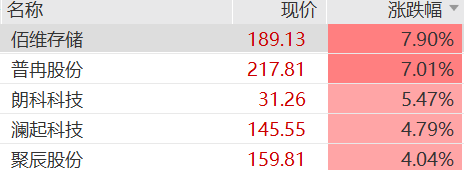
Market Overview - On January 20, A-shares experienced a significant drop, with the ChiNext Index falling over 2% at one point, ultimately closing down 1.8% [1] - The chemical sector showed resilience, with several stocks such as Hongbaoli and Shandong Heda hitting the daily limit [1] AI and Semiconductor Sector - AI application stocks rose, with companies like Jiayun Technology and Yue Media hitting the daily limit [2] - The storage chip concept remained active, with Yingfang Micro, which plans to acquire shares in two semiconductor companies, also hitting the daily limit; Bawei Storage saw a nearly 200% increase over the last 120 trading days [2] - Micron Technology reported a worsening shortage of memory chips, indicating that supply tightness will persist beyond this year [2] Retail and Real Estate Sector - The retail sector strengthened, with Shanghai Jiubai and Xinhua Department Store hitting the daily limit, following the National Development and Reform Commission's announcement to develop a strategy for expanding domestic demand from 2026 to 2030 [2] - The real estate sector also saw gains, with stocks like Dayue City and Wo Ai Wo Jia hitting the daily limit [2] Financing and Market Dynamics - A-shares' financing balance decreased for the first time in two weeks, with a reported balance of 27,059 billion yuan, down 8.5 billion yuan from the previous day [4] - The electronic, communication, defense, computer, and basic chemical sectors were the main areas of net selling by financing clients, each exceeding 1 billion yuan in net sell amounts [5] - Analysts noted that the recent increase in margin requirements is likely aimed at cooling off overheated speculative trends, particularly affecting high-volatility sectors [6] - Despite short-term fluctuations, the long-term outlook for A-shares remains bullish, with expectations for new highs in the cross-year market [6]


盘中实时爆买3亿份!5天加仓逾16亿元,谁在加速买入人工智能?
Mei Ri Jing Ji Xin Wen· 2026-01-19 06:37
Group 1 - The core viewpoint of the articles highlights the strong inflow of capital into the AI sector, particularly through the ChiNext AI ETF (159363), which has seen over 1.6 billion yuan in net inflows over the past five trading days, indicating high investor sentiment towards AI investments [1][2] - The fund manager of the ChiNext AI ETF, Cao Xuchen, suggests that short-term corrections do not alter the expectation of a strong performance in the A-share market for the first half of the year, with optical modules expected to be a favored sector during this correction period [1] - The optical module industry is currently in a high prosperity cycle, driven by the explosive demand for AI computing power, which is expected to lead to rapid growth in high-end optical module demand, with supply becoming a core issue [1] Group 2 - The ChiNext AI ETF (159363) and its associated off-market connection (023407) are positioned to benefit directly from the commercial explosion of AI technology, with approximately 60% of its portfolio allocated to computing power (optical modules + IDC) and about 40% to AI applications [2] - The articles emphasize that the ETF not only focuses on the core of "computing power" but also represents true "AI applications," reflecting the growing importance of AI in investment strategies [2]
市场本周先扬后抑,A500ETF易方达(159361)、沪深300ETF易方达(510310)助力布局A股核心资产
Sou Hu Cai Jing· 2026-01-16 10:35
Market Overview - The market experienced fluctuations this week, with the Shanghai Composite Index maintaining above 4100 points and an average daily trading volume exceeding 34 trillion yuan [1] - In the first half of the week, sectors such as commercial aerospace and AI applications showed strong performance, while the latter half focused on semiconductor and optical module sectors [1] Index Performance - The Shanghai Shenzhen 300 Index decreased by 0.6%, while the CSI A500 Index increased by 0.1%. The ChiNext Index rose by 1.0%, and the STAR Market 50 Index increased by 2.6%. The Hang Seng China Enterprises Index saw a rise of 1.9% [1][3] - The rolling price-to-earnings (P/E) ratios for the indices are as follows: Shanghai Shenzhen 300 Index at 14.3 times, CSI A500 Index at 17.4 times, ChiNext Index at 43.1 times, STAR Market 50 Index at 175.3 times, and Hang Seng China Enterprises Index at 10.8 times [3] Historical Performance - Over the past month, the cumulative performance of the indices is as follows: Shanghai Shenzhen 300 Index up 3.3%, CSI A500 Index up 6.7%, ChiNext Index up 5.8%, STAR Market 50 Index up 14.2%, and Hang Seng China Enterprises Index up 4.3% [7] - Year-to-date performance shows the Shanghai Shenzhen 300 Index up 2.2%, CSI A500 Index up 4.4%, ChiNext Index up 4.9%, STAR Market 50 Index up 12.6%, and Hang Seng China Enterprises Index up 3.4% [7] Sector Composition - The Shanghai Shenzhen 300 Index consists of 300 stocks with good liquidity across 11 primary industries. The CSI A500 Index includes 500 securities from 93 tertiary industries, covering 89 of them [4] - The ChiNext Index is composed of 100 stocks with high market capitalization and liquidity, with a significant focus on strategic emerging industries, particularly in power equipment, communications, and electronics, which together account for nearly 60% [4] - The STAR Market 50 Index features 50 stocks with high market capitalization and liquidity, prominently including semiconductor companies, which make up over 50% of the index, along with medical devices, photovoltaic equipment, and software development industries, which together account for nearly 75% [4] - The Hang Seng China Enterprises Index includes 50 actively traded stocks of Chinese companies listed in Hong Kong, with a broad industry coverage where consumer discretionary, information technology, finance, and energy sectors account for nearly 85% [4]

强达电路(301628) - 2026年1月15日投资者关系活动记录表
2026-01-15 08:14
Group 1: Company Performance - The company achieved a revenue of 7.06 billion yuan in the first three quarters of 2025, representing a year-on-year growth of 20.74% [2] - Net profit reached 9,632.37 million yuan, with a year-on-year increase of 20.91% [2] Group 2: Production Capacity and Orders - The company's production capacity utilization has increased due to the recovery in PCB downstream demand and a focus on high-end samples and small batch boards [2][3] - The company serves nearly 3,000 active customers, including around 100 listed companies, with a diverse application in industries such as industrial control, communication equipment, automotive electronics, consumer electronics, medical health, and semiconductor testing [4] Group 3: Customer Structure and Risks - The company has a low concentration of major customers, mitigating the risk of dependency on a few large clients [5] - The proportion of overseas revenue has decreased from 38.66% in 2022 to 28.11% by the end of 2024, with 27.95% in the first half of 2025 [5][6] Group 4: M&A Intentions and Strategy - The company remains open to mergers and acquisitions but has no specific plans or targets at this time, focusing on strategic alignment and technological advancement [7][8] Group 5: Long-term Development Strategy - The company aims to enhance its core advantages of "multi-variety, small batch, high quality, and fast delivery" while expanding into high-tech fields such as quantum computing and satellite communication [9] - Plans include solidifying production in Shenzhen and Jiangxi, and advancing high-value PCB product development [9] Group 6: Market Value Management - The company focuses on pragmatic development, emphasizing performance improvement and considering measures like dividends and convertible bonds to enhance market value [10] - The issuance of convertible bonds is underway, aimed at funding the production project of Nantong Qiangda Circuit Technology Co., Ltd., with an expected first batch production in the second quarter of 2026 [11] Group 7: Competitive Advantages - The company has over 20 years of industry experience, characterized by a demand for "multi-variety, small batch, high quality, and fast delivery," enabling rapid response and flexible production capabilities [11]
光通信概念股拉升 剑桥科技涨超6% 汇聚科技涨超5%
Zhi Tong Cai Jing· 2026-01-15 07:03
Core Viewpoint - The optical communication sector is experiencing a significant rally, driven by TSMC's announcement of a substantial increase in capital expenditure and the ongoing demand for AI computing power, which is expected to boost the optical module industry [1] Group 1: Company Performance - Cambridge Technology (603083) shares rose by 6.13%, reaching HKD 88.3 [1] - Hong Teng Precision (06088) shares increased by 5.74%, reaching HKD 4.97 [1] - Huijun Technology (01729) shares climbed by 5.43%, reaching HKD 15.54 [1] - Huahong Semiconductor (01347) shares grew by 4.33%, reaching HKD 97.6 [1] Group 2: Industry Insights - TSMC's CEO announced a capital expenditure plan for 2026 that could reach USD 56 billion, a 37% increase from the actual expenditure of USD 40.9 billion in 2025, marking a historical high for the company [1] - TSMC's management indicated that capital expenditures will significantly increase over the next three years, with a long-term gross margin target of 56% or higher [1] - Guotou Securities reported that the demand for AI computing power is expanding, leading to sustained growth in the optical module industry, which presents opportunities across the supply chain [1] - The firm anticipates that global cloud providers' capital expenditures will continue to rise in 2026, driven by AI cluster expansions, the rollout of new computing platforms, and the implementation of technologies such as 1.6T/CPO [1]

港股异动 | 光通信概念股拉升 剑桥科技(06166)涨超6% 汇聚科技(01729)涨超5%
智通财经网· 2026-01-15 06:53
Core Viewpoint - The optical communication sector is experiencing a significant rally, driven by TSMC's announcement of a substantial increase in capital expenditure for 2026, which is expected to reach a historical high of $56 billion, a 37% increase from 2025's actual spending of $40.9 billion [1] Group 1: Company Performance - Cambridge Technology (06166) shares rose by 6.13% to HKD 88.3 [1] - Hong Teng Precision (06088) shares increased by 5.74% to HKD 4.97 [1] - Huiju Technology (01729) shares climbed by 5.43% to HKD 15.54 [1] - Hua Hong Semiconductor (01347) shares went up by 4.33% to HKD 97.6 [1] Group 2: Industry Insights - TSMC's management indicated that capital expenditures will significantly increase over the next three years, with a long-term gross margin target of 56% or higher being achievable [1] - Guotou Securities reported that the demand for AI computing power is continuously expanding, leading to sustained growth in the optical module industry, which presents opportunities across the supply chain [1] - The new round of AI computing infrastructure development is expected to drive high growth in demand for high-speed optical modules [1] - It is anticipated that global cloud vendors' capital expenditures will continue to rise in 2026, supported by AI cluster expansions, the rollout of new generation computing platforms, and the implementation of technologies such as 1.6T/CPO [1]
富国基金罗擎:光模块确定性很强 AI硬件仍是投资主线之一
Zhi Tong Cai Jing· 2026-01-15 03:37
Group 1 - The core viewpoint is that the AI sector, particularly large models and optical modules, shows significant growth potential, with AI hardware being a primary investment focus due to its profit release phase and clear growth trajectory over the next two years [1][2] - The optimism for the AI sector in 2023 is based on the expected advancements in large models, particularly with the introduction of NVIDIA's B series chips, which are anticipated to enhance model capabilities [1] - The optical module segment is highlighted as a critical sub-sector in AI investment, with strong demand from both downstream users and upstream chip manufacturers indicating a robust market environment [1] Group 2 - There is a caution regarding the short-term performance of leading optical module stocks, which have already seen significant price increases, suggesting a need for time to digest these gains before further investment [2] - The development of AI applications is perceived to be slower than market expectations, particularly in B2B contexts, where integrating large models into existing processes requires time [2][3] - The investment strategy should balance between AI hardware and applications, focusing on cost-effectiveness and identifying profitable AI applications that can create a commercial loop [3] Group 3 - The Hong Kong stock market has unique AI application companies, but the key factor for investment is the ability to produce quality products that meet user needs, regardless of the market [3]