
具身智能

Search documents
广电运通(002152) - 2026年3月30日投资者关系活动记录表
2026-03-31 08:27
Financial Performance - In 2025, the company achieved an operating revenue of 12.055 billion CNY, a year-on-year increase of 10.94% [2] - The net profit attributable to shareholders was 861 million CNY, with a non-recurring net profit of 786 million CNY, reflecting a growth of 4.25% [2] - The net cash flow from operating activities reached 1.7 billion CNY, up 34.26% year-on-year, laying a solid foundation for the "14th Five-Year Plan" [3] - The total cash dividend for 2025 is expected to be 919 million CNY, accounting for 106.74% of the net profit attributable to shareholders [3] Strategic Initiatives - The company is focusing on the "AI in all" strategy to stabilize its core business while expanding into robotics and digital currency [2] - The subsidiary, Guangdian Wuzhou, aims to achieve nearly 1.8 billion CNY in revenue by 2025, emphasizing technological innovation and product iteration [3] - The company plans to enhance its core technology and product offerings in the AI robotics sector, with a focus on the development of intelligent robots for banking and financial services [4] Market Expansion - The company has established a dual-license layout for its cross-border payment business, enhancing operational efficiency and compliance [5] - It aims to diversify its overseas market presence, targeting regions such as the Americas, Africa, Southeast Asia, and Europe to mitigate market volatility [5] - The company is committed to improving its international operational capabilities and contributing to the global expansion of China's financial technology industry [5] Collaboration and Ecosystem - The company has formed strategic partnerships with major players like Huawei and Alibaba to enhance its computing power business [3] - It is focused on building a differentiated competitive edge through collaboration with mainstream ecosystem partners [3] Risk Management - The company is enhancing its risk management framework to address potential challenges in international operations, including currency and compliance risks [5]

张颖爱张雪
投中网· 2026-03-31 08:19
Core Viewpoint - Zhang Xue's success in the World Superbike Championship (WSBK) represents a breakthrough for Chinese motorcycle manufacturing, showcasing a clear goal and relentless execution akin to AI logic [3][5][11]. Group 1: Zhang Xue's Approach - Zhang Xue embodies an AI-like execution style, focusing on a singular goal of creating a top-tier motorcycle for China and achieving international championship success [5][6]. - His journey includes dropping out of school to master mechanical structures, dedicating all his time to engine and motorcycle development, and treating every failure as an opportunity for optimization [5][6][9]. - Zhang's commitment to his goal is unwavering, as he prioritizes long-term objectives over short-term gains, demonstrating a clear value system that guides his actions [7][9]. Group 2: Broader Implications - The article highlights a shift in the entrepreneurial landscape, where many are seeking shortcuts and leveraging AI tools, yet Zhang Xue's story emphasizes the importance of hard work and a strong value system [8][10]. - The narrative contrasts the current trend of seeking quick success through external validation (like funding and IPOs) with Zhang's intrinsic motivation to excel in his craft [7][10]. - Zhang Xue's rise resonates with a collective desire for authenticity and dedication in an era dominated by AI, suggesting that true success comes from a deep personal commitment to one's goals [11][13].


珞石机器人获赴港上市备案通知书:距离完成「从A转H」流程仅一年时间
IPO早知道· 2026-03-31 05:25
Core Viewpoint - Luoshi Robotics has successfully transitioned from pursuing an A-share IPO to preparing for a Hong Kong listing within a year, indicating rapid growth and adaptability in the market [3]. Group 1: Company Overview - Established in 2014, Luoshi Robotics has developed a comprehensive ecosystem of robotic applications, including industrial robots, collaborative robots, and embodied intelligent robots [3]. - The company offers 10 series of 27 industrial robot products with payload capacities ranging from 4 kg to 220 kg and working radii from 475 mm to 2,705 mm, as well as 3 series of 15 collaborative robot products with payload capacities from 3 kg to 45 kg and working radii from 705 mm to 2,246 mm [3]. - Luoshi Robotics is the only company in China capable of mass-producing both industrial and collaborative robots, ranking third among domestic manufacturers and seventh globally in multi-joint robot sales by 2024 [4]. Group 2: Financial Performance - Revenue for Luoshi Robotics is projected to be 153 million yuan in 2022, 267 million yuan in 2023, and 325 million yuan in 2024, with a significant increase in the first half of 2025 to 176 million yuan, representing over 50% growth compared to the same period in 2024 [4]. - The gross profit margins for Luoshi Robotics from 2022 to 2025 are 7.0%, 11.4%, 21.9%, and 22.3% respectively, indicating a positive trend in profitability [5]. - The company has completed a total of 10 financing rounds, with a valuation of 5.295 billion yuan following its last round before the IPO [5]. Group 3: Strategic Partnerships and Market Reach - Luoshi Robotics has provided robotic solutions to over 1,000 clients across approximately 40 countries and regions, including leading companies in various sectors such as consumer electronics and automotive manufacturing [4]. - The company has entered into an agreement with Zhiyuan Robotics to supply humanoid robotic arms for integration into their humanoid robot products, showcasing its commitment to innovation and collaboration [4].
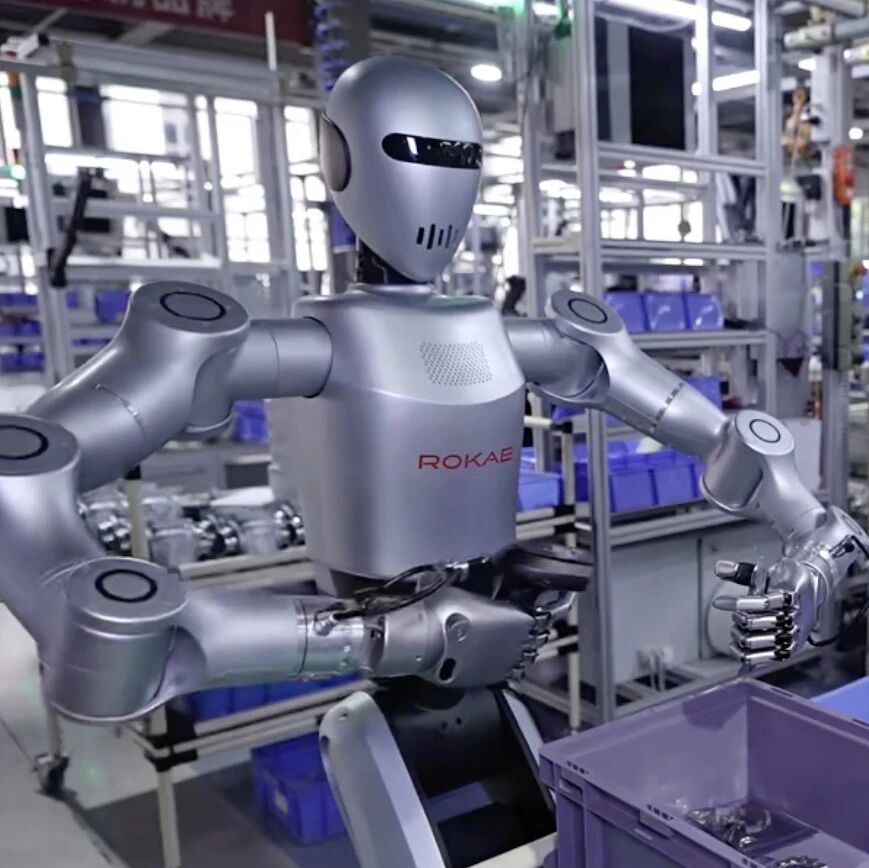
又融一轮!节卡凭什么拿到产业资本的“生态选票”
机器人大讲堂· 2026-03-31 04:00
Core Viewpoint - The capital narrative in the robotics industry is shifting as "embodied intelligence" moves from concept to practical application, leading to stricter evaluation criteria from the capital market, where commercialization validation, core technology barriers, and industrial collaboration capabilities become essential entry tickets [1] Group 1: Investment Logic of Industrial Capital - The recent financing round for JAKA Robotics reflects a trend where capital is increasingly focused on companies with clear commercial scenarios, core technology barriers, and industrial collaboration capabilities [3] - The median amount of single financing in the domestic robotics sector has significantly increased, indicating a concentration of capital towards leading enterprises [3] - The investment from industrial capital, such as Dazero Bay and Guangyu Technology, highlights the importance of JAKA's ability to integrate technology development, industrial cooperation, and scene implementation [5] Group 2: JAKA's Industrial Capability - JAKA Robotics has established a comprehensive capability loop in technology research and development, industrial cooperation, and scene implementation, which is crucial for attracting investment [5] - The company has formed a multi-dimensional cooperation network that connects academic frontiers, computational power, and downstream applications, facilitating a complete loop from technology research to mass application [5] - JAKA's robots have been deployed in various industries, including automotive, 3C, semiconductor, new energy, healthcare, and home care, demonstrating their value in real-world scenarios [5] Group 3: Strategic Partnerships and Collaborations - JAKA has signed strategic cooperation agreements with key players like Xingyu Co. and Intel, focusing on innovation in embodied intelligent robots and smart manufacturing upgrades [6][7] - These partnerships are part of JAKA's strategy to deepen its industrial capabilities and expand its application fields, from automotive manufacturing to smart home solutions [6][7] Group 4: Historical Development and Technological Foundation - JAKA's success is rooted in its V1.0 phase, which established a solid foundation in product and industrial accumulation, leading to its current position as a leader in the robotics industry [11] - The company has developed a comprehensive product library that meets industry-leading performance standards, validated in extreme high-end scenarios [11] - JAKA's innovations in programming and user interaction have lowered the barriers to robot usage, aligning with its mission to "liberate human hands" [12] Group 5: Transition to V2.0 and Future Outlook - The transition from V1.0 to V2.0 represents a strategic leap for JAKA, as it aims to evolve from a manufacturer of industrial collaborative robots to a broader general intelligent robotics platform [14] - The company recognizes the need for robots that can understand tasks and adapt to changes, moving beyond mere tools to intelligent agents capable of solving real problems [14] - JAKA's positioning as a "general intelligent robotics company" reflects its insight into the future competitive landscape, emphasizing the importance of a comprehensive ecosystem that integrates hardware, software, data, and collaboration [14][16]
2700GB高质量数据,训出空间智能SOTA,背后秘诀全栈开源
量子位· 2026-03-31 03:06
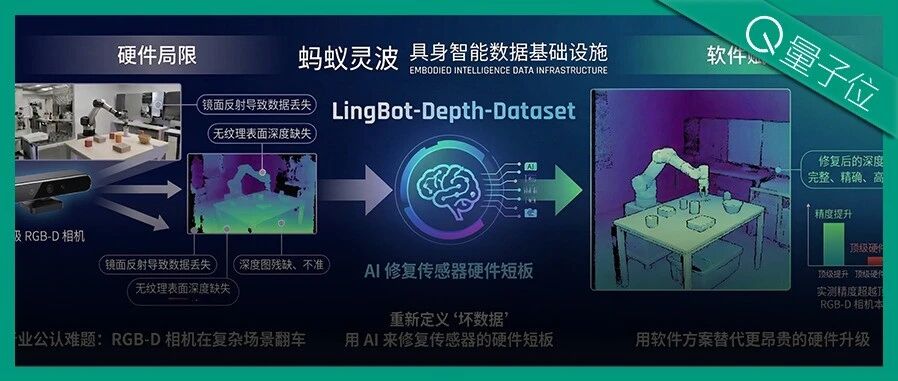
Core Viewpoint - The article emphasizes that the limitation of spatial intelligence in robotics is primarily due to insufficient data, which affects the generalization ability of models, leading to reliance on hardware solutions [1][2]. Group 1: Data Challenges in Robotics - The lack of reliable data sources has historically forced the industry to compensate by enhancing hardware capabilities, particularly in the use of RGB-D cameras for spatial perception [3][4]. - RGB-D cameras, while popular, face significant challenges in accurately perceiving environments, especially in the presence of reflective or transparent surfaces, which can lead to erroneous data [5][6][9]. Group 2: Introduction of LingBot-Depth-Dataset - Ant Group's LingBot-Depth-Dataset has been introduced as a solution to the data scarcity issue, comprising 2.71TB of data with 3 million pairs of labeled RGB-D data, including real and synthetic data from various environments [11][13][20]. - The dataset's diverse data distribution, collected from multiple depth cameras, enhances its applicability for training models in different scenarios, thus improving generalization [18][19]. Group 3: Advancements in Spatial Intelligence - The deployment of LingBot-Depth has enabled robots to effectively grasp transparent and reflective objects, a task previously deemed challenging [22]. - Following this, Ant Group has released additional models like LingBot-VLA and LingBot-World, which integrate visual, linguistic, and action capabilities, further advancing the field of embodied intelligence [24][25][28]. Group 4: Software vs. Hardware in AI Development - The article highlights a shift in focus within the industry towards prioritizing data and algorithm architecture over merely increasing the number and cost of sensors, as seen in the autonomous driving sector [30][31]. - This approach suggests that enhancing spatial intelligence through software methods can lead to more effective and cost-efficient solutions in robotics, aligning with the broader trend of prioritizing data-driven advancements [29][31].
越疆2025年收入增超31%:具身智能收入数倍增长,将继续加大具身投入
IPO早知道· 2026-03-31 03:05
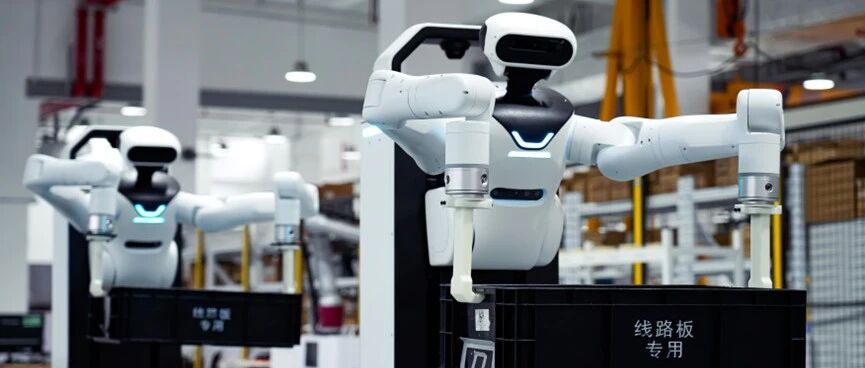
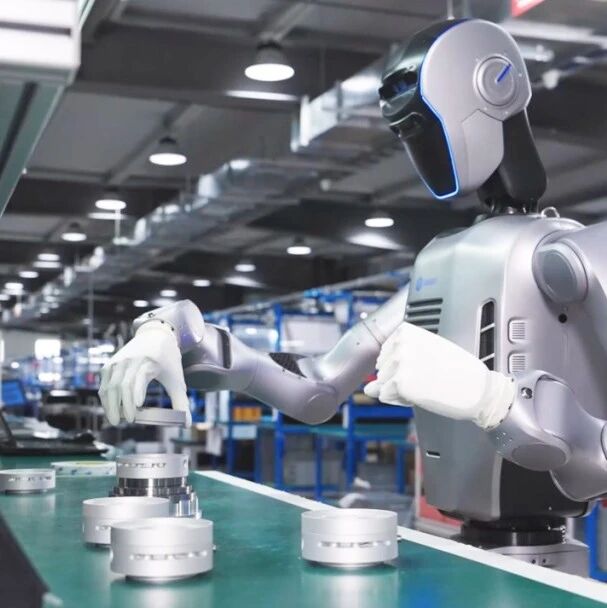
Core Viewpoint - The article highlights the significant growth and transformation of the company, Yuejiang, from a leader in collaborative robotics to a frontrunner in embodied intelligence, driven by substantial investments in R&D and a focus on real industrial applications [3][5][16]. Group 1: Financial Performance and Market Position - In 2025, Yuejiang reported a revenue growth of 31.7% year-on-year, with collaborative robot shipments reaching over 100,000 units, maintaining the leading position in domestic brand exports [3][5]. - The company serves over 80 Fortune 500 companies across 15 major industries and more than 200 sub-sectors, solidifying its position as a top player in the global collaborative robot market [3][7]. Group 2: R&D and Technological Advancements - Yuejiang's total R&D investment in 2025 increased by approximately 60%, focusing on embodied intelligence, which is expected to see multiple growth in revenue [5][16]. - The company has achieved a self-research rate of over 90% for core components, enabling a new product development cycle of just 7 months [10][11]. Group 3: Strategic Transition and Market Differentiation - The transition from "collaborative robot leader" to "embodied intelligence leader" is characterized by leveraging deep industrial scenarios and a globally leading "one brain, multiple bodies" platform [5][12]. - Yuejiang's unique value proposition lies in its ability to grow naturally from high-end manufacturing, providing a solid foundation for its embodied intelligence capabilities [17]. Group 4: Global Expansion and Application - Yuejiang has been the top exporter of industrial robots in China for eight consecutive years, with products sold in over 100 countries and regions [9]. - The company has launched the "one brain, multiple bodies" embodied intelligence platform, which integrates hardware, software, algorithms, and services, enhancing customer stickiness and pricing power [13][17].
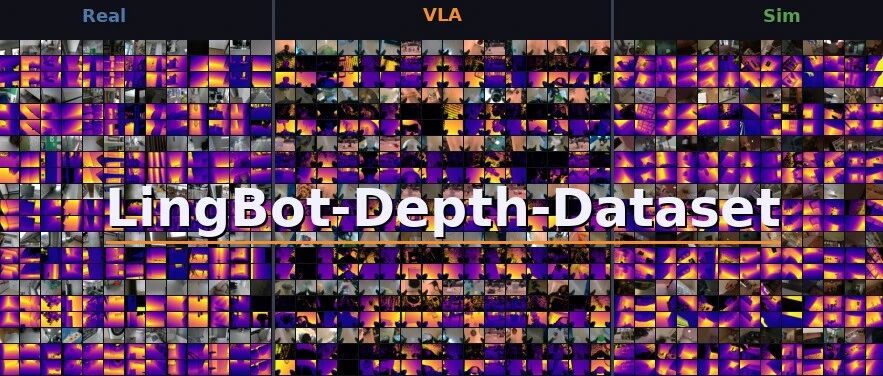
300万对样本、200万对实拍:深度估计的数据荒,终于被打破
机器之心· 2026-03-31 02:59
Core Viewpoint - The article discusses the limitations of existing depth estimation and completion models due to reliance on outdated datasets, highlighting the significance of the newly released LingBot-Depth-Dataset by Ant Group, which provides a large-scale, high-quality RGB-depth dataset to enhance model training and performance in real-world applications [4][5][34]. Group 1: Dataset Overview - Ant Group has open-sourced approximately 3 million pairs of high-quality RGB-depth data, making it one of the largest real-world RGB-D datasets available [5][16]. - The dataset consists of 2.71TB of data, including around 2 million pairs of real RGB-D data and 1 million pairs of high-quality rendered data, covering six mainstream depth cameras [5][6]. - The dataset is structured into four subsets: RobbyReal, RobbyVla, RobbySim, and RobbySimVal, each designed to address specific challenges in depth perception tasks [17][22][24]. Group 2: Importance of Real Data - The article emphasizes the challenges in obtaining high-quality real RGB-D data, including high costs, technical complexities, and the inherent limitations of depth sensors [12][13][14]. - The lack of large-scale real-world RGB-D datasets has created a gap in the field, which the LingBot-Depth-Dataset aims to fill, providing a critical resource for advancing depth estimation technologies [14][34]. - The dataset's design allows models to learn from diverse sensor characteristics, improving their generalization across different hardware environments [19][20]. Group 3: Impact on the Industry - The introduction of the LingBot-Depth-Dataset is expected to shift the focus from model complexity to data quality, as the performance of models is increasingly determined by the quality and quantity of training data [31][32]. - This dataset could serve as a new benchmark for depth estimation and completion, similar to how ImageNet transformed visual recognition [34][35]. - By providing a comprehensive dataset, Ant Group enables research teams to concentrate on higher-level problems without the need to collect data from scratch, fostering innovation in the field [36].
直指具身智能核心瓶颈,千寻智能高阳团队提出 Point-VLA:首次以视觉定位实现语言指令精准执行
机器之心· 2026-03-31 02:59
Core Insights - The article discusses the limitations of traditional Vision-Language-Action (VLA) models in accurately interpreting complex spatial instructions and proposes a new method called Point-VLA to overcome these challenges [5][27]. Group 1: Limitations of Traditional VLA Models - Language often fails to express certain spatial scenarios accurately, leading to ambiguity in communication [6][8]. - Even when detailed descriptions are provided, VLA models struggle to generalize and execute complex spatial commands, resulting in low success rates [7][20]. - Advanced Visual-Language Models (VLM) can achieve 60-70% accuracy in locating targets based on complex text descriptions, but text-only VLA models have a success rate of only around 25% [14][9]. Group 2: Introduction of Point-VLA - Point-VLA introduces visually grounded instructions by overlaying bounding boxes on images, allowing robots to understand commands more intuitively, similar to human pointing [10][11]. - This method combines high-level intentions expressed in language with precise spatial information encoded visually, enhancing the model's performance [12][15]. Group 3: Experimental Results - Point-VLA achieved an impressive average success rate of 92.5% across various challenging tasks, significantly outperforming the 32.4% success rate of traditional text-only VLA models [20][19]. - In specific tasks, such as cluttered scene grasping, Point-VLA's success rate improved from 43.3% to 94.3%, demonstrating its effectiveness in real-world applications [20][23]. Group 4: Data Annotation and Scalability - The development of an automated data annotation pipeline allows for efficient generation of visual grounding signals, reducing the cost of acquiring training data [18][27]. - As training data increases, Point-VLA's performance continues to improve, while traditional text-only VLA models reach a performance plateau [25][30]. Group 5: Implications for Future Development - Point-VLA addresses a fundamental issue in the VLA field by bypassing the limitations of language expression, paving the way for new advancements in VLA models [27]. - The demonstrated capabilities of Point-VLA provide a technical foundation for practical applications in industrial and service sectors, highlighting the effectiveness of human-like interaction methods in human-robot collaboration [27][29].

广汽集团改革落地首年:销售连续3个季度环比增长,Robotaxi、飞行汽车和具身智能进入商业化窗口期
Jin Rong Jie· 2026-03-31 02:58
Core Insights - GAC Group reported a total revenue of approximately 96.54 billion yuan and annual vehicle sales of 1.7215 million units for 2025, indicating a positive trend in sales following the implementation of the "Panyu Action" reform [1][2] Group 1: Sales and Market Performance - Since Q2 2025, GAC Group has experienced continuous sales growth, with a nearly 30% increase in sales in the second half of the year compared to the first half [3] - In January and February 2026, cumulative sales reached 203,100 units, a year-on-year increase of 3%, with self-owned brand sales exceeding 84,800 units, up 43.25% [3] Group 2: Reform and Efficiency Improvements - The "Panyu Action" reform initiated at the end of 2024 has led to significant efficiency improvements, with product planning efficiency up by 30%, project approval efficiency up by 67%, and decision-making efficiency up by 85% [2] - The new model development cycle has been shortened to 18-21 months, reflecting the effectiveness of the reform [2] Group 3: International Expansion - GAC Group's overseas terminal sales reached nearly 130,000 units in 2025, a year-on-year increase of approximately 48%, with overseas revenue of 17.022 billion yuan, up 44.99% [4] - The company aims for overseas sales of 250,000 units in 2026, supported by localized operational strategies [6] Group 4: Research and Development - Cumulative R&D investment exceeded 62 billion yuan by the end of 2025, with over 24,900 patent applications, focusing on solid-state batteries, intelligent cockpits, and intelligent driving technologies [7] - GAC has entered a critical commercialization window for technologies related to Robotaxi, flying cars, and embodied intelligence [7][8]

每日市场观察-20260331
Caida Securities· 2026-03-31 02:35
Market Overview - On March 30, the A-share market showed a rebound after hitting a low, with the Shanghai Composite Index rising by 0.24% while the Shenzhen Component Index and ChiNext Index fell by 0.25% and 0.68% respectively[4] - The total trading volume reached 1.93 trillion yuan, an increase of approximately 70 billion yuan compared to the previous trading day[1] Sector Performance - Half of the industry stocks rose, with notable gains in oil, non-ferrous metals, building materials, and military industries, while public utilities, home appliances, and non-bank financials saw significant declines[1] - The food concept and agricultural chemical sectors strengthened, indicating a defensive market structure amidst geopolitical risks[1] Capital Flow - On March 30, net inflow into the Shanghai Stock Exchange was 9.72 billion yuan, while the Shenzhen Stock Exchange experienced a net outflow of 3.216 billion yuan[5] - The top three sectors for capital inflow were communication equipment, general equipment, and industrial metals, while the top three sectors for outflow were electricity, photovoltaic equipment, and batteries[5] Economic Policies - The Ministry of Commerce announced measures to boost consumption, including optimizing the "tax refund 2.0" for outbound travelers to enhance shopping convenience[9][10] - A focus on promoting leisure consumption, such as RV camping and low-altitude consumption, was highlighted as part of the consumption growth strategy[6] Fund Dynamics - In March, over 139 new funds were established, raising approximately 109.88 billion yuan, with a strong focus on "hard technology" themes, including AI, chips, and renewable energy[16] - Public funds conducted around 3,500 research visits in the past month, indicating increased interest in high-performing stocks as companies prepare for earnings disclosures[15]