可再生能源转型

Search documents
抽水蓄能电站成为新型电力系统“稳定器”
Ke Ji Ri Bao· 2025-06-10 00:56
Group 1 - The core viewpoint of the articles highlights the rapid growth of renewable energy capacity in China and globally, with China's renewable energy generation capacity expected to increase by over 370 million kilowatts in 2024, contributing to a global total of approximately 4.45 billion kilowatts, a 15% year-on-year increase [1] - The integration of renewable energy sources like wind and solar into the power system poses challenges due to their intermittency and volatility, necessitating stronger regulation capabilities within the power system [1] - Pumped storage power stations are identified as crucial for supporting the development of renewable energy, providing essential energy storage and stability to the power grid [1][2] Group 2 - Pumped storage power stations, often referred to as "super batteries," utilize low-load electricity to pump water to an upper reservoir and release it during peak demand, making them the most mature and economically viable energy storage technology in China [2] - As of the end of 2024, China's total installed capacity of pumped storage power stations is projected to reach 58.69 million kilowatts, with an additional 200 million kilowatts approved for construction [2] - The technology has advanced significantly, with the largest pumped storage power station in the world, Fengning, boasting a capacity of 3,600 megawatts, showcasing China's leadership in this field [2] Group 3 - Current challenges in pumped storage technology include site selection limitations, long construction periods, and insufficient second-level regulation capabilities [3] - The industry is expected to enter a critical phase of large-scale, intelligent, and market-oriented development over the next 5 to 10 years, with a focus on the collaborative development of pumped storage and new energy storage technologies [3] - A multi-level energy storage system combining long-term and short-term storage solutions is proposed to support the stable operation and efficient consumption of high proportions of renewable energy [3]
去年我国可再生能源新增装机占全球近64%
Ke Ji Ri Bao· 2025-05-29 01:44
Core Insights - The "China Renewable Energy Development Report 2024" indicates that China's renewable energy generation capacity is set to grow significantly, with an addition of 37.4 million kilowatts in 2024, representing a 22% year-on-year increase, and accounting for 86.3% of the country's new power generation capacity [1][2] - China's total renewable energy installed capacity is projected to reach 1.89 billion kilowatts in 2024, making up 56.4% of the total power generation capacity [1][2] - The report highlights that China's renewable energy generation is expected to reach 3.47 trillion kilowatt-hours in 2024, a 17.3% increase year-on-year, which will constitute approximately 35% of the national total power generation [2] Industry Developments - The report emphasizes that China's renewable energy installed capacity growth will account for nearly 64% of the global increase, showcasing the country's leadership in the renewable energy transition [2] - Technological advancements in the industry are notable, with "super-large" wind turbine technology leading globally, featuring onshore units with a maximum capacity of 15 megawatts and offshore units reaching 26 megawatts [2] - The solar photovoltaic sector is entering a phase of larger, higher-power components, with over 80% of installations being string inverters [2] Policy and Market Trends - The National Energy Administration stresses the importance of high-quality development in the renewable energy sector, encouraging the industry to adapt to market-oriented developments and focus on integrated growth [3] - The report indicates a trend towards centralized and large-scale new energy storage stations, with lithium-ion battery storage dominating the market at approximately 96% [2]


风能和太阳能开发的生物多样性与负责任采购概述及行动议程
国际自然保护联盟&生物多样性咨询公司· 2025-05-26 10:20
生物多样性及风电和太阳能开 发中的负责任采购 概述和行动计划议程 克莱尔·弗莱彻,利昂·贝努恩,本·乔布森,劳拉·索纳特 ,露西·默瑞尔,瑞秋·阿桑特-奥苏,刘秋林 国际自然保护联盟 关于IUCN 国际自然保护联盟(IUCN)是一个独特的成员联盟,由政府组织和民间社会组织共同组 成。它为公共、私营和非政府组织提供知识和工具,使人类进步、经济发展和自然保护能 够协同进行。 成立于1948年,国际自然保护联盟(IUCN)现已成为全球最大且最多元化的环境保护网络, 整合了超过1400个会员组织和约17000名专家的知识、资源和影响力。它是保护数据、评估 和分析的主要提供者。其广泛的会员基础使IUCN能够承担孵化器和最佳实践、工具及国际标 准可信信息库的角色。 IUCN提供了一个中立的空间,让包括政府、非政府组织、科学家、企业、当地社区、原住民 组织等在内的多元利益相关者能够共同协作,制定并实施应对环境挑战的解决方案,以实现 可持续发展。通过与众多合作伙伴和支持者合作,IUCN在全球范围内实施了大量多样化且内 容丰富的保护项目。结合最新的科学知识与当地社区的传统文化知识,这些项目致力于扭转 栖息地丧失、恢复生态系统并 ...
我国绿证获认可,交易持续升温
Sou Hu Cai Jing· 2025-05-14 06:30
Core Viewpoint - The recent unconditional recognition of China's Green Electricity Certificate (GEC) by RE100 marks a significant milestone in the international acceptance of China's green energy initiatives, enhancing the credibility and demand for GEC in global markets [1][4]. Group 1: Development of China's Green Certificate - The journey of China's GEC from being questioned to being recognized took five years, with RE100 initially requiring additional steps to ensure the credibility of GEC in 2020, which led to lower recognition in international supply chains [2][3]. - In 2023, a series of policies were implemented by various government bodies to establish GEC as the sole proof of renewable energy's environmental attributes, expanding its issuance to include all categories of renewable energy projects [3][6]. Group 2: Impact of RE100 Recognition - The recognition by RE100 is expected to significantly boost the consumption demand for GEC, enhancing the willingness of RE100 member companies and their supply chains to procure and utilize GEC [4][5]. - This recognition is seen as a key step in the global renewable energy transition, with expectations for increased collaboration between Chinese entities and international organizations in green electricity consumption standards [5][6]. Group 3: Market Growth and Future Prospects - The GEC market has shown substantial growth, with the issuance of 174 million certificates in March 2023, a year-on-year increase of 939% [3][6]. - The national trading scale of GEC is projected to quadruple in 2024, reaching 446 million certificates, with approximately 59,000 participants in the trading market, a 250% increase year-on-year [6].
绿电交易增11倍、跨境合作提速,粤港澳大湾区数据亮眼获赞
Nan Fang Du Shi Bao· 2025-05-13 13:09
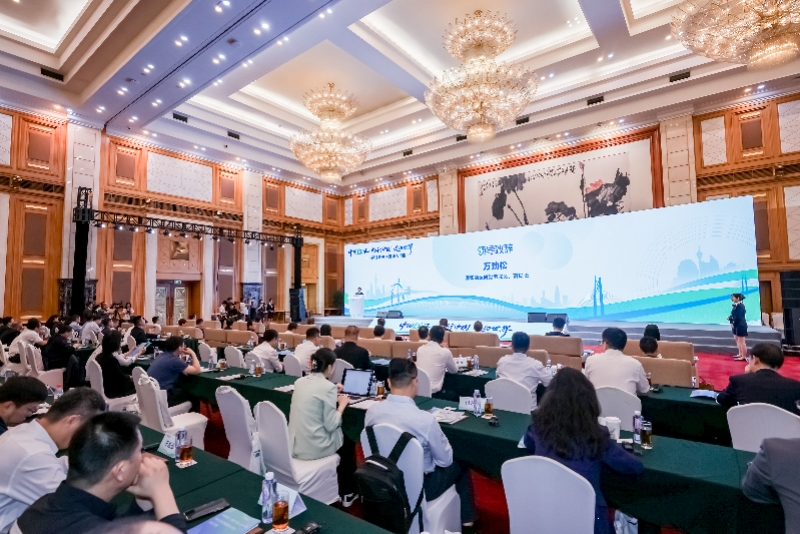
Core Insights - The event "Green Certificate Entering the Guangdong-Hong Kong-Macao Greater Bay Area" was held in Shenzhen, where representatives from the National Energy Administration, international climate organizations, and local governments discussed the construction and internationalization of the green certificate market [1][3] - China's green certificate has been fully recognized by the global renewable energy consumption initiative RE100, with a signed agreement for a transaction of 40 billion kilowatt-hours of green electricity [1][4] - The 2024 Guangdong-Hong Kong-Macao Green Electricity Consumption Report indicates a remarkable growth in the region, with a transaction volume of 49.1 billion kilowatt-hours, a year-on-year increase of 1100% [1][10] Green Certificate Market Development - The green certificate system in China has rapidly developed since its implementation in 2017, establishing a comprehensive lifecycle management system for green certificates [5][7] - The RE100 initiative, which includes around 430 large companies committed to using 100% renewable electricity, has embraced China's green certificate system, enhancing its credibility and international recognition [7][8] - The Guangdong-Hong Kong-Macao Greater Bay Area has become a significant growth area for green electricity consumption, with transaction volumes expected to reach 78 billion kilowatt-hours in the first quarter of 2025, a 1600% increase year-on-year [10][11] Cross-Border Cooperation and Market Activity - Cross-border green certificate transactions have gained momentum, with Hong Kong and Macau users purchasing 400,000 certificates (equivalent to 400 million kilowatt-hours) since the start of cross-border trading in 2023 [1][11] - Shenzhen leads the region in green electricity consumption, with a total of 12.7 billion kilowatt-hours, while Guangzhou, Dongguan, and Huizhou also contribute significantly to the overall consumption [11][13] - The Guangdong-Hong Kong-Macao region's green certificate market is highly active, with the Guangzhou Electric Power Trading Center accounting for three-quarters of the national green certificate transactions [11][13] Future Prospects and Recommendations - Experts suggest that the international recognition of China's green certificate should be pursued in stages, leveraging the Belt and Road Initiative to promote acceptance in neighboring countries and align with European and American market rules [8] - The establishment of a monitoring and early warning mechanism for cross-provincial green certificate trading is recommended to facilitate a more unified national market [18] - The market is currently influenced by energy consumption control policies, which may create barriers to inter-provincial trading, impacting the overall market dynamics [18]
环境破坏拷问高悬 挪威主权财富基金对谈力拓(RIO.US)、South32
Zhi Tong Cai Jing· 2025-05-12 08:19
挪威央行投资管理公司(NBIM)管理的挪威主权财富基金上周日表示,已决定就环境实践问题,主动与 矿业巨头力拓(RIO.US)和South32展开对话。作为全球规模最大的主权财富基金,其执行董事会透露, 该决定源于政府任命的独立顾问——伦理委员会提出的撤资建议。 此外,挪威主权财富基金还宣布,取消对德国能源企业莱茵集团(RWE AG)的投资限制,并称赞其向可 再生能源转型的举措。 与此同时,该基金以伦理问题为由,决定抛售墨西哥石油公司(Petroleos Mexicanos)和以色列Paz零售能 源公司(Paz Retail and Energy)的股票。 路孚特(LSEG)数据显示,该基金持有力拓集团(Rio Tinto PLC)约2.5%的股份、力拓有限公司(Rio Tinto Ltd)0.13%的股份,以及South322.6%的股份。 北里约矿业合资项目由嘉能可(Glencore,持股45%)、力拓(持股22%)和South32(持股33%)共同持有。 South32公司发言人在电子邮件中回应:"South32注意到挪威主权财富基金基于伦理委员会建议,决定 与我方展开沟通。"该发言人补充道,公司将继续就 ...

西班牙大停电带来怎样的电网投资机会?
阿尔法工场研究院· 2025-05-06 11:13
Core Viewpoint - The recent nationwide blackout in Spain highlights the vulnerabilities in its electrical system, providing lessons for other countries as the world transitions to cleaner energy sources and faces new demands on the grid [1][2]. Investment in Grid vs. Renewable Energy - Spain's investment in its electrical grid has lagged behind its renewable energy investments compared to other European countries, with a significant increase in solar capacity over the past five years [1][3]. - Over the last five years, Spain spent an average of $1 on renewable energy for every $0.30 invested in grid infrastructure, while the average in most European markets is $0.70 [3]. Challenges of Renewable Energy Transition - The transition to renewable energy presents unique challenges, particularly due to the intermittent nature of solar and wind energy, which requires careful management to maintain grid stability [1][3]. - Spain's electrical grid, largely built decades ago, was not designed to handle the high volatility associated with renewable energy sources [7][11]. Investment Plans and Current Status - Red Electrica, the grid operator, has significantly increased its investment in the grid, planning to invest €1.1 billion ($1.2 billion) last year and €1.4 billion by 2025, with total investments exceeding €4.2 billion from 2021 to 2025 [4]. - The Spanish government aims to increase the share of clean energy in the grid to 81% by 2030, up from just over 50% last year [3]. Interconnection Issues - Spain is one of the least interconnected regions in Europe, with limited cross-border transmission lines that hinder its ability to stabilize the grid during outages [7][8]. - The current interconnection capacity with neighboring countries is approximately 3 GW, which is less than 3% of total capacity, while the EU aims for a 15% interconnection ratio by 2030 [8]. Need for Energy Storage and Stability - As reliance on renewable energy grows, Spain may need to invest more in energy storage solutions, as its installed battery capacity is significantly lower than that of the UK [11]. - The lack of "inertia" in the grid, traditionally provided by fossil fuel and nuclear power plants, poses challenges for maintaining frequency stability, especially during high solar energy usage [11][12].
美媒发愁:在清洁技术领域中国正“不战而胜”,菲律宾也无法说不
Guan Cha Zhe Wang· 2025-05-05 12:36
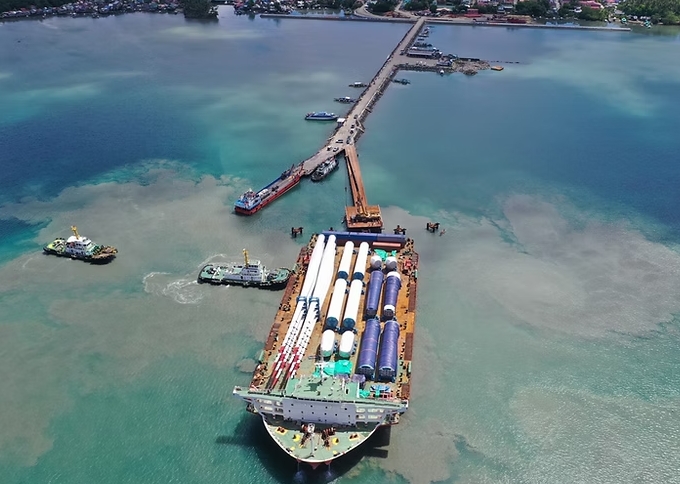
Core Viewpoint - The article highlights China's dominant position in the renewable energy sector, particularly in the Philippines, where Chinese companies are winning contracts for wind power projects despite geopolitical tensions with the U.S. [1][4][5] Group 1: China's Competitive Advantage - Chinese clean technology products, such as wind turbines and solar panels, are significantly cheaper than those from Europe and the U.S., making them attractive to countries like the Philippines [1][4] - China holds a leading global position in clean technology manufacturing, producing more solar panels, wind turbines, and electric vehicles than the rest of the world combined, with a 90% market share in key components of the solar supply chain [4][5] Group 2: U.S. Policy Impact - The U.S. has reduced subsidies for renewable energy and imposed high tariffs on solar manufacturers from Southeast Asia, which has inadvertently strengthened China's influence in the region [5][7] - The shift in U.S. policy has led to a perception that the U.S. is no longer a reliable economic and security partner, pushing countries like the Philippines to rely more on China for renewable energy solutions [2][5] Group 3: Philippines' Renewable Energy Goals - The Philippine government aims to increase the share of renewable energy from 22% to 35% by 2035 to ensure energy security amid extreme weather risks [7] - Despite previous concerns over national security regarding Chinese investments, Philippine officials acknowledge the necessity of Chinese suppliers for affordable solar panels and wind turbines [8]
聚和材料(688503):浆料出货保持稳增 铜浆产品加速落地
Xin Lang Cai Jing· 2025-05-01 00:36
Core Viewpoint - The company reported its 2024 annual results and Q1 2025 results, showing a mixed performance with revenue growth but a decline in net profit for 2024. The increase in revenue is attributed to the growth in the photovoltaic conductive paste market driven by renewable energy transition and technological upgrades in N-type battery technology [1][2]. Financial Performance - In 2024, the company achieved operating revenue of 12.488 billion yuan, a year-on-year increase of 21.35%. However, the net profit attributable to shareholders was 418 million yuan, a decrease of 5.45%. The net profit excluding non-recurring items was 406 million yuan, an increase of 2.52% [1]. - For Q1 2025, the company reported operating revenue of 2.994 billion yuan, a year-on-year increase of 1.38%. The net profit attributable to shareholders was 90 million yuan, an increase of 18.24%, while the net profit excluding non-recurring items was 89 million yuan, an increase of 5.90% [1]. Product and Market Development - The company's main product, photovoltaic conductive paste, generated revenue of 12.321 billion yuan in 2024, reflecting a year-on-year increase of 20.75%. The total shipment of photovoltaic conductive paste reached 2024 tons, with N-type conductive paste accounting for 1,576 tons, representing 77.87% of the total shipments [1]. - The company is investing 1.2 billion yuan to establish a "high-end photovoltaic electronic materials base project" in Changzhou, which will enable large-scale production of electronic-grade metal powders. Additionally, a 300 million yuan investment is planned for a "special electronic functional materials factory and R&D center" [2]. Innovation and Future Growth - The company has pioneered the production of copper paste products for the photovoltaic sector, including pure copper paste and silver-coated copper paste, which significantly reduce battery metallization costs and fragment rates. These products have shown excellent performance in reliability tests and are expected to achieve large-scale shipments, providing new growth momentum for the industry [2]. - Profit forecasts for the company indicate expected net profits of 499 million yuan, 607 million yuan, and 747 million yuan for 2025, 2026, and 2027, respectively, with corresponding EPS of 2.06, 2.51, and 3.09 yuan, and PE ratios of 15.50, 12.74, and 10.36 times [2].

西葡“黑暗12小时” 电网脆弱性再现
Bei Jing Shang Bao· 2025-04-29 14:28
Core Points - A massive power outage occurred in Spain and Portugal on April 28, affecting over 50 million people on the Iberian Peninsula, disrupting key sectors such as transportation, communication, and healthcare [2][3] - The outage was triggered by a sudden loss of 15 GW of power, equivalent to 60% of Spain's electricity demand at that time, leading to significant disruptions in major cities [3][6] - The incident has raised concerns about the vulnerability of the European power grid and the reliability of renewable energy sources, particularly in Spain, which has a high reliance on wind and solar energy [8][9] Group 1: Incident Details - The power outage began at 12:33 PM, with a rapid loss of 15 GW of generation capacity within 5 seconds, an unprecedented event [3] - Major cities like Madrid and Lisbon experienced extensive blackouts, with Madrid's power outage lasting over 6 hours and affecting transportation systems, including rail and air travel [3][4] - The situation led to chaos, with people rushing to supermarkets for supplies and traffic signals failing, causing accidents [4][5] Group 2: Causes and Implications - Initial assessments suggest that extreme temperature fluctuations in Spain may have caused abnormal oscillations in high-voltage lines, contributing to the grid failure [6][8] - Experts indicate that Spain's heavy reliance on renewable energy, combined with limited interconnections with neighboring countries, makes the grid more susceptible to disturbances [7][8] - The incident has sparked debates about the pace of renewable energy transition and the need for investment in grid stability and infrastructure modernization across Europe [9]