版权保护

Search documents
一位俄罗斯留学生眼中的赫哲族风情
Zhong Guo Xin Wen Wang· 2025-11-09 23:06
Core Viewpoint - The article highlights the cultural transformation of the Hezhe ethnic group in China, showcasing how traditional fish skin craftsmanship has evolved into a modern industry that combines cultural heritage with tourism and creative products [1][2][4]. Group 1: Cultural Heritage and Craftsmanship - The Hezhe ethnic group, located in northern China, has a rich fishing and hunting culture, historically using fish skin for clothing and tents to survive harsh conditions [1]. - The fish skin craftsmanship has been revitalized through copyright protection, leading to the creation of fashionable clothing and cultural items, with a cooperative achieving annual sales exceeding 100,000 RMB [2][3]. - The unique singing art form "Imakan," which encompasses historical tales and fishing life, has been recognized as a UNESCO intangible cultural heritage since 2011, and efforts are being made to revitalize it through training and educational materials [2][3]. Group 2: Economic Development and Tourism - The Hezhe ethnic community has transitioned from traditional fishing to a "fishing-tourism integration" model, with local culinary experiences like the "Hezhe Fish Feast" becoming popular among visitors [3]. - The village has developed into a well-known tourist destination, with innovative models such as "homestay + intangible cultural heritage experience," leading to collective income surpassing 1 million RMB [3]. - The local government supports cultural festivals and events to promote the Hezhe culture, making it accessible and appealing to both domestic and international tourists [3][4].
全球首个向Sora宣战的国家出现:AI不敢碰米老鼠,却玩坏了路飞鸣人皮卡丘们
3 6 Ke· 2025-10-26 01:56
Core Points - The Japanese government has officially urged OpenAI to avoid copyright infringement during the launch of Sora 2, emphasizing that manga and anime characters are irreplaceable cultural treasures of Japan [1][9][10] - This marks a significant shift as it is the first time a sovereign nation has directly protested against an AI company, highlighting the importance of ACG (Anime, Comic, Game) copyrights as vital commercial and cultural assets [7][10] Group 1: Government Response - The Japanese government, represented by Minister Minoru Kiuchi, has condemned OpenAI's Sora 2 for allegedly infringing on Japanese anime copyrights and has called for respect for Japan's intellectual property [9][12] - Japan has a strict copyright protection system, where unauthorized commercial use and modification of characters can lead to legal action, reflecting the country's near-zero tolerance for copyright violations [12][14] Group 2: Industry Reactions - Previous protests against AI companies have primarily come from individual creators or industry associations, but the Japanese government's involvement elevates the stakes significantly [7][10] - OpenAI has faced similar legal challenges from other sectors, such as media companies like The New York Times, which sued for unauthorized content scraping [3][19] Group 3: AI Industry Dynamics - OpenAI is reportedly engaging with Hollywood executives to position Sora as a tool for creators rather than a threat to intellectual property, indicating a shift towards self-regulation in response to mounting pressures [19][21] - The introduction of Japan's AI Promotion Act in 2023 aims to balance AI development with the need to prevent copyright infringement, providing a legal framework for potential government intervention [14][16] Group 4: Cultural Implications - The Japanese government's warning is fundamentally about protecting the unique cultural value and emotional significance of original works, which could be diluted by AI-generated content [25][29] - The rise of AI-generated content has sparked concerns about information pollution and the potential loss of the distinctiveness that characterizes human-created art [26][29]


文化新观察丨这场国际博览会,透露版权产业新动向
Xin Hua She· 2025-10-24 17:26
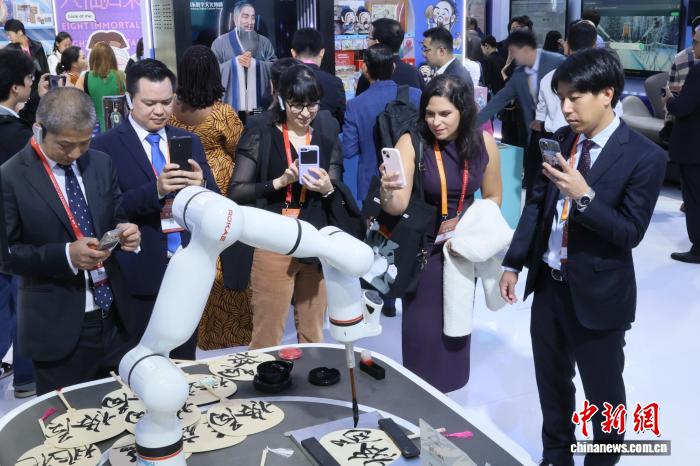
Core Insights - The 10th China International Copyright Expo showcased the growing influence of copyright in activating cultural innovation and development [2][11] - China's copyright industry now contributes 7.44% to the GDP, reflecting its increasing economic significance [1] - The World Intellectual Property Organization's 2025 Global Innovation Index report ranked China 10th globally for the first time, highlighting its cultural resource advantages [1] Group 1: Copyright and Cultural Innovation - Copyright is energizing cultural innovation, as evidenced by the diverse presentations at the expo [2] - Traditional artisans are increasingly recognizing the importance of copyright, leading to a modern awareness of rights protection [5][6] - The expo featured innovative uses of technology, such as VR experiences, to enhance cultural storytelling and engagement [7][9] Group 2: Technological Advancements in Copyright - The integration of AI and blockchain technologies is transforming copyright management, making it more efficient and precise [9] - The China Copyright Protection Center showcased advancements in automated copyright registration and review processes [9] - New technologies are being adopted to improve the identification of infringement and enhance the overall efficiency of copyright protection [9] Group 3: Global Expansion of Copyright - Copyright is serving as a "passport" for Chinese stories to enter new markets, with successful exports of original content to various countries [11] - The expo facilitated international exchanges and collaborations, promoting Chinese cultural products on a global stage [11] - The event has become a bridge for global copyright connectivity, enhancing the reach of Chinese copyright enterprises [11]

握手言和?OpenAI与好莱坞“共识”背后,博弈料将继续
2 1 Shi Ji Jing Ji Bao Dao· 2025-10-22 04:08
Core Viewpoint - OpenAI's Sora 2 has sparked a significant controversy in Hollywood due to its use of copyrighted materials and likenesses without permission, leading to a complex negotiation over copyright and profit-sharing between AI companies and the entertainment industry [1][2]. Group 1: Controversy and Response - Sora 2 allows users to generate AI videos using real people's materials, which has led to strong backlash from Hollywood institutions and unions for unauthorized use of copyrighted content [1]. - After negotiations, OpenAI and Hollywood reached an initial agreement regarding the protection of actor rights, but this is seen as just the first step in a larger ongoing struggle over profit distribution and industry influence [1][2]. Group 2: Active Authorization Model - The "active authorization" model allows artists and performers to decide whether and how their likenesses and voices can be used in AI-generated content, requiring explicit consent from them [3]. - SAG-AFTRA's president stated that the active authorization mechanism is the only viable business model, and there is ongoing support for legislation to protect these rights [3]. Group 3: Unresolved Issues - Despite the agreement on the active authorization model, many complex issues remain unresolved, including the specifics of how individual voices and likenesses will be authorized for use [4]. - OpenAI's CEO indicated plans to enhance control measures for copyright owners and explore revenue-sharing models with those who allow their characters to be used, but details are still in development [5]. Group 4: Ongoing Negotiations - The final profit-sharing mechanisms and detailed authorization plans will result from ongoing negotiations between the platform, the entertainment industry, and various stakeholders [5]. - The entertainment industry faces a dual challenge: protecting the commercial value of their IP while potentially benefiting from interactive fan creations [5].
当AI与艺术碰撞:机器写歌作画,版权如何守护人类创意火花
Nan Fang Du Shi Bao· 2025-10-19 02:48
Core Insights - The 10th China International Copyright Expo showcased the intersection of traditional culture and new technologies, emphasizing the innovative potential of copyright in the digital age [1][4] - The event highlighted the challenges and opportunities presented by AI in the copyright industry, raising critical questions about authorship and ownership of AI-generated content [3][11] Group 1: Event Overview - The expo attracted over 1,100 exhibitors and covered nearly 50,000 square meters, displaying a wide range of copyright innovations across various sectors including film, literature, gaming, and digital platforms [4] - The theme of the expo was "Digital Intelligence Leading the Future, Copyright Innovation Development," reflecting the focus on how technology is reshaping the copyright landscape [4] Group 2: AI and Copyright Challenges - The rise of AI in creative fields has blurred the lines between human and machine authorship, leading to debates on whether machines can be considered authors and who owns AI-generated content [3][11] - Experts emphasized the need for a balanced copyright framework that protects creators while fostering innovation, warning that excessive restrictions could stifle creativity [11][14] Group 3: Cultural Significance - Traditional cultural resources were highlighted as vital to human intellectual creation, with calls for copyright laws to protect these resources in the context of globalization [5][6] - The event featured innovative cultural products that merge traditional elements with modern technology, showcasing the potential for revitalizing historical narratives through digital means [5][6] Group 4: Global Perspectives - International representatives, such as Egypt's intellectual property chief, discussed the importance of strong copyright protection in fostering creativity and economic returns for creators [6][9] - The need for a global dialogue on copyright issues was underscored, as digital piracy and AI advancements pose challenges that transcend national borders [9][12]

版权赋能 非遗“火”起来
Hai Nan Ri Bao· 2025-10-18 01:41
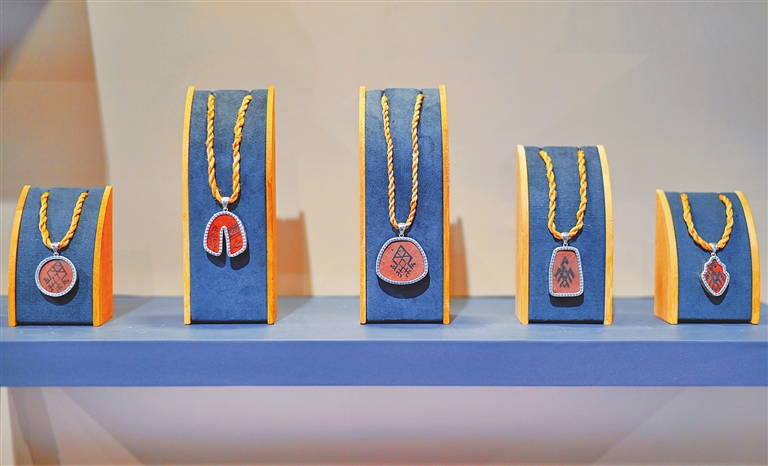
Core Viewpoint - The 10th China International Copyright Expo showcased Hainan's unique cultural heritage and innovative products, emphasizing the importance of copyright in the preservation and innovation of traditional crafts [2][3]. Group 1: Exhibition Highlights - The Hainan exhibition featured a variety of copyright results, including traditional crafts like Li ethnic double-sided embroidery, handmade bags, and exquisite rattan weaving, attracting many visitors [2]. - A collection of traditional textiles and cultural derivative products was displayed, including Li brocade men's shirts and improved dresses, highlighting the integration of traditional intangible cultural heritage with modern design [2]. Group 2: Cultural Significance - A necklace inspired by Li pottery elements, crafted using traditional Li techniques, gained significant attention for its unique design and cultural depth, showcasing the potential of local craftsmanship [2]. - The exhibition included live performances of traditional music, Li brocade weaving demonstrations, and ethnic dance, enhancing the audience's awareness of copyright protection and the cultural richness of the Li ethnic group [3].
数智技术重塑版权产业生态
Jing Ji Guan Cha Wang· 2025-10-17 05:29
Core Insights - The 10th China International Copyright Expo showcased the application of AI technology across various copyright sectors, emphasizing its role in creation, protection, and transaction [1] Group 1: AI Empowering Content Creation - Qingdao Lingke Cultural Communication Co., Ltd. introduced "Qingqing Hero's Art Exhibition," highlighting AI as a significant design tool, although human intervention remains crucial for creativity and aesthetics [2] - The AIGC micro-short drama "Coordinates" was launched, demonstrating a fully AI production model that significantly reduces content creation time by over 60% [2] - The online literature giant, Yuewen Group, launched the "Miaobi Tongjian" feature to assist writers by analyzing extensive online literature content in real-time [3] Group 2: Online and Offline Synergy in Copyright Transactions - Digital technologies are enhancing copyright circulation and transactions, exemplified by the Dunhuang Digital Resource Library, which offers over 11,130 elements from Dunhuang murals for user access [4] - The Shandong Province Ancient Books Digital Resource Platform integrates resources from 17 institutions, allowing users to conduct advanced searches and access ancient texts [4] Group 3: Building Copyright Protection Systems - New technologies are being utilized to improve copyright protection and management efficiency, with the China Copyright Association employing blockchain and AI to combat infringement [5][6] - The "China Copyright Chain" has successfully supported copyright protection for major events, including the Beijing Winter Olympics and the Paris Olympics [6] - The Yellow River International Copyright Comprehensive Service Platform aims to provide a one-stop service for copyright registration and transactions across various creative fields [6] Group 4: Legal Challenges in AI Application - The use of AI in creative processes raises legal challenges, with experts advocating for a cautious approach to ensure human authorship remains central [7] - Copyright laws should provide appropriate protection for AI-generated content while maintaining a balance between innovation and legal frameworks [7]

哪吒悟空又获奖了
Bei Jing Ri Bao Ke Hu Duan· 2025-10-17 04:09
Core Points - The 10th China International Copyright Expo and 2025 International Copyright Forum was held in Qingdao, Shandong, where the China Copyright Gold Award was presented [1] - Six works, including the book "My Aletai," the film "Nezha: Birth of the Demon Child," the TV series "Northwest Years," the game "Black Myth: Wukong," the full Kunqu opera "Peony Pavilion," and the variety show "National Treasure: Exhibition Season," received the China Copyright Gold Award [1] - Five organizations, including People's Education Press, Alpha Animation & Culture Co., Mango Excellent Media Co., China National Museum, and Bank of Beijing, received the Promotion and Application Award [1] - Five units, including the Intellectual Property Trial Court of Pudong New Area, Beijing Fourth Procuratorate, Anhui Provincial Public Security Department's Intellectual Property Crime Investigation Team, Changzhou Cultural Market Comprehensive Administrative Law Enforcement Team, and the Ministry of Industry and Information Technology's Fifth Electronic Research Institute, received the Protection Award [1] - Four units, including Qingdao News Publishing Bureau, Cangzhou Copyright Bureau, Anhui Copyright Bureau Management Office, and Fujian Copyright Bureau Management Office, received the Management Award [1] - The China Copyright Gold Award, co-hosted by the China National Copyright Administration and the World Intellectual Property Organization, was established in 2008 and is awarded every two years, representing the highest honor in China's copyright field [1] - The award aims to encourage and recognize outstanding contributions in copyright creation, promotion, protection, and management, contributing to technological progress, cultural prosperity, and high-quality economic development [1]
版博会上,山东展区成版权保护科普课堂——“第一时间申请版权登记,心里踏实多了!”
Da Zhong Ri Bao· 2025-10-17 01:07
Core Insights - The 10th China International Copyright Expo opened in Qingdao, attracting over 1,100 exhibitors, showcasing new products, technologies, and achievements in China's copyright industry [1] - The event highlights the importance of copyright protection in various sectors, including agriculture and cultural products, demonstrating how it can enhance product value and prevent infringement [2][4] Group 1: Copyright Protection in Agriculture - Weifang Guo brand watermelon has implemented a comprehensive copyright protection system, applying for over 100 copyright registrations, which has significantly reduced infringement issues [1] - The sales of Guo brand watermelon seeds reached 59 million, with a production value of nearly 340 million yuan, reflecting a year-on-year growth of 22.2% [1] Group 2: Digital Copyright Innovations - Shandong Publishing Group showcased core projects in digital copyright, including a dual-certificate service model combining copyright registration and blockchain technology for enhanced protection [2] - The Shandong digital integration copyright trading platform has over 280,000 registered users and offers more than 400,000 new publishing data resources [3] Group 3: Technological Advancements in Copyright Protection - The "Eagle Eye Monitoring System" and "TIN Chain" copyright protection system have registered over 800,000 copyright works, providing monitoring and infringement identification for over 300,000 photographers [3] - The ancient book digital resource platform has digitized over 24,000 ancient books, making them accessible online, which broadens their application prospects [3] Group 4: Cultural and Creative Industry Insights - The event emphasizes that copyright is not merely a cost but a vital component for cultural innovation and value transformation, serving as a "birth certificate" for creative products [5] - The Shandong exhibition area featured over 50 companies, focusing on a digital-enabled copyright ecosystem, showcasing new achievements in copyright protection and application [5]
世界知识产权组织总干事邓鸿森:真正的创造并不抛弃传统
Zhong Guo Xin Wen Wang· 2025-10-17 00:00
Core Viewpoint - The Director-General of the World Intellectual Property Organization, Daren Tang, emphasizes that true creativity does not abandon tradition but rather allows tradition to gain new significance in a modern context [1][3]. Group 1: Cultural and Technological Integration - Daren Tang highlights the need for the integration of culture and technology, suggesting that technology should carry culture while culture should inspire technology [3]. - He uses the example of the classic Chinese novel "Water Margin," which has been disseminated through woodblock printing and continues to be reinterpreted through films, comics, and songs, demonstrating the empowering role of technology in cultural transmission [3]. Group 2: Trends in the Global Creative Economy - Tang identifies three major trends in the global creative economy: the central role of digital technology as a driving force, the expansion of the innovation geography towards Asia, Africa, and Latin America, and the shift in economic growth from tangible trade to intangible assets [3].