
空铁联运

Search documents
全线累计运送旅客超1300万人次
Xin Lang Cai Jing· 2025-12-27 21:47
Core Insights - The Beijing-Xiong'an Intercity Railway has transported over 13 million passengers in its first five years of operation, highlighting its significance as a transportation link between Beijing and the Xiong'an New Area [3][4] - The number of trains operating daily has increased from 32 to 59, indicating a growing demand for this transportation service [3] - The railway has enhanced service quality, including the establishment of a dedicated service team for vulnerable passengers, which has assisted nearly 7,000 individuals and recovered over 2,500 lost items [3] Group 1 - The railway connects key locations including Beijing West Station, Daxing Airport Station, and Xiong'an Station, forming an integrated transportation network [3] - The fastest travel time from Xiong'an Station to Daxing Airport is now 19 minutes, providing efficient options for business travel and international connections [3] - Daxing Airport Station has implemented service upgrades, including improved signage and free charging facilities, to enhance passenger experience [4] Group 2 - The upcoming opening of the Tianjin-Xiong'an Intercity Railway at the end of 2023 will create an additional high-speed rail link between Beijing and Tianjin [4] - Future connections, such as the Beijing-Hong Kong High-Speed Railway and the Xiong-Xin High-Speed Railway, will further integrate Xiong'an with various regions, enhancing its role in the national rail network [4]

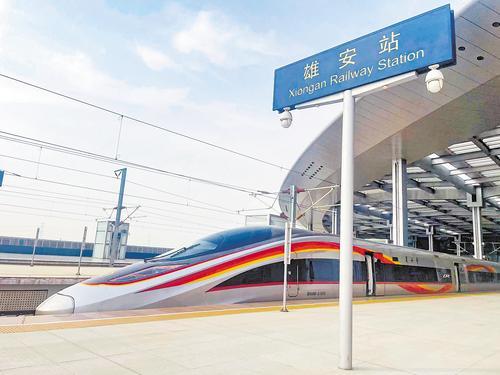
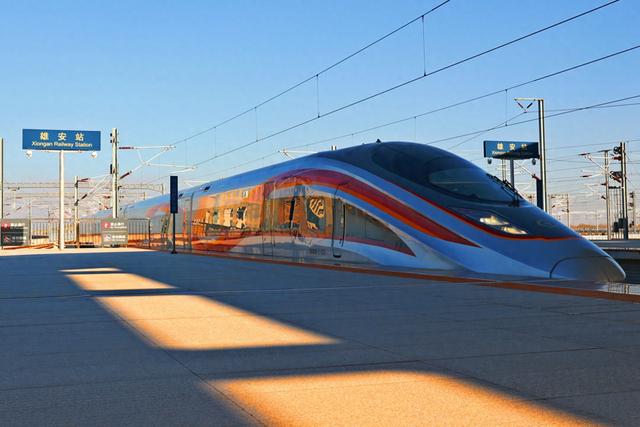
京雄城际运行五载,累计运送旅客超1300万人次
Xin Lang Cai Jing· 2025-12-27 15:38
Core Viewpoint - The Beijing-Xiong'an Intercity Railway has celebrated its fifth anniversary, marking its significance as a vital transportation link between Beijing and the Xiong'an New Area, having transported over 13 million passengers in five years [1]. Group 1: Operational Highlights - The number of trains operating on the Beijing-Xiong'an Intercity Railway has increased from 32 to 59 daily since its inception [1]. - The railway connects key locations including Beijing West Station, Daxing Airport Station, and Xiong'an New Area, creating a multi-dimensional transportation network [7]. Group 2: Service Enhancements - Daxing Airport Station has implemented service upgrades, including improved signage systems and the addition of free charging facilities, enhancing the travel experience for passengers [9]. - The railway's integration with Daxing Airport facilitates efficient transfers between high-speed rail and air travel, supporting business travel and international exchanges [7]. Group 3: Future Developments - The upcoming opening of the Tianjin-Xiong'an Intercity Railway by the end of 2023 will further enhance connectivity between Beijing and Tianjin, establishing a new high-speed rail corridor [9]. - Future expansions, such as the Beijing-Hong Kong High-Speed Railway and the Xiong'an-Xinzhou Railway, will strengthen Xiong'an's connections to East China, South China, and central regions, highlighting the railway's growing importance in the network [9].
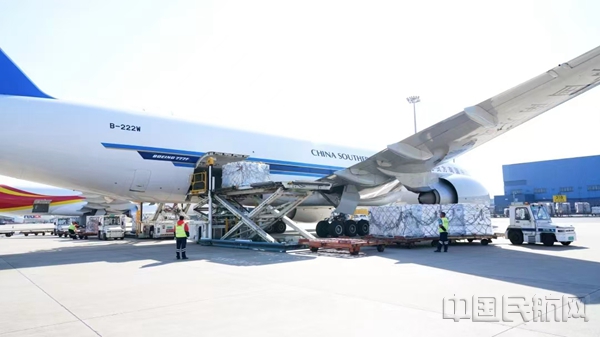
针对不同体量货物 上海机场货运“空铁联运”推出新产品
Zhong Guo Min Hang Wang· 2025-12-19 03:33
Core Viewpoint - The Shanghai Air-Rail Intermodal Service Center has launched three new freight products to enhance the multifunctional capabilities of Shanghai Airport, facilitating faster and more cost-effective logistics solutions for various cargo types [1][2]. Group 1: New Freight Products - The three new products are "Scheduled High-Speed Rail," "Ad-Hoc Full Truck," and "Express Freight Train," tailored for different cargo sizes and requirements [2]. - "Scheduled High-Speed Rail" targets international express shipments weighing under 25 kilograms, focusing on small volumes and high timeliness [2]. - "Ad-Hoc Full Truck" is designed for e-commerce air freight with individual items weighing under 50 kilograms, offering medium capacity and timeliness [2]. - "Express Freight Train" caters to bulk air cargo with individual items weighing under 1 ton, providing high capacity and medium timeliness [2]. Group 2: Logistics Advantages - The air-rail intermodal logistics model combines the extensive coverage of air transport with the diverse routes of rail, resulting in faster delivery times compared to road-based intermodal transport and lower costs than air-only transport [2]. - This model is particularly suitable for high-value, time-sensitive goods that require a balance between logistics costs and efficiency [2]. Group 3: Operational Developments - The Shanghai Air-Rail Intermodal Service Center, established in January 2024, is a collaboration among the Shanghai municipal government, Shanghai Port Group, China Eastern Airlines, Shanghai Airport, and China Railway Shanghai Bureau [2]. - After nearly two years of development, the center has established logistics air-rail intermodal corridors connecting Shanghai to nine cities, including Hefei, Jinhua, and Guangzhou [2]. - As of November 2023, the freight volume for the Shanghai air-rail intermodal service has exceeded 1,460 tons, marking a 146% year-on-year increase [2].

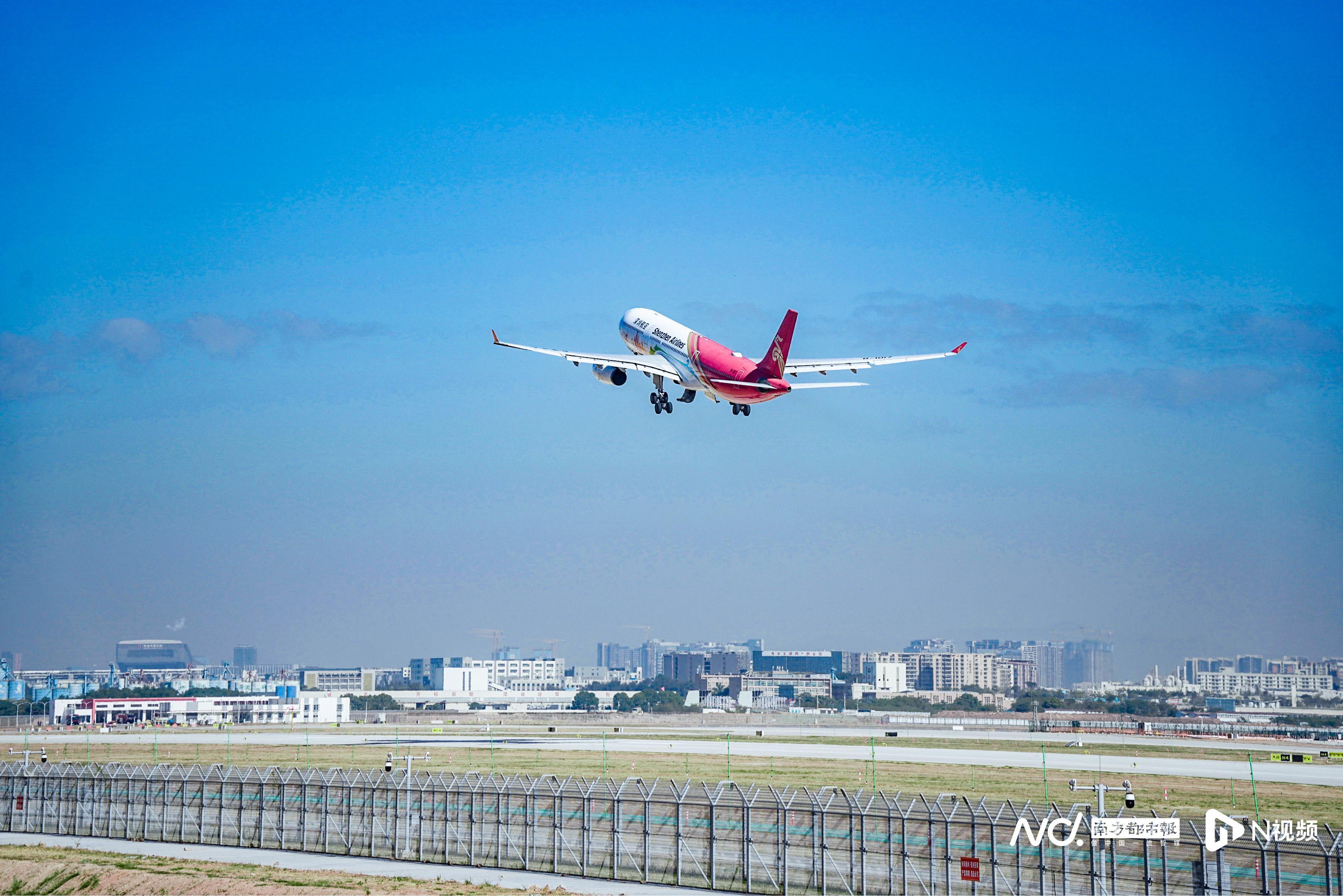
大湾区机场群迈入“三跑3.0时代”:从枢纽扩容到集群共舞
Nan Fang Du Shi Bao· 2025-12-08 03:14
Core Insights - The three major international aviation hubs in the Greater Bay Area (GBA) have completed runway expansions, marking a shift towards a collaborative regional aviation network [1][3][4] - The GBA airport cluster is transitioning from individual hub competition to a coordinated network characterized by high quality, efficiency, and collaboration, entering a "3.0 era" [3][4][16] Infrastructure Expansion - Shenzhen Airport's third runway was put into operation on November 29, 2023, handling over 200 flights within a week [1][14] - Guangzhou Baiyun Airport's T3 terminal and fifth runway can accommodate an annual passenger throughput of 120 million, with a terminal capacity of 140 million [4][15] - Hong Kong International Airport's expanded second terminal began phased operations in September 2023, enhancing its capacity to handle 120 million passengers and 10 million tons of cargo annually [15] Network Coordination - The GBA airports are implementing seamless transfer services, such as the "fast boat + shuttle bus" service between Shenzhen and Hong Kong airports, reducing travel time to one hour [17][19] - The new transfer parking facility at Hong Kong Airport supports the "Yue Car South" policy, facilitating cross-border travel [19] - Ground connectivity improvements include integrating high-speed rail and metro services at major airports, enhancing regional transportation efficiency [19] Cargo Operations - The GBA airports collectively handled 9.2 million tons of cargo in 2024, representing 7.2% of the global total, with Guangzhou and Shenzhen ranking among the top 20 cargo airports worldwide [22][23] - Innovative logistics models, such as the "Dongguan-Hong Kong International Air Cargo Center," have reduced logistics costs by 30% and expedited cargo delivery [20][22] Economic Drivers - The airport upgrades are driven by the demand from high-value industries in the GBA, including electronics, biomedicine, and cross-border e-commerce [22][23] - The GBA's economic output is projected to exceed 14.79 trillion yuan in 2024, with foreign trade accounting for nearly one-fifth of the national total [15][22] Competitive Landscape - The GBA airports face challenges in collaborative development due to overlapping service areas and competition for international routes [24] - Differentiated positioning is essential, with Guangzhou focusing on Southeast Asia and Oceania, Shenzhen on technology and high-end manufacturing, and Hong Kong on global network advantages [24] Future Outlook - By 2035, the GBA is expected to meet an aviation passenger demand of 420 million, necessitating the current infrastructure developments [25] - The enhanced airport network will facilitate greater connectivity with the global economy, attracting multinational companies and enhancing the GBA's status in the global city network [25]
事关粤东西北共振!大湾区四座区域航空枢纽能否下好这盘棋?
Nan Fang Du Shi Bao· 2025-11-23 15:53
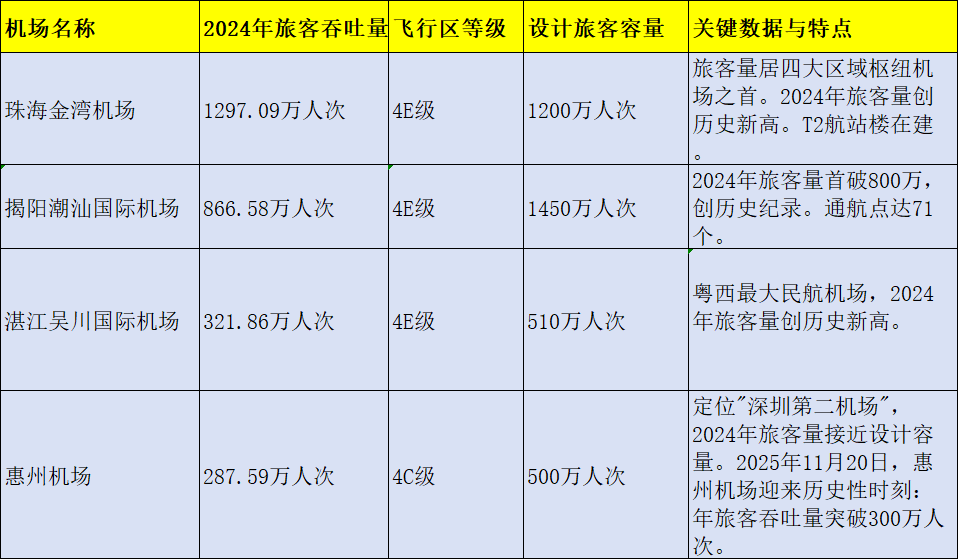
在粤港澳大湾区世界级机场群的"棋盘"上,落子粤东西北的四座区域航空枢纽,正以一连串跃升的数字,展现出强劲的战略价值与发展潜力。 刚刚过去的11月20日,惠州机场年旅客吞吐量刷新纪录,突破300万人次;东翼的揭阳潮汕国际机场2024年全年旅客吞吐量达866.6万人次,创历史新高;西 翼的湛江吴川国际机场则以4E干线机场为目标,迈入提质扩容新阶段…… 珠海机场、揭阳潮汕国际机场、湛江吴川国际机场、惠州机场——这四大枢纽,正以功能互补、错位发展之姿,共同启动区域经济协同的新引擎。它们能否 真正盘活全局,推动粤东西北与珠三角核心区实现更深层次的"共振",值得拭目以待。 "3+4+8"格局下的湾区天空 机场群的多层次布局 当前,粤港澳大湾区世界级机场群建设已进入快速发展阶段。 T3航站楼投运后,广州白云国际机场(以下简称"白云机场")正式迈入"五条跑道+三座航站楼"运行时代,成为中国民航首个五条商用跑道运行的机场,近 期可满足年旅客吞吐量1.2亿人次,货邮吞吐量380万吨使用需求,终端容量更可承载1.4亿人次旅客、600万吨货邮,客货规模均位居世界前列。 T3航站楼的正式启用,不仅是白云机场实现运能跨越的里程碑,更是将 ...
杭台高铁温玉段启动铺轨
Mei Ri Shang Bao· 2025-11-06 22:22
Core Points - The construction of the Hangtai High-speed Railway's Wenyu section has officially entered the track-laying phase, with the first 500 meters of steel rail successfully laid, marking a significant milestone for the project [1] - The Wenyu section, extending approximately 37 kilometers, will connect the cities of Wenling and Yuhuan, featuring three stations and a design speed of 350 km/h, with a high bridge-tunnel ratio of 90.34% [1] - This railway will enhance intercity passenger transport, end Yuhuan's lack of railway access, and contribute to a comprehensive railway network in Taizhou, promoting regional tourism and economic development [1] - The railway will also expand Hangzhou's one-hour transportation circle to the southeastern coast of Zhejiang, integrating Yuhuan into Hangzhou's economic sphere and connecting local tourism resources with the "Zhejiang Eastern Tang Poetry Road" [2] - The railway is expected to be operational by next year, further improving Hangzhou's high-speed rail network and providing residents with new travel experiences [2]
广深铁路今启全新运行图 速度与密度双提升
Ke Ji Ri Bao· 2025-11-05 04:15
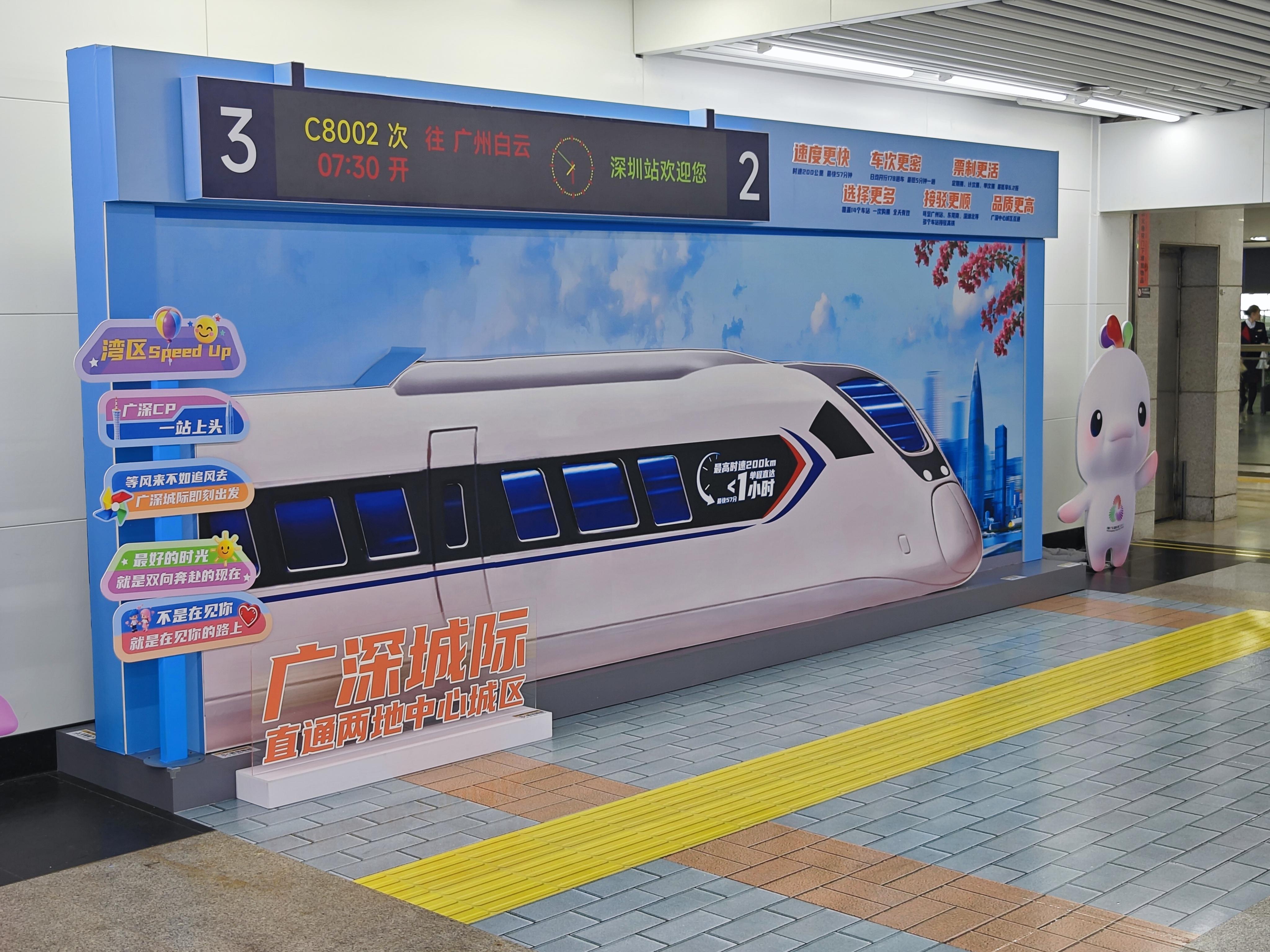
Core Points - The new train schedule for the Guangzhou-Shenzhen Railway has been implemented, enhancing both speed and frequency of service [1][4][9] Speed Enhancement - The fastest travel time between Shenzhen and Guangzhou East is now 56 minutes, representing a 6.7% improvement [1] - A "1-hour commuting circle" is established between the central business districts of Guangzhou (Tianhe CBD) and Shenzhen (Futian CBD, Luohu District) [1] Frequency Improvement - The average number of daily train services has increased to 178, with trains departing every 13 minutes on average [1] - The minimum interval between train departures has been reduced to 5 minutes, facilitating a more convenient "on-demand" service model [1] Ticketing and Accessibility - The railway has introduced various ticketing options, including "regular tickets" and "single journey tickets," with discounts of up to 38% for 30-day/60-trip regular tickets [4] - Single journey tickets remain valid all day, allowing passengers to board any train on the same day at designated stations [4][9] Connectivity and Network Integration - The new schedule complements the Guangzhou-Shenzhen-Hong Kong High-Speed Railway and the Ganzhou-Shenzhen High-Speed Railway, covering 14 stations and creating a comprehensive transportation network [4][9] - Enhanced connections to other transport hubs, such as Guangzhou Station and Baiyun Airport, enable seamless transfers between different modes of transport [4][9]

广州白云国际机场T3航站楼投入运营
Guang Zhou Ri Bao· 2025-10-31 01:56
Core Points - The Guangzhou Baiyun International Airport T3 terminal has officially commenced operations, marking a significant milestone in the development of civil aviation in Guangdong province [2][4] - The T3 terminal is part of the largest expansion project in China's civil aviation history, aimed at enhancing the airport's capacity and service quality [4][6] - The new terminal is expected to accommodate an annual passenger throughput of 120 million and a cargo throughput of 3.8 million tons, significantly boosting the airport's operational capabilities [6] Summary by Sections Project Announcement and Significance - The T3 terminal's opening was announced by provincial leaders, highlighting its importance as a key hub for domestic and international connectivity, especially with the upcoming 15th National Games [2][3] - The project is seen as a vital contributor to Guangdong's integration into the new development landscape and its role in national dual circulation [3][4] Operational Goals and Management - Leaders emphasized the need for high standards in airport operations, focusing on safety, efficiency, and passenger experience [3][5] - There is a call for the adoption of advanced management practices and modern information technology to enhance operational intelligence and convenience [3][4] Economic Impact and Future Development - The T3 terminal is expected to stimulate the development of the airport economy, including logistics, aircraft maintenance, and cross-border e-commerce [3][4] - The project aligns with the broader goals of the Guangdong-Hong Kong-Macao Greater Bay Area initiative, aiming to create a world-class airport cluster [4][5] Infrastructure and Design - The T3 terminal features a design that incorporates local cultural elements and is complemented by a comprehensive transportation hub for seamless connectivity [6] - The airport now operates with five commercial runways, making it the first in China to achieve this, which is anticipated to enhance its competitive edge [6]
广州白云国际机场T3航站楼投入运营 黄坤明宣布投运 孟凡利出席
Nan Fang Du Shi Bao· 2025-10-30 08:09
Core Points - The Guangzhou Baiyun International Airport T3 terminal has officially commenced operations, marking a significant milestone in the development of civil aviation in Guangdong province [1][2][4] - The T3 terminal is part of the largest expansion project in China's civil aviation history, aimed at enhancing the airport's capacity and supporting the development of the Guangdong-Hong Kong-Macao Greater Bay Area [3][6] Summary by Sections Project Overview - The T3 terminal includes a main building, east, west, and north concourses, and boarding bridges, designed to reflect local cultural elements [6] - The terminal, along with the fifth runway, positions Baiyun Airport as the first in China to operate five commercial runways, with an expected annual passenger capacity of 120 million and cargo capacity of 3.8 million tons [6] Government and Leadership Remarks - Provincial leaders emphasized the importance of the T3 terminal in connecting domestic and international routes and enhancing Guangdong's role in national development [2][4] - The focus is on ensuring safety, operational efficiency, and enhancing passenger experience through modern management practices and technology [2][4][3] Economic Impact - The expansion is expected to boost the local economy by attracting various industries, including aviation logistics, aircraft maintenance, and cross-border e-commerce [2][3] - The project aligns with the broader goals of the "14th Five-Year Plan" and the upcoming "15th Five-Year Plan" for high-quality development in Guangdong [3][4]

西北货航开通西安—郑州—曼谷航线 西北航空枢纽国际物流通道再升级
Zhong Guo Min Hang Wang· 2025-10-25 01:58
Core Points - The opening of the new cargo route from Xi'an to Bangkok via Zhengzhou marks a significant development in the logistics network of Xi'an, enhancing its status as a key aviation hub in Northwest China [1][2] - The route is expected to increase the annual cargo throughput at Xi'an Airport by 5,000 tons, with a focus on exporting machinery and e-commerce goods while importing fresh produce like durians from Southeast Asia [1][3] - The collaboration between Xi'an and Zhengzhou airports facilitates a multi-modal logistics network, leveraging high-speed rail and air transport to optimize cargo flow [2][3] Summary by Sections Route Details - The new cargo route operates three flights per week using Boeing 757-200 aircraft, with initial cargo volumes of 15 tons outbound and 23 tons inbound [1] - The route is part of a broader strategy to establish a comprehensive air cargo network connecting Xi'an with Southeast Asia and beyond [1] Economic Impact - The new route is expected to strengthen the support of Xi'an's aviation logistics for the local economy, providing international logistics channels for local manufacturers and pharmaceutical companies [3] - The influx of Southeast Asian agricultural products will enhance the supply in the Northwest market, promoting a "buy global, sell global" trade model [3] Future Prospects - Xi'an Airport is projected to see a 16.7% year-on-year increase in cargo volume by July 2025, with international cargo growth expected to rise by approximately 150% [2] - The airport's ongoing expansion projects and technological upgrades are anticipated to further enhance its logistics capabilities, supporting the growth of the new route and the overall aviation logistics sector in the region [3]