
立德树人

Search documents
红色文化融入高校思政教育的实践路径研究
Xin Hua Wang· 2025-08-26 06:28
Group 1 - The core viewpoint emphasizes the importance of integrating red culture into ideological and political education in higher education institutions to cultivate a new generation responsible for national rejuvenation [1][9] - Red culture serves as a vital resource for shaping students' spiritual character and enhancing the effectiveness of ideological education [1][2] Group 2 - The value of integrating red culture into ideological education lies in its ability to inspire patriotism and convey deep spiritual connotations, which resonate with contemporary students [2][3] - Historical events and revolutionary heroes can be utilized as case studies to help educators establish correct educational concepts and engage students in meaningful reflections [2][3] Group 3 - Current challenges include a mismatch between the content provided and the needs of contemporary students, with traditional teaching methods failing to engage students effectively [3][4] - There is a lack of depth in experiential learning opportunities, leading to passive participation and insufficient emotional resonance among students [4][5] Group 4 - Proposed practical paths include innovating educational models and enhancing audiovisual content to better resonate with students [5][6] - Strengthening the "second classroom" through competitions themed around red culture can deepen students' engagement and foster innovative thinking [7][8] Group 5 - Utilizing red venues as interactive learning spaces can transform red culture from abstract concepts into tangible experiences, enhancing emotional connection and value recognition among students [8][9] - A comprehensive practice system integrating content, carriers, and scenarios is essential for effectively embedding red culture into ideological education [9]
教育综合改革构建铸魂育人新格局
Ren Min Ri Bao Hai Wai Ban· 2025-08-19 22:38
Group 1 - The core viewpoint emphasizes the importance of education in ensuring the continuity of the party and national affairs, focusing on cultivating talent for the country during the "14th Five-Year Plan" period [1] - The education system aims to deepen comprehensive reforms and promote the integrated development of education, technology, and talent, enhancing the ability of education to serve economic and social development [1][3] - A series of practical measures and development achievements reflect the continuous improvement in the public's sense of gain and happiness regarding educational reforms [1] Group 2 - The fundamental questions of education include what kind of people to cultivate, how to cultivate them, and for whom they are being cultivated, which are core issues in building a strong education nation [3] - The implementation of high-quality moral education projects and the systematic improvement of ideological and political education standards in schools are ongoing [4] - The integration of ideological and political education across all educational levels is being innovated and reformed [4][5] Group 3 - The development of a comprehensive education system is being reinforced, focusing on physical education and aesthetic education to enhance the overall cultivation of students [6] - New educational activities, such as AI and 3D printing projects, are being introduced to stimulate innovation and engagement among students [7] - Policies promoting free preschool education are expected to benefit approximately 12 million children, enhancing educational equity [8] Group 4 - The comprehensive reform of education is addressing key challenges, with policies ensuring equitable access to education across all regions and demographics [9] - The establishment of a national smart education public service platform has gathered over 110,000 basic education resources and 48,500 quality online courses [9] Group 5 - The introduction of 29 new undergraduate programs reflects the alignment of education with national strategies and market demands, providing diverse options for students [10] - The integration of education, technology, and talent development is being accelerated to cultivate high-quality professionals and innovative talents [10] Group 6 - The total number of full-time teachers in various schools is approximately 18.85 million, highlighting the importance of a strong teaching workforce [11] - Initiatives to promote the spirit of educators and enhance teacher quality are being implemented, including the "Education Family Spirit Journey" [11][12] - Policies aimed at improving teacher welfare and professional development are being established to build a high-quality teaching workforce [12]
决胜“十四五” 打好收官战丨教育综合改革构建铸魂育人新格局
Xin Hua She· 2025-08-19 11:26
Core Viewpoint - The article emphasizes the importance of comprehensive education reform during the "14th Five-Year Plan" period, focusing on nurturing talent for the nation and enhancing the education system's ability to serve economic and social development [1][3]. Group 1: Educational Reform and Development - The education system aims to deepen comprehensive reforms and promote the integrated development of education, technology, and talent, ensuring that education meets the needs of the people [1]. - The focus is on cultivating individuals who can undertake the responsibilities of national rejuvenation, with a strong emphasis on ideological and political education [3][4]. - A series of practical measures have been implemented to enhance the effectiveness of ideological education in schools, including the integration of traditional culture into the curriculum [5]. Group 2: Enhancing Educational Quality - The article highlights the establishment of a comprehensive system for moral, intellectual, physical, aesthetic, and labor education, aiming for a holistic development of students [6]. - Innovative educational practices, such as AI and 3D printing in classrooms, are being introduced to stimulate creativity and engagement among students [7]. Group 3: Equity in Education - The introduction of free preschool education is expected to benefit approximately 12 million children, promoting educational equity [9]. - Policies have been implemented to ensure balanced access to education across all regions, with a focus on supporting economically disadvantaged students [9]. Group 4: Integration of Education and Industry - The education system is aligning with national strategies and market demands by introducing new undergraduate programs that reflect technological advancements and societal needs [10]. - Efforts are being made to integrate vocational education with industry requirements, fostering a workforce equipped with necessary skills [10]. Group 5: Teacher Development - The article discusses the importance of a high-quality teaching workforce, with initiatives aimed at enhancing teacher training and professional development [11][12]. - Policies are being implemented to improve teachers' working conditions and societal respect for the teaching profession, contributing to the overall quality of education [12].
决胜“十四五” 打好收官战|教育综合改革构建铸魂育人新格局
Xin Hua She· 2025-08-19 10:50
Group 1 - The core viewpoint emphasizes the importance of education in nurturing talent for the country, highlighting the commitment to reform and improve education during the "14th Five-Year Plan" period [1][3] - The education system aims to integrate education, technology, and talent development to enhance the quality and effectiveness of education, thereby increasing public satisfaction and contributing to the construction of an education powerhouse [1][6] Group 2 - The focus on moral education and the cultivation of patriotic sentiments is evident through various activities, such as the "Red Study Tour" in Hebei, which aims to instill a sense of national pride among students [2][5] - The implementation of high-quality moral education programs and the integration of political education across all educational levels are being prioritized to strengthen the foundation of education [4][5] Group 3 - The introduction of policies promoting free preschool education is expected to benefit approximately 12 million children, reflecting efforts to enhance educational equity [8] - The comprehensive reform of education is addressing key challenges, such as ensuring balanced access to education across regions and providing financial support to economically disadvantaged students [9] Group 4 - The establishment of new undergraduate programs in response to national strategies and market demands aims to cultivate innovative talents and skilled professionals [10] - The focus on teacher quality is underscored by initiatives to enhance teacher training, support, and recognition, which are crucial for achieving high-quality education [11][12]
做新时代立德树人的大先生(思想纵横)
Ren Min Ri Bao· 2025-07-28 22:30
Core Viewpoint - The articles emphasize the critical role of teachers in education, highlighting their responsibilities in nurturing students and contributing to national development, as articulated by President Xi Jinping [1][2][3][4]. Group 1: Teacher's Role and Responsibilities - Teachers are expected to embody a "great sentiment," serving as role models for students and promoting their holistic development [1][2]. - The profession requires teachers to have a deep understanding of knowledge and wisdom, ensuring they are well-equipped to educate students effectively [2][3]. - Teachers must focus on national needs and innovate in their teaching methods, utilizing new technologies to enhance education [3][4]. Group 2: Educational Philosophy and Vision - The philosophy of education is rooted in love and responsibility, motivating teachers to dedicate themselves to their students' growth and opportunities [2][4]. - Teachers should possess a broad international perspective, understanding the global context of education and its implications for national development [4]. - The articles advocate for teachers to be agents of knowledge and civilization, shaping the minds and hearts of students to prepare them for future challenges [4].
优秀网络文化成果评价认定的价值与路径
Xin Hua Wang· 2025-07-23 06:50
Core Viewpoint - The article emphasizes the importance of evaluating excellent online cultural achievements in higher education as a crucial measure for promoting ideological and political work, thereby contributing to the development of a strong educational and cultural nation [1][2]. Group 1: Importance of Online Cultural Achievements - Excellent online cultural achievements serve as vital resources for universities' ideological and cultural work, expanding the space for online education and promoting traditional and revolutionary cultures [2]. - These achievements are significant for ideological work, leveraging the internet's characteristics to enhance theoretical discussions and contribute positively to a clear online space [2]. - The evaluation of these achievements is a key consideration in the ideological work of universities, as highlighted by various governmental directives aimed at integrating online cultural products into academic assessments [2][3]. Group 2: Requirements for Educational Evaluation Reform - The reform of educational evaluation should be comprehensive, scientific, and address the issues of "five only" practices, focusing on establishing a correct evaluation philosophy and a scientific evaluation system [3]. - The evaluation of online cultural achievements must align with the political, professional, collaborative, and problem-oriented requirements of educational evaluation reform [3][4]. Group 3: Pathways to Construct a High-Quality Evaluation System - Strengthening organizational leadership is essential, with universities needing to design comprehensive plans that integrate various educational systems and enhance the recognition of online cultural achievements among faculty and students [7]. - Establishing a diversified recognition mechanism is crucial, involving various departments to assess and promote online cultural achievements effectively [8]. - A robust indicator system should be developed, focusing on originality, online influence, educational value, and academic professionalism to ensure a thorough evaluation of online cultural products [9].
以学查改实效检验作风建设成效
Zhong Yang Ji Wei Guo Jia Jian Wei Wang Zhan· 2025-07-03 01:16
Core Viewpoint - The article emphasizes the importance of higher education institutions in implementing the fundamental task of fostering virtue and talent, aiming to cultivate well-rounded socialist builders and successors, while adhering to the spirit of the Central Eight Regulations [1] Group 1: Quality of Learning - The primary task of learning education is to persistently use the innovative theories of the Party to unify thoughts and actions with the major decisions of the Party Central Committee [2] - It is essential to deeply study the important speeches and directives of General Secretary Xi Jinping regarding learning education and the significance of the Central Eight Regulations [3] Group 2: Problem Identification - The key to learning education is to accurately identify and address existing issues in work style, ensuring that the rectification is targeted and effective [4] - Leaders must take the initiative to confront problems directly and encourage faculty and staff to identify specific manifestations of work style issues [5] Group 3: Effective Rectification - The rectification process should involve genuine efforts to address identified issues, with leaders taking responsibility and leading by example [6] - The focus should be on comprehensive inspection and rectification of work style issues in alignment with the goal of fostering virtue and talent [7]
旁听立德树人的三堂课(深聚焦)
Ren Min Ri Bao· 2025-06-28 22:03
Core Viewpoint - The article emphasizes the importance of ideological and political education (思政课) in shaping the values and beliefs of the younger generation, highlighting innovative teaching methods and the integration of historical context into modern education [2][15]. Group 1: Ideological and Political Education - The Chinese Communist Party has historically valued the construction of ideological and political education, which influences the ideals and life choices of generations of youth [2]. - Recent years have seen schools enriching their teaching content and effectively implementing the fundamental task of fostering moral integrity [2][5]. - The integration of moral education into various subjects, including music, science, and physical education, is a key focus for schools [5][10]. Group 2: Innovative Teaching Methods - Schools are adopting innovative approaches to make ideological education more engaging, such as using historical sites and figures to create a dialogue with students [4][11]. - The use of technology, like AI-generated audio in music classes, is being employed to enhance the learning experience [4]. - Teachers are encouraged to incorporate current events and discussions into their lessons to keep the content relevant and engaging for students [6][10]. Group 3: Historical Context and National Identity - Historical events, such as the Anti-Japanese War, are being integrated into the curriculum to instill a sense of national identity and responsibility among students [11][12]. - Schools are utilizing local historical sites as educational resources, allowing students to connect with their heritage and understand the significance of past struggles [11][14]. - The narrative of resilience and patriotism is emphasized through various teaching methods, including storytelling and experiential learning [12][14].

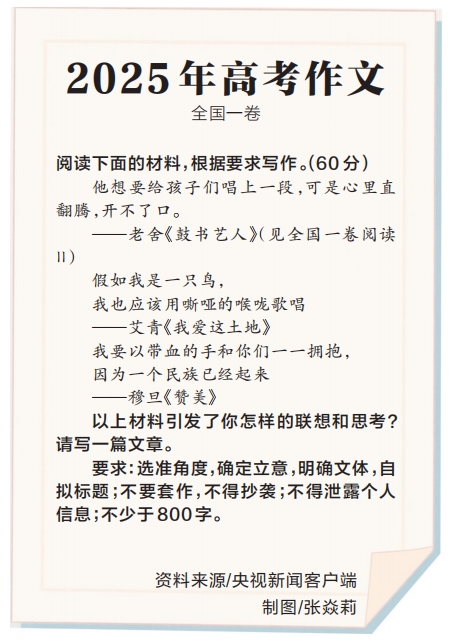
2025高招全服务丨名师解析高考作文题 聚焦立德树人 与主旋律共振
He Nan Ri Bao· 2025-06-07 23:18
Group 1 - The core viewpoint of the article highlights the significance of this year's college entrance examination essay topic, which reflects deep thinking about the relationship between individuals and the nation, emphasizing moral education and aligning with contemporary themes [2] - The essay materials provided for the exam include excerpts from Lao She's "Drum Artist," Ai Qing's "I Love This Land," and Mu Dan's "Praise," all of which focus on national spirit, patriotism, and responsibility [2][3] - The essay prompts encourage students to explore various relationships, such as the external and internal aspects of nationalism, individual versus collective identity, and the connection between past, present, and future [2][3] Group 2 - To write a successful essay, it is essential to ensure that the theme aligns with the provided materials while also demonstrating a certain depth of thought [3] - The structure of the essay should be clear, with distinct sub-points that enhance logical reasoning and coherence, while maintaining the appropriate writing style [4] - The overall theme of the essay is designed to inspire youth to focus on both personal development and national progress, fostering a sense of patriotism and collective responsibility [4]
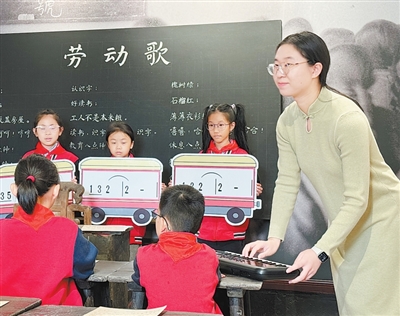
林武“六一”前夕在济南看望少年儿童 祝全省少年儿童节日快乐
Da Zhong Ri Bao· 2025-05-31 00:50
Group 1 - The core message emphasizes the importance of nurturing children's moral values and promoting comprehensive development in education, aligning with the teachings of Xi Jinping [2][3] - The visit by Lin Wu to schools and kindergartens highlights the focus on enhancing educational quality and integrating socialist core values into the educational process [2][3] - Lin Wu advocates for a safe and supportive environment for children, stressing the need for mental health education and effective management of school safety and meals [2][3] Group 2 - The activities observed during the visit, such as health exploration and technology demonstrations, reflect a commitment to fostering creativity and hands-on skills among children [3] - The emphasis on labor education and physical exercise is aimed at cultivating good habits in children from a young age [3] - The call for local governments to prioritize the well-being and safety of children indicates a broader commitment to creating favorable conditions for their growth [3][4]