
素质教育

Search documents
今年市场规模预计增长19% 研学游,目标瞄准品质优(探访)
Ren Min Ri Bao· 2025-08-19 22:11
Core Insights - The summer has seen a surge in educational travel, with a focus on experiential learning through activities like artificial intelligence and space exploration, meeting market demand effectively [1] - The Chinese educational travel market is projected to reach 213.2 billion yuan this year, reflecting a 19% year-on-year growth [1] Group 1: Market Trends - The educational travel market is expanding, with a notable increase in the variety of programs offered, such as hands-on experiences in AI and space [2][3] - Parents are increasingly seeking educational travel for their children to enhance scientific interest and independence, indicating a shift towards experiential learning [3][4] Group 2: Quality and Standards - There is a growing concern regarding the quality and consistency of educational travel programs, with reports of inadequate services and unqualified providers [7] - The Ministry of Culture and Tourism has implemented industry standards to regulate educational travel products and services, aiming to improve quality management [7][8] Group 3: Institutional Support - Some regions are introducing well-qualified institutions into the educational travel market, enhancing the quality of offerings and training for instructors [8] - Collaborative efforts among education, tourism, and regulatory bodies are essential for establishing a comprehensive governance system to ensure quality in educational travel services [8]
帮家长解忧 助孩子成长
Zhong Guo Qing Nian Bao· 2025-08-18 21:49
Core Viewpoint - The article highlights the innovative summer care programs organized by youth organizations across China, which not only address the childcare needs of working parents but also provide enriching educational experiences for children during the summer break [1][3][7]. Group 1: Summer Care Programs - Various regions in China have established unique summer care programs that focus on holistic development, moving beyond traditional childcare to include educational and practical skills training [2][3][6]. - In Wuxi, Jiangsu Province, a summer care program at Yunlin Farmers' Market has been set up to support children of migrant workers, providing a safe and engaging environment where they can learn life skills [2][3]. - The program includes activities such as a simulated market experience, health education, and cultural arts, aiming to enhance children's life skills and cultural awareness [2][3]. Group 2: Regional Variations - Different provinces have tailored their summer programs to reflect local culture and resources, such as Sichuan's traditional opera face painting and Jiangxi's pottery workshops [3]. - In rural areas, programs focus on agricultural education, allowing children to learn about farming practices and the importance of labor [3][4]. - In Xinjiang, returning university students are leading creative workshops that blend modern science with traditional culture, impacting over 200,000 children [5]. Group 3: Community Engagement - Community centers in cities like Beijing and Yichang have launched summer camps that combine educational activities with social interaction, addressing the childcare challenges faced by working families [6][7]. - These initiatives have received positive feedback from parents, who appreciate the educational value and social opportunities provided to their children [6][7]. - The programs are designed to foster a sense of community and support for families, particularly for those with dual-income households or rural backgrounds [6][7].
2025年中国少儿综合能力教育研究报告
艾瑞咨询· 2025-08-15 00:07
Core Insights - The article emphasizes the shift in education policy from exam-oriented to comprehensive development-oriented education, highlighting the growing consensus on the importance of quality education that focuses on the cultivation of comprehensive abilities in children [1][2][9]. Policy Insights - The Chinese government has been consistently promoting policies that encourage the development of quality education, transitioning from an exam-oriented approach to one that emphasizes comprehensive development [2][4]. - Key policies include the 2014 curriculum reform, the 2021 "double reduction" policy, and the 2022 regulations on non-subject training, all aimed at fostering quality education and meeting the demand for non-subject education [2][4]. Financial Insights - National education funding has been increasing, with total education expenditure exceeding 64,595 billion yuan in 2023, marking a 5.3% increase from the previous year [5]. - Per-student funding for kindergartens grew by 7.2% year-on-year, while funding for primary schools increased by 2.1% [5][6]. Market Trends - The non-subject education market is entering an upgrade phase, driven by policy support and new curriculum reforms, with a focus on comprehensive ability cultivation [8][70]. - The market for non-subject education is projected to reach 646.3 billion yuan by 2024, with a compound annual growth rate (CAGR) of 20.44% from 2023 to 2027 [70]. Educational Model Transformation - The educational model is evolving from passive learning to active exploration, emphasizing the development of critical thinking, problem-solving, and collaborative skills [72]. - There is a need for a multi-dimensional assessment system to evaluate children's comprehensive abilities, moving away from traditional standardized testing [74][76]. Parental Insights - Parents are increasingly prioritizing the comprehensive development of their children, focusing on skills such as multi-language expression, critical thinking, and practical abilities [21][28]. - A significant portion of parents, particularly those from high-tier cities, believe that external educational institutions are necessary to meet their children's comprehensive ability cultivation needs [37][34]. Future Outlook - The cultivation of comprehensive abilities is becoming a long-term focus, with an emphasis on early-stage education to prepare children for future societal demands [67]. - The integration of AI and technology in education is expected to further enhance the importance of core competencies in talent evaluation and development [62][65].

素质教育助力高职院校应用型人才培养
Xin Hua Ri Bao· 2025-08-14 21:55
Core Viewpoint - Vocational colleges play a crucial role in cultivating high-quality applied talents, but traditional skill training is insufficient to meet the demands of the digital economy era, necessitating a shift towards quality education that integrates moral, social, and professional competencies [1][2][3] Group 1: Talent Development Goals - The demand for high-quality applied talents is increasing due to rapid technological advancements and industrial upgrades, with 51.6% of companies raising soft skill requirements in recruitment [2] - Current vocational education trends show a focus on skills over quality, making it difficult to meet the comprehensive talent needs of modern industries [2][3] Group 2: Curriculum Integration - Vocational colleges need to incorporate quality education throughout the talent development process, emphasizing a holistic development system that includes moral, intellectual, physical, aesthetic, and labor education [3][4] - There is a need to create a curriculum that integrates general quality education with professional skills, ensuring a balance between knowledge acquisition, skill enhancement, and quality development [4][5] Group 3: Practical Experience and Collaboration - Effective implementation of quality education requires diverse practical platforms to bridge the gap between knowledge and action, addressing current limitations in practical education [6][7] - Collaboration with enterprises through real-world projects and internships is essential for developing students' professional qualities and problem-solving abilities [6][7] Group 4: Evaluation and Improvement Mechanisms - Establishing a comprehensive evaluation and incentive mechanism for quality education is crucial, incorporating students' performance in moral, social, and innovative aspects into their overall quality profiles [7] - Utilizing information technology to create personalized development plans and career guidance can enhance students' adaptability and prepare them for the demands of the new economy [7]
研学热为乡村游注入新动能(专家解读)
Ren Min Ri Bao· 2025-08-10 22:54
Core Insights - The article highlights the growing trend of educational tourism in rural China, emphasizing its role in transforming educational experiences for children and driving local economic growth [1][2][3] Industry Overview - The market size of China's educational tourism industry reached 146.9 billion yuan in 2023, with projections to grow to 242.2 billion yuan by 2026 [1] - Over 90% of administrative villages in China are now covered by 5G networks, enhancing accessibility to remote areas for tourists [1] Educational Experience - Rural areas provide unique, vibrant learning environments that cannot be replicated in urban settings, allowing youth to engage in hands-on activities like farming and cultural practices [2][3] - The shift from passive learning to active exploration and project-based learning in rural settings fosters independent thinking and teamwork among students [3] Economic Impact - Educational tourism is reshaping the traditional rural tourism model, which was primarily focused on sightseeing, by introducing a curriculum-based experience that enhances local resource utilization [3][4] - The integration of education, tourism, agriculture, and culture creates a multi-faceted economic model that promotes sustainable development and community prosperity [4] Cultural Exchange - Increasing participation of overseas youth in rural educational tourism provides a unique opportunity for cultural exchange and understanding of "real China," serving as a form of grassroots diplomacy [5][6] - Successful overseas educational bases can enhance the global cultural presence of rural China and attract international resources for rural revitalization [5][6] Infrastructure and Service Development - To accommodate global youth, rural areas must improve infrastructure, ensuring safety, hygiene, and multilingual services [6] - Cultural expression should be adapted to facilitate understanding and engagement, using relatable narratives to present local culture [6]
2025上半年中国教育行业融资风向报告,创投圈的钱都去哪了?
3 6 Ke· 2025-07-30 09:05
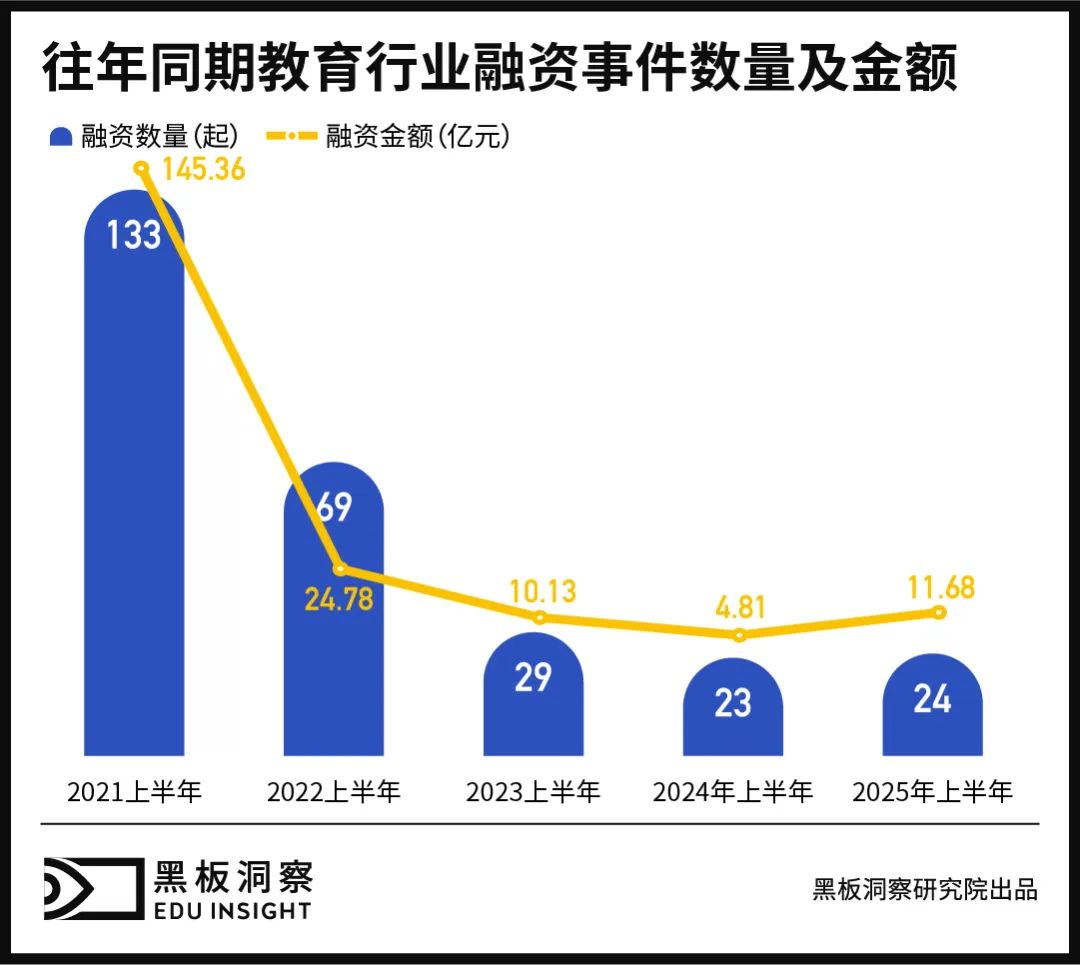
Core Insights - The education industry is experiencing a new pattern of "stable total volume and structural reconstruction" in investment and financing in the first half of 2025, driven by regulatory stabilization, demand transformation, and technological innovation [1][3] - A total of 24 financing events occurred in the first half of 2025, with an overall financing scale exceeding 1.168 billion yuan, surpassing the total amount for the entire year of 2024, indicating a marginal recovery in capital confidence and a focus on "certain tracks" [1][3] - Key investment directions include vocational education, AI empowerment, and quality education, reflecting a shift towards sectors with essential demand and growth potential [1][14] Financing Overview - The education industry's financing heat has been declining over the past five years, with a drop from 133 financing events and 14.536 billion yuan in the first half of 2021 to only 23 events and 481 million yuan in 2024 [3] - In the first half of 2025, although only 24 events were recorded, the financing amount rebounded to 1.168 billion yuan, marking a local recovery with "stable volume and increased amount" [3] Monthly Financing Trends - The financing events in the first half of 2025 were relatively evenly distributed monthly, with a notable spike in June, which accounted for 80.2% of the total financing amount for the half-year [6] - The overall financing frequency remained low, but the concentration of capital significantly increased, with a clear preference for high-certainty targets [6] Financing Rounds Distribution - Early-stage projects dominated the financing rounds, with angel rounds accounting for two-thirds of the events (16 occurrences), indicating sustained interest in innovative projects at the startup stage [9] - There were also 2 mergers and acquisitions and 1 equity investment, suggesting ongoing industry consolidation [9] Regional Financing Distribution - The financing distribution showed a pattern of "strong East, weak West," with Beijing leading with 5 events, followed by Guangdong and Jiangsu with 3 each, highlighting the continued advantage of first-tier and strong provincial cities in resource and capital supply [10] - Regions like Hubei, Hunan, Shanghai, and Zhejiang remained active, while western and central provinces showed minimal activity, indicating significant regional disparities [10] Sector-Specific Financing Distribution - Financing in the first half of 2025 was heavily concentrated in vocational education and enterprise services, which together accounted for over 90% of the total financing amount, reflecting capital's ongoing optimism towards "employment capability enhancement" and "educational toolization" [14] - Other sectors like quality education, study abroad, K12, and early childhood education had limited financing events, indicating challenges in consumer-end project financing [14] Top Financing Events - The top financing events included: - Tianyu Fei Training, an aviation training service company, acquired for 799 million yuan [16] - Cool Xuan Technology, a corporate training service platform, acquired for 180 million yuan [16] - Changxiang World, an art training intelligent service provider, raised 7 million USD in an angel round [16] Conclusion - The education industry's investment and financing landscape in the first half of 2025, while still at a low level, shows signs of structural recovery, with capital shifting focus towards vocational education and enterprise services [17] - The investment logic is transitioning from consumer-driven flow to supply-side value, indicating a move towards a quality-first, long-term oriented reconstruction cycle [17]
2025年中国少儿综合能力教育研究报告
艾瑞咨询· 2025-07-26 13:51
Core Insights - The article emphasizes the shift in education policy from exam-oriented to comprehensive development-oriented education, highlighting the growing consensus on the importance of quality education that focuses on the cultivation of children's overall abilities [1][2][10]. Policy Insights - The Chinese government has consistently issued policies to promote quality education, transitioning from an exam-oriented approach to one that emphasizes comprehensive development, creating a favorable environment for the growth of non-subject education markets [2][3]. - Key policies include the 2014 curriculum reform, the 2021 "double reduction" policy, and the 2022 regulations on non-subject training, all aimed at fostering quality education and meeting parental demand for non-subject education [2][3]. Financial Insights - National education funding has been steadily increasing, with total education expenditure exceeding 64,595 billion yuan in 2023, marking a 5.3% increase from the previous year. Per-student funding for kindergartens and primary schools has also seen growth, with kindergarten funding increasing by 7.2% [5][6]. Market Trends - The non-subject education market is entering an upgrade phase, driven by policy support and new curriculum reforms, with a focus on comprehensive ability cultivation for children aged 3-12. The market is expected to reach 646.3 billion yuan by 2024, with a CAGR of 20.44% from 2023 to 2027 [7][71]. - The shift from single-interest cultivation to comprehensive ability cultivation is evident, with a growing emphasis on skills such as critical thinking, creativity, and practical abilities [71][73]. Parental Insights - Parents are increasingly prioritizing the comprehensive development of their children, focusing on skills such as multi-language expression, critical thinking, and practical abilities. This shift is particularly pronounced among parents in high-tier cities and those with higher education levels [22][32][34]. - A significant portion of parents (over 90%) express willingness to repurchase comprehensive ability training courses, indicating a strong belief in the long-term benefits of such education [55]. Educational Model Transformation - The educational model is evolving from passive learning to an exploratory learning approach, emphasizing the integration of cross-disciplinary knowledge and the development of critical thinking and problem-solving skills [73][74]. - The future of education evaluation is expected to shift towards a more comprehensive and multi-dimensional assessment system, moving away from traditional standardized testing [76][77].

应试教育为什么越来越硬实了?
Hu Xiu· 2025-07-24 03:22
Group 1 - The core viewpoint emphasizes the need for an education system that caters to the growth of every student, moving away from exam-oriented education that harms the majority [3][10][101] - The speaker reflects on the inadequacies of the exam-oriented education system, which primarily benefits a small number of students while neglecting the majority [6][10][12] - The transition from exam-oriented education to a more holistic approach, integrating vocational and adult education into rural schooling, is highlighted as a significant reform [14][15][42] Group 2 - The challenges faced in implementing vocational education in rural areas, including lack of resources and qualified teachers, are discussed [14][21][66] - The establishment of agricultural programs in vocational education is noted as a successful strategy to connect students with their rural roots and provide practical skills [15][16][30] - The importance of fostering a supportive environment for students, including free vocational education and community engagement, is emphasized [18][19][20] Group 3 - The speaker advocates for an education system that focuses on students' strengths rather than attempting to remediate their weaknesses, aligning with the theory of multiple intelligences [33][37][38] - The concept of "goal-oriented education" is introduced, aiming to help students identify their long-term and short-term goals, thus promoting personal development [42][43][44] - The integration of arts and sports into the curriculum is presented as a means to enhance student engagement and well-being [47][49][84] Group 4 - The speaker discusses the importance of classroom teaching reforms that prioritize quality over quantity, advocating for a focus on essential knowledge and skills rather than excessive practice [87][88][91] - The shift in educational values from knowledge and exam scores to fostering students' overall development and character is highlighted as crucial for effective education [101][102] - The speaker reflects on the need for a cultural shift in education, moving away from a purely exam-focused approach to one that values individual growth and potential [100][103]
让学校“好玩”,让学生“好学”(暖闻热评)
Ren Min Ri Bao· 2025-07-22 21:51
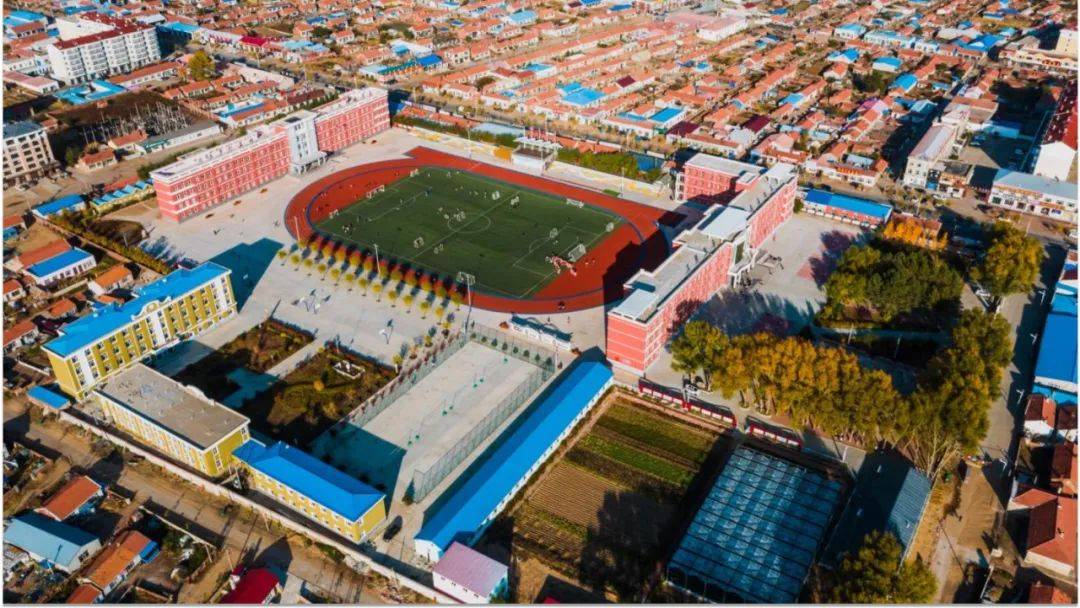
Core Viewpoint - The article emphasizes the importance of a balanced educational approach that integrates play and learning, showcasing the success of Xinzou No. 2 Primary School under Principal Yang Changsheng's leadership in promoting both physical health and academic excellence [1][2]. Group 1: Educational Philosophy - Principal Yang Changsheng has focused on making school enjoyable for students, utilizing the limited space of the school to encourage play and physical activity during breaks [1][2]. - The school has achieved remarkable academic results, ranking first in educational quality assessments for nine consecutive years, demonstrating that play and learning can coexist effectively [2][3]. Group 2: Holistic Development - The article highlights the need for diverse educational methods to foster student development, citing examples from various regions in China where schools collaborate with local resources to enhance learning experiences [3][4]. - It stresses that achieving comprehensive education requires not only facilities and funding but also a shared understanding among parents and educators about respecting children's natural growth and creativity [3][4]. Group 3: Community and Cultural Integration - The integration of community resources and local culture into education is essential for promoting holistic student development, as seen in various initiatives across different regions [4]. - The article advocates for a shift in the perception of schools from mere exam preparation spaces to nurturing environments that encourage creativity and diverse growth opportunities for children [4].
暑假安排不妨合理“留白”(纵横)
Ren Min Ri Bao· 2025-07-21 22:12
Core Viewpoint - The article emphasizes the importance of balancing structured activities and free time for children during summer vacation, highlighting that over-scheduling can lead to burnout and decreased learning efficiency [1][2]. Group 1: Survey Findings - A recent survey indicates that 42% of parents enroll their children in three or more extracurricular classes during summer, leading to significant financial expenditure for many families [1]. - Students attending multiple training classes during summer are more likely to experience learning anxiety in the new school term compared to those who have self-directed time [1]. Group 2: Recommendations for Quality Summer - A high-quality summer arrangement should combine a basic framework with autonomous space, such as dedicating one hour to reading and one hour to physical activities daily, while also allowing for unstructured time [1]. - Engaging in practical experiences, like household chores, can enhance children's self-care abilities and reinforce the application of knowledge learned in school [2]. Group 3: Value of Summer Vacation - The unique value of summer lies in its potential to strengthen quality education through experiential learning, where children learn about life cycles, social interactions, and responsibility through seemingly "useless" experiences [2]. - The essence of summer vacation is to allow children to accumulate growth power in a relaxed environment, alleviating the anxiety of falling behind while maintaining a basic routine and providing autonomy [2].