
美债

Search documents
10.23黄金跳水刹车 守4000多空争夺
Sou Hu Cai Jing· 2025-10-23 07:33
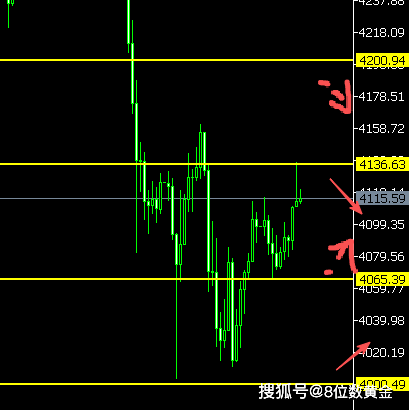
Group 1 - Gold prices experienced significant fluctuations, with a drop followed by a rebound of $160, indicating a volatile market environment [1][3] - The current resistance level is observed at $4136, with potential upward movement towards $4200 if this level is breached [3][5] - Support levels are identified at $4065 and $4000, which are critical for potential rebounds [4][5] Group 2 - Recent geopolitical developments, including a softening stance from Trump and ongoing U.S.-China trade discussions, have contributed to a decrease in safe-haven demand for gold [6][7] - The anticipation of interest rate cuts by the Federal Reserve, alongside rising U.S. debt levels, is expected to support gold prices in the near term [7][8] - The labor market's instability, highlighted by delayed unemployment claims, adds uncertainty to the Federal Reserve's decision-making regarding interest rates [8] Group 3 - The global stock market is experiencing turmoil, with significant declines in major indices, reflecting a broader economic uncertainty [9] - Capital continues to seek profitable opportunities, indicating that investment trends will follow where returns can be maximized [10]

美联储:或下周结束缩表,短期国债供应月减200亿
Sou Hu Cai Jing· 2025-10-20 14:14
Core Viewpoint - The research institution Wrightson ICAP indicates that the Federal Reserve may announce the end of its balance sheet reduction next week due to signs of funding pressure in the repurchase market [1][2]. Group 1: Federal Reserve Actions - The Federal Reserve is expected to halt the reduction of its bond holdings in the upcoming interest rate decision [1][2]. - Federal Reserve Chairman Jerome Powell hinted earlier this month that the central bank is waiting for the right moment to end the balance sheet reduction [1][2]. - The institution anticipates that the Federal Reserve will begin purchasing U.S. Treasury bonds to offset maturing mortgage-backed securities, thereby maintaining a stable overall balance sheet size [1][2]. Group 2: Market Implications - As the Federal Reserve shifts towards a neutral policy stance, the supply of short-term government bonds in the market may decrease by approximately $20 billion per month [1][2].

10.16黄金涨80美金破4200 续刷历史新高
Sou Hu Cai Jing· 2025-10-16 07:32
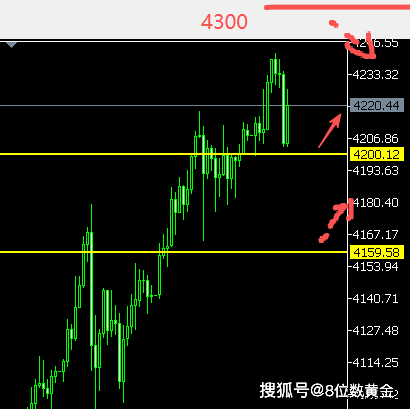
Group 1 - Gold prices surged by $80, breaking through the $4200 mark, followed by a sharp decline of $60, but then rebounded again, indicating a strong bullish trend [1][3] - The recent price movements show a pattern of volatility, with gold returning above $4200 and approaching historical highs around $4240, with expectations to reach $4300 [3][5] - The year-to-date performance of gold has been impressive, with a total increase of over $1500, and a significant rise of more than $700 in the last two months alone [7] Group 2 - Key factors influencing gold prices include geopolitical tensions, particularly the U.S.-China trade war, which has created uncertainty and increased demand for gold as a safe haven [9] - The U.S. national debt has reached a record high of over $37.8 trillion, contributing to market volatility and impacting investor sentiment towards gold [9] - Upcoming economic data releases, such as U.S. retail sales and PPI, are critical as they may influence Federal Reserve policy and subsequently affect gold and dollar movements [10] Group 3 - Investment strategies in gold emphasize the importance of timing and market entry/exit points, which require extensive experience and practical knowledge [10] - A successful trading approach involves managing risk effectively while maximizing profit opportunities, with a focus on following experienced traders for better outcomes [10]
美债已经滚到 37 万亿了,为啥还没暴雷?
Sou Hu Cai Jing· 2025-10-16 02:02
Core Insights - The U.S. national debt has reached $37 trillion, with a rapid increase in recent months, raising concerns about sustainability [1][4][6] - The Federal Reserve is the largest holder of U.S. debt, and there are underlying tensions between different financial interests in the U.S. [3][7] - The dollar's status as the world's primary currency allows the U.S. to continue borrowing, but this may not be sustainable in the long term [4][7] Debt Dynamics - The U.S. government employs a "borrow new to pay old" strategy, issuing new debt to cover maturing obligations and additional deficits [5][6] - Interest payments on the debt have surged to $1.4 trillion, consuming a significant portion of government revenue [6][7] - The rate of debt accumulation is accelerating, with an increase of $1 trillion every five months, which is double the average rate of the past 25 years [6][7] Global Context - Major foreign holders of U.S. debt include Japan and China, with Japan increasing its holdings significantly in early 2025 [6] - There is a growing trend of de-dollarization, with countries increasingly opting to settle trade in their own currencies, leading to a decline in the dollar's share of global reserves [6][7] - Large investment funds are diversifying their portfolios away from U.S. assets, indicating a potential shift in investment strategies [7][8]
美债明明已经滚到37万亿了,为什么还没暴雷?其实说白了,美债已经出事了,只不过美国短时间不会这么倒下,如今的状况有点类似温水煮青蛙
Sou Hu Cai Jing· 2025-10-15 16:08
Core Insights - The U.S. national debt has reached $37 trillion, raising concerns about its sustainability and potential risks, which are currently masked by various factors [1][3]. Group 1: Debt Dynamics - U.S. debt is perceived as a safe asset due to the dollar's dominant position in global trade, particularly in oil transactions, leading countries to invest in U.S. Treasuries despite the growing debt burden [3][5]. - The U.S. employs a strategy of rolling over debt, where new debt is issued to pay off maturing debt, resulting in an increasing debt scale without immediate visible collapse [5][9]. - A significant portion of U.S. debt is held internally by institutions like Social Security, reducing immediate repayment pressure and allowing for interest payments to be prioritized over principal repayment [5][9]. Group 2: Federal Reserve's Role - The Federal Reserve has slowed down its planned reduction of Treasury holdings to prevent market turmoil, even purchasing Treasuries with returns from other assets to maintain liquidity [5][7]. - To address short-term funding pressures, the Federal Reserve utilizes tools like reverse repos to ensure smooth issuance of new debt, creating a temporary safety net for the economy [7][9]. Group 3: Fiscal Challenges - Interest payments on U.S. debt have surpassed military spending, consuming funds that could otherwise be allocated to infrastructure and public services, leading to a vicious cycle of fiscal imbalance [9][11]. - The U.S. faces structural issues in its budget, with rigid expenditures in military, healthcare, and social welfare that cannot be easily reduced, exacerbated by recent legislation increasing future borrowing limits [9][11]. - Political gridlock between U.S. parties has hindered meaningful debt reform, with a lack of motivation to address the underlying issues of debt sustainability [11].
美债最大“接盘侠”诞生,大举买走1.6万亿,但偏偏不是英国、日本
Sou Hu Cai Jing· 2025-10-10 19:12
Core Insights - The article discusses the rising prominence of stablecoins in the context of increasing U.S. national debt and global economic challenges, highlighting their potential to reshape financial transactions and investment dynamics [3][5][12]. Group 1: Stablecoin Market Dynamics - Stablecoins, particularly those pegged to the U.S. dollar, have gained traction, with regulations requiring issuers to maintain 1:1 reserves in real dollars or short-term government bonds [5][9]. - The total market capitalization of stablecoins surged from $200 billion at the beginning of the year to $280 billion, reflecting a quarterly growth of 22% [7][9]. - Major players like Tether and Circle have significantly increased their holdings in U.S. Treasury bonds, with Tether holding $105 billion and Circle holding $55.2 billion in short-term debt [7][9]. Group 2: Regulatory and Technological Developments - The U.S. regulatory environment is becoming more favorable for stablecoins, with Texas issuing the first licenses and major firms like BlackRock and Deloitte involved in reserve management and auditing [9][10]. - The integration of stablecoins into payment systems is accelerating, with cross-border transactions now accounting for 37% of their use, benefiting various sectors including remittances and e-commerce [7][12]. Group 3: Future Projections and Risks - Analysts predict that the issuance of stablecoins could reach $1.9 trillion by 2030, with a bullish scenario suggesting it could even hit $4 trillion, surpassing the holdings of Japan, the UK, and China combined [10][18]. - While stablecoins provide benefits such as faster transactions and reduced costs, concerns about their impact on the traditional banking system and potential risks of financial instability are emerging [12][18].
谁在狂买美债?不到6万人口,却一年买入1160亿美元,哪来那么多钱?
Sou Hu Cai Jing· 2025-10-03 09:59
Core Viewpoint - The debate over whether U.S. Treasury bonds remain the best safe financial asset is polarized, and understanding this requires looking beyond binary thinking to actual capital flows from central banks and institutions, which provide more reliable insights than public discussions [1] Group 1: U.S. Treasury Holdings - From June 2024 to June 2025, foreign holdings of U.S. Treasury bonds increased from $8.3 trillion to $9.13 trillion, a net increase of $830 billion, indicating that despite market concerns about risks, most economies are not significantly reducing their holdings [2] - China reduced its U.S. Treasury holdings from $7.8 trillion to $7.56 trillion during the same period, a decrease of $240 billion, reflecting a strategy for diversified asset allocation and the impact of changing geopolitical dynamics [4] Group 2: Major Buyers of U.S. Treasuries - The Cayman Islands, Belgium, and the UK were the top three countries increasing their U.S. Treasury holdings, each adding over $100 billion, with the Cayman Islands leading at $116 billion, surpassing the total U.S. Treasury holdings of Germany [4] - The Cayman Islands' status as an offshore financial center attracts numerous hedge funds and multinational corporations, making it a significant buyer of U.S. Treasuries, although the actual holders are global investors, including some Chinese institutions [6] Group 3: Offshore Financial Centers - Similar trends are observed in Belgium, Luxembourg, and Ireland, which also serve as important nodes for global capital allocation in U.S. Treasuries, with Belgium's increase reflecting both local and cross-border capital flows [8] - The "account-based" holding model of U.S. Treasuries indicates that actual control is dispersed among global investors, while the reported holdings reflect technical classifications rather than true demand from individual economies [8] Group 4: Strategic Role of U.S. Treasuries - The U.S. Treasury bonds' appeal is driven by the dollar's dominance as a global settlement currency, the depth and liquidity of the U.S. Treasury market, and the relative stability of the U.S. economy, alongside their role as a stabilizing asset in investment portfolios [10] - The evolving role of U.S. Treasuries from a simple "risk-free asset" to a multi-dimensional strategic tool is shaped by various factors, including U.S. fiscal deficits, inflation volatility, and rising geopolitical risks, necessitating a nuanced understanding of each country's Treasury strategies [10]

中国不妥协,美债难填补,特朗普出手打击大债主
Sou Hu Cai Jing· 2025-10-02 22:49
Core Insights - The U.S. debt crisis is intensifying, with the national debt exceeding $37.4 trillion and interest payments projected to reach $900 billion in 2025, surpassing military spending [3][15][23] - Trump's recent tax policies, including a 10% tariff on Chinese goods, are seen as ineffective and potentially harmful, exacerbating the existing economic challenges [3][5][23] - The agricultural sector is facing significant challenges, with a reported 20% decline in exports and rising costs due to tariffs, leading to widespread discontent among farmers [8][9][15] Economic Indicators - The debt-to-GDP ratio has reached a historical high of 117%, indicating severe fiscal pressure [5] - Inflation is evident, with consumer prices rising, such as a nearly $1 increase in the price of milk [6][15] - The U.S. is experiencing a trade deficit that is worsening, contrary to expectations of improvement [15][23] Market Reactions - The stock market has reacted negatively to the economic situation, with significant drops in indices like the Dow Jones, which lost 1,000 points in a single day [11] - International capital is beginning to flow out of the U.S. market, raising concerns about the dollar's stability and its status as the world's primary reserve currency [11][17] Global Trade Dynamics - China's exports to the EU and ASEAN have increased by 8% and 10% respectively, indicating a shift in trade patterns and supply chain resilience [6][13] - The Chinese government is diversifying its foreign reserves, reducing its holdings of U.S. debt to $775 billion by 2025, while increasing gold reserves [13][19] Political and Economic Strategy - The U.S. government's approach to managing the debt crisis involves a mix of tax increases and tariffs, but these measures are criticized as short-term fixes that do not address underlying issues [15][23] - The ongoing U.S.-China trade tensions are characterized by retaliatory tariffs, particularly affecting U.S. agricultural products, which are facing an 84% tariff from China [9][19] Future Outlook - The situation is described as a "live broadcast" of a debt crisis with no clear resolution in sight, as both the U.S. and China navigate their respective economic challenges [21][25] - The potential for a shift in global economic leadership is being discussed, with China's stable approach contrasting with the U.S.'s more aggressive tactics [25]
中国7月减持美债257亿美元 仓位降至16年新低
Xin Hua Cai Jing· 2025-09-19 09:04
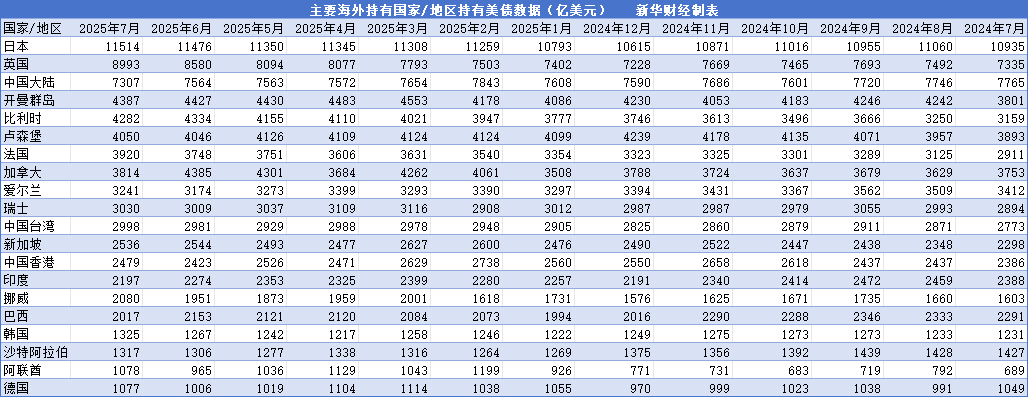
Core Insights - The U.S. Treasury Department reported that foreign investors continued to increase their holdings of U.S. Treasury bonds, with a month-over-month increase of $31.9 billion, bringing the total to $9.16 trillion, marking the fifth consecutive month above $9 trillion [1][3] - Japan and the UK have been the top buyers, with the UK increasing its holdings by over $40 billion for two consecutive months, while Canada and mainland China have significantly reduced their holdings by $57.1 billion and $25.7 billion, respectively [1][3] Summary by Category Foreign Holdings of U.S. Treasury Bonds - As of July 2025, Japan holds $1.1514 trillion, an increase from $1.1476 trillion in June, while the UK holds $899.3 billion, up from $858 billion [2] - Mainland China's holdings decreased to $730.7 billion, the lowest since February 2009, following a reduction of $25.7 billion [3] Market Dynamics - Canada dropped from the fifth to the eighth largest holder of U.S. Treasuries after a significant reduction of $57.1 billion in July, following a volatile pattern of buying and selling in previous months [5] - Concerns over debt levels and tariffs have led to rising yields in the Treasury market, with the 10-year Treasury yield increasing by 13 basis points [5] Legislative Impact - The "Big and Beautiful" tax and spending bill signed by President Trump is projected to increase the U.S. deficit by $3.3 trillion over the next decade, which may further elevate interest rates [6][7] - The bill's extension of tax cuts alone is expected to incur over $4.5 trillion in costs, contradicting IMF recommendations for the U.S. to reduce fiscal deficits [6] Economic Outlook - The uncertainty surrounding U.S. trade, security, and economic policies has shaken confidence in the U.S. dollar as a global reserve currency, with its share in global foreign exchange reserves slightly declining to 57.7% in Q1 2025 [8]
申万期货品种策略日报:贵金属-20250919
Shen Yin Wan Guo Qi Huo· 2025-09-19 01:26
Group 1: Market Data - The current prices of Shanghai Gold 2510 and 2512 are 825.86 and 828.08 respectively; the current prices of Shanghai Silver 2510 and 2512 are 9869.00 and 9902.00 respectively [2] - The price changes of Shanghai Gold 2510 and 2512 are 1.76 and 1.26 respectively, with price change rates of 0.21% and 0.15% respectively; the price changes of Shanghai Silver 2510 and 2512 are 61.00 and 67.00 respectively, with price change rates of 0.62% and 0.68% respectively [2] - The open interest of Shanghai Gold 2510 and 2512 are 87731 and 228640 respectively; the open interest of Shanghai Silver 2510 and 2512 are 144039 and 395854 respectively [2] - The trading volumes of Shanghai Gold 2510 and 2512 are 192704 and 221255 respectively; the trading volumes of Shanghai Silver 2510 and 2512 are 301538 and 646031 respectively [2] - The spot premiums and discounts of Shanghai Gold 2510 and 2512 are -1.33 and -3.55 respectively; the spot premiums and discounts of Shanghai Silver 2510 and 2512 are -58.00 and -91.00 respectively [2] - The price changes of Shanghai Gold T+D, London Gold, and London Gold (in USD/ounce) are -5.72, -2.62, and -15.12 respectively, with price change rates of -0.69%, -0.31%, and -0.41% respectively; the price change of Shanghai Silver T+D is -65.00, with a price change rate of -0.66%; the price change of London Silver (in USD/ounce) is 0.16, with a price change rate of 0.38% [2] - The current values of the differences between Shanghai Gold 2512 and 2510, and between Shanghai Silver 2512 and 2510 are 2.22 and 33 respectively; the current value of the gold/silver ratio (spot) is 84.04; the current values of the ratios of Shanghai Gold to London Gold and Shanghai Silver to London Silver are 7.04 and 7.30 respectively [2] - The current inventories of Shanghai Futures Exchange gold and silver are 56,430 kg and 1,203,523 kg respectively; the current inventories of COMEX gold and silver are 39,280,534 and 524,086,477 respectively [2] - The current values of the US Dollar Index, S&P Index, US Treasury yield, Brent crude oil, and USD/CNY are 97.3696, 6631.96, 4.11, 66.97, and 7.1087 respectively; their changes are 0.34%, 0.48%, 1.23%, 0.01%, and 0.09% respectively [2] - The current holdings of SPDR Gold ETF and SLV Silver ETF are 44315 tons each; the current net positions of CFTC speculators in silver and gold are 33486 and 32895 respectively [2] Group 2: Macroeconomic News - In July, non-US investors increased their holdings of US Treasuries, with the total holdings reaching a record high. Japan's holdings of US Treasuries increased by $3.8 billion to $1.1514 trillion; the UK's holdings increased by $41.3 billion to $899.3 billion, reaching a record high. Mainland China's holdings decreased by $25.7 billion to $730.7 billion; Canada's holdings decreased by $57.1 billion to $381.4 billion, the lowest since April [3] - The number of initial jobless claims in the US last week dropped to 231,000, the largest decline in nearly four years. The expected number was 240,000, and the previous value was revised from 263,000 to 264,000. Although the number of initial claims decreased, the number of continued claims remained above the key level of 1.9 million, indicating some pressure in the labor market [3] Group 3: Core Views and Strategies - After the Fed's interest rate decision, gold and silver prices declined. The number of initial jobless claims in the US last week dropped to 231,000, the largest decline in nearly four years. In September, the Fed cut interest rates by 25 basis points in a risk - management move, in line with market expectations. Only newly - appointed Fed Governor Milan supported a 50 - basis - point rate cut [4] - The dot - plot shows that the Fed's current neutral expectation is to cut interest rates by 25 - 50 basis points this year and to below 3.5% next year. Under Trump's continuous pressure, the Fed's stance on rate cuts remains cautious [4] - The US retail sales in August were strong, with a month - on - month increase of 0.6% (the forecast was 0.2%) and a year - on - year increase of 2.1%, achieving positive growth for the 11th consecutive month. The CPI in August increased by 2.9% year - on - year, and the core inflation remained at 3.1% year - on - year [4] - Multiple data this month show a weak employment market in the US economy, especially the non - farm payrolls of 22,000, far lower than the market expectation of 75,000. Trade negotiations have shown multiple developments, but the overall trade environment has deteriorated. The market is still observing the continuation of the impact of tariff inflation [4] - The US fiscal deficit and debt continue to expand, and central banks represented by China continue to increase their gold holdings. The long - term drivers for gold are still clear. Due to the lack of expectations for recession - style rate cuts, attention should be paid to the adjustment of profit - taking after the short - term expectations are fulfilled [4]