
美国梦

Search documents
去美国的“打工人”,天塌了
Mei Ri Jing Ji Xin Wen· 2025-09-27 11:52
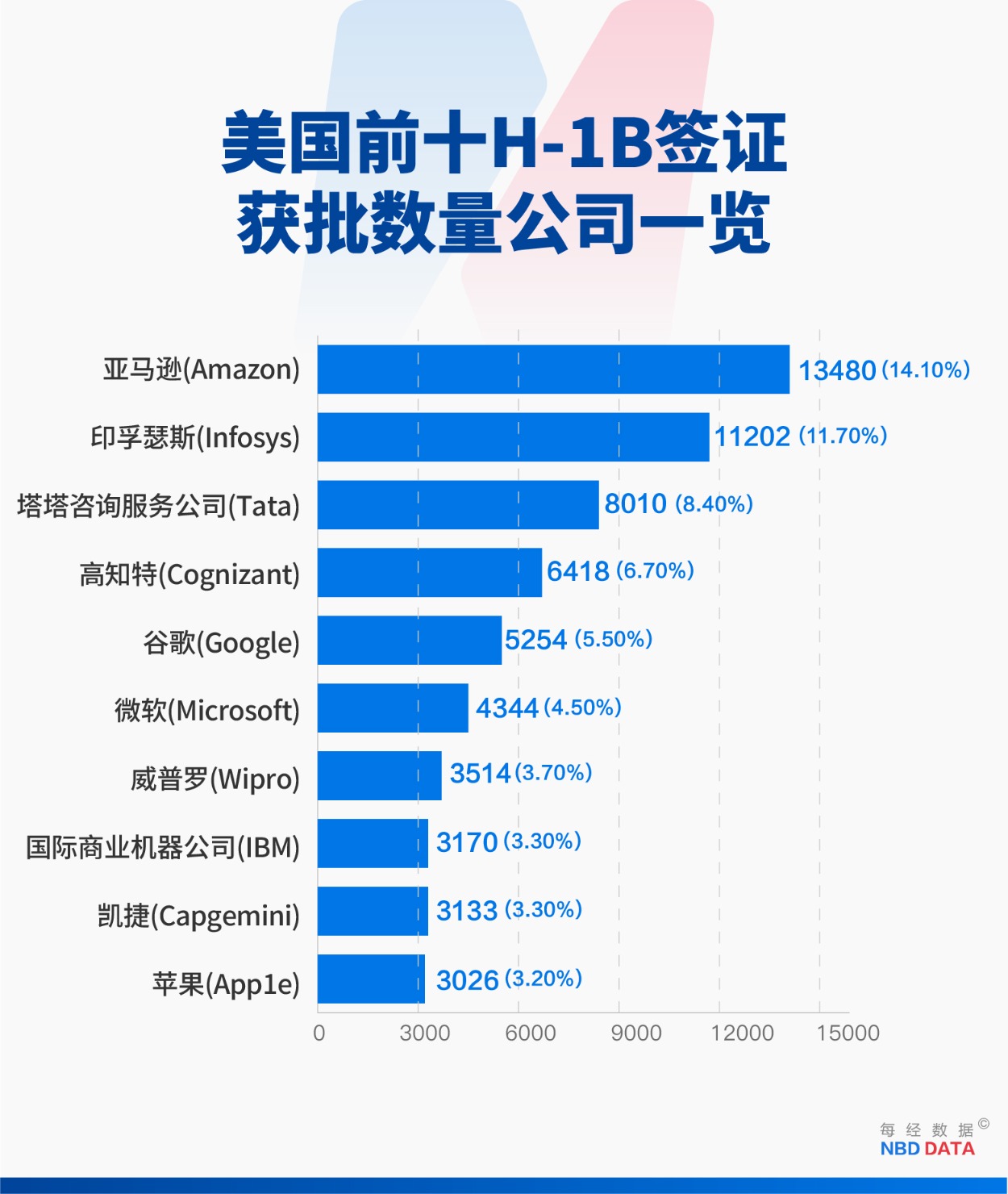
Core Points - The new H-1B visa regulation signed by President Trump has raised the application fee to an unprecedented $100,000, causing panic in the tech industry and prompting companies to reassess their hiring strategies [1][2][18] - The regulation introduces a "weighted lottery" system, favoring higher salaries for applicants, which alters the selection logic for overseas talent [2][18] Impact on Startups - Startups, particularly those with fewer than 25 employees, face severe challenges due to the high visa costs, which could stifle innovation and growth [6][5] - A significant portion of billion-dollar startups have at least one immigrant founder, indicating the critical role of H-1B visa holders in the startup ecosystem [6] Effects on Indian IT Services - Major Indian IT firms, such as Tata, Infosys, and Wipro, are heavily reliant on H-1B visas, and the new fee structure could significantly reduce their core operating profits [7][5] Consequences for Tech Giants - Silicon Valley tech giants like Amazon, Microsoft, and Google depend on H-1B visas for hiring software engineers, and the new costs could lead to a shift in hiring focus from emerging talent to experienced professionals, potentially disrupting the talent pipeline [8][5] Challenges for U.S. Universities and Research Institutions - U.S. universities and research institutions, which apply for thousands of H-1B visas annually, may face budget constraints that could limit their ability to hire foreign faculty and researchers, impacting research capabilities [10][11] Broader Economic Implications - The new regulation may accelerate the trend of outsourcing jobs and lead to a significant increase in companies seeking remote talent from abroad, particularly in countries like Canada [12][14][15] - The high visa fees are perceived as a means for the U.S. government to address fiscal challenges while potentially sacrificing global competitiveness [12][18] Legal and Medical Community Reactions - There is growing opposition to the new fee structure, with potential legal challenges being considered in California, and concerns from the medical community about the impact on the recruitment of foreign-trained physicians [17][18]


10万美元签证费击碎“美国梦” 硅谷恐失去下一代“马斯克” 美企加速外包 加拿大趁机“抢人”
Mei Ri Jing Ji Xin Wen· 2025-09-27 04:22
Core Viewpoint - The new H-1B visa regulation signed by President Trump has drastically increased the application fee to $100,000, creating significant barriers for foreign talent seeking to work in the U.S. and potentially altering the landscape of the American workforce [1][2][18]. Impact on Various Sectors - **Startups**: The high application fee poses a severe threat to small startups, which often operate with limited cash flow. Many startups rely on immigrant founders, and the new fee could stifle innovation by making it financially unfeasible to hire overseas talent [5][6]. - **Indian IT Services**: Major Indian IT firms, which are significant users of H-1B visas, may see their core operating profits reduced by 7% to 15% due to the new fees. This could force these companies to rethink their long-standing business models [6][7]. - **Silicon Valley Tech Giants**: Companies like Amazon, Microsoft, and Google, which depend on H-1B visas to hire software engineers, will face increased costs. The annual cost for hiring H-1B tech employees could rise to $5.5 billion, leading to a shift in hiring focus from emerging talent to more experienced professionals, potentially disrupting the talent pipeline [7][11]. - **U.S. Universities and Research Institutions**: The new regulation will strain the budgets of universities and research institutions that rely on H-1B visas to recruit faculty and researchers. The increased costs may lead to a reduction in hiring foreign staff, adversely affecting research capabilities and international talent development [11][13]. Broader Economic Implications - **Outsourcing and Global Talent Acquisition**: The new visa fee may accelerate the trend of U.S. companies outsourcing jobs or seeking talent abroad. Reports indicate a 50% increase in U.S. companies looking for visa-free global hiring options following the announcement [14][15]. - **International Competition**: Other countries, particularly Canada, are poised to capitalize on the U.S. visa changes by attracting skilled workers who may now view the U.S. as less accessible. Canadian officials see this as a significant opportunity to enhance their innovation sectors [15][16]. - **Legal and Political Reactions**: There is growing opposition to the new regulation within the U.S., with potential legal challenges being considered. Critics argue that the fee is arbitrary and excessively high, which could lead to a shortage of skilled professionals in critical sectors like healthcare [17][18].
《超级女声》20年,我们为何怀念那份抽象的勇敢?
Hu Xiu· 2025-09-27 03:10
Core Viewpoint - The article reflects on the cultural impact of the "Super Girl" talent show in China, highlighting its role in democratizing the entertainment industry and fostering a sense of nostalgia for a time when ordinary individuals could pursue their dreams on a public platform [1][10][22]. Group 1: Historical Context - "Super Girl" emerged during a period of market transformation in Chinese television, allowing for a low-cost, accessible platform for aspiring singers, which contrasted with previous elite-driven talent competitions [10][15]. - The show attracted approximately 150,000 participants in 2005, showcasing a wide demographic range from ages 4 to over 80, emphasizing its inclusive nature [10][17]. - The format of "Super Girl" was inspired by Western shows like "American Idol," but it localized the concept to resonate with Chinese audiences, promoting a sense of community and participation [10][17]. Group 2: Cultural Significance - The show represented a shift towards a more egalitarian entertainment model, where the audience had a direct role in the selection process through SMS voting, thus enhancing viewer engagement [11][17]. - The success of contestants like Li Yuchun, who won with 3.52 million votes, symbolized a challenge to traditional beauty standards and the emergence of a new aesthetic that embraced diversity [17][19]. - The phenomenon of "Super Girl" also coincided with the rise of internet culture, where alternative voices and subcultures began to gain visibility, indicating a broader societal shift towards individual expression [18][19]. Group 3: Nostalgia and Reflection - Current audiences reflect on the bravery and authenticity of participants from the "Super Girl" era, contrasting it with contemporary talent shows that may feel more judgmental and less forgiving [9][22]. - The nostalgia for the "Super Girl" era is tied to a sense of lost simplicity and optimism, as expressed by commentators who note the straightforwardness and enthusiasm of participants at that time [9][19]. - The article suggests that the current landscape of entertainment, such as stand-up comedy, echoes the earlier "Super Girl" ethos but with a different tone, focusing more on shared vulnerabilities rather than aspirational dreams [22][24].

黄仁勋最新专访:关于投资OpenAI、AI泡沫、ASIC的竞争.........(三万字全文)
美股IPO· 2025-09-27 02:01
Core Insights - OpenAI is likely to become the next trillion-dollar company, with AI-driven revenue projected to grow from $100 billion to $1 trillion within the next five years [1][4][10] - NVIDIA's partnership with OpenAI, involving a $100 billion investment, aims to support the establishment of OpenAI's autonomous AI infrastructure, positioning it as a major player in the AI market [3][10][11] - The shift from general computing to accelerated computing marks the end of Moore's Law, creating significant growth opportunities for NVIDIA in the global computing market [3][17][18] - AI is expected to contribute trillions to global GDP, enhancing human intelligence and creating new industries and applications [3][20][25] - NVIDIA's competitive advantage lies in its "extreme co-design" approach, which integrates chip, software, and system design to deliver exponentially improved performance [3][49][51] AI Growth and Economic Impact - The introduction of a new reasoning law in AI, emphasizing deep thinking before answering, is expected to lead to exponential growth in reasoning capabilities [3][8][9] - AI is projected to significantly enhance productivity and create new job opportunities, rather than eliminate existing jobs [3][20][25] - The potential market for AI infrastructure is estimated to reach $5 trillion, driven by the need for AI to enhance global economic activities [21][22][25] NVIDIA's Strategic Positioning - NVIDIA is transitioning from a GPU supplier to an AI infrastructure builder, integrating various ASICs to meet diverse AI workload demands [3][10][11] - The company's system-level design provides significant cost advantages, ensuring that even if competitors offer ASICs for free, NVIDIA's total cost of ownership remains lower [3][10][11] - NVIDIA's annual release cycle and deep collaboration with the supply chain enhance its ability to deliver high-performance products, creating a formidable competitive barrier [3][41][54] Market Dynamics and Future Outlook - The AI market is experiencing a dual exponential growth driven by increasing user numbers and the computational demands of AI applications [3][13][28] - The transition from CPU to GPU for AI applications is reshaping the infrastructure landscape, with traditional computing methods being replaced by AI-driven solutions [3][18][30] - Concerns about potential oversupply or market bubbles are mitigated by the ongoing demand for AI capabilities, as companies increasingly rely on AI for their operations [3][26][32]


Gen Z is deep in ‘financial nihilism’: Why young people are betting big on stocks and crypto
Yahoo Finance· 2025-09-23 20:30
Core Insights - Gen Z exhibits a less optimistic economic outlook compared to older generations, leading to a phenomenon termed "financial nihilism" which reflects their disillusionment with traditional financial systems [1][2] - This generation's financial mindset is shaped by experiences during economic downturns, such as the 2008 crisis, resulting in a skepticism towards conventional investing methods [1][2] Financial Nihilism - Financial nihilism, a term introduced in 2021, describes the belief among Gen Z and younger millennials that the traditional financial system is unfair and unpredictable, making saving for retirement or investing seem pointless [2] - Contributing factors include stagnant wages, high living costs, significant student debt, and challenges in homeownership [2] Attitudes Towards the American Dream - Many in Gen Z perceive the American dream as unattainable, expressing concerns about potentially living with their parents indefinitely and the inability to own a home [3] Investment Preferences - Gen Z is shifting away from traditional stock and bond markets, opting instead for riskier investments such as cryptocurrencies, meme stocks, and sports betting platforms [4] - A recent U.S. Bank survey indicates that Gen Z is more inclined than older generations to explore or plan investments in cryptocurrencies over the next five years [5] - This trend reflects a broader loss of faith in the traditional value of money and market functions, with a growing desire for quick wealth accumulation [5]
今天在洛杉矶,我看到了“美国的暗面”
虎嗅APP· 2025-09-19 11:10
Core Viewpoint - The article reflects on the stark contrast between the glamorous image of America and the harsh realities faced by many, particularly in urban areas like Los Angeles, highlighting issues of wealth inequality and social responsibility [4][8][11]. Group 1: Observations on American Society - The author describes a personal experience of exploring Los Angeles through public transportation, revealing a different side of the city that contrasts with its glamorous reputation [5][7]. - Observations include the presence of homeless individuals and the visible signs of poverty, which starkly contrast with the wealth concentrated in financial districts [8][9]. - The article references Joseph Stiglitz's assertion that 1% of Americans hold over 40% of the nation's wealth, illustrating the deep economic divide [8]. Group 2: Social Responsibility and Welfare Debate - The author raises questions about the moral obligation of the wealthy to assist the less fortunate, emphasizing the need for a humane society that does not allow its citizens to live in indignity [9][10]. - The discussion includes the challenges of balancing welfare policies between generosity and efficiency, suggesting that simply providing financial aid may not address the root causes of poverty [9][10]. - The need for a comprehensive social safety net, including affordable healthcare and job training, is highlighted as essential for restoring dignity and hope to those in need [10]. Group 3: Reflection on Societal Values - The article concludes that true civilization is measured by how a society treats its most vulnerable members, warning against the dangers of prioritizing economic growth over social equity [11]. - It serves as a cautionary tale for other nations, including the author's own, to ensure that rapid economic development does not come at the cost of social welfare and individual dignity [10][11].

今天在洛杉矶,我看到了“美国的暗面”
Hu Xiu· 2025-09-19 00:37
Core Insights - The article presents a stark contrast between the glamorous image of America and the harsh realities faced by many, particularly in urban areas like Los Angeles, highlighting the disparity between wealth and poverty [1][5][10] Group 1: Economic Disparities - The article notes that 1% of Americans hold over 40% of the nation's wealth, with millions unable to afford basic healthcare, illustrating the deep economic divide [5][8] - The "American Dream" narrative is critiqued as being hollow for those born into poverty, emphasizing the lack of opportunities for marginalized groups [5][9] Group 2: Social Issues - The presence of homelessness and drug addiction in urban settings is described, showcasing the visible consequences of systemic failures in social support [4][7] - The article raises questions about the responsibilities of the wealthy to assist the less fortunate, balancing humanitarian needs with concerns about incentivizing dependency [7][9] Group 3: Systemic Challenges - The discussion includes the inadequacies of the social safety net, suggesting that mere financial aid is insufficient to address deeper issues of dignity and hope for the disadvantaged [8][10] - The need for a comprehensive social support system, including affordable healthcare and job training, is emphasized as essential for rebuilding societal trust and opportunity [8][9]

底特律兴衰
Jing Ji Ri Bao· 2025-09-13 22:25
Group 1: Event Overview - A recent event in Detroit involved a "cash rain" where approximately $60,000 in $20 bills was released into the air for about 5 minutes, initiated by a local car wash heir named Smock to fulfill his father's wish and give back to the community [1] - The event sparked significant controversy, with critics arguing it mocked residents living below the poverty line, while supporters viewed it as a harmless joke [1] Group 2: Historical Context - Detroit was once synonymous with the "American Dream," particularly in the mid-20th century when it became the hub of the automotive industry, with 1 in 8 workers employed in car manufacturing [2] - The city reached a peak population of over 1.8 million, becoming the fourth largest city in the U.S. due to the automotive industry's growth [2] Group 3: Decline of the Automotive Industry - The turning point for Detroit's automotive industry began in the 1970s with the first oil crisis, leading to a 30% drop in U.S. car sales and a significant loss of profits for the Big Three automakers [3] - From 1979 to 1999, Detroit lost approximately 170,000 manufacturing jobs, transforming once-bustling factory areas into "rust belts" [3] - The 2008 financial crisis further devastated the automotive sector, resulting in two of the Big Three automakers filing for bankruptcy and an unemployment rate exceeding 20% [3] Group 4: Municipal Bankruptcy - In July 2013, Detroit filed for bankruptcy, marking the largest municipal bankruptcy in U.S. history, with a fiscal deficit of $18 billion, equating to over $20,000 in debt per citizen [4] - The city's decline was attributed to a combination of factors, including a singular industrial structure, severe population loss, and unsustainable pension and healthcare obligations [4] Group 5: Recovery and Transformation - Post-bankruptcy, Detroit initiated a financial restructuring plan approved in November 2014, which included debt reduction and investment in infrastructure and public services [6] - The automotive industry began to pivot towards electric vehicles and autonomous driving technologies, with significant investments from major automakers [6] - New industries and startups have emerged in Detroit, supported by financial institutions and cultural initiatives, contributing to the city's revitalization [6] Group 6: Current Status and Challenges - As of now, Detroit's population has stabilized around 630,000, with a declining unemployment rate of 6.8%, showing significant improvement from over 20% a decade ago [7] - Despite progress, challenges remain, including a high dependency on the automotive sector, persistent wealth inequality, and the need for stable funding sources for ongoing urban renewal [7]


美国经济悲观情绪创纪录!房市低迷待售牌林立,“美国梦”褪色
Sou Hu Cai Jing· 2025-09-10 06:16
调查数据描绘出一幅令人沮丧的社会图景:近70%的美国人不再相信通过努力工作就能实现美国梦,这 一比例达到近15年来的峰值。这种普遍存在的焦虑情绪几乎渗透到社会的每个角落,无论受访者的年 龄、性别、教育程度或收入水平如何。值得注意的是,年收入超过10万美元的家庭中,仍有65%对经济 前景持负面看法。 政治立场与经济感受之间的关联同样引人注目。调查通过六个维度综合评估发现,55%的共和党支持者 对经济感到悲观,而民主党支持者的这一比例高达90%。斯坦福大学经济学教授尼尔·马奥尼对此表示 忧虑:这确实令人沮丧。美国作为超级大国的核心优势之一,就是国民那种'不懈的乐观'精神。正是这 种精神,在过去数十年里推动着创业浪潮和技术创新。 8月28日,美国加利福尼亚州阿罕布拉市一处独栋住宅前,一块褪色的待售标牌在烈日下显得格外醒 目。这栋标价85万美元的三居室房屋已在市场上挂牌超过90天,却鲜有买家问津。这一幕生动反映了当 前美国房地产市场的持续疲软,也折射出更深层次的经济困境。 《华尔街日报》与NORC研究机构联合开展的最新民调揭示了一个令人不安的社会现实:美国民众对经 济前景的悲观情绪正达到历史高点。这项覆盖全美2000 ...

美媒:为何他们不再相信“美国梦”
Huan Qiu Shi Bao· 2025-09-04 22:52
Core Insights - A recent survey indicates a significant decline in American optimism regarding economic mobility, with only 25% believing they have a good chance of improving their living standards, the lowest since 1987 [1] - Over 75% of respondents lack confidence that the next generation will have a better life, and nearly 70% feel the traditional "American Dream" of success through hard work is no longer applicable or never was, marking a 15-year high in this sentiment [1] Group 1: Public Sentiment - The survey reveals that 55% of Republicans and up to 90% of Democrats hold negative views about their and their children's future prospects, indicating widespread discontent across demographic lines [2] - Despite some individuals having stable financial situations, many express concerns about economic fragility, believing that previous generations had easier access to homeownership and entrepreneurship [2] - Only 17% of respondents view the U.S. economy as superior to other countries, with nearly 40% believing other regions are performing better, a 15% increase since 2021 [2] Group 2: Economic Indicators vs. Public Perception - Stanford University economist Neil Maoni notes a shocking divergence between economic indicators, which remain robust, and public sentiment, which has turned increasingly negative since the pandemic [3] - Historically, rising stock markets have correlated with positive consumer sentiment, but this trend has not held in the current climate, reflecting deep-seated worries about the future [3] Group 3: Housing Market Concerns - 28% of Americans report severe financial pressure from rising prices, consistent with survey results from when inflation was at 5%, despite the current rate being 2.7% [4] - Less than 25% of respondents feel "very confident" about their ability to purchase a home, while 56% express "little to no confidence" [4] - Personal anecdotes illustrate the struggles of individuals in the housing market, with many young adults moving back in with parents due to high rents and economic pressures [4] Group 4: Economic Challenges - The public's negative sentiment is attributed to a "triple whammy" of economic shocks: the 2008-2009 financial crisis, the recent pandemic, and ongoing inflation and labor market concerns [5] - The impact of economic policies on job security and wages is highlighted, with individuals expressing frustration over stagnant wages amid rising living costs [6] - Concerns about the effects of artificial intelligence on employment and the burden of student debt are also prevalent among those facing job loss [6]