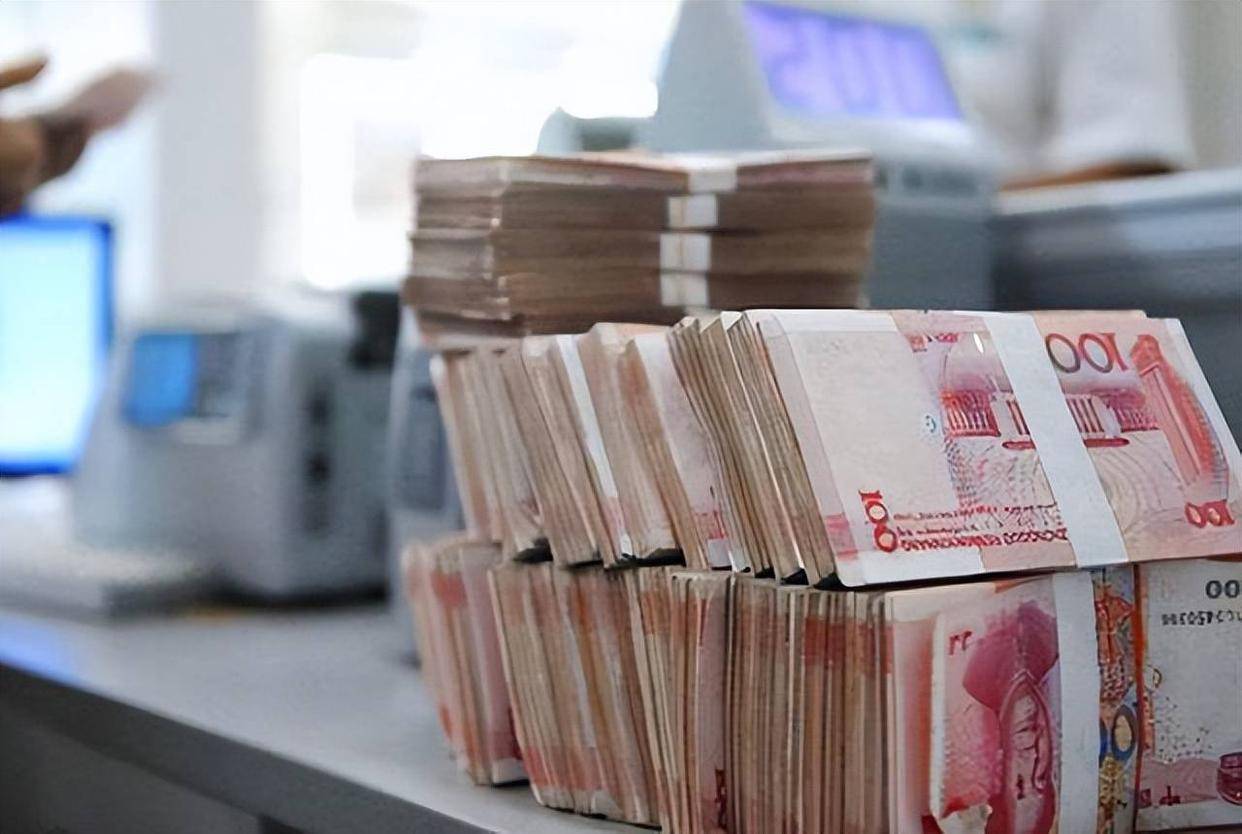
贫富差距

Search documents
股市越涨,贫富差距就越大 || 关注
Sou Hu Cai Jing· 2025-09-02 03:14
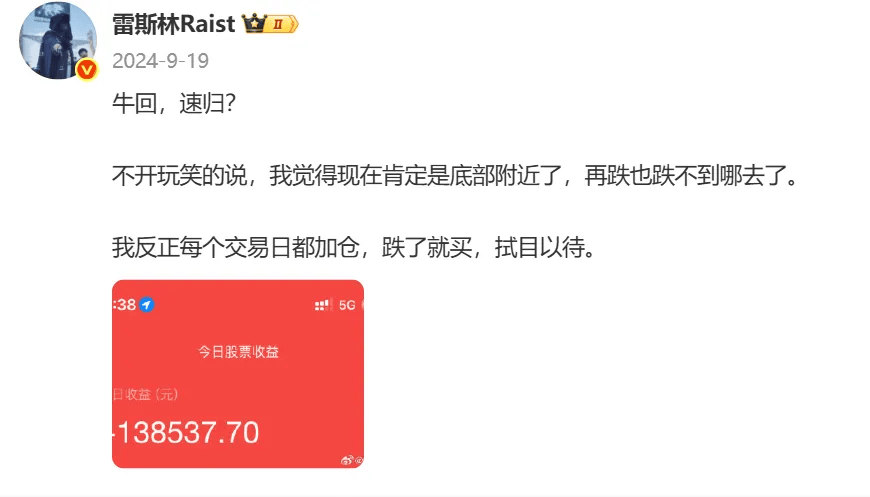
Group 1 - The core argument is that rising stock prices in the U.S. exacerbate wealth inequality, making life more difficult for the poor despite overall market gains [2][4]. - The average American household has assets worth $1.2 million, but the median household asset is only $192,000, indicating a significant wealth gap of 6.25 times [2]. - Asset price inflation, particularly in stocks and real estate, benefits the wealthy who rely on asset appreciation, while the poor depend on labor for income [2]. Group 2 - The recent surge in A-shares from 2,600 points to 3,800 points has not translated into significant gains for most ordinary investors, with many either hesitant to enter the market or only making modest profits [6][7]. - Notable investors, such as top speculators, have profited significantly during this bull market, with one investor reportedly earning over 3 billion yuan from a single stock [9]. - The disparity in investment success suggests that larger capital can leverage market opportunities more effectively, reinforcing the notion that the stock market favors the strong [11].


FBI发布2024年美国犯罪数据:平均每30分钟就有一人被杀
Huan Qiu Wang· 2025-08-06 11:27
Core Insights - The FBI's latest crime data report indicates that in 2024, an average of one person is murdered every 30 minutes in the United States [1] - The report highlights a significant increase in violent crime, with an incident occurring every 25.9 seconds and a rape case every 4.1 minutes [3] - The number of attacks on law enforcement officers reached a historic high, with 85,730 officers attacked and 64 fatalities reported [3] Crime Statistics - The FBI's "Uniform Crime Reporting" program compiled data from over 16,000 law enforcement agencies, covering approximately 95.6% of the U.S. population [3] - The report reveals a disturbing rise in hate crimes and violent incidents, contributing to heightened public concern over crime and violence [3] Political Response - There is a growing public demand for the government to improve social security in response to rising crime rates [3] - Political parties are criticized for using crime issues for electoral gain rather than addressing the underlying problems [3] Underlying Issues - Systemic issues such as interest group influence, systemic racism, wealth disparity, and ineffective drug regulation are identified as contributing factors to the rise in violent crime [3]

贝佐斯桑切斯蜜月开销引热议,保镖日薪八万欧元系鞋带
Xin Lang Cai Jing· 2025-08-04 07:45
Group 1 - The article highlights the extravagant lifestyle of billionaires like Jeff Bezos and Lauren Sanchez, showcasing their lavish expenditures and the stark contrast to the average worker's life [1][3][5] - It discusses how their public displays of affection and lifestyle choices can influence stock prices, drawing parallels to tactics used by other wealthy individuals like Elon Musk [2][4] - The narrative emphasizes the growing wealth gap and the perception of the elite's lifestyle as disconnected from the struggles of ordinary workers, with social media reactions reflecting a mix of envy and resignation [3][6] Group 2 - The article points out the strategic use of personal relationships and public appearances by billionaires to manage public perception and divert attention from negative corporate news, such as layoffs [2][4][5] - It contrasts the current generation of wealthy individuals who openly flaunt their wealth with past figures like Warren Buffett, who preferred a more understated approach [5][6] - The piece concludes with a commentary on the societal implications of wealth concentration, questioning whether the happiness of the wealthy can translate into benefits for the average worker [6]

美国发现一颗富含黄金小行星:估值5.53亿亿元 全球每人可分6912亿元
Sou Hu Cai Jing· 2025-07-30 05:20
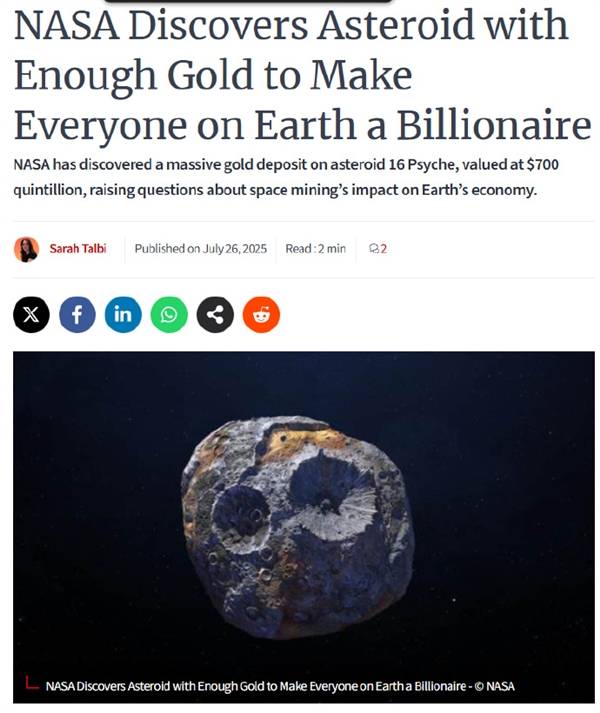
Core Viewpoint - NASA has discovered a massive "gold mine" on the asteroid 16 Psyche, with metal resources valued at approximately €700 trillion (around ¥55.3 trillion) [1] Group 1: Discovery and Valuation - The asteroid is rich in metals, including gold, iron, and nickel [1] - If the wealth were distributed among the global population of approximately 8 billion, each person could theoretically receive about €875 billion (around ¥6.912 trillion) [1] Group 2: Economic Implications - Experts warn that this discovery could have catastrophic effects on the global economy, potentially exacerbating wealth inequality and leading to inflation and soaring prices [1] - The feasibility of mining these resources remains uncertain, as current Earth-based technology may not allow for practical extraction [1]
下调至“恶化”!美国经济,突传利空!
证券时报· 2025-07-25 04:05
Core Viewpoint - Fitch Ratings has downgraded the outlook for approximately one-quarter of U.S. industries to "deteriorating," citing increased uncertainty and risks of economic slowdown in the U.S. [1][3] Trade and Tariff Policies - The uncertainty surrounding the trade and tariff policies of the Trump administration is a primary reason for Fitch's warning [2][4][5] - The U.S. is facing complex trade negotiations with the EU and India, with significant variables affecting outcomes [2][11] - The EU has approved counter-tariffs on U.S. products worth €93 billion, indicating a strong response to U.S. trade policies [2][17] Economic Projections - Despite a slight increase in the GDP growth forecast for 2025 from 1.2% to 1.5%, Fitch expects the momentum of U.S. GDP growth to slow down within the year [7][10] - The U.S. government deficit is projected to remain above 7% of GDP, with the debt-to-GDP ratio expected to rise to 135% by 2029 due to recent tax and spending legislation [6][8] Impact on Consumers and Inequality - The "Big and Beautiful" Act is anticipated to exacerbate income inequality, with the poorest Americans losing approximately $1,600 annually, while wealthier households could see an increase of $12,000 in average annual income [9]

美国会机构:“大漂亮”税法将十年让政府赤字增加3.4万亿美元
Hua Er Jie Jian Wen· 2025-07-21 19:13
Core Points - The "Big Beautiful" Act (OBBBA) is projected to increase the U.S. federal deficit by $3.4 trillion over the next decade according to the Congressional Budget Office (CBO) [1][2] - The act is expected to reduce federal revenue by $4.5 trillion and decrease spending by $1.1 trillion by 2034 [1] - The legislation is anticipated to result in approximately 10 million Americans losing their health insurance by 2034 [1] - The CBO's estimates indicate that the deficit increase surpasses previous predictions, and the analysis does not account for potential dynamic effects on economic growth or interest rates [1] Financial Implications - The act is expected to add $3.4 trillion to the already high U.S. government debt, which stands at $36.2 trillion [2] - The act includes a provision to raise the federal debt ceiling by $5 trillion and makes the tax cuts from 2017 permanent [3] - The Medicaid program is projected to face nearly $1 trillion in cuts over the next decade [3] Socioeconomic Impact - The act is controversial due to its potential to increase long-term debt and provide tax cuts primarily benefiting the wealthy and large corporations [3] - The CBO estimates that the act will exacerbate income inequality, with the poorest Americans losing about $1,600 annually while the wealthiest families could see an average income increase of $12,000 [3] - The act's cuts to healthcare and federal assistance are expected to negate any minor tax relief for many families [3] Inflation and Cost of Living - Rising tariffs are contributing to increased prices, which disproportionately affect low-income households [4] - Recent inflation data indicates that costs are rising, particularly impacting essential goods for low-income Americans [4]
银行经理坦言:个人存款超过50万,就已超越了全国98%的家庭!
Sou Hu Cai Jing· 2025-07-08 07:59
Core Insights - The article highlights the stark reality of personal savings in China, revealing that having savings of 500,000 yuan places individuals in the top 2% of households, contrary to the common belief that such savings are widespread [3][8] - The disparity in wealth distribution is a significant factor, with 2% of families holding 80% of the savings, indicating a concentration of wealth among a small segment of the population [4][8] Wealth Distribution - The data from China shows that only 10% of the population has savings exceeding 100,000 yuan, while those with over 500,000 yuan are less than 2% [3][4] - The concentration of savings illustrates the severe inequality in wealth distribution, where the majority of families possess minimal savings, often insufficient to cover unexpected expenses [4][6] Economic Factors - High housing prices are a critical burden, forcing many families to rely on loans for home purchases, which depletes their savings and creates significant monthly repayment pressures [6][8] - The mortgage scale in China has reached nearly 39 trillion yuan, with over 200 million families repaying loans, further straining their financial capacity [6][8] Investment Risks - The collapse of high-yield investment products, such as P2P platforms, has led to significant losses in household savings, pushing individuals towards riskier investments like stocks and funds, often resulting in further financial losses [4][8] - The low interest rates on bank deposits have also contributed to the shift towards higher-risk investments, exacerbating the financial challenges faced by many households [4][8] Income Levels - The average income level for many Chinese residents is relatively low, with monthly earnings typically ranging from 3,000 to 6,000 yuan, making it difficult to save substantial amounts [6][8] - Even dual-income households often struggle to save more than 3,000 yuan per month, indicating that accumulating 500,000 yuan could take over 13 years for an average family [6][8]

为什么消费刺激不起来
集思录· 2025-07-06 14:02
Core Viewpoint - The article discusses the disparity in wealth distribution in China and its impact on consumer spending, highlighting that a small percentage of high-net-worth individuals hold a significant portion of the country's savings, which affects overall consumption levels [1][2][3]. Group 1: Wealth Distribution - As of May 2025, total deposits in China reached 326 trillion yuan, with household deposits at 160 trillion yuan, and the one-year deposit interest rate has fallen below 1% [1]. - The top 10% of depositors control nearly 70% of total deposits, while around 600 million people have deposits close to zero [1]. - The top 20% of high-net-worth families own approximately 83% of household deposits, while the bottom 40% hold only about 2.5% [2]. Group 2: Consumer Behavior - The article argues that the focus of consumption stimulation should be on high-net-worth individuals rather than the working class, as the current policies do not effectively address the wealth concentration issue [2][3]. - There is a notable difference in consumption patterns between China and the U.S., where the top 10% of earners account for 50% of consumption in the U.S., while in China, the top 20% only account for 40% [3][4]. Group 3: Service Consumption - The disparity in service consumption between China and the U.S. is significant, with the latter having a higher percentage of spending on services such as healthcare, legal, financial, and education [3][4]. - In the U.S., service consumption constitutes over 65% of total consumption, while in China, many services are state-run and do not cater to the wealthier population's needs [3][4]. Group 4: Economic Implications - The article suggests that the concentration of wealth leads to a lack of effective consumer spending, as extremely wealthy individuals tend to be frugal and do not significantly contribute to stimulating the economy [5][6]. - The ongoing wealth gap poses a challenge for economic policies aimed at boosting consumption, as the majority of the population lacks sufficient disposable income to drive demand [8].

“大而美”法案与稳定币,放手一搏的美国,不成功便成仁
Sou Hu Cai Jing· 2025-07-04 06:27
Group 1 - The passage of Trump's "Big and Beautiful" bill is almost inevitable, as failure to pass it would lead to a halt in U.S. government operations and a collapse of the dollar and U.S. Treasury credit system [1] - Both the Democratic and Republican parties are attempting to leverage the bill for personal interests despite their public disagreements [1] - The current situation indicates a failure in efforts to control carbon emissions and a stagnation in the development of alternative energy, exacerbating wealth inequality in the U.S. [1] Group 2 - The current government faces two urgent issues: maintaining operational funding through continued issuance of Treasury bonds and addressing the credibility of the dollar and U.S. debt [3] - Trump's strategies include raising the debt ceiling, using ambiguous statements to create market volatility, and issuing a dollar stablecoin linked to U.S. debt to alleviate the debt crisis [5] - The potential outcomes of these strategies could determine whether the U.S. remains a leading power or declines to a second or third-tier status [7]

一个家庭手里有30万存款,在国内属于什么水平?终于有人说了实话
Sou Hu Cai Jing· 2025-07-04 04:14
Group 1 - The total balance of personal deposits in China reached 134.98 trillion yuan, with an average of 95,600 yuan per person, indicating a significant amount of savings among the population [1] - However, 65% of Chinese households have savings below 163,000 yuan, revealing a stark contrast between average figures and the reality faced by most families [3][4] - A small percentage of families hold a disproportionate amount of savings, with 2% of households owning 80% of the total deposits, while over 560 million people have no bank savings at all [3][9] Group 2 - The income levels for ordinary Chinese residents are generally low, especially in second and third-tier cities, where monthly incomes range from 3,000 to 6,000 yuan [4] - High debt levels, particularly from housing loans, have increased financial pressure on households, with total household loans reaching 75.23 trillion yuan and housing loans at 44.64 trillion yuan [9] - The disparity in savings and income, coupled with high housing costs and debt, makes wealth accumulation a challenging task for the majority of families in China [10]