
AI机器人

Search documents
汽车周观点:小鹏科技日完善AI布局,继续看好汽车板块-20251110
Soochow Securities· 2025-11-10 02:28
Investment Rating - The report maintains a positive outlook on the automotive sector, particularly emphasizing investment opportunities in AI and smart vehicles [1][3]. Core Insights - The automotive industry is at a crossroads, transitioning from electric vehicle (EV) benefits to a focus on smart technology and robotics. Investment opportunities are identified in three main areas: AI smart vehicles, AI robotics, and traditional vehicle segments [3][54]. - Key developments include Tesla's $1 trillion compensation plan approval, aiming for significant production and delivery targets, and Xiaopeng's launch of new AI-driven products [2][3][62]. Summary by Sections Market Performance - This week, the automotive sector showed mixed performance, with commercial passenger vehicles leading with a +0.8% increase, while passenger cars saw a decline of -3.4% [2][7]. - The report highlights the best-performing stocks, including Weichai Power and China National Heavy Duty Truck [2][25]. Investment Opportunities - The report suggests focusing on AI smart vehicles, with key players like Tesla, Xiaopeng, and various technology providers leading the charge. The report also identifies opportunities in the supply chain, including vehicle manufacturing and component suppliers [3][54]. - The expected growth in the domestic market is projected at 4.1% year-on-year for 2025, with total retail sales anticipated to reach 23.7 million units [50][57]. Future Outlook - The report forecasts a significant increase in the penetration of L3 and L2+ autonomous driving technologies by 2025, with expected market shares of 20% and 33% respectively for new energy vehicles [52][54]. - The report anticipates a continued recovery in the bus market and a 15% growth in domestic sales driven by policy support [57]. Key Companies and Developments - Notable companies mentioned include Tesla, Xiaopeng, and various suppliers like Top Group and Yanfeng Automotive. The report emphasizes the importance of these companies in the evolving landscape of smart vehicles and robotics [61][65]. - The report also highlights the recent IPOs of companies like Xiaopeng and WeRide, indicating a growing interest in the sector [62][65].
36氪首发|高秉强投资的智能厨电团队,「栗上LISSOME」完成超千万元Pre-A轮融资
3 6 Ke· 2025-11-08 02:34
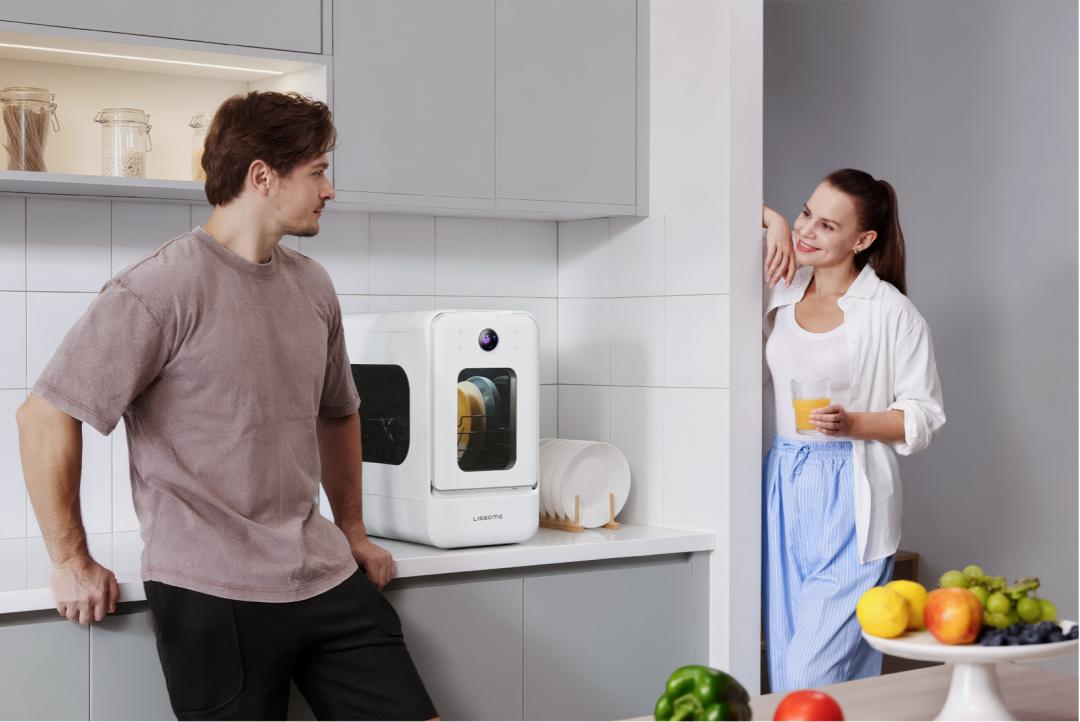
Core Insights - LISSOME, a smart kitchen appliance brand, has recently completed a Pre-A round financing of over 10 million yuan, led by Professor Gao Bingqiang and Gao Feng Naxin Capital, with Chasing Capital as the exclusive financial advisor [1] - The funds will primarily be used for product development, team expansion, and market channel development, as well as to enhance supply chain layout [1] - The company focuses on smart kitchen appliances and food technology, having applied for over 30 technology patents [1] Company Overview - LISSOME was incubated at the Xbotpark base and specializes in innovative kitchen appliances, particularly in the fields of robotics, smart sensing, and motion control [1] - The latest product, the capsule dishwasher R1, features a compact design with a width of only 28 cm and utilizes advanced cleaning technologies [2][4] Market Trends - The demand for independent dishwashers is expected to grow at a rapid rate of 10.5% from 2025 to 2032, driven by changing family structures and the pursuit of quality living [1] - The global smart dishwasher market is projected to grow from $5.13 billion in 2024 to $11.08 billion by 2032, with a compound annual growth rate of 10.1% during the forecast period [2] Product Innovation - The R1 capsule dishwasher can achieve a quick cleaning cycle of 15 minutes without the need for installation or plumbing modifications [2] - It incorporates a high-pressure brushless integrated water pump, which required extensive development due to its unique small size [4] - The R1 features advanced cleaning capabilities, including a 360° spray system and multiple cleaning modes, leveraging AI and sensor technology [4] Future Plans - LISSOME aims to continue exploring the integration of AI robotics and other innovative technologies in kitchen appliances, with plans to launch more innovative products [6] - The founding team has extensive experience in robotics, sensors, and motion control, with members coming from leading companies in the industry [6]

2025消费电子创新大会深圳开幕 科技新品受捧
Zhong Guo Xin Wen Wang· 2025-11-07 06:41
Group 1 - The 2025 Consumer Electronics Innovation Conference (CEIC2025) was held in Shenzhen, attracting nearly 300 tech companies from 20 countries and regions, with over 18,000 attendees on the first day [1][2] - The conference focused on five major areas: smart terminals, smart vehicles, smart homes, digital health, and new technologies, showcasing a complete innovation chain from technology to application scenarios [1][2] - Huawei showcased its HarmonyOS 6 products across five categories, highlighting seamless collaboration between devices, which generated significant interest among attendees [1][2] Group 2 - The smart automotive section featured several car manufacturers demonstrating integrated smart cockpit experiences, allowing remote control of home devices through in-car screens, promoting a smart living environment [2] - The digital health area presented various smart wearable devices and remote care systems, indicating new trends in digital health development [2] - CEIC2025 adopted a "show, conference, festival" model to activate the innovation ecosystem, including three main forums and 16 sub-forums with over 300 industry experts sharing insights [2]
腾远钴业(301219):业绩符合预期,一体化持续推进
Huaan Securities· 2025-11-06 07:37
Investment Rating - The investment rating for the company is "Buy" (maintained) [1] Core Views - The company reported a revenue of 5.75 billion yuan for the first three quarters of 2025, representing an 18% year-on-year increase, and a net profit attributable to shareholders of 750 million yuan, up 22% year-on-year. In Q3 alone, revenue reached 2.22 billion yuan, a 32% year-on-year increase and a 7% quarter-on-quarter increase, with a net profit of 280 million yuan, marking a 48% year-on-year growth [4][5] - The company is expected to achieve net profits of 1.014 billion yuan, 1.373 billion yuan, and 1.672 billion yuan for 2025, 2026, and 2027 respectively, with corresponding P/E ratios of 20, 15, and 12 [5] - The company is advancing its integrated layout, with the Democratic Republic of the Congo's quota policy expected to support rising cobalt prices. The company has established processing capabilities for cobalt salts, electrolytic cobalt, and electrolytic copper, and is extending its reach into downstream markets [8] Financial Summary - For 2025, the company is projected to have a revenue of 7.661 billion yuan, a year-on-year growth of 17.1%, and a net profit of 1.014 billion yuan, reflecting a 47.9% increase year-on-year. The gross margin is expected to be 25.8% [7] - The company’s return on equity (ROE) is projected to increase from 7.8% in 2024 to 10.3% in 2025, and further to 12.2% in 2026 [7] - The earnings per share (EPS) is expected to rise from 2.33 yuan in 2024 to 3.44 yuan in 2025, and reach 4.66 yuan in 2026 [7]
FT中文网精选:中国AI机器人赛道的“群雄时刻”
日经中文网· 2025-11-06 02:26
Core Viewpoint - The article discusses the emerging competition between China and the United States in the field of humanoid robotics, highlighting the strengths of each country's technological ecosystem and the implications for the market [5][6]. Group 1: Technology Comparison - The competition is characterized by China's manufacturing and engineering advantages represented by the humanoid robot R1 from Yuzhu Technology, priced at $5,900, which is aimed at researchers and developers [6]. - In contrast, the U.S. is represented by Figure AI's Figure 03, which focuses on household tasks and is expected to see its price drop from $150,000 to a range of $20,000 to $30,000, showcasing the ambition of American companies in industrial automation and home applications [6]. Group 2: Market Dynamics - The introduction of these humanoid robots marks the beginning of a price war aimed at making robotics more accessible, indicating a shift towards mass production and consumer adoption in both markets [6]. - The competition is described as a "final showdown" between the two tech giants, emphasizing the significance of this moment in the evolution of humanoid robotics [6].

【周观点】Q3乘用车/零部件略有承压,商用车/摩托车表现更佳,继续看好汽车板块
东吴汽车黄细里团队· 2025-11-03 14:50
Investment Highlights - This week, the performance of the automotive sector was mixed, with the SW commercial passenger vehicle segment leading with a gain of 4.8%, followed by SW motorcycles and others at 3.2%, while the SW passenger vehicle segment saw a decline of 1.9% [4][13] - The team released several reports, including a test drive report for October in Beijing and third-quarter reviews for various companies such as Changan Automobile, Great Wall Motors, and Yutong Bus [5][13] Industry Core Changes - SAIC Group reported total revenue of CNY 169.4 billion for Q3 2025, with year-on-year growth of 16% and a net profit of CNY 2.08 billion, reflecting a significant increase of 645% year-on-year [6][13] - Seres achieved Q3 2025 revenue of CNY 48.13 billion, with a net profit of CNY 2.37 billion, showing a slight decrease of 1.7% year-on-year [6][13] - Xiaopeng Motors delivered 42,013 vehicles in October, setting a new monthly record, while Leap Motor delivered 70,289 vehicles, also a historical high [6][8][13] Current Automotive Sector Configuration - The automotive industry is at a crossroads, transitioning from the end of the electric vehicle boom to the dawn of automotive intelligence, with three main investment opportunities emerging: AI smart vehicles, AI robots, and traditional vehicle segments [9][15] - Key investment targets in the AI smart vehicle segment include Tesla, Xiaopeng Motors, and various technology providers like Horizon Robotics and Baidu [15] - The traditional vehicle segment remains promising, particularly in buses and heavy trucks, with companies like Yutong Bus and China National Heavy Duty Truck Group being highlighted [10][15]






【2025Q3业绩综述】乘用车/零部件略有承压,商用车/摩托车表现更佳
东吴汽车黄细里团队· 2025-11-03 14:50
Investment Opportunities in the Automotive Sector - The automotive industry is at a crossroads, with the end of electric vehicle (EV) incentives and the dawn of automotive intelligence, while robotics innovation is in its early stages [4][7] - Three main investment themes are identified: AI smart vehicles, AI robotics, and traditional vehicle segments [4][7] AI Smart Vehicle Investment Theme - Key targets from the Robotaxi perspective include integrated models like Tesla and Xpeng, technology providers like Horizon Robotics and Baidu, and the transformation of ride-hailing services involving Didi and others [4][7] - For Robovan, companies like Desay SV and Zhongyou Technology are highlighted [4][7] - From the C-end vehicle sales perspective, companies such as Xpeng, Li Auto, and Huawei's automotive ventures are noted [4][7] - In the upstream supply chain, B-end vehicle manufacturing firms like BAIC Blue Valley and GAC Group are key, along with core suppliers in testing, chips, domain controllers, sensors, and more [4][7] AI Robotics Investment Theme - Selected components include Top Group, Junsheng Electronics, and others, focusing on robotics and automation [4][7] Traditional Vehicle Segments - The bus segment, represented by Yutong Bus, and heavy trucks like China National Heavy Duty Truck and Weichai Power are expected to perform well [5][7] Performance Overview of the Automotive Sector - The overall performance of the passenger vehicle sector is under pressure, with a slowdown in growth rates and increased competition leading to price reductions [8][22] - The heavy truck sector has seen strong sales, with Q3 2025 wholesale and export volumes up significantly, driven by policy incentives [10][11] - The bus sector has experienced a surge in demand, with leading companies like Yutong achieving better-than-expected results [11] - The motorcycle segment has shown strong export growth, particularly in large-displacement models, despite domestic sales pressures [12][13] Financial Performance Insights - Q3 2025 results indicate that the overall automotive sector's performance is mixed, with some companies exceeding expectations while others face challenges [17][18] - The heavy truck sector's revenue and profit growth are robust, with leading companies reporting significant year-on-year increases [10][14] - The passenger vehicle sector has seen a decline in profitability due to increased competition and external economic factors [8][22] Market Trends and Future Outlook - The automotive market is expected to continue evolving, with a focus on electric and intelligent vehicles, as well as robotics integration [4][7] - The outlook for Q4 2025 suggests potential recovery in sales and profitability, driven by policy changes and new model launches [8][22]

2025Q3业绩综述:乘用车/零部件略有承压,商用车/摩托车表现更佳
Soochow Securities· 2025-11-03 12:54
Group 1: Overall Market Performance - The automotive sector is at a crossroads, with electric vehicle (EV) benefits waning and smart vehicle technology in its early stages[2] - The overall performance of the passenger vehicle sector in Q3 2025 was below expectations, primarily due to a slowdown in industry growth and intensified competition[3] - The passenger vehicle industry saw a year-on-year growth of only 3% in retail sales, while exports grew by 23%[27] Group 2: Segment-Specific Insights - Heavy-duty trucks experienced a significant year-on-year sales increase of 58.1%, with domestic sales up 64.5% and exports up 22.9% in Q3 2025[5] - The bus segment saw strong performance, with leading companies like Yutong exceeding expectations due to rapid sales growth and improved profit margins[6] - Motorcycle exports showed robust growth, with large-displacement motorcycle exports reaching 146,000 units, a year-on-year increase of 57.4%[7] Group 3: Financial Metrics - The average selling price (ASP) for vehicles remained stable in Q3 2025, with some companies like BYD implementing price increases[3] - The overall net profit margin for the heavy-duty truck sector improved, with major players like China National Heavy Duty Truck Group reporting a 21% increase in net profit[8] - The motorcycle industry saw a year-on-year profit increase of 21%, despite a 10% decline in revenue quarter-on-quarter[7] Group 4: Risks and Challenges - Risks include potential escalations in trade wars, slower-than-expected global economic recovery, and geopolitical uncertainties[2] - The automotive industry faces challenges from regulatory pressures and a lack of significant price reductions among manufacturers[3]



2025Q3业绩综述:乘用车、零部件略有承压,商用车、摩托车表现更佳
Soochow Securities· 2025-11-03 11:58
Group 1: Overall Market Performance - The overall performance of the passenger car sector in Q3 2025 was below expectations, primarily due to a slowdown in industry growth and intensified competition across all price segments[3] - The passenger car industry saw a year-on-year growth rate of only 3% in retail sales, 23% in exports, and 13% in wholesale during Q3 2025, indicating a significant deceleration compared to previous quarters[27] - The inventory levels in the industry remain healthy, with a controlled increase in stock despite the overall market pressures[27] Group 2: Segment-Specific Insights - Heavy-duty trucks experienced a strong performance in Q3 2025, with wholesale, domestic, and export sales increasing by 58.1%, 64.5%, and 22.9% year-on-year, respectively[5] - The bus sector also performed well, with leading companies like Yutong achieving significant revenue growth, driven by robust demand from both domestic and international markets[6] - The motorcycle segment saw a 57.4% increase in large-displacement motorcycle exports, while domestic sales faced pressure, declining by 9.3% year-on-year[7] Group 3: Financial Metrics and Adjustments - The average selling price (ASP) for vehicles remained stable in Q3 2025, with some companies like BYD implementing price increases starting in July[3] - The gross profit margins for many companies showed slight recovery, attributed to stable sales and limited discounting in the market[3] - Several companies, including Great Wall Motors and Changan, reported a decline in net profit due to foreign exchange losses and inventory adjustments[4]


汽车周观点:特斯拉Robotaxi进展顺利,继续看好汽车板块-20251027
Soochow Securities· 2025-10-27 03:18
Investment Rating - The report maintains a positive outlook on the automotive sector, particularly highlighting the progress of Tesla's Robotaxi initiative and the overall performance of the automotive industry [1][3]. Core Insights - Tesla achieved total revenue of $28.095 billion in Q3 2025, with automotive sales revenue of $20.776 billion, reflecting a quarter-on-quarter increase of 6.2% and a year-on-year increase of 28.0% [2][3]. - The report emphasizes the importance of the V14.2 version and the Cybercab mass production milestone for Tesla's Robotaxi project, with plans to start mass production of Optimus in 2026, targeting an annual capacity of one million units [2][3]. - The report identifies three main investment themes in the automotive sector: AI smart vehicles, AI robotics, and traditional vehicle segments, indicating a transitional phase in the industry [3]. Summary by Sections Automotive Sector Performance - The automotive sector saw varied performance, with commercial passenger vehicles leading with a 4.1% increase, followed by automotive parts at 4.0% and commercial freight vehicles at 2.5% [2][3]. - The report notes that the automotive industry may be entering a new crossroads, with the end of the electric vehicle boom and the dawn of automotive intelligence [3]. Key Company Updates - North Benz Blue Valley reported Q3 2025 revenue of 5.87 billion yuan, with a net loss of 1.12 billion yuan, showing a reduction in losses compared to previous quarters [2][3]. - Aima Technology achieved Q3 2025 revenue of 8.06 billion yuan, a year-on-year increase of 17.3%, with a net profit of 690 million yuan, up 15.2% year-on-year [2][3]. Future Outlook - The report forecasts a 4.1% year-on-year increase in domestic retail sales of passenger vehicles in 2025, estimating total sales of 23.7 million units [2][3]. - It predicts that the penetration rate of L3 autonomous driving technology will reach 20% by 2025, driven by major players like Tesla and Huawei [3][50].