
AI汽车

Search documents
从深渊爬出来的小鹏,要杀回高端市场了
3 6 Ke· 2025-05-22 07:32
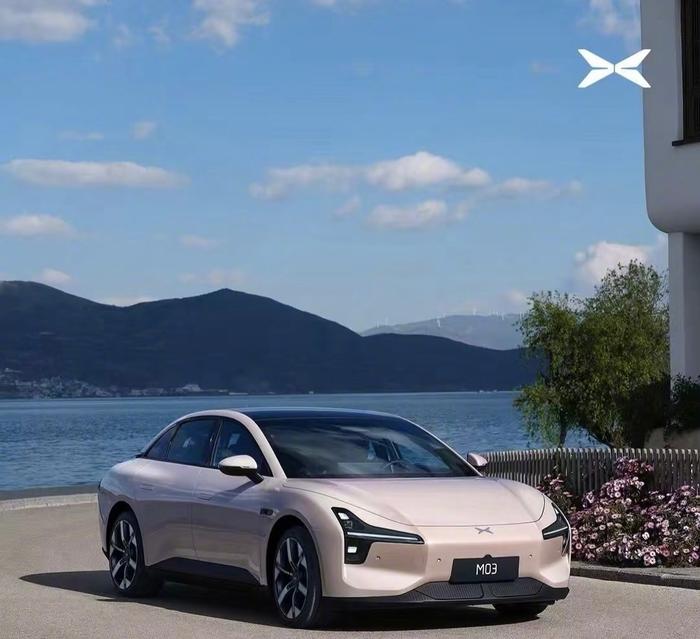
Core Insights - Xiaopeng Motors has reported impressive first-quarter results, driven by strong sales of its popular models, P7+ and MONA M03, which have significantly contributed to the company's revenue growth [1][2][4] - The company aims to re-enter the mid-to-high-end market with upcoming models such as G7 and a new generation of P7, alongside an extended-range vehicle [1][8][11] Financial Performance - Xiaopeng's total revenue for Q1 2025 reached 158.1 billion yuan, marking a year-on-year increase of 141.5% [2] - Automotive sales revenue was 143.71 billion yuan, with a staggering growth rate of 159.2% year-on-year [2] - The automotive gross margin improved to 10.5%, up 5 percentage points from the previous year [2] - The company reported a net loss of 6.6 billion yuan for the quarter, a reduction from 13.3 billion yuan in the previous quarter [7] Sales and Market Position - In Q1 2025, Xiaopeng delivered over 30,000 vehicles each month, nearly doubling the delivery volume compared to the same period last year [2][4] - The MONA M03 achieved an average monthly sales volume of over 15,000 units, while the P7+ maintained around 8,000 units per month [4] - Xiaopeng's sales strategy has shifted to reduce the number of vehicle configurations (SKUs), simplifying the purchasing process for consumers [5] Future Outlook - Xiaopeng plans to launch several new models in the second half of 2025, including the G7 and a new version of the P7, targeting the 20-30 million yuan price range [8][11] - The company anticipates Q2 2025 deliveries to be between 102,000 and 108,000 units, with total revenue projected between 175 billion and 187 billion yuan [7] - Xiaopeng's chairman, He Xiaopeng, expressed confidence in achieving profitability by Q4 2025, following a period of restructuring and strategic adjustments [13][15] Strategic Initiatives - The company is focusing on integrating AI technologies into its products, including AI-assisted driving and smart cockpit features, aiming for breakthroughs in multiple areas [16] - Xiaopeng is also exploring partnerships and technological advancements to enhance its competitive edge in the rapidly evolving automotive market [16]


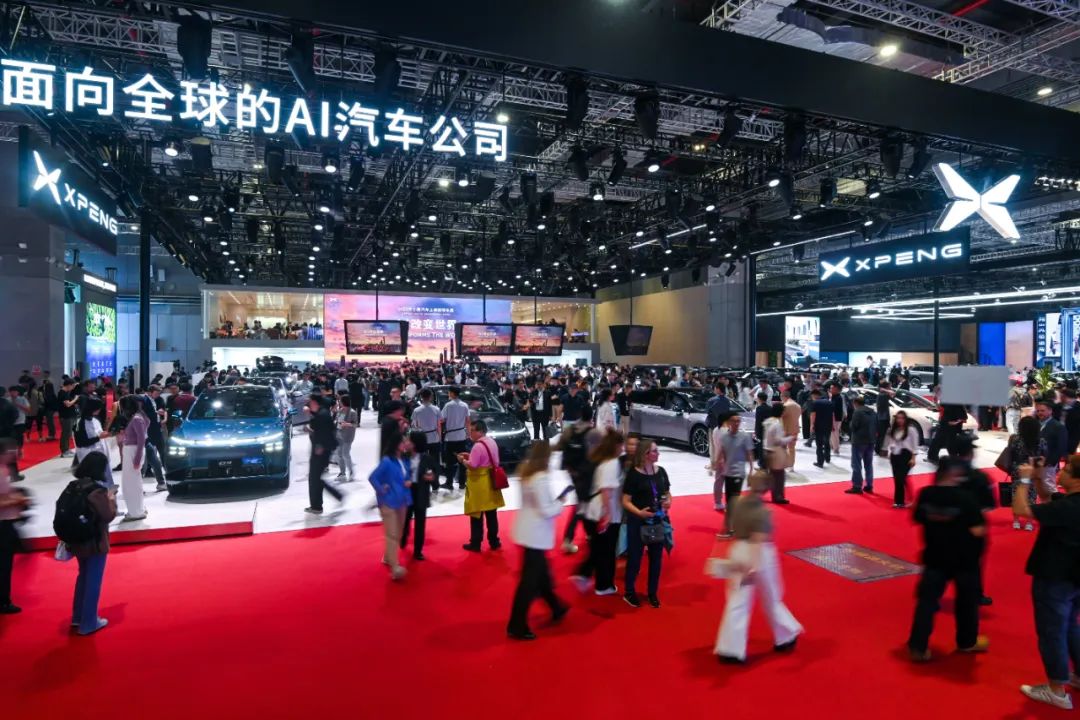
小鹏汽车现金储备达453亿 ,净增超33亿元
3 6 Ke· 2025-05-22 04:43
Core Viewpoint - Xiaopeng Motors reported significant growth in Q1 2025, with revenue reaching 15.81 billion yuan, a year-on-year increase of 141.5%, and vehicle deliveries totaling 94,008 units, up 330.8% compared to the previous year [1] Financial Performance - Q1 2025 revenue was 15.81 billion yuan, reflecting a 141.5% year-on-year increase [1] - Net loss attributable to ordinary shareholders in Q1 2025 was 660 million yuan, a significant reduction from 1.37 billion yuan in Q1 2024 and 1.33 billion yuan in Q4 2024 [2] Cash Reserves - As of the end of Q1 2025, Xiaopeng Motors' cash reserves reached 45.28 billion yuan, an increase of over 3.3 billion yuan compared to the end of 2024 [1] Future Projections - For Q2 2025, Xiaopeng Motors expects to deliver between 102,000 and 108,000 vehicles, representing a year-on-year increase of 237.7% to 257.5% [1] - Projected revenue for Q2 2025 is estimated to be between 17.5 billion and 18.7 billion yuan, a year-on-year increase of 115.7% to 130.5% [1] Technological Advancements - Xiaopeng's self-developed Turing chip achieved successful tape-out in 2024, with computing power 3 to 7 times that of mainstream automotive AI chips [1] - The Turing chip is designed for AI applications in vehicles, robots, and flying cars, supporting L4 autonomous driving capabilities [1] - The company aims to develop larger-scale cloud and edge models for AI applications in the automotive sector, with plans to introduce humanoid robots for industrial and commercial scenarios by 2026 [1]
中国首份AI汽车产品报告:智能辅助驾驶五星标准来了
3 6 Ke· 2025-05-07 08:01
Core Viewpoint - The competition in the smart assisted driving sector remains intense, with companies focusing on enhancing user experience and product capabilities, particularly in the context of AI vehicles [1][5]. Industry Trends - The industry has entered a new phase where product experience is prioritized over technical jargon, leading to the establishment of new standards for evaluating AI vehicle capabilities [3]. - Smart assisted driving technology has reached a performance ceiling, with leading players implementing "from parking space to parking space" capabilities, while innovations are now focused on responsibility delineation [5]. - The proliferation of smart assisted driving features is accelerating across various vehicle types and price points, with a notable increase in fuel vehicles adopting intelligent driving technologies [5]. Market Dynamics - The relationship between vehicle pricing and the level of smart assisted driving capabilities is becoming evident, with higher-priced models offering advanced features and earlier access to over-the-air updates [6]. - A trend towards free standardization of smart assisted driving features is emerging, with some manufacturers including high-level assisted driving as standard across all models, effectively embedding these costs into the overall vehicle price [6][14]. Capability Classification - A new star rating system for smart assisted driving capabilities has been proposed, with five stars representing comprehensive functionality from parking to navigation [7][8]. - The introduction of a "five-star vehicle" concept is anticipated, where vehicles will be rated on multiple criteria including smart assisted driving, safety, and environmental standards [10]. Product Launch Insights - In the first quarter of the year, new models featuring high-speed navigation assistance have been launched, with several models priced above 70,000 yuan being equipped with standard features [11][12]. - The cost structure for smart assisted driving varies, with some models offering free standard features, while others charge for advanced capabilities, typically ranging from 3,000 to 64,000 yuan [18]. Technological Integration - The industry is moving towards a fully integrated vehicle architecture, with advancements in electronic systems and software enabling a seamless integration of smart assisted driving, intelligent cockpit, and connectivity features [20].
小鹏汽车李力耘:AI汽车是具象智能的第一步
news flash· 2025-04-14 07:54
4月14日下午消息,在小鹏AI分享交流会上,小鹏汽车自动驾驶负责人李力耘表示,自动驾驶的问题本 质上是"复杂物理AI"的问题,而AI汽车是具象智能的第一步。李力耘称,自动驾驶不仅需要去认识理解 世界,更重要的是,自动驾驶还需要做出动作,包括对加减速、油门刹车、方向盘、信号灯甚至未来更 多人车和外界的交互等作出动态响应。在李力耘看来,更为重要的一点,自动驾驶是一个需要面向用户 量产的产品,它既需要满足消费者对功能体验的要求,也需要做到安全无碰撞,所以自动驾驶是一个非 常难又非常有趣的具身问题。(新浪科技) ...
中兴通讯古永承:打造AI汽车新质生产力,助力智能网联汽车跃迁
Zhong Guo Qi Che Bao Wang· 2025-04-01 08:09
近日,2025年中国电动汽车百人会论坛在北京钓鱼台国宾馆举行,以"夯实电动化、推进智能化、实现高 质量发展"为主题,包括高层论坛、国际论坛、理事研讨会、全球政策圆桌会、12场主题论坛及研究成果发 布。围绕车路云一体化发展、AI汽车、智能汽车创新技术与产业、聚合型智能产业、市场与消费、商用车可 持续发展等核心议题,共同探讨新能源汽车产业的高质量发展的方向。 中兴通讯副总裁、汽车电子总经理古永承出席AI汽车论坛,与多位业内同行一起探讨"打造AI汽车软硬件协同 生态"这一话题,发表了主题为《打造AI汽车新质生产力,助力智能网联汽车跃迁 》的演讲。他表示,2025年新能 源汽车正式进入智能化下半场,人工智能作为关键变量,正在推动智能网联汽车向更高质量发展。 域融合是未来整车AI智能的关键路径 构建芯片+OS+AI的软硬协同新范式加大加强开放开源体系建设 域融合是智能网联汽车发展的必然选择。在车端,打通智驾域、座舱域、车控域的数据闭环,实现环境感知、 决策控制与交互体验的有机统一;在路端,通过V2X技术连接智能路侧设备,形成超视距全局感知能力;在云端, 构建算力平台,支撑OTA持续进化。这种"车-路-云"三位一体的融合 ...


晚点对话何小鹏:为了做一个真正的 CEO,我付出了怎样的代价
晚点LatePost· 2025-02-07 05:59
小鹏汽车 CEO 何小鹏 "小赢总比死好,但也不够。" 文丨宋玮 赵宇 何小鹏变了。几年时间,他从一名轻快的造梦者,变成了沉重的实业家。 2019 年,何小鹏成为小鹏汽车 CEO 的第三年,我们第一次访谈他,他状态极好,正在追《凡人修仙传》。现 在,他一周工作六天半,早上 10 点前到岗,晚上 10 点还在公司。一位老同事点评,"他这就是在玩命。" 曾经的何小鹏是典型互联网创业者,用《凡人修仙传》式的浪漫主义追逐技术奇点,融足够多的钱、探索、扩 张。 进入到复杂的制造业,他被暴击了。 2022 年春天,小鹏 P7 月销 9183 辆,小胜,大家以为进入顺周期。仅仅半年后,G9 发布,因定价、配置设计 等失误引发大量差评,早期的技术精英主义引发了定价灾难,此后汽车行业的竞争迅速白热化,小鹏销量一路滑 坡,跌入谷底。 他给同样经历过逆境的雷军打电话。雷军说,小鹏最大的问题是,"你只想做董事长,不想做 CEO。" 两年多时间,何小鹏重新学习做一名 CEO。他自己总结,要做大型的、制造业的、追求科技创新的 CEO——科 技创新暂列最后。 之前的何小鹏沉浸技术,喜欢炫酷的东西。现在他拉着公司从技术导向转向客户导向,亲自 ...