数字经济

Search documents
如何看待中国经济发展的成色
Ren Min Ri Bao· 2026-02-02 22:17
持续壮大的新动能。不断发展的新质生产力,为中国经济提供强大引擎。创新能力显著提升,我国成为 全球首个国内有效发明专利拥有量超500万件的国家,国际专利(PCT)申请量连续多年位居世界第 一;2025年全球百强创新集群中,我国拥有24个,数量连续3年排名全球第一。新兴产业加速壮大, 2025年,数字经济核心产业增加值占GDP比重超过10%。人才创新活力迸发,人才资源总量、科技人力 资源总量、研发人员总量跃居世界第一,科学、技术、工程、数学专业毕业生每年超过500万人。事实 证明,我们自立自强的能力不断提高,自主创新的累累硕果加快涌现,创新正为我国经济发展注入源源 动力。 不断提升的"含绿量"。加快生态系统保护和修复,推动经济社会发展全面绿色转型,决不"吃祖宗饭、 断子孙路"。能源利用更加清洁,构建起全球最大、发展最快的可再生能源体系,2025年,非化石能源 消费总量超过石油,风电光伏发电装机容量首次超过火电,新型储能装机全球占比超过40%。国土绿化 成绩斐然,"十四五"时期造林面积1.85亿亩,新增森林蓄积量相当于一个大兴安岭林区,根据联合国数 据,近10年我国贡献了全球人工林增长面积的一半左右。气候治理担当尽 ...
2026石景山区产业发展促进大会举行
Bei Jing Ri Bao Ke Hu Duan· 2026-02-02 22:08
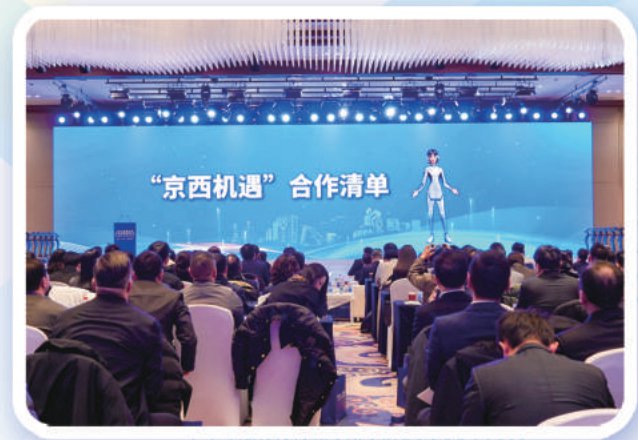
Group 1 - The 2026 Shijingshan District Industrial Development Promotion Conference was held to foster government-enterprise cooperation and promote high-quality economic development in the region [1][3] - Shijingshan District has experienced significant economic growth during the 14th Five-Year Plan, with GDP exceeding 137 billion yuan and an average annual growth rate of 6.3% [3][4] - The district aims to enhance its industrial development capabilities and core competitiveness by focusing on industrial upgrades and innovation-driven strategies [4][5] Group 2 - The district has introduced a series of measures to stimulate enterprise vitality and promote the integration of technology and industry, including 14 specific initiatives targeting innovation and resource allocation [7][8] - Shijingshan District is developing a comprehensive industrial ecosystem supported by favorable policies, aiming to attract high-tech industries and enhance the local business environment [9][11] - The district has launched the "Jingxi Opportunities" cooperation list to invite domestic and international enterprises to leverage local resources and market opportunities [11][12] Group 3 - The district is expanding its industrial space and financial support, with a total of 55.9 billion yuan in funds allocated to key sectors such as information technology and artificial intelligence [13][22] - Shijingshan District is committed to building a modern industrial system and a world-class technology park, with ongoing projects to enhance its industrial capacity [12][13] - The district is actively engaging with enterprises to foster collaboration and innovation, exemplified by partnerships with companies like Leju Robotics to develop a humanoid robot training center [5][20] Group 4 - The district is focusing on creating new models for industrial development, emphasizing high-end, intelligent, and green growth [8][9] - Shijingshan District is promoting the integration of advanced manufacturing and modern services, aiming to cultivate benchmark enterprises and industry chains [9][10] - The district is enhancing its appeal to foreign investment and encouraging the establishment of new foreign enterprises to boost economic growth [9][15] Group 5 - The district has recognized the contributions of local enterprises by awarding titles to "stable cornerstone enterprises" and "innovation-leading enterprises" [15][16] - Shijingshan District is leveraging its historical industrial base, such as the Shougang Group, to drive urban renewal and enhance consumer activity [16][17] - The district is planning to host significant industry events and activities to strengthen its position in the gaming and e-sports sectors [17][18] Group 6 - The district is initiating a global recruitment campaign for "city partners" to foster collaboration among research institutions, enterprises, and educational organizations [20][21] - Shijingshan District aims to transform its identity from a traditional industrial hub to a leader in aerospace technology and innovation [21][22] - The district is committed to creating a vibrant and innovative ecosystem that supports high-quality economic development and enhances its reputation as a key player in the capital's growth [22][23]

昌平区互联网营销师技能培训开班
Xin Lang Cai Jing· 2026-02-02 16:59
Core Insights - The article discusses the launch of an internet marketing skills training program in Changping District, Beijing, aimed at enhancing the skills of workers in the digital economy [1] Group 1: Training Program Details - The training program is organized by the Changping District Federation of Trade Unions and conducted by the Changping District Craftsman Academy [1] - A total of 31 participants, including current employees and platform economy workers, are enrolled in the training [1] - The training employs a hybrid teaching model that combines offline and online methods, focusing on the entire process of live-stream marketing [1] Group 2: Training Objectives and Outcomes - The program includes practical courses, case analyses, and interactive training to equip participants with skills relevant to the digital economy [1] - Upon completion of the training and passing the exam, participants can obtain nationally recognized certifications: the "Internet Marketing Professional Skill Level Certificate" or the "E-commerce Professional Skill Level Certificate" [1]
中国电力企业联合会:预计2026年全社会用电量同比增长5%至6%
Zheng Quan Ri Bao· 2026-02-02 16:24
Core Insights - The report predicts that by 2026, China's total electricity consumption will grow by 5%-6% year-on-year, with solar power generation capacity expected to surpass coal power capacity for the first time [1][3]. Group 1: Electricity Consumption - In 2025, China's total electricity consumption is projected to exceed 10 trillion kilowatt-hours, reaching 10.37 trillion kilowatt-hours, marking the first time any single economy has achieved this milestone [1][2]. - Monthly electricity consumption is expected to surpass 1 trillion kilowatt-hours for the first time, with July 2025 seeing consumption reach 1.02 trillion kilowatt-hours [1]. Group 2: Sector Contributions - The second industry remains the primary contributor to electricity consumption, accounting for 6.64 trillion kilowatt-hours in 2025, which is 64.0% of total consumption, contributing 47.5% to the growth [2]. - New infrastructure developments in sectors such as big data, cloud computing, artificial intelligence, 5G networks, and industrial internet are driving rapid growth in electricity consumption, with internet data services expected to grow at an annual rate of 35.9% from 2021 to 2025 [2]. Group 3: Power Generation Capacity - By the end of 2025, China's total installed power generation capacity is expected to reach 3.89 billion kilowatts, a year-on-year increase of 16.1%, with an average annual growth rate of 12.0% during the 14th Five-Year Plan [3]. - Wind and solar power are projected to account for 80.2% of the newly installed generation capacity, with a total of 4.4 billion kilowatts added in 2025 [3]. - By 2026, it is anticipated that over 4 billion kilowatts of new generation capacity will be added, with more than 3 billion kilowatts coming from renewable sources, and solar power capacity expected to exceed coal power capacity for the first time [3].

越南数字经济推动增长模式创新
Shang Wu Bu Wang Zhan· 2026-02-02 16:01
Group 1 - The core viewpoint is that Vietnam's digital economy is rapidly developing and becoming a crucial pillar for economic growth and the cultivation of new productive forces, particularly in the service and emerging industries [1][2] - By 2025, the value added by Vietnam's digital economy is expected to account for 14% of GDP, approximately $72.1 billion, which is 1.6 times the value in 2020 ($43.8 billion) [1] - The number of digital technology enterprises in Vietnam has significantly increased to about 80,000, up from 58,000 in 2020, indicating a broad expansion of the digital economy [1] Group 2 - The digital economy plays a key role in shaping modern productivity and is essential for Vietnam to prevent developmental lag and achieve leapfrog growth in the digital age [2] - Despite the rapid increase in the digital economy's share of GDP, the domestic value added remains low, with a significant reliance on foreign enterprises and cross-border platforms [2] - To meet the targets set by the Central Political Bureau's Resolution No. 57, which aims for the digital economy to account for at least 30% of GDP by 2030 and 50% by 2045, future development must focus on practical and in-depth approaches, leveraging breakthrough innovations for higher added value [2] Group 3 - The Minister of Science and Technology emphasized the need for the government to build a comprehensive national digital economy framework and promote digital technology enterprises as strategic production forces [3] - The government should guide the development of the digital market through regulations, standards, and procurement mechanisms to create demand for domestic enterprises, helping them grow and compete globally [3] - The focus should be on mastering core technologies, including telecommunications infrastructure, data centers, cloud computing platforms, and cybersecurity solutions, to provide solutions for the domestic market and create globally competitive products [3]
宿迁全面启动数智新城建设,实施人工智能“百景应用”
Yang Zi Wan Bao Wang· 2026-02-02 16:00
Core Insights - The city of Suqian is focusing on building a "Smart City" to leverage opportunities from digital integration and e-commerce, aiming for a transition by 2030 from an e-commerce city to a smart city [1][2] Group 1: Strategic Planning - Suqian has developed a five-year plan and a three-year action scheme to support the construction of the Smart City, emphasizing scenario construction and the OPC (One Person Company) model [1] - The "14th Five-Year" development plan for Suqian's Smart City includes five dimensions: new smart economic structure, new urban space, new social forms, new governance models, and new infrastructure support [1] Group 2: Action Plans and Goals - An action plan for the Smart City from 2026 to 2028 has been established, targeting a digital economy output of 200 billion yuan, with 15% of revenue from core digital economy enterprises [2] - The plan aims to add 600 new digital economy enterprises and achieve an artificial intelligence industry cluster output of 72 billion yuan by 2028 [2] Group 3: Artificial Intelligence Initiatives - Suqian is implementing a "Hundred Scenarios Application" project in artificial intelligence, focusing on 165 specific scenarios across nine sectors, including public services and healthcare [2] - The integration of AI technologies such as robots and drones into these scenarios is expected to create significant market opportunities for AI companies [2] Group 4: OPC Development - The city is promoting the OPC model to foster entrepreneurship, with a specific implementation plan and tailored support policies to encourage innovation [3] - The "OPC Ten Hundred Thousand" initiative aims to create a conducive environment for mass entrepreneurship and innovation [3] Group 5: Societal Impact - The development of the Smart City is projected to create 50,000 new jobs, particularly in data annotation and collection [3] - Smart community and street initiatives will enhance the quality of life for residents, introducing new consumption patterns such as smart transportation and digital tourism [3] Group 6: Government Services Enhancement - The integration of data and AI into government services will lead to streamlined processes, improving user experience with features like "no application required" and "instant access" [4]
中电联预计今年太阳能发电装机规模首超煤电
第一财经· 2026-02-02 15:59
Core Viewpoint - By 2025, China's total electricity consumption is expected to exceed 10 trillion kilowatt-hours, marking a significant milestone in energy consumption and reflecting the country's ongoing green and low-carbon transition in the power supply sector [2][5]. Group 1: Electricity Consumption Growth - In 2025, China's total electricity consumption is projected to reach 10.37 trillion kilowatt-hours, with a year-on-year growth of 5.0%. During the 14th Five-Year Plan period, the average annual growth rate is expected to be 6.6%, an increase of 0.9 percentage points compared to the previous five-year period [5]. - Monthly electricity consumption is also set to break the 1 trillion kilowatt-hour mark for the first time, with July 2025 expected to see consumption reach 1.02 trillion kilowatt-hours, a global first [5]. - The second industry remains the main contributor to electricity consumption, with high-tech and equipment manufacturing expected to see a year-on-year growth of 6.4%, outpacing the average growth of the manufacturing sector by 3.0 percentage points [5][6]. Group 2: New Energy Sector Growth - The new energy sectors, including electric vehicles, lithium batteries, and solar cells, are showing remarkable growth in electricity consumption. The manufacturing of new energy vehicles continues to grow at double-digit rates each quarter [6]. - By 2025, the third industry is expected to consume 1.99 trillion kilowatt-hours, with a year-on-year growth of 8.2%, contributing 30.7% to the overall electricity consumption growth [6]. - Rapid growth in sectors such as charging services and information technology services is driving the increase in electricity consumption in the third industry, with respective growth rates of 48.8% and 17.0% [6]. Group 3: Power Supply Transition - By the end of 2025, the total installed power generation capacity in China is expected to reach 3.89 billion kilowatts, a year-on-year increase of 16.1% [10]. - Non-fossil energy power generation capacity is projected to reach 2.4 billion kilowatts, accounting for 61.7% of the total installed capacity, an increase of 3.5 percentage points from the previous year [10]. - Wind and solar power generation are expected to account for over 80% of the total new installed capacity, with a total of 5.5 billion kilowatts of new generation capacity added in 2025 [10][11]. Group 4: Market Development and Policy Recommendations - The establishment of a unified national electricity market is expected to be achieved by the end of 2025, with further development planned for 2026 [11]. - Recommendations include breaking down inter-provincial market barriers and promoting the integration of provincial and cross-regional markets to optimize electricity resource allocation nationwide [12]. - The report emphasizes the need for a robust electricity safety assurance mechanism and the optimization of capacity pricing compensation mechanisms for various energy sources [12].
中电联预计今年太阳能发电装机规模首超煤电
Di Yi Cai Jing· 2026-02-02 13:00
Core Insights - In 2025, China's total electricity consumption is projected to exceed 10 trillion kilowatt-hours for the first time, reaching 10.37 trillion kilowatt-hours, with a year-on-year growth of 5.0% [2] - The report indicates that the electricity supply will continue to transition towards green and low-carbon sources, with a balanced supply and demand overall [1][4] Electricity Consumption Growth - The average annual growth rate of total electricity consumption during the 14th Five-Year Plan period is expected to be 6.6%, an increase of 0.9 percentage points compared to the 13th Five-Year Plan [2] - By July 2025, the monthly electricity consumption is expected to surpass 1 trillion kilowatt-hours, marking a global first [2] Sector Contributions - The secondary industry remains the primary contributor to electricity consumption, with high-tech and equipment manufacturing sectors showing a significant increase in electricity usage, growing by 6.4% year-on-year, which is 3.0 percentage points higher than the average growth of the manufacturing sector [2][3] - The third industry is projected to consume 1.99 trillion kilowatt-hours in 2025, with an 8.2% year-on-year growth, contributing 30.7% to the overall electricity consumption growth [3] Renewable Energy Expansion - By the end of 2025, the installed capacity of renewable energy sources is expected to account for 61.7% of the total installed capacity, with a significant increase in solar and wind power installations [5][6] - The report anticipates that by 2026, the installed capacity of solar power will surpass that of coal power, with renewable energy sources expected to contribute over 80% of the new installed capacity [6] Electricity Market Development - By the end of 2025, the initial establishment of a unified national electricity market is expected to be achieved, facilitating better resource allocation across regions [7] - The report emphasizes the need for continued development of the unified electricity market, including breaking down inter-provincial barriers and enhancing market operations [7][8]

构筑数字经济新高地,天心区数据产业生态联盟迈入实质运营新阶段
Xin Lang Cai Jing· 2026-02-02 12:51
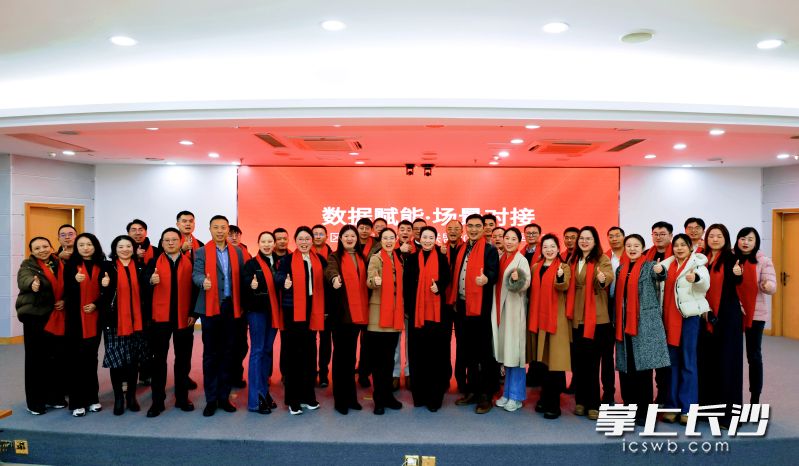
Core Insights - The meeting marked a significant milestone in the development of the Data Industry Ecosystem Alliance, transitioning from formal establishment to substantial operation [2] - The focus has shifted from platform building to deepening scene integration, promoting collaboration among member units and facilitating the implementation of data elements in specific industrial scenarios [2][4] Group 1: Alliance Development - The meeting established the "Alliance Work System," providing a stable framework for deep integration among members [2] - A total of 17 new member units joined the alliance, covering vertical fields such as cybersecurity, smart transportation, new consumption research, and human resources digitization [2] Group 2: Value Realization through Scene Integration - The core of the meeting was a salon discussion focused on "scene integration," where representatives shared cutting-edge practices in data utilization across various layers [3] - The "Enterprise Scene Demand Release" segment highlighted specific business needs and collaboration opportunities, showcasing how ecological co-creation can transform into tangible new productivity [3] Group 3: Strategic Outlook - The alliance's advancement aligns with the strategic goal of the Tianxin District to build a digital economy hub, forming a complete industrial chain from data trading to secure applications [4] - The ecosystem is likened to a tropical rainforest, emphasizing the need for diverse and symbiotic systems to foster innovation and reduce collaboration costs and risks [6] Group 4: Future Vision - The ultimate goal is to transition from "enterprise aggregation" to "ecological co-creation," aiming for "value co-prosperity" [7] - Participants left the meeting with initial cooperation intentions and a clear ecological vision, indicating a promising future for the digital ecosystem [7]
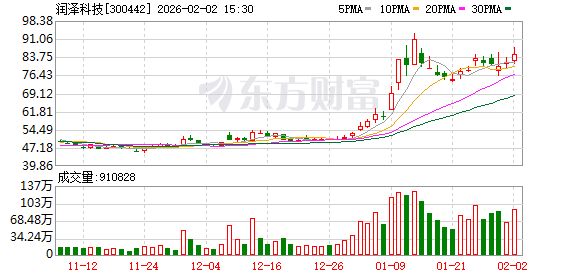
润泽科技发布 2025 年业绩预告:归母净利预增 179%-196% 扣非稳步增长
Xin Hua Wang· 2026-02-02 12:36
润泽智算科技集团股份有限公司(以下简称"润泽科技")近日发布的2025年度业绩预告显示,公司预计实现归属于 上市公司股东的净利润50亿元至53亿元,同比增长179.28%至196.03%。扣除非经常性损益后的净利润预计为18.8亿 元至19.8亿元,同比增长幅度为5.71%至11.33%。 区域布局方面,公司已从早期的区域性服务商逐步转型为覆盖京津冀、长三角、粤港澳大湾区的全国性算力服务提 供者。多区域算力中心的陆续投运,为其承接全国性客户需求奠定了物理基础。同时,客户结构呈现优化态势,公 司与多家头部互联网企业及人工智能公司建立了持续合作,终端客户群体的拓宽为其收入增长提供了较为稳定的来 源。 应当看到公司业绩的增长,一方面来自资本市场的阶段性助力,另一方面也依托于主营业务的扎实拓展。在算力基 础设施成为数字经济发展重要支撑的背景下,润泽科技通过"资本+运营"双轮驱动,逐步构建起涵盖投资、建设、 运营、退出的全周期发展模式。这种模式有助于企业在行业上升期快速扩张,在市场竞争中积累先发优势。 未来,随着全国化布局进一步落地、算力中心上架率逐步提升,公司有望在人工智能算力服务领域形成更可持续的 盈利能力。值得注 ...