
大数据

Search documents
上海第六轮加强公共卫生体系建设三年行动计划全面完成
Jie Fang Ri Bao· 2026-01-17 03:09
Core Viewpoint - Shanghai has launched the sixth round of its three-year action plan to strengthen the public health system, achieving all target tasks, and has developed a disease risk forecasting service based on meteorological big data, recognized as a model case by the World Health Organization [1] Group 1: Public Health System Enhancement - The action plan aims to build a "national regional public health center" relying on the Shanghai CDC to enhance core disease control capabilities [1] - The plan includes improving monitoring, early warning, emergency response, and major infectious disease medical treatment systems, positioning Shanghai as a global model for public health safety [1] Group 2: Data and Technology Utilization - The Shanghai CDC has developed various early warning model tools using big data and artificial intelligence, capable of predicting trends for diseases like COVID-19 and influenza two weeks in advance [1] - The risk assessment scale has been refined from "administrative districts" to "sub-districts," achieving prediction accuracy at an internationally advanced level [1]
加快“智改数转”步伐 推动“数字+实体”深度融合
Xin Lang Cai Jing· 2026-01-16 23:10
Core Viewpoint - The integration of digital economy and real economy is a crucial measure for promoting high-quality economic development, with a focus on leveraging strategic opportunities in the digital economy to build new advantages for development [1]. Group 1: Digital Economy and Real Economy Integration - The integration of digital economy and real economy is seen as the core trend for future economic development, with the potential to activate industrial innovation and transform digital advantages into developmental strengths for Shenyang [1]. - Shenyang has a solid foundation for digital and real economy integration but needs to address issues such as insufficient digitalization levels in some enterprises, high transformation costs for small and medium-sized enterprises, and a shortage of high-end talent [1]. Group 2: Industry Transformation and Infrastructure - There is a recommendation to prioritize the cultivation of "four above" enterprises and accelerate the construction of new infrastructure, promoting innovation in industrial internet and digital transformation of traditional infrastructure [2]. - Encouragement for enterprises to build smart factories and digital workshops to fill the gaps in digital industrialization is emphasized [2]. Group 3: Talent Development and Policy Support - The suggestion includes focusing on precise investment in key areas like virtual reality to accelerate the construction of the digital economy industrial chain and support the transformation of manufacturing towards high-end, intelligent, and green development [2]. - It is advised to refine digital economy support policies at national, provincial, and municipal levels, and to organize enterprises to apply for special support to release policy dividends [2]. - A dual approach of "self-cultivation + open recruitment" is recommended to accelerate talent development in artificial intelligence and big data, alongside enhancing data security management mechanisms [2].
越总理范明政:越南希加强与日荷的前沿领域合作
Shang Wu Bu Wang Zhan· 2026-01-16 16:10
Group 1 - Vietnam aims for double-digit GDP growth and focuses on digital transformation and modern digital infrastructure development, particularly in AI and big data [1] - Japan is considered an irreplaceable partner for Vietnam, with ongoing cooperation in digital transformation and AI governance [1] - Vietnam seeks support from Japan in planning, technology transfer, and high-quality human resource training [1] Group 2 - Vietnam is enhancing its policies related to technology, innovation, and digital transformation to meet the stringent standards of the semiconductor industry [2] - ASML is exploring the establishment of a semiconductor training and R&D center in Vietnam and is considering setting up a representative office [2] - ASML aims to support Vietnamese companies in developing digital infrastructure and semiconductor production, including training and expert exchange programs [2]

智慧赋能乡村振兴,助推基层组织治理增效
Xin Lang Cai Jing· 2026-01-16 16:00
Core Viewpoint - The rural revitalization strategy is a crucial part of China's modernization efforts, presenting new opportunities for agricultural and rural development while demanding enhanced governance capabilities at the grassroots level [1] Group 1: Value of Smart Empowerment in Rural Governance - Utilizing smart technologies in grassroots governance significantly enhances decision-making processes, moving away from reliance on experience to data-driven insights [2] - The example of Sanjianxi Village in Jinan, Shandong Province illustrates the effectiveness of digital construction, with collective assets increasing from 113 million yuan in 2018 to over 300 million yuan [2] Group 2: Challenges and Pathways for Smart Empowerment - Despite the promising outlook for smart empowerment, various challenges must be addressed through targeted strategies [3] - A modern governance mindset is essential, as traditional thinking limits the understanding and acceptance of modern technologies among grassroots workers [4] - Establishing a smart governance platform is necessary to improve the quality and effectiveness of grassroots governance, utilizing big data and AI for data collection and analysis [5] - There is a notable talent drain in rural areas, with young labor preferring to work elsewhere, leading to a shortage of skilled personnel for modern technology applications [6] - A comprehensive talent cultivation mechanism is needed to attract and train individuals in digital skills, ensuring a robust support system for smart governance [6] Group 3: Future Directions - Continuous exploration of new pathways for smart empowerment in grassroots governance is essential under the guidance of the rural revitalization strategy, leveraging modern technological advantages [7]
长芯博创(300548.SZ)发预增,预计2025年度归母净利润同比增长344.01%至413.39%
智通财经网· 2026-01-16 15:10
Core Viewpoint - Changxin Bochuang (300548.SZ) forecasts a net profit attributable to shareholders of 320 million to 370 million yuan for the year 2025, representing a year-on-year growth of 344.01% to 413.39% [1] Group 1: Financial Performance - The company expects significant growth in net profit due to the increasing demand for computing power driven by new-generation information technologies such as cloud computing, artificial intelligence, and big data [1] - The performance of the company's subsidiary, Changxin Sheng (Wuhan) Technology Co., Ltd., has seen substantial year-on-year growth, contributing positively to the overall financial results [1] Group 2: Strategic Developments - The company has increased its stake in Changxin Sheng from 42.29% to 60.45% by acquiring an additional 18.16% of shares from minority shareholders, which has led to a corresponding increase in net profit attributable to shareholders [1]

长芯博创发预增,预计2025年度归母净利润同比增长344.01%至413.39%
Zhi Tong Cai Jing· 2026-01-16 15:03
Core Viewpoint - Changxin Bochuang (300548.SZ) forecasts a net profit attributable to shareholders of the listed company between 320 million to 370 million yuan for the year 2025, representing a year-on-year growth of 344.01% to 413.39% [1] Group 1: Financial Performance - The company expects significant growth in net profit due to the increasing demand for computing power driven by new-generation information technologies such as cloud computing, artificial intelligence, and big data [1] - The performance of the company's subsidiary, Changxin Sheng (Wuhan) Technology Co., Ltd., has seen a substantial year-on-year increase [1] - The acquisition of an additional 18.16% stake in Changxin Sheng has raised the company's ownership from 42.29% to 60.45%, contributing to the increase in net profit attributable to shareholders [1]
全面排查!第三方支付机构主动掐断高息网贷支付链路
Guo Ji Jin Rong Bao· 2026-01-16 13:36
Core Viewpoint - The implementation of new regulations on internet lending and small loan companies has prompted some online lending operators to attempt to circumvent these regulations by using alternative models, leading to a crackdown on high-interest lending practices [1][4]. Group 1: Regulatory Actions - New regulations have been enacted to manage internet lending and small loan companies, specifically targeting annual interest rates above 24% [1]. - Third-party payment institutions are conducting compliance checks and terminating relationships with potentially non-compliant local financial institutions to prevent high-interest lending [4][5]. - Regulatory bodies have previously mandated that payment companies must not open accounts for financial institutions, especially small loan companies, and must scrutinize any business with internal annual returns exceeding 24% [4]. Group 2: High-Interest Lending Practices - Recent investigations revealed that some platforms, like Lu You Xuan, are charging significantly higher prices for products, effectively masking high-interest loans under the guise of installment shopping [3]. - The installment model used by these platforms often results in a total payment that is much higher than the market price, with an example showing a 23.98% annualized interest rate on a product priced at 8,444 yuan compared to its market price of 5,999 yuan [3]. Group 3: Challenges in Compliance - There are significant challenges in completely severing ties with high-interest lending due to the hidden nature of these lending models and the complex relationships between payment institutions and lending platforms [8][9]. - Payment institutions face pressure to maintain revenue from high-interest lending scenarios, complicating their ability to comply with regulations [9]. - The lack of robust risk control technologies and dynamic monitoring capabilities among smaller payment institutions makes it difficult to identify and address non-compliant lending practices [9]. Group 4: Recommendations for Payment Institutions - Payment institutions are advised to establish a "white list" system for partners, implement dynamic monitoring systems for transactions, and create dedicated compliance tracking departments to ensure adherence to regulations [10]. - There is a suggestion for payment institutions to innovate in areas encouraged by regulators, such as enhancing payment accessibility and utilizing emerging technologies like AI and big data to improve compliance efficiency [10].
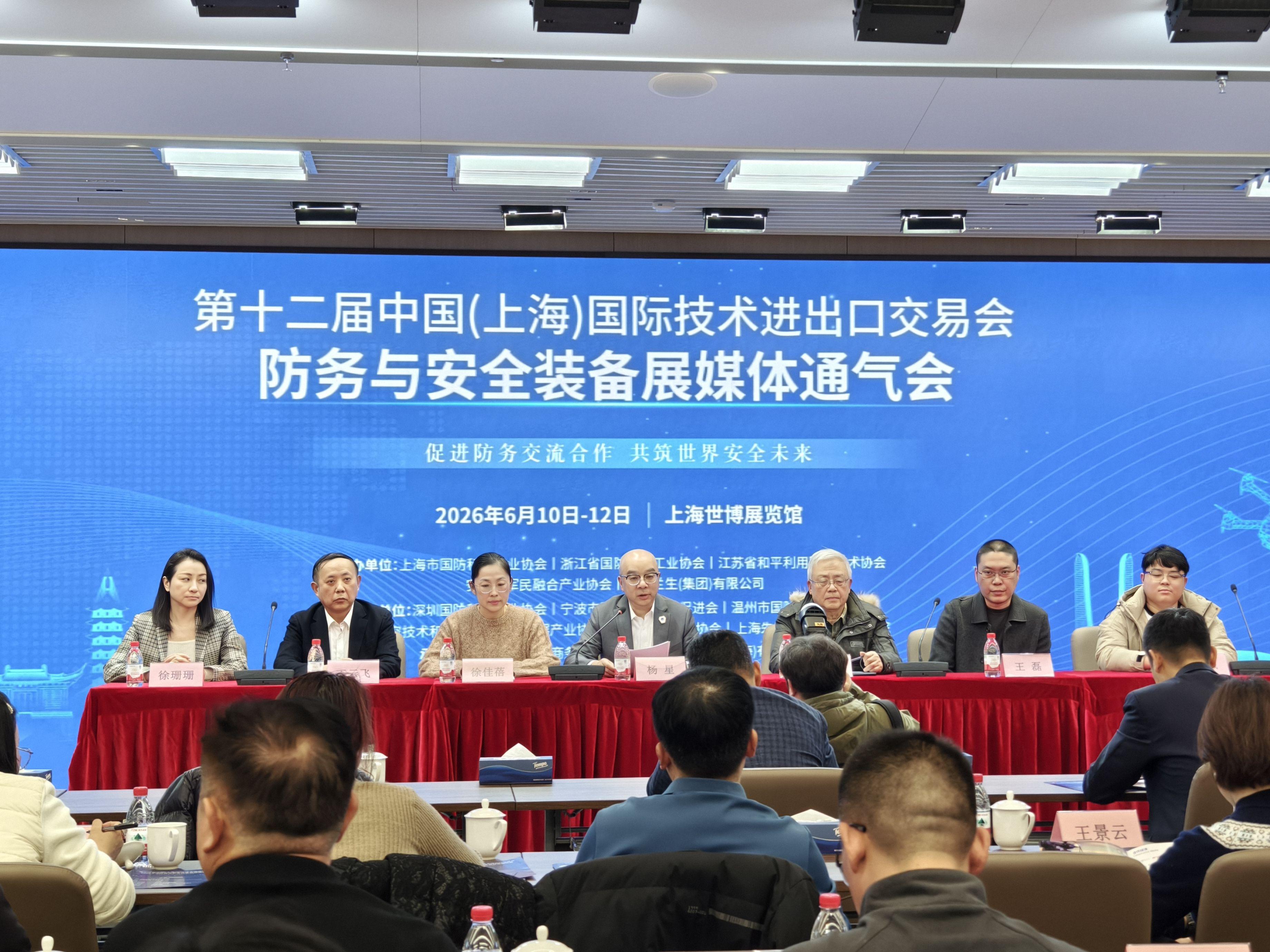
上交会防务展今年6月开幕 将精准对接全球供应链与创新链
Zheng Quan Shi Bao Wang· 2026-01-16 12:43
Core Insights - The 12th China (Shanghai) International Technology Import and Export Fair Defense and Security Equipment Exhibition will be held in mid-June in Shanghai, themed "Promoting Defense Exchange and Cooperation, Building a Secure Future for the World" [1] - The exhibition will feature eight thematic areas including advanced manufacturing equipment, aerospace and new materials, space information and navigation, cybersecurity, electronic equipment and components, new energy and nuclear energy, marine vessels, and independent innovation services, covering a total exhibition area of 10,000 square meters with over 200 leading enterprises participating [1] - The event aims to showcase the latest applications in industries such as aerospace, industrial manufacturing, marine vessels, robotics, artificial intelligence, and new energy, while presenting cutting-edge technologies like Beidou navigation, satellite rockets, 5G communication, large models, high-end equipment, AR/VR, cloud computing, and big data [1] - The exhibition is expected to attract numerous professional delegations from over 20 countries, including Saudi Arabia and Indonesia, as well as domestic government, emergency, aerospace, weapons, and marine departments and research institutions [1]

长芯博创(300548.SZ):预计2025年净利润同比增长344.01%~413.39%
Ge Long Hui A P P· 2026-01-16 12:37
Core Viewpoint - The company, Changxin Bochuang (300548.SZ), expects a significant increase in net profit for 2025, projecting a range of 320 million to 370 million yuan, representing a year-on-year growth of 344.01% to 413.39% [1] Group 1: Financial Performance - The net profit attributable to shareholders, excluding non-recurring gains and losses, is expected to be between 305 million and 355 million yuan, indicating a year-on-year growth of 429.50% to 516.30% [1] - The rapid development of the data communication market, driven by the demand for computing power from new-generation information technologies such as cloud computing, artificial intelligence, and big data, has led to steady revenue growth from the company's data communication-related products [1] Group 2: Subsidiary Performance - The performance of the company's subsidiary, Changxin Sheng (Wuhan) Technology Co., Ltd., has seen a significant year-on-year increase [1] - The company has increased its ownership stake in Changxin Sheng from 42.29% to 60.45% by acquiring 18.16% of the shares held by minority shareholders, which has correspondingly boosted the net profit attributable to shareholders [1]
长芯博创:2025年净利润同比预增344.01%—413.39%
Zheng Quan Shi Bao Wang· 2026-01-16 12:03
报告期内,云计算、人工智能、大数据等新一代信息技术对算力的需求推动数据通信市场的快速发展, 带动公司数据通信相关产品收入稳步增长,进而带动净利润增长。 人民财讯1月16日电,长芯博创(300548)1月16日发布业绩预告,预计2025年归属于上市公司股东的净 利润3.2亿元—3.7亿元,同比增长344.01%—413.39%。 ...