
智能家居

Search documents
万润科技涨2.00%,成交额7.87亿元,主力资金净流出4861.77万元
Xin Lang Cai Jing· 2025-10-09 02:35
Core Viewpoint - Wanrun Technology's stock has shown significant growth this year, with a 34.30% increase, and the company is involved in various sectors including LED packaging and digital marketing [1][2]. Financial Performance - For the first half of 2025, Wanrun Technology achieved a revenue of 2.548 billion yuan, representing a year-on-year growth of 27.44%. However, the net profit attributable to shareholders decreased by 46.07% to 15.5352 million yuan [2]. - The company has distributed a total of 133 million yuan in dividends since its A-share listing, with no dividends paid in the last three years [3]. Stock Market Activity - As of October 9, Wanrun Technology's stock price was 16.29 yuan per share, with a market capitalization of 13.77 billion yuan. The stock experienced a 2.00% increase during the trading session [1]. - The trading volume was 787 million yuan, with a turnover rate of 5.77%. Major funds saw a net outflow of 48.6177 million yuan, while large orders accounted for 22.61% of buying and 23.72% of selling [1]. Shareholder Information - As of June 30, the number of shareholders decreased by 5.10% to 131,100, with an average of 6,446 circulating shares per person, an increase of 5.37% [2]. - Notable changes in institutional holdings include an increase in shares held by Southern CSI 1000 ETF and the entry of Huaxia CSI 1000 ETF as a new shareholder [3].

海信家电跌2.04%,成交额9144.06万元,主力资金净流出676.78万元
Xin Lang Cai Jing· 2025-10-09 02:06
Core Viewpoint - Hisense Home Appliances has experienced a decline in stock price and significant changes in shareholder structure, indicating potential challenges in the market and investor sentiment [1][2][3]. Stock Performance - The stock price of Hisense Home Appliances has dropped by 7.81% year-to-date, with a recent decline of 6.56% over the last five trading days [2]. - As of October 9, the stock was trading at 25.51 CNY per share, with a market capitalization of 35.328 billion CNY [1]. Financial Performance - For the first half of 2025, Hisense Home Appliances reported a revenue of 49.34 billion CNY, reflecting a year-on-year growth of 1.44%, and a net profit attributable to shareholders of 2.077 billion CNY, up by 3.01% [2]. Business Overview - Hisense Home Appliances, established in April 1997 and listed in July 1999, is primarily engaged in the manufacturing and sales of refrigerators, air conditioners, and home appliances [2]. - The company's main revenue sources are: HVAC (48.02%), washing machines (31.20%), and other segments (20.78%) [2]. Shareholder Structure - As of June 30, 2025, the number of shareholders increased by 27.22% to 41,200, with an average of 0 shares per shareholder [2]. - The top circulating shareholder, Hong Kong Central Clearing Limited, reduced its holdings by 20.65 million shares [3].
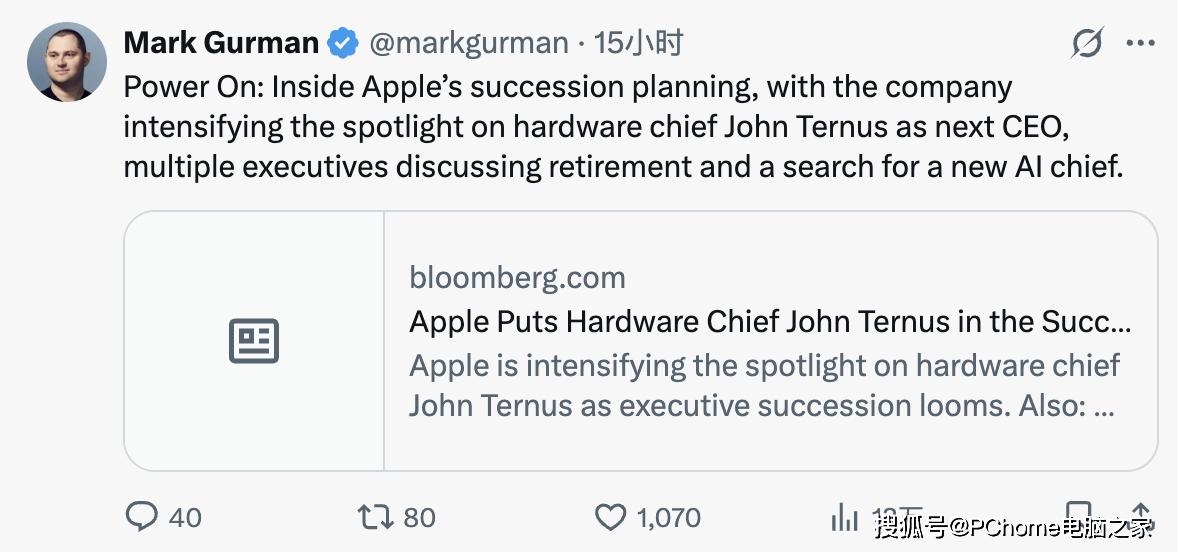
库克即将卸任,硬件主管约翰・特纳斯成苹果CEO热门候选人
Sou Hu Cai Jing· 2025-10-06 14:47
Core Viewpoint - The industry widely believes that Apple now needs a "tech-savvy" leader to drive innovation in key frontier areas such as mixed reality, generative AI, smart home technology, and autonomous driving, as the current pace of advancement appears conservative under Tim Cook's leadership [3] Group 1 - Tim Cook has successfully elevated Apple's market value to new heights and expanded multiple high-margin product lines through his supply chain and operational capabilities [3] - There is a growing expectation for Apple to regain the technological adventurous spirit reminiscent of the Steve Jobs era [3] Group 2 - Turnas possesses a unique combination of engineering background and team leadership, earning the trust of Cook and being granted core decision-making authority over product roadmaps and feature definitions [5] - Turnas has broken traditional boundaries within Apple, significantly influencing the company's strategic direction, and has seen a notable increase in public exposure over the past year [5] - Although known for his steady approach and lacking a "risk-taking" investment style, Turnas's pragmatic yet innovative qualities may provide the necessary balance for Apple amid the AI and new hardware wave under Cook's management structure [5]


有钱人从别墅搬回高层?别墅不走俏了?三个硬伤很真实
Sou Hu Cai Jing· 2025-10-06 09:41
Core Viewpoint - The article discusses a significant shift in housing preferences among affluent individuals in Shanghai, moving away from villas to high-quality apartments in city centers, indicating a decline in the appeal of villas as a status symbol [1][2]. Summary by Sections Shift in Housing Preferences - A report by the China Real Estate Association reveals that over 35% of villa owners plan to change their residences, with 68% preferring high-quality apartments in city centers, marking a 23 percentage point increase from 2020 [1][2]. Decline of Villa Appeal - The average resale period for villas has increased from 6 months in 2020 to 15 months in 2025, with price reductions significantly higher than other residential types [2]. Major Drawbacks of Villas - High maintenance costs are a primary concern, with average annual costs for villas reaching 380 yuan per square meter, compared to 110 yuan for high-rise apartments, leading to an annual expenditure of approximately 80,000 yuan for a typical 300-square-meter villa [7][5]. - Security issues are prevalent, with burglary rates for standalone villas being 3.6 times higher than for gated high-rise communities, prompting owners to invest in enhanced security measures [9]. - The geographical location and convenience of villas are problematic, with long commutes and limited access to services, contrasting sharply with the convenience of urban living [10]. Rise of High-Quality Apartments - High-rise apartments are increasingly attractive, featuring amenities such as fitness centers and enhanced property services, reflecting a "quality revolution" in urban housing [11]. - Sales of high-end apartments in first-tier cities increased by 38% year-on-year in the first half of 2025, with a 40% reduction in transaction cycles compared to 2020 [11]. - Smart home technology is becoming a key selling point, with 82% of high-end apartment projects equipped with comprehensive smart systems [11]. Future of the Villa Market - Villas will not disappear entirely, as they still hold value for specific demographics, such as large families or those seeking privacy [12]. - The villa market is expected to become more segmented, focusing on ultra-luxury and eco-friendly options, although these segments will have limited market capacity [12]. Changing Housing Concepts - The shift in housing choices reflects a broader change in lifestyle values, with a growing emphasis on time efficiency and convenience over mere material space [12][13]. - The future housing market is predicted to favor compact, high-quality residences, while the share of large properties, including most villas, will continue to decline [13].

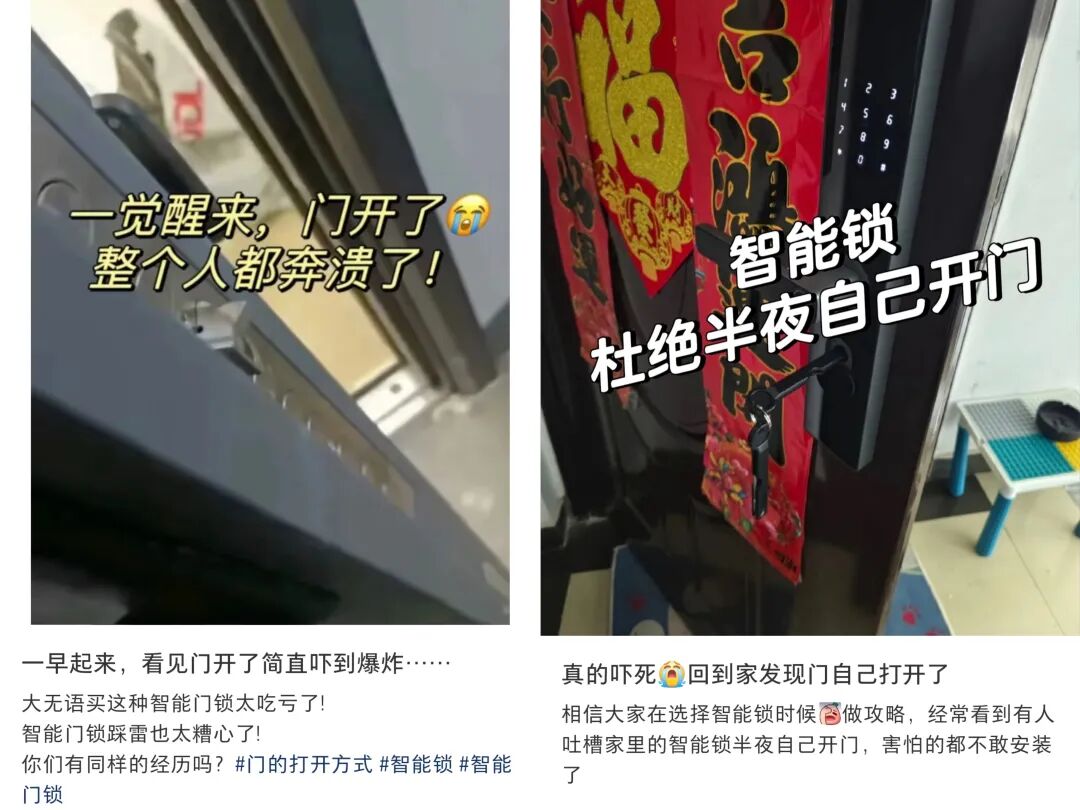
“一觉醒来门是开着的!”智能门锁为何频频“翻车”?
Xin Jing Bao· 2025-09-30 07:30
Core Insights - The article highlights the increasing popularity of smart locks in the smart home product category, but also points out significant issues and consumer complaints regarding their reliability and safety [1][10] Consumer Experience - Many consumers choose smart locks for convenience, with features like automatic locking and keyless entry being major selling points [3][11] - Complaints include malfunctioning screens, rapid battery depletion, and issues with fingerprint recognition, leading to frustration and safety concerns [4][6][10] Safety Concerns - Reports of smart locks malfunctioning, such as unlocking unexpectedly or failing to open, have raised alarms about their security [6][7] - Specific incidents, including a high school student being trapped due to a lock failure, illustrate the potential risks associated with these devices [6][10] Market Overview - The smart lock market features a variety of brands, including well-known names like Xiaomi, DeShiMan, and Huawei, with prices ranging from hundreds to thousands of yuan [10][11] - A significant number of complaints have been recorded on consumer platforms, indicating widespread dissatisfaction with various brands [10] Quality Control - Recent inspections revealed that a notable percentage of electronic locks failed to meet safety standards, with a non-compliance rate of 23.3% in a sample of 244 products [10] - Experts recommend consumers focus on brand reputation and product certifications when purchasing smart locks to avoid low-quality options [11]
恒玄科技涨2.00%,成交额7.58亿元,主力资金净流入1645.17万元
Xin Lang Cai Jing· 2025-09-30 03:18
Core Viewpoint - Hengxuan Technology's stock has shown significant growth in 2023, with a year-to-date increase of 22.09% and a recent surge in trading activity, indicating strong investor interest and confidence in the company's performance [1][2]. Financial Performance - For the first half of 2025, Hengxuan Technology reported a revenue of 1.938 billion yuan, representing a year-on-year growth of 26.58% [2]. - The net profit attributable to shareholders for the same period was 305 million yuan, reflecting a substantial increase of 106.45% compared to the previous year [2]. Stock Market Activity - As of September 30, Hengxuan Technology's stock price reached 282.93 yuan per share, with a trading volume of 758 million yuan and a market capitalization of 47.636 billion yuan [1]. - The stock has experienced a net inflow of 16.4517 million yuan from major funds, with significant buying activity observed [1]. Shareholder Information - As of June 30, the number of shareholders increased to 12,400, up by 22.89%, while the average number of circulating shares per shareholder decreased by 18.63% to 9,659 shares [2]. - The company has distributed a total of 315 million yuan in dividends since its A-share listing, with 254 million yuan distributed over the past three years [3]. Institutional Holdings - Among the top ten circulating shareholders as of June 30, 2025, Hong Kong Central Clearing Limited held 4.8491 million shares, a decrease of 953,400 shares from the previous period [3]. - New institutional shareholders include Huaxia SSE STAR 50 ETF and E Fund SSE STAR 50 ETF, which have recently entered the top ten circulating shareholders list [3].

顾家家居涨2.09%,成交额4087.85万元,主力资金净流出103.57万元
Xin Lang Cai Jing· 2025-09-30 02:20
Core Viewpoint - Gujia Home's stock price has shown a mixed performance in recent trading sessions, with a year-to-date increase of 15.34% but a recent decline over the last five days [1] Financial Performance - As of June 30, Gujia Home achieved a revenue of 9.801 billion yuan, representing a year-on-year growth of 10.02% [2] - The net profit attributable to the parent company for the same period was 1.021 billion yuan, reflecting a year-on-year increase of 13.89% [2] Shareholder Information - The number of shareholders for Gujia Home reached 23,500, an increase of 14.88% compared to the previous period [2] - The average number of circulating shares per shareholder decreased by 12.95% to 34,547 shares [2] Dividend Distribution - Since its A-share listing, Gujia Home has distributed a total of 6.339 billion yuan in dividends, with 3.173 billion yuan distributed over the last three years [3] Institutional Holdings - As of June 30, 2025, the sixth largest circulating shareholder is China Europe Pension Mixed A, holding 10.8777 million shares, an increase of 176,400 shares from the previous period [3] - Hong Kong Central Clearing Limited is the seventh largest circulating shareholder, holding 10.3095 million shares, a decrease of 1.4921 million shares from the previous period [3]

资本涌入家居赛道 行业加速整合与升级
Bei Jing Shang Bao· 2025-09-29 13:37
Core Insights - The recent investment activities in the home furnishing industry, particularly the stake acquisition by Yingfeng Group in Sophia, have garnered significant attention, highlighting the increasing capital interest in this sector [1][2]. Group 1: Capital Influx - Yingfeng Group has become the fifth largest shareholder of Sophia, holding 18.76 million shares, which accounts for 2.88% of Sophia's circulating shares and 1.95% of the total share capital [1]. - Other major players like JD.com and Jianfa Group are also actively investing in the home furnishing sector, with JD.com completing the acquisition of Life Home Decoration Group, enhancing its market presence [2][7]. - The influx of capital from various sources is expected to provide financial, technological, and resource support to the home furnishing industry, facilitating digital transformation and industry integration [1][2][3]. Group 2: Market Demand Potential - The home furnishing market in China is projected to reach a total scale of 5 trillion yuan by 2025 and 7 trillion yuan by 2030, driven by rising consumer demand for quality and personalized products [4]. - Consumers are increasingly seeking personalized, intelligent, and environmentally friendly home products, leading to a growing market for customized home furnishings [4][5]. - The smart home appliance market is also on the rise, with an expected scale of approximately 793.8 billion yuan by 2025, indicating a shift towards intelligent home solutions [4]. Group 3: Industry Transformation - The home furnishing industry is undergoing a critical transformation, with traditional companies facing challenges such as low production efficiency and product homogeneity [5]. - Capital investment is crucial for enhancing production capabilities, introducing advanced technologies, and fostering product innovation, thereby transitioning from traditional manufacturing to smart manufacturing [5][6]. - The integration of capital is enabling companies to optimize their sales channels and adopt a hybrid online-offline sales model, enhancing market competitiveness [6][7]. Group 4: Accelerated Upgrades - The influx of capital is reshaping the competitive landscape of the home furnishing industry, driving advancements in technology research, smart manufacturing, and channel expansion [6][7]. - Smaller home furnishing companies are benefiting from increased funding, allowing them to invest in research and development, thereby improving product quality and innovation [6]. - The focus on smart solutions and AI-driven personalized design is becoming a key competitive factor, with companies aiming to enhance customer engagement through innovative offerings [7].


中国泳池机器人第一股要来了,年入5个亿,毛利率超65%
21世纪经济报道· 2025-09-29 12:35
Core Viewpoint - The pool cleaning robot sector is gaining significant attention from the capital market, with Tianjin Wangyuan Intelligent Technology Co., Ltd. aiming to become the first publicly listed company in China focused on this niche [1]. Market Overview - Wangyuan Technology is the largest supplier of pool cleaning robots in China and the world's largest supplier of cordless pool cleaning robots, ranking among the top three globally [1]. - The global pool robot market is projected to grow from USD 980 million in 2024 to USD 1.94 billion by 2029, with a compound annual growth rate (CAGR) of 14.7% [1]. Company Financials - Wangyuan Technology's revenue increased from RMB 317.694 million in 2022 to RMB 543.535 million in 2024, with a further rise to RMB 379.167 million in the first half of 2025, reflecting a year-on-year growth of 42% [9]. - The gross profit margin improved from 53.4% in 2022 to 65.2% in the first half of 2025, while the net profit margin decreased from 30.8% in 2022 to 16.1% in the first half of 2025 [9][11]. Business Model Shift - The company is transitioning from OEM (Original Equipment Manufacturer) to its own brand products, with brand product sales increasing from 6.0% of total revenue in 2022 to 86.4% in the first half of 2025 [11]. - Sales costs rose from RMB 148 million in 2022 to RMB 228 million in 2024, indicating a significant increase in operational costs [11]. Market Expansion - Wangyuan Technology primarily exports over 97% of its products to more than 60 countries and regions [12]. - The domestic market for pool cleaning robots is expanding, with companies like iGarden entering the market and targeting Chinese consumers [15][16]. Investment Activity - Recent financing activities in the sector include a RMB 1 billion round for the pool cleaning robot brand Beatbot, indicating strong investor interest [14][15]. - The increasing number of private pools globally, estimated at over 28 million, is driving demand for pool cleaning solutions [15].

匠心家居跌0.98%,成交额1.34亿元,今日主力净流入-461.80万
Xin Lang Cai Jing· 2025-09-29 08:01
Core Viewpoint - The company, Jiangxin Home, is experiencing a decline in stock price while benefiting from the depreciation of the RMB and its focus on smart home and elderly care products [2][4]. Company Overview - Jiangxin Home, established on May 31, 2002, and listed on September 13, 2021, specializes in the research, design, production, and sales of smart electric sofas and beds, with a revenue composition of 78.76% from smart electric sofas, 12.06% from accessories, and 8.34% from smart electric beds [7]. - As of June 30, 2025, the company reported a revenue of 1.681 billion yuan, a year-on-year increase of 39.29%, and a net profit of 432 million yuan, up 51.38% year-on-year [7]. Financial Performance - The company has a total market capitalization of 19.907 billion yuan, with a trading volume of 134 million yuan and a turnover rate of 1.01% on September 29 [1]. - The company has distributed a total of 628 million yuan in dividends since its A-share listing, with 468 million yuan in the last three years [8]. Market Position and Trends - The company benefits from a high overseas revenue ratio of 99.49%, primarily due to the depreciation of the RMB [2]. - Jiangxin Home is expanding into the elderly care industry with products such as smart beds for rehabilitation and home care [3]. Institutional Holdings - As of June 30, 2025, significant institutional shareholders include Hong Kong Central Clearing Limited and Yongying Rui Xin Mixed A, with notable increases in their holdings [9].