
美联储货币政策

Search documents
凌晨 白银飙升 再创新高!美联储 突传重磅
Qi Huo Ri Bao· 2025-12-20 02:44
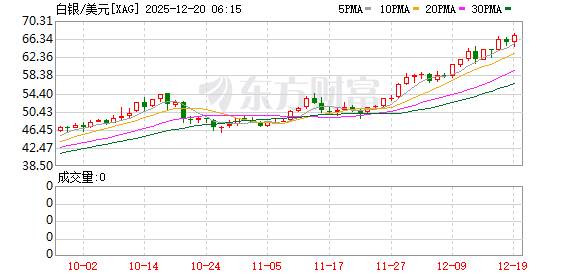
米兰是美联储内部最坚定支持降息的官员之一。在上周的美联储会议上,他投下反对票,主张降息50个 基点,而大多数同僚倾向于更小幅的25个基点降息。他的美联储任期将于1月31日结束。 截至发稿,纽约期银收涨3.34%,报67.395美元/盎司,本周累计上涨8.55%。现货白银价格收涨2.26%, 报67.04美元/盎司。 早上好,先来关注下重要消息。 现货白银价格盘中突破67美元/盎司 今天凌晨,现货白银价格突破67美元/盎司,再创历史新高,日内涨2.38%。纽约期银日内涨幅达 3.00%。 KCM Trade首席市场分析师Tim Waterer表示:"较温和的通胀数据对黄金和白银来说有点像'双刃剑',它 有助于证明美联储'鸽'派轨迹的合理性,但也意味着它们作为通胀对冲工具的吸引力有所下降。" 美联储理事斯蒂芬·米兰周五重申,由于通胀已降温,且货币政策需要抵消就业市场风险,美联储应降 息。 "就业市场正在放缓,如果继续沿着这个方向发展,而我们未能充分调整政策加以遏制,到2027年我们 将陷入困境。"米兰说。 2026年金价趋势性上涨动力仍在 沃勒在美联储主席面试中表现"出色" 昨日,据媒体报道,特朗普正在推进美联储 ...

美国通胀“跳水”背后:警惕数据失真 “最后一英里”尤为艰巨
Xin Lang Cai Jing· 2025-12-19 23:35
明年1月美联储降息的可能性仍然较低,但交易员已开始上调明年3月降息预期。芝商所美联储观察工具 显示,明年3月降息概率为60%,高于此前一天的约50%。 尽管这份因政府停摆而推迟发布的报告显示物价压力有所缓和,但考虑到报告的编制存在问题,经济学 家持谨慎态度,这一积极变化并不意味着长期高于美联储2%目标的物价压力已出现持续性缓解。 前路依旧迷雾重重,美联储货币政策需要更多数据来指引方向。 意外"跳水" 在通胀数据公布后,下一任美联储主席的热门人选之一白宫国家经济委员会主任凯文·哈西特表示赞 赏。"我并不是说我们已经可以宣布在价格问题上取得胜利,但这份CPI报告好得令人震惊。" 芝加哥联储主席古尔斯比是上周美联储议息会议上对降息决定投出反对票(主张维持利率不变)的两位 官员之一。他表示,最新公布的通胀数据"良好",如果这一趋势持续,可能为明年进行更多的降息打开 大门。 不过,整体而言,这份意外的通胀数据参考价值有限。东吴证券首席经济学家芦哲对21世纪经济报道记 者分析称,11月CPI和核心CPI均大幅低于预期。美国11月CPI在技术层面面临两个问题:首先,因为政 府停摆,10月数据未采集,因此没有10月CPI数据 ...
美国通胀“跳水”背后:警惕数据失真,“最后一英里”尤为艰巨
2 1 Shi Ji Jing Ji Bao Dao· 2025-12-19 13:14
南方财经 21世纪经济报道记者吴斌 在美国政府结束"停摆"后,通胀数据意外低于预期。 据央视新闻报道,美国劳工部12月18日发布的数据显示,今年11月美国消费者价格指数(CPI)同比上 涨2.7%,低于9月的3%。剔除波动较大的食品和能源价格后,11月核心消费者价格指数同比上涨2.6%。 前路依旧迷雾重重,美联储货币政策需要更多数据来指引方向。 意外"跳水" 在通胀数据公布后,下一任美联储主席的热门人选之一白宫国家经济委员会主任凯文·哈西特表示赞 赏。"我并不是说我们已经可以宣布在价格问题上取得胜利,但这份CPI报告好得令人震惊。" 芝加哥联储主席古尔斯比是上周美联储议息会议上对降息决定投出反对票(主张维持利率不变)的两位 官员之一。他表示,最新公布的通胀数据"良好",如果这一趋势持续,可能为明年进行更多的降息打开 大门。 不过,整体而言,这份意外的通胀数据参考价值有限。东吴证券首席经济学家芦哲对21世纪经济报道记 者分析称,11月CPI和核心CPI均大幅低于预期。美国11月CPI在技术层面面临两个问题:首先,因为政 府停摆,10月数据未采集,因此没有10月CPI数据,11月CPI只有同比数据,没有环比数据。 ...
铁矿石市场周报:现货报价坚挺,铁矿期价止跌反弹-20251219
Rui Da Qi Huo· 2025-12-19 09:22
瑞达期货研究院 「2025.12.19」 铁矿石市场周报 现货报价坚挺 铁矿期价止跌反弹 期货从业资格号F0251444 期货投资咨询从业证书号Z0013101 关 注 我 们 获 取 更 多 资 讯 研究员:蔡跃辉 添加客服 业务咨询 3 来源:瑞达期货研究院 1. 价格:截至12月19日收盘,铁矿主力合约期价为780(+19.5)元/吨,青岛港麦克粉845(+14)元/干吨。 2. 发运:全球铁矿石发运总量环比+224万吨。2025年12月8日-12月14日Mysteel全球铁矿石发运总量3592.5万吨,环比增加224.0 万吨。澳洲巴西铁矿发运总量2965.5万吨,环比增加310.2万吨。 3. 到港:本期47港到港量+358.9万吨。2025年12月08日-12月14日中国47港到港总量2928.1万吨,环比增加358.9万吨;中国45港 到港总量2723.4万吨,环比增加242.9万吨;北方六港到港总量1358.5万吨,环比增加79.8万吨。 4. 需求:铁水产量-2.65万吨。日均铁水产量 226.55万吨,环比上周减少2.65万吨,同比去年减少2.86万吨。 5. 库存:港口库存+114.06 ...
铝年报:现货需求不乐观,沪铝可能冲高回落
Hong Ye Qi Huo· 2025-12-19 08:44
1. Report Industry Investment Rating - Not provided in the content 2. Core Viewpoints of the Report - In 2026, the aluminum price trend may be mainly affected by factors such as the Fed's monetary policy, tariff impacts, the situation of Russia-Ukraine negotiations, economic data of major countries like China and the US, and spot supply and demand. Currently, aluminum prices are at a historical high, but downstream spot demand is not ideal. If speculative buying fades and medium - long - term energy prices decline, metal speculative funds may withdraw, and aluminum prices face significant pressure. The alumina price has fallen below the cost line, and the electrolytic aluminum smelting industry is restricted by the production capacity ceiling, maintaining high profit margins, but there is high uncertainty in the medium - long - term industrial outlook [2][3][44] 3. Summary by Directory 3.1 Market Review - In 2025, the Shanghai aluminum price generally showed an oscillating upward trend. In Q1, it was supported by the Fed's interest - rate cut expectation and China's mild economic rebound. In April, the US tariff policy caused a market slump, but then the market recovered. From September, with the Fed's restart of the interest - rate cut cycle, the aluminum price continued to rise and reached a new high in December. The London aluminum price trend was basically the same as that of Shanghai aluminum, but after China取消 the aluminum export tax rebate, the supply - demand situations at home and abroad diverged, and the outer - plate aluminum price was stronger than the inner - plate price for a long time [10] 3.2 China's Macroeconomic Situation 3.2.1 China's Monetary Policy in 2025 was Moderately Loose, and the Price Level was Basically Stable - In 2025, China's domestic monetary policy was moderately loose. The M2 growth rate rose from around 7.1% at the beginning of the year to a maximum of 8.8%. The CPI index rebounded from - 0.7% year - on - year in February to 0.7%. The PPI price index remained stable throughout the year. In 2026, China may implement more proactive fiscal policies and moderately loose monetary policies, which are favorable to non - ferrous metals [16] 3.2.2 China's Manufacturing Industry was Generally Stable in 2025 - In 2025, China's manufacturing PMI generally fluctuated around the critical point of 50. The service industry PMI was mostly above 50. In 2026, many domestic provinces and municipalities may expand the policy of issuing consumer vouchers to boost residents' consumption and ensure the stable operation of the national economy [17] 3.2.3 Fixed - asset Investment Reflected that the Economic Pressure was Still High - Since the peak in February 2021, China's fixed - asset investment growth rate has been declining. In 2025, the fixed - asset investment data was still poor. From January to November, the domestic fixed - asset investment decreased by 1.7% year - on - year, and private fixed - asset investment decreased by 4.5% year - on - year, indicating insufficient market confidence and a fragile economic recovery [22] 3.3 Analysis of Key Related Industries 3.3.1 The Real Estate Industry was Gradually Stabilizing at the Bottom - From 2024 - 2025, relevant real - estate policies were continuously introduced, but the overall performance of the real - estate industry was still not ideal. From January to November, the decline in real - estate sales area and new construction area narrowed, but the completed real - estate development investment continued to weaken. Overall, the downward trend of the real - estate industry was gradually being controlled [25] 3.3.2 The Automobile Industry was Gradually Becoming a Pillar of the National Economy, with a High Growth Rate of New Energy Vehicles - From January to November, the total domestic automobile production increased by 11% year - on - year, and the production of new energy vehicles increased by 28.1% year - on - year. In 2026, the purchase tax of new energy vehicles will be adjusted from exemption to half - exemption. Export demand may become the main growth point, and the situation of the domestic automobile industry may become a key factor determining the supply - demand relationship of non - ferrous metals [27] 3.4 Supply - Demand Situation Analysis 3.4.1 Global Aluminum Production Increased Slightly, with a Slight Supply Surplus - In 2025, the global energy supply became tight. The global aluminum production increased in the first half of the year and decreased in the second half. China's aluminum production trend was basically consistent with the global trend, and the year - on - year growth rate was higher than the global level. From January to October, global aluminum production increased by 0.58% year - on - year, and China's aluminum production increased by 0.88% year - on - year, with a slight supply surplus [30] 3.4.2 Policies Led to a Significant Decline in Aluminum Exports in 2025, while Imports Remained High - Due to the reduction of Russian aluminum consumption in Europe and the US, China's aluminum import and export have been booming since 2020. In 2025, aluminum imports remained high, but exports were greatly affected by the cancellation of the export tax rebate. From January to October, the total aluminum imports increased by 9.38% year - on - year, and from January to November, aluminum exports decreased by 14.93% year - on - year. It is expected that in 2026, aluminum exports may remain at about 500,000 tons per month [32] 3.4.3 Raw Material Prices Continued to Decline Throughout the Year and Still had Room to Fall in the Future - In 2025, aluminum raw material prices fluctuated significantly. Coal prices first decreased and then increased, caustic soda prices declined, and bauxite prices decreased after a high - level operation. In the coming year, domestic energy prices and supply are likely to remain stable, and bauxite supply will be stable. It is expected that aluminum raw material costs may further decrease, but aluminum prices have strong support at the bottom due to the domestic production capacity ceiling [33] 3.4.4 Low Inventories Supported Aluminum Prices to Some Extent - In 2025, the electrolytic aluminum inventory increased significantly at the beginning of the year, decreased in the second quarter, and remained stable in the third and fourth quarters, with a slight decrease compared to the beginning of the year. The alumina inventory remained at a low level, with a small increase recently but still relatively low [35] 3.5 Macroeconomic Hot - spot Analysis 3.5.1 Policies Continued to Take Effect, and the Domestic Economy was Generally Stable - In the Central Economic Work Conference, it was emphasized that in 2026, China should implement more proactive fiscal policies and moderately loose monetary policies, and expand domestic demand. In 2025, China's economy remained basically stable. In 2026, the central government is expected to implement more proactive fiscal policies and moderately loose monetary policies, which will support the spot demand for non - ferrous metals. In the future, consumption may become the most important economic support and policy focus in China [39][40][41] 3.5.2 The Economies of Europe and the US were Facing Severe Pressure, and the Fed May Continue to Promote Interest - rate Cuts after the Leadership Change - In the US, the unemployment rate rose in November 2025, and the manufacturing PMI continued to decline. The Fed cut interest rates three times in 2025, with a total reduction of 75 basis points. The euro - zone manufacturing PMI also showed a downward trend. In 2026, the US tariff policy may not change much, and the Fed may enter a new interest - rate cut cycle in the second half of the year, which may drive a new round of price increases for non - ferrous metals [42][43] 3.6 Conclusion - In 2026, the aluminum price trend may be affected by the Fed's monetary policy, tariff impacts, the Russia - Ukraine negotiation situation, economic data of major countries, and spot supply and demand. Currently, aluminum prices are at a high level, but downstream demand is not good. If speculative funds withdraw and energy prices decline in the medium - long term, aluminum prices will face pressure. The alumina price has fallen below the cost line, and the electrolytic aluminum smelting industry is restricted by the production capacity ceiling, with high uncertainty in the medium - long - term industrial outlook [44][45][46]
长江有色:现货成交不兴及市场情绪博弈 19日锌价或小跌
Xin Lang Cai Jing· 2025-12-19 07:26
Group 1 - The core viewpoint of the article highlights that the recent decline in zinc prices is influenced by disappointing U.S. inflation data and traders reducing their positions ahead of the Christmas season, despite tight supply and decreasing social inventories providing some support [1][2]. Group 2 - In the zinc futures market, overnight London zinc prices fell by 0.44%, closing at $3058 per ton, with a trading volume of 9734 lots, down by 3501 lots [1]. - The macroeconomic context indicates that the U.S. consumer price index (CPI) rose by 2.7% year-on-year in November, significantly lower than the expected 3.1%, but the data collection was hindered by a 43-day federal government shutdown, leading to concerns about the reliability of the data [1]. - The domestic zinc mining import volume has decreased due to unfavorable price comparisons, leading to increased losses in importing zinc concentrate, while domestic smelters are starting to stockpile raw materials for winter, favoring domestic zinc concentrate procurement [2]. - The overall demand side shows a weakening trend, particularly in the real estate sector, with construction and home appliance sectors also showing signs of decline, while only the automotive sector shows some positive developments due to policy support [2]. - The current trading environment is characterized by low willingness to restock among downstream markets, resulting in a generally quiet trading atmosphere [2].

黄金点评:美通胀数据大幅回落,黄金日内波动加剧
Sou Hu Cai Jing· 2025-12-19 03:02
Group 1 - The core viewpoint of the article highlights the volatility in the gold market following the release of the US CPI data, which showed a significant decrease in inflation, leading to increased expectations for interest rate cuts by the Federal Reserve [1] - The US November CPI rose by 2.7% year-on-year, lower than the expected increase of 3.1%, while the core CPI also came in at 2.6%, below both the previous value and market expectations of 3% [1] - The market anticipates a dovish shift from the Federal Reserve, reinforced by President Biden's statement that the next Fed chair must be a "super dove," raising concerns about the independence of the Fed's monetary policy [1] Group 2 - The European Central Bank decided to maintain interest rates at its last meeting, marking the fourth consecutive meeting without changes [1] - The market is closely watching the actions of the Bank of Japan, with expectations of a dovish stance being fully priced in [1] - Despite the prevailing loose monetary environment, caution is advised regarding gold prices and their potential to quickly break through previous historical highs [1]
有色商品日报(2025 年 12 月 19 日)-20251219
Guang Da Qi Huo· 2025-12-19 02:44
1. Report Industry Investment Rating No information provided. 2. Core Viewpoints - Copper: Overnight, both domestic and international copper prices fluctuated narrowly and trended stronger, with the spot import of refined copper in China remaining at a loss. The inflation data strengthened the market's expectation of the Fed turning dovish, and the expectation of continued interest - rate cuts in 2026 was reinforced. With the upcoming Bank of Japan meeting, there are certain macro - level disturbances. Although copper has digested this factor to some extent, short - term caution is advised, but a prudent and optimistic attitude can be maintained [1]. - Aluminum: Overnight, alumina fluctuated weakly, while Shanghai aluminum and aluminum alloy fluctuated strongly. The alumina still has downward pressure, and the aluminum price is expected to continue to run at a high level as the de - stocking process is expected to be prolonged [1][2]. - Nickel: Overnight, LME nickel and Shanghai nickel prices rose. The news boosted nickel prices, but the actual implementation situation needs to be monitored. In the traditional industry chain, the price of nickel - iron was stable, and the trading atmosphere in the stainless - steel spot market improved. In the new - energy industry chain, the price was dragged down by the decline in nickel prices and weakening demand [3]. 3. Summary by Related Catalogs 3.1 Research Views - **Copper**: US inflation data in November showed a further easing of inflation pressure, strengthening the market's expectation of the Fed turning dovish. LME copper inventory decreased by 2650 tons to 164275 tons, COMEX copper warehouse receipts increased by 2339 tons to 416914 tons, SHFE copper warehouse receipts decreased by 227 tons to 44650 tons, and BC copper decreased by 5127 tons to 1053 tons [1]. - **Aluminum**: Overnight, AO2601 closed at 2545 yuan/ton, down 1.05%, with a position reduction of 4503 lots to 166,000 lots. AL2602 closed at 22030 yuan/ton, up 0.18%, with a position increase of 3445 lots to 299,000 lots. AD2602 closed at 21130 yuan/ton, up 0.05%, with a position reduction of 14 lots to 17176 lots. The SMM alumina price dropped to 2778 yuan/ton, and the spot discount of aluminum ingots widened to 140 yuan/ton [1]. - **Nickel**: Overnight, LME nickel rose 1.84% to 14630 US dollars/ton, and Shanghai nickel rose 1.56% to 115350 yuan/ton. LME inventory decreased by 60 tons to 253938 tons, and SHFE warehouse receipts decreased by 748 tons to 37513 tons. The Indonesian Nickel Miners Association (APNI) revealed that the planned nickel ore production in 2026 might be about 250 million tons, a significant decrease from the 2025 target [3]. 3.2 Daily Data Monitoring - **Copper**: On December 17, 2025, the price of flat - water copper was 92115 yuan/ton, up 440 yuan from the previous day. The LME registered + cancelled inventory was 166925 tons, up 325 tons from the previous day. The total domestic + bonded area social inventory was 23.9 million tons, up 0.1 million tons from the previous day [4]. - **Lead**: On December 17, 2025, the average price of 1 lead in the Yangtze River was 16840 yuan/ton, unchanged from the previous day. The LME registered + cancelled inventory remained at 265575 tons, and the SHFE inventory decreased by 2508 tons to 32227 tons [4]. - **Aluminum**: On December 17, 2025, the Wuxi quotation was 21740 yuan/ton, up 120 yuan from the previous day. The total SHFE inventory decreased by 3635 tons to 119995 tons, and the electrolytic aluminum social inventory increased by 1.2 million tons to 59.6 million tons [5]. - **Nickel**: On December 17, 2025, the price of Jinchuan nickel plate was 118350 yuan/ton, up 800 yuan from the previous day. The LME registered + cancelled inventory was 253998 tons, up 690 tons from the previous day. The total social inventory of nickel (SHFE + Nanchu + hidden) was 58970 tons, up 2122 tons from the previous day [5]. - **Zinc**: On December 17, 2025, the main settlement price was 22910 yuan/ton, down 1.0% from the previous day. The LME S3 price was 2505.5 US dollars/ton, unchanged from the previous day. The social inventory decreased by 0.44 million tons to 12.58 million tons [7]. - **Tin**: On December 17, 2025, the main settlement price was 325010 yuan/ton, up 0.6% from the previous day. The LME S3 price was 27540 US dollars/ton, down 2.1% from the previous day. The SHFE inventory increased by 526 tons to 7391 tons [7]. 3.3 Chart Analysis The report provides multiple charts for analysis, including spot premiums and discounts, SHFE near - far month spreads, LME inventory, SHFE inventory, social inventory, and smelting profits of various metals such as copper, aluminum, nickel, zinc, lead, and tin [8][15][22][29][35][42]
美国通胀系列二十:CPI低于预期,降息交易进一步升温
Hua Tai Qi Huo· 2025-12-19 01:57
%56789:;<=>?2025-12-19 !"#$ 徐闻宇 * xuwenyu@htfc.com 从业资格号:F0299877 投资咨询号:Z0011454 !"#$%&"'() *+,-./01121/34 5) CPI !"#$%&'()*+,-. ——!"#$%&'(! ■ 34 经济数据短期波动风险,上游价格快速上涨风险 请仔细阅读本报告最后一页的免责声明 宏观数据丨 2025/12/19 !"#$% 北京时间 2025 年 12 月 18 日晚美国劳工部公布 11 月通胀数字。其中: 同比:CPI+2.7%,预期+3.1%,前值+3.0%;核心 CPI+2.6%,预期+3.0%,前值+3.0%。 &'"( ■ 11 ! CPI "#$%&'() 本次美国 11 月 CPI 整体低于市场预期,通胀显示进一步降温迹象。数据显示,CPI 同 比为 2.7%,略低于市场预期的 3.1%;核心 CPI 同比回落至 2.6%,同样弱于预期。从结 构看,住房通胀明显降温,超级核心服务价格涨幅同步放缓,核心商品与服务环比走 弱,通胀动能边际减弱。不过,由于联邦政府停摆导致 10 月数据缺失、采集周期被压 缩,部 ...
经济数据发布日程恢复正常11月通胀率料仍高于美联储目标
Xin Lang Cai Jing· 2025-12-18 09:15
Core Insights - The upcoming inflation data report for November is expected to show a year-on-year increase in the Consumer Price Index (CPI) of 3.1%, which remains above the Federal Reserve's target [1][5] - The core Consumer Price Index, excluding volatile food and energy prices, is also anticipated to rise by 3.1% year-on-year [2][6] - The November report will be the first official inflation report since September, as the October report was canceled due to the government shutdown [3][7] Economic Context - The November CPI and core CPI will not include month-on-month changes due to the adjustments caused by the government shutdown [3][7] - The report signifies the end of the adjusted release schedule for key economic data, returning to a regular timetable following a 43-day government shutdown earlier this year [3][7] - The November non-farm payroll report indicated job growth exceeding market expectations, but the unemployment rate has risen to a four-year high [3][7] Market Expectations - LPL Financial's chief economist, Jeffrey Roach, suggests that the current inflation rate is above target but expects this to be temporary, with easing price pressures anticipated in the coming months [8] - Economists from Bank of America predict that commodity inflation will remain sticky due to tariff policies, while service-related inflation may moderate due to healthcare factors [8] - The mixed inflation data may lead the Federal Reserve to maintain its current monetary policy stance during the January meeting, with a 25% probability of a rate cut next month [4][8]