
全国统一大市场建设

Search documents
坚持有效市场和有为政府相结合 推动建设强大国内市场
Xin Hua She· 2025-11-13 02:31
Core Viewpoint - The article emphasizes the importance of combining an effective market with a proactive government to build a strong domestic market, as outlined in the 15th Five-Year Plan proposal by the Central Committee of the Communist Party of China [1][2]. Group 1: National Unified Market Construction - The construction of a national unified market is a significant strategic decision made by the central leadership, aiming to eliminate barriers that hinder market integration [2]. - Market regulatory authorities will focus on improving market access quality and addressing issues related to business deregistration and migration [2][3]. - Measures will be taken to prevent local government interference in market mechanisms and to enhance fair competition review capabilities [3]. Group 2: Activating Business Entities - The vitality of various business entities is crucial for economic development, and the market regulatory department aims to treat all forms of ownership equally to promote their growth [4]. - Regular evaluations of business entity development quality will be conducted to guide them towards high-quality development [4][5]. - Efforts will be made to reduce the burden on businesses by eliminating illegal fees and enhancing communication channels for addressing operational challenges [5]. Group 3: Quality Improvement Initiatives - The proposal highlights the need to accelerate the construction of a quality-driven economy, which is essential for high-quality economic development [6]. - The market regulatory department will support leading enterprises in enhancing quality management systems and innovation [6][7]. - Initiatives will be implemented to strengthen quality across supply chains, counties, and establish high-level quality infrastructure to support modern industrial systems [7].
中国光伏行业协会发表声明:网络流传的小道消息均为不实信息
智通财经网· 2025-11-12 06:58
Group 1 - The China Photovoltaic Industry Association (CPIA) has issued a statement on November 12, emphasizing that the association and industry enterprises are working together to address current challenges, and that circulating rumors are false information [1][2] - The association is committed to safeguarding national and industry interests, and will combat malicious actions aimed at defaming the photovoltaic industry for profit [1][2] - The association is actively promoting industry self-discipline and the orderly exit of backward production capacity, in line with directives from the central government [2] Group 2 - The association believes that with strong guidance and support from the central government, and active cooperation from the industry and enterprises, their efforts will be successful [2]


加力推动物流降本提质增效
Jing Ji Ri Bao· 2025-11-10 22:02
Core Insights - The total logistics cost in China for the first three quarters reached 14.2 trillion yuan, with a growth rate decrease of 0.6 percentage points compared to the first half of the year [1] - The ratio of logistics costs to GDP is 14.0%, down 0.1 percentage points year-on-year, indicating progress in optimizing logistics structure and enhancing supply chain efficiency [1][2] - The reduction in logistics costs is expected to alleviate the financial burden on the real economy, particularly benefiting small and medium-sized enterprises [2] Logistics Cost and Economic Impact - The decrease in logistics costs is equivalent to a savings of approximately 100 billion yuan, allowing enterprises to allocate more funds for technology research and market expansion [2] - There is a notable growth in logistics volume for high-end manufacturing sectors, such as industrial control computers and 3D printing equipment, which increased by over 30% [2] - The optimization of the logistics system supports the construction of a unified national market by reducing regional circulation barriers and promoting efficient resource allocation [2] Challenges and Systematic Reforms - Despite the progress, challenges remain, including the contradiction between low costs in single logistics segments and high overall operational costs [2] - Small and medium-sized logistics enterprises face significant financial pressures, which may impact their long-term competitiveness [2] - Compared to developed countries, there is still room for improvement in the ratio of logistics costs to GDP in China [2] Future Directions for Logistics Development - Continuous efforts to reduce logistics costs should focus on establishing integrated circulation rules and standards, enhancing the connectivity of the logistics system [3] - There is a need to optimize logistics network distribution and improve infrastructure in rural areas [3] - Technological innovation, including the integration of artificial intelligence and open logistics data, is essential for advancing the logistics system [3] - The initiative to lower logistics costs is crucial for the construction of a unified national market, enhancing industrial competitiveness, and ensuring smooth national economic circulation [3]
深度关注 | 监督护航全国统一大市场建设
Zhong Yang Ji Wei Guo Jia Jian Wei Wang Zhan· 2025-11-08 00:47
Core Viewpoint - The construction of a unified national market is both a critical battle and a long-term endeavor, requiring the elimination of obstacles and inefficiencies to ensure effective implementation of policies and regulations [3][5][20]. Group 1: Supervision and Governance - The central government emphasizes the need to remove barriers to the construction of a unified national market, with a focus on effective supervision to eliminate persistent issues [3][4]. - Local governments, such as in Shandong and Jiangsu, are actively addressing inefficiencies in administrative processes and ensuring that policies benefiting enterprises are effectively implemented [5][6]. - Political supervision is crucial for correcting distorted performance views that hinder the execution of policies related to the unified market [5][7]. Group 2: Market Integration and Optimization - The concept of "Five Unifications and One Opening" is essential for breaking local protectionism and market segmentation, facilitating the transformation of China's vast market potential into real advantages [4][20]. - Efforts are being made to streamline market access for private enterprises, with local governments focusing on reducing hidden barriers and improving approval processes [11][12]. - The establishment of platforms like "City Procurement" in Jiangsu aims to support small and medium-sized enterprises in navigating export challenges and integrating domestic and foreign trade [16][17]. Group 3: Addressing Corruption and Mismanagement - There is a strong focus on addressing corruption and mismanagement within local governments, particularly in areas such as project approvals and resource allocation [6][7][21]. - Local authorities are implementing strict measures to combat issues like "image projects" that waste public resources and do not align with market needs [7][20]. - The promotion of a culture of accountability and transparency is being emphasized to ensure that government actions align with the goals of a unified national market [14][21]. Group 4: Performance Metrics and Outcomes - Recent statistics indicate significant growth in trade activities, with a reported 37.3% increase in exports from the Changshu garment market, highlighting the effectiveness of new policies [18]. - Local governments are actively monitoring and improving the efficiency of administrative processes, resulting in a 55% reduction in inspection frequency for businesses [13][11]. - The establishment of a credit system in the bidding and procurement process aims to enhance market fairness and efficiency, addressing issues of low-price bidding and unfair competition [10][12].
用好场景这个重要稀缺资源
Jing Ji Ri Bao· 2025-11-07 22:17
Core Insights - The article emphasizes the importance of "scenarios" as a bridge connecting technology and industry, facilitating the large-scale commercialization of new technologies and products [1][2][3] Group 1: Role of Scenarios - Scenarios are crucial for promoting the large-scale application of new technologies and products, acting as training grounds for iterative optimization [1][2] - The concept of scenarios has evolved beyond traditional definitions, now encompassing technology innovation, industrial applications, and market consumption [1] Group 2: Government Initiatives - Recent government reports and meetings have highlighted the need for large-scale application demonstrations of new technologies and products, indicating a strategic focus on "scenarios" [2] - The implementation opinions from the State Council emphasize systematic deployment for accelerating scenario cultivation and large-scale application [2] Group 3: Strategic Focus Areas - The State Council prioritizes the layout of new fields and tracks, high-value niche scenarios, and cross-regional comprehensive scenarios, reflecting a forward-looking approach to technology innovation and industrial transformation [3] - The implementation path includes fostering new scenarios through reform and innovation, enhancing infrastructure, and establishing supportive regulations and policies [3] Group 4: Market Dynamics - Scenarios are recognized as important and scarce market resources that can unlock the commercial value of technology and provide growth opportunities for new tech companies [4] - Successful scenario implementation requires a supply-demand linkage, necessitating localized strategies to avoid homogenization and competition [4]
黑龙江省坚持“破立并举” 持续优化市场环境
Zhong Guo Xin Wen Wang· 2025-11-07 17:50
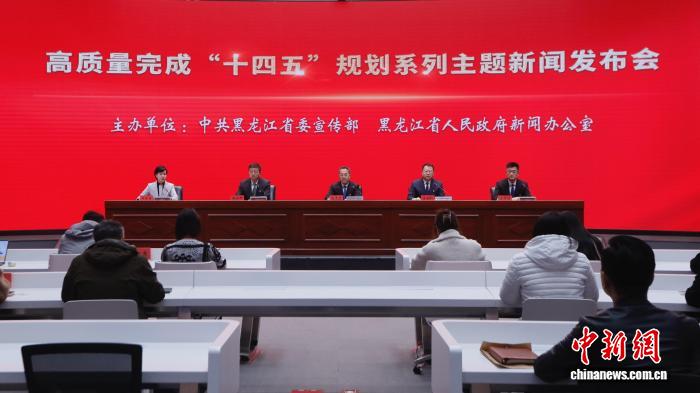
Core Points - During the "14th Five-Year Plan" period, Heilongjiang Province has actively integrated into and served the national unified market construction, establishing policies and systems conducive to the competitive development of business entities, resulting in significant achievements [1][3] - The number of business entities in Heilongjiang Province increased by 28% compared to the end of the "13th Five-Year Plan," with enterprises growing by 34.9% [1] Group 1 - Heilongjiang Province has established a provincial-level anti-monopoly and anti-unfair competition committee, innovating the "three letters and two documents" system for fair competition review, correcting 168 policy measures that violated fair competition standards, and abolishing 1,702 local standards [3] - The province has handled 609 cases of monopoly and unfair competition, effectively breaking local protectionism and market segmentation, thereby continuously optimizing the market competition ecology [3] Group 2 - In terms of regional cooperation, Heilongjiang Province has actively promoted collaboration among the three northeastern provinces and one region in areas such as administrative law enforcement, enterprise credit, food safety, standard certification, and inspection and testing, establishing a linkage mechanism for "same standards in different places" [3] - The province initiated and jointly handled 224 cases and released 13 regional standards, while also deepening cooperation with Guangdong Province to help more advantageous agricultural and forestry products from Heilongjiang enter the Guangdong-Hong Kong-Macao Greater Bay Area market [3] Group 3 - Moving forward, Heilongjiang Province will continue to strengthen comprehensive governance of competitive order, further optimize the market environment, and focus on enhancing product quality to inject new momentum for high-quality development [3]
财政部最新报告:用好用足更加积极的财政政策
Zheng Quan Shi Bao· 2025-11-07 11:18
Core Viewpoint - The Ministry of Finance released the "2025 Mid-Year Report on China's Fiscal Policy Execution," highlighting a proactive fiscal policy aimed at stabilizing employment, businesses, markets, and expectations, while promoting economic recovery [1][3]. Fiscal Policy Execution - The fiscal operation in the first half of 2025 was stable, with good budget execution and a gradual recovery in tax revenue [3]. - The central government allocated 300 billion yuan for long-term special bonds to support consumption, alongside 7.279 billion yuan for service industry development, aimed at stimulating rural and county-level consumption [4]. Investment and Consumption - The fiscal policy coordinated efforts to boost consumption and expand investment, with 42.7% of the annual issuance of special bonds completed in the first half, which is 17.7 percentage points faster than the previous year [4]. - The Ministry of Finance has implemented measures to support effective investment, including the issuance of special bonds for infrastructure and housing projects [4]. Trade and Tariff Adjustments - The Ministry effectively utilized tariff adjustments, implementing temporary import tax rates lower than the most-favored-nation rates on 935 items since January 1, 2025, to enhance the synergy between domestic and international markets [5]. Fiscal Management Pilot Programs - The Ministry initiated fiscal management pilot programs in 12 provinces to improve fiscal resource allocation and budget management, with a focus on achieving breakthroughs in key areas over two years [7][6]. Future Fiscal Policy Directions - The report outlines six key areas for future fiscal policy, including: 1. Utilizing more proactive fiscal policies to stimulate consumption and support key sectors [10]. 2. Supporting employment stability and foreign trade through enhanced public services and training [11]. 3. Fostering new growth drivers by promoting innovation and upgrading manufacturing [11]. 4. Improving social welfare services, particularly for the elderly and children [11]. 5. Preventing and mitigating risks in key areas through debt management policies [11]. 6. Enhancing fiscal governance and reforming tax policies [11].
财政部:完善财政科技经费分配和管理使用机制,加强科技资源统筹配置
Sou Hu Cai Jing· 2025-11-07 09:51
Core Viewpoint - The Ministry of Finance emphasizes the need to accelerate the cultivation and development of new growth drivers, focusing on industrial innovation and technology supply, as well as promoting the transformation and upgrading of the manufacturing sector [1] Group 1: Policy Initiatives - Strengthening the supply of key core technologies and actively fostering emerging and future industries [1] - Enhancing the allocation and management of fiscal science and technology funds to improve the effectiveness of technological investments [1] - Increasing support for the digital transformation of small and medium-sized enterprises (SMEs) to promote specialized and innovative development [1] Group 2: Market Environment - Advancing the construction of a unified national market, ensuring equal treatment of various business entities in fiscal subsidies and government procurement [1] - Creating a favorable environment for business development through equitable policies [1]
财政部:加快培育壮大发展新动能
Sou Hu Cai Jing· 2025-11-07 09:51
Core Insights - The report emphasizes the strengthening of industrial innovation and technology supply, focusing on advancing key core technology breakthroughs and actively nurturing emerging and future industries [1] - It highlights the continuous promotion of manufacturing transformation and upgrading, along with improving the allocation and management of fiscal science and technology funds to enhance the effectiveness of technological investments [1] - There is a significant push to support the digital transformation of small and medium-sized enterprises (SMEs), encouraging more SMEs to develop specialized and innovative capabilities [1] - The report also mentions the deepening of the construction of a unified national market, ensuring equal treatment of various business entities in fiscal subsidies and government procurement to create a favorable environment for business development [1]
针对带薪休假“有假难休”、提高居民收入,发改委主任郑栅洁发声!
Jin Rong Shi Bao· 2025-11-07 07:21
Core Viewpoint - The article emphasizes the importance of expanding domestic demand as a strategic foundation during the "14th Five-Year Plan" period, aligning with the central government's decisions to promote modernization and national rejuvenation [1] Group 1: Enhancing Consumer Spending - The focus is on boosting resident consumption by optimizing the environment, innovating scenarios, and reducing restrictions, while integrating consumption expansion with the development of new productive forces [2] - Measures include canceling unreasonable restrictions in the consumption sector, improving mechanisms for paid leave, and enhancing service consumption through relaxed access and brand leadership [2] - Long-term strategies aim to increase residents' consumption capacity and rates by improving income distribution and labor remuneration, alongside expanding social security systems to support consumption [2] Group 2: Expanding Effective Investment - The strategy includes optimizing investment structures to stimulate private investment and addressing barriers in market access and rights protection [3] - Emphasis is placed on enhancing investment efficiency by ensuring that investments yield greater economic and social value, particularly in infrastructure and public services [3] - The reform of investment financing systems is highlighted, utilizing new policy financial tools to invigorate investment [3] Group 3: Major Landmark Projects - The plan involves implementing significant landmark projects that align with national strategies, focusing on urban renewal, energy systems, and major technological infrastructure [4] - Infrastructure investment is to be maintained at a sustainable level while addressing the needs of an aging population and promoting service consumption in health and education [4] Group 4: Unified National Market Construction - The initiative aims to establish a unified market by standardizing institutional rules and eliminating barriers to resource allocation and government actions [5] - Efforts will be made to enhance market competition through legal frameworks against unfair practices and to streamline logistics costs across the economy [5]