
民间投资

Search documents
投资扩需求优供给作用加大(锐财经)
Sou Hu Cai Jing· 2025-05-30 22:14
Group 1 - The core viewpoint of the news highlights the significant progress in fixed asset investment across various sectors in China, particularly in manufacturing and private investment, indicating a positive economic outlook [2][3][5]. - The construction of the air traffic control project in Northeast China is a key strategic initiative under the national "14th Five-Year Plan," aimed at enhancing aviation control capabilities in the region [2]. - National fixed asset investment from January to April reached 147,024 billion yuan, showing a year-on-year growth of 4.0%, with manufacturing investment growing by 8.8%, contributing 54.6% to total investment growth [3][4]. Group 2 - High-tech manufacturing sectors, such as computer and office equipment manufacturing, saw investment growth of 28.9%, while the aerospace sector experienced a 23.9% increase [3]. - In Anhui Province, automotive manufacturing investment surged by 39.2%, reflecting a strong recovery in the manufacturing sector [3]. - Private investment in Henan Province grew by 9.7%, surpassing the national average, indicating a robust recovery in private sector confidence [5]. Group 3 - The implementation of the Private Economy Promotion Law is expected to further enhance private investment vitality by ensuring equal treatment and protection for private enterprises [5]. - Local governments are actively promoting investment through various initiatives, such as improving the business environment and facilitating investment projects [7]. - The potential for investment growth remains substantial, driven by industrial upgrades, major regional strategies, and ongoing social welfare investments [8].

政策发力民间投资打开新增长空间
Sou Hu Cai Jing· 2025-05-29 04:29
Group 1 - Private investment is a crucial engine for economic growth, employment stability, and innovation promotion, with policies being implemented to enhance investment channels and environments for private capital [1][5] - From January to April this year, private investment grew by 0.2% year-on-year, with private project investment (excluding real estate) increasing by 5.8%, and private investment in manufacturing and infrastructure rising by 9% and 9.6% respectively [4][5][11] - The National Development and Reform Commission (NDRC) has introduced a new negative list for market access to eliminate barriers for private enterprises, resulting in a 5 percentage point increase in the bidding success rate for private companies [5][10] Group 2 - Various regions in China have released lists of key private investment projects, focusing on industrial development and infrastructure, with significant investment amounts planned, such as Yunnan's 382 projects totaling approximately 345.66 billion yuan [7][8] - The implementation of the "Promotion Law for Private Economy" provides a legal framework for private enterprises to engage in major national strategies and projects, particularly in emerging and future industries [10] - The continuous rollout of high-quality projects aimed at attracting private investment is expected to enhance transparency and provide more opportunities for private enterprises, thereby boosting their confidence and investment activity [9][11]

重大项目加快推进,民间投资信心增强
Di Yi Cai Jing· 2025-05-29 02:06
Group 1 - The core viewpoint emphasizes the importance of major projects in stabilizing economic operations, optimizing industrial structure, ensuring national security, and enhancing public welfare [1][4] - Fixed asset investment in China grew by 4.0% year-on-year from January to April, with infrastructure investment showing a significant increase of 5.8% [4] - The National Development and Reform Commission (NDRC) aims to complete the list of major construction projects by the end of June, focusing on "two重" projects [4] Group 2 - The Yantai Zhaoyuan 400 MW offshore photovoltaic project has successfully connected to the grid, marking a significant milestone in China's offshore photovoltaic development [3] - The Jiangxi Pengze cotton boat island wind power project has also connected to the grid, establishing the first "zero-carbon island" in the Yangtze River basin [3] - The average annual power generation of the Yantai project is expected to be 694 million kWh, reducing coal consumption by approximately 208,700 tons and CO2 emissions by about 535,800 tons [3] Group 3 - Private investment in major projects has shown stable growth, with a year-on-year increase of 0.2% from January to April, and a notable 5.8% growth when excluding real estate [6] - The NDRC is enhancing mechanisms for private enterprises to participate in national major projects, with private capital participation in nuclear power projects reaching 20% [6][7] - Local governments are actively promoting investment projects to attract private capital, with significant plans announced in provinces like Shaanxi and Hubei [7][8]
党外人士大调研丨促进民营经济高质量发展 扩大国内有效需求——全国工商联开展2025年度重点考察调研
Xin Hua Wang· 2025-05-28 11:29
Group 1 - The private economy is a vital force for promoting modernization and high-quality development in China, with significant potential for growth following the implementation of the Private Economy Promotion Law on May 20, 2025 [1][5] - The All-China Federation of Industry and Commerce is conducting research to stimulate private investment and expand domestic demand, focusing on the theme of "stimulating private investment vitality" [1][2] - Tianjin is emerging as a hub for technology and innovation, with over 3,502 registered companies in the Tianjin High Education Science and Technology Park, of which more than 90% are private enterprises [1][2] Group 2 - The integration of technology and finance is seen as an effective path for development, with a strong innovation ecosystem attracting talent and investment in Tianjin [2][3] - Traditional industries in Tianjin are also revitalizing, with companies like Tianjin Rongcheng Group focusing on circular economy and transforming into large-scale private enterprises [2][3] - The research group emphasizes the importance of enhancing the quality of the supply system to drive consumption upgrades, advocating for high-tech product launches to stimulate new consumer demand [3][4] Group 3 - The research group is gathering insights from private enterprises to address challenges in stimulating private investment and enhancing innovation capabilities [3][4] - Suggestions from private entrepreneurs include leveraging innovation for transformation, utilizing renewable energy for green development, and enhancing policy guidance [4][5] - The research group plans to compile feedback from discussions to inform central government decision-making and policy formulation [4][5] Group 4 - The research group recommends using the Private Economy Promotion Law as an opportunity to tap into consumer potential by increasing household income and improving social security systems [5] - There is a call to expand effective investment in key areas such as infrastructure, technological innovation, and public welfare, encouraging enterprises to increase R&D investments [5] - The goal is to create a virtuous cycle between consumption and investment to drive economic growth [5]
【数说经济】有力扭转民间投资下降势头
Sou Hu Cai Jing· 2025-05-27 09:16
民间投资势头,体现的是市场用真金白银对未来发展投票的信心。扭转民间投资下降势头,短期看需要 更强有力的政策供给,根本上则要靠进一步全面深化改革,助力民营企业稳定预期、提振信心,提升能 力、激发活力。 影响民间投资增速的因素比较复杂,既受到我国处于转变发展方式、优化经济结构、转换增长动力攻关 期的阶段性变化的影响,也有全球产业链供应链加速重构、国内有效需求不足等因素的影响,还与民营 企业发展环境有待进一步优化以及民间投资自身特点有关。研究显示,民间投资具有顺周期性,对经济 景气的敏感度高、灵活性强。在经济周期上行时,民营企业投资意愿和市场信心明显加强;在经济周期 下行时,民营企业投资决策趋于更加谨慎,民间投资增速往往低于经济增长和整体投资的表现。 从结构性数据看,民间投资内部呈现出此消彼长的特点。我国民间资本主要投向制造业和房地产业。近 段时期房地产开发投资降幅较大,是民间投资的主要拖累。在扣除房地产开发投资后,1月份至7月份, 民间投资同比增长6.5%。其中制造业民间投资增长11.5%,增速比全部制造业投资高2.2个百分点;基础 设施民间投资增长5.2%,增速比全部基础设施投资高0.3个百分点。据统计,民营企 ...
民间投资活力持续释放 政策优化助力民营经济高质量发展
Yang Shi Wang· 2025-05-27 08:41
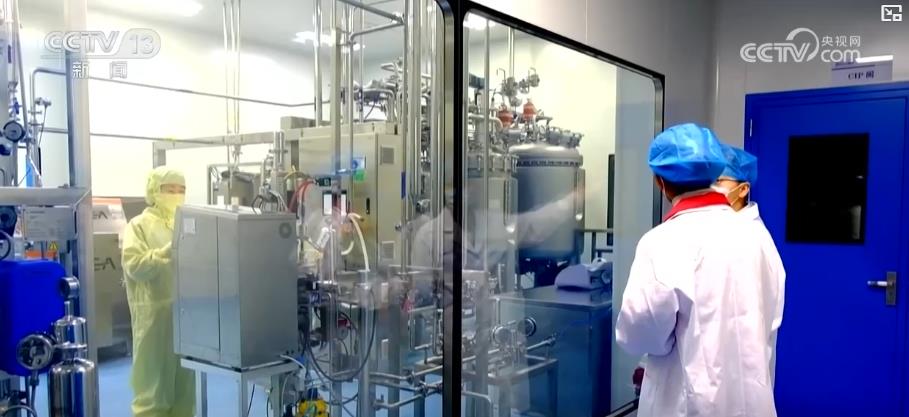
Group 1 - The private economy is a crucial entity for advancing supply-side structural reforms, promoting high-quality development, and building a modern economic system [1] - The All-China Federation of Industry and Commerce conducted annual key research focusing on "stimulating private investment vitality and expanding effective domestic demand" in regions like Tianjin and Shanxi [1] - In Shanxi, private investment grew by 10.2% in the first quarter, contributing 4.9 percentage points to overall investment growth [3] Group 2 - Shanxi Jinbo Biopharmaceutical Co., Ltd. invested over 200 million yuan in technological innovation over the past two years, leading to the development of a hundred billion-level industrial cluster [3] - The company emphasized the need for stronger intellectual property protection and a well-established market for intellectual property transactions to enhance innovation returns and boost private investment confidence [3] - The development of artificial intelligence and emerging industries is becoming a hotspot for private investment, with companies like Shanxi Baixin Information Technology Co., Ltd. making significant advancements in AI computing [5] Group 3 - The "super-intelligent integration" of supercomputing and AI is emerging as an investment hotspot, with companies like Sugon focusing on high-value products and services in AI and computing infrastructure [7] - Sugon's "super-intelligent integration" solutions have been implemented in over 30 industries, but the domestic ecosystem for AI computing still requires time for development [7] - Traditional industries are also focusing on high-end, intelligent, and green development, as seen in Tianjin Rongcheng Xiangtai Investment Holding Group's transition towards hydrogen energy and green transformation [9] Group 4 - The All-China Federation of Industry and Commerce conducted extensive surveys and discussions with over 126,000 private enterprises to understand the current state and challenges of private investment [11] - Two new trends were identified in private investment: a strong positive momentum and a shift towards new driving forces, particularly in emerging and future industries [11] - The Federation plans to promote policies that support private enterprises and enhance their investment efficiency, contributing to the expansion of domestic demand [11]
政策力挺下,民营企业在扩投资、稳外贸中作用凸显
Sou Hu Cai Jing· 2025-05-20 05:00
记者 辛圆 从最新公布的一系列经济数据来看,民营企业在扩投资、稳外贸等方面的作用凸显。 早在2023年7月19日,中共中央、国务院就正式印发《关于促进民营经济发展壮大的意见》。《意见》从民营经济的发展环境、政策支持、法治保障、高质 量发展以及促进民营经济人士健康成长等方面提出了多达31条具体举措。 这是继2005年2月《国务院关于鼓励支持和引导个体私营等非公有制经济发展的若干意见》和2010年5月《国务院关于鼓励和引导民间投资健康发展的若干意 见》之后,中央关于民营经济发展的又一重要文件。 2023年7月,国家发改委等部门印发《关于实施促进民营经济发展近期若干举措的通知》,提出支持民营企业参与重大科技攻关,牵头承担工业软件、云计 算、人工智能、工业互联网、基因和细胞医疗、新型储能等领域的攻关任务。 国家统计局周一公布数据显示,1-4月份,全国固定资产投资同比增长4.0%,其中,民间投资同比增长0.2%。民间项目投资(扣除房地产开发民间投资)增 长5.8%。 分行业看,1-4月份,制造业民间投资增长9.0%,增速比全部制造业投资高0.2个百分点;基础设施民间投资增长9.6%,增速比全部基础设施投资高3.8个百分 ...
谁撑住了一季度的固定资产投资
经济观察报· 2025-05-11 06:34
Core Viewpoint - Under the dual policy support, state-owned sector investment growth reached 6.5%, with actual growth estimated to exceed 8% after price factors are deducted, significantly supporting investment growth and the economic foundation amid declining real estate development investment and stagnant private investment [1][3][4]. Investment Trends - In Q1 2025, national fixed asset investment (excluding rural households) was 103,174 billion yuan, a year-on-year increase of 4.2%. After accounting for a 2.3% decline in PPI, the actual growth rate of fixed asset investment was approximately 6.5%, surpassing GDP growth by about 1 percentage point [4][5]. - Private fixed asset investment grew by only 0.4% in Q1 2025, marking the fourth consecutive year of minimal growth since 2022. Manufacturing private investment increased by 9.7%, while infrastructure private investment rose by 9.3% [2][7]. Sector Analysis - The first industry saw an investment of 2,081 billion yuan, growing by 16.0%, while the second industry investment was 36,141 billion yuan, increasing by 11.9%. The third industry investment was 64,952 billion yuan, with a marginal growth of 0.1%, indicating a significant decline in private investment in real estate [8][13]. - The decline in real estate development investment, which fell by 9.9% in Q1 2025, has heavily impacted private investment growth, with estimates suggesting that the decline in private real estate investment is even more pronounced [2][22]. Regional Investment Performance - Investment growth varied by region, with the northeastern region showing a growth of 9.7%, primarily driven by state-owned sector investment. The eastern region grew by 2.2%, while the central and western regions saw growth rates of 5.5% and 6.2%, respectively [9][20]. Legislative Impact - The passing of the "Private Economy Promotion Law" on April 30, 2025, aims to support private economic organizations in participating in major national strategies and projects, potentially leading to a rebound in private investment as the real estate market stabilizes [3][21].

谁撑住了一季度的固定资产投资
Jing Ji Guan Cha Bao· 2025-05-09 11:42
Group 1: Investment Trends - In Q1 2025, private investment grew by 0.4%, marking the fourth consecutive year of minimal growth since 2022, primarily impacted by a decline in real estate development investment, which fell by 9.9% [1][7] - Excluding real estate development, private investment increased by 6.0% in Q1 2025, while national fixed asset investment reached 103,174 billion yuan, growing by 4.2% year-on-year [1][3] - The share of private investment in national fixed asset investment dropped to below 50% for the first time since 2012, with a recorded share of 50.1% in 2024 [1][7] Group 2: Sector Performance - Manufacturing sector private investment rose by 9.7%, continuing a trend of high growth since 2021, driven by factors such as export growth and supportive policies [1][7] - Infrastructure private investment also saw a significant increase of 9.3%, contrasting with a decline in private investment in the tertiary sector, which fell by 7.7% [1][6] - The first industry investment grew by 16.0%, while the second industry investment increased by 11.9%, indicating robust performance in these sectors [5][6] Group 3: Economic Contributions - Net exports contributed significantly to economic growth, increasing by 50.4% and accounting for nearly 40% of GDP growth, despite a 6.0% decline in imports [2][4] - The "old-for-new" consumption policy supported a 4.6% growth in retail sales of consumer goods, highlighting the potential for further consumption growth [2][3] - State-owned investment grew by 6.5%, helping to stabilize overall investment growth amid declining private investment and real estate development [2][5] Group 4: Legislative Support - The newly passed Private Economy Promotion Law aims to enhance private investment by encouraging participation in national strategies and major projects, effective from May 20, 2025 [2][7] - The law is expected to support a rebound in private investment as the real estate market stabilizes [2][7]
一季度增速14.6%,成都如何激活民间投资“一池春水”?
Sou Hu Cai Jing· 2025-05-09 03:14
Group 1 - The company Zhongfa Tianxin (Sichuan) Aviation Technology Co., Ltd. reported a nearly 10-fold year-on-year increase in order volume in Q1, boosting confidence in its new project, a light aircraft engine R&D and production base with an investment of 2.25 billion yuan [1] - Chengdu's private investment growth rate reached 14.6% in Q1, surpassing national and provincial averages, indicating a vibrant private investment environment [1][3] - The private economy contributes approximately 50% of Chengdu's economic output, over 60% of tax revenue, and 90% of technological innovation and urban employment, highlighting its role in high-quality development [3] Group 2 - Chengdu is actively broadening private investment channels to enhance economic stability and growth, with a focus on major projects and effective investments [3][5] - A total of 617 major projects with a total investment scale of 363.08 billion yuan have been compiled in Chengdu's infrastructure and industrial project opportunity lists [3] - Industrial investment's contribution to private investment is increasing, with a 33.5% year-on-year growth in private industrial investment in Q1, and significant growth in sectors like electronics and automotive [5] Group 3 - The rise in private investment in Chengdu is attributed to the coupling of institutional innovation and industrial evolution, as well as the resonance between policy precision and market sensitivity [7] - The low-altitude economy is seen as a strategic emerging industry, with significant investments such as the 3 billion yuan project by Wofei Chang Kong, which aims to establish a new benchmark in Chengdu [8][9] - Chengdu's low-altitude airspace management reforms have created a favorable environment for low-altitude economy enterprises, enhancing testing capabilities and operational efficiency [9][11] Group 4 - The local government has initiated measures to optimize the business environment, helping over 100,000 enterprises, which has led to increased confidence among private enterprises [12] - Notable investments include a 3.3 billion yuan rocket production base by a private company and a zero-radiation nuclear medicine R&D base, reflecting the growing confidence in Chengdu's investment climate [14] - The increase in private investment is seen as a validation of the effectiveness of institutional innovation in activating production factors, emphasizing the need for a clear regulatory framework to foster sustainable growth [14]
