
战略性新兴产业

Search documents
袁家军、胡衡华、徐思伟、黄耀文,共同为新公司揭牌
券商中国· 2025-12-01 15:17
Core Viewpoint - The establishment of Guoxin Holdings (Chongqing) Co., Ltd. marks a significant step in enhancing cooperation between China Guoxin and Chongqing, focusing on strategic emerging industries and the development of the western financial center [1][2]. Group 1: Company Overview - China Guoxin Holdings Co., Ltd. was founded on December 22, 2010, and is one of the central enterprises regulated by the State-owned Assets Supervision and Administration Commission (SASAC) [4]. - The company was designated as a pilot for state-owned capital operation by the State Council in early 2016 and officially transitioned to a phase of continuous deepening reform in December 2022 [4]. - As of the end of 2024, the total assets of the company are expected to reach 980 billion yuan, with annual profits exceeding 20 billion yuan for four consecutive years [4]. Group 2: Strategic Cooperation - The leadership of Chongqing expressed gratitude for China Guoxin's support in the development of strategic emerging industries and the construction of the western financial center [2]. - The local government aims to leverage the recent developments to enhance the economic capabilities of the Chengdu-Chongqing economic circle and accelerate the construction of the western land-sea new corridor [2]. - China Guoxin is committed to increasing its investment in Chongqing, focusing on sectors such as semiconductors, artificial intelligence, advanced materials, biomedicine, low-altitude economy, and new energy vehicles [3].

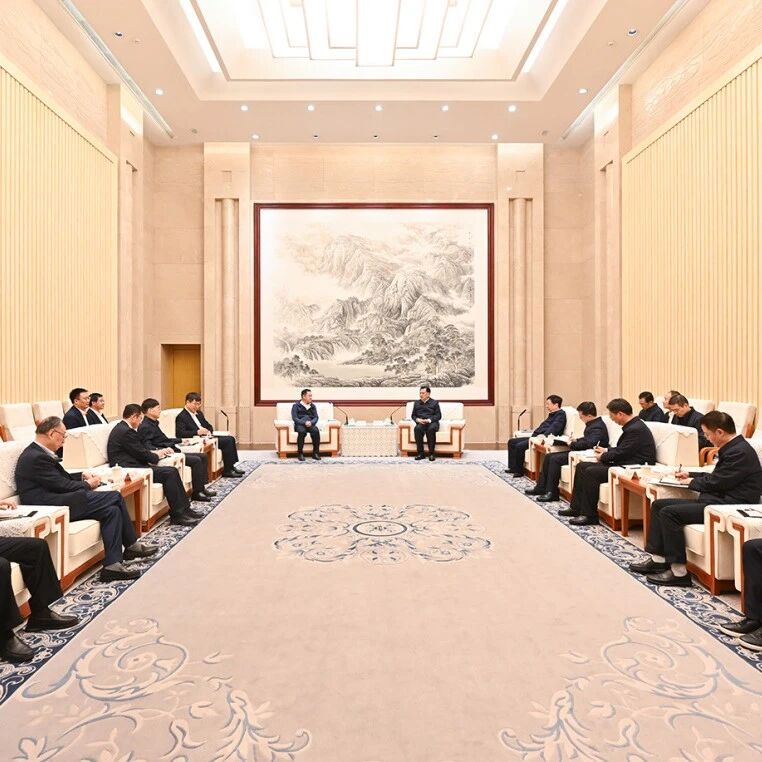
袁家军、胡衡华、徐思伟、黄耀文,共同为新公司揭牌
Xin Jing Bao· 2025-12-01 13:14
Core Viewpoint - The establishment of Guoxin Holdings (Chongqing) Co., Ltd. marks a significant step in enhancing cooperation between Guoxin and Chongqing, focusing on strategic emerging industries and the development of the western financial center [1][2]. Group 1: Company Overview - Guoxin Holdings Co., Ltd. was established on December 22, 2010, and is one of the central enterprises regulated by the State-owned Assets Supervision and Administration Commission (SASAC) [3]. - The company was designated as a pilot for state-owned capital operation by the State Council in early 2016 and officially transitioned to a phase of continuous deepening reform in December 2022 [3]. - As of the end of 2024, the company's total assets are projected to reach 980 billion yuan, with annual profits exceeding 20 billion yuan for four consecutive years [3]. Group 2: Strategic Cooperation - The unveiling of Guoxin Holdings (Chongqing) Co., Ltd. is seen as a new starting point for further practical cooperation in various fields, including modern industrial systems, strategic emerging industries, state-owned enterprise reform, and digital development in Chongqing [2]. - Guoxin expresses confidence in Chongqing's future development and plans to increase its investment in sectors such as semiconductors, artificial intelligence, advanced materials, biomedicine, low-altitude economy, and new energy vehicles [2].
AIC“新势力”积极入局,创投行业迎来阶段性拐点
Zheng Quan Shi Bao Wang· 2025-12-01 12:21
Core Insights - The banking-affiliated investment companies (AIC) are rapidly expanding their involvement in the venture capital industry, indicating a significant shift in the market dynamics [1] - AIC has invested over 410 billion yuan in strategic emerging industries such as hard technology, artificial intelligence, and new energy, emphasizing long-term and value-driven investments [1][2] - The venture capital industry is expected to experience a phase of improvement in sentiment and data by 2025, with optimism extending into 2026 despite ongoing challenges [1] Investment Strategy - AIC focuses on early-stage, small-scale, and long-term investments in hard technology, particularly in key regions like Beijing, the Yangtze River Delta, and the Guangdong-Hong Kong-Macau Greater Bay Area [2] - The investment strategy includes targeting strategic emerging industries, national innovation centers, and high-tech enterprises, as well as critical technology fields such as energy storage [2] - The influx of long-term capital from sources like social security funds and AIC is expected to enhance the supply of patient capital, addressing the long-standing funding shortages faced by hard technology companies [2]
低空经济行业信用研究(简版报告):战略性新兴产业
Lian He Zi Xin· 2025-12-01 12:13
本版为简版报告,如希望获取详版报告,请联系文末投资人服务。 战略性新兴产业—低空经济行 业信用研究(简版报告) 1. 低空经济应用场景将遵循"先物后人、从特殊到一般"的路线快速拓展; 2. 低空物流将实现规模化运营,城市空中交通将实现商业化运营; 3. eVTOL、飞行汽车等新型低空飞行器将成为未来低空出行的主流工具; 4. 低空经济行业内企业主要包括低空经济整机企业、零部件企业、运营服务企业,信用评级 覆盖 AA+、AA-、AAA、AA 和 A+等,近三年来信用水平总体保持稳定; 5. 低空经济整机企业信用特征总体表现为高成长性、高经营风险和高财务风险,对其信用分 析思路为首要看团队,其次看产品,再次看产业链整合能力,继而看资本实力,最后看资金保障 能力。 www.lhratings.com 研究报告 1 联合资信 研究中心 工商一部 | 邓博文 李小建 崔濛骁 金剑 李天娇 孙巧莉 李子昕 核心观点: 详版正文目录 | 一、低空经济行业发展现状及趋势 | | --- | | (一)低空经济的定义及行业特征 | | 1. 低空经济的定义 . | | 2. 低空经济行业特征 | | (二)低空经济相关产业政策 ...
地方政府与城投企业债务风险研究报告:湖北篇
Lian He Zi Xin· 2025-12-01 11:03
1. Report Industry Investment Rating No relevant content provided. 2. Core Viewpoints of the Report - Hubei Province has an important transportation position, obvious resource endowment advantages, and its economic aggregate and per capita GDP rank among the top in the country. The provincial government's debt burden has increased but remains at a relatively low - medium level nationwide. Debt resolution work is advancing steadily, and the debt risks of urban investment enterprises are generally controllable [4][5]. - The "one - main, two - deputy" regional economic pattern in Hubei is stable, with significant differences in the economic development levels of different cities and prefectures. The general public budget revenue of each city and prefecture has increased year - on - year, but the fiscal self - sufficiency ability is generally weak [4]. - After the introduction of a package of debt resolution plans in 2024, the issuance volume and scale of urban investment bonds in Hubei decreased significantly year - on - year. In 2025, the issuance scale increased year - on - year, but the bond financing of most cities and prefectures showed a net outflow [6]. 3. Summary According to the Directory 3.1 Hubei Province's Economic and Fiscal Strength 3.1.1 Economic Development Status - Hubei has an important transportation position and rich resources. It is a comprehensive transportation and communication hub in central China. The province has abundant water energy, mineral, tourism, and education resources. During the 14th Five - Year Plan period, it will invest 820 billion yuan in comprehensive transportation construction [7]. - The permanent population has slightly decreased, and the urbanization rate is slightly lower than the national average. In 2024, the GDP and per capita GDP ranked 7th and 9th in the country respectively, and the GDP growth rate was 5.8%. In the first half of 2025, the GDP growth rate was 6.18%, higher than the national average [9]. - The industrial structure is continuously optimized, with the service industry remaining dominant. Traditional industries are stable, and strategic emerging industries are developing rapidly. The "Optical - Chip - Display - Terminal - Network" industry cluster centered in Wuhan East Lake High - tech Zone is expected to reach a trillion - level scale [11]. - Policies such as the "14th Five - Year Plan for the Development of the Middle Reaches of the Yangtze River Urban Agglomeration" and the "Wuhan Metropolitan Area Development Plan" are beneficial to Hubei's economic development. Since 2025, Hubei has introduced a series of policies to promote economic development [14][18]. 3.1.2 Fiscal Strength and Debt Situation - General public budget revenue ranks in the middle in the country, with a low fiscal self - sufficiency rate. In 2024, it was 393.788 billion yuan, ranking 11th in the country. From January to June 2025, it was 235.334 billion yuan, a year - on - year increase of 7.6% [21]. - Government - funded revenue was basically the same as the previous year, and the contribution of land use right transfer fees increased. The scale of superior subsidy revenue is large, and the comprehensive financial strength ranks in the middle - upper reaches of the country. In 2024, the superior subsidy revenue was 561.319 billion yuan, ranking 3rd in the country, and the comprehensive financial strength ranked 8th [22][26]. - The overall debt burden is at a relatively low - medium level nationwide. At the end of 2024, the local government debt balance was 1,858.61 billion yuan, a year - on - year increase of 18.95%. The debt ratio and debt - to - GDP ratio increased by 14.12 and 2.97 percentage points respectively [29]. - Hubei strictly implements the debt resolution plan, focusing on "three - asset" reform and actively seeking replacement bond quotas. It has completed the task of exiting financing platforms ahead of schedule, and the debt resolution work is advancing steadily [30]. 3.2 Economic and Fiscal Strength of Each City and Prefecture in Hubei Province 3.2.1 Economic Development of Each City and Prefecture - The "one - main, two - deputy" regional economic pattern is stable, and the economic development levels of different cities and prefectures vary significantly. Wuhan has a strong population siphon effect. Huangshi, Xiaogan, and Jingmen have relatively fast GDP growth rates [33]. - Different regions have different industrial characteristics. The "Han - Xiao - Sui - Xiang - Shi" region has a developed automobile - related industry, and the "Yi - Jing - Jing" region has a well - developed chemical industry. Emerging industries such as the "Optical - Chip - Display - Terminal - Network" in Wuhan are developing rapidly [38]. - In 2024, Huangshi, Xiaogan, and Jingmen had relatively fast GDP growth rates. In the first half of 2025, Shiyan and Jingmen ranked among the top two in terms of GDP growth rate [40][41]. 3.2.2 Fiscal Strength and Debt Situation of Each City and Prefecture - In the first half of 2025, the general public budget revenue of each city and prefecture increased year - on - year. Xiaogan, Shiyan, Huanggang, and Huangshi had relatively fast growth rates, while Wuhan had a slower growth rate [44]. - Affected by the real estate market, the government - funded revenue of some cities and prefectures decreased year - on - year. The government - funded revenue of different cities and prefectures showed a differentiated trend [48]. - The government debt balance of each city and prefecture has increased, and the debt - to - GDP ratio has risen. The debt resolution ideas of each city and prefecture are consistent with the provincial level, and various debt resolution measures have been taken [51]. 3.3 Debt - Repayment Ability of Urban Investment Enterprises in Hubei Province 3.3.1 Overview of Urban Investment Enterprises - Bond - issuing urban investment enterprises in Hubei are mainly at the prefectural and district - county levels. Wuhan has the largest number of bond - issuing urban investment enterprises, accounting for 25.22% of the province. High - credit - rated urban investment enterprises are mainly concentrated in Wuhan [56]. 3.3.2 Bond - Issuing Situation of Urban Investment Enterprises - In 2024, the number and scale of bond issuances by urban investment enterprises in Hubei decreased significantly year - on - year. From January to September 2025, the bond - issuing scale increased year - on - year, but the overall bond financing showed a net outflow [57][59]. 3.3.3 Debt - Repayment Ability Analysis of Urban Investment Enterprises - As of the end of 2024, the debt of bond - issuing urban investment enterprises in Hubei was mainly in the form of bank loans and bonds. The overall debt burden of urban investment enterprises in Ezhou and Wuhan is relatively heavy [63]. - As of the end of June 2025, most cities and prefectures' urban investment enterprises had a slightly improved cash - to - short - term - debt ratio, but there was still significant short - term debt - repayment pressure in Suizhou, Enshi, and Ezhou [68]. 3.3.4 Support and Guarantee Ability of Fiscal Revenue of Each City and Prefecture for the Debt of Bond - Issuing Urban Investment Enterprises - The scale of "total debt of bond - issuing urban investment enterprises + local government debt" in Wuhan is the largest, followed by Xiangyang, Yichang, Jingzhou, and Huangshi. Except for Shennongjia Forestry District and Enshi Prefecture, the ratio of "total debt of bond - issuing urban investment enterprises + local government debt" to comprehensive financial resources in other cities and prefectures exceeds 250% [74].
AIC“新势力”积极入局 创投行业迎来阶段性拐点
Zheng Quan Shi Bao Wang· 2025-12-01 10:45
Core Insights - The banking financial asset investment companies (AIC) are rapidly expanding and increasing their participation in the venture capital industry, with a positive outlook for 2025 and 2026 despite existing challenges [1][2] Group 1: AIC Investment Overview - AIC has cumulatively invested over 410 billion yuan in strategic emerging industries such as hard technology, artificial intelligence, and new energy through debt-to-equity swaps and equity investments [1] - From 2024 to November 2025, AIC has made 22 investments primarily in sectors like semiconductors, new materials, aerospace, and biomedicine [1] Group 2: Investment Strategy and Focus - The investment strategy of AIC emphasizes early, small, long-term investments in hard technology, focusing on key regions like Beijing, the Yangtze River Delta, and the Guangdong-Hong Kong-Macau Greater Bay Area [2] - AIC is also targeting strategic emerging industries, national-level innovation centers, and high-tech enterprises, particularly in critical technology fields including new energy storage [2] Group 3: Market Dynamics and Collaboration - There is an increasing influx of long-term capital into the market from sources like social security funds, AIC, and national entrepreneurship funds, which are characterized by long durations and market-driven operations [2] - The expansion of AIC is expected to enhance the supply capacity of patient capital, addressing the long-standing issue of short-term funding for hard technology enterprises [2]
深市核心指数焕新 长期价值投资的 “压舱石”更牢了
Zheng Quan Shi Bao Wang· 2025-12-01 10:05
Core Insights - The Shenzhen Stock Exchange announced a sample adjustment for several indices, including the Shenzhen Component Index and the ChiNext Index, effective December 15, 2025 [2] - The adjustment will see the Shenzhen Component Index replace 17 stocks, with 7 from the main board and 10 from the ChiNext, while the ChiNext Index will replace 8 stocks [2] - The strategic emerging industries will have a significant weight in the indices, with the ChiNext Index's weight reaching 93% and the Shenzhen 100 Index's weight at 81% [2][3] Industry Performance - The manufacturing sector will represent 76% of the Shenzhen Component Index, the highest among Chinese capital market indices, with over 30% being industry champions [3] - The new sample companies in the ChiNext Index reported a 16% increase in revenue and a 24% increase in net profit year-on-year, with high-end equipment manufacturing and new energy sectors seeing net profit growth of 60% and 54%, respectively [3] - Over 80% of the Shenzhen 100 Index companies have expanded their business internationally, with a compound annual growth rate of 17% in overseas revenue over the past three years [3] Investment Trends - Nearly 60% of the companies in the Shenzhen Component Index have implemented quality and return enhancement plans, with over 30% engaging in stock buyback programs to boost market confidence [3] - The ChiNext Index includes 64 companies rated A or above in ESG, accounting for 79% of the index, indicating a strong focus on sustainable development [3] - The Shenzhen 100 Index companies have distributed a total of 302.2 billion yuan in dividends this year, representing 55% of the total dividends in the Shenzhen market, with a rolling return on equity of 12% over the past year [3]
广弘控股子公司签约中山坦洲 拟投建大湾区战略性新兴产业园区
Xin Lang Cai Jing· 2025-12-01 09:46
Core Viewpoint - Guangdong Guanghong Holdings Co., Ltd. has signed a framework agreement with the People's Government of Tanzhou Town, Zhongshan City, to revitalize its existing land in Tanzhou and develop a strategic emerging industry park in the Greater Bay Area [1][2]. Agreement Overview - The agreement is a framework and intention-based arrangement between Guanghong Food and the local government, with no specific investment amount disclosed at this stage. The actual investment scale will be determined by future formal agreements [2][5]. - The signing does not require approval from the company's board or shareholders and does not constitute a related party transaction or a major asset restructuring as per regulations [2][6]. Project Planning - The project, named "Guanghong Food Revitalization Project in Tanzhou," will focus on new materials and digital creativity, aiming to create a comprehensive service system that includes industrial production, technology research and development, and incubation [3][4]. - The goal is to establish a competitive high-level strategic emerging industry park within the Greater Bay Area [3]. Responsibilities of Both Parties - The local government will assist Guanghong Food with project approvals and infrastructure development, including roads, power, water, and drainage systems [4]. - Guanghong Food commits to advancing the project in compliance with regulations and will pay taxes and report statistics post-production [4]. Market Impact - The agreement is expected to enhance the efficiency of land use and accelerate the revitalization of the company's land resources, although it is still in the preparatory stage and will not significantly impact the company's performance in 2025 [5]. - The specifics of implementation, progress, and outcomes remain uncertain and will depend on future formal agreements [5].

广弘控股:子公司与中山市坦洲镇人民政府签订投资框架协议书
Xin Lang Cai Jing· 2025-12-01 08:44
Core Viewpoint - Guanghong Holdings has signed an investment framework agreement with the People's Government of Tanzhou Town, Zhongshan City, to revitalize the Tanzhou land project and promote industrial economic upgrading [1] Group 1: Project Objectives - The agreement aims to further activate the Guanghong Food Tanzhou site and enhance land resource utilization [1] - The project will include production, research and development, and supporting functional zones [1] Group 2: Strategic Focus - The initiative will flexibly introduce strategic emerging industry clusters such as new materials and digital creativity [1] - The goal is to establish a comprehensive service system that integrates industrial production, technology research and development, industry incubation, venture investment, and shared experimental platforms [1] Group 3: Regional Development - The project is focused on creating a high-level strategic emerging industry park in the Greater Bay Area [1]
深交所:深证成指、创业板指、深证100等深市指数焕新 筑牢长期价值投资“压舱石”
智通财经网· 2025-12-01 07:43
Core Insights - The Shenzhen Stock Exchange and Shenzhen Securities Information Co., Ltd. announced a periodic adjustment of several indices, including the Shenzhen Component Index and ChiNext Index, effective December 15, 2025 [1] Group 1: Index Adjustments - The Shenzhen Component Index will replace 17 constituent stocks, adding 7 from the main board and 10 from the ChiNext [1] - The ChiNext Index will replace 8 constituent stocks [1] - The Shenzhen 100 Index will replace 7 constituent stocks, with 4 from the main board and 3 from the ChiNext [1] - The ChiNext 50 Index will replace 5 constituent stocks [1] Group 2: Industry Weight and R&D - After the adjustments, the strategic emerging industries will account for 93% of the ChiNext Index, with a 13% year-on-year growth in R&D expenses among the new sample companies [1] - The Shenzhen 100 Index will see an increase in the weight of strategic emerging industries to 81%, with key sectors like advanced manufacturing and digital economy reaching 79% [1] - The ChiNext 50 Index will have a strategic emerging industry weight of 98%, with the new generation information technology sector, including AI and chips, making up 45% [1] Group 3: Economic Impact - The manufacturing sector will represent 76% of the Shenzhen Component Index, the highest among Chinese capital market indices, with over 30% being manufacturing champions [2] - The new sample companies in the ChiNext Index reported a 16% increase in revenue and a 24% increase in net profit year-on-year, with high-end equipment manufacturing and new energy sectors seeing net profit growth of 60% and 54%, respectively [2] - Over 80% of the Shenzhen 100 sample companies have expanded their business internationally, with a compound annual growth rate of 17% in overseas revenue over the past three years [2] Group 4: Long-term Value Investment - Nearly 60% of the new sample companies in the Shenzhen Component Index have implemented quality and return enhancement plans, with over 30% engaging in stock buyback programs [2] - The ChiNext Index includes 64 companies rated A or above in ESG, representing 79% of the sample, indicating a focus on sustainable development [2] - The Shenzhen 100 sample companies have distributed a total of 302.2 billion yuan in dividends this year, accounting for 55% of the total dividends in the Shenzhen market, with a rolling return on equity of 12% over the past year [2]
