
绿色低碳发展

Search documents
商务部关于拓展绿色贸易的实施意见
Xin Hua Wang· 2025-10-30 13:54
Core Viewpoint - The article outlines a comprehensive strategy to enhance green trade in China, aiming to promote low-carbon development in foreign trade enterprises and achieve carbon peak and neutrality goals. Group 1: Enhancing Green Development Capabilities - Foreign trade enterprises are encouraged to strengthen awareness of green low-carbon development through training and sharing best practices [1][2] - Support for green design and production is emphasized, including the use of renewable energy and reducing carbon emissions in production processes [1][2] Group 2: Promoting Green Logistics - The strategy promotes the shift of long-distance transportation from road to rail and water, encouraging the use of environmentally friendly packaging and logistics equipment [2] - Support for shipping companies to establish green low-carbon systems and utilize clean energy in transportation is highlighted [2] Group 3: Expanding Green Product and Technology Trade - Foreign trade enterprises are guided to develop products made from recycled materials and explore sustainable fuel trade [3] - Research on overseas markets for green low-carbon products is encouraged to identify potential trade opportunities [3] Group 4: Creating a Favorable International Environment - Strengthening international communication and participation in global carbon trade rule discussions is emphasized [6] - The establishment of standards for green low-carbon products and services that align with international norms is encouraged [6] Group 5: Supporting Infrastructure for Green Trade - Financial policies are to be enhanced to support green low-carbon product exports, including the development of carbon footprint databases [12][13] - The article calls for the establishment of a monitoring and analysis system for green trade statistics to support policy development [16]
加强电网建设 赋能绿色低碳高质量发展
Qi Lu Wan Bao· 2025-10-30 11:55
Core Viewpoint - The State Grid Heze Juancheng Power Supply Company is actively implementing higher-level directives to support regional green and low-carbon development through robust power supply and infrastructure improvements [1][2] Group 1: Infrastructure Development - The company is focused on optimizing the Juancheng power grid structure, particularly through the advancement of the 110 kV Shungeng substation project, which is essential for local grid upgrades and green transformation [1][2] - The 110 kV Shungeng substation will create an inter-supply network with surrounding substations, enhancing power supply reliability by shortening supply radius and reducing line load [2] Group 2: Clean Energy Integration - The project will reserve access channels for clean energy, efficiently absorbing distributed photovoltaic power in the region and minimizing energy loss [2] - The company is adhering to the principle of "appropriate advance and precise matching" while dynamically tracking load and clean energy growth trends to optimize project plans [2] Group 3: Economic Impact - Upon commissioning, the project will meet future electricity and green energy demands, laying a solid foundation for attracting investment and upgrading industries in Juancheng, thus contributing to the region's low-carbon economic growth [2]
破解资源瓶颈、强化绿色转型 中国铝工业锚定可持续发展新路径
Xin Hua Cai Jing· 2025-10-30 10:04
Core Viewpoint - The 2025 China International Aluminum Week aims to strengthen the global layout of bauxite resources, establish a green low-carbon development system, and promote long-term cooperation in the aluminum industry [1] Group 1: Industry Development Strategies - The Chinese aluminum industry needs to enhance resource security by increasing domestic bauxite exploration, stabilizing overseas resource supply, and improving the recycling rate of aluminum [2] - Emphasis on innovation through strengthening basic research and promoting collaboration between industry, academia, and research [2] - The industry should focus on green low-carbon transformation by utilizing green electricity policies and expanding the use of recycled aluminum [2] - There is a need to explore new applications for aluminum, particularly in urban settings, and to leverage new media to promote aluminum's low-carbon attributes [2] - The industry should pursue globalization by enhancing investment, products, and services on a global scale [2] Group 2: Government and Policy Support - The Ministry of Industry and Information Technology plans to optimize top-level design and promote high-quality development in the aluminum industry [3] - Policies will be developed to enhance the aluminum industry's high-end development and expand its consumption in emerging fields [3] - The government aims to accelerate the construction of a green low-carbon development framework and promote intelligent manufacturing [3] Group 3: Corporate Initiatives - China Aluminum Corporation emphasizes innovation, green development, digital empowerment, and open collaboration to build a sustainable aluminum ecosystem [4] - State Power Investment Corporation focuses on creating a clean energy-aluminum integrated industrial chain and enhancing supply chain security [4] - Shaanxi Nonferrous Metals Holding Group is committed to green formulas, low-carbon manufacturing, and intelligent production to enhance high-end aluminum supply [5] Group 4: Industry Challenges and Future Directions - The aluminum industry must adapt to complex global challenges while maintaining confidence and promoting cooperation for mutual development [3][6] - The industry is encouraged to focus on high-quality development, emphasizing technological innovation, green practices, and integration into global supply chains [6]
共绘铝产业发展新蓝图 2025年中国国际铝业周在西安开幕
Zheng Quan Ri Bao Wang· 2025-10-30 05:11
Core Viewpoint - The 2025 China International Aluminum Week aims to strengthen the global layout of bauxite resources, construct a green low-carbon development system, and lead the transformation of the global aluminum industry governance system, while enhancing long-term cooperation in the aluminum industry [1] Group 1: Economic Indicators and Industry Development - The Chinese nonferrous metals industry is showing positive economic indicators, with improved development quality and enhanced global competitiveness during the 14th Five-Year Plan period [1] - Key areas for high-quality development in the aluminum industry include resource security, innovation, green low-carbon development, and global cooperation [2][3] Group 2: Strategic Focus Areas - Strengthening resource security by increasing domestic bauxite exploration, stabilizing overseas resource supply, and improving recycling efficiency of secondary aluminum [2] - Promoting innovation through collaboration between leading aluminum processing enterprises and equipment manufacturing companies, emphasizing the importance of research and development [2] - Advancing green low-carbon development by utilizing green electricity policies and promoting large-scale, low-cost red mud disposal technologies [2] Group 3: Application and Collaboration - Expanding aluminum applications by tapping into urban aluminum potential and leveraging new media to promote aluminum's excellent performance and low-carbon attributes [2] - Conducting research on the integration of steel and aluminum industries, focusing on material recycling and technological interaction [2] - Encouraging global cooperation to promote the better development of the world aluminum industry, including investment and service globalization [2][3] Group 4: Policy and Regulation - The Ministry of Industry and Information Technology plans to optimize top-level design and enhance the high-quality development of the aluminum industry through policy guidance and the formulation of the 15th Five-Year Plan [3] - Efforts will be made to elevate the aluminum industry's high-end development level and expand its consumption potential in emerging fields [3] - The conference also featured the launch of the China Aluminum Industry High-Quality LCA Carbon Footprint Database 2.0 [4]
2025年中国国际铝业周在西安开幕
Qi Huo Ri Bao Wang· 2025-10-30 01:56
Core Viewpoint - The 2025 China International Aluminum Week aims to strengthen the global layout of bauxite resources, construct a green low-carbon development system, and lead the transformation of the global aluminum industry governance system, providing a long-term cooperation platform for the aluminum industry [1]. Group 1: Industry Development and Trends - The Chinese nonferrous metals industry is showing stable and positive economic indicators, with enhanced global competitiveness and strategic significance [3]. - The industry is focusing on high-quality development through supply-side structural reforms, innovation-driven initiatives, and green and intelligent transformation [3][4]. - The aluminum industry is expected to enhance resource security, optimize industrial structure, and promote green low-carbon development [3][5]. Group 2: Key Strategies for Development - Strengthening resource security by increasing domestic bauxite exploration and improving recycling efficiency of aluminum raw materials [3][4]. - Promoting innovation through collaboration between enterprises, academia, and research institutions, and encouraging management innovation [4]. - Expanding aluminum applications by tapping into urban aluminum potential and leveraging new media for promotion [4][5]. Group 3: Global Cooperation and Market Dynamics - China is a major trading partner for aluminum products with over 200 countries, contributing to the resilience and stability of the global aluminum supply chain [5]. - The industry faces complex global challenges, necessitating confidence, cooperation, and the enhancement of supply chain risk resilience [5][6]. - The Ministry of Industry and Information Technology is committed to optimizing top-level design and promoting high-quality development in the aluminum sector [6]. Group 4: Technological and Environmental Initiatives - The focus is on green development, with initiatives to promote the use of renewable energy and the recycling of red mud [4][7]. - The industry is encouraged to adopt intelligent manufacturing and enhance the integration of technology in production processes [7][8]. - The establishment of a carbon footprint database for the aluminum industry reflects the commitment to sustainability and environmental responsibility [11].



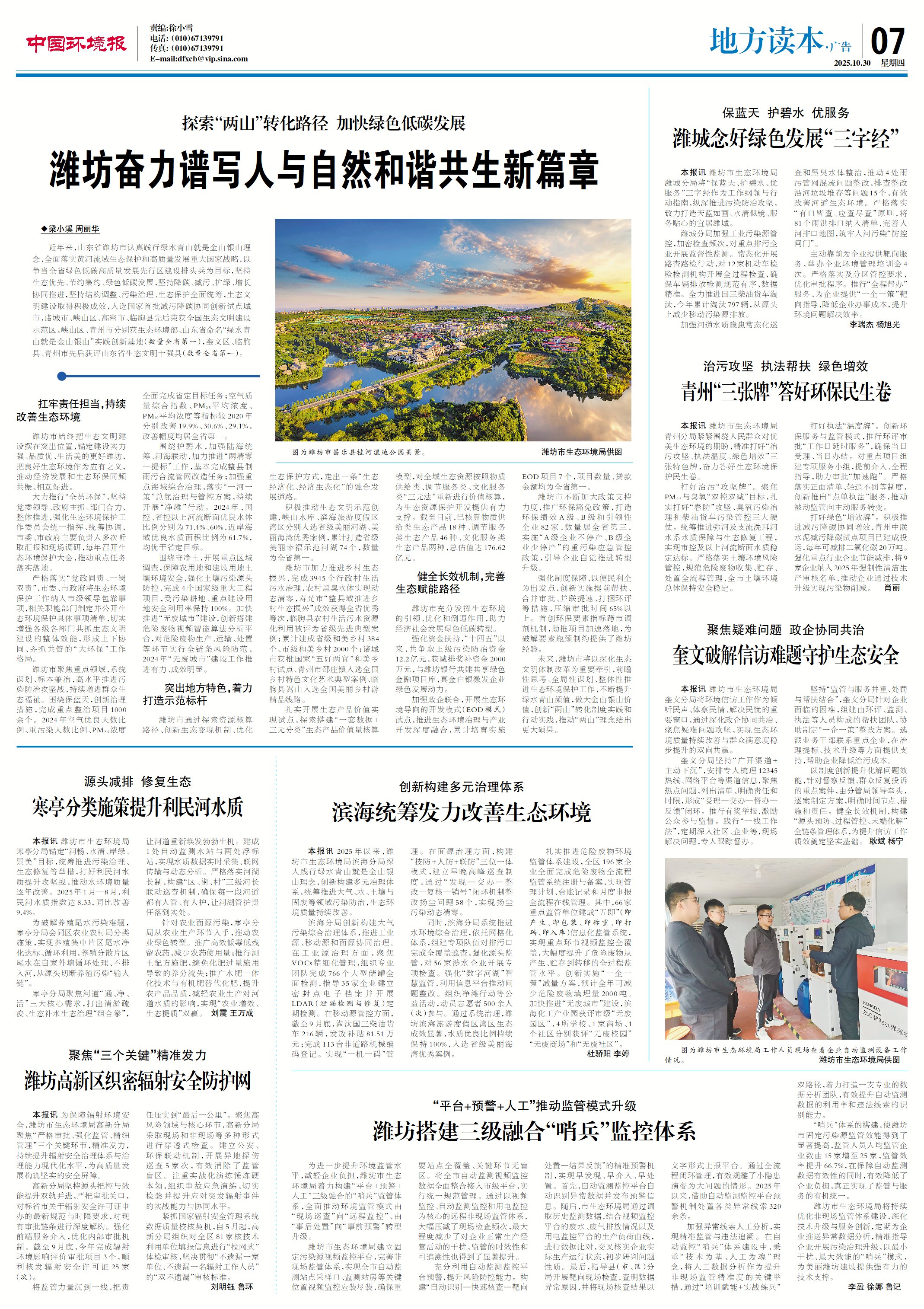
潍坊奋力谱写人与自然和谐共生新篇章
Zhong Guo Huan Jing Bao· 2025-10-30 01:56
Core Viewpoint - The city of Weifang in Shandong Province is actively implementing the concept of "Lucid waters and lush mountains are invaluable assets," focusing on ecological protection and high-quality development, aiming to become a leader in green and low-carbon development in the province [2][19]. Group 1: Ecological Development Initiatives - Weifang has been recognized as one of the first national pilot cities for coordinated innovation in pollution reduction and carbon reduction, with several districts awarded as national ecological civilization demonstration areas [2][3]. - The city has achieved significant improvements in air quality, with PM2.5 average concentration improving by 30.6% compared to 2020, ranking first in the province [3][15]. - The city has completed the transformation of rainwater and sewage systems in counties, with the proportion of good water bodies in national and provincial controlled rivers reaching 71.4% and 60% respectively by 2024 [4][16]. Group 2: Pollution Control and Environmental Protection - Weifang has implemented a comprehensive approach to pollution control, focusing on air quality, water quality, and soil safety, with a commitment to achieving a "waste-free city" by 2024 [4][16]. - The city has completed the treatment of wastewater in 3,945 administrative villages, achieving dynamic clearance of rural black and odorous water bodies [17]. - The city has established a multi-dimensional governance system for pollution prevention, integrating air, water, soil, and solid waste management [12][18]. Group 3: Economic and Financial Support for Green Development - Since the 14th Five-Year Plan, Weifang has secured 1.22 billion yuan in pollution prevention funds and 20 million yuan in emission reduction subsidies, promoting green financial projects [18]. - The city has implemented an environmental performance rating system, with 82 enterprises rated as A or B, promoting self-driven transformation and upgrades among businesses [18]. - Weifang has pioneered a cross-city adjustment mechanism for environmental factor indicators, facilitating project acceleration and addressing resource bottlenecks [18].

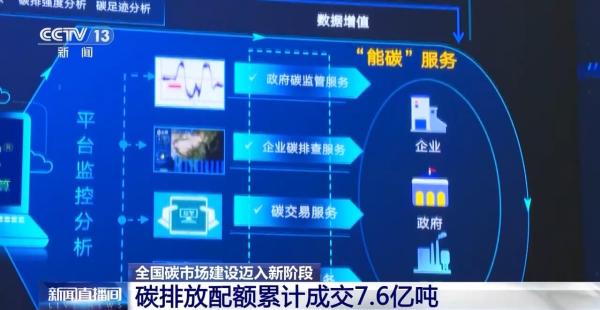
碳排放配额累计成交7.6亿吨 我国碳市场建设迈入新阶段
Yang Shi Xin Wen· 2025-10-29 23:40
Group 1 - The national carbon emissions trading market has completed its institutional framework and is now in a stable and effective operational phase, marking a new stage in its development [1][4] - As of October 28, 2025, the cumulative trading volume of carbon emission allowances reached 760 million tons, with a total transaction value of 51.44 billion yuan, indicating the gradual effectiveness of the price "guiding role" [2] - The inclusion of key emission units, approximately 1,500 new entities, will enable effective control over more than 60% of the national carbon emissions [2] Group 2 - The voluntary greenhouse gas reduction trading market has been actively promoting trading since its launch in January last year, enhancing the participation capacity and low-carbon reduction awareness among market entities [6] - The upcoming 30th United Nations Climate Change Conference aims to achieve positive outcomes, emphasizing the necessity of collective climate action and international cooperation [7] - China will adhere to the principles of the UN Framework Convention on Climate Change and the Paris Agreement, advocating for developed countries to fulfill their climate obligations while balancing negotiations on mitigation, adaptation, funding, technology, and capacity building [9]
大湾区人均碳排放5.19吨 全球“四大湾区”最低
Sou Hu Cai Jing· 2025-10-29 23:21
深圳市国际低碳发展研究院ESG中心发布了对纽约、旧金山、东京及粤港澳四大湾区的对比研究成果。 数据显示,粤港澳大湾区人均碳排放5.19吨,为全球"四大湾区"最低,展现出良好的碳排放治理成效。 【深圳商报讯】(记者 刘娥)在10月28日举行的国际湾区绿色发展论坛上,国内外政府官员、专家学 者及企业代表聚焦全球典型湾区的绿色低碳发展实践,共商合作大计。与会嘉宾普遍认为,湾区作为全 球经济创新高地,在推动绿色转型中扮演着关键角色,而加强国际经验互鉴与区域协同合作至关重要。 记者从论坛上获悉,深圳在绿色低碳发展方面,通过提高能源利用效率、整合资源、科技创新三大手 段,取得了显著成效。目前,深圳清洁能源装机占比已超过82%,终端用电占比达48%,单位GDP能耗 仅为全国平均水平的三分之一。 ...
建设现代化产业体系,巩固壮大实体经济根基(深度观察)
Ren Min Ri Bao· 2025-10-29 22:41
Core Viewpoint - The article discusses the achievements and future directions of China's modernization of its industrial system, emphasizing the transformation and upgrading of traditional industries, the growth of emerging and future industries, and the development of modern service industries and infrastructure. Traditional Industry Transformation - During the "14th Five-Year Plan" period, traditional industries in China have accelerated their transformation towards high-end, intelligent, and green development, with significant improvements in brand reputation and product quality [5][7]. - China Baowu Steel Group has implemented AI in its operations, achieving over 90% accuracy in temperature control during iron production, leading to a fuel saving of 2 kg per ton of iron [4][5]. - The steel industry has seen a 65 units per 10,000 people application density of robots, with 82.9% of enterprises establishing intelligent control centers [7]. Emerging and Future Industries - Emerging and future industries are crucial for economic stability and the development of new productive forces, with China's "three new" economy accounting for over 18% of GDP by 2024 [12][13]. - The country has established a leading position in sectors like new energy, intelligent networking, and quantum technology, with expectations for significant market growth in these areas during the "15th Five-Year Plan" [12][13]. - The development of embodied intelligent robots is highlighted as a key area, with expectations for large-scale applications in various sectors [10][11]. Modern Service Industry - The modern service industry has integrated deeply with advanced manufacturing, with significant growth in sectors like information technology and business services, achieving annual growth rates of 13% and 13.3% respectively from 2020 to 2024 [20][21]. - The production service sector is increasingly supporting the modernization of the manufacturing industry, with a 15.3% share of intermediate inputs in manufacturing in 2023 [20]. Modern Infrastructure Development - The modernization of infrastructure has accelerated, with a comprehensive transportation network exceeding 6 million kilometers and advancements in communication infrastructure [26][27]. - Future efforts will focus on optimizing the infrastructure structure, enhancing connectivity, and ensuring safety and efficiency in development [27][28].
告别扩规模,转向稳提质:煤炭行业“十五五”迎发展模式之变
Zhong Guo Neng Yuan Wang· 2025-10-29 14:09
"十四五"以来,中国煤炭实现"顶得上、保得住"。全国原煤产量连年攀升,构筑起我国能源安全的坚实 底盘;现代化矿山、高效储运加速布局,煤炭保供稳价能力显著增强;煤化工产业链不断延伸,迈向高 端化、多元化。 展望"十五五",中国煤炭面临新局面。当煤炭消费总量逼近峰值,行业站在新旧动能转换的关口,向科 技创新要发展,向绿色低碳要未来,绘就煤炭清洁高效利用的"新图景"成为必然选择。未来,乌金将以 发展新质生产力为契机,书写能源安全与绿色转型并进的时代答卷。 保供稳价,端牢"能源饭碗" "近年来,面临极端天气多发频发、抗震救灾、区域电力供应紧张等复杂局面,煤炭行业始终全力以 赴,增产保供稳价,以高质量煤炭供应为端稳端牢'能源饭碗'作出了重大贡献。"中国煤炭工业协会政 策研究部主任郭中华表示,2024年全国煤炭产量首次跃升至47.8亿吨,比2020年增加了8.8亿吨。4年 来,全国累计生产煤炭181.8亿吨,约占全国一次能源生产总量的66.6%。 "十四五"时期,全国煤炭采选业固定资产投资累计约2.1万亿元,一大批现代化煤矿、智能化煤矿建成 投产,煤炭生产能力持续增强。在中煤陕西大海则煤矿,各类设备参数在地面控制中心大屏 ...