
再生铜

Search documents
铜周报:风险偏好依然不佳-20260328
Wu Kuang Qi Huo· 2026-03-28 14:16
Report Industry Investment Rating No information provided in the content. Core Viewpoints - The copper price may show a fluctuating downward trend. The reference range for the main contract of Shanghai copper this week is 92,000 - 97,500 yuan/ton, and the reference range for LME copper 3M is 11,600 - 12,500 US dollars/ton [14]. - The supply of copper concentrates remains tight, and the short - term inventory is expected to continue to decline, which will support the copper price [14]. Summary by Directory 1. Weekly Assessment and Strategy Recommendation - **Supply**: The spot processing fee of copper concentrates has declined to the lowest level in history, and the processing fee of blister copper has continued to decline. The supply of cold materials has tightened marginally. Chile's National Copper Corporation produced 1.33 million tons of copper in 2025, a year - on - year increase of 0.5%, and the expected output in 2026 is 1.33 - 1.36 million tons. Luoyang Molybdenum produced 741,000 tons of copper in 2025, a year - on - year increase of 14.0%, and the output guidance for 2026 is 760,000 - 820,000 tons [11]. - **Demand**: The copper price has rebounded in a fluctuating manner, the purchasing enthusiasm of downstream buyers has weakened, the trading volume has declined but still remains at a relatively high level, and the operating rate of copper processing enterprises has increased in a fluctuating manner. The domestic refined - scrap copper price difference has rebounded, and the operating rate of recycled copper rod enterprises has decreased again [12]. - **Inventory**: The total inventory of the three major exchanges is 1.254 million tons, a decrease of 33,000 tons compared with the previous week. Among them, the inventory of the Shanghai Futures Exchange has decreased by 52,000 tons to 359,000 tons, the LME inventory has increased by 18,000 tons to 360,000 tons, and the COMEX inventory has increased by 1,000 tons to 535,000 tons. The inventory in the Shanghai Bonded Area has decreased by 15,000 tons. In the spot market, on Friday, the spot price of copper in East China was at a discount of 95 yuan/ton to the futures price; the Cash/3M discount in the LME market has narrowed to 70.9 US dollars/ton [13]. - **Import and Export**: The spot import profit of domestic electrolytic copper has declined, and the Yangshan copper premium has increased. From January to February, China's refined copper imports were 251,000 tons and 204,000 tons respectively, with a cumulative import volume of 454,000 tons, a year - on - year decrease of 24.6%; the net import volumes in January and February were 157,000 tons and 125,000 tons respectively, with a cumulative net import volume of 283,000 tons, a year - on - year decrease of 49.4% [13]. 2. Futures and Spot Market - **Futures Price**: The copper price has rebounded. The main contract of Shanghai copper has risen by 1.26% this week (as of Friday's close), and LME copper has risen by 2.59% to 12,141 US dollars/ton [25]. - **Spot Price**: The report provides the spot prices of electrolytic copper, copper products, and recycled copper at different times from February 13, 2026, to March 27, 2026, and the price differences between them [27]. - **Premium and Discount**: The domestic copper price has rebounded, and the basis has weakened. On Friday, the copper spot in East China was at a discount of 95 yuan/ton to the futures price; the LME inventory has increased, the proportion of cancelled warrants has increased, and the Cash/3M discount has narrowed, reporting a discount of 70.9 US dollars/ton on Friday. The spot import profit of domestic electrolytic copper has declined, and the Yangshan copper premium has increased [30]. 3. Profit and Inventory - **Smelting Profit**: The spot rough smelting fee TC of imported copper concentrates has reached a new low, reporting - 68.9 US dollars/ton. The price of sulfuric acid in East China has strengthened, which still makes a positive contribution to copper smelting revenue [38]. - **Import - Export Ratio**: The offshore RMB has depreciated slightly, and the spot Shanghai - London ratio of copper has risen and then fallen [41]. - **Import - Export Profit and Loss**: The spot import profit of copper has risen and then fallen [44]. - **Inventory**: The total inventory of the three major exchanges is 1.254 million tons, a decrease of 33,000 tons compared with the previous week. The inventory in the Shanghai Bonded Area is 63,000 tons, a decrease of 15,000 tons compared with the previous week. The decrease in the inventory of the Shanghai Futures Exchange mainly comes from Shanghai, Jiangsu, Guangdong, and Zhejiang; the number of copper warrants has decreased by 37,039 to 237,076 tons. The LME inventory has increased, and the increase comes from warehouses in Asia, North America, and Europe; the proportion of cancelled warrants has increased [47][50][53]. 4. Supply Side - **Electrolytic Copper Monthly Output**: According to SMM research data, China's refined copper output in February 2026 decreased by about 37,000 tons month - on - month, and it is expected that the output in March will rebound significantly and be at a relatively high level in history. According to national statistics data, the refined copper output in December 2025 was 1.326 million tons, a year - on - year increase of 9.1%; the annual cumulative output was 14.72 million tons, a year - on - year increase of 10.4% [58]. - **Import and Export Situation**: From January to February 2026, China's copper ore imports were 2.624 million tons and 2.31 million tons respectively, a year - on - year increase of 4.1% and 5.9% respectively, with a cumulative import volume of 4.934 million tons, a year - on - year increase of 4.9%. The imports of unwrought copper and copper products in January and February were 384,000 tons and 316,000 tons respectively, a year - on - year decrease of 8.4% and 24.8% respectively, with a cumulative import volume of 700,000 tons, a year - on - year decrease of 16.1%. The imports of anode copper in January and February were 65,000 tons and 57,000 tons respectively, a year - on - year increase of 3.1% and 3.8% respectively, with a cumulative import volume of 750,000 tons, a year - on - year increase of 3.4%. The imports of refined copper in January and February were 251,000 tons and 204,000 tons respectively, a year - on - year decrease of 15.6% and 33.3% respectively, with a cumulative import volume of 454,000 tons, a year - on - year decrease of 24.6%; the net import volumes in January and February were 157,000 tons and 125,000 tons respectively, a year - on - year decrease of 43.8% and 55.0% respectively, with a cumulative net import volume of 283,000 tons, a year - on - year decrease of 49.4%. The exports of refined copper in January and February were 93,000 tons and 78,000 tons respectively. The imports of recycled copper in January and February were 232,000 tons and 168,000 tons respectively, a year - on - year increase of 22.8% and a decrease of 13.1% respectively, with a cumulative import volume of 400,000 tons, a year - on - year increase of 4.6% [61][64][67][73][76]. 5. Demand Side - **Consumption Structure**: Globally, the consumption of electrolytic copper is mainly in the power (46%), household appliances (15%), transportation (11%), construction (9%), mechanical electronics (9%), and other (10%) sectors. In China, the consumption is mainly in the construction (26%), equipment (23%), industry (12%), transportation (13%), infrastructure (17%), and other (9%) sectors [80]. - **PMI**: In February, China's official manufacturing PMI declined month - on - month, while the RatingDog comprehensive PMI increased significantly, showing a differentiation in manufacturing prosperity. The manufacturing prosperity of major overseas economies is also differentiated, with the prosperity of Japan, the Eurozone, and India improving, and that of the United States and the United Kingdom weakening [83]. - **Downstream Industry Output Data**: Among the copper downstream industries, the cumulative output from January to February 2026 increased year - on - year in cold storage, power generation equipment, refrigerators, color TVs, and air conditioners, while it decreased in automobiles, AC motors, and washing machines [86]. - **Real Estate Data**: From January to February 2026, the domestic real estate data was weak, with new construction, construction, sales, and completion all declining year - on - year, and completion and new construction showing relatively weak performance. The National Real Estate Climate Index declined in December 2025 [89]. - **Downstream Enterprise Operating Rate**: In February, the operating rate of China's refined copper rod enterprises weakened seasonally and is expected to rebound significantly in March; the operating rate of recycled copper rod enterprises remained at a low level and is expected to rebound in March. The operating rate of enameled wire enterprises weakened in February and is expected to recover in March, approaching the level of the same period last year; the operating rate of wire and cable enterprises declined in February and is expected to rebound in March. The operating rate of copper tube enterprises weakened in February and is expected to rebound seasonally in March but be lower than the level of the same period last year; the operating rate of brass rod enterprises declined in February and is expected to rebound in March. The operating rate of copper strip enterprises weakened in February and is expected to rebound in March, higher than the level of the same period last year; the operating rate of copper foil enterprises declined slightly in February and is expected to increase in March, with the operating situation significantly better than that of the same period last year. The weekly operating rate of electrolytic copper rod enterprises continued to increase, significantly higher than the level of the same period last year; the operating rate of recycled copper rod enterprises decreased and remained at a relatively low level. The weekly operating rate of wire and cable enterprises increased slightly; the operating rate of copper strip enterprises increased [92][96][99][102][105][108]. - **Refined - Scrap Price Difference**: The domestic refined - scrap copper price difference has rebounded, reporting 796 yuan/ton on Friday [113]. 6. Capital Side - **Shanghai Copper Position**: The total position of Shanghai copper has decreased by 79,960 to 1,068,508 lots (bilateral), among which the position of the near - month 2604 contract is 163,454 lots (bilateral) [118]. - **Foreign Fund Position**: As of March 24, the CFTC fund position remained net long, and the net long ratio has declined to 15.5%; the proportion of long positions of LME investment funds has declined (as of March 20) [121].
铜日报:利率决议凌晨落地,关注铜价的修复力度-20260319
Tong Hui Qi Huo· 2026-03-19 07:11
Copper Futures Market Data Analysis - **Main Contract and Basis**: The SHFE copper price fell slightly from 100,020 yuan/ton on March 17, 2026, to 98,720 yuan/ton on March 18, a decline of 1.3%. The LME copper price dropped from $12,918.5/ton on March 12 to $12,780/ton on March 17. In terms of basis, the premium copper discount remained stable at -60 yuan/ton on March 18, the flat copper discount strengthened from -110 yuan/ton on March 17 to -100 yuan/ton, and the wet copper discount strengthened from -175 yuan/ton to -160 yuan/ton. The LME (0-3) discount widened from -$102/ton on March 12 to -$113.47/ton on March 17, indicating overall weak basis [1][39]. - **Position and Trading Volume**: The LME position decreased from 293,259 lots on March 12 to 293,259 lots minus 8,255 lots on March 17, showing a contraction in position. After the copper price decline, the downstream buying interest picked up, and the trading volume may have increased [1][40]. Industrial Chain Supply, Demand, and Inventory Analysis - **Supply Side**: The smelting capacity was operating at full load, as seen in Defu Technology on March 16. However, the supply of recycled copper raw materials was insufficient, leading to an increase in the price of domestic含税 recycled copper raw materials. The import window remained open, and the expectation of overseas supply inflow increased. Although the social inventory was at a high level, the actual circulating supply was tight, and the release of some warehouse receipts alleviated the supply pressure. The recycling of recycled copper in the Philippines and France increased the long - term supply potential [2][41]. - **Demand Side**: In the power sector, the Mengxi - Beijing - Tianjin - Hebei UHV project started on March 17, and the State Grid of Zhejiang planned to invest 51 billion yuan in 2026. The wind power demand drove growth. In the construction and automotive sectors, projects like Guangde Hengtong Copper and Chujiang New Materials focused on new - energy applications, with stable demand. However, in the consumer electronics - related fields, air - conditioner exports were affected by the Middle - East conflict, with a reduction of over 500,000 units. The willingness of downstream enterprises to replenish inventory at low prices increased [2][42][43]. - **Inventory Side**: The LME inventory decreased from 324,289 tons on March 17 to 318,624 tons on March 18, a decrease of 1.75%. The SHFE inventory increased from 330,375 tons on March 17 to 334,100 tons on March 18, an increase of 1.13%. The COMEX inventory decreased slightly, showing a differentiated inventory trend [2][44]. Price Trend Judgment In the next one to two weeks, the copper futures price is expected to maintain a weak oscillating pattern. On the supply side, the supply of recycled copper is tight, but the import expectation increases, and the high inventory restricts the upward movement. On the demand side, power investment provides support, but some exports are frustrated. In terms of macro - sentiment, the decline in copper price stimulates inventory replenishment, but the overall attractiveness is limited. The copper price is expected to fluctuate around 98,000 - 100,000 yuan/ton [3][45].
沪铜日报:关注美联储议息会议-20260318
Guan Tong Qi Huo· 2026-03-18 11:16
Report Summary 1. Report Industry Investment Rating No information provided. 2. Core View The copper price is under pressure. Although the shortage of copper resources supports the price, the weak feedback from the terminal and the expected inflation due to rising oil prices, along with the possible impact of the Fed's interest - rate decision, make the copper price lack a logical basis for an upward movement [1]. 3. Summary by Directory 3.1 Market Analysis - **Supply**: In February 2026, China imported 2.31 million tons of copper concentrates and ores, a 6.0% year - on - year increase and a 12.0% month - on - month decrease. The domestic copper concentrate inventory is at a relatively low level compared to previous years. The shortage of overseas copper resources and shipping difficulties due to war support the copper price. The spread between refined and scrap copper in mainstream areas has narrowed. The electrolytic copper output in March increased by 52,800 tons month - on - month and 6.51% year - on - year [1]. - **Demand**: After entering the peak season (Golden March and Silver April), the copper product segment's production has started to pick up. In February, the copper cable industry's operating rate was 55.81%, a 14.29 - percentage - point decrease month - on - month but a 9.06 - percentage - point increase year - on - year. However, the terminal data is not optimistic, and the new energy vehicle production and sales decreased by 21.8% and 14.2% year - on - year respectively [1]. - **Macro - factor**: The Fed's interest - rate meeting is expected to keep the March interest rate unchanged, and the number of interest rate cuts in 2026 will be crucial. Rising oil prices lead to inflation, which strengthens the US dollar and suppresses the copper price [1]. 3.2 Futures and Spot Market - **Futures**: The Shanghai copper futures opened lower and moved lower during the day [1][4]. - **Spot**: The spot premium in East China is - 100 yuan/ton, and in South China is - 5 yuan/ton. On March 17, 2026, the LME official price is 12,790 US dollars/ton, and the spot premium is - 113 US dollars/ton [4]. 3.3 Supply - side - As of March 16, the spot smelting fee (TC) is - 60.12 US dollars/dry ton, and the spot refining fee (RC) is - 6.10 US cents/pound [8]. 3.4 Inventory - SHFE copper inventory is 318,600 tons, a decrease of 5,665 tons from the previous period. As of March 16, the copper inventory in the Shanghai Free Trade Zone is 83,900 tons, a decrease of 0.63 tons from the previous period. LME copper inventory is 330,400 tons, an increase of 18,775 tons from the previous period. COMEX copper inventory is 588,400 short tons, a decrease of 1,883 short tons from the previous period [11].
中国铜业:向“城市矿山”挖富矿
Xin Hua Cai Jing· 2026-02-11 11:32
Core Viewpoint - Under the "dual carbon" goals, China Copper Corporation is leveraging the large-scale consumption of recycled copper as a key engine for its green transformation, establishing a sustainable development model of "resource recycling - energy conservation and carbon reduction - green production" [1] Group 1: Green Supply Chain - China Copper has implemented a "1+N" procurement system through its trading platform, Zhong Copper International Trade, forming a strong collaborative network with core suppliers [2] - The establishment of regional recycling centers in Yunnan, Hubei, and Henan has significantly reduced carbon emissions from raw material transportation [2] - The company is actively expanding channels for high-quality recycled copper resources that meet international environmental standards, leading to a notable decrease in unit transportation energy consumption [2] Group 2: Circular Economy and Production Innovation - A unique "customer old material closed-loop recycling" mechanism is in operation, allowing for the recycling of copper scrap from downstream customers, which has significantly reduced raw material costs and resource consumption [3] - Innovations in technology, such as the use of floating magnetic separation to extract valuable metals from smelting waste, are central to driving green circular processes [3] - Collaborative research with academic institutions is ongoing to tackle key technologies in recycled copper purification and dioxin prevention [3] Group 3: Value Addition and Product Development - Recycled copper is being transformed into high-end green products, such as electronic copper strips with low impurity content, which are supplied to leading consumer electronics companies [4] - High-performance alloy materials developed from recycled copper are being produced for use in emerging green industries like electric vehicle charging stations and photovoltaic components [4] - The quality of recycled cathode copper produced meets national standards and is applied in essential sectors like electricity and construction [4] Group 4: Integrated Green Development - The green transformation of China Copper is characterized by collaborative progress across the entire industry chain, optimizing procurement, enhancing smelting efficiency, and innovating product development [5] - Digitalization is injecting new momentum into the green industry chain, enabling real-time tracking of raw material sources, energy consumption, and carbon emissions [5] - Energy-saving measures in copper smelting and processing are expected to significantly reduce carbon emission intensity by 2025 [5] Group 5: Policy Support and Future Goals - The company is leveraging favorable policies, such as "reverse invoicing," to promote the large-scale and standardized development of the recycled copper industry [6] - The annual consumption target for recycled copper set during the 14th Five-Year Plan has been exceeded, leading to substantial savings in mineral resources and reductions in energy consumption and carbon emissions [6] - China Copper aims to continue its focus on green development, maximizing the potential of "urban mines" and contributing to the high-quality transformation of the non-ferrous metal industry [6]
财经聚焦|铜价高位震荡 “以铝节铜”应用提速
Xin Hua Wang· 2026-02-06 09:13
Group 1 - The core viewpoint of the article highlights the significant rise in domestic copper prices in early 2026, following a historical high in 2025, driven by supply disruptions, increased demand, and favorable policy expectations [1][2] - The supply side faces long-term constraints due to declining resource quality, rising extraction costs, and increased supply vulnerability, with global copper ore grades dropping from 1.3% in 2005 to 0.65% in 2025, and extraction costs rising over 40% from 2015 to 2025 [2] - Demand for copper is being significantly boosted by the growth of "green energy" and "artificial intelligence," with electric vehicles using 3 to 5 times more copper than traditional vehicles, and AI data centers requiring higher copper density than traditional ones [2] Group 2 - The rise in copper prices is exerting cost pressure on downstream enterprises, leading to price adjustments in various sectors, including electrical appliances and air conditioning [3][4] - Companies are focusing on technological upgrades and innovations to mitigate cost pressures, such as optimizing structural designs and employing AI for dynamic energy savings, which enhance performance without increasing material usage [5] - The strategy of "using aluminum to save copper" is emerging as a significant approach in various industries, allowing for the development of aluminum alloy cables and copper-aluminum composite materials to reduce copper usage while maintaining performance [7][9] Group 3 - The application of copper-aluminum composite materials is expected to reduce copper usage significantly in power distribution equipment, with predictions indicating a 65% average reduction in copper usage per unit over the next three years [8] - The value of copper-aluminum composite materials extends beyond cost reduction, offering green benefits due to lower energy consumption in aluminum recycling compared to copper recovery, and enhancing industrial safety and international competitiveness [9]

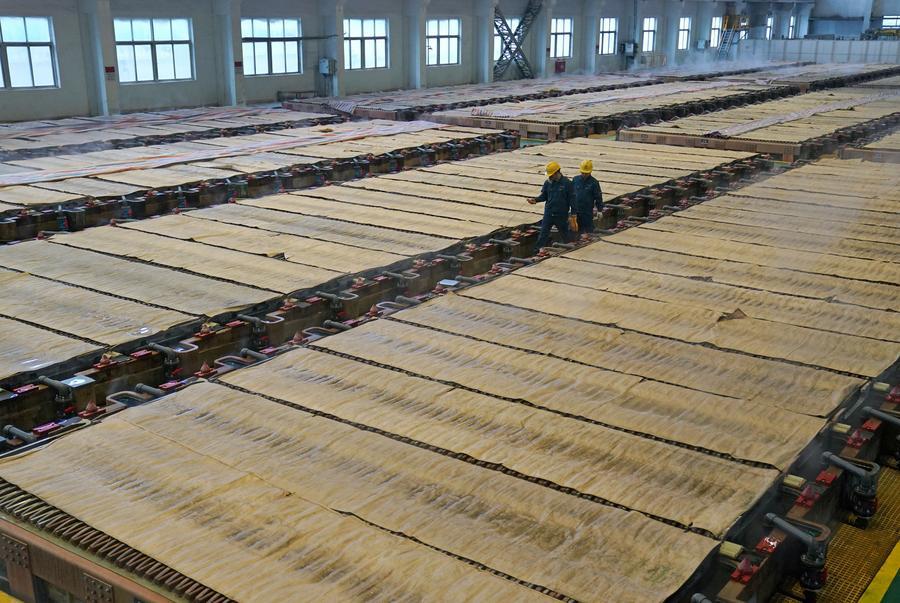
2025年中国废铜回收行业发展历程、市场政策、产业链图谱、回收量、回收价值、竞争格局及发展趋势分析:行业呈现量价齐升的局面[图]
Chan Ye Xin Xi Wang· 2026-01-12 01:26
Core Viewpoint - The copper recycling industry in China is experiencing rapid growth driven by strong demand in strategic sectors and government policies aimed at promoting circular economy and carbon neutrality goals. The recycling of waste copper is becoming a key channel to bridge the supply-demand gap, with significant increases in recycling volume, average price, and total value projected for 2024 [1][5]. Overview - Waste copper recycling refers to the process of collecting, sorting, processing, and purifying discarded copper and copper alloy products to convert them back into usable industrial copper materials (recycled copper). This process reduces resource consumption and environmental damage from copper mining and lowers energy consumption and pollutant emissions from copper smelting [2]. Development History - The waste copper recycling industry in China has evolved from state monopoly during the planned economy to market-oriented growth post-reform, and is now entering a high-quality development phase driven by dual carbon goals and environmental policies. The industry is shaped by policy drivers, technological innovations, and changing market demands [3]. Market Policies - The Chinese government has issued numerous policies to support the development of the recycling industry, including guidelines for establishing recycling systems for various waste materials and promoting green development in manufacturing. These policies create a favorable environment for the growth of the waste copper recycling sector [4]. Industry Chain - The waste copper recycling industry in China has formed a complete closed loop consisting of upstream recycling, midstream processing, and downstream application. The midstream segment, which focuses on the smelting and processing of recycled copper, is the core of value transformation within the industry [6]. Current Development - The demand for copper in key sectors such as new energy vehicles, photovoltaics, and electronic information is strong. The recycling market is projected to reach 2.6 million tons in 2024, with an average price of 68,564.9 yuan per ton and a total value of 178.27 billion yuan, reflecting year-on-year growth of 8.3%, 10.4%, and 19.6% respectively [1][8]. Competitive Landscape - The waste copper recycling market in China is becoming increasingly competitive, with many companies entering the sector. Major players include Anhui Chuangjiang Technology New Materials Co., Ltd., Ningbo Jintian Investment Holdings Co., Ltd., and Zhejiang Fu Holdings Co., Ltd., which are implementing integrated strategies to stabilize raw material supply and enhance product value [10]. Development Trends - The waste copper recycling industry is expected to see more standardized and compliant development driven by ongoing policy support. The focus will be on enhancing environmental qualifications and technological advantages among enterprises, while also promoting the use of intelligent and green technologies to improve efficiency and reduce emissions [12][13]. - The industry is likely to shift towards a more integrated and collaborative structure, with leading companies consolidating resources and establishing long-term partnerships across the supply chain to create a closed-loop system for recycling, processing, and reuse [14].

产能释放叠加价格上行 金属资源化龙头高能环境2025年归母扣非净利润预计翻倍
Sou Hu Cai Jing· 2026-01-07 12:14
Core Viewpoint - The company, GaoNeng Environment, is expected to significantly increase its net profit for 2025, driven by improvements in technology, capacity optimization, and market opportunities, particularly in the solid waste and hazardous waste resource utilization sector [1][2]. Group 1: Financial Performance - The company anticipates a net profit attributable to shareholders of between 750 million to 900 million yuan for 2025, representing an increase of 268 million to 418 million yuan year-on-year, which translates to a growth of 55.66% to 86.79% [1]. - The expected net profit after deducting non-recurring gains and losses is also projected to be between 750 million to 900 million yuan, with an increase of 426 million to 576 million yuan compared to the previous year, indicating a growth of 131.63% to 177.95% [1]. Group 2: Operational Developments - The company's subsidiary, Jinchang GaoNeng Environment Technology Co., Ltd., is set to release production capacity for high-value rare and platinum group metals in 2025, following the full implementation of its platinum group recovery process in 2024, which will enhance profitability [2]. - Another subsidiary, Jiangxi Xinke Environmental Protection High-tech Co., Ltd., is optimizing production processes to increase rare metal output and reduce production costs, gradually improving operational efficiency [2]. - The Zhuhai New Hong project in the solid waste and hazardous waste resource utilization sector commenced stable production in December 2024, contributing to overall production capacity and efficiency [2]. Group 3: Industry Context - In 2024, China's comprehensive utilization rate of bulk solid waste reached 59%, with domestic raw material supply for recycled copper and aluminum at 58.4% and 84.4%, respectively, indicating a solid industrial foundation [3]. - The implementation of the "Action Plan" for solid waste management is expected to accelerate policy benefits for the solid waste resource utilization industry, enhancing the recovery potential of important mineral resources and constructing a secondary resource supply system [3]. - The company is positioned as a leader in the metal resource utilization sector within the solid waste and hazardous waste field, aligning its core business with national policies and contributing to the dual carbon goals [2][3].

山东:落实废铝回收利用增值税30%即征即退政策
Ge Long Hui· 2026-01-07 11:00
Core Viewpoint - The Shandong Provincial Department of Industry and Information Technology, along with multiple departments, has issued a work plan aimed at stabilizing growth in the non-ferrous metal industry, focusing on the development of recycling and resource utilization [1] Group 1: Industry Development Initiatives - The plan emphasizes the establishment of a copper industry cluster in Linyi, integrating "recycled copper smelting + urban mining" [1] - A recycling base for recycled aluminum is to be developed in Binzhou and Linyi, enhancing the circular economy [1] - The initiative supports the construction of an "Internet + recycling" platform to improve the efficiency and coverage of recycled resource collection [1] Group 2: Policy and Regulatory Framework - The implementation of a 30% immediate tax refund policy on value-added tax for recycled aluminum collection is highlighted [1] - The plan aims to standardize the dismantling and sorting processes for recycled copper and aluminum [1] - There is a focus on promoting the resource utilization of emerging solid waste, such as used power batteries and photovoltaic components, to create a comprehensive recycling industry chain [1] Group 3: International Expansion - The plan encourages recycling companies to expand internationally, enhancing their capabilities in acquiring overseas scrap copper and aluminum [1]
新湖有色(铜)2026年报:宏观&基本面强驱动,铜价有望再创辉煌
Xin Lang Cai Jing· 2026-01-06 02:31
Macro Analysis - The focus of Trump's policies is shifting towards stabilizing growth amid the U.S. midterm elections, with reduced uncertainty regarding tariffs and a continuation of global fiscal and monetary expansion trends. The U.S. economy is expected to recover from a slowdown, which will support copper prices [3] - In China, the proactive policy line will continue into the first year of the 14th Five-Year Plan, contributing to an increase in macroeconomic sentiment that will help copper prices reach new levels [3] Copper Pricing Logic - Global copper demand is transitioning from being driven by incremental consumption in China to a rapid growth expectation for copper needed in AI infrastructure, including data centers, power systems, and energy storage [3] - Historical data indicates that mining gross margins need to remain above 40% to encourage capital expenditure, with a copper price of $12,000 per ton potentially serving as a bottom support level [3][25] Supply and Demand Dynamics - Global copper mine supply growth is expected to remain low at around 2% from 2026 to 2028, with refined copper production growth projected to fall below 2% in 2026. Energy storage and AI data centers are anticipated to become strong growth points for copper consumption, alongside global grid upgrades [4] - By 2026, a copper supply shortage of 330,000 tons is expected, increasing to 630,000 tons in 2027, driven by the U.S. siphoning off refined copper [4] Market Outlook - The macroeconomic environment is improving, leading to a substantial supply-demand imbalance. The expected price fluctuation range for copper in 2026 is projected to rise to $10,000 to $15,000 per ton, depending on the recovery of the global economy [4] - The arbitrage opportunity is anticipated to continue, with a strong external market and a weaker domestic market structure [4] Tariff Impact - The imposition of tariffs has led to significant fluctuations in copper prices, with the U.S. imposing a 50% tariff on semi-finished copper products, resulting in a 31% year-on-year decline in imports in August and a 39% decline in September [14] - The tariffs have caused a substantial drop in copper material imports, which will be compensated by increased domestic processing capacity and operational rates [14][18] U.S. Copper Consumption - U.S. copper consumption is projected to grow by 4% in 2025, driven by AI data center construction and grid upgrades, with an expected increase of 135,000 tons in copper consumption [15] - The anticipated increase in copper consumption from 2025 to 2026 is expected to total 450,000 tons, despite a significant increase in net imports in 2025 [18] Global Copper Supply Challenges - The global copper mine supply is facing disruptions, with a growth rate revised down to 0.5% for 2025 due to various incidents affecting major mines [22][25] - The overall copper supply growth is expected to be limited, with domestic companies contributing most of the incremental supply in 2026 [24] Recycled Copper Dynamics - The supply of recycled copper is expected to remain tight, with a significant portion flowing to the smelting sector to address raw material shortages [31][34] - The implementation of the "reverse invoicing" policy in 2024 is anticipated to impact the production rates of recycled copper rods, with a potential decline in operational rates due to increased tax burdens [32][34] Future Consumption Trends - The demand for copper is expected to be driven by AI, energy storage, and grid upgrades, with renewable energy sources like wind and solar experiencing slower growth rates [45][54] - The global demand for copper in energy storage systems is projected to increase significantly, with an expected rise from 270,000 tons in 2025 to 500,000 tons in 2026 [55]

2025循环经济产业创新发展大会在江西丰城举行
Zhong Guo Xin Wen Wang· 2025-12-23 17:14
Group 1 - The 2025 Circular Economy Industry Innovation Development Conference was held in Fengcheng, Jiangxi, focusing on high-quality development paths for the circular economy to support carbon neutrality goals [1] - The China Circular Economy Association reported significant achievements during the 14th Five-Year Plan, with a total of 16.5 billion tons of major solid waste utilized and a comprehensive utilization rate of 59.2% [1] - Approximately 70% of paper, over 20% of plastics, and about 50% of construction materials in China are sourced from recycled materials, contributing 30% to the country's carbon reduction efforts [1] Group 2 - Jiangxi has developed 95 enterprises listed in the national standard announcement, with annual utilization of recycled resources like scrap steel and recycled copper exceeding 20 million tons [1] - Fengcheng is recognized as a national circular economy demonstration city and has established a complete industrial system for waste resource recovery, processing, and deep processing [2] - The city has built a specialized circular economy park with 130 large-scale enterprises, creating an industrial cluster that supports over 1,000 upstream and downstream companies [2]