
绿色低碳转型

Search documents
中远海发回购50.00万股股票,共耗资约54.11万港元,本年累计回购1.32亿股
Jin Rong Jie· 2025-12-16 10:54
Group 1 - Company recently repurchased 500,000 shares at an average price of HKD 1.08 per share, totaling approximately HKD 541,100, bringing the total repurchased shares for the year to 132 million, which represents 3.81% of the total share capital [1] - The recent share buyback is seen as a signal from the management that the company's stock is undervalued, and it aims to enhance earnings per share and shareholder value [1] - The buyback plan may be intended to optimize the capital structure and boost market confidence amid significant fluctuations in the shipping market, reflecting the company's strong cash flow [1] Group 2 - Company is a key listed platform under China Ocean Shipping Group Co., Ltd., primarily engaged in ship leasing, container manufacturing, and financial investment [2] - As a leading provider of shipping financial services globally, the company leverages its parent company's resources to build a comprehensive service system covering the entire shipping industry chain [2] - The company is actively promoting a green and low-carbon transition, investing in smart containers and new energy vessels to align with industry sustainability trends [2]

黑色产业链日报-20251216
Dong Ya Qi Huo· 2025-12-16 10:32
Report Industry Investment Rating No relevant information provided. Core Viewpoints - After the Central Economic Work Conference, the macro - positive factors faded, and pricing returned to fundamentals. Steel supply is reducing, but the recovery of steel mill profits may slow down the reduction speed. Demand is seasonally weak, and steel exports are expected to tighten. Steel inventories show different trends, with short - term prices fluctuating weakly [3]. - After macro events, trading logic returned to fundamentals. Iron ore supply from major mines is restricted, and steel mills have a need to replenish inventory. Iron ore demand is seasonally declining but is expected to rebound in January. Falling coking coal prices provide support, and the downside price space is limited [21]. - Coking coal supply has limited marginal changes, but due to pressure on steel mill profits and unexpected reduction in hot metal production, coking coal supply exceeds demand. Coke production decreased slightly last week due to environmental restrictions. With the decline in coking coal costs, coke prices are likely to continue to fall [31]. - The fundamentals of ferroalloys are weak, but news from the SASAC and the National Development and Reform Commission led to a price rebound today. However, price increases may stimulate enterprises to hedge and suppress prices [47]. - With the strengthening of new production capacity expectations, the expectation of soda ash oversupply is intensifying. The acceleration of glass cold - repair weakens the demand for soda ash. Although exports are high, high inventories restrict prices [65]. - From December to before the Spring Festival, some glass production lines are expected to undergo cold - repair, which may affect long - term pricing. Near - term contracts will follow the delivery logic, and currently, high intermediate inventories and weak end - market demand put pressure on spot prices [88]. Summaries by Related Catalogs Steel Price Data - On December 16, 2025, the closing prices of rebar contracts 01, 05, and 10 were 3090, 3081, and 3112 yuan/ton respectively, and those of hot - rolled coil contracts 01, 05, and 10 were 3254, 3246, and 3255 yuan/ton respectively [4]. - The rebar spot prices in China, Shanghai, Beijing, and Hangzhou were 3295, 3280, 3120, and 3300 yuan/ton respectively, and the hot - rolled coil spot prices in Shanghai, Lecong, and Shenyang were 3270, 3260, and 3180 yuan/ton respectively [9][11]. Ratio and Spread Data - The 01, 05, and 10 rebar/iron ore ratios were all 4, and the 01, 05, and 10 rebar/coke ratios were all 2 [18]. - The 01, 05, and 10 roll - to - rebar spreads were 164, 165, and 143 yuan/ton respectively, and the roll - to - rebar spot spreads in Shanghai, Beijing, and Shenyang were - 10, 210, and 0 yuan/ton respectively [15]. Iron Ore Price Data - On December 16, 2025, the closing prices of iron ore contracts 01, 05, and 09 were 783.5, 761, and 739.5 yuan/ton respectively. The 01, 05, and 09 basis were 1, 25, and 46.5 yuan/ton respectively [22]. - The prices of Rizhao PB powder, Rizhao Carajás fines, and Rizhao Super Special were 779, 856, and 666 yuan/ton respectively [22]. Fundamental Data - The daily average hot metal production was 229.2 tons, 45 - port throughput was 319.19 tons, and the apparent demand for five major steel products was 840 tons [25]. - Global shipments were 3592.5 tons, Australia - Brazil shipments were 2889.3 tons, and 45 - port arrivals were 2723.4 tons [25]. - The 45 - port inventory was 15431.42 tons, and the inventory of 247 steel mills was 8834.2 tons [25]. Coal and Coke Price Data - The 09 - 01, 05 - 09, and 01 - 05 spreads of coking coal were 170.5, - 76.5, and - 94 yuan/ton respectively, and those of coke were 234, - 78.5, and - 155.5 yuan/ton respectively [35]. - The spot price of Anze low - sulfur coking coal was 1500 yuan/ton, and the spot price of Rizhao quasi - first - grade wet coke was 1430 yuan/ton [38]. Ratio and Profit Data - The main mine - to - coke ratio was 0.503, the main rebar - to - coke ratio was 2.034, and the main coke - to - coal ratio was 1.524 [35]. - The on - the - spot coking profit was 21 yuan/ton, and the Mongolian coal import profit (long - term agreement) was 213 yuan/ton [38]. Ferroalloys Price Data - The silicon - iron basis in Ningxia was 18 yuan/ton, and the silicon - manganese basis in Inner Mongolia was 154 yuan/ton [48][49]. - The spot prices of silicon - iron in Ningxia, Inner Mongolia, and Qinghai were 5250, 5280, and 5200 yuan/ton respectively, and the spot prices of silicon - manganese in Ningxia, Inner Mongolia, and Guizhou were 5490, 5540, and 5550 yuan/ton respectively [48][49]. Cost and Inventory Data - The price of semi - coke small materials was 800 yuan/ton, and the price of Qinhuangdao thermal coal was 737 yuan/ton [48]. - The silicon - iron warehouse receipts were 13068, and the silicon - manganese warehouse receipts were 25032 [48][50]. Soda Ash Price Data - On December 16, 2025, the closing prices of soda ash contracts 05, 09, and 01 were 1170, 1221, and 1133 yuan/ton respectively. The 5 - 9, 9 - 1, and 1 - 5 spreads were - 51, 88, and - 37 yuan/ton respectively [66]. - The heavy - soda market prices in North China, South China, and East China were 1300, 1400, and 1250 yuan/ton respectively [66]. Fundamental Data - In October, soda ash exports exceeded 210,000 tons, maintaining a high level [65]. - The upper - and middle - stream inventories were generally high, restricting soda ash prices [65]. Glass Price Data - On December 16, 2025, the closing prices of glass contracts 05, 09, and 01 were 1038, 1117, and 946 yuan/ton respectively. The 5 - 9, 9 - 1, and 1 - 5 spreads were - 79, 171, and - 92 yuan/ton respectively [89]. - The 01 - contract basis in Shahe and Hubei was 64 and 140 yuan/ton respectively [89]. Sales and Production Data - On December 12, 2025, the sales - to - production ratios in Shahe, Hubei, East China, and South China were 59, 90, 89, and 102 respectively [90].
中广核福建宁德核电站6号机组主体工程开工
Zheng Quan Shi Bao Wang· 2025-12-16 10:01
Core Viewpoint - The completion of the first concrete pouring for the nuclear island of Unit 6 at the Ningde Nuclear Power Plant marks the official commencement of the main construction phase for this unit, which is part of a larger project aimed at enhancing clean energy production in Fujian Province [1][2]. Group 1: Project Overview - The Ningde Nuclear Power Project is located in Fujian Province and plans to construct six 1,000 MW nuclear power units in two phases, with the first phase already operational [1]. - The second phase, including Units 5 and 6, received national approval on July 31, 2023, and both units utilize China's self-developed third-generation nuclear technology, "Hualong One" [1]. Group 2: Construction Details - The total volume of concrete poured for the nuclear island of Unit 6 is approximately 8,819.2 cubic meters, completed over a period of about 55 hours [1]. - The project team has implemented various strategies to address challenges such as limited site space and complex geological conditions, including leveraging past construction experiences and establishing a comprehensive quality management system [1]. Group 3: Technological Innovation - The construction will be driven by technological innovation, utilizing digital tools such as digital sand tables and integrated digital progress platforms to enhance efficiency [1]. - A total of 26 advanced construction technologies, including steel plate concrete and integrated installation units, will be actively applied during the project [1]. Group 4: Economic Impact - The ongoing construction of the Ningde Nuclear Power Project is expected to contribute significantly to the economic and social development of Fujian Province by providing clean energy and supporting the region's energy structure optimization and green low-carbon transition [2]. - This project aligns with the company's goals for high-quality development during the 14th Five-Year Plan period and aims to establish a world-class clean energy brand [2].
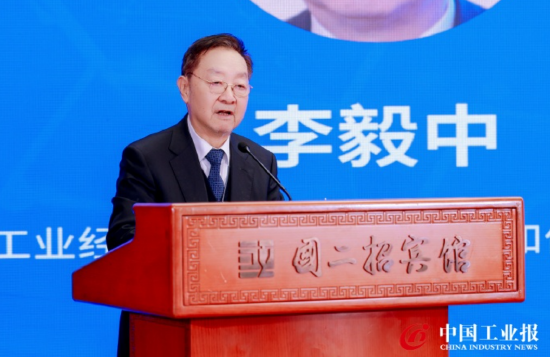
李毅中:推动深化绿色低碳转型,推动科技创新与产业创新深度融合
Xin Lang Cai Jing· 2025-12-16 02:54
第十八届中国工业论坛于12月16日在北京举办,主题为"融合创新 工业当强"。中国工业经济联合会会 长、工业和信息化部原部长李毅中出席并演讲。 李毅中表示,智能化要向人工智能的应用演进提升,应强化推动深化绿色低碳转型,推动科技创新与产 业创新深度融合,准确把握"高端化",提升全产业有效供给。 新浪声明:所有会议实录均为现场速记整理,未经演讲者审阅,新浪网登载此文出于传递更多信息之目 的,并不意味着赞同其观点或证实其描述。 责任编辑:王翔 专题:第十八届中国工业论坛 第十八届中国工业论坛于12月16日在北京举办,主题为"融合创新 工业当强"。中国工业经济联合会会 长、工业和信息化部原部长李毅中出席并演讲。 李毅中表示,智能化要向人工智能的应用演进提升,应强化推动深化绿色低碳转型,推动科技创新与产 业创新深度融合,准确把握"高端化",提升全产业有效供给。 新浪声明:所有会议实录均为现场速记整理,未经演讲者审阅,新浪网登载此文出于传递更多信息之目 的,并不意味着赞同其观点或证实其描述。 责任编辑:王翔 专题:第十八届中国工业论坛 ...

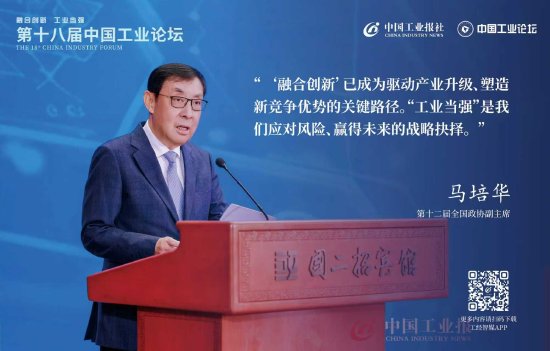
马培华:实现“工业当强”必须依靠“融合创新”这一核心引擎
Xin Lang Cai Jing· 2025-12-16 02:42
Core Viewpoint - The 18th China Industrial Forum emphasizes the theme "Integration Innovation, Industry Strength" and highlights the importance of "integrated innovation" as a core engine for achieving industrial strength [1][3]. Group 1: Key Strategies for Industrial Strength - Strengthening technological innovation leadership is essential to lay a solid foundation for industrial strength [1][3]. - Promoting digital technology empowerment is crucial to stimulate intelligence in achieving industrial strength [1][3]. - Advancing green and low-carbon transformation is necessary to enhance the quality of industrial strength [1][3]. - Deepening reform and opening up cooperation is vital to expand the scope of industrial strength [1][3]. - Cultivating and growing high-quality enterprises is fundamental to solidifying the pillars of industrial strength [1][3].
2025中国储能CEO峰会:出海成中国储能企业生存“必答题”
Zhong Guo Hua Gong Bao· 2025-12-16 02:27
Core Insights - The 2025 China Energy Storage CEO Summit emphasized the necessity for Chinese energy storage companies to expand internationally as a survival strategy [1][2] - The industry is transitioning from scale to high-quality development, with significant improvements in installation capacity and application efficiency [1] - Global collaboration is becoming a central theme, with Chinese companies leveraging technological and supply chain advantages to enter international markets [1][2] Industry Trends - The energy storage sector is identified as a core support for new power systems and a catalyst for green and low-carbon transformation [2] - Companies are focusing on technological innovation and comprehensive solutions, with a commitment to localizing operations in over 100 countries [2] - The industry is experiencing rapid growth, with global energy storage installations expected to reach 550-600 GWh by 2025, and overseas markets projected to surpass domestic ones for the first time [3] Strategic Recommendations - Companies are encouraged to build competitive relationships and promote industry chain collaboration to avoid destructive price wars [2] - There is a call for the industry to transition from merely "going out" to "integrating in," emphasizing deep localization and international talent development [2] - Firms should adopt a long-term perspective, focusing on technology and quality to navigate the trillion-dollar market and break free from internal competition [3]
南华期货金融期货早评-20251216
Nan Hua Qi Huo· 2025-12-16 01:52
Report Industry Investment Rating No relevant information provided. Core Viewpoints of the Report - The Fed cut interest rates by 25 basis points in December, with a more dovish tone than expected. The subsequent non - farm data will affect the direction of interest rate cut expectations. Domestically, the government will continue to implement a more proactive fiscal policy and a moderately loose monetary policy, with expanding domestic demand as the primary task for next year [2]. - In the short term, the RMB is likely to be moderately strong against the US dollar, with low - volatility trading. The stock index is expected to continue to fluctuate in the short term, and the bond market sentiment is weak, but the downside of the index is limited. The container shipping market for the European route will continue to see a tug - of - war between bulls and bears [5][8][9]. - For commodities, precious metals are expected to be bullish in the medium - long term and volatile in the short term; base metals have different trends, such as copper showing an internal - weak and external - strong pattern, aluminum being oscillatingly strong, and zinc having short - term wide - range fluctuations; energy and chemical products also have diverse trends, like crude oil being weakly volatile, and LPG being oscillating; agricultural products have different outlooks, for example, the supply - demand situation of pigs in the peak season needs verification, and the oil market is weakly operating [16][19][20][23][43][44][83] Summary by Related Catalogs Financial Futures - **Macro**: Pay attention to the release of the US non - farm payroll report. The Fed's interest rate cut decision and domestic economic data, such as the industrial production in November showing resilience while consumption and investment facing pressure, are important factors affecting the market [1]. - **RMB Exchange Rate**: It continues the callback trend. The on - shore RMB against the US dollar rose on the previous trading day. In the short term, it is likely to be moderately strong against the US dollar, supported by policy, seasonal factors, and the external environment [3][5]. - **Stock Index**: The previous trading day's stock index closed down, and the trading volume decreased. The fundamentals are still weak, and the market sentiment is cautious. It is expected to continue to fluctuate in the short term [6][8]. - **Treasury Bond**: The bond market closed down on Monday, and the market sentiment is weak. The economic data in November shows weakening economic momentum, but the market focus is not on the fundamentals. The policy focus on expanding domestic demand has not yet formed a clear impact on the bond market [8][9]. - **Container Shipping to Europe**: The price increase is less than expected. The market is in a tug - of - war between the support of spot prices and the expectation of future capacity release. In the short term, the market will continue this situation, and different contracts need to pay attention to different factors [9][10][12] Commodities Non - ferrous Metals - **Platinum & Palladium**: The prices rose sharply at night. The Fed's expected loose monetary policy and the EU's relaxation of the fuel - vehicle ban are beneficial to the demand for platinum and palladium in automobile catalysts. It is recommended to pay attention to the internal - external price difference of platinum [14][16]. - **Gold & Silver**: The prices are in a high - level shock. Focus on the release of the US non - farm payroll report tonight. In the short term, it is expected to be in a high - level shock, and bullish in the medium - long term [17][18][19]. - **Copper**: The fixed - asset investment growth rate declined, and the copper price shows an internal - weak and external - strong pattern. Pay attention to the high - level adjustment risk and support at 90,000 [20][21][22]. - **Aluminum Industry Chain**: The trends are different. Aluminum is expected to be oscillatingly strong in the medium term; alumina is weakly operating; cast aluminum alloy is oscillatingly strong [22][23][24]. - **Zinc**: It is in short - term wide - range fluctuations. The macro environment is favorable, and the fundamentals show tight supply at the mine end and support from inventory de - stocking [25][26]. - **Tin**: It is in a technical correction. Although the supply at the mine end is tight, the downstream demand has not increased significantly. It is expected to enter a wide - range shock stage [26]. - **Lithium Carbonate**: It is oscillatingly strong. In the short term, it is driven by market sentiment, and in the medium - long term, it has a long - value support from the demand side [27][28]. - **Industrial Silicon & Polysilicon**: Industrial silicon has limited downside space in the medium - long term; polysilicon is in a wait - and - see situation, with the trading logic mainly based on technical aspects [29][30]. - **Lead**: The inventory accumulation exerts pressure. The price is in a weak shock, and it is expected to oscillate between 16,700 - 17,500 in the short term [31]. Black Metals - **Rebar & Hot - Rolled Coil**: They are oscillatingly weak. After the central economic work conference, the market pricing returns to the fundamentals. The supply may slow down in the reduction, and the demand is seasonally weak. The prices are expected to oscillate within a certain range [32][33]. - **Iron Ore**: The price first fell and then rose. The trading logic returns to the fundamentals. The supply is relatively stable, the demand is in a bottom - grinding stage, and the price is expected to have limited downside space [34]. - **Coking Coal & Coke**: They are in a weak consolidation. The supply of coking coal has limited marginal changes, and the demand is weak, resulting in a marginal oversupply. The supply of coke may increase in the future, and the price is likely to continue to decline [36][37]. - **Silicon Iron & Silicon Manganese**: They face a situation of weak reality and strong expectation, with limited upside space. The supply and demand are both weak, and the inventory is at a high level [37][38]. Energy and Chemicals - **Pulp - Offset Paper**: The pulp price is in an oscillating state. The high - price pulp has poor sales, and the demand is weak. The offset paper is affected by the pulp price and supply factors. It is recommended to wait and see [40][41]. - **Crude Oil**: The price hit a new low this year due to the progress of the Russia - Ukraine peace talks. It is weakly oscillating in the short term, and attention should be paid to the potential support of Brent crude oil at $60 per barrel [42][43]. - **LPG**: It is oscillating. The supply has increased slightly, and the demand is relatively stable. The external market is in an oscillating pattern, and the domestic spot is relatively strong [44][45]. - **PTA - PX**: There is no obvious driving force, and it fluctuates with the cost side. The supply of PX is expected to be high in the fourth quarter, and the demand for polyester will decline in the later stage. The PTA processing fee has limited repair space [46][49]. - **MEG - Bottle Chip**: The supply negative feedback appears, but it is difficult to reverse the situation. The demand is declining, and the supply has some support signals. The short - term downward driving force is weakened, but the long - term oversupply situation remains [50][52]. - **Methanol**: Maintain the reverse - spread view. The 1 - 5 spread shows a positive - spread pattern, mainly due to market trends and unloading problems. It is recommended to add positions in the 1 - 5 reverse - spread [53][54]. - **PP**: The cost side still has strong support. The supply pressure may be alleviated in January, and the demand has some support. It is necessary to pay attention to the spot situation [56][57]. - **PE**: Pay attention to the spot situation. It shows a pattern of increasing supply and decreasing demand. The supply pressure is large, and it is difficult to form strong support [58][59]. - **Pure Benzene - Styrene**: Styrene's inventory decreased on Monday. Pure benzene shows a near - weak and far - strong pattern, while styrene shows a near - strong and far - weak pattern [60][61][62]. - **Fuel Oil**: The cracking is weak. The supply is stable, the demand is weak, and the high - sulfur cracking is under pressure. It is recommended to wait and see [63]. - **Low - Sulfur Fuel Oil**: The cracking is rising. The supply is tightening, and the cracking has an upward driving force. It is recommended to wait and see [64][65]. - **Asphalt**: The bottom - space is limited, and the winter - storage policies are gradually introduced. The supply is slightly reduced, the demand is weakening, and the cost side is weakly oscillating. It is expected to oscillate in the short term [65][66]. - **Rubber**: The macro atmosphere is warm, but the fundamental benefits are limited. The supply of natural rubber is slightly tightened, the downstream demand support is weakening, and the inventory is still accumulating. It is expected to oscillate [68][70]. - **Urea**: The futures and spot prices tend to converge. The supply is high, and the price is under pressure, but the export policy weakens the downward driving force. It is expected to oscillate [71][72]. - **Soda Ash & Caustic Soda**: They fluctuate at a low level. Soda ash has an increasing over - supply expectation, and glass may have some production - line cold - repairs in the future. Caustic soda has weak fundamentals and is expected to decline weakly [73][74][75]. - **Log**: The short positions left the market intensively, and the price rose and then fell. The price is in a game state, with limited trading value [76][78][79]. - **Propylene**: It is weakly oscillating. The cost pressure is increasing, the supply is relatively loose, and the demand is not strong. It will remain in a weak state before more maintenance [79][80]. Agricultural Products - **Pigs**: The supply - demand situation in the peak season needs verification. The policy may affect the long - term supply, and the short - term is mainly based on fundamentals. The near - month has an over - supply pressure, and the far - month is stronger [82][83]. - **Oilseeds**: The customs - clearance time is extended. The import soybean buying sentiment is reduced, and the domestic soybean meal and rapeseed meal have different supply - demand situations. The external market of soybeans is weakly oscillating, and the domestic soybean meal is in a positive - spread trend in the short term [84][85][86]. - **Oils**: They are weakly operating. Palm oil is under supply pressure, soybean oil is affected by soybean auctions, and rapeseed oil is affected by market news. The short - term price center of gravity is moving down [87][88]. - **Cotton**: Pay attention to downstream orders. The domestic cotton supply - demand is expected to be tight in the long term, and the price is relatively strong, but there is short - term pressure. It is recommended to buy on dips [89]. - **Sugar**: The price hits a new low. Affected by the high - supply situation in major producing countries, the sugar price is in a weak state [90][91][92]. - **Eggs**: The chicken culling is in progress. The long - term egg - laying hen capacity is still excessive, but there is a turning point. It is recommended to participate in long positions lightly if betting on a rebound [93]. - **Apples**: The price has a large retracement. The consumption is not smooth, and the inventory is slowly decreasing. It is recommended to buy on dips [94][95]. - **Jujubes**: The new - product supply is sufficient. The new - season jujube production is expected to decrease slightly, and the short - term price has limited downside space. Pay attention to downstream pre - holiday purchases [96][97].
擘画海南自贸港能源大动脉
Hai Nan Ri Bao· 2025-12-16 01:48
Core Viewpoint - The successful commissioning of the Hainan 500 kV main grid project marks a significant advancement in Hainan's energy infrastructure, enhancing the province's energy capacity and supporting the development of the Hainan Free Trade Port [5][22]. Group A: Project Overview - The Hainan 500 kV main grid project, with an investment of 5.7 billion yuan, took 21 months to complete and spans 14 cities and counties, creating a "口" shaped energy artery [5][15]. - This project represents a historic leap from a 220 kV to a 500 kV network operation, significantly improving the energy backbone of Hainan [6][14]. Group B: Challenges and Solutions - The construction faced unique challenges, including crossing 211 facilities and multiple ecological protection zones, which required innovative solutions such as the use of aerial cableways for material transport [6][11]. - A total of 159 government-enterprise coordination meetings were held to address construction challenges, resulting in the resolution of 71 major issues [10]. Group C: Technological Innovations - Advanced technologies, including heavy-duty drones and smart cableway systems, were employed to enhance construction efficiency while minimizing ecological impact [11][12]. - The project incorporates a digital grid infrastructure that utilizes new digital technologies for comprehensive monitoring and management throughout its lifecycle [17]. Group D: Energy Capacity and Resilience - The new grid's single-line transmission capacity exceeds 3.5 million kilowatts, which is 4 to 5 times that of the previous 220 kV lines, effectively creating a "power ring road" for Hainan [15]. - The design of the grid adheres to the highest standards for typhoon resistance, significantly improving the grid's disaster resilience [16]. Group E: Support for Clean Energy Transition - The project aligns with Hainan's goal of becoming a clean energy island, with projections indicating that by November 2025, clean energy will account for 87.1% of installed capacity and 73.03% of total generation [19]. - The grid will facilitate the large-scale development of offshore wind farms and distributed solar projects, ensuring efficient integration of clean energy sources [20]. Group F: Strategic Importance - The project enhances Hainan's connectivity to the national power market, allowing local clean energy to be distributed nationwide and facilitating the import of clean energy from inland regions [20]. - The successful operation of the 500 kV main grid is seen as a cornerstone for the high-quality development of Hainan's Free Trade Port, supporting various strategic industries [21][22].

国网能源院解读集中式新能源市场报价新规
Zhong Guo Dian Li Bao· 2025-12-16 01:32
Group 1 - The core viewpoint of the article is that the new policy aims to optimize and standardize the market pricing mechanism for centralized renewable energy generation enterprises, facilitating their participation in the electricity market while ensuring fair competition and enhancing market efficiency [1][2][8]. Group 2 - The background of the policy highlights the challenges faced by small, scattered, and less professionally equipped renewable energy stations in participating in market competition, necessitating a solution to enable their effective market entry [2]. - The policy draws on international experiences, such as those from the US and Europe, which allow centralized pricing for renewable energy to reduce transaction costs and ensure a fair competitive environment through comprehensive market regulation [2]. - The current market conditions indicate that renewable energy projects have a manageable market share, with only a few provinces exceeding 20%, allowing for controlled impacts from centralized pricing [2]. Group 3 - The significance of the policy includes promoting green transition by establishing a pricing mechanism that enhances the competitiveness of renewable energy enterprises and supports their transition to market-oriented consumption [3]. - The policy aims to standardize market order and prevent collusion by implementing transparent processes for centralized pricing, thereby maintaining a fair and orderly electricity market [3]. - It emphasizes the importance of a comprehensive risk prevention and regulatory framework, detailing the responsibilities of various stakeholders in ensuring fair competition [4]. Group 4 - The implementation of the policy requires attention to potential market power abuse by monitoring the pricing behavior of centralized pricing entities within the same group [6]. - It stresses the need for effective separation of business operations within large power generation groups to prevent improper associations that could distort market signals [7]. - The policy calls for enhanced coordination and monitoring across the entire market to address the challenges posed by the new centralized pricing mechanism [7]. Group 5 - The conclusion of the article states that the policy represents a significant step towards modernizing energy governance and optimizing the market mechanism for renewable energy, supporting the healthy and orderly development of the sector [8].
12月15日晚间央视新闻联播要闻集锦
Yang Shi Xin Wen Ke Hu Duan· 2025-12-15 14:01
今日摘要 习近平对未成年人思想道德建设工作作出重要指示强调,坚持把未成年人思想道德建设作为战略性基础 性工作来抓,合力为未成年人健康成长营造良好社会环境。蔡奇出席座谈会并讲话。 系列报道【践行新发展理念中国经济行稳致远】今天播出,2025年,我国绿色低碳转型步伐稳健,成效 显著,为高质量发展注入源源不断的动能。 赵乐际主持召开十四届全国人大常委会第五十六次委员长会议,决定十四届全国人大常委会第十九次会 议12月22日至27日在京举行。 丁薛祥会见新加坡副总理并共同主持中新双边合作机制会议。 习近平对未成年人思想道德建设作出重要指示强调 坚持把未成年人思想道德建设作为战略性基础性工 作来抓 合力为未成年人健康成长营造良好社会环境 蔡奇出席座谈会并讲话 中共中央总书记、国家主席、中央军委主席习近平近日对未成年人思想道德建设作出重要指示。他指 出,党的十八大以来,党中央高度重视未成年人思想道德建设,多措并举推动各项工作取得新进展新成 效。 【践行新发展理念 中国经济行稳致远】全面绿色转型提速 铺就高质量发展底色 绿色发展是中国式现代化的鲜明底色。习近平总书记指出,越是发展任务重,越要重视生态环境保护, 推动经济社会 ...